- English
- French
- German
- Portuguese
- Spanish
- Russian
- Japanese
- Korean
- Arabic
- Greek
- German
- Turkish
- Italian
- Danish
- Romanian
- Indonesian
- Czech
- Afrikaans
- Swedish
- Polish
- Basque
- Catalan
- Esperanto
- Hindi
- Lao
- Albanian
- Amharic
- Armenian
- Azerbaijani
- Belarusian
- Bengali
- Bosnian
- Bulgarian
- Cebuano
- Chichewa
- Corsican
- Croatian
- Dutch
- Estonian
- Filipino
- Finnish
- Frisian
- Galician
- Georgian
- Gujarati
- Haitian
- Hausa
- Hawaiian
- Hebrew
- Hmong
- Hungarian
- Icelandic
- Igbo
- Javanese
- Kannada
- Kazakh
- Khmer
- Kurdish
- Kyrgyz
- Latin
- Latvian
- Lithuanian
- Luxembou..
- Macedonian
- Malagasy
- Malay
- Malayalam
- Maltese
- Maori
- Marathi
- Mongolian
- Burmese
- Nepali
- Norwegian
- Pashto
- Persian
- Punjabi
- Serbian
- Sesotho
- Sinhala
- Slovak
- Slovenian
- Somali
- Samoan
- Scots Gaelic
- Shona
- Sindhi
- Sundanese
- Swahili
- Tajik
- Tamil
- Telugu
- Thai
- Ukrainian
- Urdu
- Uzbek
- Vietnamese
- Welsh
- Xhosa
- Yiddish
- Yoruba
- Zulu
How to Choose an SCR Dosing System OEM and Supplier for Import
Choosing the right SCR dosing system OEM and supplier for import directly affects your compliance record, production costs, and equipment uptime. A urea dosing system—also called a DEF (Diesel Exhaust Fluid) injection system—controls precisely how much AdBlue enters the exhaust stream to convert NOx into nitrogen and water. Getting this selection wrong can trigger fault codes like P204B, cause urea crystallization blockages, or push engines into limp mode. This guide walks through every critical step so purchasing managers and R&D engineers can make confident, well-informed sourcing decisions.
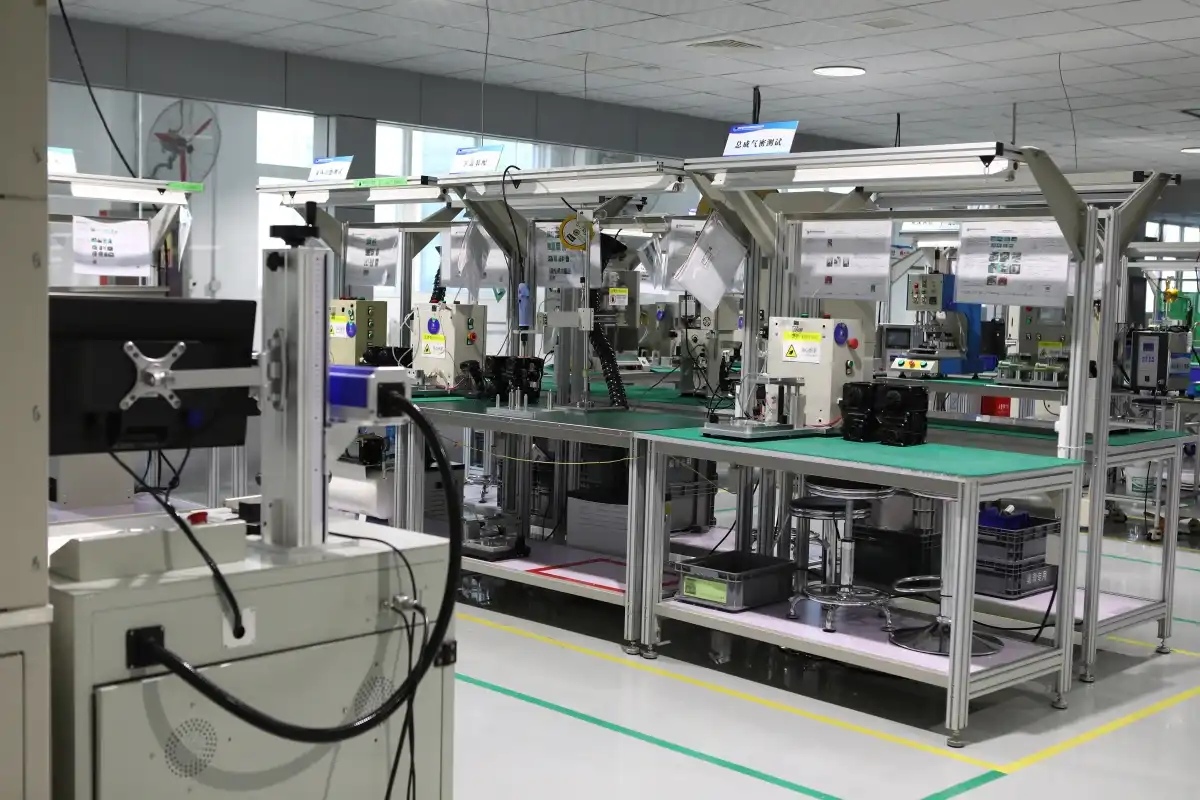
Understanding SCR Dosing Systems and Their Market Requirements
How the Technology Works
One way that an SCR device cuts down on NOx pollution is by adding AdBlue to the exhaust pipe before the catalyst. Nitrogen fumes are turned into nitrogen gas and water mist, which are not dangerous. The three main parts that change how exact the machine is are the urea pressure monitor, the dose injection, and the dose Control Unit (DCU). The pressure sensor tells the DCU what's going on in real time through a closed loop. This keeps the pressure of the injection steady and finds problems like fat that has frozen or leaks.
Regulatory Drivers Shaping Demand
Rules from the EU Stage 6 and the EPA Tier 4 say that heavy trucks, building equipment, farm equipment, and power sets all need to use SCR aftertreatment. China VI rules, which have been in place since 2021, set the same goals for lowering NOx across the whole country. If you don't follow the rules, you could get a big fine, be told you can't bring your car into the country, or have your engine de-rated. Because of these rules, more than ever, people all over the world want dosing units and monitors that have been checked out and accepted.
SCR vs. Competing Technologies
When it comes to lowering NOx, SCR always works better than EGR by itself. SCR systems can change more than 90% of NOx, but EGR systems can only change 40% to 60% of NOx. They don't go back into the combustion chamber if you use SCR instead of EGR. It doesn't use more gas or get dirty like systems that only use EGR.
Core Decision Criteria When Choosing an SCR Dosing System OEM and Supplier
Define Your Procurement Requirements First
Before contacting any supplier, map out your specific needs for SCR dosing system: fleet size, engine displacement range, operating environments (dust, salt, extreme cold), and target emission standard. A mining excavator running in -30°C conditions demands a dosing module with a freeze-protection structure that accommodates the 9% volume expansion of frozen AdBlue—this is a non-negotiable design specification, not a marketing claim.
Evaluate Certifications and Technical Parameters
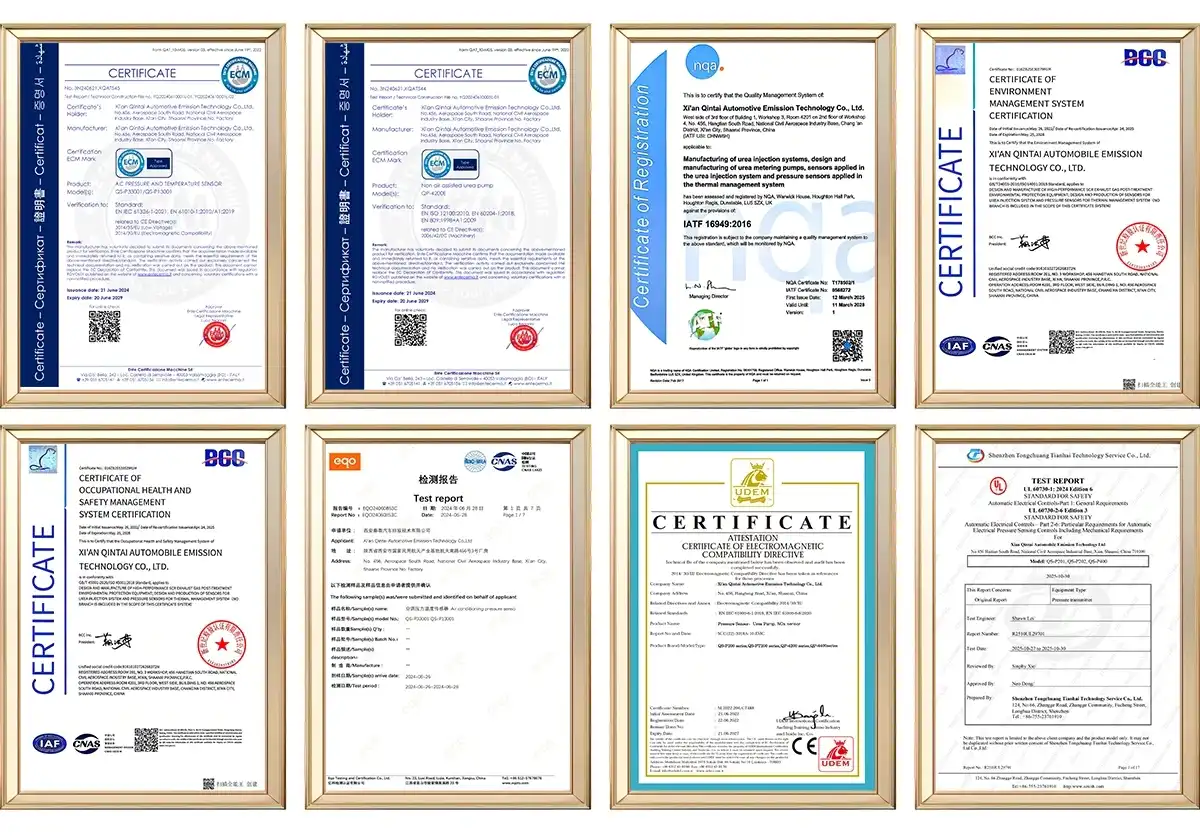
Certifications separate qualified suppliers from unverified ones. Look for ISO 9001 and IATF 16949 for quality management, plus application-specific approvals such as CE, UL, and Ex (explosion-proof) where relevant. Key technical parameters to request include operating pressure range, sensor output signal type (0.5V–4.5V analog or SENT digital), connector compatibility with your ECU, and rated service life in operating hours. Suppliers who cannot furnish these data sheets upfront are a liability.
Assess Supply Chain Reliability and After-Sales Support
Production capacity matters as much as product quality. A supplier capable of mass production with documented lead times protects your assembly line from costly stoppages. Evaluate responsiveness: how quickly does the technical team answer application-specific questions? Can they support OEM/ODM customization for interface parameters or housing dimensions? Long-term cooperation agreements should also include firmware update provisions and spare parts availability commitments.
Comparing SCR Dosing Systems – Types, Efficiency, and Cost Benefits
Application-Specific Variants
The dose units need to be set up in a different way for each type of work. For more than a million kilometers, sensors in trucks that go on long trips need to be able to handle shaking and changes in temperature. Construction and mining equipment needs to have an IP grade of at least 67 because it works in dirty and rough places. The parts used in the dosage circuit for marine diesel engines have to be able to resist rust because they are used in salty places.
Here's how to compare the best parts of different versions:
- Pressure accuracy: Industrial-grade urea pressure sensors should maintain ±1.5% full-scale accuracy across the operating temperature range of -40°C to +125°C.
- Crystallization resistance: Internal flow path geometry should minimize dead volume to prevent AdBlue from drying and fouling the sensing diaphragm.
- Signal compatibility: Confirm whether your ECU reads analog voltage (0.5V–4.5V) or SENT protocol before ordering—mismatched signals cause immediate diagnostic faults.
- Connector standardization: M10×1 and M12×1.5 thread standards cover most platforms, but always verify against your dosing module drawing.
To prevent AdBlue from drying out and clogging the sensing diaphragm, the internal flow path of the SCR dosing system should be designed to minimize dead space. Signal compatibility verification is essential: Before placing your order, confirm whether your ECU adopts the SENT protocol or analog voltage signal (0.5V–4.5V). Mismatched signals will lead to immediate malfunctions. For standardized interfaces: M10×1 and M12×1.5 thread standards fit most platforms, but always check the drawing of your dosing module first.
Cost Structure and Bulk Purchasing Strategy
It costs less per unit to buy aftermarket dosing modules than OEM-grade ones, but in the long run, it's cheaper to use OEM parts. Damage claims, unexpected downtime, and fines for not following pollution rules can add up to a lot more than the price difference at first glance. Take care of your production schedule by making sure you get written lead-time guaranties when you sign contracts for bulk imports. You should also ask for different prices based on how much you promise to buy each year.

How to Assess and Select the Best OEM and Supplier for Import
Verify Brand Reputation and Certifications
Don't believe what the book says; ask for proof instead. The IATF 16949 certificates should have clear scope statements, test results from a third party, and contact information from well-known OEM users from a company you can trust. In order to show that they are doing research and development (R&D) and not just copying other companies' work, suppliers should have patents. Especially idea patents that cover sensor design or closing structures.
Check Inventory Capacity and Geographic Reach
You are much less likely to have to wait for your imports if you work with a company that has set up logistics routes and has customers in more than 60 countries. Make sure you know how many of each part number you have on hand. If you buy a lot of parts, you might want to look into buffer stocking systems. Having the item in stock is often more important than a small price difference per unit when people buy things in car repair shops and stores that sell spare parts.
Structure Your Contracts Carefully
A purchase agreement for SCR dosing system should define the minimum acceptable quality level, warranty duration and coverage, responsible party for software and firmware updates if the system is equipped with a DCU, and resolution mechanism for technical disputes. Many cross-border procurement conflicts arise simply from ambiguous contract terms.
Practical Tips for Smooth Import Procurement and Long-Term Maintenance
Documentation and Customs Compliance
All packages of dosing injectors and pressure sensors from other countries must have the right HS code classification, certificates of origin, and, if needed, REACH and RoHS compliance statements. To get your things through quickly, work with a registered customs broker who knows about diesel aftertreatment parts. Tags that are wrong for tariffs are a common mistake that can be avoided and make shipping take weeks longer.
Maintenance Practices That Extend System Life
Regular diagnostics and calibration checks on the sensors make sure that the dosing is accurate within the range that is allowed. Every once in a while, you should compare the data inside the urea pressure monitor to norms for pressure. If any of the pins look rusty, you need to get new ones right away.
Most of the time, P204B fault codes (Urea Pressure Sensor Circuit Range/Performance) are caused by broken connector contacts. ISO 22241 says that AdBlue must be of a certain quality. Fluid that doesn't meet these standards makes the catalyst poison the faster and the diaphragm wear out faster.
Build Long-Term Supplier Partnerships
Long-term OEM partners benefit when suppliers put money into developing new products all the time. Some of the benefits that OEM partners get are new designs, faster access to parts, and faster technical support. Not just the sales desk, but also the supplier's R&D and quality engineering teams should be easy to get in touch with. This will help solve issues more quickly and make sure your things always meet the most recent government rules.
Conclusion
You should look at more than just price to find the best SCR dosing system OEM and provider. It is important to look at the certifications, technical specs, production capacity, and contract terms in a planned way. It is very important to use the urea pressure monitor to get the right dose.
The aftertreatment machine might not work right and break down early if there isn't enough air. More weight should be given to providers who have clear quality systems, real OEM references, and enough technical know-how to support long-term partnerships. You should be careful about how you buy the tools at first because it will last as long as your business, your customers, and your health and safety record.
FAQ
What factors most affect SCR dosing system efficiency?
How well NOx is changed depends on how hot the catalyst is, how well the AdBlue fluid is mixed, and how good the fluid is. As long as the urea pressure sensor is set up correctly, it will keep the pressure steady, which means that the injection volumes are always right. This changes whether or not your system meets the Euro VI or EPA Tier 4 Final requirements.
How do I verify a supplier's product authenticity and quality?
Ask for IATF 16949 certificates that show the work that will be done, its scope, test results from a third party, and the ability to see models of the work that will be done. Search for the patents in national IP databases and get examples from well-known OEM users.
What routine maintenance does a dosing system require?
Make sure the wire lines and connection pins are still in good shape when the service is due. Check the AdBlue to see if it meets ISO 22241 (32.5% ±0.8%). Any urea pressure sensors that are moving outside of their expected accuracy range should be changed. The signal output of the sensors should be checked. After each service, write down the trouble number. You can quickly find small problems this way, before they get worse.
Can urea pressure sensors work across different SCR system brands?
Thread sizes are standard, but signal means for ECUs are not. You should always check the type of output signal and voltage range of a new sensor against the one in your DCU calibration file before you buy it.
Partner with Qintai for Proven SCR Dosing System Solutions
Qintai is a national high-tech company that has been around since 2001. People in more than 60 countries buy parts for SCR aftertreatment and OEM-grade urea dose pressure monitors from them. It is the only company in China that Weichai Power, Yuchai Power, and Quanchai Power all buy from. It has 58 idea patents and is approved by ISO 9001, IATF 16949, CE, UL, Ex, REACH, and RoHS.
We can help you with your project whether you need a skilled SCR dosing system maker for lots of units or an open partner for custom ODM development. They have tech and R&D teams ready to help. To find out more and get prices, email us at info@qt-sensor.com or go to qt-sensor.com.
References
1. European Commission, Euro VI Heavy-Duty Vehicle Emission Regulations, Official Journal of the European Union, 2014.
2. U.S. Environmental Protection Agency, Tier 4 Final Emission Standards for Nonroad Diesel Engines, EPA Publication 420-F-04-032, 2004.
3. International Organization for Standardization, ISO 22241: Diesel Engines – NOx Reduction Agent AUS 32, ISO, 2019.
4. SAE International, Technical Paper: SCR System Performance and Urea Injection Accuracy in Heavy-Duty Applications, SAE Journal of Engines, 2018.
5. Dieselnet Technology Guide, Selective Catalytic Reduction (SCR) for NOx Control, Ecopoint Inc., 2022.
6. IATF, IATF 16949:2016 – Quality Management System Requirements for Automotive Production and Relevant Service Parts Organizations, International Automotive Task Force, 2016.
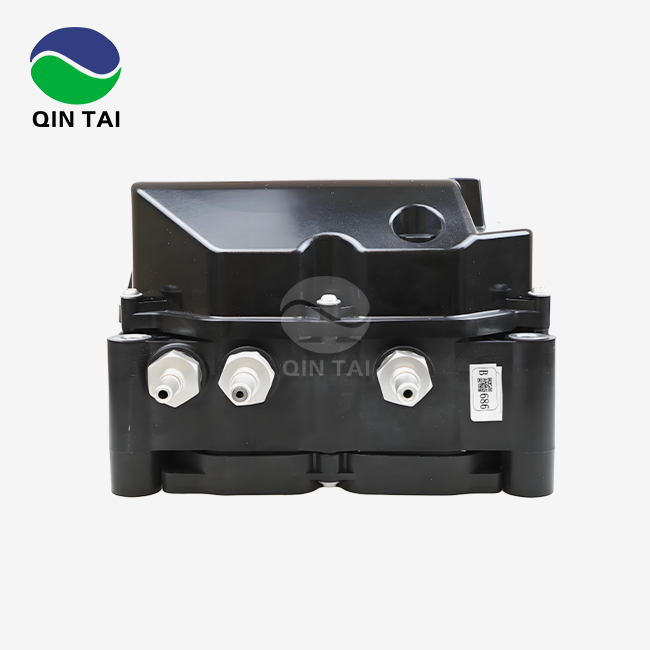
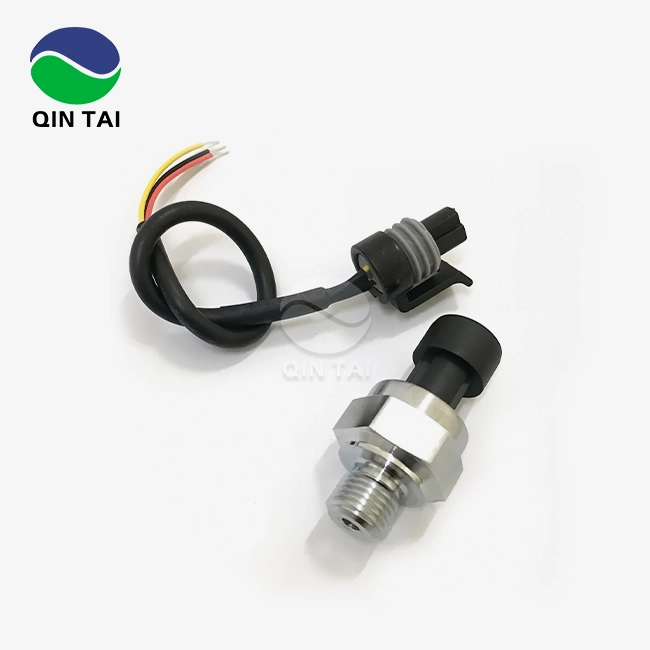
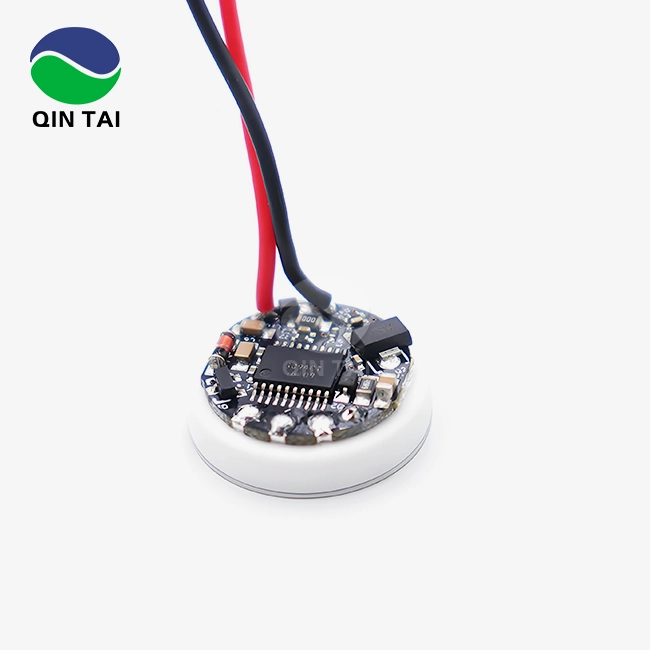


Our customers’ satisfaction speaks for our quality — contact us to experience the same reliable service.