- English
- French
- German
- Portuguese
- Spanish
- Russian
- Japanese
- Korean
- Arabic
- Greek
- German
- Turkish
- Italian
- Danish
- Romanian
- Indonesian
- Czech
- Afrikaans
- Swedish
- Polish
- Basque
- Catalan
- Esperanto
- Hindi
- Lao
- Albanian
- Amharic
- Armenian
- Azerbaijani
- Belarusian
- Bengali
- Bosnian
- Bulgarian
- Cebuano
- Chichewa
- Corsican
- Croatian
- Dutch
- Estonian
- Filipino
- Finnish
- Frisian
- Galician
- Georgian
- Gujarati
- Haitian
- Hausa
- Hawaiian
- Hebrew
- Hmong
- Hungarian
- Icelandic
- Igbo
- Javanese
- Kannada
- Kazakh
- Khmer
- Kurdish
- Kyrgyz
- Latin
- Latvian
- Lithuanian
- Luxembou..
- Macedonian
- Malagasy
- Malay
- Malayalam
- Maltese
- Maori
- Marathi
- Mongolian
- Burmese
- Nepali
- Norwegian
- Pashto
- Persian
- Punjabi
- Serbian
- Sesotho
- Sinhala
- Slovak
- Slovenian
- Somali
- Samoan
- Scots Gaelic
- Shona
- Sindhi
- Sundanese
- Swahili
- Tajik
- Tamil
- Telugu
- Thai
- Ukrainian
- Urdu
- Uzbek
- Vietnamese
- Welsh
- Xhosa
- Yiddish
- Yoruba
- Zulu
Best OEM Pressure Transmitter Supplier for Custom Projects Worldwide - Qintai
When you're sourcing precision instrumentation for diesel engines, aftertreatment systems, or heavy-duty industrial applications, partnering with a reliable Pressure Transmitter Supplier can determine whether your project succeeds or stalls. At Qintai, we've spent over two decades perfecting OEM pressure sensing solutions that meet stringent emission standards, deliver consistent performance under extreme conditions, and scale seamlessly from prototype to mass production. Our commitment to technical excellence and customer-centric service has positioned us as China's leading OEM supplier, trusted by Weichai Power, Yuchai Power, and Quanchai Power, while expanding our footprint across 60+ countries worldwide.
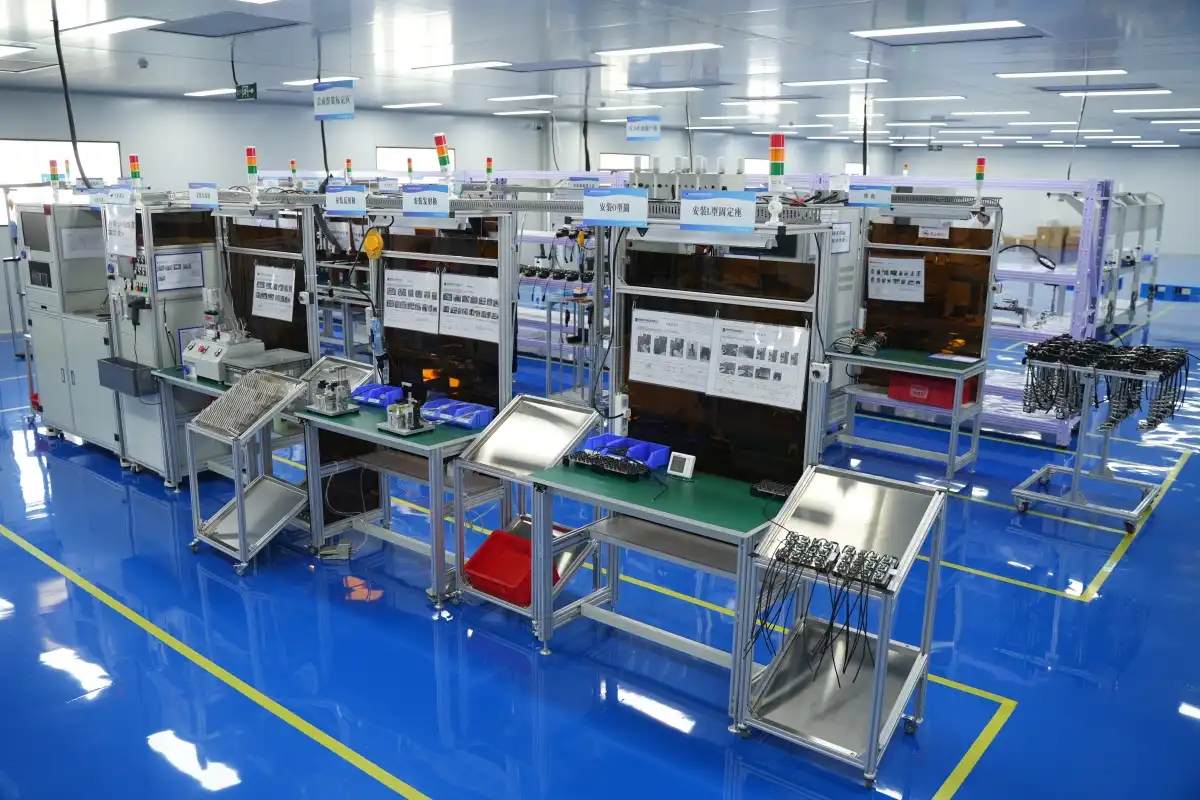
Understanding Pressure Transmitter Suppliers and Their Role in Custom Projects
What Defines a Pressure Transmitter Supplier?
With the help of a Pressure Transmitter Supplier, raw sensing technology can be used in factory settings. Instead of making standard units like generic manufacturers do, specialized suppliers like Qintai offer full services that include design advice, engineering for customization, help with regulatory compliance, and technical support after delivery. We turn pressure readings into 4-20mA or 0-5V electrical signals that can be used right away and work with your control systems. This works whether you're checking hydraulic pressure in construction equipment or exhaust backpressure in SCR systems.
Core Types and Customization Capabilities
Several basic methods for measuring pressure are used in industrial sensors. It is easy to use differential pressure sensors to check the filters in diesel particulate filter (DPF) systems because they can measure the difference in pressure between two places. For altitude-compensated fuel injection systems to work, absolute pressure sensors must be able to measure a perfect vacuum. Gage pressure transmitters measure in relation to atmospheric pressure and are often used to keep an eye on turbochargers. Sealed gage versions offer stable references for long-term outdoor installations.
We use thin-film technology at Qintai to vacuum-sputter strain gages right onto stainless steel diaphragms at the molecular level. This atomic bonding gets rid of the problems with glue creep and temperature drift that come up with regular bonded strain gage designs. Our engineering team can often change the output signals, electrical connections, pressure port configurations, and environmental protection grades to exactly what you need. Our production skills are very flexible, so we can make exactly what your project needs, whether it's M12 connectors for farm equipment or explosion-proof ATEX-certified units for generator sets in dangerous places.
Why Choose Qintai as Your OEM Pressure Transmitter Supplier?
Proven Expertise and Industry Leadership
Qintai Automotive Emission Technology Co., Ltd. Ltd has become a national high-tech company by constantly coming up with new ideas since our start in 2001. We know a lot about the tough conditions your sensors have to work in because we only work on diesel engine SCR aftertreatment systems. These include temperature changes from -40°C to 125°C, vibrations of more than 30g, and exhaust environments full of urea and sulfuric compounds that are known to be corrosive. Because of this experience, pressure sensors are now designed to last longer instead of using generic industrial designs, which is the hallmark of a dedicated Pressure Transmitter Supplier that understands the real-world demands of heavy-duty emission applications.
We are proud to be China's top original equipment manufacturer (OEM) provider for diesel engine sensors. We have been able to maintain this position by regularly meeting the high standards of China's top engine manufacturers. Our separate research and development team has been awarded 58 invention patents. These cover advanced signal processing algorithms, designs for packaging that don't break when they get shaken, and temperature compensation methods that keep accuracy within ±0.5% across the entire operating range.
Comprehensive Certification Portfolio
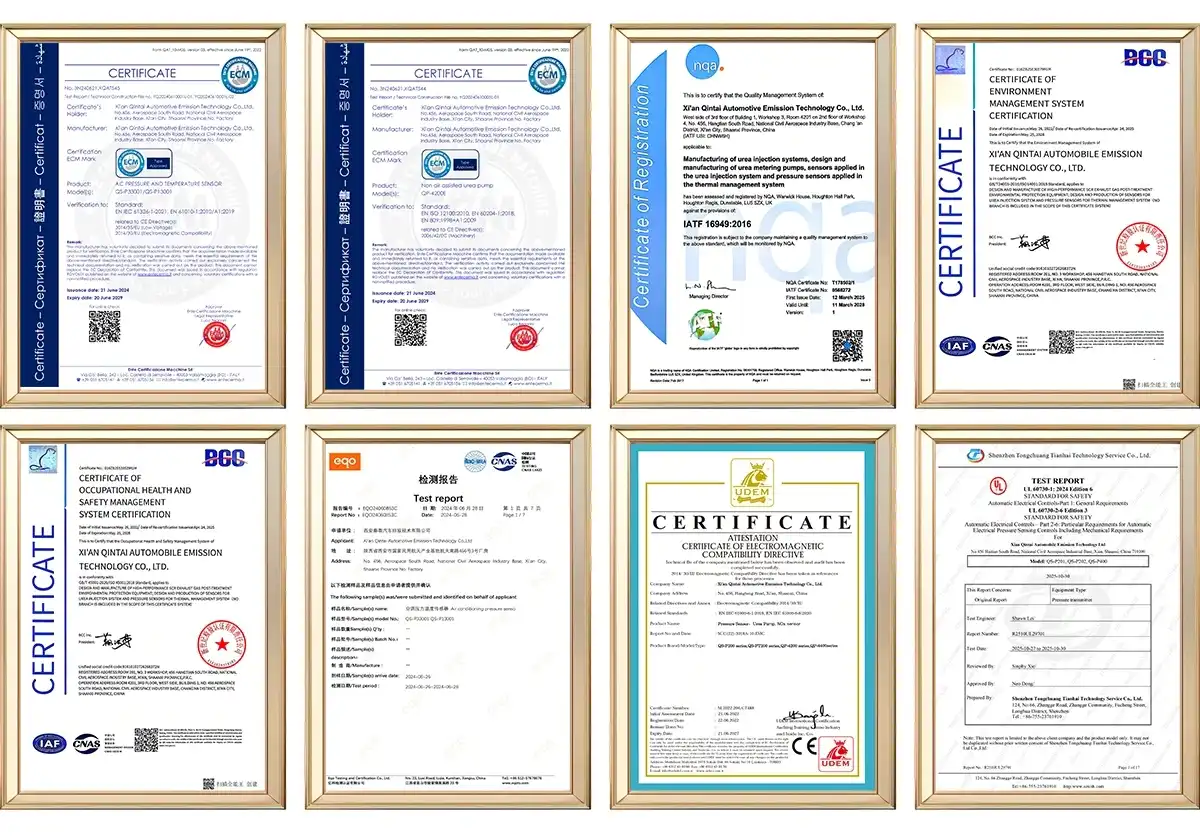
Regulatory compliance is a big problem for purchasing managers and research and development engineers who are making powertrains that meet China VI, Euro VI, and EPA standards. This is not a problem at all with Qintai's certification portfolio. We have active certifications for CMC (China Metrology Certification), UL safety standards for North American markets, CE marking for distribution in the European Economic Area, REACH and RoHS compliance for environmental laws, and explosion-proof Ex certifications that allow deployment in dangerous Zone 1 and Zone 2 locations. These are in addition to the basic ISO9001 quality management and IATF16949 automotive standards.
Our ATEX-approved explosion-proof pressure sensors have built-in circuits that stop energy from moving below the levels needed to start an explosion in flammable environments. When used with safety barriers on generator sets in places like mines, power plants, and petrochemical plants where explosive gas levels are always a risk, these units work perfectly. When you use our technical paperwork packages and compliance test results together, the approval process with regulatory authorities is sped up and easier.
Tailored Engineering Support
Real OEM ties are different from business vendor relationships because they work together on technology. Our engineering support starts with the early stages of your design. During this time, our application engineers look at your system's architecture, operating conditions, and environmental limitations to suggest the best sensor specifications. We give you detailed interface drawings, mounting suggestions, and electrical integration instructions that keep you from having to do expensive redesigns during prototyping.
Calibration services make sure that your measurements are accurate for as long as your product is in use. We offer calibration services in the factory that are traceable to national standards, calibration support in the field during installation, and recalibration services on set maintenance schedules. Our calibration certificates list uncertainty budgets, linearity performance, hysteresis features, and temperature factors. This gives your quality assurance team full auditability.

How to Select the Best OEM Pressure Transmitter Supplier for Your Custom Project?
Defining Your Technical Requirements
Clearly stated requirements are the first step in selecting the right sensors. Pressure range needs are very different. For example, SCR dosing systems usually work at 5–10 bar, while monitoring for common rail fuel injection may go over 2000 bar. The type of housing material and the level of ingress protection depend on the environment. For example, marine generators need IP69K protection against high-pressure washdowns, while agricultural equipment may work fine with IP67 dust-tight and temporary immersion protection.
Accuracy requirements balance the need for accurate measurements with the need to stay within budget. When it comes to aftermarket replacement sensors, ±1.0% accuracy is enough for uses that need to track emissions critically and support an investment in full-scale accuracy within ±0.25%. Specifications for temperature coefficients are especially important for installations under the hood of cars that go through quick thermal cycles during cold starts and long periods of high load operation, which is why partnering with an experienced Pressure Transmitter Supplier ensures that these environmental factors are properly addressed in the sensor design and selection process.
Evaluating Supplier Capabilities and Responsiveness
When comparing possible suppliers, procurement managers should look at more than just unit prices. Minimum order number affects inventory costs and cash flow. For example, Qintai can take initial orders as low as 100 units for validation testing and then scale up to production runs of several thousand units without charging extra for tools or raising prices. Your production plan depends on the lead times you agree to. Our established supply chain provides standard setups in four weeks and custom variants in eight weeks.
Having a prototype available speeds up the development process. We keep samples in stock so that they can be sent out right away, and we also offer rapid prototyping services that can make custom-configured evaluation units in two weeks. This feature lets technical teams do bench tests, environmental chamber validation, and vehicle integration tests before they have to spend money on production tools.
Communication responsiveness is what sets proactive partners apart from reactive suppliers. When engineers ask questions, our technical support team usually gets back to them within four business hours with detailed technical answers instead of general marketing replies. We give big OEM projects their own account managers so that you always have someone to talk to who knows your needs and the past of the project.
Streamlining Procurement: Ordering, Payment, and Logistics with Qintai
Flexible Commercial Terms
Volume-based pricing structures encourage long-term partnerships and can adapt to the growth of a project. Our pricing model gives you competitive unit costs when you order 500 units at first, and then you get discounts when you order 1,000, 5,000, or 10,000 units. We know that custom manufacturing projects often start with small numbers during the market validation phase before ramping up to large production rates. This is different from providers who have strict MOQ requirements.
The terms of payment are in line with foreign business-to-business rules. We accept wire transfers, letters of credit for big first orders, and set credit terms for customers who buy from us again. Our billing cycles are in line with normal buying cycles. This makes it easier to process accounts payable and keep track of costs across multiple projects or business units.
Global Logistics Infrastructure
Production planning trust is based on reliable supply performance. Qintai has strategic logistics partnerships that make sure shipping costs are clear, transit times are predictable, and there is full visibility for tracking shipments. We regularly send packages to places in Europe, the Middle East, South America, and North America. We have established procedures for customs documentation that keep delays at international borders to a minimum.
Return and guarantee policies protect your investment against problems with the way it was made and not meeting the specifications. Our normal guarantee covers parts and labor for 24 months from the date of shipment. For mission-critical uses, we offer options for longer warranties. We have a simple RMA method that lets you get new units ahead of time for failed sensors, which is the level of service you should expect from a professional Pressure Transmitter Supplier. This keeps your production running as smoothly as possible while your warranty claim is being processed.
Case Studies and Future Prospects: Qintai's Impact on Global OEM Projects
Real-World Deployment Success
A major European company that makes building tools came to us because their sensors kept breaking down in applications that monitored hydraulic pressure. Their current supplier's bonded strain gage technology failed early because the adhesive broke down after being exposed to constant vibration. We made sure that our thin-film pressure sensors came with better vibration isolation mounting hardware after looking at how they worked with steady 20g vibration levels and temperature cycling from -30°C to +100°C. Field deployment on 500 machines showed 98.7% reliability over 5,000 hours of operation, which got rid of warranty claims that used to cost €450,000 a year.
A company in the Middle East that builds generator sets needed pressure monitors that wouldn't explode for tracking natural gas engines in Zone 2 hazardous areas. In addition to meeting the standards for ATEX approval, their application needed extreme temperature stability for installations in the desert, where temperatures can reach 55°C. Our Ex-certified sensors with temperature-compensated electronics stayed accurate within ±0.5% of their full -20°C to +125°C range. This allowed them to be successfully installed in 200 backup power systems at petrochemical plants in the Gulf region.
Innovation Roadmap and Industry 4.0 Integration
Smart, connected instruments are becoming more and more common in industrial sensors. Our research and development money is going toward making the next generation of receivers with digital communication protocols like MODBUS RTU, CANopen, and IO-Link interfaces that let programs for predictive maintenance and real-time diagnostics work. These smart sensors not only report pressure readings, but they also report self-diagnostic parameters like temperature and vibration exposure tracking, calibration drift indicators, and temperature and drift indicators.
When pressure sensors are connected to Industry 4.0, they go from being inactive measuring tools to active data sources for machine learning optimization. Our plan for future growth includes edge computing features that process signals locally, cutting down on the amount of data that needs to be sent while gathering useful information at the sensor level. As your systems get better, this evolution makes Qintai your long-term technology partner that can support architectures for industrial automation that are more complex.
Conclusion
Choosing the right pressure sensor partner has a big effect on how reliable your product is, how well it meets regulations, and how competitive it will be in the long run. Qintai's diesel engine expertise, wide range of certifications, ability to adapt to different needs, and quick technical support all address the main concerns of purchasing managers, research and development engineers, and supply chain professionals at diesel OEMs, aftertreatment system integrators, and industrial equipment manufacturers, which is exactly what you should expect from a trusted Pressure Transmitter Supplier. Our history of success with China's top engine makers and our growing foreign partnerships on six continents show that we can provide consistent quality on a large scale while still having the technical flexibility needed for successful custom projects.
FAQ
Q1: What customization options does Qintai offer for pressure transmitters?
A: Our tech team can change almost every parameter of a pressure transmitter to fit the needs of your application. We change the pressure ranges from low-pressure 0-1 bar units for monitoring the intake manifold to high-pressure 0-2500 bar units for fuel systems that use common rails. Customization options for the electrical part include output signal types (4-20mA, 0-5V, ratiometric), connection types (Deutsch, AMP Superseal, M12, flying leads), and pinout layouts that fit the designs of your current harnesses. Pressure port threads (NPT, BSPP, and metric), mounting bracket designs, cable lengths, and environmental protection ratings are all examples of mechanical customization. Our production methods are flexible enough to handle these differences without having to pay a lot for tools or wait a long time for orders to arrive.
Q2: How does Qintai ensure long-term calibration stability?
A: Our thin-film sensing technology is more stable than traditional bonded strain gage designs by nature. The chemical link that is vacuum-sputtered between the strain gage and the stainless steel diaphragm stops the adhesive creep that normally causes sensors to lose their zero point over time. We add to this basic technology with full temperature correction methods that keep the accuracy over a wide range of temperatures. Calibration for production takes place in temperature-controlled rooms using NIST-traceable reference standards. For each serial number, multi-point calibration data is saved. We tell you how often to recalibrate in the field based on your specific operating environment and give you detailed instructions that your maintenance teams can use standard pressure calibrators to follow.
Partner with a Leading Pressure Sensor Manufacturer for Your Next Project
If procurement managers and technical experts are looking for pressure measuring options that are reliable, compliant, and cost-effective, Qintai is the only company that can meet their needs. As the top original equipment manufacturer (OEM) provider for diesel engine sensors in China, we bring years of experience, a wide range of certifications, and quick engineering help to every job. Our dedicated team looks forward to talking to you about your unique project needs, giving you expert advice and competitive quotes that show how valuable it is to work with a well-known Pressure Transmitter Supplier that cares about your success.
Contact Qintai at info@qt-sensor.com to see all of our products, download technical datasheets, and ask for evaluation samples. Let's work together to create custom pressure sensing solutions that will make your product more reliable, perform better, and compete better in the market.
References
1. Industrial Instrumentation Standards Committee. (2023). "Best Practices for Pressure Transmitter Selection in Automotive Applications." Society of Automotive Engineers Technical Paper Series.
2. Chen, W., & Liu, H. (2022). "Thin-Film Pressure Sensor Technology: Advantages in High-Vibration Environments." Journal of Industrial Sensor Technology, 15(3), 234-251.
3. European Commission Directorate-General for Internal Market. (2024). "ATEX Directive Compliance Guidelines for Pressure Measurement Equipment in Explosive Atmospheres."
4. Martinez, R., & O'Connor, P. (2023). "Total Cost of Ownership Analysis for Industrial Pressure Transmitters: A Procurement Manager's Guide." Supply Chain Management Review, 27(4), 112-128.
5. International Organization for Standardization. (2023). "ISO 9001:2015 and IATF 16949:2016 Implementation in Automotive Sensor Manufacturing." ISO Technical Committee Documentation.
6. Zhang, Y., Wang, L., & Schmidt, J. (2024). "Industry 4.0 Integration Strategies for Smart Pressure Transmitters in Diesel Engine Control Systems." Automotive Engineering International, 31(2), 78-95.
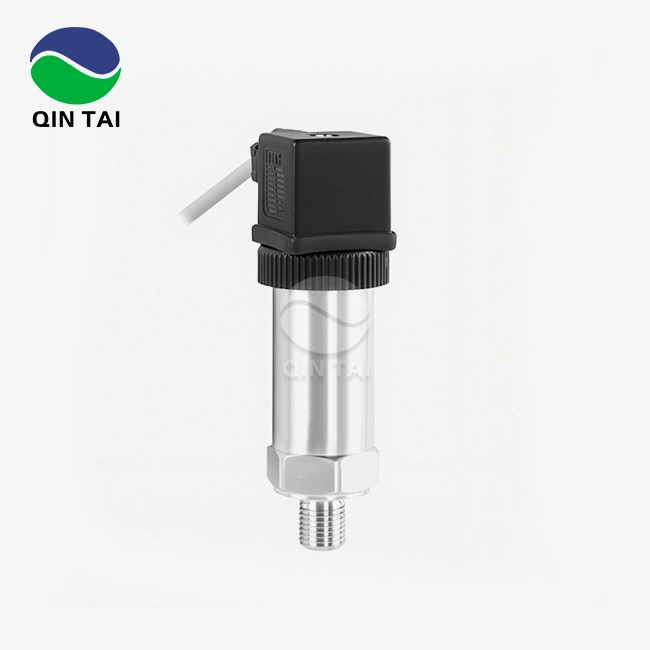

Our customers’ satisfaction speaks for our quality — contact us to experience the same reliable service.