- English
- French
- German
- Portuguese
- Spanish
- Russian
- Japanese
- Korean
- Arabic
- Greek
- German
- Turkish
- Italian
- Danish
- Romanian
- Indonesian
- Czech
- Afrikaans
- Swedish
- Polish
- Basque
- Catalan
- Esperanto
- Hindi
- Lao
- Albanian
- Amharic
- Armenian
- Azerbaijani
- Belarusian
- Bengali
- Bosnian
- Bulgarian
- Cebuano
- Chichewa
- Corsican
- Croatian
- Dutch
- Estonian
- Filipino
- Finnish
- Frisian
- Galician
- Georgian
- Gujarati
- Haitian
- Hausa
- Hawaiian
- Hebrew
- Hmong
- Hungarian
- Icelandic
- Igbo
- Javanese
- Kannada
- Kazakh
- Khmer
- Kurdish
- Kyrgyz
- Latin
- Latvian
- Lithuanian
- Luxembou..
- Macedonian
- Malagasy
- Malay
- Malayalam
- Maltese
- Maori
- Marathi
- Mongolian
- Burmese
- Nepali
- Norwegian
- Pashto
- Persian
- Punjabi
- Serbian
- Sesotho
- Sinhala
- Slovak
- Slovenian
- Somali
- Samoan
- Scots Gaelic
- Shona
- Sindhi
- Sundanese
- Swahili
- Tajik
- Tamil
- Telugu
- Thai
- Ukrainian
- Urdu
- Uzbek
- Vietnamese
- Welsh
- Xhosa
- Yiddish
- Yoruba
- Zulu
Best Pressure Sensor Materials for Long-Term Performance
Choosing the right materials for pressure sensors determines whether your diesel engines meet emission standards, operate reliably, and maintain accuracy throughout their service life. Pressure sensor construction materials—including ceramics, stainless steel, silicon, and specialized alloys—directly influence measurement stability, corrosion resistance, and temperature tolerance. When these sensors monitor exhaust aftertreatment systems, hydraulic circuits, or combustion processes, material selection becomes the foundation of compliance, durability, and cost-effectiveness across heavy-duty applications.
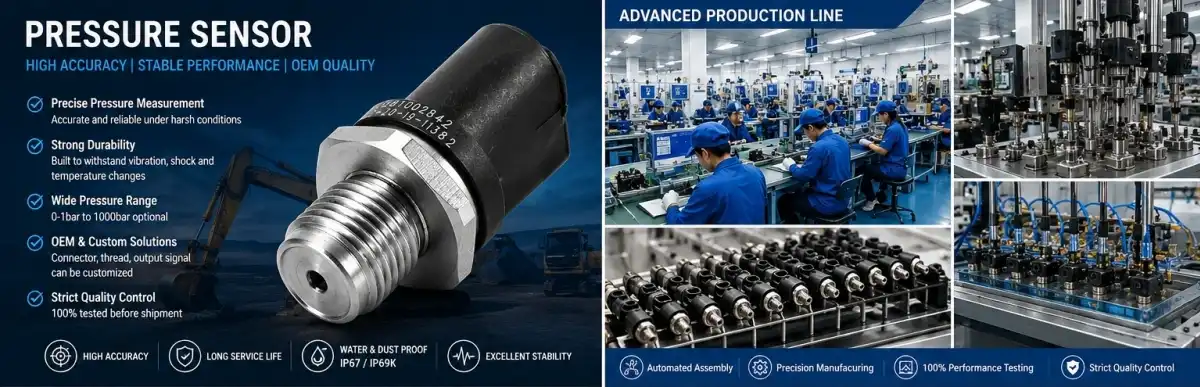
Understanding Pressure Sensor Materials and Their Role in Long-Term Performance
The choice of material affects all parts of a sensor's behaviour, from how well it works at first to how long it lasts in difficult conditions. The diaphragm, housing, electrical contacts, and protective coatings all need to be carefully thought out based on how they will be used and how well they are supposed to work.
Core Materials in Modern Pressure Sensing Technology
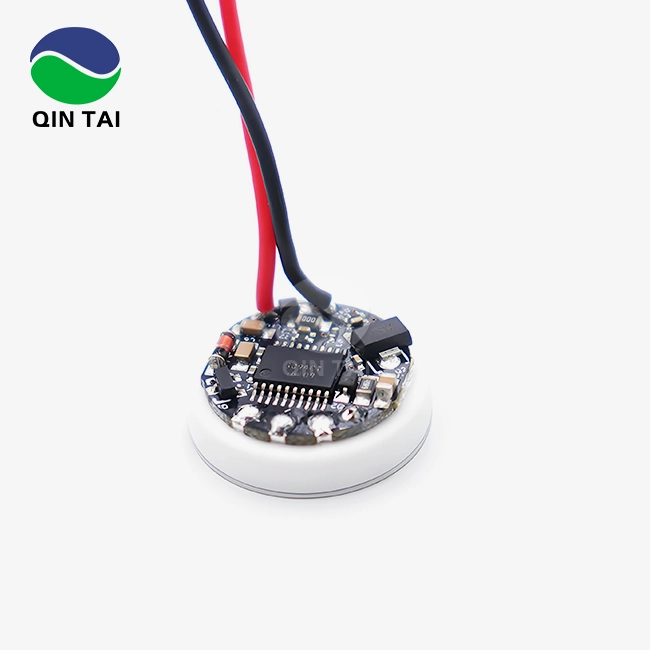
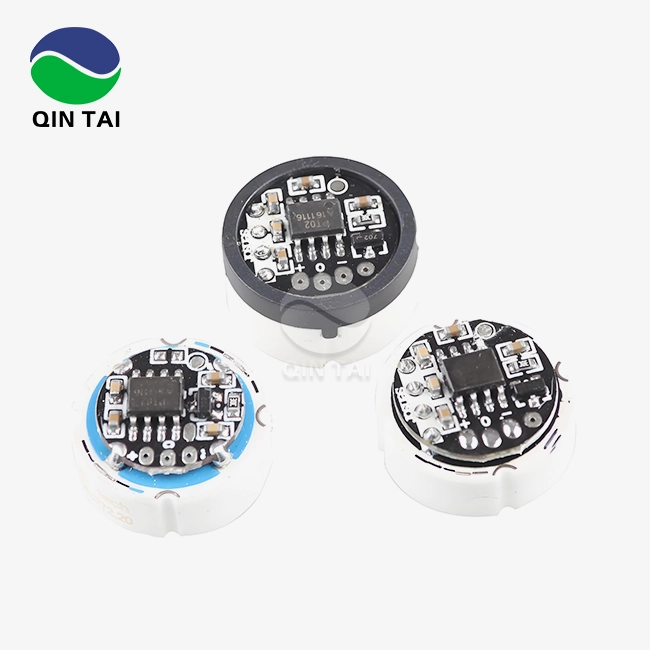
Ceramics, especially alumina and zirconia, work very well in situations where they need to be chemically inert and thermally stable. When force is applied, a ceramic diaphragm bends and acts as an electrode. A fixed counterpart acts as a capacitor. Changes in pressure cause the diaphragm to move, which causes capacitance to change in a way that can be measured. This design stands up to exhaust gases that are bad for the environment. This makes ceramic capacitive Pressure Sensors perfect for SCR and DPF systems, where ammonia, soot, and nitrogen oxides can damage parts.
316L and 17-4PH types of stainless steel are most often used in heavy-duty uses that need to be strong and resistant to corrosion. These alloys are used in building and farming tools for high-pressure hydraulic systems, fuel rail monitoring, and measuring oil pressure. The material can handle vibrations, changes in temperature, and polluted fluids that would damage other materials.
Microfabrication methods are used in silicon-based MEMS devices to make very small sensor elements that are very sensitive. These piezoresistive structures can pick up on very small changes in pressure, which makes them useful for taking readings at low ranges in emission control systems. Temperature adjustment circuits are often used with silicon Pressure Sensors because their average readings are more affected by thermal expansion than those of ceramic or steel sensors.
How Material Properties Affect Measurement Reliability?
The thermal expansion factors tell us how the shape of a sensor changes when it works in temperatures range from below zero to high loads all the time. When the expansion rates of the bonding layers don't match up, mechanical stress is introduced, which changes the zero points and span values. Ceramic materials don't expand much when heated, so they stay the same size from -40°C to +150°C, which is the temperature range that is common in car aftertreatment systems.
When Pressure Sensors are exposed to diesel exhaust condensates, hydraulic fluids, or cooling mixes, their chemical compatibility has a direct effect on how long they last. Even though stainless steel passivation layers offer a lot of protection, some chemical environments, like high-chloride condensates or phosphate-ester hydraulics, need stronger alloys or extra layers of protection. Ceramic Pressure Sensors naturally don't react well with most chemicals, but they can still be damaged by hydrofluoric acid and strong alkalis, which aren't often used in diesel uses.
When Pressure Sensors go through millions of pressure cycles over the course of their useful life, fatigue resistance becomes very important. Generator sets that run all the time, construction equipment that has to deal with constantly changing loads, and heavy trucks that have to drive over different types of terrain all put repetitive mechanical stress on machines. The grain structure of the material, the heat treatment methods, and the surface finishing methods decide whether diaphragms stay flexible or permanently distort after a lot of use.
Common Material-Related Failure Modes
Corrosion shows up as pitting on stainless steel surfaces that are exposed to exhaust condensates that contain chloride, usually in salty sea or road settings. These targeted strikes weaken the diaphragm, which can lead to measurement errors or complete failure. Exhaust Pressure Sensors that work in coastal areas, where salty air speeds up material breakdown, have failed because of rust.
The difference in readings when pressure goes up and down is called hysteresis. It is caused by the viscoelasticity of the material and the creep of the bonding layer. The polymer adhesives that hold sensing elements to housings change shape over time, which causes measurement mistakes that can't be fixed by testing. Ceramic-to-metal brazing and glass-frit bonding have less hysteresis than rubber seals, which is why they are better for precision uses.
Drift caused by temperature affects all detecting materials, but it is very different depending on the type of structure. Temperature values for silicon piezoresistive elements are very large, so they need active correction networks. Ceramic capacitive designs naturally are less sensitive to temperature changes. This makes the electronics simpler and more stable over time in places where temperatures change a lot, like exhaust aftertreatment systems.
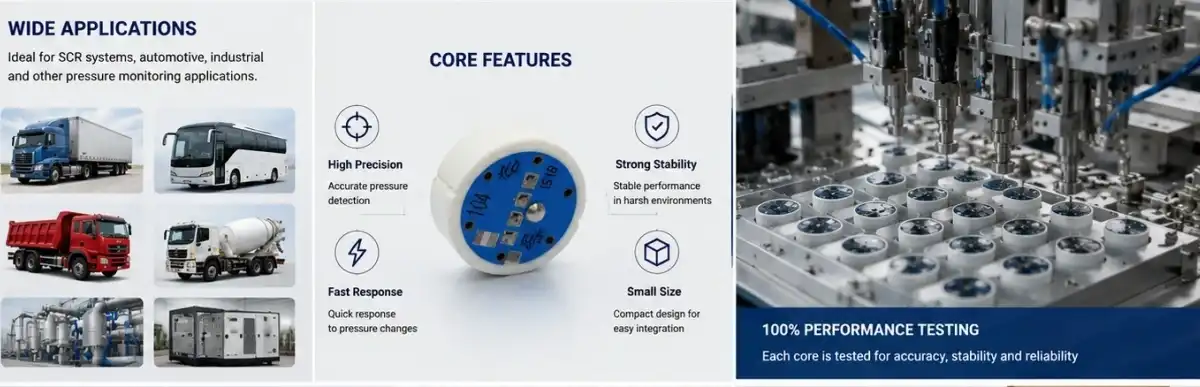
Comparing Key Pressure Sensor Materials for Different Industrial Needs
For industrial uses, environmental problems are unique and need custom material solutions. When buying something, people have to weigh the needs for efficiency against the limits of their budget, all while making sure that the rules are followed and the production can be expanded.
Stainless Steel versus Ceramic for Harsh Environments
When mechanical strength is more important than chemical protection, stainless steel designs are the best choice. There are pressure spikes, vibrations, and sometimes particles that could damage ceramic elements in the hydraulic systems of construction equipment. The precipitation-hardened grade 17-4PH is strong and has moderate corrosion resistance. It can handle normal hydraulic fluid chemicals and can also handle mechanical abuse.
When temperatures rise above 800°C during renewal cycles and corrosive gas mixes hit metal surfaces, ceramic materials are most often used in exhaust applications. At these very high temperatures, alumina ceramics keep their shape and don't react with sulphur compounds, nitrogen oxides, or trapped hydrocarbons. These Pressure Sensors keep an eye on the difference in pressure across DPF filters. Accurate readings make sure that the filters don't get damaged and that refilling happens at the right time.
Because it is cheaper, stainless steel is better for uses that can handle its flaws. Because of how much the materials cost and how easy they are to work with and put together, steel Pressure Sensors are a good choice for mass production. Processing ceramics in ways like sintering, metallisation, and airtight closing makes production more difficult and raises the cost per unit. When commercial vehicle fleets or lines of farm equipment are equipped with multiple Pressure Sensors per unit, this price difference becomes important.
Silicon MEMS Technology Advantages and Limitations
Making microelectromechanical systems (MEMS) allows for the creation of sense structures that are very small and very sensitive. The sensing diaphragm, signal conditioning electronics, and temperature compensation circuits are all built into a single silicon chip. This makes assembly easier and improves consistency from batch to batch. Emission control devices that need to be small and use little power will gain from this integration.
Temperature limits make it hard to use MEMS in places that are very hot. When watching exhaust systems, silicon material qualities break down above 125°C, so it needs to be thermally isolated or mounted from a distance. Ceramic substrates and heat sinks used in packaging techniques make operational ranges longer, but separating the measurement points physically causes pneumatic delays that slow down response times.
MEMS devices are easily damaged by overpressure and vibrations that cause them to wear out. These risks are lessened by protective housings and pressure-limiting features, but they cost more and are harder to use. We build overload safety into MEMS-based tyre pressure tracking systems to keep silicon parts safe from damage during installation and from impacts with the road.
Polymer Materials for Cost-Effective Solutions
Specialised polymers, such as polyimide and fluoropolymers, are used in niche markets where their flexibility, ability to conduct electricity, and low cost of production make up for their limited performance. Injection-molded polymer housings and elastomer diaphragms are good for low-pressure HVAC monitoring, pneumatic control systems, and consumer-grade uses.
Chemical resistance changes a lot between polymer families, so it's important to carefully match the material to the conditions of the job. Materials made of PTFE can handle harsh chemicals, but they let more gases through than metal diaphragms. This permeability causes measurement drift in situations with volatile compounds or environments that are high in hydrogen. This makes it harder to use polymer Pressure Sensors in fuel systems and high-pressure gas monitoring.
How to Choose the Best Pressure Sensor Materials for Long-Term Performance?
For strategic material selection, working factors, performance requirements, and purchase limits must be carefully looked at. This decision strategy helps the technical and buying teams make the best choices that meet both short-term needs and long-term reliable goals.
Defining Critical Application Parameters
The pressure range sets the minimum strength requirements for the material. For tracking low-pressure emissions (usually a difference of 0 to 10 kPa), thin ceramic diaphragms or silicon MEMS elements can be used. For hydraulic systems that work at 35 MPa, the diaphragms must be made of thick stainless steel and bend very little so that they don't change shape permanently. By knowing these mechanical pressure conditions, you can avoid over-specification, which raises costs for no reason.
How thermally stable a material needs to be depends on how it will be used. Exhaust Pressure Sensors that are placed before the turbochargers work at a constant 650°C, with short bursts of 900°C during recovery. Because of these factors, ceramic sensing elements with electronics that can handle high temperatures must be placed far away using capillary connections. Monitoring the coolant pressure in 110°C settings opens up more material choices, such as designs made of adjusted silicon and stainless steel.
The chemical exposure study finds the risks of corrosion and the standards for compatibility. Diesel exhaust condensate has organic compounds, sulphuric acid, and nitric acid in it, which can damage a lot of different things. When liquid contact happens, we ask for 316L stainless steel with electropolished surfaces or ceramic Pressure Sensors. Some rubber seals grow or break down, which means that hydraulic systems that use synthetic esters need to be checked for compatibility.
Evaluating Performance Metrics and Material Specifications
Specifications for accuracy directly show the quality of the materials and the accuracy of the production. Because they don't change size or temperature easily, ceramic capacitive Pressure Sensors usually have a full-scale accuracy of ±0.5%. Precision microfabrication is needed to get silicon piezoresistive devices to an accuracy of ±0.25%, but they need active temperature compensation. When application needs require tighter tolerances, understanding these performance-cost relationships helps buying teams explain using more expensive materials.
Long-term stability, or the change in measurements over months or years, tells the difference between good materials and average ones. Ceramic structures show drift below 0.1% per year because the materials are naturally stable and they have hermetic sealing that keeps water out. Polymer-sealed devices may move 1% to 2% each year as the elastomers wear down and allow air to get in. Fleet managers who replace Pressure Sensors every time they're inspected can handle more drift, but generator sets that need to be serviced every few years need to be very stable.
The mass, stiffness, and damper properties of the diaphragm affect its frequency response. Response times of less than 1 millisecond are needed for dynamic pressure measurement in hydraulic surge monitoring or combustion analysis. These speeds are reached by thin silicon MEMS diaphragms, while thicker stainless steel elements react more slowly but can handle higher pressures. Specification mismatches can be avoided by matching changing needs to what materials can do.
Addressing Procurement and Compliance Considerations
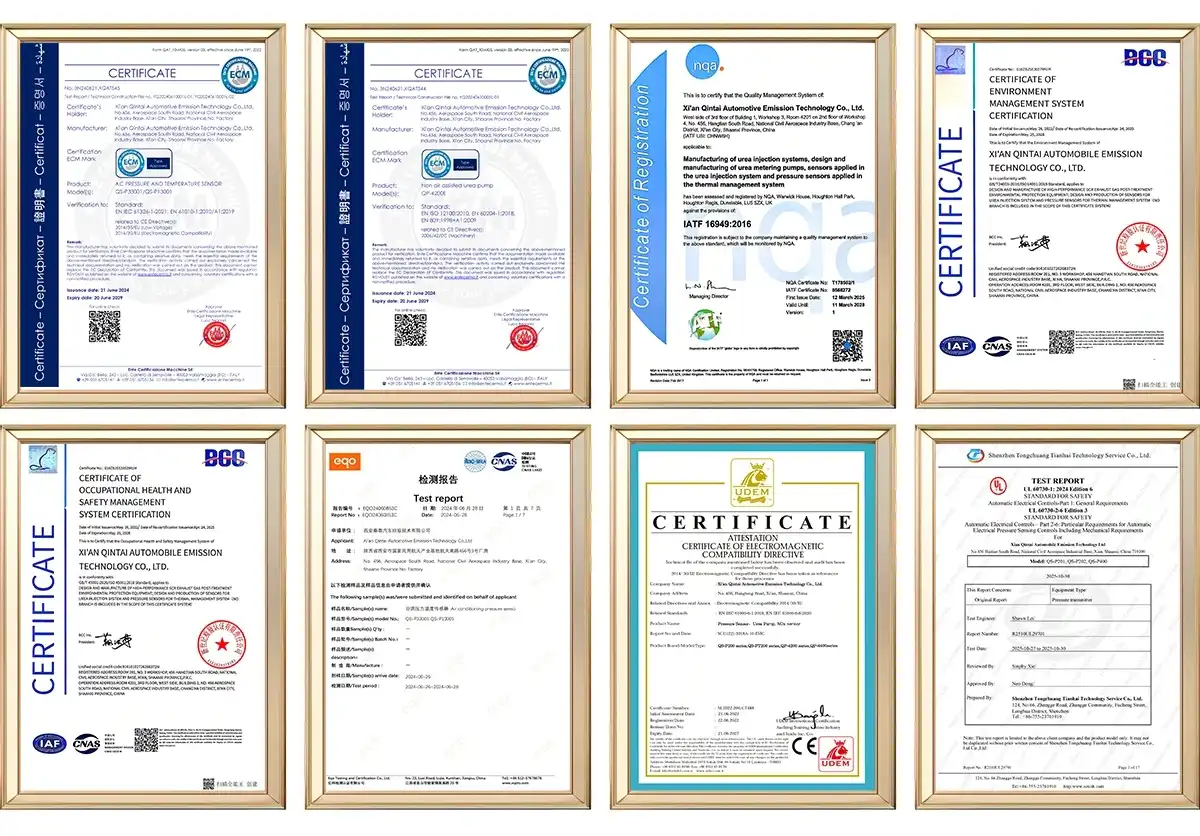
Material choices are affected by regulatory licensing standards that require testing and keeping records. RoHS rules limit the amount of lead that can be used in electronic parts, which changes the solder materials and methods used for metalization. REACH rules limit the use of some chemicals in industry and require sellers to check where their materials come from all the way through their supply chains. Our ISO9001 and IATF16949 licenses make sure that we follow the rules, that materials can be tracked back to their original sources, and that our quality control methods meet the standards of the car industry.
Structures that set prices based on volume encourage standardisation and long-term supply deals. Costs go down when purchasing managers combine around common material platforms while balancing different Pressure Sensor specifications across product lines. Instead of making a different ceramic capacitive Pressure Sensor for each measurement point, it is easier to get one that can be used for exhaust, intake, and engine uses.
How well material advantages lead to application success depends on how well the supplier can help with technical issues. System designers can match voltage, current, or digital protocols from Pressure Sensors to existing control designs without having to redesign the electronics. With fast development services, R&D teams can test how well Pressure Sensors work in real-world situations before committing to making production tools. We have special application engineering teams that help OEMs with the process of making specifications, testing prototypes, and starting production.

Innovations and Future Trends in Pressure Sensor Materials
Improvements in material science keep making Pressure Sensors more useful while also lowering their costs and making them easier to make. By keeping up with new technologies, procurement teams can quickly adopt innovations that improve performance as they reach commercial readiness.
Advanced Ceramic and Nanocomposite Developments
Zirconia-toughened alumina ceramics combine the chemical resistance of alumina with the increased crack toughness of zirconia. This makes diaphragms that can handle both acidic exhausts and mechanical shocks. These composite ceramics make it possible for sensing elements to be smaller without lowering their resilience. This increases sensitivity while keeping the strength. This balance between performance and reliability is good for applications like monitoring the exhaust from generator sets.
Adding carbon nanotubes or graphene to polymer matrices to make nanocomposite materials improves their mechanical strength and heat conductivity while keeping their processing freedom. These new developments could lead to low-cost Pressure Sensors that can be used in medium-duty situations where standard plastics don't last long enough and ceramics are too expensive. Research prototypes show that the idea can work, but it won't be widely available until manufacturing scalability is improved.
Novel Coating Technologies Extending Component Life
Thin layers of titanium nitride, diamond-like carbon, or ceramic coats are applied to stainless steel surfaces using physical vapour deposition. This makes the surfaces much more resistant to rust and wear. These treatments make Pressure Sensors last longer in chemically harsh conditions without having to remake the core structures. We protect hydraulic Pressure Sensors that work in phosphate-ester fluids that would otherwise damage stainless steel by coating them.
Sol-gel methods use lower temperatures to make thick, conformal oxide coatings compared to standard ceramic methods. These coatings keep out moisture, make materials less conductive, and protect structures below with chemical barriers. When used in MEMS devices, it makes them more reliable in damp places where silicon would corrode without protection.
Digital Integration and MEMS Evolution
Modern Pressure Sensors include transmission links, data processing based on microcontrollers, and analog-to-digital conversion right into the detecting packages. This combination depends on new materials that make it possible to combine silicon MEMS parts with CMOS electronics in small, stable packages. Digital output sensors make system connections easier, make it less likely that electromagnetic interference will happen, and let you do advanced troubleshooting that you can't do with analogue devices.
For Industry 4.0 projects to work, Pressure Sensors need to be smart enough to help with predicted repair and system optimisation. New materials that make sensing elements smaller and more capable help this evolution along by making room for processing electronics while keeping the environmental toughness. Our R&D team works with OEM partners to create unique Pressure Sensor solutions that include diagnostic features that meet the needs of specific equipment monitoring.
Conclusion
Choice of material is a key factor in determining whether Pressure Sensors meet performance expectations over the course of their useful lives. For exhaust aftertreatment systems, ceramic constructions offer great chemical resistance and heat stability. Stainless steel is strong enough for hydraulic uses, and silicon MEMS lets controlled settings measure things in a small, sensitive way. To make good buying choices, you need to weigh these material traits against the needs of the application, the available budget, and the need for long-term dependability. Our many years of experience making sensors for diesel engine OEMs, aftertreatment installers, and industrial uses gives us the technical knowledge to help you make smart material choices that improve performance right away and over the product's lifetime.
FAQ
What distinguishes pressure sensor materials from transducer materials?
"Pressure Sensor materials" usually include diaphragms, housings, and seals that directly contact the medium being measured. "Transducer materials," on the other hand, focus on elements that turn mechanical deformation into electrical signals, like piezoresistive silicon or piezoelectric ceramics. Practical buying focuses on full Pressure Sensor building because both parts affect how well the sensor works.
How does material choice affect calibration frequency?
Because they are stable in size and don't rust, ceramic and stainless steel Pressure Sensors usually only need to be checked for accuracy during routine maintenance periods. Temperature changes and humidity exposure can cause silicon MEMS devices with polymer seals to need to be calibrated more often. The quality of the material has a direct effect on the stability of the calibration and the cost of maintenance.
Which materials suit high-temperature or corrosive environments best?
Ceramic materials work well in both high-temperature and acidic environments. They can keep their shape above 800°C and don't react with chemicals. Grades 316L or 17-4PH stainless steel can handle mild temperatures and a wide range of chemicals without breaking the bank. Applications that use high temperatures and harsh chemicals, like exhaust aftertreatment systems, need ceramic constructions to work reliably for a long time.
Partner with Qintai for Superior Pressure Sensor Solutions
Qintai is an expert at making high-quality Pressure Sensors from carefully chosen materials that work best in diesel engines and other industry settings. Our ceramic capacitive Pressure Sensors have been shown to work reliably in SCR and DPF systems. They meet China VI and Euro VI emission standards by using materials that are specifically made for exhaust environments. We understand the exact needs of heavy-duty uses because we are the top OEM Pressure Sensor seller in China and work with Weichai Power, Yuchai Power, and Quanchai Power.
Our certificates in ISO9001, IATF16949, RoHS, and REACH make sure that materials can be tracked and that production standards are met. We offer full customisation services that let you change the electrical specifications, Pressure Sensor interfaces, and pressure ranges to fit your exact needs. Get in touch with our scientific team at info@qt-sensor.com to talk about your application needs and get specific material suggestions based on our more than 20 years of experience developing sensors.
References
1. Webster, J. G. (2019). The Measurement, Instrumentation, and Sensors Handbook: Spatial, Mechanical, Thermal, and Radiation Measurement. CRC Press.
2. Norton, H. N. (2018). Handbook of Transducers for Electronic Measuring Systems. Prentice-Hall International.
3. Bao, M. H. (2020). Micro Mechanical Transducers: Pressure Sensors, Accelerometers, and Gyroscopes. Elsevier Science.
4. Fraden, J. (2021). Handbook of Modern Sensors: Physics, Designs, and Applications. Springer Publishing.
5. Wilson, J. S. (2017). Sensor Technology Handbook. Newnes Technical Books.
6. Pallas-Areny, R., & Webster, J. G. (2019). Sensors and Signal Conditioning: Principles and Applications. Wiley-Interscience.

Our customers’ satisfaction speaks for our quality — contact us to experience the same reliable service.