- English
- French
- German
- Portuguese
- Spanish
- Russian
- Japanese
- Korean
- Arabic
- Greek
- German
- Turkish
- Italian
- Danish
- Romanian
- Indonesian
- Czech
- Afrikaans
- Swedish
- Polish
- Basque
- Catalan
- Esperanto
- Hindi
- Lao
- Albanian
- Amharic
- Armenian
- Azerbaijani
- Belarusian
- Bengali
- Bosnian
- Bulgarian
- Cebuano
- Chichewa
- Corsican
- Croatian
- Dutch
- Estonian
- Filipino
- Finnish
- Frisian
- Galician
- Georgian
- Gujarati
- Haitian
- Hausa
- Hawaiian
- Hebrew
- Hmong
- Hungarian
- Icelandic
- Igbo
- Javanese
- Kannada
- Kazakh
- Khmer
- Kurdish
- Kyrgyz
- Latin
- Latvian
- Lithuanian
- Luxembou..
- Macedonian
- Malagasy
- Malay
- Malayalam
- Maltese
- Maori
- Marathi
- Mongolian
- Burmese
- Nepali
- Norwegian
- Pashto
- Persian
- Punjabi
- Serbian
- Sesotho
- Sinhala
- Slovak
- Slovenian
- Somali
- Samoan
- Scots Gaelic
- Shona
- Sindhi
- Sundanese
- Swahili
- Tajik
- Tamil
- Telugu
- Thai
- Ukrainian
- Urdu
- Uzbek
- Vietnamese
- Welsh
- Xhosa
- Yiddish
- Yoruba
- Zulu
Capacitive Pressure Sensor Applications in Automation
Modern industrial automation demands precision instruments that deliver consistent, reliable data under challenging conditions. Capacitive pressure sensors have emerged as critical components in automated systems, providing accurate pressure measurement capabilities essential for process control, safety monitoring, and operational efficiency. These sensors excel in applications requiring high sensitivity and low power consumption, making them particularly valuable in diesel engine management systems, emission control technologies, and aftertreatment solutions. Understanding how these sensors function and selecting the right model directly impacts system performance, compliance with emission regulations, and long-term operational costs across heavy trucks, construction machinery, agricultural equipment, and generator set applications.
Understanding Capacitive Pressure Sensor Technology
How Capacitive Sensing Works?
Capacitive Pressure Sensors work on a simple principle: they measure changes in pressure by looking at changes in capacitance between two metallic plates that are divided by a dielectric. When force is applied from the outside to a movable diaphragm that is used as an electrode, the gap between the plates changes, which changes the capacitance. This change in capacitance is turned into an electrical output that is related to the pressure that is being applied. The technology is based on the basic formula for capacitance, which says that capacitance goes up as the space between wires goes down. More advanced designs use differential capacitance setups that record changes in pressure in both ways. This makes them much more accurate and cuts down on errors caused by temperature that are common in industrial settings.
Key Performance Metrics That Matter
When looking at pressure monitors for use in automation, a number of technical factors decide how well they will work in harsh industrial environments. Accuracy is a measure of how closely the sensor's output matches the real pressure, which is usually given as a percentage of full scale. The sensor's sensitivity, which is measured in millivolts per volt (mV/V), tells you how well it can pick up on small changes in pressure. Thermal stability is important for diesel engines that work in temperatures between -40°C and 135°C because it makes sure that they work the same way at all temperatures. Nonlinearity below 0.3% FS makes sure that results are accurate across the whole measurement range, and safety overload rates keep pressure spikes that happen in hydraulic systems and emission control equipment from happening.
Comparison with Alternative Technologies
Procurement managers can make better decisions when they know how Capacitive Pressure Sensors stack up against piezoresistive, strain gauge, and piezoelectric options. Because they use a lot less power and are more sensitive in low-pressure situations, Capacitive Pressure Sensors are perfect for battery-powered systems and wireless sensor networks. Piezoresistive sensors are very accurate over a wider range of pressures, but they need more complicated temperature correction. Strain gauge monitors work great in industrial settings with a lot of pressure, but they tend to move over time. Piezoelectric devices can quickly react to changes in dynamic pressure, but they can't measure static pressure, which limits how they can be used in automation. Ceramic capacitive technology is durable and performs well over time. This is especially helpful in acidic conditions like those found in SCR and DPF aftertreatment systems.
Core Applications of Capacitive Pressure Sensors in Automation
Industrial Process Control and Manufacturing
Accurate monitoring of pressure along production lines is needed for manufacturing automation to keep quality standards high and avoid damage to equipment. Capacitive Pressure Sensors keep an eye on the pressure in hydraulic presses, the performance of pneumatic actuators, and the systems that distribute compressed air. In factories that make diesel engines, these monitors check the pressures of the parts that go together to make sure that the gaskets fit properly and the bolts are torqued to the right levels.
The technology's high clarity can pick up on small changes in pressure that mean something is wearing out or about to break. This lets repair plans be planned ahead of time, which cuts down on unplanned downtime. Chemical processing plants use Capacitive Pressure Sensors to keep an eye on reactor pressure and control distillation columns. The accuracy of the measurements has a direct effect on the quality of the product and the safety of the process.
Emission Control and Aftertreatment Systems
For diesel engine pollution control systems to meet China VI and Euro VI norms, they need to be able to measure pressure accurately. Capacitive Pressure Sensors check the difference in pressure across diesel particulate filters (DPF) and let you know when recovery is needed to keep the flow of fumes going. In selective catalytic reduction (SCR) systems, these monitors keep an eye on the urea injection pressure and the exhaust backpressure. This helps find the best dosing methods to lower NOx emissions while using the least amount of DEF. Because the sensors are stable across wide temperature ranges, engines will always work at the same level of efficiency, whether they are working on construction sites in the Arctic or in oil fields in the Middle East. Because they don't rust or break easily when exposed to vibrations and exhaust gases, they are perfect for heavy-duty uses in trucks, farm equipment, and generator sets.
HVAC and Environmental Control Systems
Automating heating, ventilation, and air conditioning means managing flows very carefully so that comfort is maintained while energy economy is maximised. Capacitive Pressure Sensors check the static pressure in the ducts, which lets variable air volume systems change the fan speeds based on how much air is needed. In clean rooms, which are necessary for making medicines and putting together electronics, these sensors keep the difference in pressure between zones very accurate, which keeps things from getting dirty. When temperature, humidity, and Capacitive Pressure Sensor data are combined in building automation systems, they create full environmental control that saves 20–30% on energy costs compared to fixed-speed systems. The sensors don't need much power, so they can work with battery-powered wifi nodes, which are becoming more popular in smart building systems today.
Robotics and Automated Machinery
Pressure sensing is being used more and more in industrial robotics for force feedback, collision detection, and precise control. Capacitive Pressure Sensors in pneumatic grippers measure how hard they are gripping. This keeps products from getting damaged during automated packaging and assembly tasks. Mobile robots that move around buildings use Capacitive Pressure Sensors in their air support systems to change the height of their rides based on how heavy the loads are. In automation of building equipment, these devices check the pressure in the hydraulic system. This allows smart control that uses the least amount of fuel possible while keeping performance high. Using pressure measurement in automated farming equipment helps control the planting depth and apply sprays more accurately, which increases food yields while lowering the use of chemicals.

Spotlight: Qintai Model QS-P105F Ceramic Capacitive Pressure Sensor
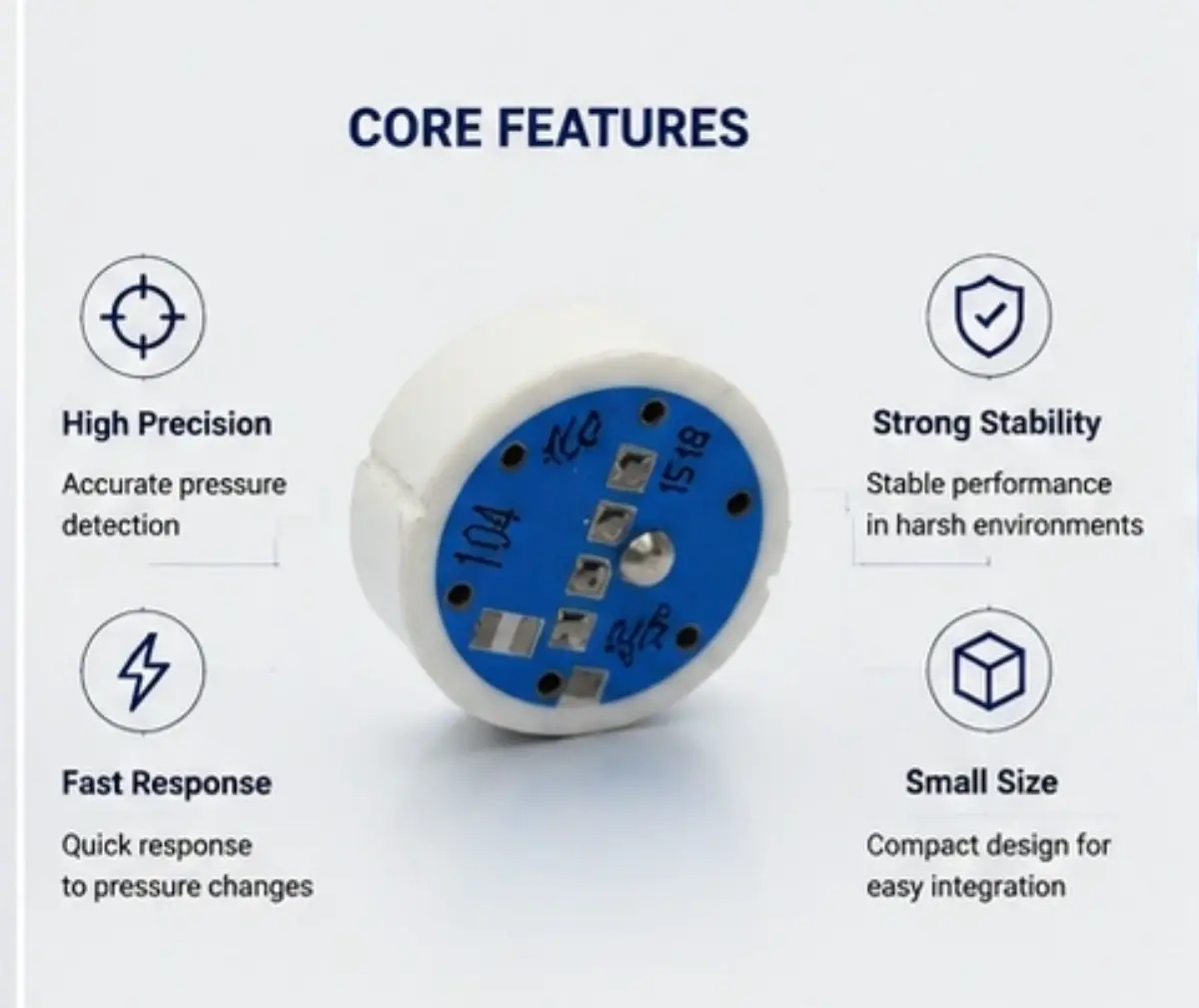
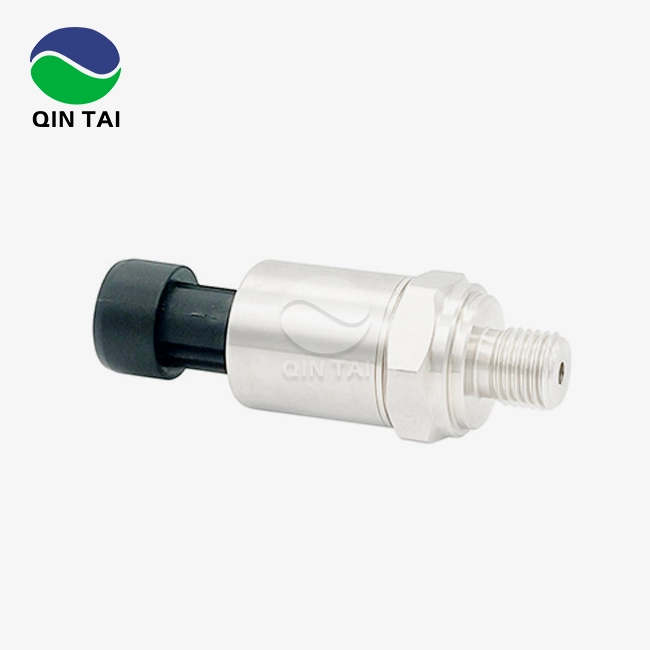
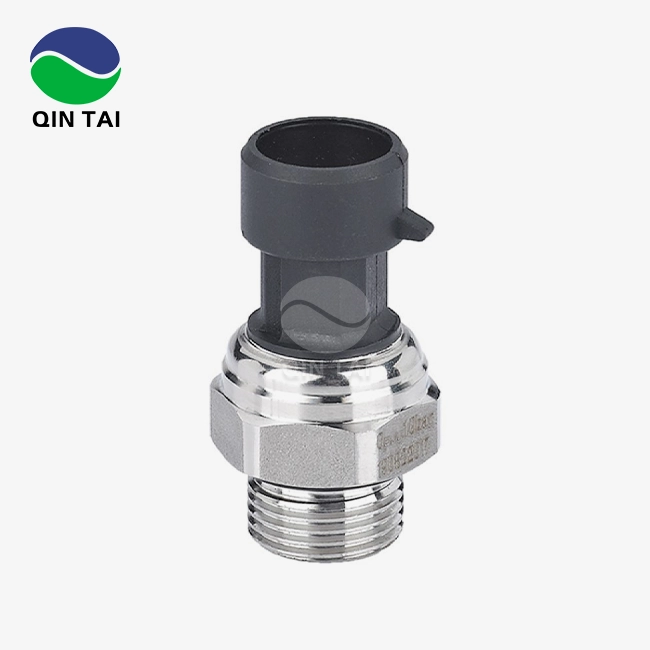
To choose the right pressure sensor, you need to match the technical specs with the needs of the application. The QS-P105F uses cutting edge ceramic capacitive technology that was made to work in tough industrial settings like those found in diesel engine applications and emission control systems.
This monitor solves the main problems that OEM makers and aftertreatment system operators have. The device measures pressures very well from zero (-1 bar) to ultra-high pressure (600 bar), so it can be used for a wide range of tasks, from checking intake manifolds to common rail fuel systems. Its 96% alumina ceramic diaphragm is very good at resisting rust from diesel fuel, exhaust gases, and DEF fluids. It can also handle the wear and tear that comes with working in places with a lot of particles.
Every part of this sensor's design is based on high-level technology. Because it only has a 0.3% FS nonlinearity, the QS-P105F gives accurate readings that are needed for closed-loop emission control strategies. Sensitivity levels between 2 and 4 mV/V guarantee good signal quality that reduces the need for enhancement and the noise that comes with it. The sensor stays accurate from -40°C to 135°C, and there is no temperature shift of more than 0.03% FS/°C for low-pressure models and 0.04% FS/°C for high-pressure models. This thermal stability is very important for diesel engines that have to deal with temperature changes from cold starts to full load operation.
Reliability features keep the sensor and any systems that are connected to it from getting damaged. The 200% FS safety overload rating can handle pressure spikes that happen when the engine starts up, hydraulic shock, and system problems without having to change the calibration. Full accuracy within ±0.5% FS meets strict OEM requirements, and the 11±30% kΩ bridge resistance makes sure stable operation with common signal conditioning circuits. The device works with input voltages ranging from 2 to 30 VDC, which gives designers a lot of freedom when deciding how to incorporate it into different car electrical systems and battery-powered tracking systems.
Concerns about practical buying are addressed by choices for easy installation and customisation. The mechanical form of the Capacitive Pressure Sensor makes it easy to install in engine compartments and exhaust systems with limited room. Qintai lets you change a lot of things about its electrical connectors, pressure ports, and output characteristics to make them fit the needs of a specific application. This makes integration easier and speeds up time-to-market. Aftertreatment system integrators who need strong sensor compatibility and flexible connections will gain the most from this versatility.
When technical departments, purchasing managers, and project engineers choose pressure sensors, these features directly affect the things they look at. Quality that is backed by certification, proven mass production capacity, and a low cost structure all work together to help OEMs build long-term relationships with their suppliers.
Procurement Strategies for Capacitive Pressure Sensors in B2B Automation
Evaluating Supplier Capabilities and Certifications
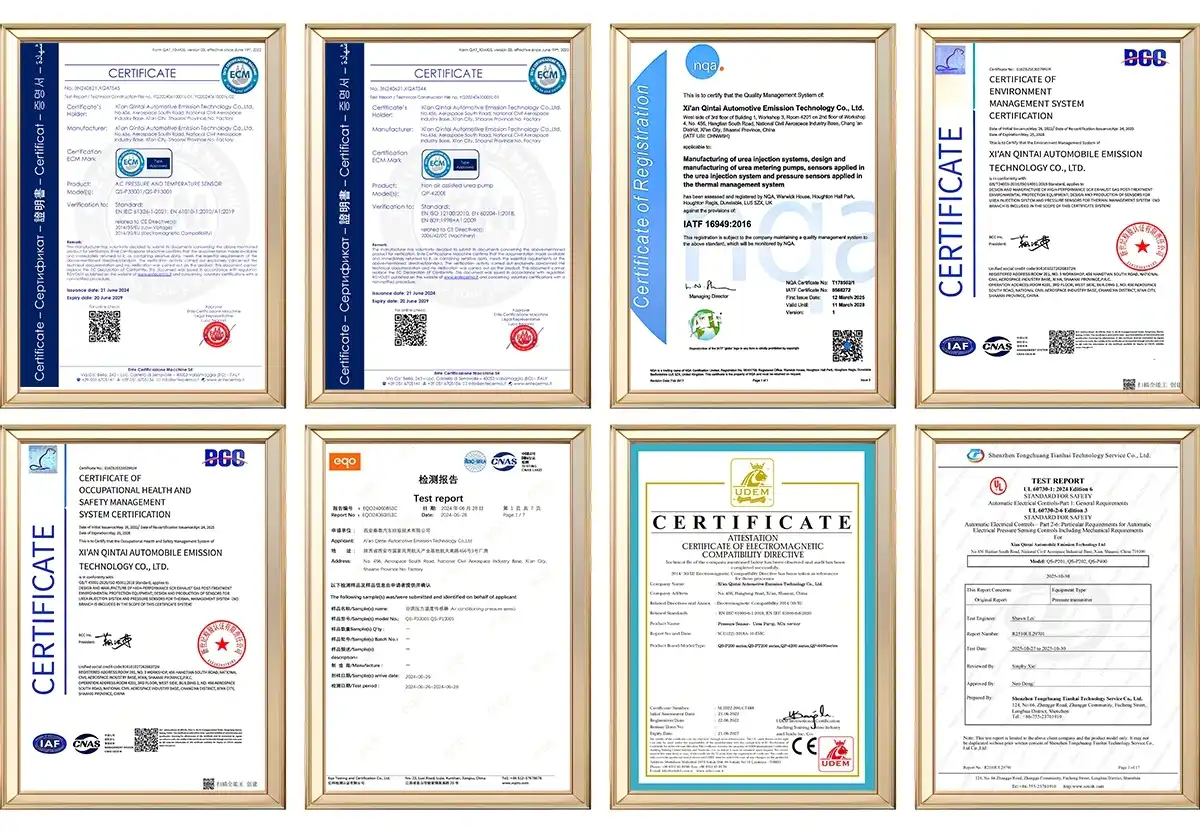
A successful procurement process starts with a detailed evaluation of the seller that goes beyond just looking at the part specs. Manufacturers should have the right quality certificates, like ISO9001 for managing quality and IATF16949 for supply chains in the car industry. Compliance certifications like CMC, Ex ratings for dangerous environments, and environmental compliance (REACH, RoHS) show that you know the rules that are needed to get into the global market for emission-critical applications. Check out the intellectual property portfolios of your suppliers.
Having a lot of patents shows that they can really come up with new ideas, not just make things that are in high demand. Suppliers with their own research and development teams are always making their goods better to meet changing pollution standards and customer needs. Ask for proof of OEM agreements with major engine makers; these partnerships show that the company is technically competent and can reliably produce goods.
Balancing Cost, Quality, and Lead Times
Procurement strategies that work know that the lowest initial price doesn't always mean the lowest total cost of ownership. Look at how prices are set for different levels of volume and figure out how economies of scale affect unit costs based on your expected yearly needs. Think about the value of technical support. Suppliers who offer application engineering help lower the risks of merging and speed up product launches. Reliability in lead times affects production schedules and the cost of keeping supplies on hand.
Just-in-time manufacturing methods can be used with suppliers who keep popular configurations in stock, and platform diversification can be helped by suppliers who offer quick customisation. Before placing a large order, ask for samples to be tested to make sure the Capacitive Pressure Sensors work properly in your particular operating conditions. This investment stops expensive fails in the field and guarantee claims that are much bigger than the price differences between the parts.
Building Strategic Supplier Relationships
Long-term partnerships with suppliers have benefits that go beyond just buying things once. When people work together, they can make custom solutions that work best for your products instead of just adapting standard parts. Suppliers who care about your business's success let you know ahead of time about technology roadmaps, parts that will no longer be made, and changes to regulations that affect supply lines. Set up clear lines of contact between your technical team and the engineering staff at your seller.
This will make it easier to solve problems quickly when they come up. Think about where your suppliers are located and how well they can handle logistics. This is especially important for international businesses that need localised support and effective distribution networks. Suppliers who have exported before know what paperwork is needed, how to classify goods based on tariffs, and what rules must be followed to make cross-border deals go smoothly.
Troubleshooting and Optimizing Capacitive Pressure Sensor Performance
Diagnosing Common Performance Issues
Systematic fixing is needed to keep measurement accuracy high over the lifetime of a sensor. Most of the time, signal drift is caused by changes in temperature that happen in electrical parts, not by loss of sensing elements. You can add temperature compensation methods to your signal conditioning circuits or choose sensors, like the QS-P105F, that already have compensation built in. In vehicle applications, electromagnetic interference from ignition systems, alternators, and motor controllers can mess up pressure signals.
Keep sensor wires away from lines that carry a lot of power, and think about using shielded cables that are properly grounded to the chassis. Zero point changes could mean that stress from the mounting has been passed to the sensor body. Make sure the fastening surfaces stay flat and tighten the screws to the recommended levels, being careful not to over-tighten them which can cause mechanical stress.
Maintenance Best Practices
Regular repair plans keep Capacitive Pressure Sensors working longer and keep their calibration precision. Check electrical lines every three months for rust, especially in harsh places where water or road salt is present. To keep connectors from oxidising, put dielectric grease on them while you're installing them. As needed, clean the pressure ports to keep particles from building up and making it hard for the diaphragm to move.
Be careful not to use harsh solvents, though, as they could damage the seals or diaphragm materials. Plan to check the calibration on a regular basis against traceable pressure standards. This is especially important for uses that need to meet emission standards and where measurement precision is required by law. Write down the results of the testing to find patterns of slow drift that show when the product is nearing the end of its useful life. This way, you can replace it before it breaks.
Optimizing System Integration
Integrating sensors into a system in the right way makes them work better and be more reliable. Choose pressure ranges that are right for your purpose and stay away from ranges that are too wide and lose sharpness. Place sensors so that they are exposed to the least amount of temperature changes and vibrations possible. When there are fast changes in pressure that could lead to wear failure, use pressure snubbers or restrictor clamps. Through range checking and rate-of-change research, diagnostic tracking can help you find sensor failures in your control systems. These software strategies find problems with wiring, short circuits, and worn-out sensors before they affect how the system works or put people in danger. Set up standard performance data during the initial setup to compare to normal operation. This will make troubleshooting easier in the future.
Conclusion
Capacitive Pressure Sensors are now an important part of modern industrial automation because they provide the accuracy, dependability, and longevity that diesel engine makers, aftertreatment system integrators, and equipment OEMs need. Because the technology is sensitive, uses little power, and works well in harsh environments, it is perfect for emission control tasks that need accurate measurements to meet regulations. Strategically choosing sensors that match the technical needs of the application and working with reliable suppliers are two ways to make sure that automation systems work at their best for the whole time they are in use. The QS-P105F is a great example of how advanced ceramic capacitive technology can be used to solve real-world industrial problems through careful engineering and top-notch production.
FAQ
What distinguishes capacitive pressure sensors from piezoresistive alternatives?
Capacitive Pressure Sensors detect pressure by changing the distance between the electrodes. They are more sensitive for low-pressure uses and use less power than piezoresistive types. Piezoresistive sensors find changes in resistance in materials that are under a lot of stress. They are very accurate over a wider range of pressures, but they need more complicated temperature corrections. Capacitive technology works best for battery-powered uses and measuring low pressures below 10 bar. On the other hand, piezoresistive sensors work best for industrial uses with high pressures above 100 bar.
How do temperature variations affect sensor accuracy?
Both the sensing part and the signal conditioning circuits are affected by temperature. Sensors of good quality, like the QS-P105F, have built-in temperature compensation circuits and matched materials that keep drift below 0.03% FS/°C. In places where temperatures change a lot, sensors with ceramic diaphragms work better because they are more stable at high and low temperatures. Instead of depending on adjustments to fix too much drift, choose sensors that are rated for the whole temperature range where they will be used.
Can capacitive sensors be customized for specific applications?
These days, makers let you choose from a wide range of customisation choices, such as pressure ranges, electrical connectors, pressure port configurations, and output signal types. Qintai offers OEM and ODM services that allow changes to be made to everything from basic measures to full custom designs for specific uses. This adaptability lets it work best with current systems while keeping the speed and dependability benefits of tried-and-true sensor technology.
Partner with Qintai for Superior Capacitive Pressure Sensor Solutions
Xi'an Qintai Automotive Emission Technology Co. Ltd delivers industry-leading Capacitive Pressure Sensor technology backed by over two decades of diesel engine aftertreatment expertise. As China's premier OEM supplier and core partner to Weichai Power, Yuchai Power, and Quanchai Power, we understand the demanding requirements of heavy-duty applications. Our QS-P105F sensor represents the pinnacle of ceramic capacitive technology, providing the accuracy, durability, and customization capabilities that procurement managers and R&D engineers demand.
Certified to ISO9001, IATF16949, CMC, Ex, UL, CE, REACH, and RoHS standards with 58 invention patents, Qintai combines independent R&D capabilities with proven mass production capacity. We serve global markets across 60+ countries, supporting diesel engine manufacturers, aftertreatment system integrators, and industrial automation companies with responsive technical support and reliable delivery. Whether you require standard sensors or customized solutions, our engineering team collaborates closely to optimize performance for your specific application.
Contact info@qt-sensor.com today to discuss your Capacitive Pressure Sensor requirements with a leading manufacturer. Request technical specifications, samples for validation testing, or volume quotations. Experience why discriminating OEMs worldwide choose Qintai as their trusted sensor supplier, and discover how our technology can enhance your automation systems' performance and reliability.
References
1. Webster, J.G. "The Measurement, Instrumentation and Sensors Handbook: Spatial, Mechanical, Thermal and Radiation Measurement." CRC Press, 2014.
2. Fraden, J. "Handbook of Modern Sensors: Physics, Designs, and Applications, Fifth Edition." Springer International Publishing, 2016.
3. Wilson, J.S. "Sensor Technology Handbook." Elsevier/Newnes, 2005.
4. Pallas-Areny, R. and Webster, J.G. "Sensors and Signal Conditioning, Second Edition." John Wiley & Sons, 2001.
5. Bao, M. "Analysis and Design Principles of MEMS Devices." Elsevier Science, 2005.
6. Regtien, P.P.L. and Dertien, E. "Sensors for Mechatronics, Second Edition." Elsevier, 2018.

Our customers’ satisfaction speaks for our quality — contact us to experience the same reliable service.