- English
- French
- German
- Portuguese
- Spanish
- Russian
- Japanese
- Korean
- Arabic
- Greek
- German
- Turkish
- Italian
- Danish
- Romanian
- Indonesian
- Czech
- Afrikaans
- Swedish
- Polish
- Basque
- Catalan
- Esperanto
- Hindi
- Lao
- Albanian
- Amharic
- Armenian
- Azerbaijani
- Belarusian
- Bengali
- Bosnian
- Bulgarian
- Cebuano
- Chichewa
- Corsican
- Croatian
- Dutch
- Estonian
- Filipino
- Finnish
- Frisian
- Galician
- Georgian
- Gujarati
- Haitian
- Hausa
- Hawaiian
- Hebrew
- Hmong
- Hungarian
- Icelandic
- Igbo
- Javanese
- Kannada
- Kazakh
- Khmer
- Kurdish
- Kyrgyz
- Latin
- Latvian
- Lithuanian
- Luxembou..
- Macedonian
- Malagasy
- Malay
- Malayalam
- Maltese
- Maori
- Marathi
- Mongolian
- Burmese
- Nepali
- Norwegian
- Pashto
- Persian
- Punjabi
- Serbian
- Sesotho
- Sinhala
- Slovak
- Slovenian
- Somali
- Samoan
- Scots Gaelic
- Shona
- Sindhi
- Sundanese
- Swahili
- Tajik
- Tamil
- Telugu
- Thai
- Ukrainian
- Urdu
- Uzbek
- Vietnamese
- Welsh
- Xhosa
- Yiddish
- Yoruba
- Zulu
Capacitive Pressure Sensors for Smart Manufacturing
For contemporary manufacturing settings, Capacitive Pressure Sensors represent a game-changing monitoring technology. By tracking changes in the electrical capacitance between electrodes that are divided by a dielectric material, these devices can pick up on very small changes in pressure. When pressure is put on a flexible diaphragm, it bends.
This changes the distance between the electrodes, which changes capacitance in the same way. This idea makes monitoring a wide range of industrial tasks incredibly accurate, from controlling diesel engine emissions to tracking the operation of hydraulic machinery. Capacitive Pressure Sensors are very important for improving efficiency in today's smart manufacturing world because they are very accurate, stable, and flexible.
Understanding Capacitive Pressure Sensors and Their Working Principles
Core Structural Components
The basic structure of these sensing devices is made up of three important parts that work together. The moving electrode is a flexible diaphragm, which is usually made of special materials like 96% Al2O3 ceramic, which is very resistant to corrosion and very stable mechanically. There is a precise dielectric layer between this diaphragm and a fixed base electrode that is mounted on a rigid substrate. The dielectric material—silicone, ceramic, or specialised air gaps—determines the working features, such as the temperature ranges and sensitivity ranges.
Capacitance Measurement Mechanics
The basic idea behind how it works is based on the capacitance equation, which says that capacitance is equal to the permittivity of the dielectric times the electrode area divided by the gap distance. When pressure from the outside works on the diaphragm, it bends inward, making the space between the electrodes smaller. This change in geometry raises capacitance directly proportional to the amount of pressure applied.
On the other hand, lowering the pressure lets the diaphragm move back to its original position, which makes the gap bigger and the capacitance smaller. Advanced differential configurations use two capacitor arrangements to accurately record changes in both directions of pressure, making measurements much more accurate in industrial settings that are always changing.
Signal Conditioning and Output Processing
Changes in raw capacitance are measured in picofarads, which means they need complex electronics to be useful. Specialised integrated circuits and capacitance-to-digital converters boost these very small signals while using linearisation methods to fix the diaphragm's non-linear displacement patterns. These circuits block electromagnetic interference and fix temperature drift, which is very important for keeping accuracy over a wide range of working temperatures.
The information that has been processed comes out as either an analogue voltage output or a digital data stream that can be used with current computer systems. The Model QS-P105F uses tried-and-true signal conditioning methods to provide sensitivity between 2 and 4 mV/V and an impressive non-linearity specification of only 0.3% full scale. This makes sure that readings are accurate even in harsh manufacturing environments.
Temperature Compensation Techniques
Capacitive Pressure Sensor technology has problems that come with changes in temperature. The diaphragm and dielectric layer's material features change when the temperature changes, which causes measurement mistakes that have nothing to do with changes in pressure. Hardware and software-based compensation strategies are used to get around this problem.
When matched reference capacitors are used with sensing elements, they can track temperature-induced shift and make corrections in real time. Digital signal processors use polynomial compensation methods that are based on input from multiple calibration points. With zero drift below 0.03% FS/°C for mid-range pressures, the QS-P105F has the best temperature stability in its class. It can keep measurements accurate from -40°C to 135°C.
Advantages of Capacitive Pressure Sensors in Smart Manufacturing
Superior Durability and Long-Term Stability
Manufacturing operations need sensing solutions that can work reliably in harsh conditions and for long periods of time without needing to be serviced. Because they are strong and have few moving parts, Capacitive Pressure Sensor systems are great in this way. Aggressive process fluids can't damage the ceramic diaphragm materials, and the sealed capacitor chamber keeps sensitive electronics from getting dirty.
Capacitive Pressure Sensors stay calibrated for years without losing their accuracy, unlike alternatives like strain gauges that wear out over time. This means lower upkeep costs and fewer production breaks, which is especially helpful for companies that make diesel engines and generator sets that need to run all the time.
The QS-P105F shows these benefits of longevity through smart engineering choices. Its ceramic diaphragm can handle pressures of up to 600 bar, and its 200% full-scale safety overload rate protects it well against pressure spikes that happen a lot in hydraulic systems and engine aftertreatment systems. Comprehensive accuracy standards of ±0.5% full scale stay the same for the life of the sensor, giving R&D engineers the stability they need for quality assurance and emission compliance tests.
Seamless Integration with Industry 4.0 Ecosystems
Today's smart manufacturing relies on sensor networks that are linked together and send data to central control systems in real time. Because of their electrical output characteristics and small size, Capacitive Pressure Sensors are easy to add into these digital systems. Because it uses little power, it can be used in battery-powered wireless sensor nodes, which lets you monitor machines that you couldn't get to before. Standard industrial communication methods make it possible to connect directly to programmable logic controllers, remote control systems, and analytics tools in the cloud.
These connection features are especially helpful for people who put together aftercare systems. Selective catalytic reduction and diesel particulate filter systems need precise pressure monitoring at multiple measurement points so that catalyst efficiency and regeneration cycles are at their best. The QS-P105F's source voltage ranges from 2 to 30 VDC, so it can work with a variety of power designs without the need for extra circuitry to condition the power.
It works directly with microcontrollers and data acquisition systems thanks to a consistent output signal. This makes system design easier and lowers the cost of the parts. This kind of flexibility speeds up the process of making new products and helps with the customisable interfaces that technical managers look for in sensor providers.
Enhanced Measurement Precision for Quality Control
Monitoring process parameters correctly is a key part of making sure the quality of the product. When compared to other pressure sensing methods, Capacitive Pressure Sensor technology gives more accurate readings that allow for better process control. The low hysteresis and high accuracy make it possible to pick up on small changes in pressure that could mean that equipment problems or process drift are starting to happen. This awareness is very helpful for predictive maintenance plans because it helps find problems early on, before they cause costly unexpected downtime.
People who work in the commercial car industry are aware of these quality benefits. Repair shops and parts sellers that work with big truck companies need sensors that can reliably give them diagnostic information about a wide range of vehicle types and working conditions. The QS-P105F can handle a wide range of pressures, from -1 bar vacuum to 600 bar high pressure, which is more than enough for most car and building machinery uses.
Because it has been used successfully in emission control systems before, technicians can use it to accurately diagnose problems with turbochargers, exhaust gas recirculation, and aftertreatment systems. This helps them make repairs quickly and correctly, keeping vehicles legal and running.

Choosing the Right Capacitive Pressure Sensor for Your Smart Manufacturing Needs
Defining Technical Requirements
To choose the right sensor, you must first clearly define the measurement factors that meet the needs of the application. The pressure range is the most important standard, and it needs to be carefully looked at for both regular working levels and possible transient situations. Accuracy needs come from quality control standards and the need to follow the rules. For example, emission testing needs tighter limits than general process tracking. Response time specifications are very important for dynamic applications like engine control that need sensor bandwidth at the millisecond level to handle sudden changes in pressure.
The working factors of the environment have a big effect on how long Capacitive Pressure Sensors last and how reliable they are. Extreme temperatures, chemical exposure, shaking levels, and humidity all affect the choice of which sensors to use. When purchasing managers look at different options for generator sets used in power plants or mines, they should focus on sensors that are rated for industrial-grade reliability. The QS-P105F can handle these tough situations thanks to its ability to work in a wide range of temperatures and its ceramic diaphragm design, which can handle the acidic exhaust gases and hydraulic fluids that are used to service big machinery.
Evaluating Supplier Capabilities and Certifications
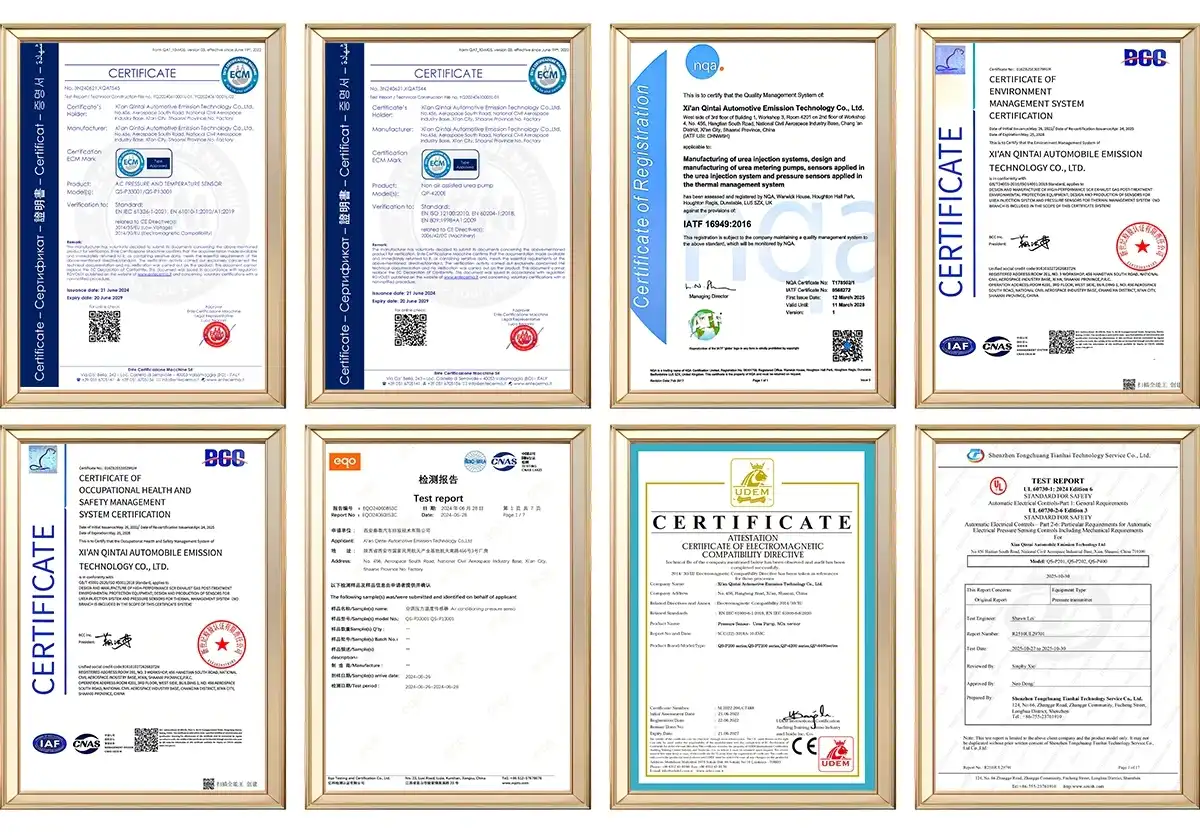
Using technical specifications alone is not enough to choose a supplier. Long-term partners who are trusted can be told apart from commodity sellers by their manufacturing skills, quality system certifications, and engineering support services. When purchasing departments do audits of suppliers, they should check to see if the suppliers are certified for ISO9001 and IATF16949. This shows that the suppliers follow systematic quality management and automotive-grade manufacturing discipline. Regulatory approvals like ATEX/IECEx explosion protection rates, CE conformity marks, and RoHS compliance paperwork make sure that products can be sold all over the world and follow the law.
Xi'an Qintai Automotive Emission Technology Co., Ltd. is a good example of the qualities that picky buyers look for in a seller. Our dedication to quality and compliance is shown by our national high-tech company designation and wide range of certifications, such as ISO9001, IATF16949, CMC, Ex, UL, CE, REACH, and RoHS. We have 58 invention patents, which shows that we have been investing in innovation for a long time.
As China's top OEM supplier to Weichai Power, Yuchai Power, and Quanchai Power, we combine technical know-how with large-scale production. This position in the market proves that we can meet the needs of mass production while keeping the quality standards diesel engine manufacturers and aftertreatment system integrators need.
Balancing Performance with Total Cost of Ownership
Decisions about what to buy include more than just the original purchase price. They also include the total costs of owning the monitor over its entire lifecycle. Unit price is very important, especially for high-volume uses, but reliability and longevity are what really determine economic value. When sensors need to be replaced often or have a lot of upkeep done, the initial savings are lost in the form of higher labour costs and production delays. The terms of the warranty, the availability of technical support, and the policies for keeping spare parts in stock all play a role in figuring out the risk and the costs.
The ability to customise is another important aspect of value. Standard catalogue items don't usually meet specific mounting needs, electrical input choices, or calibration ranges. Suppliers that offer engineering support for custom configurations make it possible for systems to work together perfectly without having to buy expensive adapter hardware or signal conditioning modules. Qintai offers a wide range of OEM and ODM services that allow products to be customised from the initial design stage all the way through full-scale production. These services meet the needs of a wide range of customers while keeping costs low through manufacturing knowledge and vertical integration.
Optimizing Performance and Maintenance of Capacitive Pressure Sensors
Installation Best Practices for Maximum Accuracy
The accuracy of measurements and the dependability of operations are directly affected by how well Capacitive Pressure Sensors are installed. When choosing where to mount something, you need to think carefully about how the fluid will move, the temperature differences, and the shaking exposure. To get a good reading, pressure taps should be placed away from areas of rough flow and have straight pipe runs both upstream and downstream. Thermal isolation techniques keep sensors from getting too hot in exhaust applications, and vibration-damping mounts keep mechanical stress from changing the calibration.
The way electrical installations are done also affects performance. In busy industrial settings with a lot of electricity, shielded wires help keep electromagnetic interference to a minimum, especially near welding equipment and variable frequency drives. When you ground something correctly, you get rid of ground loop currents that cause measurement noise. Connection integrity is very important. Signal degradation and sensor failure can happen when terminals corrode or when moisture gets into junction boxes. The QS-P105F's simple mounting design and flexible power source make installation easier, which saves time and prevents wiring mistakes that could hurt system performance.
Systematic Calibration and Validation Protocols
Structured calibration programs that are in line with application criticality and legal standards are needed to keep sensors accurate over time. For quality-conscious businesses, checking pressure standards once a year is the bare minimum. Checking key measurement points three or four times a month may be necessary. Calibration methods record sensor output at several pressure points across the measurement range. This helps find drift trends before they get too big of a problem. Zero-point verification is a simple way to check for mistakes between full calibrations and doesn't require a lot of expensive tools.
The specs on a datasheet help you decide how often to calibrate and what the acceptance criteria are. Stability features of the QS-P105F, such as a zero shift of less than 0.2 mV/V and good temperature compensation, allow for longer calibration intervals without lowering measurement confidence. Documentation techniques are necessary because they create records that can be tracked and meet the standards of ISO quality audits and emission certification. Digital calibration management systems make it easier to keep track of all this paperwork and offer analytics that make the best calibration plans based on real drift patterns instead of random time intervals.
Troubleshooting Common Performance Issues
Even though they are built to last, Capacitive Pressure Sensors sometimes act in strange ways that need to be systematically diagnosed. Signal drift usually means that there are issues with temperature adjustment, electrical interference, or diaphragm contamination that is affecting the mechanical reaction. Readings that aren't a straight line could mean that connections are loose, wires are broken, or an electronic part in the signal conditioning circuit has failed. If there is no signal at all, it means that the power source has been cut off, the wiring has been destroyed, or the sensor has been severely damaged by overpressure.
The method for troubleshooting moves logically from simple checking to diagnosing at the component level. Checking the voltage makes sure that the power is working right, and measuring the resistance finds broken cables or short circuits. By comparing the sensor output to reference instruments, problems with accuracy can be separated from problems with the display or control system further down the line.
Knowing the different types of failure makes analysis faster and reduces downtime. When procurement managers buy from reputable companies like Qintai, they get responsive technical support services that help them figure out what's wrong and quickly repair any sensors that are proven to be broken. This keeps production going.
Conclusion
For current smart manufacturing processes, Capacitive Pressure Sensors provide the accuracy, dependability, and integration capabilities required. Their strong construction means they can handle tough industrial settings and still keep the accuracy of measurements that are needed for quality control and following the rules. The QS-P105F is a great example of this kind of performance because it has great specs like 0.3% non-linearity, a wide temperature range, and a lot of pressure range options.
Pay close attention to technical needs, source qualification, correct installation methods, and planned upkeep schedules for a successful deployment. New developments in materials, miniaturisation, and the integration of artificial intelligence (AI) promise even more advanced features that will help with predictive maintenance strategies and improving operational efficiency. Strategic relationships with qualified sellers give you access to both new technologies and technologies that are already on the market. This gives you a competitive edge.
FAQ
What distinguishes capacitive pressure sensors from piezoelectric alternatives?
Capacitive Pressure Sensors measure both static and changing pressures by constantly checking their capacitance. They offer a DC reaction for steady-state tasks like checking the level of a tank. Piezoelectric devices can only produce electricity when the pressure changes, which means they can only be used in dynamic situations like flame analysis. For long-term stability and temperature compensation, capacitive designs are better, while piezoelectric sensors respond faster for high-frequency measurements.
How do I select sensors for extreme temperature environments?
Carefully look over the operating temperature specifications to make sure there is enough room for conditions that aren't expected. Specifications for the temperature coefficient show how measurements change over the whole working range. Capacitive Pressure Sensors with ceramic diaphragms and special computer packages can handle a wider range of temperatures. With a temperature range of -40°C to 135°C and almost no shift, the QS-P105F is suitable for most commercial uses.
What calibration frequency maintains measurement accuracy?
How often you need to calibrate depends on how important the application is, what the rules say, and how stable the sensor is. For general making, once a year is enough, but for emission tests, it may need to be done every three months. Longer times can be supported by stable designs like the QS-P105F. This lowers the cost of calibration without lowering trust in its accuracy.
Partner with a Leading Capacitive Pressure Sensor Manufacturer
Xi'an Qintai Automotive Emission Technology Co., Ltd. is ready to help you with your smart manufacturing sensor needs with their extensive knowledge and experience. Weichai Power, Yuchai Power, and Quanchai Power are just a few of the big OEMs that buy Capacitive Pressure Sensors from us. We can bring unmatched manufacturing scale and quality systems to your projects. Diesel engine makers, aftertreatment system installers, and industrial equipment makers need our Model QS-P105F because it is accurate, long-lasting, and flexible. We turn your ideas into production-ready products by offering independent research and development, full approval portfolios, and open OEM/ODM services that allow for full customisation.
Email our engineering team at info@qt-sensor.com to talk about the needs of your application, get detailed docs, or set up an evaluation sample. Find out how our 20 years of experience making new sensors and dedication to customer satisfaction can help your production process. You can see all of our products at qt-sensor.com and start working with us to get measurable value throughout the lifecycle of your sensor.
References
1. Webster, J.G., Eren, H. (2014). Measurement, Instrumentation, and Sensors Handbook: Spatial, Mechanical, Thermal, and Radiation Measurement. CRC Press, Boca Raton.
2. Bao, M. (2005). Analysis and Design Principles of MEMS Devices. Elsevier Science, Amsterdam.
3. Ripka, P., Tipek, A. (2007). Modern Sensors Handbook. ISTE Ltd, London.
4. Fraden, J. (2016). Handbook of Modern Sensors: Physics, Designs, and Applications (5th Edition). Springer International Publishing, Cham.
5. Wilson, J.S. (2005). Sensor Technology Handbook. Newnes, Burlington.
6. Pallas-Areny, R., Webster, J.G. (2001). Sensors and Signal Conditioning (2nd Edition). John Wiley & Sons, New York.
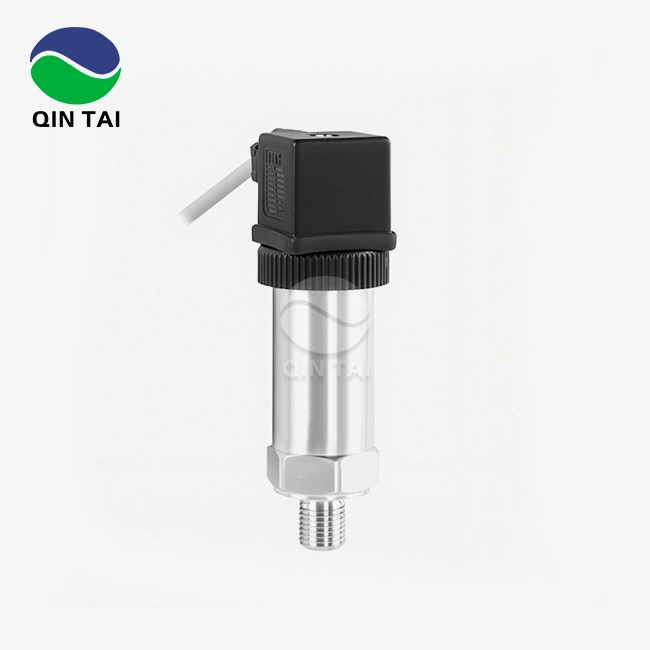
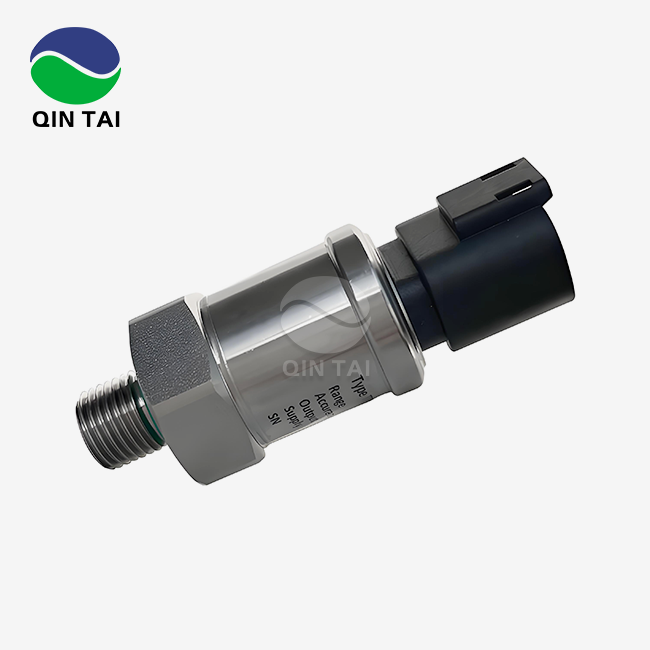

Our customers’ satisfaction speaks for our quality — contact us to experience the same reliable service.