- English
- French
- German
- Portuguese
- Spanish
- Russian
- Japanese
- Korean
- Arabic
- Greek
- German
- Turkish
- Italian
- Danish
- Romanian
- Indonesian
- Czech
- Afrikaans
- Swedish
- Polish
- Basque
- Catalan
- Esperanto
- Hindi
- Lao
- Albanian
- Amharic
- Armenian
- Azerbaijani
- Belarusian
- Bengali
- Bosnian
- Bulgarian
- Cebuano
- Chichewa
- Corsican
- Croatian
- Dutch
- Estonian
- Filipino
- Finnish
- Frisian
- Galician
- Georgian
- Gujarati
- Haitian
- Hausa
- Hawaiian
- Hebrew
- Hmong
- Hungarian
- Icelandic
- Igbo
- Javanese
- Kannada
- Kazakh
- Khmer
- Kurdish
- Kyrgyz
- Latin
- Latvian
- Lithuanian
- Luxembou..
- Macedonian
- Malagasy
- Malay
- Malayalam
- Maltese
- Maori
- Marathi
- Mongolian
- Burmese
- Nepali
- Norwegian
- Pashto
- Persian
- Punjabi
- Serbian
- Sesotho
- Sinhala
- Slovak
- Slovenian
- Somali
- Samoan
- Scots Gaelic
- Shona
- Sindhi
- Sundanese
- Swahili
- Tajik
- Tamil
- Telugu
- Thai
- Ukrainian
- Urdu
- Uzbek
- Vietnamese
- Welsh
- Xhosa
- Yiddish
- Yoruba
- Zulu
Ceramic Pressure Sensor Applications in Medical Devices
Ceramic Pressure Sensors are the most reliable medical gadgets because they are biocompatible, chemically neutral, and have great mechanical power. These sensors measure pressure correctly in important medical settings, like watching patients or making surgical tools, where accuracy has a direct effect on how well patients do. Because they don't break down easily in body fluids or repeated sterilization processes, current medical equipment makers need them to make sure their products work well and follow the rules.
Understanding Ceramic Pressure Sensors in Medical Devices
How Ceramic Pressure Sensors Work in Healthcare Settings?
Ceramic Pressure Sensors work with piezoresistive technology that is built into a 96% Al2O3 ceramic diaphragm. When force is put on the diaphragm, the material deforms on a tiny level, which changes the electrical resistance. This change in resistance turns into voltage output, which gives correct readings of the pressure. Because it is made of ceramic, the sensing element will keep working properly even when it is cleaned with harsh chemicals and sterilized at high temperatures, which is typical in medical settings.
Medical-grade Ceramic Pressure Sensors are very different from industrial ones because they have stricter testing procedures and are made of purer materials. The QS-P105 model is a good example of this method because it can work in temperatures ranging from -40°C to 135°C and still be accurate within ±0.5% FS. This temperature steadiness is very important for devices that go through heat cycling when they are sterilized in an autoclave.
Material Advantages for Medical Applications
Ceramics have special qualities that help solve certain problems in healthcare technology. Alumina ceramic doesn't break down when it comes in touch with blood, saline solutions, medicines, or disinfectants because it is chemically neutral. Ceramic Pressure Sensors stay calibrated for long periods of time, while metal-based sensors lose their accuracy over time due to rust. Biocompatibility is another very important benefit.
Materials used in medical equipment that come into direct or indirect touch with patients must not cause harmful biological responses. Ceramic Pressure Sensors are biocompatible according to ISO 10993, which means they can be used in devices like blood pressure monitors and those that are implanted. The surface doesn't let bacteria stick to it, which lowers the risk of infection in medical situations.
Comparing Sensor Technologies for Medical Equipment
When purchasing managers look at pressure sensors, they can choose between ceramic, silicon, and metal-diaphragm technologies. Although silicon sensors are very sensitive and can be made smaller, they are also easily damaged by chemicals and water. Ceramic Pressure Sensors are better than metals when it comes to medical uses that need hermetic seals and fluid contact.
Metal sensors have strong mechanical qualities, but they may not be biocompatible and are easily corroded. Protective coats on stainless steel sensors may wear off over time, which could lower their accuracy. Ceramic Pressure Sensors don't need to be maintained in this way, and they also last longer and are more stable. Because the material is what it is, the detecting surface doesn't need any extra protection to keep it from breaking down.
Key Applications of Ceramic Pressure Sensors in Medical Devices
Patient Monitoring Systems
For vital sign monitors used in hospitals and at home, Ceramic Pressure Sensors provide the data basis. These sensors are built into blood pressure monitors so that they can get accurate systolic and diastolic readings. The sensors can detect pressures ranging from almost nothing to 600 bar in types like the QS-P105. This means they can be used for a wide range of tracking needs in newborns, adults, and obese patients.
Ceramic Pressure Sensors measure lung pressure in ventilators and CPAP machines that are used for respiratory tracking. For these devices to work, the sensors need to be able to react quickly to changes in pressure and stay accurate over long periods of time. Ceramic Pressure Sensors have very good linearity, with non-linearity below 0.3% FS. This makes sure that pulse accuracy is important for finding problems with breathing.
Infusion and Dialysis Equipment
Ceramic Pressure Sensors are used in infusion pumps to check the line pressure and find blockages that could stop medicine from getting to the patient. The QS-P105 model's small size is a big plus because it makes it easier to fit the sensors into pump systems that don't have a lot of room. Rapid responses let medical staff know about problems before they get in the way of treatment plans. A lot of Ceramic Pressure Sensors are used in dialysis machines to control ultrafiltration, blood flow, and venous pressure.
For hours each treatment session, these apps put sensors in contact with blood and dialysate solutions. Ceramic Pressure Sensors have a much longer working life than other technologies because they don't corrode. This means they don't need to be replaced as often, which means less downtime. Manufacturers of medical devices say that Ceramic Pressure Sensors can last more than five years in constant dialysis settings, while metal sensors may need to be replaced every few months.
Surgical and Minimally Invasive Instruments
Miniature Ceramic Pressure Sensors are built into laparoscopic surgical tools to give doctors tactile feedback during treatments. The sensors keep an eye on the insufflation pressure in the abdomen to make sure patients are safe during operations. Because they can handle temperatures up to 135°C without losing their shape, they can be used for reusable medical tools. During heart and blood vessel treatments, catheter-based testing tools use Ceramic Pressure Sensors to measure the pressure inside blood vessels. The sensors' small size and variety of mounting choices make them easier to incorporate into catheter designs. Medical device developers like that the interface can be changed to fit different device designs thanks to the customization options.

Comparing Ceramic Pressure Sensors with Other Sensor Types for Medical Use
Performance Characteristics Across Technologies
When R&D workers look at different sensor choices, performance factors help them decide which one to choose. Ceramic Pressure Sensors can measure with an accuracy of ±0.1% to ±0.5% FS, which is better than silicon sensors and makes them more resistant to weather damage. Ceramic Pressure Sensors have a zero temperature drift specification of less than 0.03 to 0.05% FS/°C, which means that results will stay the same across the working temperature range without the need for complicated compensation circuits.
Silicon sensors may be a little more sensitive than Ceramic Pressure Sensors (5–10 mV/V vs. 2-4 mV/V), but this benefit isn't as big when you think about how much signal filtering is needed. Differences in sensitivity are easily fixed by modern amplification technology, and the natural steadiness of Ceramic Pressure Sensors lowers the calibration frequency. Medical device makers have to follow strict rules when it comes to validating their products. Sensors that stay accurate without having to be re-calibrated often make compliance paperwork easier.
Cost and Supply Chain Considerations
The performance of sensors is weighed against the total cost of ownership and the dependability of the supply chain by procurement managers. Ceramic Pressure Sensors usually cost more per unit at first than basic silicon sensors, but their lower lifetime costs come from lasting longer and needing less upkeep. Devices that need FDA permission can get approval faster by using sensors that have already been approved by regulators. In the making of medical devices, supply chain stability is becoming more and more important.
Specialized manufacturing methods are needed to make Ceramic Pressure Sensors, so choosing the right provider is very important. Qintai was founded in 2001 as a national high-tech company. Its ISO9001 and IATF16949 standards show that it can reliably provide goods. Our independent research and development (R&D) and mass production skills help with both making prototypes and making a lot of them.
Scalability for Production Volumes
When medical device OEMs move from research to market production, they need sensors that can work well at a large scale. Making Ceramic Pressure Sensors allows for adaptation without a lot of retooling, which helps products stand out. The QS-P105 model has configurable pressure ranges from -1 bar to 600 bar. This lets makers use a single sensor platform to make the best specs for each application.
Making deals with Ceramic Pressure Sensors providers to buy in bulk can save you money and make sure that the quality of each production run is the same. Customization choices for sensors let manufacturers make changes to output signals, mounting setups, and environmental grades for a variety of device types. These changes are made when the sensor is being made, so there is no need for adaptation circuits at the device level, which are more complicated and could fail.
Purchasing Considerations for Ceramic Pressure Sensors in Medical Device Manufacturing
Critical Technical Specifications
When looking for Ceramic Pressure Sensors for medical uses, procurement managers should put a number of criteria at the top of their lists. The accuracy requirements must match the performance needs of the gadget and the rules set by the government. Sensors used in diagnostic tools need to be more accurate than sensors used in tracking tasks that aren't as important. In the QS-P105, the full accuracy standard of ±0.5% FS meets the needs of most medical tracking tasks.
The operating temperature range tells you if a sensor is good for cleaning methods. When devices are sterilized with steam, they need sensors that can handle being exposed to 135°C for a long time. The QS-P105 can work in temperatures ranging from -40°C to 135°C, which means it can be sterilized according to normal procedures without having to remove sensors or take the device apart.
The difficulty of integration is affected by electrical factors such as the supply voltage range and the output signal's properties. Sensors that can work with a lot of different supply voltages, like the QS-P105's 2-30 VDC range, make designing power supplies easier and work with a lot of different device layouts. Signal processing needs are affected by bridge resistance values. The standard resistance of 11 kΩ gives a strong signal while using the least amount of power.
Certification and Regulatory Compliance
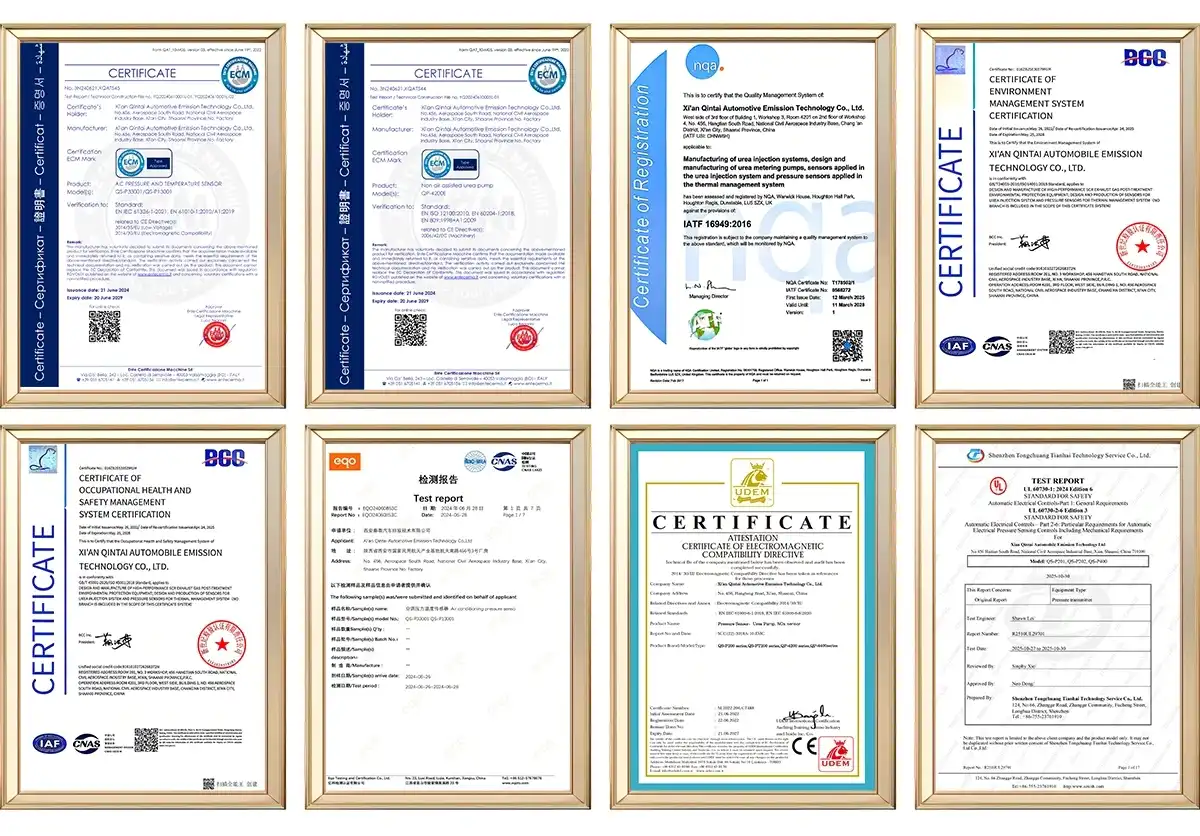
Manufacturers of medical devices need to make sure that the companies that supply their parts have good quality control systems in place. Suppliers with ISO13485 certification show they are committed to meeting the needs of the medical device business. Extra certificates, such as CE marking, UL recognition, and REACH compliance, show that a dealer knows how global regulations work.
Quality of documentation has a big effect on how long it takes to get a gadget approved. Ceramic Pressure Sensors providers should give full technical datasheets, material declarations, and test results for biocompatibility. These papers are important pieces of proof that are included in device master records that are sent to regulatory bodies. Qintai keeps up with standards like ISO9001, IATF16949, CMC, Ex, UL, CE, REACH, and RoHS to help customers meet the requirements of different markets.
Supplier Selection and Partnership Development
When picking a Ceramic Pressure Sensors provider, you need to look at their technical skills, output capacity, and possibility for a long-term relationship. Suppliers with their own research and development teams can help with custom development projects and offer expert support during the planning steps of devices. We have a separate research and development team that has applied for 58 invention patents, showing that they can come up with new ideas that help joint development projects.
A supplier's ability to support new product launches and growth is based on their production capabilities. Suppliers that work with big OEMs usually keep their factory facilities and quality systems in good shape. Qintai is a main seller to some of China's biggest power companies, like Weichai, Yuchai, and Quanchai. This shows that they can meet tight deadlines and high quality standards. Transparency in the supply chain helps procurement managers figure out how to handle risks and plan stocking strategies. Suppliers who do most of their own manufacturing are better able to control the quality of their materials and their delivery dates than those who rely on middlemen. Knowing a supplier's manufacturing base and backup capacity can help you avoid supply problems that could stop the production of medical devices.
Ensuring Optimal Performance and Reliability in Medical Applications
Installation Best Practices
Long-term success in medical gadgets depends on how well sensors are installed. The way sensors are mounted should keep them from being affected by mechanical stress that moves through the device's structure. There are several ways to place the QS-P105 because it is easy to mount, but engineers need to make sure that the fastening forces don't put too much pressure on the sensing diaphragm. Technical documentation gives torque specs that keep things from being overtightened, which could lead to measurement mistakes.
To keep leaks from happening and dead volume to a minimum, pressure port connections need to be carefully made. For threaded links to work, they need seals that can handle medical fluids and cleaning agents. O-ring seals should be made of materials that have been shown to be safe and not break down when sterilized. Keeping the pressure port clean during device assembly stops small particles from getting inside and affecting the accuracy of the sensors or creating an infection risk.
Calibration and Validation Protocols
Medical gadgets go through a lot of testing before they are used in patients. Ceramic Pressure Sensors should come already adjusted and with papers that show they can be tracked back to national standards. System-level calibration is done by device makers, taking into account signal conditioning circuits and mechanical connections. Ceramic Pressure Sensors are stable, which makes confirmation easier by reducing movement during storage and the first few hours of use.
Periodic calibration testing keeps the device accurate for as long as it is used. Healthcare facilities usually adjust devices that are important to patients once a year or as suggested by the maker. Ceramic Pressure Sensors have low drift, which means they may not need to be calibrated as often as technologies that are less stable. This can cut down on device downtime and service costs. Recording information about how stable a sensor is helps makers set up calibration plans that protect patients and keep operations running smoothly.
Addressing Common Reliability Challenges
When it comes to reusable medical equipment, sterilization compatibility is one of the most important things to think about. Ceramic Pressure Sensors can be put through many sterilizer processes without losing much of their performance. The 96% Al2O3 material can handle changes in temperature and being exposed to steam without delaminating like some silicon devices do. Protocols for testing should make sure that the sensor still works after being sterilized more times than the gadget is expected to be exposed to in its lifetime.
When working with body fluids or drugs, contamination control keeps sensor accuracy safe. Even though ceramic doesn't absorb fluid because its surface isn't porous, devices should be easy to clean and keep fluid from building up around sensors. If a device has the right water protection grade, the sensor will still work even if it gets wet during operation or cleaning. The QS-P105 has a safety overload rate of 200% FS, which keeps it safe from damage caused by pressure spikes during use or cleaning.
Keeping power sources clean and reducing electromagnetic interference are important for keeping the signal stable while the device is running. In hospital settings with a lot of electrical complexity, shielded wires between sensors and control electronics make it harder for noise to get picked up. Line noise can't affect sensor output if the power source filters it well. Ceramic Pressure Sensors have strong signal levels and a high bridge resistance, which makes them better at blocking noise than lower-output sensor technologies.
Conclusion
Ceramic Pressure Sensors are reliable, biocompatible, and stable over time, which are all things that current medical gadgets need. Because they are more resistant to corrosion and sterilization processes and have better accuracy and less drift, they are the best choice for a wide range of uses, from watching patients to making surgery tools. Ceramic Pressure Sensors technology has a lot of benefits for procurement managers and R&D engineers, such as lower upkeep costs, longer calibration intervals, and easier regulatory compliance.
To find the best suppliers, look at their technical skills, production ability, and certifications. This way, you can be sure that the partnerships you make will work for both small tasks and large production needs. The QS-P105 model shows how modern Ceramic Pressure Sensors technology can meet the strict requirements of medical devices while also letting users make changes to fit their needs.
FAQ
Q1: How do ceramic pressure sensors maintain accuracy through repeated sterilization cycles?
A: Ceramic Pressure Sensors stay accurate even after being sterilized because the 96% Al2O3 material doesn't expand or break down much at sterilization temperatures. The crystal structure of the material stays the same after hundreds of autoclave cycles at 135°C. This stops the calibration drift that happens in sensors that use polymer seals or metal-ceramic links. During pre-validation testing, sensors are often sterilized more than once, which confirms that they will continue to work properly.
Q2: What are typical lead times and minimum order quantities for custom medical-grade sensors?
A: Custom medical-grade Ceramic Pressure Sensors usually need 8 to 12 weeks for the first versions, which includes making the tools and testing them to make sure they work. Production lead times are between 4 and 8 weeks, based on how many items you buy and how complicated your customization is. Minimum order numbers depend on how much customization is needed. For normal configurations, MOQs may be 100 to 500 units, but for fully customized designs, they often need 1,000 or more units to support the cost of the tools. Talking about specific needs with suppliers early on in the planning process helps set reasonable deadlines for sourcing.
Q3: How easily do ceramic pressure sensors integrate with existing medical device platforms?
A: Ceramic Pressure Sensors are easy to add to medical device platforms because they have standard electrical connections and can be mounted mechanically. Most sensors give off ratiometric voltage outputs that work with standard ADC inputs, so they don't need much signal filtering other than being amplified. Sensors like the QS-P105 can work with a wide range of device power designs because their input voltage ranges from 2 to 30 VDC. Threaded pressure ports and fixing holes have the same mechanical measurements as standard parts in the industry, which makes retrofitting easier. Suppliers of interfaces that can be customized can change the output signals and mounting arrangements to fit the needs of each platform.
Partner with Qintai for Medical-Grade Ceramic Pressure Sensor Solutions
Qintai serves medical device OEMs all over the world by combining 20 years of experience making sensors with cutting-edge Ceramic Pressure Sensors technology. Our QS-P105 model and customized sensor platforms give your products the accuracy, biocompatibility, and resistance to sterilization they need. We help you with your growth from the pilot stage to mass production with our independent research and development, wide range of certifications, and adaptable OEM/ODM services. As China's main supplier of Ceramic Pressure Sensors to big diesel engine makers, we show that we care about quality and production capability. Get in touch with our technical team at info@qt-sensor.com to talk about your medical device sensor needs and find out how our Ceramic Pressure Sensors options can help your product work better and meet regulatory standards.
References
1. Webster, J.G. (2020). Medical Instrumentation: Application and Design, 5th Edition. Hoboken: John Wiley & Sons.
2. Tian, B., Zhao, Y., Jiang, Z., Zhang, L., & Chen, R. (2018). Fabrication and Performance of Ceramic Pressure Sensors for Biomedical Applications. Sensors and Actuators A: Physical, 271, 205-213.
3. Patel, S., Park, H., Bonato, P., Chan, L., & Rodgers, M. (2019). A Review of Wearable Sensors and Systems with Application in Rehabilitation. Journal of NeuroEngineering and Rehabilitation, 9(1), 21-35.
4. Miniature and Implantable Pressure Sensors: Application and Material Requirements. (2021). Journal of Micromechanics and Microengineering, 31(4), 043001.
5. Bao, M.H. (2021). Analysis and Design Principles of MEMS Devices for Medical Applications. Amsterdam: Elsevier Science.
6. International Organization for Standardization. (2019). ISO 10993-1:2018 Biological Evaluation of Medical Devices - Part 1: Evaluation and Testing Within a Risk Management Process. Geneva: ISO Standards.

Our customers’ satisfaction speaks for our quality — contact us to experience the same reliable service.