- English
- French
- German
- Portuguese
- Spanish
- Russian
- Japanese
- Korean
- Arabic
- Greek
- German
- Turkish
- Italian
- Danish
- Romanian
- Indonesian
- Czech
- Afrikaans
- Swedish
- Polish
- Basque
- Catalan
- Esperanto
- Hindi
- Lao
- Albanian
- Amharic
- Armenian
- Azerbaijani
- Belarusian
- Bengali
- Bosnian
- Bulgarian
- Cebuano
- Chichewa
- Corsican
- Croatian
- Dutch
- Estonian
- Filipino
- Finnish
- Frisian
- Galician
- Georgian
- Gujarati
- Haitian
- Hausa
- Hawaiian
- Hebrew
- Hmong
- Hungarian
- Icelandic
- Igbo
- Javanese
- Kannada
- Kazakh
- Khmer
- Kurdish
- Kyrgyz
- Latin
- Latvian
- Lithuanian
- Luxembou..
- Macedonian
- Malagasy
- Malay
- Malayalam
- Maltese
- Maori
- Marathi
- Mongolian
- Burmese
- Nepali
- Norwegian
- Pashto
- Persian
- Punjabi
- Serbian
- Sesotho
- Sinhala
- Slovak
- Slovenian
- Somali
- Samoan
- Scots Gaelic
- Shona
- Sindhi
- Sundanese
- Swahili
- Tajik
- Tamil
- Telugu
- Thai
- Ukrainian
- Urdu
- Uzbek
- Vietnamese
- Welsh
- Xhosa
- Yiddish
- Yoruba
- Zulu
Ceramic Pressure Sensor Uses in Industrial Applications
Ceramic Pressure Sensors have become essential measuring tools in many industries because they last a very long time, which is something that other sensors struggle with. Ceramic diaphragm technology and piezoresistive principles are used in these high-tech gadgets to provide accurate pressure tracking even in the harshest conditions. These strong sensors are used in many fields, from making diesel engines to handling chemicals, because they don't corrode, can handle high and low temperatures, and stay accurate over long periods of time. Because they are small and work reliably, they are perfect for uses that need accuracy, stability, and long-term consistency in operation without having to be replaced or calibrated often.
Understanding Ceramic Pressure Sensors: Working Principles and Benefits
How Ceramic Pressure Sensing Technology Works?
Ceramic devices that measure pressure work by using a thick-film ceramic diaphragm that bends in a way that is related to changes in pressure. The resistance of piezoresistive elements built into the ceramic body changes because of this shift. When electricity flows through these resistive elements set up in a Wheatstone bridge pattern, the change in resistance creates an electrical output signal that can be measured and is related to the pressure that is being applied. The ceramic material, which is mostly 96% aluminum oxide (Al2O3), is strong and good at keeping electricity from flowing through it. This way of building is very different from metal-diaphragm designs, where the sensing element is still open to touch with media and damage from the environment.
Core Advantages of Ceramic Construction
Ceramic sensor units have performance features that solve important problems in industry. Because the material is naturally chemically neutral, it is very resistant to aggressive media like hydraulic fluids, coolants, and acidic gases that are common in diesel engine aftertreatment systems. Stability at different temperatures is another big benefit. Good ceramic sensors stay accurate from -40°C to 135°C without losing their accuracy or calibration. Alumina ceramic is very strong mechanically and can handle pressure spikes of up to 200% of full scale. This keeps it from breaking during hydraulic bursts or pneumatic transients. Compared to other sensing technologies, these features directly lead to lower upkeep costs and longer periods of time between replacements.
Piezoresistive vs. Capacitive Ceramic Variants
There are two main types of Ceramic Pressure Sensors that are used in different industries. Piezoresistive variants detect changes in the resistance of the ceramic base. They have a sensitivity range of 2 to 4 mV/V and a linearity of about 0.3% full scale. This design works great in situations that need high accuracy and a wide range of pressures, from zero to 600 bar. Capacitive ceramic sensors measure changes in capacitance between a fixed electrode and a moving diaphragm. This is helpful in situations with very low pressure where sensitivity needs are higher than what piezoresistive sensors can handle. Choosing between these technologies relies on the measurement range, the level of accuracy needed, and the conditions of the surroundings in each case.
Key Industrial Applications of Ceramic Pressure Sensors
Diesel Engine Management and Emission Control
Modern diesel engines have many places where the pressure can be measured so that the burning process works as efficiently as possible while still meeting strict pollution standards. Ceramic Pressure Sensors check the pressure in the fuel rail in common rail injection systems. They give real-time information that lets exact fuel dosing happen for full combustion. In exhaust aftertreatment systems, these monitors keep an eye on the difference in pressure across diesel particulate filters (DPFs).
They let the system know when it needs to go through regeneration processes to get rid of the soot that has built up. Selective catalytic reduction (SCR) systems depend on ceramic sensors to keep the urea flow pressure at the right level. This makes sure that the NOx reduction rate needed for China VI and Euro VI compliance is met. It is very important that the sensors can handle high temps and don't rust in places like under the hood, where temperatures change quickly and exhaust gases contain chemicals that rust.
Hydraulic and Pneumatic System Monitoring
Heavy-duty tasks are done by construction equipment, farm equipment, and industry automation systems that use hydraulic power transfer. Ceramic diaphragm pressure transmitters are built into these hydraulic circuits and send constant input to control systems. This lets them handle loads precisely and stop dangerous over-pressure situations before they happen.
Because the sensors can handle hydraulic fluid without breaking down, measurements will be accurate for longer periods of time between repair intervals. Ceramic sensor technology also helps pneumatic control systems in factories. For example, tracking compressed air pressure improves actuator performance and finds leaks that raise running costs. Ceramic sensors are easy to place in manifolds and valve blocks that are limited in size, which is common in current fluid power systems.
Chemical Processing and Industrial Instrumentation
Chemical industrial settings are very hard on pressure measurement tools because the process media are very corrosive and the temperatures can vary a lot. When keeping an eye on reactor vessels, distillation columns, and pipeline systems that handle harsh chemicals, ceramic pressure transducers keep the accuracy of the measurements.
Because ceramic is chemically neutral, there are no worries about sensor degradation, which is a problem with metal-diaphragm tools used in similar situations. These sensors are built into process automation systems and are used in distributed control designs. The accurate data they provide allows for exact process parameter control, which raises the quality of the product and lowers waste. Ceramic sensing technology is being used more and more in environmental tracking to accurately measure gas pressures in emission control tools and air quality management systems.
Generator Set and Power Generation Systems
Power production equipment that stays in one place and works in mines, factories, and backup power installations needs strong instruments that can keep working without any upkeep. In diesel generator sets, ceramic pressure sensors keep an eye on the engine oil pressure, coolant pressure, and fuel system factors. This information is very important because it keeps catastrophic breakdowns from occurring. The industrial-grade stability of ceramic pressure sensors makes them useful in places where machine breakdowns cause big problems or put people in danger.
In power plants, ceramic pressure sensors are used in fuel supply networks, lubrication systems, and cooling circuits because they are stable over time and require less calibration. This lowers the cost of upkeep. Ceramic pressure sensor technology has been shown to last in continuous-duty applications, which makes it very useful for project procurement managers who are choosing tools for operating contracts that last more than one year.

Comparing Ceramic Pressure Sensors with Alternative Sensor Technologies
Performance Relative to Metal Diaphragm Sensors
The deflecting element in traditional metal-diaphragm pressure monitors is made of stainless steel or other alloys. This has some benefits in some situations but can't be used in harsh settings. In controlled lab settings, metal sensors usually respond more quickly and are a little more sensitive. Ceramic options, on the other hand, work better in situations where media corrosion, abrasive particle contact, and temperature cycles are common.
Metal diaphragms can fail after being under a lot of pressure over and over again, especially if they are exposed to acidic media that make cracks spread faster. Because ceramic doesn't wear down like metal does, even after millions of pressure cycles, the structure of ceramic devices stays the same. This main difference is what makes ceramic technology so popular in situations where dependability is more important than small performance gains when conditions are good.
Advantages Over Silicon and Piezoelectric Technologies
For household devices, silicon-based pressure sensors are great for making things smaller and cheaper to make in large quantities, but they aren't as durable enough for use in industrial settings. Silicon can't be used in places where it will be exposed to mechanical shocks or harsh media because it is fragile and doesn't fight chemicals very well. Piezoelectric sensors are great at measuring dynamically changing pressures, but they have problems with signal drift and temperature sensitivity that make it harder to measure steady pressures.
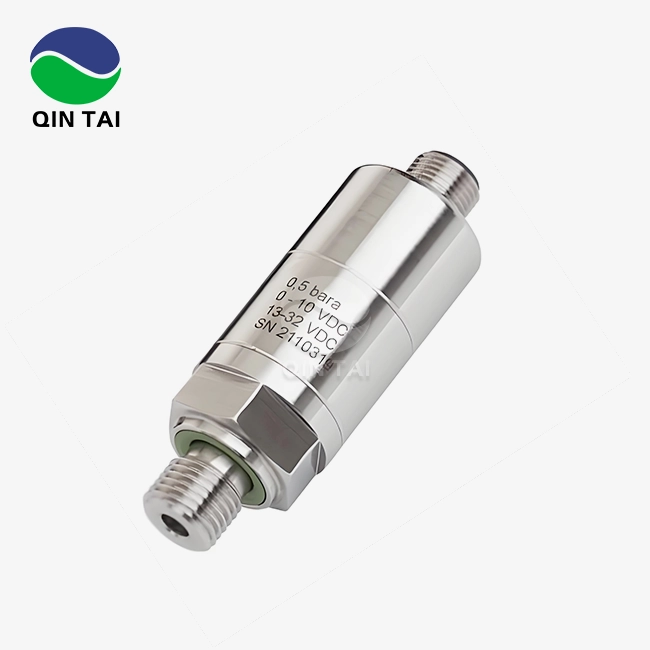
The QS-P105 Ceramic Pressure Sensor from Qintai shows how advanced ceramic technology gets around these problems while keeping prices low enough for commercial use. Ceramic sensors offer the measurement stability that diesel engine makers and aftertreatment system developers need to make sure that pollution rules are followed. They can work in temperatures ranging from -40°C to 135°C and are accurate to within ±0.5% of the full scale.
Selection Criteria for Industrial Applications
To pick the right pressure sensor technology, you need to carefully consider the needs of your unique application. The requirements for accuracy must match the needs for process control. Ceramic sensors have great uniformity and very little temperature change, which makes them ideal for uses that need to control tolerances very closely. Environmental factors like media compatibility, temperature changes, shaking exposure, and placement space requirements have a big impact on the choice of technology.
Whether dynamic pressure tracking or steady-state measurement accuracy is more important depends on how long it takes to respond. Instead of just looking at the original purchase price, cost should take into account all of the costs of ownership, such as labor for installation, regular testing, and the expected service life. When technical teams look at sensor choices for OEM uses, they usually put long-term dependability and following the rules ahead of small cost savings that hurt performance.
Procurement Considerations for Ceramic Pressure Sensors in B2B Markets
Evaluating Supplier Capabilities and Certifications
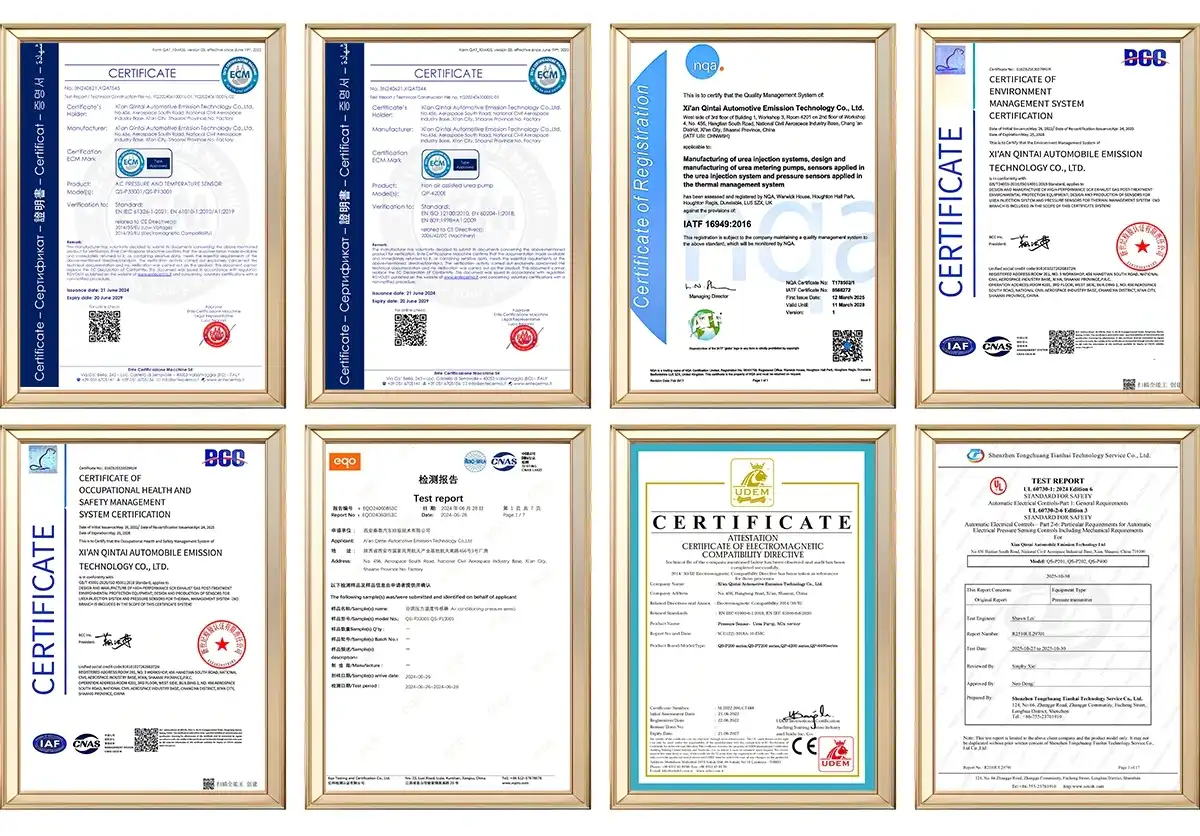
When businesses buy things, the choices they make affect more than just the parts they buy right now. They also affect the stability of the supply chain and their ability to get professional help in the future. Ceramic Pressure Sensors makers with a good reputation have quality management systems that are approved to ISO9001 and car industry standards like IATF16949. This shows that they take a systematic approach to quality assurance. Hazardous location approvals, such as ATEX, IECEx, and UL standards, let sensors be used in places like oil factories and chemical plants where the air could explode.
Electromagnetic compatibility (EMC) standards make sure that sensors work properly in electrically noisy factory settings with high-power switching equipment and variable frequency drives. Supplier claims are backed up by concrete proof like product-specific certifications that show accuracy, temperature performance, and media compatibility. Purchasing managers should make sure that producers keep all the paperwork they need to meet regulatory requirements that are specific to their business and market area.
Customization and Volume Production Capabilities
Common measurement needs are met by standard catalog sensors, but unique industrial uses often need different specs. The best companies that sell ceramic sensors have engineers who can change the ranges of pressure, electrical outputs, mechanical connections, and environmental grades to fit the needs of any application. Usually, the customization process starts with technical talks about speed requirements. This is followed by making a prototype and trying it to make sure it works before committing to production volumes.
Minimum order numbers (MOQ) vary a lot from one seller to the next. Well-known companies that serve OEM markets often accept smaller initial orders as a way to test their production before ramping up to full production rates. Lead times depend on whether the specs fit with current product platforms or if a lot of engineering work needs to be done. When supply chain managers look at possible providers, they should check both how well they can customize technical aspects and how much they can make to meet expected volume needs throughout the lifetime of a product.
Cost Structure and Long-term Value Analysis
Industrial-grade ceramic sensors are priced based on more than just the cost of making them. Choosing the right material affects the price. For example, sensors made of 96% alumina ceramic and thick-film piezoresistive elements cost more than cheaper options, but they last longer and work better, so the extra money is worth it. Specifications for accuracy have a direct effect on cost. For example, sensors with a full scale accuracy of ±0.5% need tighter production tolerances than devices with a standard of ±1.0% or higher.
The costs of getting governmental approvals and following industry standards are spread out over a large number of units produced. This means that the per-unit costs are different for high-volume and specialized uses. Instead of just looking for the cheapest price at first, value-focused procurement analysis should figure out the total cost of ownership, which should include installation work, expected service life, upkeep needs, and what will happen if something breaks. When it comes to aftermarket applications, sensors that balance good performance with low prices are good for applications that want to save money. On the other hand, OEM applications that focus on regulatory compliance and long-term stability should buy more expensive products from well-known providers.
Advanced Features of Qintai QS-P105 Ceramic Pressure Sensor
Technical Specifications Addressing Industrial Demands
The QS-P105 model from Qintai shows how current Ceramic Pressure Sensor design meets the needs of diesel engine makers and system designers who work with aftertreatment systems every day. The sensor can measure pressures from -1/0 bar to 600 bar, which lets it work with a wide range of measurement points in the engine and hydraulic systems, from the vacuum in the intake pipe to the pressure in the common rail fuel system. With sensitivity ranges of 2 to 4 mV/V, the output voltage is high enough for accurate signal processing even in places with a lot of electrical noise.
Maintaining non-linearity within 0.3% of the full scale ensures accurate readings across the entire measurement range, getting rid of the compensation mistakes that make multi-point calibration methods harder to use. Zero temperature drift below 0.05% FS/°C stops measuring mistakes that could happen when engine temps change normally. The wide source voltage range (2-30 VDC) makes electrical integration easier by letting different system voltages work without the need for separate regulator circuits.
Material Engineering for Extended Service Life
The 96% aluminum oxide ceramic structure of the QS-P105 is designed to survive the mechanical stresses and chemical exposures that are common in diesel engine uses. This mix of materials has a very high mechanical strength (about 300 MPa bending strength), so the diaphragm won't break even when it's overloaded 200%, which can happen during pressure changes. Chemical inertness keeps things from breaking down when they come in contact with diesel fuel, biofuel mixes, engine coolants, and the corrosive condensates that are found in exhaust aftertreatment systems.
When sensors come into touch with rough particles in hydraulic fluids or fuel systems, they don't wear down because the surface is hard enough—approximately 1300 Vickers. These qualities of the material directly address the durability issues that repair shops and sellers of aftermarket parts face, where sensor failures cause equipment to stop working and lead to warranty claims. Ceramic construction makes things last longer, which means that fleet workers and people who use the tools have lower total costs of ownership.
Installation and Integration Advantages
Considerations about how to install the sensor have a big impact on the choice of sensor, especially when retrofitting old equipment or working with limited room in small machines. The small size of the QS-P105 makes it easier to install in current engine compartments and hydraulic lines that have limited space. Standard pressure port threads make mechanical fitting easier because you don't have to make your own adapters or make a lot of changes to the pipes.
Using industry-standard connectors for electrical connections makes it easy to connect to current wire harnesses and signal conditioning equipment. The sensor is built to withstand normal installation torques without damaging its internal parts, which lowers the level of skill needed for successful deployment. These useful benefits are especially helpful for commercial car aftermarket customers whose techs work on a wide range of equipment that needs to be quickly diagnosed and fixed with few specialized tools.
Installation Best Practices and Maintenance Guidelines
Proper Mounting Techniques for Optimal Performance
When you place a Ceramic Pressure Sensor correctly, it won't break down early and will keep measuring accurately for its whole life. Installing a pressure port needs the right amount of torque. Not tightening enough leads to pressure leaks and measurement errors, while using too much torque can damage threads or crack ceramic parts. Manufacturers usually give torque numbers between 20 and 40 Nm, but this depends on the size of the thread and the way the seal is configured. The direction of the pressure port should keep the electrical lines away from sources of heat and damage that could happen to the parts.
When putting sensors in equipment that moves, fixing sites that minimize the vibrations that are sent through the equipment will increase service life and lower the noise in the output signals. To keep dirt from getting into the pressure port, thread seals must be compatible with the measurement media and should only be used on male threads. Correct installation methods have a direct effect on the number of warranty claims and customer happiness. For B2B customers installing sensors at multiple sites or on different types of equipment, detailed installation paperwork is a must.
Maintenance Requirements and Longevity Factors
Ceramic Pressure Sensors have a lot of benefits, including the fact that they don't need much upkeep over time. Traditional sensors need to be calibrated on a regular basis, but quality ceramic devices stay accurate for years as long as they are installed correctly and used within their stated limits. Regular maintenance checks usually include looking at the electrical connections, making sure the fixing hardware stays in place, and making sure the pressure ports don't have any damage or contamination.
Environmental factors like how often temperatures change, how much pressure changes, and how clean the media is have a bigger effect on the expected service life than the total number of hours used. Inline filter can help protect sensor pressure ports from particle impact in situations involving coarse media. In outdoor or naval settings, electrical lines need to be kept dry so that corrosion doesn't affect the signal quality. Preventive maintenance that focuses on these environmental factors makes sensors last longer and reduces the number of unexpected breakdowns that stop activities.
Future Trends in Ceramic Pressure Sensor Technology
Integration with Digital Communication Protocols
Digital communication standards are replacing analog data transmission more and more in modern industrial automation systems. In new Ceramic Pressure Sensor designs, signal conditioning and digital output standards like CAN bus, IO-Link, and industrial Ethernet versions are built in. These smart sensors allow for advanced diagnostic features, such as self-testing processes, storage of setup parameters, and thorough error reporting that make troubleshooting easier and shorten the time it takes to set up.
Long runs of analog cables can cause signal loss, but digital communication doesn't. It's also easier to connect to spread control systems. More and more sensors are becoming digital, which is a big chance for companies like Qintai to make their products stand out by adding value-added features that go beyond simple pressure measurement. When equipment OEMs are planning the next generation of designs, they should look at their providers' roadmaps for digital communication features to make sure they will work with new system layouts.
Advanced Materials and Manufacturing Techniques
Pressure sensors are getting better thanks to ongoing study into ceramic materials and processing methods. Nanostructured ceramic materials have better mechanical qualities and higher sensitivity than regular versions. This means that they can be used to make sensors that are smaller or that can detect a wider range of pressures. Some types of additive manufacturing, like ceramic 3D printing, might one day make it possible to make complicated shapes that aren't possible with standard machining methods in a way that isn't too expensive.
These improvements in production could make it easier to customize products for specific uses while also lowering the costs of tools that make low-volume custom designs expensive right now. Material science advances that make ceramics more resistant to thermal shock would allow them to be used in more extreme thermal cycle settings. When industrial procurement professionals keep an eye on these technology trends, they set up their companies to benefit from better performance and lower costs as advanced manufacturing techniques move from research labs to production settings.
Conclusion
For industrial uses requiring dependability, accuracy, and life under difficult working conditions, Ceramic Pressure Sensors are the best measurement technology. The material's natural benefits—its ability to fight rust, stay stable at high temperatures, be strong mechanically, and not wear out easily—make up for some of the problems with other sensing technologies. Diesel engine makers, companies that put together aftertreatment systems, and equipment original equipment manufacturers (OEMs) are increasingly asking for ceramic sensors to meet strict pollution rules while keeping upkeep costs and warranty risks to a minimum.
Instead of just looking at the price of the parts, procurement choices should focus on the skills of the suppliers, such as quality standards, support for customizing, and technical knowledge. As digital communication standards are added to industrial systems and ceramic materials and processes are improved, these monitors will be able to do more to support Industry 4.0. Companies that work with skilled ceramic pressure sensor makers can take advantage of new technologies and make sure they have dependable supply lines that will help them reach their long-term business goals.
FAQ
What pressure ranges can ceramic sensors accurately measure?
Depending on the diaphragm design and structure setup, piezoresistive Ceramic Pressure Sensors can measure pressures ranging from very low (0–1 bar) to very high (>1,000 bar). The Qintai QS-P105 can handle pressures from -1/0 bar to 600 bar, which is enough for most diesel engines and hydraulic systems. High-range specifications can handle common rail fuel systems and hydraulic circuits, while vacuum measurement skills are good for tracking intake manifolds.
How does ceramic sensor accuracy compare to other technologies?
Ceramic pressure detectors of good quality usually meet accuracy standards of ±0.1% to ±0.5% of full scale, which is the same as or better than metal-diaphragm sensors that are about the same price. The QS-P105 has a total accuracy of ±0.5% and an excellent linearity of ≒0.3% FS. This makes it accurate enough for checking emissions compliance and controlling processes precisely. Ceramic sensors can keep their original accuracy levels for long periods of time without having to be re-calibrated because they are very stable at high temperatures and don't change much over time.
What industries benefit most from ceramic sensor technology?
Industrial hydraulic and pneumatic systems, chemical processing plants, aircraft fuel and hydraulic monitoring, medical equipment, HVAC systems, and environmental monitoring are some of the biggest markets for these systems. Other big markets include automotive uses like engine control and tire pressure monitoring. Ceramic sensors are useful in situations where they need to be exposed to hard media, high temperatures, or have to last for a long time.
Partner with Qintai for Reliable Ceramic Pressure Sensor Solutions
Since 2001, Xi'an Qintai Automotive Emission Technology Co., Ltd. has been making industrial-grade measurement products and is China's top Ceramic Pressure Sensor maker. Our dedication to quality standards that OEM customers around the world expect is shown by our ISO9001, IATF16949, and other foreign certifications. The QS-P105 ceramic pressure sensor is an example of our technical skills.
It is made of 96% alumina and uses piezoresistive technology that works best with diesel engines and aftertreatment systems. We offer full OEM/ODM services, which include unique pressure ranges, electrical specs, and mechanical connections made to fit your exact needs. We know how important it is to find the right mix between speed, dependability, and cost-effectiveness because we are the main supplier to China's biggest diesel engine makers. As your chosen ceramic pressure sensor provider for long-term relationship success, please contact our technical team at info@qt-sensor.com to talk about your needs and experience the quick support that makes Qintai stand out.
References
1. Webster, J.G. & Eren, H. (2018). Measurement, Instrumentation, and Sensors Handbook: Electromagnetic, Optical, Radiation, Chemical, and Biomedical Measurement. CRC Press.
2. Fraden, J. (2016). Handbook of Modern Sensors: Physics, Designs, and Applications (5th ed.). Springer International Publishing.
3. Wilson, J.S. (2005). Sensor Technology Handbook. Elsevier/Newnes Publications.
4. Bau, H.H., de Rooij, N.F., & Kloeck, B. (1994). Mechanical Sensors: Pressure Sensors, Accelerometers, and Gyroscopes. VCH Publishers.
5. Tian, B., Zhao, Y., Jiang, Z., Zhang, L., & Liao, N. (2013). Fabrication and Structural Design of Micro Pressure Sensors for Tire Pressure Measurement Systems. Sensors, 13(2), 1836-1850.
6. Chavan, A.V. & Wise, K.D. (2001). Batch-Processed Vacuum-Sealed Capacitive Pressure Sensors. Journal of Microelectromechanical Systems, 10(4), 580-588.


Our customers’ satisfaction speaks for our quality — contact us to experience the same reliable service.