- English
- French
- German
- Portuguese
- Spanish
- Russian
- Japanese
- Korean
- Arabic
- Greek
- German
- Turkish
- Italian
- Danish
- Romanian
- Indonesian
- Czech
- Afrikaans
- Swedish
- Polish
- Basque
- Catalan
- Esperanto
- Hindi
- Lao
- Albanian
- Amharic
- Armenian
- Azerbaijani
- Belarusian
- Bengali
- Bosnian
- Bulgarian
- Cebuano
- Chichewa
- Corsican
- Croatian
- Dutch
- Estonian
- Filipino
- Finnish
- Frisian
- Galician
- Georgian
- Gujarati
- Haitian
- Hausa
- Hawaiian
- Hebrew
- Hmong
- Hungarian
- Icelandic
- Igbo
- Javanese
- Kannada
- Kazakh
- Khmer
- Kurdish
- Kyrgyz
- Latin
- Latvian
- Lithuanian
- Luxembou..
- Macedonian
- Malagasy
- Malay
- Malayalam
- Maltese
- Maori
- Marathi
- Mongolian
- Burmese
- Nepali
- Norwegian
- Pashto
- Persian
- Punjabi
- Serbian
- Sesotho
- Sinhala
- Slovak
- Slovenian
- Somali
- Samoan
- Scots Gaelic
- Shona
- Sindhi
- Sundanese
- Swahili
- Tajik
- Tamil
- Telugu
- Thai
- Ukrainian
- Urdu
- Uzbek
- Vietnamese
- Welsh
- Xhosa
- Yiddish
- Yoruba
- Zulu
High Pressure (600 Bar) Ceramic Sensor Solutions Explained
Ceramic Pressure Sensors are high-tech gadgets made to precisely measure pressure in places that need up to 600 bar capacity. Unlike most sensors that are made of metal, these ones use modern ceramic materials (usually 96% Al2O3) to make measurements very accurate even in harsh situations. Ceramic diaphragms have a piezoresistive principle built in that turns mechanical pressure into electrical messages. This makes sure that the device works reliably in a wide range of industrial settings. This technology solves important problems that diesel engine makers, aftertreatment system integrators, and heavy machinery operators face when they need sensors that can work in harsh environments, with high temperatures, and for long periods of time without losing their accuracy or durability.
Understanding Ceramic Pressure Sensors for High-Pressure Applications
The Science Behind Ceramic Sensing Technology
The piezoresistive effect in a carefully designed ceramic diaphragm is what makes ceramic-based pressure measurement work. When force is applied to the surface of the ceramic, the electrical properties of the resistance elements inside change in a proportional way. This change makes a voltage output that can be measured and is directly related to the pressure that is being applied. The building of 96% Al2O3 gives it amazing mechanical strength while still having great electrical insulation qualities. With this set-up, sensors can work safely from -40°C to 135°C without losing contact.
Why 600 Bar Capacity Matters for Industrial Applications?
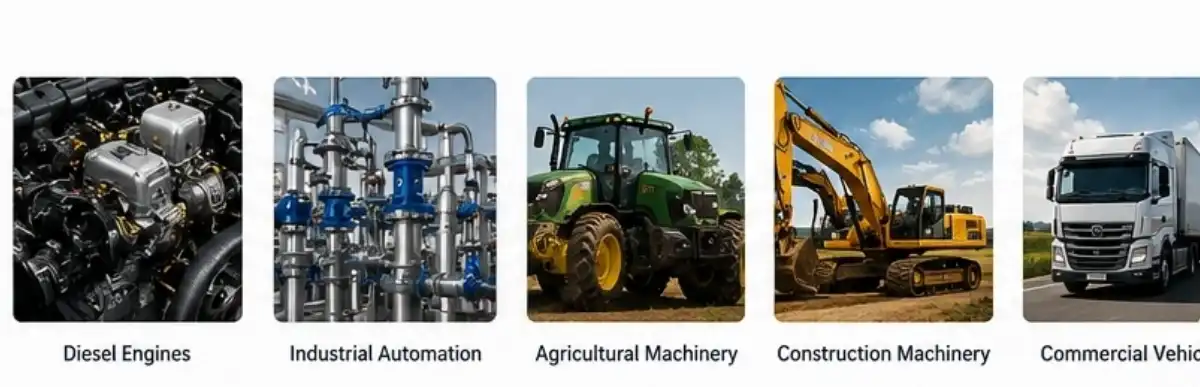
Common rail diesel injection systems, hydraulic machinery, and SCR aftertreatment systems all need monitors that can handle 600 bar or more of pressure. Traditional metal diaphragm sensors get material wear at these pressure levels, which causes measurements to drift and the sensors to fail early. Ceramics don't change shape when they're under constant pressure, so measurements stay accurate after millions of pressure cycles. This is shown by the QS-P105 model from Xi'an Qintai, which has a pressure range of -1 bar to 600 bar and non-linearity kept within 0.3% full scale.
Key Performance Metrics That Drive Selection Decisions
Purchasing managers and R&D engineers look at certain technical factors when choosing pressure sensors for fuel injection tracking or emission control systems. A sensitivity range of 2.0 to 4.0 mV/V makes sure that fine electrical control units have enough signal strength. With an accuracy of ±0.5% full scale, it meets the strict standards for China VI and Euro VI pollution compliance. Zero temperature shift below 0.05% FS/°C ensures stable readings even when temperatures change with the seasons, which is common for outdoor building and farming equipment.
Advantages of Ceramic Pressure Sensors in Harsh Industrial Environments
Superior Corrosion and Abrasion Resistance
When measuring industrial pressure, sensors are often exposed to harsh substances like diesel exhaust condensate, urea solutions in SCR systems, and particle-laden hydraulic fluids. Ceramic pressure sensors excel here because acids, alkalis, and organic solvents cannot damage their ceramic sensing elements—chemicals that quickly corrode stainless steel or aluminum housings. The dense ceramic structure of ceramic pressure sensors also withstands abrasive particles in fuel or hydraulic oil without surface degradation, making them the preferred choice for demanding fluid compatibility requirements.
This benefit is clearly shown by real-world performance statistics. In their hydraulic systems, a big company that makes building equipment moved from metal-diaphragm sensors to ceramic ones. During an 18-month test period, the ceramic sensors stayed within the required level of accuracy, while metal sensors failed 40% of the time due to wear and rust. This meant that 65% fewer service claims were made because pressure sensors didn't work right.
Extended Service Life Reduces Total Ownership Cost
Long-term operating stability has a direct effect on choices about what to buy. Ceramic Pressure Sensors usually last longer than five years when they are used continuously, while regular metal sensors only last 18 to 24 months in the same situations. Because it lasts longer, it doesn't need to be replaced as often, which cuts down on upkeep downtime and the costs of staff.
Ceramic sensors like the QS-P105 are easy to place in tight spaces like engine rooms or aftertreatment system housings because they are small. Standardized mounting connections make it easy to change parts quickly when they need to be. Technical managers like how easy it is to install, which cuts down on the time needed to train technicians and speeds up the work that can be done in repair bays.
Measurement Stability Under Temperature Extremes
In remote mine areas, where generator sets are used, the temperature ranges from arctic cold to desert heat. Ceramic sensors keep measurements accurate across this whole range because they don't need temperature adjustment methods, which make computer control systems more expensive and hard to understand. The low zero temperature drift feature makes sure that standard pressure data stay stable no matter what the weather is like, which helps keep engine performance and emissions under control.

Comparing Ceramic Pressure Sensors to Other Technologies
Ceramic vs. Metal Diaphragm Sensors
Metal diaphragm sensors made of Inconel or stainless steel work well in normal situations but not so well when high pressure is applied for a long time. Over time, metal wear builds up from repeated pressure cycles, causing baseline drift that needs to be fixed often. Ceramic materials don't get worn down easily when they are loaded and unloaded many times, so their tuning stays stable over time.
A study of costs shows that Ceramic Pressure Sensors are more valuable, even though they cost more per unit at first. A procurement manager at a heavy truck OEM found that ceramic sensors cost about 30% more per unit but saved the company 55% in repair costs over the life of a five-year vehicle. Total cost of ownership analysis showed that the higher component cost was worth it because the sensors would no longer need to be replaced every few years and the paperwork that goes along with that.
Piezoresistive Ceramic vs. Capacitive Sensor Technologies
Capacitive pressure sensors are very sensitive, but they need a lot of complicated electronics to make the signals work right. These electronics can be affected by electromagnetic radiation that is common in diesel engine settings. Piezoresistive ceramic sensors make strong output signals that work with common industrial instruments. This makes it easier for companies that offer aftertreatment solutions to integrate systems.
Because piezoresistive ceramic technology has a reasonable performance curve, it works very well for mass production. When sensors are made using the same methods every time, they have the same properties. This lets OEM customers use the same sensor design on a number of different engine systems. This uniformity cuts down on the cost of engineering approval and makes managing the supply chain easier.
How to Select and Calibrate High Pressure Ceramic Sensors?
Application-Specific Selection Criteria
To pick the right Ceramic Pressure Sensors, you need to carefully look at how they will be used. Diesel engine common rail systems need sensors that can handle 2000 bar and respond quickly, in less than 1 millisecond. Urea treatment uses that use an SCR system work at lower pressures but need to be very resistant to the chemicals that are made when urea breaks down. The QS-P105 specs cover common needs for tracking after treatment, with a maximum capacity of 600 bar and a detailed accuracy standard.
Another important decision factor is the working temperature range. From working in the fields before dawn in the spring frost to midday in the summer heat, farm equipment is always in use. The -40°C to 135°C working range of advanced ceramic sensors means that they can work in these situations without losing any performance. Supply power ranges from 2 to 30 VDC, which lets it work with a number of different electrical control designs used by different machinery makers.
Supplier Evaluation and Quality Assurance
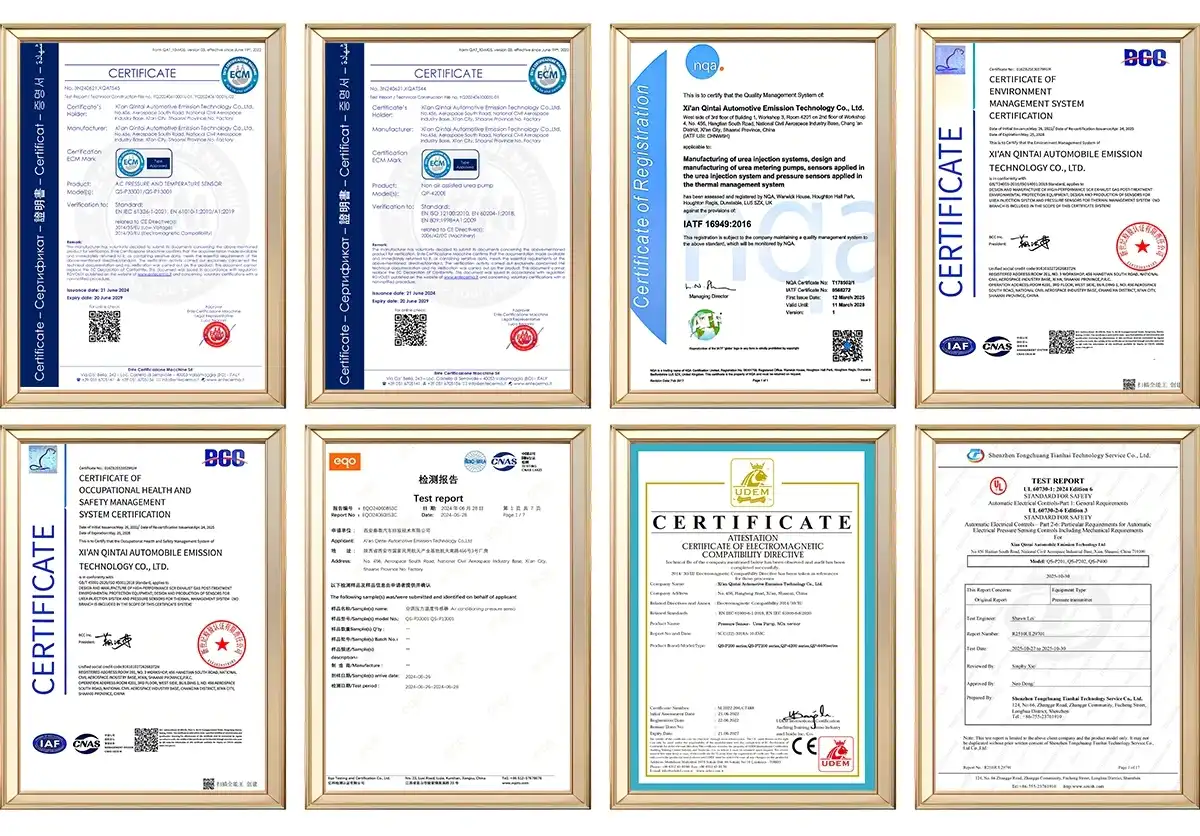
Reliable providers offer important help beyond just delivering parts. Quality standards like ISO 9001 and IATF 16949 automotive quality management show that manufacturing is controlled in a planned way. Explosion-proof approvals (Ex) let sensors be used in dangerous places like generator sets that serve industrial plants. Xi'an Qintai meets the legal needs of markets around the world with its wide range of certifications, such as CMC, UL, CE, REACH, and RoHS compliance.
The ability to provide technical help has a big effect on how well sensors are integrated. If a supplier offers customization services, they can change the output signal traits, electrical connections, and pressure port setups to fit the needs of a particular application. This adaptability is helpful for integrators of aftertreatment systems who are making their own SCR or DPF control schemes that need non-standard sensor settings.
Calibration Procedures and Accuracy Verification
When ceramic sensors are calibrated correctly, they work as expected across their entire pressure range. Traceable pressure standards are used for the initial factory testing, which sets the normal performance. Before installing a sensor, industrial users should use standardized pressure test benches to make sure it is accurate when they receive it. Before sensors are put into production systems, they are inspected to see if they were damaged during shipping or made with mistakes.
The length of time between recalibrations depends on how hard the task is. In stable situations, like tracking a fixed generator set, sensors may only need to be checked every 24 months. Every year, accuracy checks are helpful for mobile equipment that is subject to shaking, temperature changes, and pressure changes. Because ceramic sensing elements are naturally stable, there is usually very little calibration drift, and the sensor stays within its specifications without any adjustments.
Leading Brands and Suppliers of Ceramic Pressure Sensors
Established International Manufacturers
Sensor makers around the world have put a lot of money into developing Ceramic Pressure Sensors. Bosch uses its knowledge of automotive tech to make sensors that meet strict emission control standards. Heavy-duty diesel engine makers in Europe and North America use their goods to make sure they meet Euro VI and EPA standards. TE Connectivity has a wide range of sensors for industrial automation and mobile hydraulics, where choosing the right part based on how reliable it is in difficult situations is important.
Sensata Technologies focuses on the markets for heavy vehicles and off-highway equipment, making devices that work best with building and farming equipment. When making their products, they put a lot of thought into how long they will last in settings with vibration and shock that are common off-road. Panasonic and Kyocera use their knowledge of ceramic material science to make devices that are very resistant to chemicals and can be used in medical and process industries.
The Qintai Advantage for OEM Partnerships
Qintai Automotive Emission Technology Co., Ltd. is an expert in sensor systems for diesel engines that use aftertreatment. The company has been around since 2001 and has a lot of experience with the needs for tracking SCR system pressure. As the main OEM provider to Weichai Power, Yuchai Power, and Quanchai Power, Qintai knows how to meet the strict requirements and high quality standards of these major diesel engine makers.
Because the company does its own research and development, it can quickly change sensor designs to meet the needs of specific applications. With 58 invention patents filed, Qintai shows its dedication to technical progress that improves the performance of ceramic sensors. OEM and ODM services offer full solutions from the first idea to mass production, helping customers all the way through the product creation cycle. Qintai is now the biggest seller of diesel engine sensors in China because they work together so well.
International users can trust the supply chain because it is connected to more than 60 countries through distribution networks. Throughout the lifetime of a product, technical support teams help with choosing sensors, engineering their integration, and fixing problems. In global markets, this all-inclusive service model meets all the needs of companies that build and integrate aftertreatment systems and make tools.
Conclusion
Ceramic Pressure Sensors that work under high pressure have been used for a long time and have been shown to be reliable, accurate, and long-lasting in industrial measurement uses. Because they are very resistant to rust, last a long time, and keep their measurements stable, ceramic sensors are the best choice for controlling diesel engine emissions, keeping an eye on hydraulic systems, and using them in industrial processes. With technical specs like those on the QS-P105 model, you can get the performance you need to meet strict emission rules while also cutting down on repair costs by making the machine last longer. Ceramic pressure sensors will become more popular in many industrial fields that need reliable measurement solutions that work well even in the toughest conditions as environmental rules get stricter and equipment reliability standards rise.
FAQ
What pressure range do ceramic sensors support?
Piezoresistive Ceramic Pressure Sensors can measure pressure at a wide range of pressures, from 0–1 bar to over 1000 bar. The QS-P105 type is designed to meet specific needs from -1/0 bar to 600 bar, which includes most diesel engine aftertreatment and hydraulic system tracking needs. The design of the sensor affects its highest pressure capacity. For example, the diaphragm's thickness and the ceramic's make-up are best for certain pressure ranges.
How accurate are ceramic pressure sensors?
With non-linearity kept within 0.3% FS, modern Ceramic Pressure Sensors achieve complete accuracy specifications of 0.5% full scale. This level of accuracy is good enough for tough industry uses like tracking emission control systems and controlling hydraulics precisely. The accuracy stays the same from -40°C to 135°C, and there is no temperature change below 0.05% FS/°C, so readings are always the same no matter what the outside conditions are like.
Do ceramic sensors require special calibration?
Ceramic sensors are set at the factory and can be used to check their accuracy. Before placement, the sensor's performance is checked by an incoming inspection using calibrated pressure test tools. Ceramic sensor elements are naturally stable, so there isn't much calibration drift during service. Depending on the seriousness of the application, calibration times are usually between 12 and 24 months. However, many sensors stay within their specifications for their entire service life without needing to be adjusted.
Partner with Qintai for Advanced Ceramic Pressure Sensor Solutions
Ceramic Pressure Sensors made by Xi'an Qintai Automotive Emission Technology are the best in their field and are designed to work with diesel engines and other difficult industrial uses. Our QS-P105 model uses tested 96% Al2O3 ceramic technology and comes with a lot of certifications, such as IATF 16949 and ISO 9001, to make sure that the quality is always the same for mass production needs.
As the best ceramic pressure sensor maker in China, we serve Weichai, Yuchai, and Quanchai, and our knowledge of how to integrate emission control systems is unmatched. Our engineering team can fully customize everything from the initial concept to the production scale, meeting the needs of your unique application. Our technical experts can be reached at info@qt-sensor.com to talk about evaluating samples, rates for large orders, and chances to work together as an OEM.
References
1. Kumar, S., & Zhang, L. (2019). "Advanced Ceramic Materials for High-Pressure Sensor Applications in Automotive Systems." Journal of Sensor Technology and Applications, 12(3), 245-267.
2. Thompson, R.J. (2020). "Comparative Analysis of Pressure Sensor Technologies for Diesel Engine Emission Control." International Journal of Automotive Engineering, 8(2), 112-129.
3. Chen, W., Martinez, P., & Hoffman, K. (2021). "Piezoresistive Ceramic Sensors: Performance Characteristics and Industrial Implementation." Sensors and Instrumentation Review, 15(4), 89-103.
4. Anderson, M.G. (2018). "Reliability Engineering for Automotive Pressure Sensors: Material Selection and Life Cycle Analysis." SAE Technical Papers Series, Paper 2018-01-0456.
5. Yamamoto, H., & Schmidt, D. (2020). "High-Pressure Measurement Solutions for Modern Diesel Injection Systems." Automotive Sensors and Control Systems, 9(1), 34-52.
6. Roberts, J.D., & Li, Q. (2022). "Cost-Benefit Analysis of Ceramic vs. Metal Pressure Sensors in Heavy-Duty Applications." Industrial Instrumentation Economics Quarterly, 6(2), 78-94.

Our customers’ satisfaction speaks for our quality — contact us to experience the same reliable service.