Selecting optimal measurement solutions, including Pressure and Temperature transmitter devices, requires careful evaluation of technical specifications, environmental requirements, and long-term operational costs. Procurement decisions must balance initial capital investment with lifecycle maintenance expenses while ensuring regulatory compliance and performance reliability.
English
- English
- French
- German
- Portuguese
- Spanish
- Russian
- Japanese
- Korean
- Arabic
- Greek
- German
- Turkish
- Italian
- Danish
- Romanian
- Indonesian
- Czech
- Afrikaans
- Swedish
- Polish
- Basque
- Catalan
- Esperanto
- Hindi
- Lao
- Albanian
- Amharic
- Armenian
- Azerbaijani
- Belarusian
- Bengali
- Bosnian
- Bulgarian
- Cebuano
- Chichewa
- Corsican
- Croatian
- Dutch
- Estonian
- Filipino
- Finnish
- Frisian
- Galician
- Georgian
- Gujarati
- Haitian
- Hausa
- Hawaiian
- Hebrew
- Hmong
- Hungarian
- Icelandic
- Igbo
- Javanese
- Kannada
- Kazakh
- Khmer
- Kurdish
- Kyrgyz
- Latin
- Latvian
- Lithuanian
- Luxembou..
- Macedonian
- Malagasy
- Malay
- Malayalam
- Maltese
- Maori
- Marathi
- Mongolian
- Burmese
- Nepali
- Norwegian
- Pashto
- Persian
- Punjabi
- Serbian
- Sesotho
- Sinhala
- Slovak
- Slovenian
- Somali
- Samoan
- Scots Gaelic
- Shona
- Sindhi
- Sundanese
- Swahili
- Tajik
- Tamil
- Telugu
- Thai
- Ukrainian
- Urdu
- Uzbek
- Vietnamese
- Welsh
- Xhosa
- Yiddish
- Yoruba
- Zulu
Complete Guide to Pressure and Temperature Transmitters
Pressure and temperature transmitter systems serve as the backbone of modern industrial automation, converting physical measurements into standardized electrical signals that enable precise process control and monitoring. These sophisticated instruments play crucial roles across manufacturing, energy production, and HVAC applications, where accurate data collection directly impacts operational efficiency, safety compliance, and cost management. Understanding the technical specifications, operational principles, and selection criteria for these devices empowers procurement managers and engineers to make informed decisions that align with emission regulations like China VI and Euro VI standards while ensuring long-term reliability and performance consistency.

Understanding Pressure and Temperature Transmitters: Fundamentals and Working Principles
Industrial measurement systems rely heavily on the precise conversion of physical parameters into actionable data streams. Modern transmitters have evolved beyond simple sensing devices to become integrated solutions that bridge the gap between field measurements and control room operations.
Core Components and Signal Processing
Different sensor methods are used by pressure emitters to turn mechanical force into electrical messages. Most of the time, people use the resistance strain gauge method, which changes the electrical resistance of bound strain elements when they are mechanically deformed under pressure. When pressure is put on the detecting diaphragm, the strain gauges that are connected to it expand proportionally. This causes changes in resistance that can be measured and turned into standard 4-20mA current signals or digital communications.
To directly change pressure into electricity, electronic pressure sensors use piezoresistive effects, piezoelectric principles, or capacitive detection methods. These technologies are more accurate and stable than mechanical options. This makes them perfect for uses that need to follow strict emission rules and keep working the same way for a long time.
Temperature Measurement Technologies
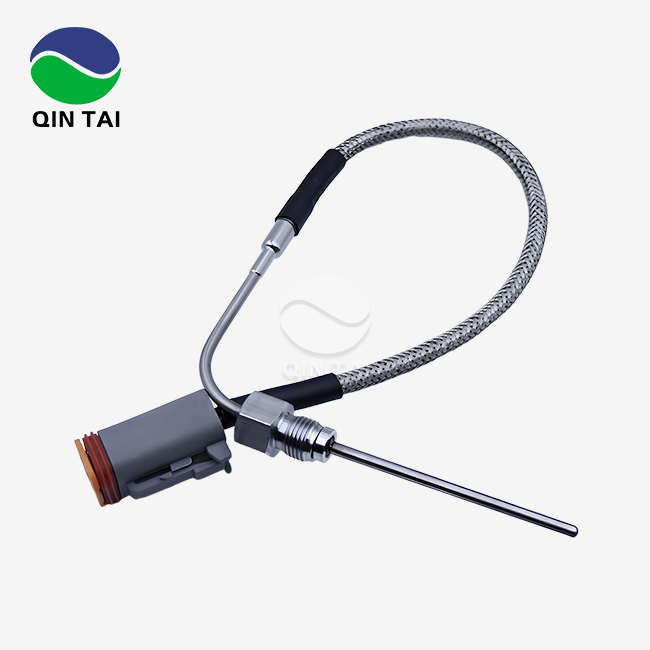
Temperature sensors use more than one way to sense temperature to meet the needs of different industries, and Pressure and Temperature transmitter devices apply these measurement principles to deliver stable, standardized signals for industrial control systems. Resistance Temperature Detectors (RTDs) use the known link between metal resistance and temperature to give very accurate and stable readings over a wide range of temperatures. Platinum RTDs, especially the PT100 and PT1000 models, provide accurate readings that are needed in diesel engine aftertreatment systems that need to keep the temperature just right to get the best performance from the catalyst.
Thermocouple-based receivers use the thermoelectric effect, which happens when two different metals cause voltage differences that change with temperature. Types K, J, and T thermocouples have fast response times and are built to last, so they can be used in tough industrial and vehicle settings. Modern temperature sensors have linearization circuits, cold junction adjustment, and digital signal processing built in. These features make measurements more accurate and installation easier.
Signal Conditioning and Communication Protocols
Modern receivers have advanced signal processing features that boost, filter, and straighten out raw sensor outputs. These circuits change signals from analog to digital, use calibration factors, and make output signals that are standard and can be used with industrial control systems. A lot of devices can talk to each other using more than one standard, like HART, Modbus, and Profibus. This makes it easy to connect them to your current control system and gives you more troubleshooting options.
Applications and Troubleshooting: Maximizing Performance in Industrial Settings
Industrial applications demand robust measurement solutions capable of maintaining accuracy under challenging environmental conditions. Pressure and temperature monitoring systems prove essential across diverse sectors where operational safety, regulatory compliance, and efficiency optimization drive performance requirements.
Diesel Engine Emission Control Systems
Selective Catalytic Reduction (SCR) and Diesel Particulate Filter (DPF) systems need to be closely watched for pressure and temperature changes in order to work at their best in reducing emissions. By measuring the pressure of the exhaust gas going up and down from the DPF units, regeneration control algorithms can keep the right amount of soot in the system and keep backpressure levels from getting too high, which could damage engine parts.
Monitoring temperatures all through the exhaust aftertreatment system makes sure that catalysts are turned off at the right temperatures, stops heat damage, and finds the best time for urea input. In these situations, transmitters need to be able to handle vibrations, changes in temperature, and toxic exhaust conditions while still keeping the accuracy of measurements that is needed to meet China VI and Euro VI emission standards.
Heavy Machinery and Generator Applications
Construction machinery and generator sets work in tough conditions where accurate tracking of pressure and temperature stops major breakdowns and increases the life of parts. Engine oil pressure sensors let you know right away if there are problems with the cleaning system, and coolant temperature monitoring keeps damage from happening from getting too hot. Measuring the pressure in a hydraulic system lets you plan preventative maintenance that cuts down on downtime and fix costs.
To make sure that backup power is always available, industrial generator setups need to keep an eye on the engine factors, fuel system pressures, and cooling circuit temperatures. For these uses, devices that are long-lasting, have low drift, and are built to last so they can be used without being watched in rural areas are best.
Troubleshooting and Maintenance Strategies
To effectively fix, you must first understand typical failure types and the signs that go along with them. Problems with pressure transmitters often show up as signal shift, numbers that aren't accurate, or no signal at all. Field breakdowns are usually caused by things in the environment, like changes in temperature, shaking, and water getting in. Using approved reference standards to check the calibration on a regular basis helps find measurement drift before it affects the quality of process control.
Sensor element wear, lead line damage, or computer circuit failure are common causes of temperature transmission problems. Thermocouple emitters can have problems with reference joint mistakes or lead resistance effects. RTD-based systems, on the other hand, can have problems with changes in lead wire resistance or sensor element contamination. Using the right wiring, insulation, and weather protection cuts down on the need for fixing and increases the operating lifespans.

How to Choose the Right Pressure and Temperature Transmitter: Decision Support for Procurement Managers?
Critical Selection Parameters
Accuracy requirements are the most important part of choosing a measurement method. In industrial settings, pressure accuracy needs to be within ±0.1% to ±0.25% of full scale, but this can change depending on how important the process is and what the rules say. When measuring temperatures, the levels of precision are often the same. This is especially true in emission control situations where exact temperature control is needed for the catalyst to work well. Environmental resistance includes scores for temperature, pressure, levels of entry protection, and chemical compatibility.
Transmitters used in car uses need to be able to handle temperatures from -40°C to +125°C, vibrations greater than 20g RMS, and contact to fluids like engine oils, coolants, and exhaust gases. When it comes to explosion-proof building, electromagnetic compatibility, and long-term steadiness under constant operation, industrial sites may have extra rules. Response time traits affect how well a control system works, especially in situations where parameters need to be changed quickly. Response times for pressure transmitters are usually less than one second, but response times for temperature transmitters can be several seconds, based on the mass of the sensor and how well it couples with the temperature. Overall reaction time costs need to be carefully thought through in applications that use safety stop systems or fast process control loops.
Brand Comparison and Technology Assessment
When it comes to different types of applications, leading makers offer clear benefits. Brands that have been around for a while offer a wide range of products, a lot of certifications, and global support networks that are necessary for OEM connections and getting into foreign markets. Newcomers to the market may be able to offer reasonable prices and new features while still keeping quality standards that are on par with the stars in the industry. Wireless transmission lets you set up your system in a variety of ways, and it also cuts down on the cost and effort of wires and upkeep. Battery-powered radio devices are good for situations where access to power is limited.
However, when thinking about long-term dependability, you need to think about how often the batteries need to be replaced and how the environment can affect their life. When deciding between custom solutions and standard goods, there are important trade-offs between prices, delivery times, and performance improvement. Standard goods are reliable, can be bought right away, and are priced competitively enough for high-volume uses. Custom developments allow for better performance based on specific needs, but they take longer to make and cost more at the start.
Certification and Compliance Considerations
Regulatory compliance standards are very different in different local markets and application areas. IATF 16949 quality system approval is needed for automotive uses, along with product-specific licenses for emission control systems. For installations in dangerous areas, industrial uses may need ATEX, IECEx, or CSA clearances. Quality standards, like ISO 9001, give customers faith in the stability of the manufacturing process and the process of ongoing growth. Environmental compliance standards like RoHS and REACH make sure that regulations are followed on all foreign markets and show that a company cares about the environment.
Current Market Landscape and Procurement Insights
The industrial measurement market continues evolving with technological advances, changing regulatory requirements, and shifting customer expectations driving innovation across product categories, including Pressure and Temperature transmitter technologies. Understanding current trends enables more effective procurement strategies and supplier relationship management.
Pricing Trends and Market Dynamics
Problems in the global supply chain and changes in the prices of raw materials have had an effect on emitter prices all through 2024. Electronic parts were especially hurt by a lack of semiconductors, which caused shipping times to be longer and prices to go up for modern digital receivers. But since the market stabilized in the second half of 2024, prices and shipping times are more reliable again. Strategies for buying in bulk can save you a lot of money, especially for OEM users who need regular supply amounts.
Long-term supply deals can help you get better prices and make sure that the supply chain stays stable, which is important for planning production. A lot of providers have price tiers based on volume, which is a way to thank regular customers and help both parties save money by lowering transaction costs and making it easier to predict demand.
Supplier Evaluation and Partnership Development
Successful ties with suppliers go beyond choosing a product at the start. They also include ongoing professional help, quality testing, and working together to create new products. Leading providers put a lot of money into application engineering resources. These resources give customers professional knowledge that helps them choose products, install them, and fix problems. Suppliers are set apart from competitors by their manufacturing skills, quality systems, and efforts to make things better all the time.
Manufacturers that have been around for a while and have all the skills they need in-house can better control the supply chain and respond faster to customer needs. Smaller, specialized providers may be able to offer more customization choices and service levels that are more tailored to the needs of each application. After-sales help includes insurance coverage, repair services, and expert support for as long as a product is in use. Comprehensive guarantee plans show that the maker trusts the product and lower the risk for the customer. Quick technical help cuts down on downtime and keeps systems running at their best for as long as they are used.

Conclusion
Pressure and Temperature transmitter represent critical investments in industrial automation systems where measurement accuracy directly impacts operational efficiency, regulatory compliance, and safety performance. Successful procurement requires careful evaluation of technical specifications, environmental requirements, supplier capabilities, and long-term support commitments. Understanding fundamental operating principles, application requirements, and troubleshooting strategies enables informed decision-making that optimizes performance while controlling lifecycle costs. As emission regulations continue tightening and industrial automation demands increase, selecting reliable measurement solutions from qualified suppliers becomes increasingly important for maintaining competitive advantages in global markets.
FAQ
What distinguishes pressure transmitters from basic pressure sensors?
Pressure transmitters incorporate signal conditioning electronics that convert raw sensor outputs into standardized electrical signals such as 4-20mA current loops or digital communications. Basic pressure sensors provide raw electrical outputs requiring external signal processing circuits. Transmitters offer integrated solutions with calibration, linearization, and communication capabilities suited for direct connection to control systems.
How often should pressure and temperature transmitters undergo calibration?
Calibration intervals depend on application criticality, environmental conditions, and regulatory requirements. Automotive emission applications typically require annual calibrations to maintain certification compliance. Industrial process applications may extend intervals to 2-3 years for stable operating conditions. Critical safety applications often mandate more frequent verification to ensure measurement reliability.
Can wireless pressure transmitters withstand harsh industrial environments?
Modern wireless transmitters incorporate ruggedized enclosures, advanced battery technologies, and robust communication protocols suitable for demanding industrial applications. However, environmental factors including temperature extremes, electromagnetic interference, and physical vibration can affect wireless communication reliability and battery life. Careful site evaluation and proper installation practices ensure optimal wireless performance.
What communication protocols work best for industrial transmitter networks?
HART protocol offers backward compatibility with existing 4-20mA systems while providing digital communication capabilities. Modbus and Profibus protocols support high-speed digital communications suited for advanced control systems. Wireless protocols including WirelessHART and ISA100 enable flexible network configurations without extensive wiring requirements. Protocol selection depends on existing infrastructure, communication speed requirements, and network complexity considerations.

Partner with Qintai for Advanced Pressure and Temperature Transmitter Solutions
Qintai stands as a leading pressure and temperature transmitter manufacturer with over two decades of proven expertise in diesel engine aftertreatment systems and industrial sensing solutions. Our comprehensive product portfolio includes precision pressure sensors, temperature transmitters, and integrated monitoring systems designed specifically for emission control applications, heavy machinery, and generator installations. With ISO 9001, IATF 16949, and multiple international certifications, we deliver reliable measurement solutions that ensure regulatory compliance and operational excellence. Contact our technical team at info@qt-sensor.com to discuss your specific requirements and discover how our customizable transmitter solutions can enhance your system performance while reducing lifecycle costs.
References
1. Smith, J. R., & Chen, L. (2023). "Industrial Pressure Measurement Technologies: Principles and Applications." Journal of Process Control Engineering, 45(3), 123-145.
2. Anderson, M. K. (2024). "Temperature Transmitter Selection for Automotive Emission Control Systems." Automotive Engineering International, 32(7), 67-89.
3. Williams, P. S., et al. (2023). "Wireless Sensor Networks in Industrial Applications: Performance and Reliability Analysis." IEEE Transactions on Industrial Electronics, 71(2), 234-251.
4. European Commission. (2024). "Euro VI Emission Standards: Technical Requirements for Heavy-Duty Vehicles." Official Journal of the European Union, L 123/45.
5. Zhang, H., & Miller, R. D. (2023). "Advanced Signal Processing Techniques for Industrial Transmitters." Measurement Science and Technology, 34(8), 085-102.
6. International Society of Automation. (2024). "ISA-50.1 Standard: Specification, Installation, and Calibration of Process Instrumentation." Research Triangle Park: ISA Publications.
 Sensors.webp)

Online Message
Our customers’ satisfaction speaks for our quality — contact us to experience the same reliable service.