- English
- French
- German
- Portuguese
- Spanish
- Russian
- Japanese
- Korean
- Arabic
- Greek
- German
- Turkish
- Italian
- Danish
- Romanian
- Indonesian
- Czech
- Afrikaans
- Swedish
- Polish
- Basque
- Catalan
- Esperanto
- Hindi
- Lao
- Albanian
- Amharic
- Armenian
- Azerbaijani
- Belarusian
- Bengali
- Bosnian
- Bulgarian
- Cebuano
- Chichewa
- Corsican
- Croatian
- Dutch
- Estonian
- Filipino
- Finnish
- Frisian
- Galician
- Georgian
- Gujarati
- Haitian
- Hausa
- Hawaiian
- Hebrew
- Hmong
- Hungarian
- Icelandic
- Igbo
- Javanese
- Kannada
- Kazakh
- Khmer
- Kurdish
- Kyrgyz
- Latin
- Latvian
- Lithuanian
- Luxembou..
- Macedonian
- Malagasy
- Malay
- Malayalam
- Maltese
- Maori
- Marathi
- Mongolian
- Burmese
- Nepali
- Norwegian
- Pashto
- Persian
- Punjabi
- Serbian
- Sesotho
- Sinhala
- Slovak
- Slovenian
- Somali
- Samoan
- Scots Gaelic
- Shona
- Sindhi
- Sundanese
- Swahili
- Tajik
- Tamil
- Telugu
- Thai
- Ukrainian
- Urdu
- Uzbek
- Vietnamese
- Welsh
- Xhosa
- Yiddish
- Yoruba
- Zulu
Custom Pressure Sensor Solutions for Industrial Equipment
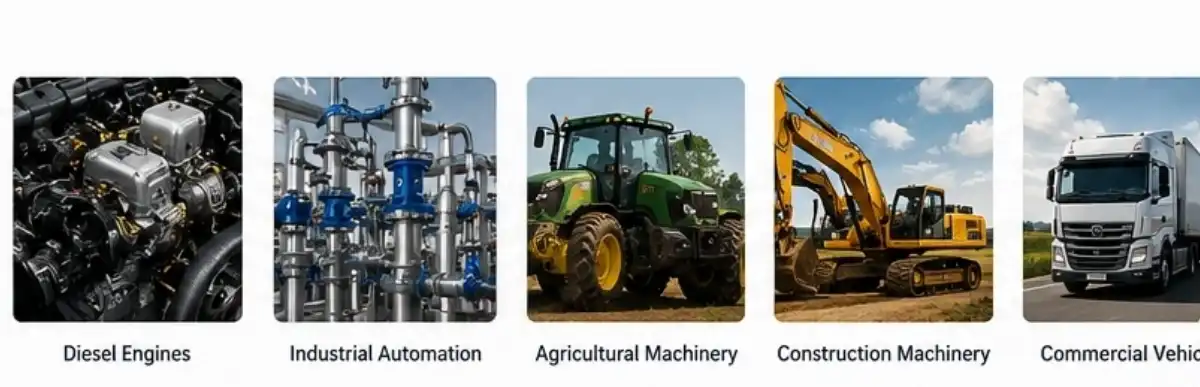
When diesel engine builders and people who put together aftertreatment systems need to keep an eye on things precisely in harsh conditions, they have to use the right pressure sensor. Heavy-duty uses, such as emission control systems that meet China VI and Euro VI standards and generator sets that work in remote mines, can get the performance they need from custom pressure sensor options. These sensors measure things like hydraulic pressure, exhaust gas flow, coolant dynamics, and air intake factors. They turn physical forces into electrical signs that engines can use to run efficiently and cleanly. Customization solves specific problems, like making sure that building equipment doesn't shake, farming equipment can handle high temperatures, and SCR aftertreatment systems don't break down when they need to in milliseconds.
Understanding Pressure Sensors in Industrial Equipment
Working Principles and Core Technologies
Different sensing systems in industrial pressure sensors turn mechanical force into electrical output. Capacitive sensors use the capacitance formula C = ε₀εᵣA/d to figure out how much the space between two electrical plates changes when a diaphragm bends under force. This design is very sensitive and stable at room temperature, so it can pick up on small changes in pressure in emission control systems. Piezoresistive sensors have strain gauges attached to a diaphragm, and the electrical resistance changes based on how much the diaphragm is deformed. This makes them perfect for high-pressure hydraulic lines in building equipment. When mechanical force is applied to piezoelectric types, they produce an electrical charge. This makes them great for measuring dynamic pressures like those used in combustion monitoring.
Technology Comparison Across Industrial Applications
Analog sensors send constant voltage or current readings that are proportional to the pressure they measure. This makes it easier to connect them to heavy-truck fleets that already have control units. Digital sensors have microprocessors inside them that give output that is temperature-aware, customizable limits, and diagnostic data. These are necessary for current CAN-bus networks in farm equipment. Low-pressure tasks that need accuracy down to the nano level, like DPF differential pressure tracking, are mostly done with capacitive technology. In hydraulic systems, piezoresistive sensors can handle high pressures of up to 10,000 psi. Even though they are more expensive, optical devices can handle electromagnetic interference in generator sets that are close to high-voltage equipment.
Real-World Applications Across Sectors
Automobile emission systems depend on exhaust pressure sensors to control EGR valves and keep an eye on DPF renewal cycles, which has a direct effect on meeting strict emission standards. Pressure sensors are used in factories to control pneumatic devices and check the quality of compressed air, which keeps paint booths from getting dirty. Submersible pressure sensors are used by oil and gas companies in storage tanks to measure the depth of the liquid and figure out its level using hydraulic measurement. Ultra-low-power capacitive sensors are being used more and more in IoT-enabled industrial equipment for wireless status tracking and sending data to platforms for predictive maintenance.
Key Considerations When Choosing Custom Pressure Sensors
Critical Performance Parameters
Depending on how important the application is, accuracy requirements are usually between ±0.1% and ±2% of full scale. To make sure the right amount of urea is injected into waste streams, SCR systems need accuracy of ±0.5%, but ±2% is fine for hydraulic return lines. The measuring range needs to take into account both normal working conditions and short-term pressure spikes. For example, a diesel fuel rail pressure sensor might say that its range is 0 to 2500 bar with overpressure safety up to 3000 bar. Temperature adjustment from -40°C to 150°C, vibration resistance that meets ISO 16750 automotive standards, and IP67 or IP69K ingress protection against water and dirt are all examples of environmental longevity.
Technology Trade-offs and Lifecycle Costs
Compared to piezoresistive types, capacitive sensors are more stable over long periods of time and don't drift much over 10 years or more, so they don't need to be re-calibrated as often. Because they are so simple (they don't have any working parts), the average time between fails is more than 1 million pressure cycles. But at first, capacitive systems are 15–30% more expensive than piezoresistive ones. Digital sensors cost more than analog ones, but they don't need any extra signal processing circuits, so they're cheaper to install overall. Maintenance factors include how easy it is to calibrate the sensors, whether field-replaceable connectors cut down on downtime, and the availability of diagnostic tools that can tell the difference between sensor failures and wire problems.
Calibration Requirements and Standards Compliance
Calibration certificates from national metrology institutes are given to new pressure sensors at the workplace, along with readings of their uncertainty. Recalibration is needed every so often in industrial settings—every year for important safety systems and every two years for process control. In HVAC systems, miscalibrated differential pressure sensors report incorrectly that the filter is full, which leads to either too much fresh air intake that wastes energy or not enough airflow that lowers the quality of the air. To recalibrate, known reference pressures must be used and output differences must be changed. Standards like IEC 61298 lay out how to test things, and automotive sensors have to pass the AEC-Q200 stress test, which includes cycles of temperature and humidity, as well as patterns of mechanical shocks.
Tailored Pressure Sensor Solutions: How Customization Adds Value
Configurable Features Matching Application Needs
Setting the pressure sensor range is the first step in customization. For example, 0–10 bar is used for tracking turbocharger boost, while 0–200 bar is used for common rail fuel injection. The output signals change depending on what the control system needs. For example, 4-20mA current loops can be used for long-distance transfer that doesn't pick up electrical noise. For microcontroller inputs, 0-5V ratiometric voltage can be used, or digital protocols like SENT and I²C can be used for integrated diagnostics. The chemical stability of housing materials is taken into account. For example, stainless steel 316L doesn't rust when exposed to diesel fuel or urea, and nickel-coated brass works well with hydraulic oils. There are many kinds of electrical connectors, such as M12 industry standards, weatherproof Deutsch automotive plugs, and custom wire systems with shielding.
Case Studies Demonstrating Custom Solutions
A European company that makes big trucks needed exhaust backpressure sensors that could handle gas temperatures of up to 850°C and still meet Euro VI durability standards. Heat stress on the diaphragm welds caused off-the-shelf sensors to fail after 500 hours. The custom system had sensing elements made of Inconel alloy and remote electronics that were divided by a cooling tube. It had an 8,000-hour service life. An OEM for farming equipment needed sensors that could work with a wide range of pressures for hydraulic tools. One sensor had to be able to handle 0-100 bar for lifting circuits and 0-400 bar for high-pressure functions. Customized electronics that switched between ranges automatically cut down on the number of parts needed by 60% while keeping accuracy at ±0.5% across all ranges.
Quality Assurance and Documentation
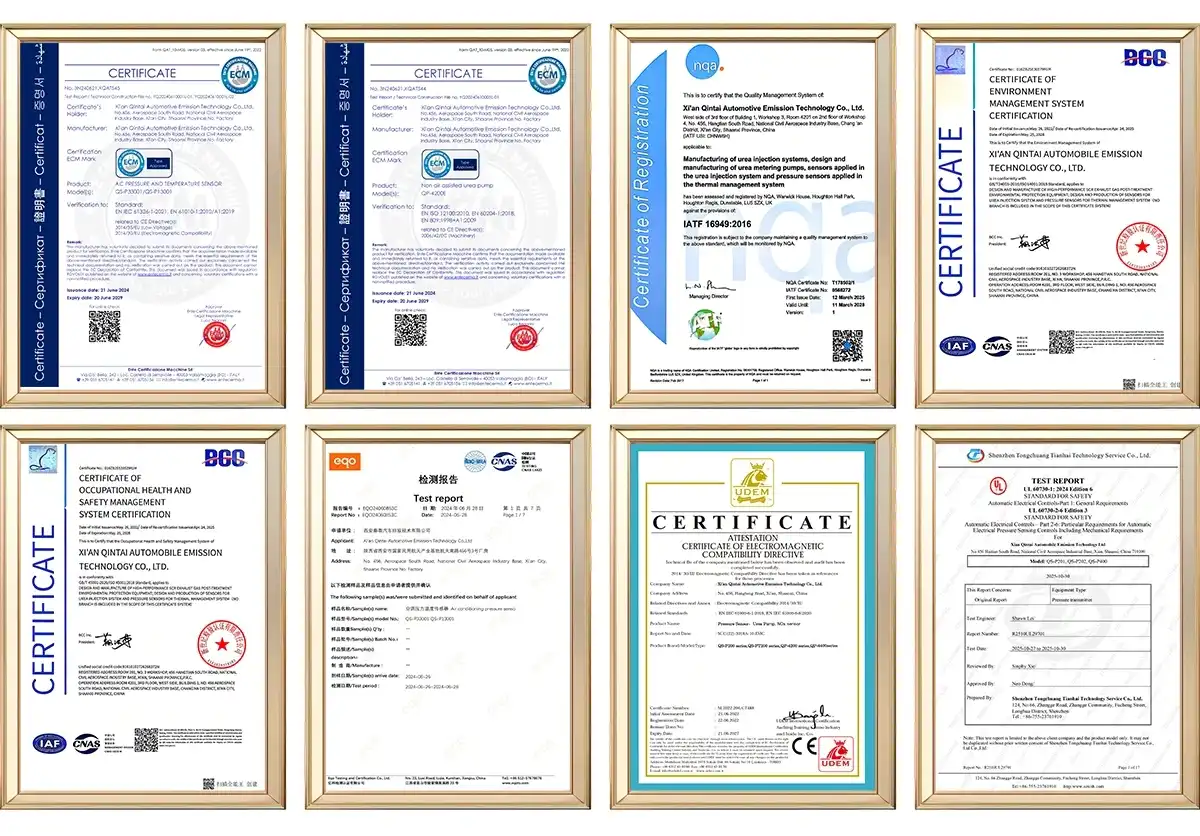
Technical datasheets list more than 15 factors, such as the pressure range, accuracy class, reaction time (usually 5 to 50 milliseconds), temperature coefficients, burst pressure, compatibility with different media, and electrical requirements. The paperwork for certification includes standards for ISO 9001 quality management, IATF 16949 automotive standards, ATEX/IECEx for dangerous environments, and RoHS/REACH environmental compliance. There are 100% functional tests on production lots, as well as random sampling for temperature cycling, vibration endurance, and pressure proof tests at 150% of their stated capacity. Tracking systems connect every sensor's serial number to its calibration data, material certificates, and records of the production batch it was made in. This is very important for warranty claims and regulatory checks.
Procurement Guide: Sourcing Custom Pressure Sensors for Industrial Use
Evaluating Supplier Capabilities
There are clear benefits to having global pressure sensor manufacturers. Honeywell has a wide range of high-quality products with a strong background in aircraft. These products are reliable in harsh settings, but they come at a higher cost. Bosch uses its knowledge of mass production in the automotive industry to find cost-effective options that meet IATF standards. Texas Instruments has low-power microcontrollers that are built into sensor-to-digital data lines that are perfect for IoT applications. The heavy-duty transportation sensors that Sensata makes have been used successfully in business cars in the past.
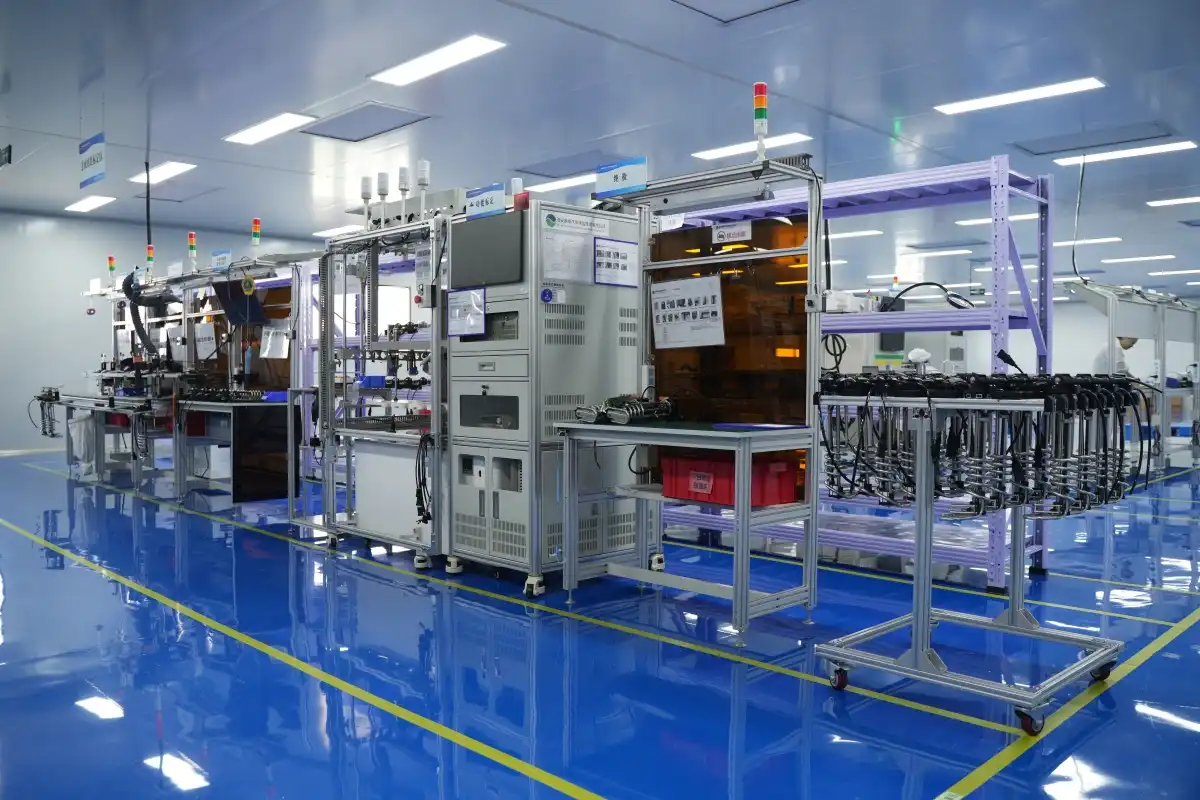
When looking at providers, make sure they have the R&D infrastructure to support constant innovation. This includes testing labs with environmental rooms and pressure calibration rigs, as well as separate engineering teams. How big the factory can make things is important: can the source go from making 100 prototypes to making over 100,000 items every month? Look at current OEM relationships as measures of success. Tier-one diesel engine makers like Weichai, Yuchai, and Cummins only work with suppliers that can meet strict quality standards for the automotive industry.
Strategic Purchasing Factors
Different pricing systems are very different. Catalog sensors vary in price from $15 to $80 per unit. Fully customized designs cost between $50 and $300 per unit, based on how complicated they are, and engineering costs between $5,000 and $25,000 for tooling and proof. Lead times range from 8 to 12 weeks for changed standard goods and from 16 to 24 weeks for completely new designs that include prototypes. Volume savings usually start at orders of 1,000 units and go down by 15 to 30 percent for orders of 10,000 units or more. When you commit to multi-year deals with demand forecasts, you have more negotiating power, which helps sellers plan their production more efficiently.
Value-Added Services Reducing Total Ownership Cost
The warranty should last for 24 to 36 months and cover problems with the way the product was made and early fails. How quickly technical support responds has a direct effect on production uptime. Integration problems are solved faster by providers with 24-hour engineering hotlines and area field application experts. As an example, stocking deals make sure that new sensors are sent out within 48 hours, which keeps expensive equipment from being down for long periods of time. Some providers offer free sensor health tracking software that can look at diagnostic data and predict breakdowns before they happen. This turns reactive maintenance into proactive servicing.
Troubleshooting and Optimizing Pressure Sensor Performance in Industrial Settings
Common Issues and Diagnostic Procedures
Problems that often happen and how to diagnose them. Signal drift shows up as slow changes in output that have nothing to do with changes in pressure. If you don't have the right adjustment circuits in your piezoresistive pressure sensors, changing the temperature speeds up drift. For verification, the output of the sensor is compared to a measured reference gauge at three different pressure levels within the range of operation. Any drift above ±1% per year means that the product is breaking down and needs to be replaced. Media pollution, like oil particles blocking diaphragm holes or water getting in and destroying electronics, can lead to wrong readings. A physical check shows that the pressure ports are either clogged and need to be flushed with solvent or the wire insulation is damaged, which is causing occasional electrical faults.
Proactive Maintenance Extending Service Life
Calibration plans find a mix between the need for accuracy and the cost of upkeep. Safety-critical sensors in brake systems need to be checked every year, but non-critical process tracking can wait three years. Protecting the environment means putting protective covers on connectors to keep road spray off of them, putting dielectric grease on pins to stop rust, and directing wires away from hot exhaust parts. Using rubber bases to block vibrations lowers the mechanical stress on sensor bodies and solder joints. Voltage spikes caused by inductive loads in nearby wires can be stopped by surge safety circuits.
Performance Enhancement Strategies
The placement of sensors has a big effect on the quality of measurements. To avoid changes caused by turbulence, pressure taps should be placed perpendicular to the direction of flow. Installing sensors above measurement points with vent holes will avoid dead-end setups that trap air bubbles that lead to wrong readings. Built-in diagnostics in digital devices let you know about out-of-range situations, memory errors, and self-test results through CAN-bus messages. Cross-checking is possible when you use redundant sensors in important situations. When two sensors watch the same pressure, they send out alerts when the numbers diverge too much, which finds and fixes problems before they happen.
Conclusion
In conclusion, when customized to meet the needs of specific industrial equipment, custom pressure sensor options offer real benefits. Capacitive, piezoresistive, and digital technologies all meet different needs, such as IoT devices needing to use very little power and building equipment needing to last a very long time. For procurement to go well, technical requirements must be weighed against lifetime costs, and providers who can show that their products can be made on a large scale and have quality certifications and quick technical help should be given the most attention. Sensor precision and operating life are maintained through routine calibration, strategic placement, and proactive troubleshooting. This has a direct effect on equipment reliability and regulatory compliance in emission-critical applications.
FAQ
What differentiates capacitive from piezoresistive pressure sensors in emission control applications?
Capacitive pressure sensors are great for measuring low-pressure differentials like DPF tracking because they keep their temperature more stable and don't move much over long periods of time. Because they don't have any working parts, they will last for more than 10 years with very little upkeep. Piezoresistive sensors can handle higher absolute pressures in fuel rails and turbocharger systems. They respond more quickly to changing conditions but need to be re-calibrated more often to keep up with accuracy standards.
How do customization options impact delivery schedules and minimum order quantities?
If you change the pressure range, output signals, or connections on standard sensor platforms, it usually takes an extra 8–12 weeks to deliver, and you have to buy at least 100–500 units. Fully customized designs with unique sensing elements or housing configurations add 20 to 24 weeks to the lead time, and tooling investments need to be made for at least 1,000 units. Validation testing can be done on prototypes of 10 to 50 sensors before committing to production numbers.
Which certifications are mandatory for pressure sensors in North American heavy-duty diesel engines?
Sensors in cars have to meet the performance standards set by SAE J1455 and the stress testing procedures set by AEC-Q200. To protect the environment, you need RoHS and REACH certificates that limit the use of dangerous chemicals. UL or CSA intrinsic safety approvals are needed for sensors that are used in dangerous environments. IATF 16949 certification shows that a supplier's quality control systems are in line with the needs of big OEMs, which speeds up the approval process.
Partner with Qintai for Precision Pressure Sensor Manufacturing
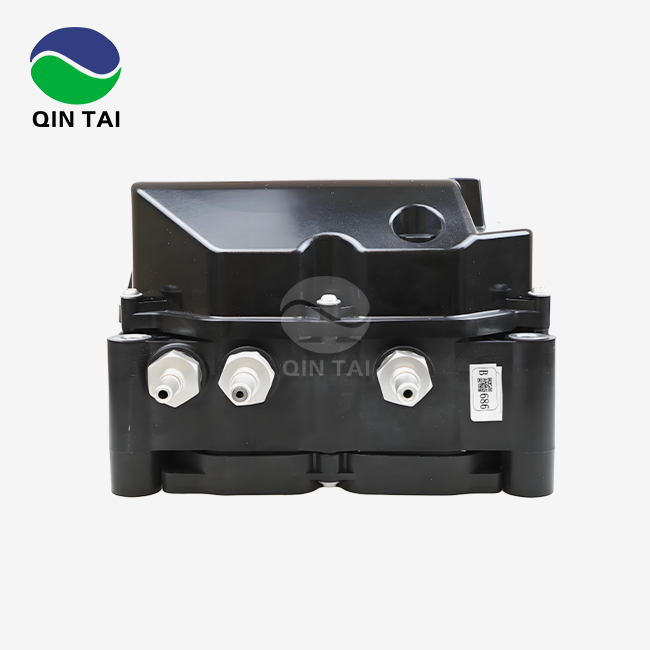
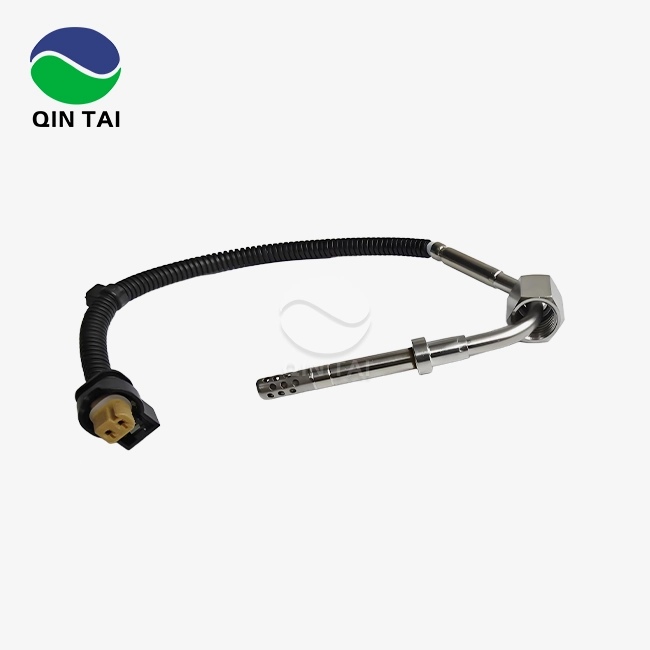
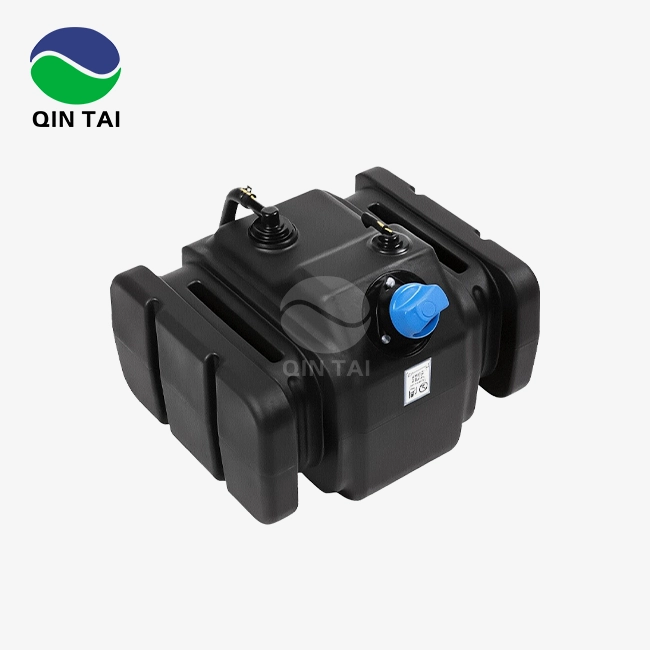
Qintai Automotive Emission Technology Co., Ltd. has 20 years of experience making engine aftertreatment systems for diesel engines and can also make all kinds of pressure sensors. Our ISO 9001, IATF 16949, and ATEX certifications show that our products meet international standards for automotive quality, and our 58 design patents show that we are always coming up with new ideas. We offer full OEM/ODM customization, from the first design advice to mass production, and our lead times are set to meet the needs of urgent projects. Technical teams offer help in multiple languages to solve interface problems that come up with SCR, DPF, and EGR systems. Get in touch with info@qt-sensor.com to talk about your needs with China's top pressure sensor provider. They work with over 60 countries and have a track record of reliability in heavy trucks, building equipment, and generators.
References
1. Webster, J.G., & Eren, H. (2018). Measurement, Instrumentation, and Sensors Handbook: Spatial, Mechanical, Thermal, and Radiation Measurement (2nd ed.). CRC Press.
2. Wilson, J.S. (2005). Sensor Technology Handbook. Newnes Publications.
3. Fraden, J. (2016). Handbook of Modern Sensors: Physics, Designs, and Applications (5th ed.). Springer International Publishing.
4. Society of Automotive Engineers. (2020). SAE J1455: Recommended Environmental Practices for Electronic Equipment Design in Heavy-Duty Vehicle Applications. SAE International.
5. International Organization for Standardization. (2019). ISO 16750-3: Road vehicles – Environmental conditions and testing for electrical and electronic equipment – Part 3: Mechanical loads. ISO Standards.
6. Brasseur, G. (2012). Robust Automotive Sensors in Advanced Microsystems for Automotive Applications 2012. Springer-Verlag Berlin Heidelberg.


Our customers’ satisfaction speaks for our quality — contact us to experience the same reliable service.