- English
- French
- German
- Portuguese
- Spanish
- Russian
- Japanese
- Korean
- Arabic
- Greek
- German
- Turkish
- Italian
- Danish
- Romanian
- Indonesian
- Czech
- Afrikaans
- Swedish
- Polish
- Basque
- Catalan
- Esperanto
- Hindi
- Lao
- Albanian
- Amharic
- Armenian
- Azerbaijani
- Belarusian
- Bengali
- Bosnian
- Bulgarian
- Cebuano
- Chichewa
- Corsican
- Croatian
- Dutch
- Estonian
- Filipino
- Finnish
- Frisian
- Galician
- Georgian
- Gujarati
- Haitian
- Hausa
- Hawaiian
- Hebrew
- Hmong
- Hungarian
- Icelandic
- Igbo
- Javanese
- Kannada
- Kazakh
- Khmer
- Kurdish
- Kyrgyz
- Latin
- Latvian
- Lithuanian
- Luxembou..
- Macedonian
- Malagasy
- Malay
- Malayalam
- Maltese
- Maori
- Marathi
- Mongolian
- Burmese
- Nepali
- Norwegian
- Pashto
- Persian
- Punjabi
- Serbian
- Sesotho
- Sinhala
- Slovak
- Slovenian
- Somali
- Samoan
- Scots Gaelic
- Shona
- Sindhi
- Sundanese
- Swahili
- Tajik
- Tamil
- Telugu
- Thai
- Ukrainian
- Urdu
- Uzbek
- Vietnamese
- Welsh
- Xhosa
- Yiddish
- Yoruba
- Zulu
DEF: How it works and how to diagnose
In many places, Diesel Exhaust Fluid (DEF), also called AdBlue, is an important part of current emission control systems that can't be done without. Selective Catalytic Reduction (SCR) systems use this water-based urea solution to change dangerous nitrogen oxides (NOx) into safe nitrogen and water vapor. The urea pressure sensor is an important part of tracking the DEF system because it tracks the fluid pressure between the dosing pump and injector. This makes sure that the right amount of DEF is delivered and that NOx levels are reduced as much as possible. Procurement managers, R&D engineers, and technical teams can stay in line with regulations and improve equipment downtime and operational efficiency by learning how DEF systems work and how to quickly figure out what's wrong.
Comprehending Urea Pressure Sensors: Function and Working Principle
The Role of Pressure Monitoring in SCR Systems
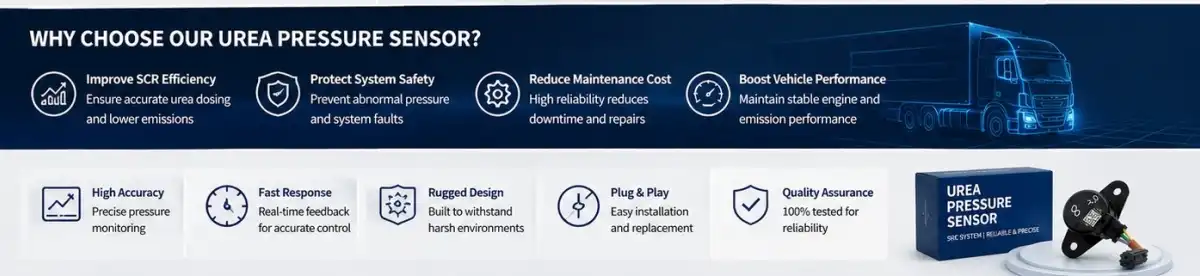
To keep the right dose rates, DEF devices need to be able to measure pressure correctly. The urea pressure sensor checks the fluid pressure in the supply line all the time and sends real-time feedback to the SCR control unit. The Electronic Control Unit (ECU) uses this information to control the dose pump correctly, making sure that the right amount of DEF gets to the injector tip to be broken up and injected into the exhaust stream. Without accurate pressure tracking, the SCR system can't convert fuel as efficiently as it should, which could lead to compliance fails and problems with engine performance.
Core Technologies Behind Pressure Sensing
These days, urea pressure sensors use a number of different technologies to get accurate readings. Because they are very sensitive and stable, piezoresistive sensors are still very popular. This is especially true in car uses where temperature changes and vibrations are common problems. Thick-film resistors are set up in a Wheatstone bridge pattern on ceramic or silicon diaphragms in these devices. The diaphragm slightly deforms when the DEF pressure changes, which changes the resistance values and creates proportional voltage signs.
The ceramic diaphragm design is better at resisting rust in the harsh urea climate, which solves the problem of crystallization that happens with regular pressure sensors. Advanced types have built-in heating parts that keep them from freezing during operations in cold weather. They can keep working in temperatures ranging from -40°C to 85°C.
Application-Specific Design Considerations
For heavy-duty uses, sensors need to be built to last in difficult situations that go beyond what's needed for cars. Extreme temperatures, vibrations, and pollution risks are present for construction equipment and power sets that are used in mines. Specialized urea-grade materials, like stainless steel housings that don't rust and advanced closing technologies, keep sensor elements from breaking down. Differential pressure setups help check the amount of liquid in DEF tanks, and diaphragm seals keep sensitive parts from coming into direct touch with media, which greatly increases their operating lifetime.

Diagnosing Common Problems with Urea Pressure Sensors
Finding early warning signs that a urea pressure sensor isn't working right can save a lot of money on repairs and downtime. When the sensor starts to fail, operators may see a number of signs, such as dashboard warning lights showing problems with the SCR system, less engine power due to derating routines, random DEF use patterns, or the dose system shutting down completely. Troubleshooting goes from guessing to efficient problem-solving when you understand organized diagnostic methods.
Visual and Physical Inspection Protocols
The first step in diagnosing is a careful eye assessment. Technicians should check electrical connections for rust, water damage, or broken pins that could risk the integrity of the signal. The body of the sensor needs to be carefully checked for damage, urea crystals building up around the fixing points, or signs of fluid leaks. When DEF crystallizes, it can be hard because dried urea deposits can block pressure ports and cause false readings. Wiring cables shouldn't have any rubbing, heat damage, or insulation that isn't working right, as these could lead to electrical problems that happen from time to time. Often, these basic checks show clear problems that need to be fixed right away before moving on to functional testing.
Electrical Testing and Signal Verification
Multimeters are used in functional testing to check the electrical properties of sensors. By measuring the voltage at the sensor connector with the key on and the engine off, you can be sure that the power source is working properly. The voltage should be between 5V and 12V, based on the manufacturer's instructions. The resistance readings between the sensor terminals should be within the range of values that have been released. This range is typically between a few hundred and a few thousand ohms.
Deviations show that an internal part has failed. Technicians can use diagnostic scan tools to keep an eye on live data streams that show real-time pressure readings and compare them to expected ranges under different working situations. When pressure numbers stay at zero, the highest level, or change erratically, it means that a sensor is broken, not that there are problems with the system pressure.
Advanced Diagnostic Techniques
For advanced troubleshooting, a signal oscilloscope is used to find electrical noise, links that don't work all the time, or reaction lag that a simple multimeter reading might miss. Functional tests done while moving the sensor wire around help find occasional wiring problems. By comparing data from a known-good reference sensor that is briefly installed, you can be sure that the sensor is accurate. Verification of the calibration makes sure that the sensor output matches the applied pressure properly. However, most current sensors don't have field-adjustable calibration, so they need to be replaced when drift goes beyond acceptable limits.
How to Choose the Right Urea Pressure Sensor for Your Procurement Needs?
To choose the right urea pressure sensor, you need to carefully look at technical specs and make sure they meet the needs of the application. The choice has a big effect on the long-term costs of running the system, making sure it is reliable, and making sure it follows the rules.
Critical Technical Parameters
The most important thing to look at is the pressure range. Most car DEF systems work between 5 and 10 bar, but industrial uses may need wider ranges. The accuracy requirements, which are usually ±2% of full-scale output, have a direct effect on the accuracy of dose and the performance of emissions. Temperature adjustment makes sure that readings stay stable no matter what the working conditions are.
This is especially important for equipment that will be exposed to harsh environments. To avoid having to make expensive changes, electrical output compatibility must match existing control system connections. This is true for voltage, current, or digital signals. Response time requirements are important for uses that need to find changes in pressure quickly, and pressure port setups need to match up with existing water connections to make installation easier.
Material Selection and Chemical Compatibility
Because DEF is acidic, it needs special materials that can stand up to long-term contact without breaking down. Compared to normal grades, housings made of stainless steel types like 1.4466 are better at resisting corrosion caused by urea. Crystallization doesn't happen as easily with ceramic sensing elements as it does with silicon ones. The materials used to make O-rings must be compatible with urea solutions so that they don't break down and leak. Integrated heating elements keep fluid flow and sensor functions even in cold places by keeping the elements from freezing. These material factors have a direct effect on how long a sensor lasts, which makes them very important for lifetime cost research.
Supplier Evaluation and Procurement Strategy
Choosing the right provider has a huge effect on the success of procurement, even beyond technical specs. OEM relationships with well-known diesel engine makers like Weichai, Yuchai, and Quanchai show that the products are reliable and work well with each other. Certifications like ISO 9001, IATF 16949, and approvals specific to the industry make sure that the quality and accuracy of the production process.
For high-volume needs, mass production capacity keeps the supply chain stable. Implementation goes faster when technical support is quick to respond, especially to requests for customization and help with integration. Coverage under warranty, easy access to after-sales service, and extra parts availability all lower operating risk. The way things are priced should take into account the total cost of ownership, weighing unit prices against quality, dependability, and longevity.
Installation and Maintenance Guide for Urea Pressure Sensors
When things are installed correctly, they don't break down too soon and are set up for reliable long-term operation. Maintenance procedures make the urea pressure sensor last longer and keep accuracy throughout the service time.
Installation Best Practices
Checking to see if the new sensor will work with current system parts is part of the pre-installation planning. Installation doesn't take too long when you check the mounting holes, electrical socket types, and pressure port positions. The fixing spot should have enough space for the connector to fit, and it shouldn't be too close to sources of extreme heat or pressure that speed up wear. Using the right thread sealant stops leaks without contaminating the DEF system.
Be careful not to use too much sealant, as it could get into pressure ports. To keep electrical connections safe from rust caused by water and other external factors, they need to be securely engaged and sealed. When installing, the torque specs must be followed to keep the sensor housings from getting damaged or the seals from breaking. Bleeding the DEF system gets rid of air spaces that make pressure numbers go all over the place during the first few hours of operation.
Preventive Maintenance and Inspection Schedules
Regular repair keeps sensors accurate and stops them from breaking down when they're least expected. Visual inspections should be done every three months to look for rust in the contacts, make sure the sensor is securely mounted, and see if urea crystals have formed around the body of the sensor. To find calibration drift before it causes system problems, annual functional testing compares sensor results to reference standards.
When cleaning, warm water is used to carefully remove hardened urea deposits without using strong chemicals that could damage sensor parts. When the system gets contaminated, changing the inner filters stops particles from getting in and damaging the sensor elements. Checking the quality of the DEF helps keep it from getting contaminated. Fluid that is broken down or contaminated speeds up sensor wear and leads to measurement mistakes.
Repair Versus Replacement Decision Criteria
Most current DEF pressure sensors don't have parts that can be fixed in the field, so fixing them isn't as useful as replacing them. When doing an economic analysis, you should compare the costs of replacing with the costs of downtime and the risks of not meeting emission standards. Sensors that have occasional problems, big changes in calibration, or real damage need to be replaced right away.
When it comes to age, things matter. Sensors that are getting close to the manufacturer-recommended service intervals should be changed during regular maintenance instead of waiting until they break down while in use. Having extra sensors on hand for important equipment cuts down on downtime when they break down suddenly.

Automechanika Istanbul 2026 (19-22,May,2026)
We look forward to your visit,warmly welcome to our booth 11A-B117-5!
Get your free ticket online now:
https://www.automechanikaistanbulplus.com/register/en

SENSOR+TEST, June 9 – 11, 2026
We look forward to your visit,warmly welcome to our booth 1-634!
Get your free ticket online now:
https://www.sensor-test.de/service/ticket/?52790
Enhancing System Reliability: Benefits and Optimization of Urea Pressure Sensors
High-quality urea pressure sensor solutions offer more than just basic usefulness; they also help improve operations and give businesses a competitive edge.
Emission Compliance and Performance Optimization
Accurate pressure tracking allows for exact DEF dosing that improves the efficiency of SCR conversion, making sure that pollution standards for EPA Tier 4 Final, Euro VI, and China VI are always met. Underdosing, which can lead to failed emission tests and fines, and overdosing, which burns DEF and could damage catalyst substrates, are both avoided by using the right amount of doses. Reliable sensors cut down on emissions-related derating events that lower the power and output of the engine. When pressure tracking is kept up to date, it helps predictive maintenance plans find parts of the system that are breaking down before they completely stop working. This cuts down on unplanned downtime that hurts operations and profits.
Integration with Advanced Monitoring Systems
IoT-enabled tracking that sends sensor data to central systems for analysis is becoming more and more common in modern fleet management. When you connect urea pressure sensors to telematics systems, you can do troubleshooting from afar and figure out when maintenance is due based on how the system is used instead of set times. Data analytics can find patterns that show problems are getting worse, which lets people take action before they get worse. Connected sensors help with automated inventory management by warning buying teams when trends in DEF use show that supplies need to be restocked. With these features, maintenance can go from being reactive to being predicted, which lowers the total cost of ownership and raises the availability of equipment.
Emerging Technologies and Future Trends
New discoveries in material science keep making sensors more resistant to conditions that are bad for them. Hydrogel biosensor technologies are more popular in labs right now, but they could be used to find urea very accurately and more reliably. Miniaturization trends make it possible to combine multiple sense functions into a single package, which makes installation easier. Digital communication methods, such as the CAN bus, send data at a higher resolution than analog signals, which lets more complex control strategies work. Keeping up with these changes in technology helps buying experts choose sensors that will still work as emission rules get stricter and systems get more complex.
Conclusion
When buying and technical teams understand how the DEF system works and how to diagnose the urea pressure sensor, they can make choices that balance performance, compliance, and cost-effectiveness. These sensors are very important for keeping an eye on SCR systems to make sure they reduce emissions as needed while still being reliable. Systematic testing methods quickly find problems, reducing downtime and upkeep costs.
Achieving long-term success starts with choosing sensors that meet the right scientific requirements, work with the right materials, and have good source support. When you place and take care of sensors the right way, they last longer and work more accurately. As emission rules change and monitoring tools improve, working with experienced makers makes sure that you can get solutions that meet both current needs and those that come up in the future.
FAQ
Q1: How often should urea pressure sensors be calibrated?
A: Most modern urea pressure sensor models are calibrated at the plant and stay that way for their whole service life, which is usually between 5 and 7 years in car settings or between 10,000 and 15,000 hours in industrial settings. Most of the time, these sensors can't be calibrated in the field, so when drift happens, it's easier to replace them than to calibrate them again. Comparing sensor results to reference standards once a year as part of functional testing helps find calibration problems early, so replacement decisions can be made before measurement mistakes affect system performance.
Q2: What symptoms indicate urea pressure sensor malfunction?
A: Dashboard warning lights that show SCR flaws, less engine power because of emission-related derating, irregular or no DEF use, and diagnostic trouble codes that specifically mention pressure sensor circuits are all signs of sensor problems. Some physical signs are rust that can be seen at the electrical contacts, urea deposits that look like crystals around the sensor body, or fluid leaks near the mounting points.
Q3: Can standard pressure sensors replace urea-specific models?
A: Standard pressure sensors aren't made with the right materials or have the right design features for DEF uses. Urea solutions quickly corrode and crystallize sensors that weren't made to work in this setting. DEF sensors are different from normal models because they are made with urea-grade stainless steels, ceramic diaphragms, and suitable seal materials. This allows them to be designed specifically for each application and keeps them from breaking down too soon, which would compromise emission compliance.
Partner with Qintai for Reliable Urea Pressure Sensor Solutions
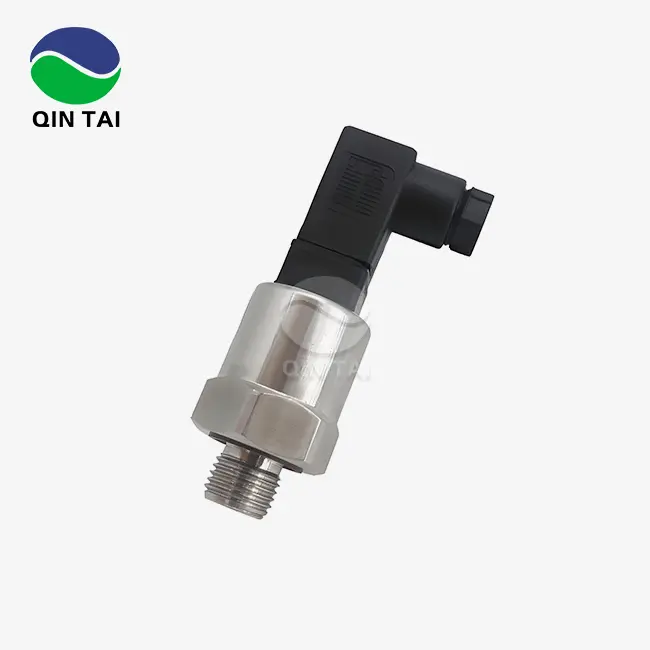
Qintai is the biggest company in China that makes urea pressure sensor solutions. They have OEM agreements with Weichai Power, Yuchai Power, and Quanchai Power that put them at the top of the market. Our ISO 9001, IATF 16949, and other foreign standards make sure that our products are of the highest quality. Additionally, our independent R&D team is always improving sensor technology by filing 58 invention patents. We provide full OEM/ODM services, including the ability to customize products to meet the needs of specific applications.
Our mass production skills ensure supply chain security for large-scale purchasing needs. Our industrial-grade DEF pressure sensors offer superior resistance to corrosion, stability at high and low temperatures, and measurement accuracy that is necessary for big trucks, building equipment, farm equipment, and generator sets to meet emission regulations. Contact our technical experts at info@qt-sensor.com to talk about your needs and find out how our certified, low-cost solutions can improve the stability of your SCR system and help you reach your long-term relationship goals.
References
1. Majewski, W.A. and Khair, M.K. (2018). Diesel Emissions and Their Control. SAE International, Warrendale, PA.
2. Johnson, T.V. (2015). "Review of Selective Catalytic Reduction (SCR) and Related Technologies for Mobile Applications." SAE International Journal of Engines, 8(3), 1122-1144.
3. Koebel, M., Elsener, M., and Madia, G. (2001). "Recent Advances in the Development of Urea-SCR for Automotive Applications." SAE Technical Paper Series, 2001-01-3625.
4. Shost, M.A., Noetzel, M.J., Wu, M., Sugiarto, T., Bordewyk, T., Fullks, G., and Fisher, G.B. (2008). "Monitoring, Feedback and Control of Urea SCR Dosing Systems for NOx Reduction." SAE International Journal of Fuels and Lubricants, 1(1), 414-423.
5. Zhang, H. and Wang, J. (2015). "Adaptive Observer Design for Urea-SCR Systems with Time-Varying Parameters." IEEE Transactions on Control Systems Technology, 23(4), 1464-1477.
6. Willems, F., Cloudt, R., van den Eijnden, E., van Genderen, M., Verbeek, R., de Jager, B., Boomsma, W., and van den Heuvel, I. (2007). "Is Closed-Loop SCR Control Required to Meet Future Emission Targets?" SAE Technical Paper Series, 2007-01-1574.

Our customers’ satisfaction speaks for our quality — contact us to experience the same reliable service.