- English
- French
- German
- Portuguese
- Spanish
- Russian
- Japanese
- Korean
- Arabic
- Greek
- German
- Turkish
- Italian
- Danish
- Romanian
- Indonesian
- Czech
- Afrikaans
- Swedish
- Polish
- Basque
- Catalan
- Esperanto
- Hindi
- Lao
- Albanian
- Amharic
- Armenian
- Azerbaijani
- Belarusian
- Bengali
- Bosnian
- Bulgarian
- Cebuano
- Chichewa
- Corsican
- Croatian
- Dutch
- Estonian
- Filipino
- Finnish
- Frisian
- Galician
- Georgian
- Gujarati
- Haitian
- Hausa
- Hawaiian
- Hebrew
- Hmong
- Hungarian
- Icelandic
- Igbo
- Javanese
- Kannada
- Kazakh
- Khmer
- Kurdish
- Kyrgyz
- Latin
- Latvian
- Lithuanian
- Luxembou..
- Macedonian
- Malagasy
- Malay
- Malayalam
- Maltese
- Maori
- Marathi
- Mongolian
- Burmese
- Nepali
- Norwegian
- Pashto
- Persian
- Punjabi
- Serbian
- Sesotho
- Sinhala
- Slovak
- Slovenian
- Somali
- Samoan
- Scots Gaelic
- Shona
- Sindhi
- Sundanese
- Swahili
- Tajik
- Tamil
- Telugu
- Thai
- Ukrainian
- Urdu
- Uzbek
- Vietnamese
- Welsh
- Xhosa
- Yiddish
- Yoruba
- Zulu
How Does a Smart Pressure Monitoring Device Improve Workplace Safety?
A smart pressure monitoring device improves workplace safety by delivering continuous, real-time pressure data that enables engineers and operators to detect anomalies before they escalate into failures. Unlike conventional gauges that require manual checks, these devices use integrated sensors, wireless communication, and automated alert systems to flag overpressure, leaks, or sudden pressure drops instantly. In industrial environments such as heavy truck manufacturing, construction machinery, and generator set operations, this level of precision directly reduces equipment damage, personnel risk, and unplanned downtime — making intelligent pressure monitoring a cornerstone of modern industrial safety strategy.
Understanding Workplace Safety Challenges Related to Pressure Monitoring
Every day, industrial sites have to deal with risks related to pressure. Some of the most common reasons why heavy industry equipment breaks down and workers get hurt are burst lines, leaks that aren't found, and overpressure situations. The U.S. Bureau of Labor Statistics says that a lot of mechanical injuries that happen each year in the energy and industrial sectors are caused by breakdowns of pressure systems.
The Limitations of Traditional Monitoring Methods
Normal pressure gages need to be checked by hand on a regular basis, which means that dangerous changes in pressure can go unnoticed between checks. Mistakes made by people, influences from the surroundings, and changes in gage calibration all make measurements less accurate. Even a short loss of pressure accuracy can cause regulatory non-conformance or expensive system damage on OEM production lines and SCR/DPF aftertreatment systems that have to work within tight emission compliance windows. Mishaps happen in the time between when a problem starts and when someone notices it. There are smarter ways to handle risks, and procurement experts are already starting to change how they think about it.
How Smart Pressure Monitoring Devices Work to Enhance Safety?
A current method for checking pressure is much more than just a digital display. Over the course of the equipment's life, it collects, sends, and analyzes pressure data continuously as an interconnected sensing platform.
Core Technology Behind Real-Time Pressure Intelligence
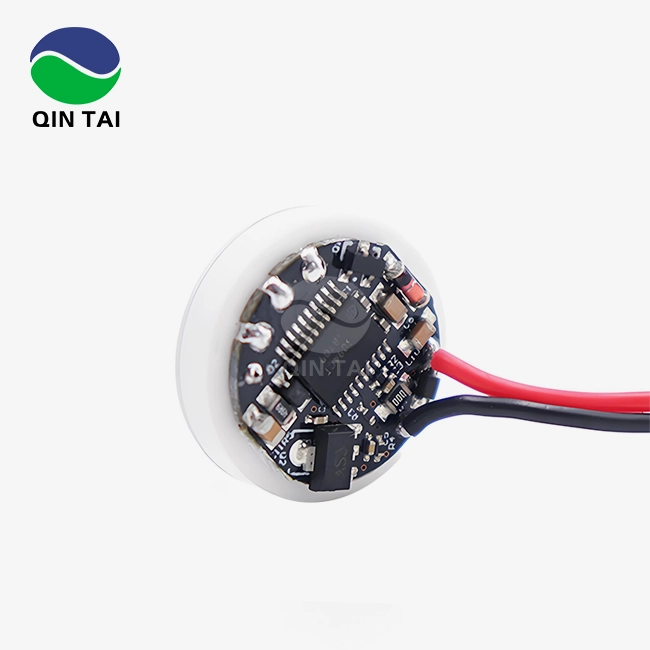
Micro-Electro-Mechanical devices (MEMS) pressure sensors are at the heart of these smart pressure monitoring device units. They can record differential, gage, or absolute pressure and do so very accurately. Wirelessly, data is sent to a central control unit or a cloud-based platform, where algorithms look for changes that aren't within certain limits. Some more modern units have G-sensors that can pick up on changing conditions, like how direct TPMS transmitters switch to drive mode when the vehicle speeds up. This makes sure that the device changes its transmission frequency based on its operating state.
Automated calibration routines keep measurements accurate over time, which is very important for uses like diesel engine exhaust aftertreatment, where DPF differential pressure readings need to stay correct to meet China VI and Euro VI emission standards.
Key Benefits of Implementing Smart Pressure Monitoring Devices in the Workplace
When you switch from reactive to proactive pressure management, you can see improvements in working efficiency, safety, and compliance. Here are the main benefits that buying managers and R&D engineers always say they get after deployment:
- Early anomaly detection: Continuous monitoring identifies pressure deviations within seconds, allowing operators to intervene before a minor irregularity becomes a critical failure. Studies in industrial process safety indicate that predictive alerts can reduce pressure-related incidents by up to 40%.
- Reduced human error: Automated data collection eliminates the inaccuracies associated with manual gauge readings, shift handover gaps, and transcription mistakes — issues that remain persistent in facilities still using analog instruments.
- Regulatory compliance support: For OEMs operating under Euro VI or China VI frameworks, precise exhaust backpressure and DPF differential pressure data is non-negotiable. Smart monitoring ensures continuous documentation of these parameters, simplifying audit readiness.
- Lower maintenance costs: Predictive maintenance enabled by trend analysis reduces unscheduled shutdowns. Research published by Deloitte suggests predictive maintenance strategies can cut maintenance costs by 25% and reduce equipment breakdowns by 70%.
These benefits of a smart pressure monitoring device directly lead to better workplaces, stronger compliance, and real cost saves. These effects are felt in technical departments, buying teams, and the approval processes for management.
Comparing Smart Pressure Monitoring Devices with Traditional Solutions
If you want to choose between old-fashioned pressure instruments and new, smart monitoring, you need to be honest about the performance trade-offs.
Wireless vs. Wired: Flexibility and Installation
While wired pressure sensors offer stable signal integrity, they require a lot of building infrastructure, especially when they are being used to replace older ones. Wireless smart devices cut down on the cost of wiring and make it possible to put sensors in places that hardwired systems couldn't before. This means that aftermarket repair shops and parts suppliers can install parts faster and charge less for labor.
Concerns about battery life are still valid. Industrial pressure transmitters of good quality usually have low-voltage-optimized parts that last longer, and a lot of them are fully enclosed to get IP67 protection ratings, which means they can be used in harsh places like mines, construction sites, and generator set enclosures.
ROI and Long-Term Value
Smart pressure monitoring device costs more up front than regular gages, but the value over its lifetime changes the equation. Most OEM procurement teams get their money back within 12 to 24 months of operation, thanks to lower incident costs, lower upkeep costs, and the end of manual inspection work. Predictive pressure monitoring helps assets last longer, which is especially helpful for generator set manufacturers that supply mines and power plants.
Integrating Smart Pressure Monitoring Devices Into Existing Safety Protocols
It's only useful to put in place a new tracking system if it works well with current processes, data systems, and team skills.
Installation, Calibration, and Staff Training Best Practices
It is very important to place sensors correctly. Sensors need to be put in places that really show the operating pressure, not places that are affected by turbulent flow or differences in temperature. Long-term measurement accuracy is maintained by following regular testing plans that are in line with the device manufacturer's instructions and industry standards like ISO 9001 quality management requirements.
Training staff is just as important. It's important for engineers and workers to have clear rules for how to read alerts, report problems, and do simple maintenance checks. When teams know what the data means, not just that an alert went off, they can respond faster and be less likely to set off false alarms. Before putting a lot of these devices into SCR/DPF systems, supply chain managers should make sure that the software works with them and that they can be customized in terms of parameters.
Conclusion
Pressure-related risks are still a real operating risk in heavy industry, but the tools used to deal with them have come a long way. Modern OEMs, system developers, and industrial operators need a smart pressure monitoring gadget that gives them real-time insight, automated intelligence, and compliance paperwork. From making diesel engines to using generators in remote mines, intelligent pressure sensing bridges the gap between gathering data and taking action, which protects workers and keeps machines running longer.
FAQ
Q1: How quickly can a smart pressure monitoring device detect a pressure anomaly?
A: Most industrial-grade smart pressure monitors sample at 100 Hz or higher, which means that any changes are noticed right away. Within one to three seconds of the threshold being broken, an alert is usually sent to a control unit or an operator interface.
Q2: What maintenance does a smart pressure monitoring device require?
A: Regular maintenance checks the accuracy, checks the battery life for wireless units, and looks at the sensor seals in places that are acidic or have a lot of moisture. Seal care isn't needed as often on units with IP67 sealing, but they should still be checked once a year.
Q3: Can these devices integrate with existing industrial IoT platforms?
A: Yes. Most new pressure transmitters work with common transmission methods like CAN bus, Modbus, or 4–20 mA analog output. This means they can be used with existing industrial data management systems and emission control ECUs.
Q4: Are smart pressure sensors compliant with international certifications?
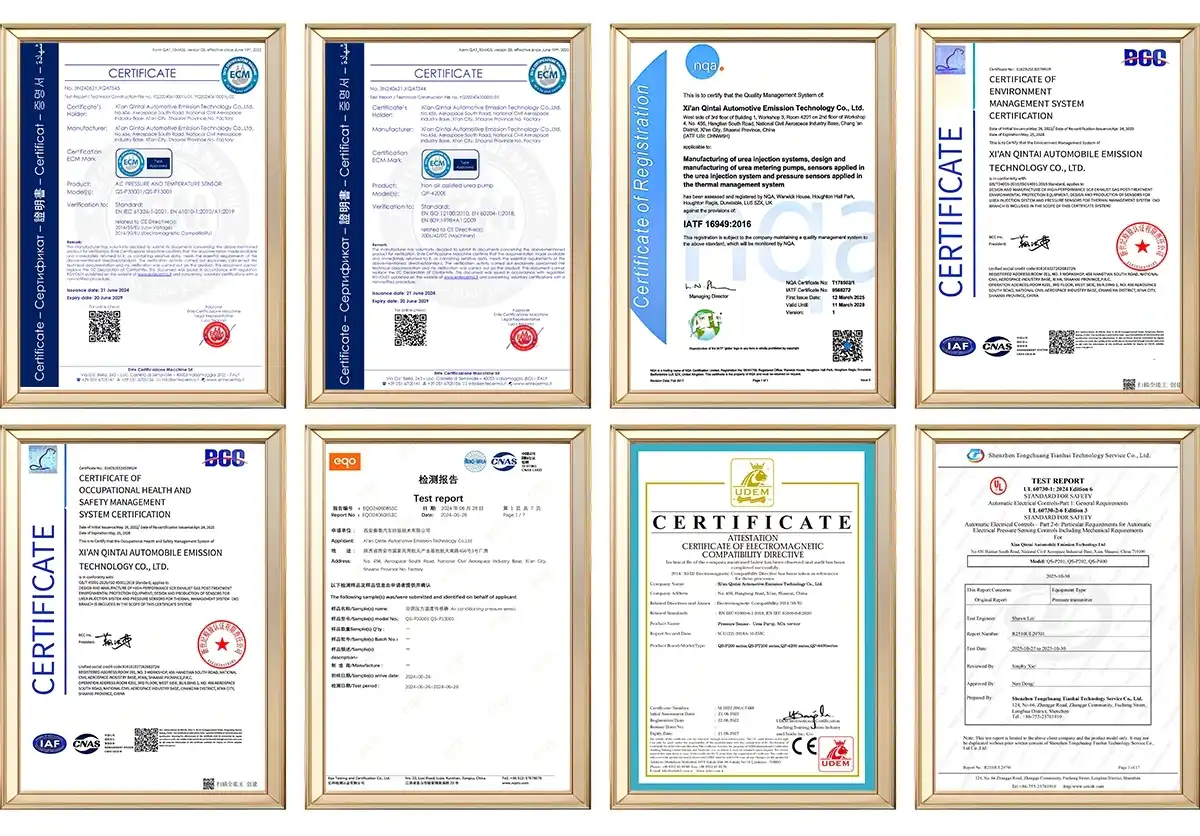
A: Manufacturers with a good reputation have certifications like ISO 9001, IATF 16949, CE, and explosion-proof (Ex) ratings. Before accepting a provider for OEM or mass production work, you should always ask to see proof of their certification.
Partner with Qintai — Your Trusted Smart Pressure Monitoring Device Supplier
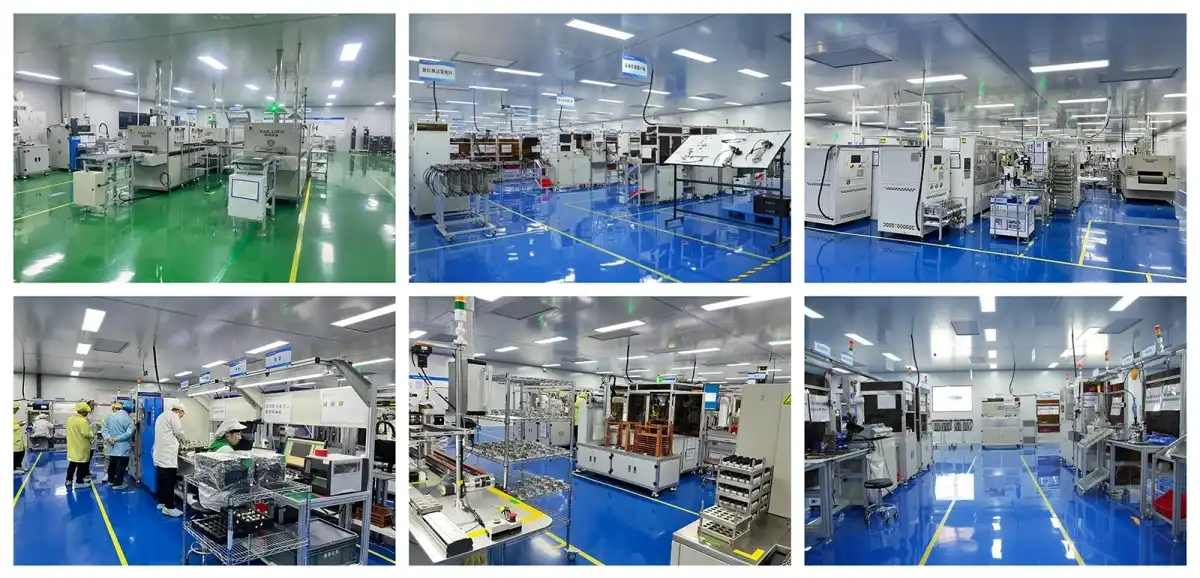
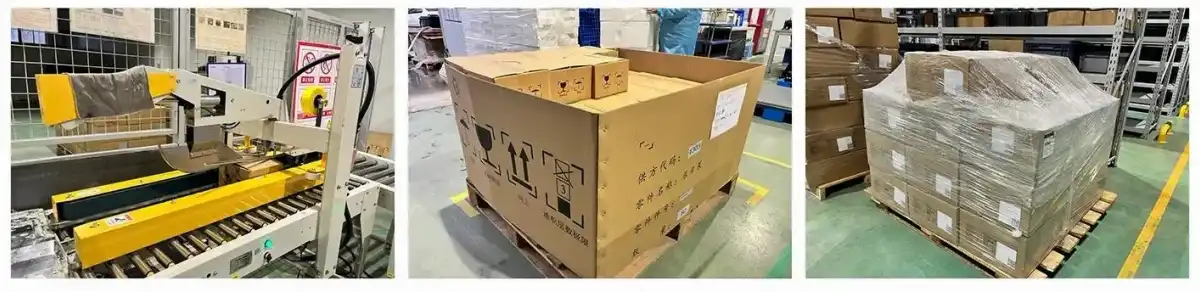
Qintai, established in 2001 and recognized as a national high-tech enterprise, supplies precision pressure sensors and SCR aftertreatment solutions to over 60 countries. As the No. 1 OEM supplier at China market share — serving Weichai Power, Yuchai Power, and Quanchai Power — Qintai holds ISO 9001, IATF 16949, CE, Ex, and UL certifications, with 58 invention patents filed. Whether you need a smart pressure monitoring device manufacturer for mass production or a customized OEM solution, our engineering team is ready. Contact us at info@qt-sensor.com to request a product consultation.
References
1. U.S. Bureau of Labor Statistics — Census of Fatal Occupational Injuries, 2022.
2. Deloitte Insights — Predictive Maintenance and the Smart Factory, 2017.
3. International Organization for Standardization — ISO 9001:2015 Quality Management Systems, 2015.
4. SAE International — SAE J2657: TPMS Transmitter Performance Requirements, 2010.
5. European Commission — Euro VI Emission Regulation for Heavy-Duty Vehicles (Regulation EC No 595/2009), 2009.
6. National Institute for Occupational Safety and Health (NIOSH) — Engineering Controls for Pressure Hazards in Industrial Workplaces, 2019.
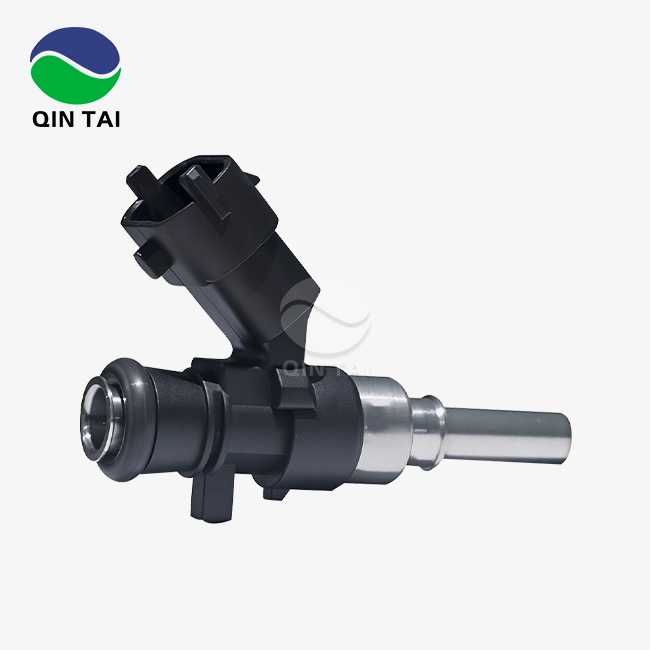
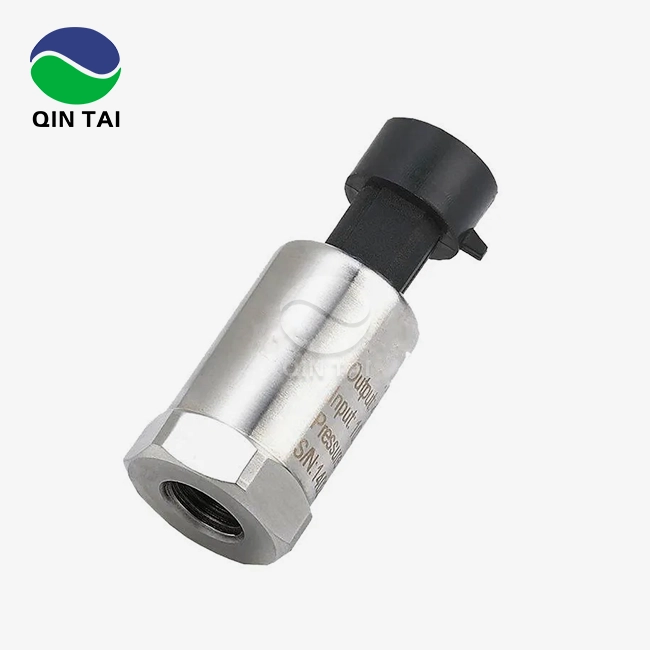
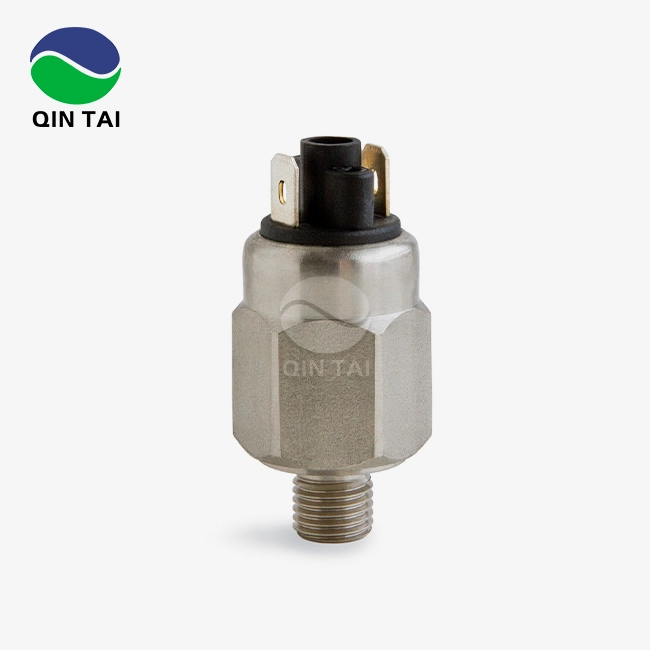

Our customers’ satisfaction speaks for our quality — contact us to experience the same reliable service.