- English
- French
- German
- Portuguese
- Spanish
- Russian
- Japanese
- Korean
- Arabic
- Greek
- German
- Turkish
- Italian
- Danish
- Romanian
- Indonesian
- Czech
- Afrikaans
- Swedish
- Polish
- Basque
- Catalan
- Esperanto
- Hindi
- Lao
- Albanian
- Amharic
- Armenian
- Azerbaijani
- Belarusian
- Bengali
- Bosnian
- Bulgarian
- Cebuano
- Chichewa
- Corsican
- Croatian
- Dutch
- Estonian
- Filipino
- Finnish
- Frisian
- Galician
- Georgian
- Gujarati
- Haitian
- Hausa
- Hawaiian
- Hebrew
- Hmong
- Hungarian
- Icelandic
- Igbo
- Javanese
- Kannada
- Kazakh
- Khmer
- Kurdish
- Kyrgyz
- Latin
- Latvian
- Lithuanian
- Luxembou..
- Macedonian
- Malagasy
- Malay
- Malayalam
- Maltese
- Maori
- Marathi
- Mongolian
- Burmese
- Nepali
- Norwegian
- Pashto
- Persian
- Punjabi
- Serbian
- Sesotho
- Sinhala
- Slovak
- Slovenian
- Somali
- Samoan
- Scots Gaelic
- Shona
- Sindhi
- Sundanese
- Swahili
- Tajik
- Tamil
- Telugu
- Thai
- Ukrainian
- Urdu
- Uzbek
- Vietnamese
- Welsh
- Xhosa
- Yiddish
- Yoruba
- Zulu
How to Choose the Best SCR Dosing Pump for Reliable DEF Flow on Trucks
To choose the best SCR dosing pump for steady DEF flow on trucks, start with the system, not the catalog. Match the pump's flow range, pressure, voltage, and wetted materials to your engine's SCR layout and your DEF grade. Confirm freeze protection, ECU communication, and endurance data, then test samples under real vehicle conditions. A good SCR dosing pump delivers steady AUS 32 to the dosing module, so the system meets NOx limits without warning lights or power derates. I also compare suppliers on certifications, production consistency, and technical support, because a pump that tests well still needs dependable supply behind it.
Understand How an SCR Dosing Pump Works Before Selecting One
How the Pump Moves DEF From Tank to Injector
It goes through an SCR dosing pump, which gets DEF from the tank and sends it to the dosing module. The amount is set by the SCR controller or the engine ECU depending on how much the engine is being used, how fast the exhaust is moving, and what the NOx monitor tells it. So, steady flow is more important than getting the most out of it. A study from 2000 in Catalysis Today said that urea-SCR can cut NOx by more than 90% if the right conditions are met. The right amount of urea must arrive at the right time for that to happen. Some pumps drift, pulse, or lag, which causes the controller to have to make changes all the time. This hurts emissions.
Key Components Inside a DEF Pump
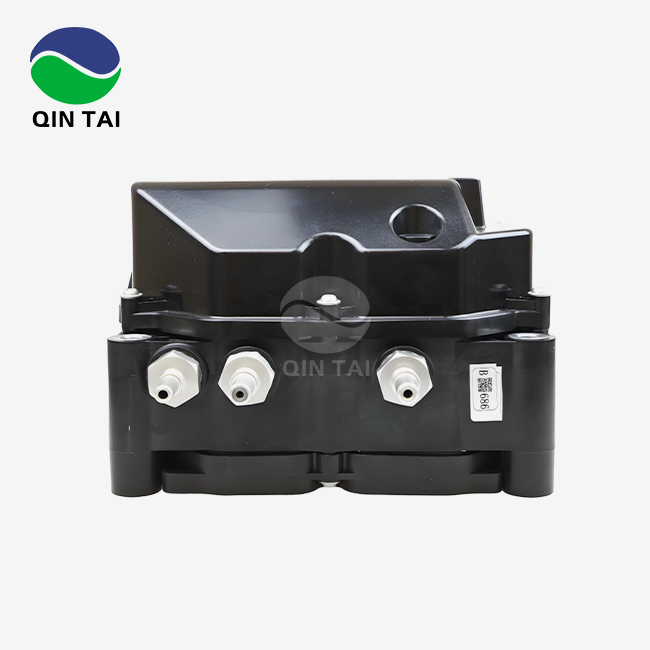
Before I compare types, I check the inside of the case to see what's there. A lot of them have a motor or air drive, a diaphragm or some other kind of metering part, check valves, a filter, seals, contacts, and parts that keep the liquid from freezing. How stable the flow is changes with each part. Backflow is stopped by valves, air is kept out by seals, and filters keep debris out of small holes. Some have a heater and a purge button that cleans the lines when the unit is off. This unified way is used by the urea pump from Qintai, which has a pump, filter, and heater all built into one small machine. You can ask better questions when you get the instructions if you know these parts.
Why DEF Demands Special Materials?
Deionized water with 32.5% urea is what DEF is. It is part of ISO 22241 and is called AUS 32. It has strict quality limits. Crystals form when it dries out, and it freezes at 12°F (-11°C). It also changes when metals are added. Copper, brass, and some kinds of plastic can get into the fluid or break down over time. For this reason, all parts that will get wet should be made for AUS 32 service. Ask for a list of the materials that will work together instead of hearing that they will in general. If you buy an SCR dosing pump made of the wrong materials, you'll have to pay a lot to fix what you thought was a small cost.
Define the Truck's Required SCR Dosing Pump Specifications
Flow Range and Pressure
I can now see what the operating envelope is. How much flow is needed depends on the engine's power, the NOx output, the duty cycle, and the way the OEM doses the fuel. DEF makes up about 2% to 3% of diesel fuel. This means that a heavy-duty engine that is going strong needs a lot more DEF than one that is just sitting there. Ask for the minimum, nominal, maximum, and peak flow instead of just one number. For the injector, the line length, the height, and any return circuits, the pressure needs to be just right. A pump can dose badly even if it only hits the target pressure in one place when demand is low. This is because metering errors are much bigger when demand is low.
Electrical Requirements
When it comes to integration, electrical fit stops a lot of problems. Off-road and heavy cars can use both 12 V and 24 V DC, so make sure you know which one the system works with. Also, look at the type of connection, the wiring, the starting current, and the constant power draw. Make sure it can work with electromagnetic fields. You should also tell the pump how to talk to the ECU or SCR controller during the calibration. One way to do this is through CAN-based commands. Using little power is helpful when many things are using the same power source. According to Qintai, its urea pumps make little noise and don't use much power. Still, I believe you should ask for the present curve for your application.
Mounting, Temperature, and Vibration
Whether a good pump makes it through the frame depends on small parts in the gears. Measure the fixing holes, make sure the ports face the right way, make sure water can't get in, and check the full temperature range, from cold starts to hot engine bays. It is better for building and farming equipment to have vibration data that fits their job cycle, as these types of equipment shake more than highway tractors. Cold starts need extra care because DEF freezes. As well as logic that keeps the solution from freezing, look for heaters that are built in. Dosing can only happen after the solution has thawed. The urea pump made by Qintai has both of them. It also has a purge function that cleans the lines. Always test a plan in your own cold room before giving it the green light.
Compare SCR Dosing Pump Types by Application
Electric and Pneumatic Designs
Electric pumps can be used on most trucks. The calibration team can give them clear directions because they are easy to connect to DC power, computer controls, and CAN-based systems. Air-filled versions make sense if you already have compressed air on board. But they need to be able to filter the air and control the pressure well, or oil and moisture can mess up the dosing. The pressure level is another thing that sets them apart, so before you choose one, make sure that it works with your injector or dose module. To find out what design is being used, I also ask the engine or aftertreatment supplier. This is because a pump that works with one plan might not work with another.
Purpose-Built Versus General Metering Pumps
Is it possible for an industrial metering pump to move urea solution? Trucks need more. A certain kind of SCR dosing pump needs to be able to deal with crystallization, dose changes that happen quickly, shaking, small installations, and radio signals from cars. They keep the flow steady and can correctly measure changes in pressure, which is why most pumps use them. Another type of pump that can handle higher pressures is the gear pump. You shouldn't compare the price or the headline flow; you should compare the whole system. A cheaper pump that doesn't work with injectors or needs to be serviced more often costs a lot more over the life of the car.
Matching the Pump to Vehicle Class and Climate
Light-duty cars need to be small, quiet, and not use a lot of power most of the time. Heavy-duty trucks need to be built to last, have steady diagnosis and dosing, and be simple to keep up. Long-haul, city delivery, building, mining, and chores for generator sets can all be hard on a pump in different ways. That's why places that are cold need to keep things from freezing and places that are hot need to keep the heat down. Then pick between a fix made by the OEM and a design made just for you. Being able to change the unit's connection, flow range, or control code from a standard one makes sense. But no matter what, you should test the pump with the tank, filter, heated lines, injector, ECU, and sensors all together.

Evaluate Reliability, Service Life, and Testing
Signs of a Durable Pump
It doesn't matter if the SCR dosing pump is dirty, vibrates, changes temperatures, gets wet, or is used over and over again; the flow and pressure stay the same. It is necessary to find wet materials that can be used together, strong valves and seals, low pulsation, electrical connections that are sealed, and materials that don't freeze or cavitate. What makes a difference in service life is how pure the DEF is, how well it is put, how often it is used, and the job cycle. This means that no truck supplier can say that all of their trucks will have the same service life. Find out about endurance data that fits your project's needs. When Qintai says that its urea pumps are reliable and last a long time, I think you should look at test reports to see if they are true.
Maintenance and Troubleshooting
Simple routines can help keep your DEF pump from breaking down. Keep an eye out for leaks, crystal growth in the filters and lines, and bad electrical connections. Also, make sure you follow the right steps to purge. When something goes wrong, you should always fix it in this order: power, priming, line limits, air entry, check valves, controller signals, and too much heat. If you skip steps, you'll save time and miss out on good parts. Service parts like filters, seals, and joints should always be on hand for trucks and shops. To make sure the fluid stays good, make sure it meets ISO 22241 standards and keep it away from heat and direct sunlight.
Testing and Calibration Before You Commit
The tests only show what the instructions says they will show. First, get rid of the air and prime the system. Then, measure the amount at the lowest, lowest, and highest places while keeping the temperatures the same. After you're done, compare the results to the controller's instructions or the maker's calibration curve. If it's important, make sure you have proof that the product has been tested for EMC, flow, pressure, leakage, current, endurance, freeze-thaw, vibration, chemical compatibility, and EMC. Find out about the pump curve, the material list, the wire drawing, how to put it together, the inspection report, the certificates, the warranty terms, and extra parts. People who have real validation are often able to tell the difference between providers who don't have it and those who do.
Compare Suppliers Before You Buy an SCR Dosing Pump
Technical Capability and Quality Control
I think about the people who work behind the SCR dosing pump as being like the pump itself. A good supplier knows how to work with industrial SCR systems, trucks, diesel engines, and mobile equipment. Also, they make sure that each batch goes through a quality control process that is written down. Find out how the team does their own study, checks their work, and deals with changes to the plan. Quality engineering is even more important for OEM buyers who need to change power, connections, housings, flow, pressure, or private marking. Price is also important. Find out about the sample support, the minimum order size, the wait time, the experience with exporting, and the logistics. It's important to get quick technical answers during integration, since even small questions about tuning can make the process take longer
Certifications and Production Experience
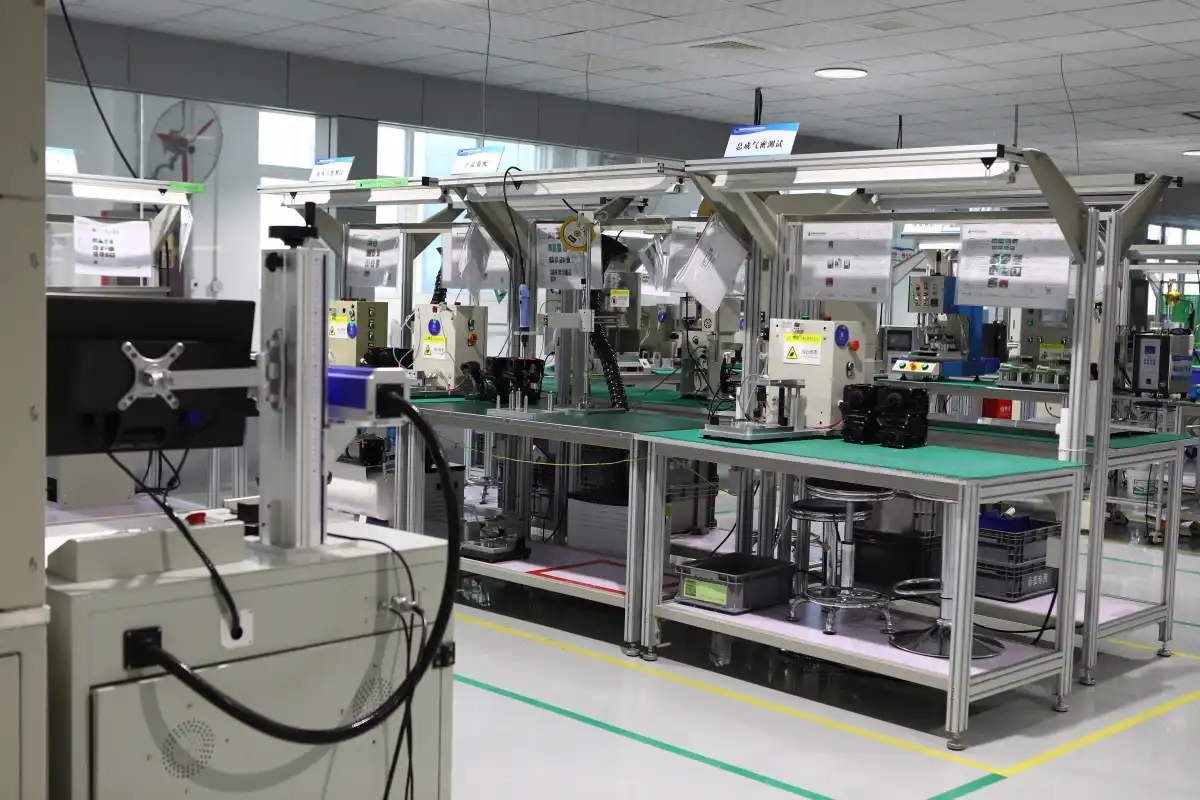
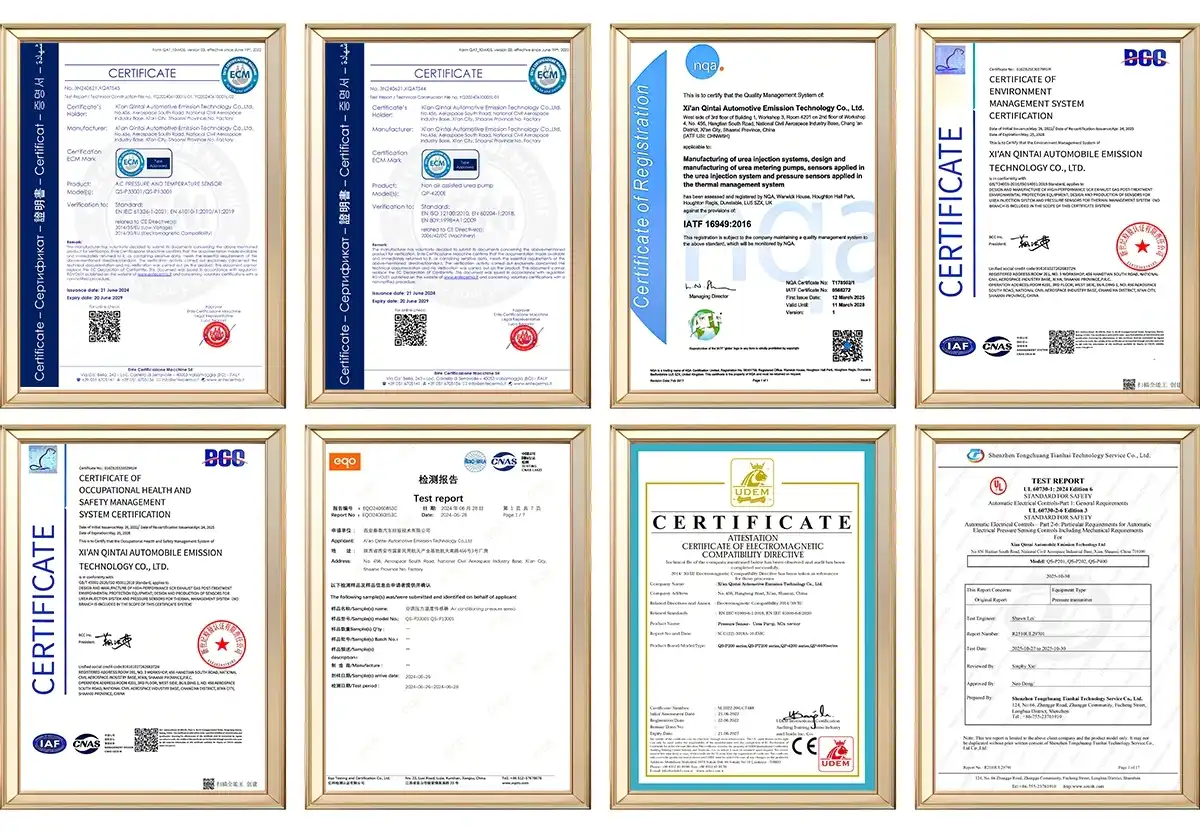
Since a supplier has certificates, you can be sure that they follow standard procedures. Qintai is a national tech company that has been around since 2001. It has ISO 9001, IATF 16949, CMC, Ex, UL, CE, REACH, and RoHS certificates, and it has applied for 58 idea patents. Some of the most important power companies in China get a lot of their support from us. Our market share in China is the largest. Making a lot of things is part of these programs, and they need to be the same from batch to batch. In more than 60 countries and areas, we sell our goods, and our own R&D team is always working to improve them. Check a supplier's certificates right away to make sure they meet the needs of your target market.
What Qintai Offers Buyers
These are the main parts of our urea machine. The tank sends AdBlue at the right pressure to the dosing module. The dosing module then talks to the ECU to set the dose based on the load on the engine, the flow of exhaust, and information from the NOx monitor. The pump, filter, and heater are all made in one small package. It also has a purge function and freeze protection that are built in. It doesn't make a lot of noise or use a lot of power. Aside from that, we also work on sensors, especially pressure sensors, and diesel engine SCR aftertreatment. From designing to making a lot of them, our OEM and ODM services can be changed to fit your wants.
Procurement Checklist and Final Decision
Questions to Ask Before You Order
Write down every answer before you send out the order. Technically, look at the range of flow, pressure, voltage, current, materials that can get wet, protection against freezing, controller functions, communication interface, operating temperature, vibration rating, and security against getting in. When it comes to business, you should know about the minimum order quantity (MOQ), the wait time, the production capacity, customization, the guaranty, extra parts, export papers, and customer service after the sale. Written answers make it clear what the pump should do. They also give the same reference to both the technical team and the buying team when they compare quotes. This makes it easy for management to agree.
Pilot Testing With Your Own System
You should test the pump with your own DEF, tank, hoses, injector, controls, and car before you buy a lot of them. Run cold starts to see if they freeze and cause dosing delays. Make sure the system doesn't get too hot by testing it with heat. If the ECU and adapter still don't fit or make contact after the shake and endurance rounds, make sure they do. Rules make things riskier. Heavy-duty NOx can't be more than 0.2 g/bhp-hr, according to an EPA rule from 2010. There are also strict rules for Euro VI and China VI. Test runs are a quick and cheap way to find integration problems before they show up in a full production batch.
Making the Final Choice
It's not the cheapest or most powerful pump that's the best. It should meet your needs for hydraulics, electricity, the environment, mechanics, and control, and it should give you the right amount of DEF throughout the whole duty cycle. Uptime, diagnostics, serviceability, and the supply of extra parts are all things that fleet managers should think about. OEMs need to pay attention to integration, customization, validation, and the accuracy of production. Distributors should make sure that the supply and paperwork are safe. I believe you should pick two or three good providers, look at samples, compare test results and total prices, and then choose the one that works best in real life.
Conclusion
You need to look at the SCR dosing pump in the context of the whole SCR system in order to choose the best one. The pump must send precise, steady DEF to the dosing module when told to by the controller. To meet EPA, Euro VI, and China VI guidelines and lower NOx levels, this has to be done. The most important things to think about are the flow range, pressure, voltage, mounting, temperature, vibration, freeze protection, and the types of materials that can be used with AUS 32. Most trucks can use electric pumps, and pumps that are made for a specific job are better at dealing with crystallization and sudden changes in strength than pumps that are used for everything. Records of tests, calibrations, and maintenance can show how long a pump will last. There is less risk when sellers have certifications, have experience making things, and have written answers to questions about buying.
FAQ
What is the function of a urea pump?
It moves AdBlue from the tank to the dose module when the pressure is right. This helps with giving the right amount of NOx to cut down on pollution and keeps the flow and pressure at the right levels for the catalyst to do its job.
How is the urea pump controlled?
When it talks to the ECU, the NOx monitor data, the load on the engine, and the flow of fumes all play a role in how much to give. You tell the pump what to do, so the amount is based on how the engine is running.
What are the advantages of Qintai urea pumps?
They work well, last a long time, are small because they have a pump, filter, and heater all in one, dose correctly across a range of temperatures, protect against freezing, have a purge function, and don't make a lot of noise or use a lot of power.
How does the pump handle freezing conditions?
It has heaters and logic built in to keep it from freezing, so AdBlue melts before it is sent. Before the dose can start, the solution must be warmer than freezing.
Which DEF grade should I use?
Make sure the fluid you use meets ISO 22241 AUS 32 standards, and talk to your provider to make sure the materials will mix.
Request an SCR Dosing Pump Quote From Qintai
Qintai is certified by both ISO 9001 and IATF 16949 to make SCR dosing pumps. They do OEM and ODM work, which means they can change their goods to fit your wants. Email info@qt-sensor.com with your order number, the type of engine you have, the DEF system data, the flow and pressure goals, the voltage range, and the temperature range. When we talk about your needs, our team will come up with a pump that fits them.
References
1. International Organization for Standardization, ISO 22241-1: Diesel Engines — NOx Reduction Agent AUS 32 — Part 1: Quality Requirements, 2019
2. U.S. Environmental Protection Agency, Control of Air Pollution From New Motor Vehicles: Heavy-Duty Engine and Vehicle Standards and Highway Diesel Fuel Sulfur Control Requirements, Federal Register, 2001
3. Koebel, M., Elsener, M., and Kleemann, M., Urea-SCR: A Promising Technique to Reduce NOx Emissions From Automotive Diesel Engines, Catalysis Today, 2000
4. Johnson, T. V., Review of Diesel Emissions and Control, SAE International Journal of Engines, 2010
5. European Parliament and Council, Regulation (EC) No 595/2009 on Type-Approval of Motor Vehicles and Engines With Respect to Emissions From Heavy Duty Vehicles (Euro VI), 2009
6. Ministry of Ecology and Environment of China, GB 17691-2018 Limits and Measurement Methods for Emissions From Diesel Fuelled Heavy-Duty Vehicles (China VI), 2018

Our customers’ satisfaction speaks for our quality — contact us to experience the same reliable service.