- English
- French
- German
- Portuguese
- Spanish
- Russian
- Japanese
- Korean
- Arabic
- Greek
- German
- Turkish
- Italian
- Danish
- Romanian
- Indonesian
- Czech
- Afrikaans
- Swedish
- Polish
- Basque
- Catalan
- Esperanto
- Hindi
- Lao
- Albanian
- Amharic
- Armenian
- Azerbaijani
- Belarusian
- Bengali
- Bosnian
- Bulgarian
- Cebuano
- Chichewa
- Corsican
- Croatian
- Dutch
- Estonian
- Filipino
- Finnish
- Frisian
- Galician
- Georgian
- Gujarati
- Haitian
- Hausa
- Hawaiian
- Hebrew
- Hmong
- Hungarian
- Icelandic
- Igbo
- Javanese
- Kannada
- Kazakh
- Khmer
- Kurdish
- Kyrgyz
- Latin
- Latvian
- Lithuanian
- Luxembou..
- Macedonian
- Malagasy
- Malay
- Malayalam
- Maltese
- Maori
- Marathi
- Mongolian
- Burmese
- Nepali
- Norwegian
- Pashto
- Persian
- Punjabi
- Serbian
- Sesotho
- Sinhala
- Slovak
- Slovenian
- Somali
- Samoan
- Scots Gaelic
- Shona
- Sindhi
- Sundanese
- Swahili
- Tajik
- Tamil
- Telugu
- Thai
- Ukrainian
- Urdu
- Uzbek
- Vietnamese
- Welsh
- Xhosa
- Yiddish
- Yoruba
- Zulu
How Urea Dosing Pressure Sensors Improve SCR Performance
Urea dosing pressure sensor technology provides real-time pressure data that permits precise diesel exhaust fluid injection. These components assess dosing line pressure to ensure the ECU delivers correct urea rates, eliminating under-dosing that increases NOx emissions and over-dosing that wastes fluid. These sensors convert reactive SCR systems into adaptive ones by continuously monitoring system pressure conditions. They automatically adjust to engine load variations, ambient temperature changes, and operational demands in heavy trucks, construction equipment, and stationary power generation units.
Selective Catalytic Reduction technology at the forefront of diesel engine pollution management converts hazardous nitrogen oxides into harmless nitrogen and water vapor. This procedure relies on accurate urea solution delivery at the proper time and concentration. This precision depends on accurate pressure monitoring in urea dosing systems, which affects emission compliance, operating efficiency, and system durability. Procurement and engineering teams may analyze, choose, and install pressure sensing technologies to improve SCR system performance in mining operations and agricultural machinery fleets with this guidance.
Understanding Urea Dosing Pressure Sensors
Core Functions and Operating Principles
Urea injection systems monitor hydraulic pressure between the dosing pump and injector nozzle via Urea dosing pressure sensors. These devices transfer mechanical pressure into electrical signals the engine control unit uses to manage dosing pump speed and injection time. Specialized sensor devices convert pressure-induced mechanical deformation into electrical output proportional to pressure. A closed-loop control system with real-time input allows the ECU to alter dosage settings depending on pressure circumstances rather than theoretical models.
Urea dosing pressure sensors and dosage control units constitute a complex monitoring network. ECU rapidly adjusts pump operation to restore ideal conditions when sensor detects pressure departures from desired ranges. This dynamic reaction eliminates SCR system faults like crystallization from high pressure or inadequate atomization from low pressure. The sensor's position between the pump and injector best represents dosage circumstances since temperature affects fluid viscosity and flow resistance throughout the delivery system.
Technical Specifications and Measurement Ranges
Modern Urea dosing pressure sensors measure from -14 to +130.5 psi for supply line conditions and diagnostic leak detection. Analog output signals from 0.5 to 4.5 VDC indicate pressure levels proportionally over the operational spectrum. High-performance sensors can detect pressure changes in milliseconds, enabling accurate dosage management during fast engine load shifts. Due to engine compartment heat and the freezing point of urea solution at 12°F, sensors must retain accuracy from -40°F to 185°F in demanding applications.
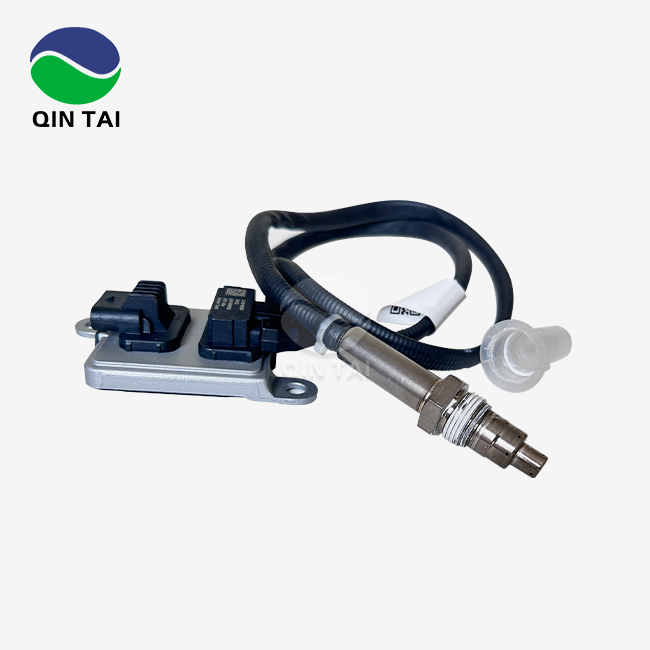
Advanced sensor characteristics for demanding SCR applications are shown by the Qintai Model QS-P226. Utilizing 5V supply voltage and ratiometric analog output, this sensor achieves ±0.5% accuracy throughout all pressure ranges. The gadget performs best between 60-80°F, although it can endure higher temperatures during typical usage. Before shipment, every unit is 100% tested to ensure measurement consistency for mass production applications where sensor variability might threaten emission compliance across vehicle fleets or equipment inventories.
Applications Across Industrial Sectors
These Urea dosing pressure sensors are versatile for diesel engines. Sensors help heavy-duty vehicles comply with emissions during highway and urban driving cycles, when engine load varies greatly. Construction gear in dusty, vibration-prone areas needs sensors with strong environmental sealing to prevent contamination-induced failures. Sensor stability and cold-start reliability are challenged by seasonal temperature variations and protracted storage in agricultural equipment. Mining generators and backup power facilities require sensors that can operate steadily for thousands of hours between maintenance.
Marine SCR systems have specific corrosion threats from salt and humidity. Manufacturing exhaust treatment applications demand sensors that can handle higher flow rates and bigger dosing systems than automotive installations. While each application requires different sensor qualities, pressure measurement stays consistent. Urea dosing pressure sensors are essential to the pollution control sector, supporting EPA Tier 4 Final requirements in North America and Stage V regulations in Europe.
Challenges in SCR Performance Without Proper Pressure Sensing
Consequences of Inaccurate Pressure Measurement
SCR systems without Urea dosing pressure sensors have several performance issues. Dosing errors increase NOx emissions, causing regulatory testing and on-road monitoring failures. Under-dosing lets extra nitrogen oxides pass through the catalyst unconverted, while over-dosing induces ammonia slip that emits smells and secondary particles. Thermal stress and chemical pollution shorten the catalytic converter's lifespan, requiring expensive aftertreatment system upgrades that might surpass $5,000 per unit in heavy-duty applications.
Urea dosing pressure sensor dosage errors severely degrade engine performance. As deposits form in the breakdown tube and catalyst substrate, excessive urea input raises exhaust backpressure. According to industry research, this limitation makes the engine work harder during regeneration cycles, increased fuel consumption, and 2-5% worse operating efficiency. When pressure levels fall outside permitted limits, the engine control unit enters restricted power modes, reducing vehicle productivity and potentially stranding equipment at distant work areas with limited maintenance access.
Diagnostic Complications and Maintenance Burdens
Maintenance workers struggle to troubleshoot diagnostic fault codes caused by irregular pressure readings from Urea dosing pressure sensors. Modern on-board diagnostic systems retain several SCR error codes, making sensor failures hard to distinguish from pump failures, injector blockage, and wire harness damage. Parts costs and vehicle downtime rise when technicians replace components instead of diagnosing. When pressure monitoring fails, the average heavy-duty truck needs SCR repairs costing $1,200–$3,500 per year, compared to $400–$800 for fleets employing high-quality sensors with predictive maintenance methods.
Without precise pressure data from Urea dosing pressure sensors, preventive maintenance fails. Technicians can't set baseline performance measurements or identify sensor drift indicating failure. This reactive maintenance technique causes unanticipated malfunctions during important operations. Many maintenance facilities lack the equipment and qualified staff to calibrate sensors. Due to uncertainty, fleet managers choose conservative replacement intervals that prematurely discard functioning sensors, raising operational costs across vast equipment populations.
How Urea Dosing Pressure Sensors Optimize SCR Performance?
Precision Dosing and Emission Control
Urea dosing pressure sensors ensure exact urea supply, improving NOx reduction efficiency. Real-time pressure feedback, exhaust temperature, flow rate, and engine load characteristics let the ECU compute proper dosage. A multi-variable control technique constantly changes injection time and volume to maintain stoichiometric ammonia-to-NOx ratios throughout the catalyst. Independent testing shows that high-accuracy pressure sensors increase NOx conversion efficiency by 3–7%, enabling OEMs meet regulatory margins for component aging and real-world operational variances.
Urea dosing pressure sensors' perfect dosage precision improves fuel economy and reduces emissions. Proper urea infusion reduces the number and length of active regeneration cycles needed to burn deposits. Precision pressure sensors enhance fuel economy by 0.5-1.2 mpg across varied driving cycles, saving heavier-duty vehicles over $800 per year at diesel pricing. These operational gains grow across fleet applications, where hundreds of cars save costs and justify premium sensor expenditures with payback times under 18 months.
Adaptive Control and Real-Time Response
Integrating Urea dosing pressure sensors and engine control units enables adaptive dosing systems that react instantly to operational conditions. The ECU automatically changes control settings to maintain goal delivery rates when pressure variances indicate pump wear or fluid temperature impacts. Preventing operating extremes that increase wear extends system component life via self-compensating behavior. The continuous feedback loop turns static dosage maps into dynamic control algorithms that optimise engine performance over its operational range rather than at calibration points.
Real-time monitoring allows predictive maintenance to decrease downtime. Urea dosing pressure sensor data is monitored by fleet management systems to detect deterioration tendencies before breakdowns. Gradual pressure drift suggests pump concerns, while occasional signal dropouts indicate wiring harness faults requiring maintenance. This diagnostic feature schedules maintenance during planned service intervals rather than emergencies. Industry case studies show that advanced telematics systems send sensor data to central monitoring facilities, allowing fleet managers to coordinate parts procurement and technician assignments, enhancing equipment availability by 4-8%.
Documented Performance Improvements
Leading OEMs claim significant emission compliance gains after deploying sophisticated Urea dosing pressure sensor technologies. Sensor enhancements let a prominent construction equipment manufacturer achieve 99.2% first-pass emission certification throughout their product range, up from 87% with earlier components. Improved consistency lowered emission calibration troubleshooting engineering efforts, speeding new engine platform time-to-market. As pressure-related SCR failures reduced, component warranty claims dropped 34%, enhancing customer satisfaction and lowering warranty reserve needs.
Fleet operators report comparable Urea dosing pressure sensor benefits. A regional trucking firm with 450 heavy-duty trucks retrofitted with precise sensors avoided 78% of SCR-related roadside problems. The breakdown rate dropped, improving on-time delivery and saving $125,000 in towing and emergency repair expenditures. Vehicle maintenance time decreased, improving driver satisfaction and retention in a competitive labor market. Quality pressure sensors provide value beyond emission compliance with these observable results.
Selecting the Right Urea Dosing Pressure Sensor for Your Needs
Critical Evaluation Factors
Urea dosing pressure sensors in SCR applications are chosen based on measurement accuracy. For most diesel engine applications, ±0.5% accuracy is sufficient, while ±1% accuracy is suitable for less demanding stationary installations. In mobile applications with fast engine load changes, sensors must detect pressure differences within 50-100 milliseconds. Sensor durability assesses functioning under vibration, temperature cycling, and urea solution chemical assault. Economy sensors may need replacement every 2,000-3,000 hours, whereas automotive-qualified industrial sensors last 10,000+ hours.
Beyond mounting size, electrical interface and signal characteristics of the Urea dosing pressure sensor affect compatibility. For correct signal interpretation, sensors must match the ECU's voltage supply and analog input range. Engine compartments are prone to vibration and moisture, thus sealed connections should be IP67 or above. In space-constrained applications, thread pitch, sensor body length, and electrical connection orientation impact installation. Prototype testing is better than specification review for procurement managers because slight interface incompatibilities might generate production integration issues.
Manufacturing Excellence at Qintai
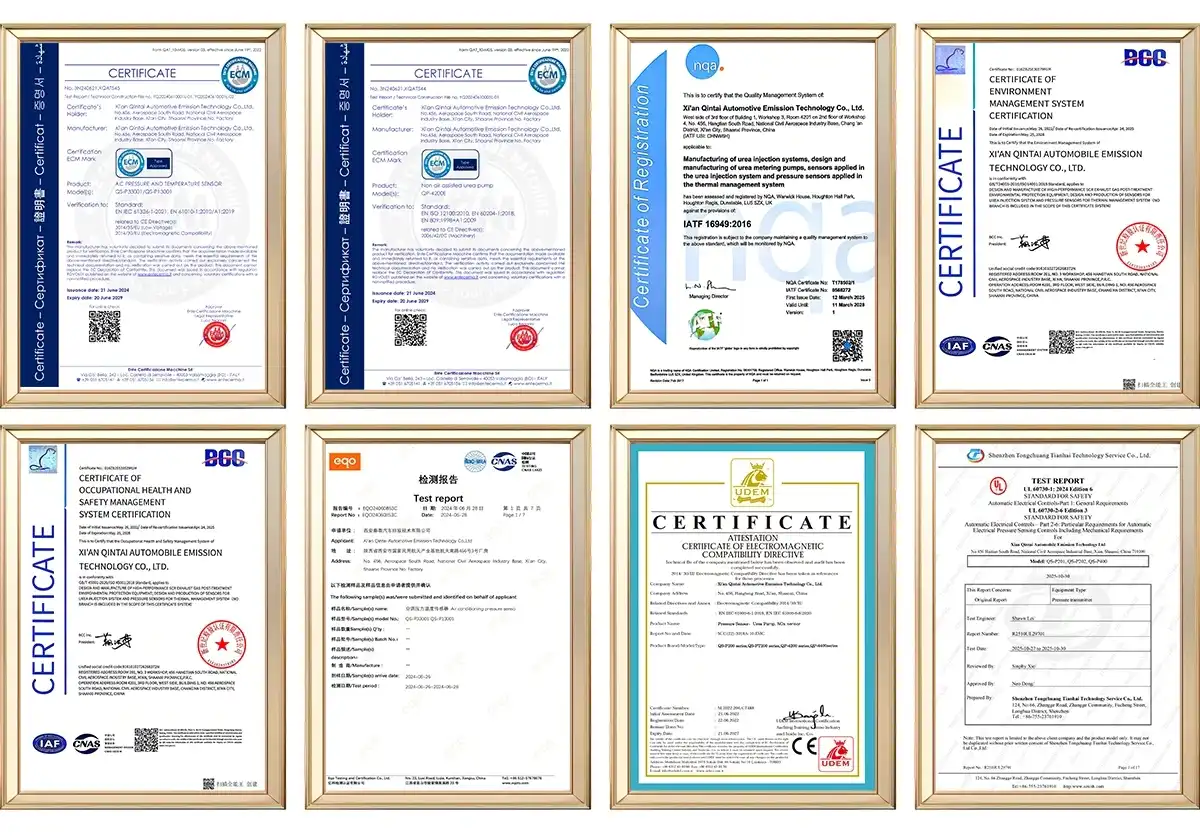
Xi'an Qintai Automotive Emission Technology, China's premier OEM supplier to Weichai Power, Yuchai Power, and Quanchai Power, has over two decades of Urea dosing pressure sensor production expertise. Market leadership is based on constant quality that fulfills strict automotive manufacturing criteria across millions of installed units. IATF16949 and ISO9001 certifications enable manufacturing process controls that guarantee component uniformity for mass production applications and systematic quality management from design to after-sales support.
Self-developed Urea dosing pressure sensor core technology ensures manufacturing stability and IP protection by eliminating component vendors. Qintai's 86-person R&D team holds 58 vehicle pollution control system invention patents and improves sensor performance through materials and signal processing. OEMs planning production launches and aftermarket distributors managing regional inventory networks need large-volume procurement while maintaining quality standards with annual output capacity of two million sensors.
Procurement Considerations for B2B Applications
OEMs and big fleet operators buying hundreds or thousands of Urea dosing pressure sensors yearly benefit from bulk ordering. Equipment makers with limited margins benefit from volume pricing, which lowers unit costs by 15-30%. Minimum order numbers vary by sensor model and customization needs. Standard configurations may be ordered in 100 units, while specialized versions may need 500-1,000 units to justify tooling costs. Custom sensors take 12-16 weeks to prototype and produce, whereas ordinary sensors take 4-8 weeks.
Technical support greatly affects Urea dosing pressure sensor performance and TCO. Prototype integration issues can be resolved with responsive engineering support, lowering new equipment design time-to-market. Sensor providers must offer diagnostic instructions, failure analysis, and replacement component availability after sales support for field difficulties. Qintai's help includes application engineering, specialized calibration, and worldwide distribution agreements for component availability in important markets. The 12-month guarantee on Model QS-P226 sensors ensures component dependability and protects procurement budgets against premature failure.
Future Trends and Innovations in Urea Dosing Pressure Sensors
Digitalization and Connected Sensor Networks
New Urea dosing pressure sensor designs use digital communication protocols to send more than pressure readings. Vehicle telematics systems receive internal temperature, voltage supply status, and self-test results from CAN bus and LIN interface sensors. This increased data stream allows advanced fleet management analytics to uncover performance trends across vehicle populations, showing systemic faults impacting numerous units before failures cascade. Wireless sensor types under development reduce wiring harness complexity, lowering installation costs and enhancing dependability in high-vibration situations where connection failures prematurely retire sensors.
Urea dosing pressure sensors become active in predictive maintenance ecosystems with IoT connectivity. Cloud-connected sensors continually upload operational data to machine learning algorithms that anticipate usable life depending on usage and environmental exposure. Fleet managers get maintenance notifications weeks before sensor failures, enabling scheduled repair scheduling to save equipment downtime. These predictive capabilities go beyond sensors to address dosing pump, injector, and catalyst system issues by evaluating pressure pattern changes that signal component deterioration.
Precision Requirements for Future Emissions Standards
Regulatory authorities increase emission restrictions, necessitating more accurate Urea dosing pressure sensors to meet compliance margins. New guidelines in California and the EU aim to cut NOx emissions by 50%, requiring sensor accuracy improvements to ±0.3% or better. Advanced sensing technologies like MEMS-based pressure transducers and temperature-compensated signal processing circuits that retain accuracy throughout wider working ranges are driven by this precise trend. Recent material science advances include corrosion-resistant alloys and ceramic sensing devices that can withstand urea solution without degrading.
Regulatory strictness increases demand for high-precision Urea dosing pressure sensors, generating opportunity for producers with sophisticated production capabilities. Due to pollution compliance issues, OEMs are specifying premium sensors as standard equipment rather than cost-cutting alternatives. This market shift benefits established suppliers with quality track records and engineering resources for product improvement. Companies like Qintai with significant R&D and manufacturing facilities benefit when pollution restrictions increase technological requirements beyond commodity sensor vendors.

SENSOR+TEST, June 9 – 11, 2026
We look forward to your visit,warmly welcome to our booth 1-634!
Get your free ticket online now:
https://www.sensor-test.de/service/ticket/?52790
Conclusion
Urea dosing pressure sensors are more than just measuring devices in current SCR systems—they govern emission compliance, operating efficiency, and system longevity. The right sensor technology affects equipment performance in highway vehicles and stationary power generating. Quality sensors increase fuel efficiency, maintenance costs, and regulatory compliance, justifying premium component expenditures with quick return and long-term dependability. Precision pressure sensing becomes more important as emission standards tighten and enforcement methods increase through remote sensing and in-service monitoring. Sensor quality procurement specialists position their businesses for future regulatory obligations and current operational advantages.
FAQ
Q1: How often should urea dosing pressure sensors be calibrated?
A: Operational intensity and application environment determine calibration intervals. Stationary generating sets under controlled circumstances may require calibration verification every 24–36 months, whereas heavy-duty vehicles in harsh usage need yearly calibration verification. Fleet operations should set baseline performance metrics upon installation and watch for calibration drift. Periodic functional testing is better than recalibration since most Urea dosing pressure sensor failures occur abruptly.
Q2: What advantages do pressure sensors have over flow sensors in SCR systems?
A: Transient engine operation requires faster Urea dosing pressure sensor reaction times to detect dosing system errors before they influence emission performance. Flow sensors detect fluid supply but cannot separate pump issues, injector blockages, and line limits, whereas pressure sensors locate system flaws. Most applications favor pressure sensors due to cost, while big industrial installations benefit from simultaneous pressure and flow monitoring for system diagnostics.
Q3: Can pressure sensors integrate into existing SCR systems without extensive modifications?
A: Urea dosing pressure sensors with industry-standard thread sizes and electrical connections replace OEM components. Custom applications may require adapter fittings or wire harness changes for unique vehicle or equipment combinations. Integration help from Qintai's technical team identifies compatibility needs and simplifies installation. With appropriate sensors, most retrofits take 30-60 minutes per car.
Partner with Qintai for Superior Urea Dosing Pressure Sensor Solutions
Qintai provides precision SCR system components as a Urea dosing pressure sensor manufacturer with over 20 years of emission control experience. Our Model QS-P226 sensors with self-developed core technology maintain ±0.5% accuracy under difficult conditions. IATF16949-certified manufacturing methods provide consistent quality throughout production. Through flexible customization, bulk pricing, and fast technical consulting, we support OEM requirements throughout product development.
As China's top diesel engine Urea dosing pressure sensor provider to Weichai, Yuchai, and Quanchai Power, our millions of installations establish reliability. With over two million sensors produced annually, we satisfy large-volume demand while ensuring emission compliance quality. From application engineering to after-sales servicing, technical assistance optimizes sensor integration and solves field challenges. Contact info@qt-sensor.com to discuss your needs, get technical specs, or get volume pricing for your next procurement cycle.
References
1. Society of Automotive Engineers. "Selective Catalytic Reduction Systems for Heavy-Duty Diesel Engines: Performance Optimization through Advanced Sensor Integration." SAE Technical Paper Series, 2022.
2. International Council on Clean Transportation. "NOx Emission Control Technologies for Diesel Engines: Comparative Analysis of Dosing System Precision Requirements." ICCT White Paper, 2021.
3. Environmental Protection Agency. "Heavy-Duty Engine and Vehicle Standards: Technical Support Documentation for Emission Control System Components." EPA Regulatory Docket, 2023.
4. Journal of Emission Control Science and Technology. "Pressure Sensing Advances in Urea Dosing Systems: Impact on SCR Catalyst Efficiency and Durability." Academic Research Publication, Volume 8, 2022.
5. Diesel Technology Forum. "Best Practices for SCR System Maintenance in Commercial Fleet Operations: Component Selection and Preventive Maintenance Strategies." Industry Technical Guide, 2023.
6. International Organization for Standardization. "Road Vehicles - Exhaust Emission Requirements and Test Procedures: Component Qualification Standards for Emission Control Sensors." ISO Technical Standard 16183, 2022 Edition.
 Sensor.webp)

Our customers’ satisfaction speaks for our quality — contact us to experience the same reliable service.