- English
- French
- German
- Portuguese
- Spanish
- Russian
- Japanese
- Korean
- Arabic
- Greek
- German
- Turkish
- Italian
- Danish
- Romanian
- Indonesian
- Czech
- Afrikaans
- Swedish
- Polish
- Basque
- Catalan
- Esperanto
- Hindi
- Lao
- Albanian
- Amharic
- Armenian
- Azerbaijani
- Belarusian
- Bengali
- Bosnian
- Bulgarian
- Cebuano
- Chichewa
- Corsican
- Croatian
- Dutch
- Estonian
- Filipino
- Finnish
- Frisian
- Galician
- Georgian
- Gujarati
- Haitian
- Hausa
- Hawaiian
- Hebrew
- Hmong
- Hungarian
- Icelandic
- Igbo
- Javanese
- Kannada
- Kazakh
- Khmer
- Kurdish
- Kyrgyz
- Latin
- Latvian
- Lithuanian
- Luxembou..
- Macedonian
- Malagasy
- Malay
- Malayalam
- Maltese
- Maori
- Marathi
- Mongolian
- Burmese
- Nepali
- Norwegian
- Pashto
- Persian
- Punjabi
- Serbian
- Sesotho
- Sinhala
- Slovak
- Slovenian
- Somali
- Samoan
- Scots Gaelic
- Shona
- Sindhi
- Sundanese
- Swahili
- Tajik
- Tamil
- Telugu
- Thai
- Ukrainian
- Urdu
- Uzbek
- Vietnamese
- Welsh
- Xhosa
- Yiddish
- Yoruba
- Zulu
NOx Sensor Applications in Modern Diesel Engines
To meet strict environmental standards while keeping up speed, modern diesel engines need precise pollution control. The NOx sensor has become an important part of this system because it can very accurately measure the amount of nitrogen oxide in exhaust streams. These sensors connect easily to Engine Control Units and aftertreatment systems to make sure they meet EPA Tier 4 and Euro 6 standards. This lets diesel-powered machines like heavy trucks, construction equipment, farm vehicles, and generator sets work efficiently while having the least possible impact on the environment.
Understanding NOx Sensors in Diesel Engines
The Core Function of NOx Sensors in Emission Control
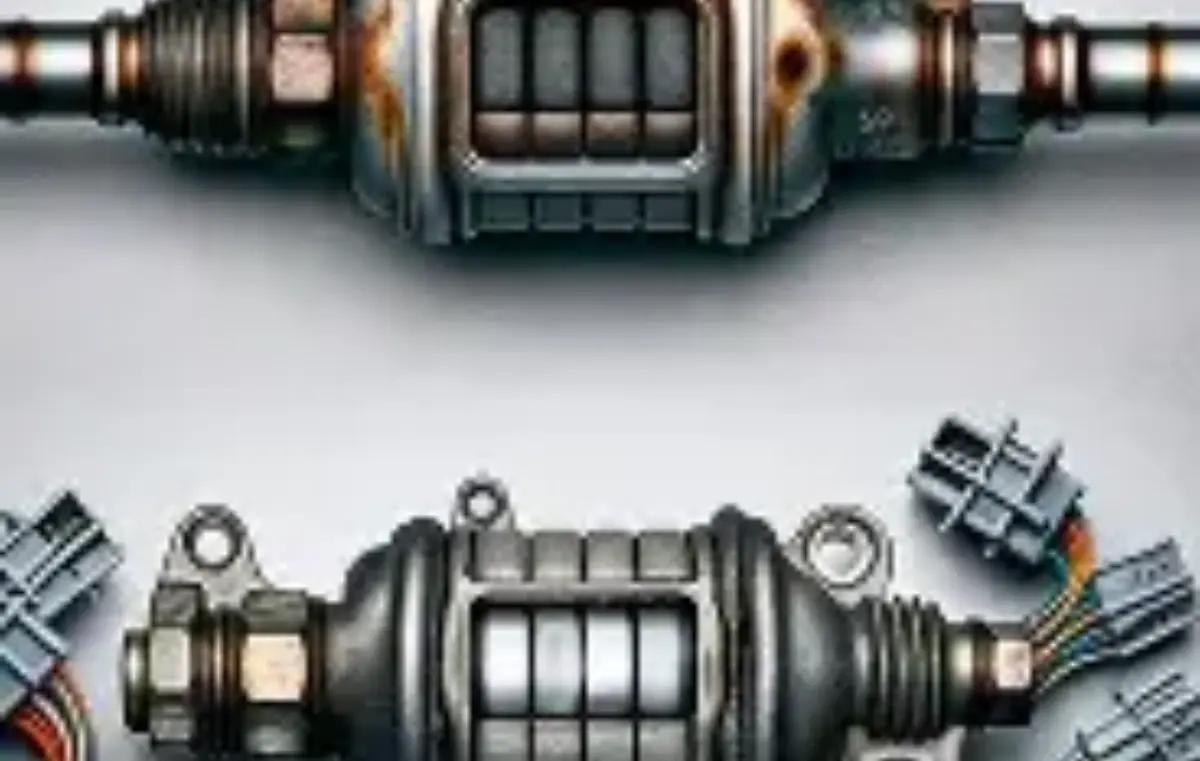
NOx sensors are like the eyes of diesel engine aftertreatment systems. They constantly check the make-up of exhaust gases to make sure they work as well as possible. These devices measure NOx levels between 0 and 2500 parts per million. They send real-time information to the Engine Control Unit, which changes the speed of fuel input, the rate of exhaust gas recirculation, and the amount of Diesel Exhaust Fluid that is added. The sensor is made up of many ceramic cells made of yttria-stabilized zirconia. These cells carry oxygen ions at high temperatures so they can measure both oxygen and NOx levels at the same time.
Sensor Types and Installation Configurations
Diesel pollution systems usually have two sensors set up in a certain way to work best. The upstream monitor is attached near the turbocharger outlet and checks the amounts of NOx coming from the engine before any further processing starts. This first reading tells the machine how much Diesel Exhaust Fluid needs to be added to the waste stream. The downstream monitor is put in place after the Selective Catalytic Reduction catalyst. It checks the efficiency of the treatment by measuring the amount of NOx that is still present. This two-point check makes sure that the SCR system works within acceptable limits and lets workers know if the catalyst is wearing down or the system isn't working right.
Distinguishing NOx Sensors from Other Emission Monitors
Oxygen sensors are mostly concerned with finding the best air-fuel ratio for efficient burning, while NOx sensors are only interested in how well the aftertreatment system works. Different levels of oxygen cause O2 sensors to send voltage signals, while NOx sensors use complex multi-chamber systems with built-in heaters and control circuits. Particulate matter monitors find soot buildup in diesel particulate filters. They work with NOx measurement functions, not instead of them. Knowing these differences helps buying managers and R&D engineers choose the right parts for their projects, which keeps them from making mistakes that cost a lot of money and makes sure that the whole system works well together.
Diagnosing and Maintaining NOx Sensors to Enhance Engine Performance
Recognizing Sensor Failure Symptoms
Finding broken NOx sensors early stops the engine from derating and saves money on costly downtime. Some signs that something is wrong are failure warning lamps that light up, engine power output going down, high Diesel Exhaust Fluid use patterns, and diagnostic trouble codes that have to do with NOx measurement accuracy or circuit integrity. As the ECU works in its usual modes without giving accurate feedback, drivers may notice that the exhaust opacity is less clear or that the vehicle uses more fuel. If you look at it closely, you might find broken wire leads, corroded connectors, or dirty sensor tips that are covered in soot or white crystalline Diesel Exhaust Fluid dust.
Systematic Diagnostic Approaches
An OBD-II scanner is used to get saved fault codes and live sensor data streams, which are then used to start a professional evaluation. Technicians check for erratic signals or frozen data that could mean a sensor failure by comparing real NOx readings to predicted values under different working conditions. During electrical testing, the source voltage (between 9 and 32 volts), heater circuit resistance, and signal wire connections are all checked to make sure they are correct. Comparing the numbers from upstream and downstream sensors during regeneration events helps figure out if the problems are caused by broken sensors or a breakdown in the SCR catalyst.
Maintenance Protocols and Service Intervals
Scheduling regular inspections to coincide with engine oil changes can help sensors last as long as possible. Visual checks should look at the socket seals to see if water is getting in, the wire to see if it is chafing or getting damaged from heat, and the fixing threads to make sure they stay tight and don't leak exhaust. Extremely dirty sensors may benefit from being carefully cleaned with certain solvents, but they need to be replaced when their accuracy drops below the limits set by testing. Heavy-duty apps that run in harsh environments may need to change sensors every 6,000 hours, but operations that run in cleaner settings can get a lot more use out of them. Maintaining the right quality of Diesel Exhaust Fluid and keeping the system from getting contaminated greatly lowers the number of early sensor failures.
Selecting the Right NOx Sensor for Diesel Engine Applications
Matching Sensors to Application Requirements
When making choices about purchases, businesses in different industries must take into account the unique needs of their operations. Heavy-duty truck uses need NOx sensors with reaction times of less than 1400 milliseconds to handle changing driving conditions with lots of load changes and short-term emissions. When used in dusty, high-vibration settings, construction equipment benefits from ruggedized sensors that are more resistant to contamination and last longer. For generator set uses, sensors that can work continuously for a long time at stable temperatures are needed, with long-term drift stability being more important than fast reaction times. Agricultural equipment needs sensors that can work with different types of fuel and different storage times of the year without losing performance.
Critical Selection Criteria for B2B Procurement
Here are the core evaluation parameters that procurement managers should assess when sourcing nitrogen oxide sensors:
Measurement Accuracy: The accuracy of the NOx sensors has a direct effect on how well the system works and how well it follows the rules. For low concentrations (0–100ppm), the specifications should promise accuracy within ±10ppm. For higher ranges, they should ensure proportional accuracy. Between 100 and 500ppm, Qintai sensors are accurate to within ±10%, which makes sure that emissions are controlled reliably no matter what the conditions are. The accuracy of oxygen measurements ranges from ±0.2% for lean situations to ±4% for higher exhaust compositions, which allows for a full analysis of the exhaust.
Response Characteristics: Modern diesel aftertreatment needs immediate response to change the amount of Diesel Exhaust Fluid that is injected. Response times longer than 2000ms cause control delays that hurt the performance of emissions when conditions are changing quickly. Modern sensors can respond with a final value of 33% to 66% in 1400ms, which lets the control system be tuned very precisely. Another important specification is the light-off time. Sensors that need less than 165 seconds to reach working temperature produce significantly less cold-start emissions than standard options that need longer warm-up periods.
Durability and Operating Range: In commercial settings, waste gas temperatures can range from -40°C to 800°C, which means that sensors need to be able to handle high temps well. The temperatures around cable systems must be able to handle temps between -40°C and 200°C without the insulation breaking down. Designs that are sealed and waterproof with an IP67 grade or higher keep wetness out in humid places. Resistance to lead and sulfur poisoning makes engines last longer when the quality of the fuel changes or when they need more lubrication oil because they are getting older. Sensors with a service life of 6000 hours or more have a lower total cost of ownership than alternatives that need to be replaced every 4000 hours.
Supplier Evaluation and Procurement Strategy
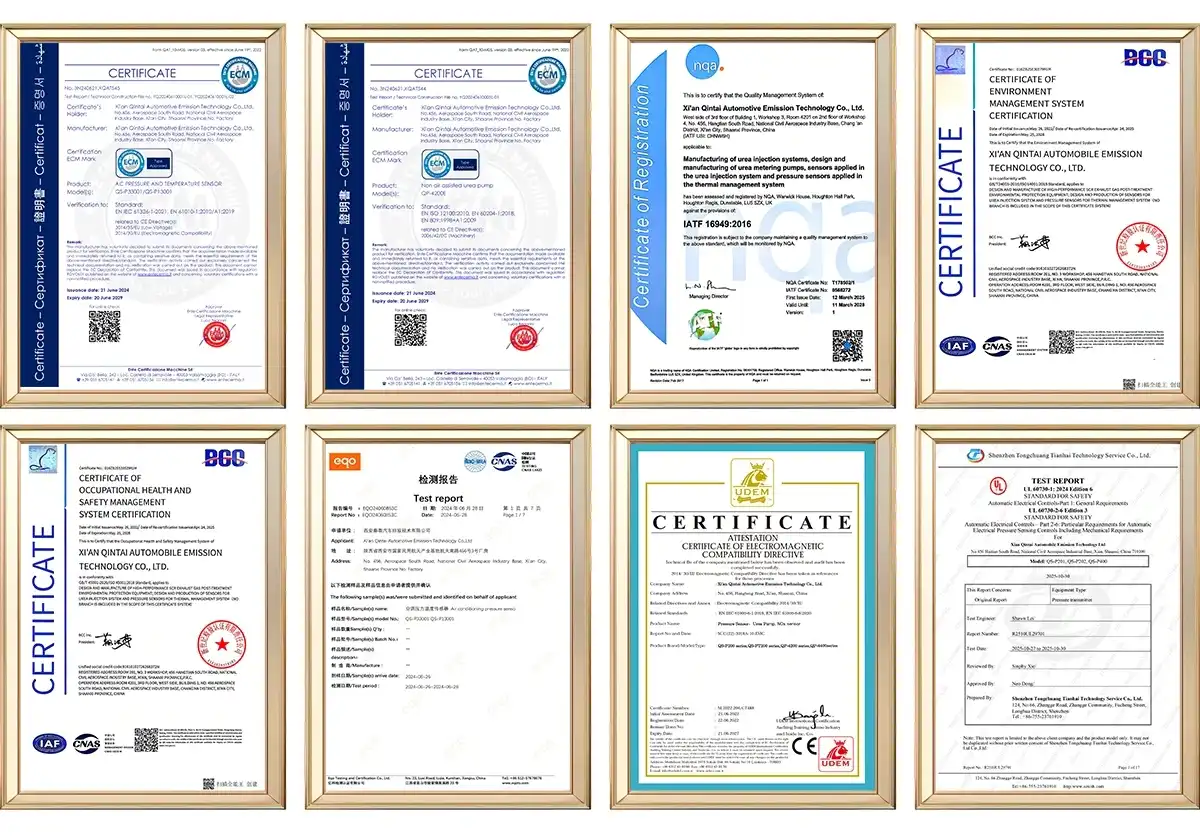
Reputable global names like Bosch, Denso, and Continental have a history of stability and have been extensively tested by OEMs. However, their high prices may make them difficult for projects that are trying to stay within their budgets. Alternative providers that meet the standards for IATF16949 approval offer great value, especially for repair uses or markets that care a lot about price. As China's top original equipment manufacturer (OEM) seller, Qintai Automotive Emission Technology has 58 idea patents and ISO9001, CMC, and CE certifications, which show that they are a great manufacturer.
They work with Weichai Power, Yuchai Power, and Quanchai Power. Managers in charge of buying things should check to see if a seller can handle mass production, offer customization options for connectors and wire lengths, and provide quick technical support. By building partnerships with providers that offer full OEM/ODM services, you can change your products to meet the needs of specific platforms while keeping prices low by working directly with manufacturers.
NOx Sensor Applications Driving Emissions Control and Regulatory Compliance
Navigating Global Emission Standards
Global regulations are getting stricter all the time. For example, EPA Tier 4 Final guidelines for off-road diesel equipment require 90% less NOx than earlier tiers. On-highway rules set by EPA 2010 and Euro 6 also limit heavy-duty cars' nitrogen oxide pollution to 0.2 g/kWh. Because of these strict rules, modern NOx sensor technology is not a choice; it is required. Even tighter rules are set by California's Air Resources Board, which leads to new developments in sensor accuracy and longevity. For compliance proof, sensors must stay calibrated for up to 435,000 miles, or 10 years for commercial trucks. This creates a need for industrial-grade stability in sensor making.
Integration with SCR Aftertreatment Systems
Selective Catalytic Reduction technology can only work if the NOx levels are measured correctly. The system sets up a closed-loop control system where readings from sensors upstream decide how much Diesel Exhaust Fluid to feed and readings from sensors downstream check how well the conversion is working. When sensors detect too much NOx breakout, the ECU raises the amount of Diesel Exhaust Fluid while keeping an eye out for ammonia slip, which would mean that the dose is too high. This exact balancing act minimizes Diesel Exhaust Fluid use without affecting emission performance, which is good for both the environment and operating costs. Advanced systems use sensor data to create prediction algorithms that can predict emissions during acceleration events and change injection rates before they happen to make control easier.
Operational Benefits Beyond Compliance
Accurate tracking of pollution has real benefits for performance that go beyond following the rules. When sensors work properly, they allow for optimized fuel injection methods that boost combustion efficiency by 2–4% compared to open-loop systems. This directly cuts down on diesel use and running costs. Real-time data lets fleet managers find vehicles that aren't working well and need to be fixed before they cause pollution problems. This keeps drivers from getting pulled over and given tickets. Data analytics systems collect sensor data from entire fleets and find trends that help with planning predictive maintenance and managing the lives of components. With these new ideas, tracking pollution goes from being a legal hassle to being a valuable tool for improving fleet operations and keeping total cost of ownership low.
Innovations and Future Trends in NOx Sensor Technology
Addressing Current Technological Limitations
In harsh diesel exhaust settings, where temperature changes, chemical exposure, and mechanical shaking all work together to slowly lower performance, traditional NOx sensor designs have a hard time. Over time, sensors lose their accuracy and need to be recalibrated or replaced on a regular basis. This makes servicing more difficult for fleet owners. Cross-sensitivity to ammonia slip from SCR systems can lead to falsely high NOx readings, which makes diagnosis more difficult. When exhaust temperatures rise above 700°C during regeneration events, thermal shock forces ceramic elements, which could lead to problems before they should. Because of these problems, scientists are still working on making materials that are stronger and signal processing methods that can fix the effects of age.
Emerging Sensor Technologies
Next-generation sensors use improved ceramic formulas that are more resistant to thermal shock and less likely to become poisoned by sulfur. Integrated microprocessors allow for self-calibration and troubleshooting on board, which extends the time between repair visits and improves accuracy. IoT platforms that allow wireless connection let health factors of sensors be monitored from afar, which lets replacements happen before they break. Some companies are looking into solid-state systems that don't use heater elements to cut down on power use and failure risks. The goal of miniaturization is to make sensor packages smaller so that it can fit more easily into exhaust systems with limited room, without affecting the accuracy of the measurements.
Strategic Procurement Recommendations
When forming long-term partnerships with sellers, business-to-business buyers should look at their plans for how technology will change over time. Manufacturers that put a lot of money into research and development and have a lot of patents show that they are committed to new ideas, which protects buyers' interests as rules change. When suppliers offer changes that work with older systems, fleets can slowly switch to better sensor technologies without having to completely rethink their systems.
Qintai supports more than 300 transmission protocols, which makes sure that sensors work well with a wide range of engine control systems from different OEMs. Platform-specific needs can be met by customizable interfaces and factors that don't affect the performance of core measurements. Getting suppliers involved early in the development process allows for joint engineering that improves the merging of sensors and speeds up the time it takes to market for new equipment platforms.
Conclusion
NOx sensors are important parts of modern diesel engines that help them meet environmental standards while still running efficiently. Procurement managers and engineers can be successful if they understand the basics of sensors, follow the right repair procedures, and choose the right providers based on the needs of the application. As regulations change and sensing technologies improve, it is necessary to constantly check the capabilities and specs of suppliers. When businesses work with innovative makers that can customize their products and offer expert support, they gain a competitive edge through better emissions control systems, lower operating costs, and better compliance with regulations.
FAQ
How often should NOx sensors undergo replacement in heavy-duty applications?
Service times rely on how the vehicle is being used and the quality of the fuel. Commercial vehicles usually need new NOx sensors every 4000 to 6000 hours, but sensors in systems that are clean and well-kept may last longer than this. Diagnostic scans are used to check the quality of sensor signals and find decline before they fail completely. When compared to normal options, Qintai sensors have a service life of 6000 hours or more, which means they don't need to be replaced as often. This saves fleet owners money and time during maintenance.
What distinguishes NOx sensor cleaning from complete replacement?
Cleaning gets rid of surface contamination from soot or Diesel Exhaust Fluid crystals that affects sensor tips. If ceramic elements stay intact, this could restore accuracy. When the internal clay cells break down, the electrical circuits stop working, or the accuracy moves out of range no matter how hard you clean it, it's time to replace it. Professional analysis with OBD scanners tells us whether cleaning brings back the proper function or replacement ensures long-term dependability and compliance with regulations.
How do NOx sensors differ functionally from oxygen sensors?
Oxygen sensors check the amounts of air to fuel to get the best combustion, and NOx sensors check the performance of the aftertreatment system. NOx sensors have more than one measurement chamber with NOx breakdown catalysts built in, while O2 sensors are easier and only have one chamber. The sensors do different but related jobs. O2 sensors make the engine run better, and NOx sensors check how well the emissions controls are working. Both are necessary for full diesel engine management.
Partner with a Leading NOx Sensor Manufacturer
Qintai Automotive Emission Technology makes industrial-grade NOx sensors that are designed to work with diesel engines in big trucks, building equipment, farm equipment, and power sets. Our sensors have response times of less than 1400ms, a service life of more than 6000 hours, and light-off performance that is much faster than the norm in the business. Connectors, cable lengths, and transmission methods that can be changed make it easy to connect to a wide range of engine systems.
With IATF16949 and ISO9001 certifications, we are China's top OEM seller and serve Weichai, Yuchai, and Quanchai. We give procurement managers the quality guarantee and technical help they need. Our research team is ready to make sensors that are exactly what you need, whether you need a lot of them for OEM uses or a wide range of options for the aftermarket. Get in touch with us at info@qt-sensor.com to talk about your diesel emission sensor needs and find out how our proven skills can help you make your supply chain more reliable.
References
1. Johnson, T. V. (2020). "Review of Selective Catalytic Reduction (SCR) and Related Technologies for Mobile Applications." SAE International Journal of Engines, 13(4), 623-658.
2. Majewski, W. A., & Khair, M. K. (2019). "Diesel Emissions and Their Control." SAE International, Warrendale, PA.
3. European Commission. (2021). "Regulation (EU) 2016/1628: Requirements Relating to Gaseous and Particulate Pollutant Emission Limits for Internal Combustion Engines for Non-Road Mobile Machinery." Official Journal of the European Union.
4. Environmental Protection Agency. (2020). "Control of Air Pollution from New Motor Vehicles: Heavy-Duty Engine and Vehicle Standards and Highway Diesel Fuel Sulfur Control Requirements." Federal Register, 40 CFR Parts 69, 80, and 86.
5. Zheng, G., Palmer, G., Salanta, G., & Kotrba, A. (2018). "NOx Sensor Ammonia Cross Sensitivity Determination and Ammonia Sensor Development." SAE Technical Paper 2018-01-0346.
6. Riegel, J., Neumann, H., & Wiedenmann, H. M. (2016). "Exhaust Gas Sensors for Automotive Emission Control." Solid State Ionics, 152-153, 783-800.

Our customers’ satisfaction speaks for our quality — contact us to experience the same reliable service.