- English
- French
- German
- Portuguese
- Spanish
- Russian
- Japanese
- Korean
- Arabic
- Greek
- German
- Turkish
- Italian
- Danish
- Romanian
- Indonesian
- Czech
- Afrikaans
- Swedish
- Polish
- Basque
- Catalan
- Esperanto
- Hindi
- Lao
- Albanian
- Amharic
- Armenian
- Azerbaijani
- Belarusian
- Bengali
- Bosnian
- Bulgarian
- Cebuano
- Chichewa
- Corsican
- Croatian
- Dutch
- Estonian
- Filipino
- Finnish
- Frisian
- Galician
- Georgian
- Gujarati
- Haitian
- Hausa
- Hawaiian
- Hebrew
- Hmong
- Hungarian
- Icelandic
- Igbo
- Javanese
- Kannada
- Kazakh
- Khmer
- Kurdish
- Kyrgyz
- Latin
- Latvian
- Lithuanian
- Luxembou..
- Macedonian
- Malagasy
- Malay
- Malayalam
- Maltese
- Maori
- Marathi
- Mongolian
- Burmese
- Nepali
- Norwegian
- Pashto
- Persian
- Punjabi
- Serbian
- Sesotho
- Sinhala
- Slovak
- Slovenian
- Somali
- Samoan
- Scots Gaelic
- Shona
- Sindhi
- Sundanese
- Swahili
- Tajik
- Tamil
- Telugu
- Thai
- Ukrainian
- Urdu
- Uzbek
- Vietnamese
- Welsh
- Xhosa
- Yiddish
- Yoruba
- Zulu
NOx Sensor vs Oxygen Sensor: Key Differences for Fleet Buyers
If you’re managing a heavy-duty fleet, knowing the difference between a NOx sensor and an oxygen sensor isn’t optional. It’s essential for procurement. A NOx sensor monitors nitrogen oxide concentrations in exhaust gas and operates inside the SCR aftertreatment system to maintain emissions under statutory limits. Oxygen sensor: measures the amount of oxygen in the exhaust so the engine control unit may adjust the air-fuel mix. They each do different things. Choose the incorrect one or replace it with the wrong one and you will get fault codes, engine derates and compliance issues.
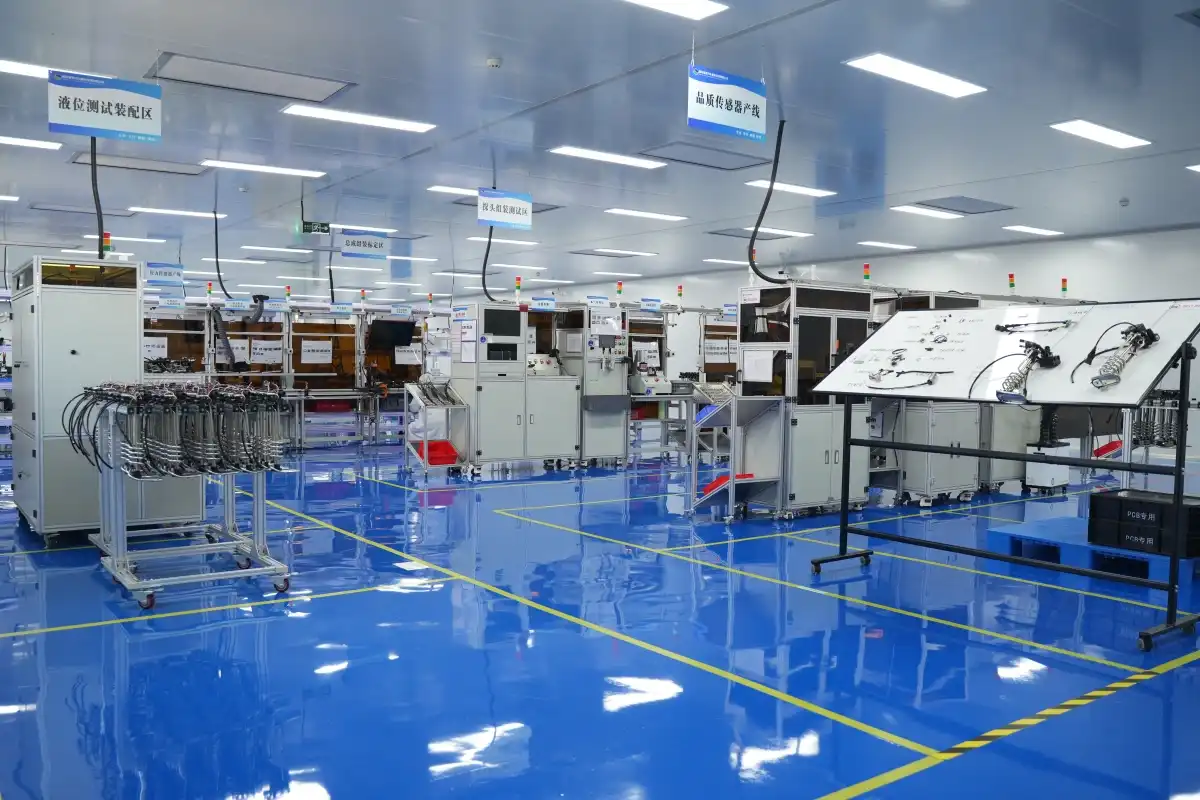
Understanding NOx and Oxygen Sensors: An Overview
Knowing what each sensor does — and where it sits in the exhaust system — saves fleet buyers from costly specification mistakes.
What Is a NOx Sensor?
The NOx sensor detects the concentration of nitrogen oxides in diesel exhaust gas. It uses a yttria-stabilized zirconia (YSZ) ceramic element to detect NOx by splitting the nitrogen oxides into nitrogen and oxygen ions and then generating a proportional electrical current. Heavy-duty cars running under Euro VI or EPA 2010+ standards commonly include two sensors – one upstream of the SCR catalyst and one downstream – to provide a closed-loop feedback system for adjusting DEF dose.
What Is an Oxygen Sensor?
An oxygen sensor, often called a lambda sensor or O2 sensor, monitors residual oxygen in exhaust gas. It feeds data to the engine ECU to adjust the air-fuel mixture in real time, which directly affects combustion efficiency and fuel consumption. In diesel applications, it also supports exhaust gas recirculation (EGR) control, helping engines maintain stable combustion temperatures and reduce raw emissions before aftertreatment.
Where Each Sensor Is Installed?
The upstream NOx sensor is positioned between the turbocharger output and the SCR intake (M20×1.5 is a popular standard). The downstream sensor is installed downstream the SCR catalyst to test the conversion efficiency. The oxygen sensors are often located in the exhaust manifold or mid-pipe, well upstream of the aftertreatment system. It is a common fault of the workshop to confuse these mounting locations during replacement, which gives rise to false diagnostic data.
Core Functional Differences Between NOx and Oxygen Sensors
The two sensor types share a similar appearance but serve completely different control loops in the vehicle's emission architecture.
Measurement Principles
The NOx sensor is designed as an electrochemical multi-cell. The first cell removes extra oxygen to provide a regulated atmosphere while the second cell catalytically decomposes NOx and detects ion current. An oxygen sensor employs a basic single-cell zirconia component that yields a voltage signal proportional to the difference between the concentration of oxygen in the exhaust gas and in the surrounding air. The two signals go to distinct control modules and are not interchangeable.
Impact on Emission Control Systems
The NOx sensor controls the DEF injection rate directly in the SCR system and also provides information to the EGR valve controller. If it reads erroneously, the engine either under-doses DEF where it results in a NOx exceedance or over-doses, resulting in ammonia slip that is recognized by the downstream sensor. The oxygen sensor mainly affects the timing of the fuel injection and the flow rate of the EGR. A bad O2 sensor will hurt fuel efficiency and increase particle emission, but it won’t always set SCR-related trouble codes.
Common Failure Symptoms
Fleet technicians should watch for these warning signs from each sensor type:
- NOx sensor failure: Fault codes P0420, P2201, P2202; engine derate; excessive DEF consumption; check engine light with SCR-related DTC.
- Oxygen sensor failure: Rough idle, black smoke, increased fuel consumption, EGR-related fault codes, failed emissions inspection.
Identifying the correct failed component early prevents misdiagnosis and avoids the cost of replacing the wrong part.
Procurement Considerations for Fleet Buyers
Getting sensor procurement right means balancing technical fit, supply reliability, and total cost of ownership — not just unit price.
OEM vs. Aftermarket Options
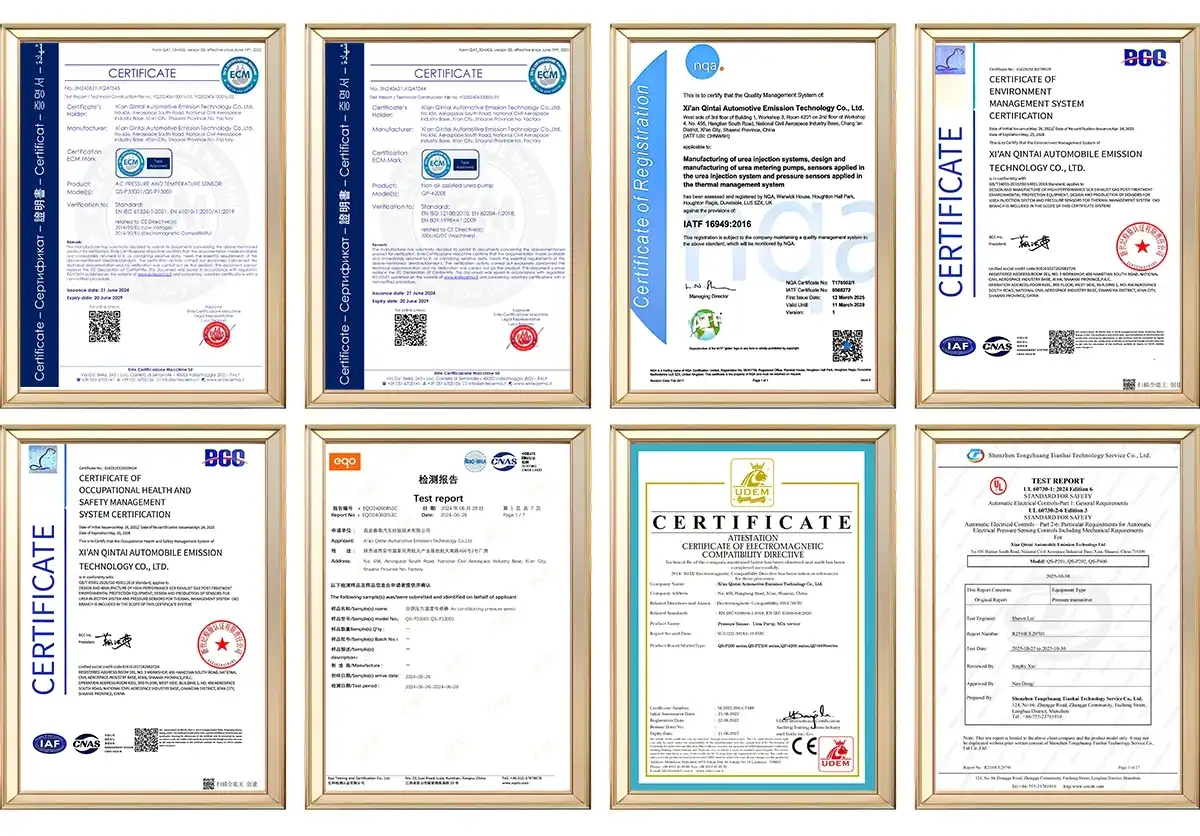
OEM sensors are provided with verified calibration data specific to the vehicle’s ECU software. The accuracy and service life of aftermarket sensors vary greatly. When considering aftermarket choices, fleet purchasers should look at whether the sensor is compatible with the communication protocol of the vehicle (CAN bus or direct voltage), connection and certifications such as IATF 16949. Documented OEM supply experience from ISO 9001-certified suppliers provides considerably reduced risk of replacement than generic catalog components.
Cost Analysis and Replacement Planning
A single NOx sensor typically costs between $150 and $400 in the US aftermarket, while OEM units from major truck OEMs can exceed $600. Replacement intervals depend heavily on operating conditions — sulfur-rich fuel and high-idling cycles accelerate sensor degradation. Building a preventive replacement schedule based on engine hours (not just mileage) helps avoid unplanned downtime. Buying in bulk from a verified NOx sensor supplier with in-stock inventory further reduces per-unit cost and lead time.
Matching Sensors to Fleet Applications
Not all sensors fit all applications. Here are the key matching criteria procurement teams should confirm before ordering:
- NOx measuring range: Confirm the sensor covers your engine's expected output, ideally 0–2500 ppm.
- Supply voltage compatibility: Verify the sensor accepts 9–32V DC if your trucks run varied electrical systems.
- Operating temperature range: Industrial and off-highway equipment may need sensors rated from −40°C to 800°C exhaust gas temperature.
- Protocol support: Check CAN 2.0B or proprietary OEM protocols are supported before placing bulk orders.
These factors directly determine whether a sensor will integrate correctly with your vehicle's ECU and aftertreatment control unit.

Testing, Maintenance, and Troubleshooting of NOx and Oxygen Sensors
Proactive sensor management extends service intervals and prevents compliance failures on the road.
Diagnostic Testing Procedures
Connect an OBD-II scanner or heavy-duty diagnostic tool to read live sensor data. A functioning NOx sensor should show a rapid response to throttle changes, with values falling between 50–200 ppm at steady highway cruise for a well-maintained Euro VI engine. A functioning O2 sensor should produce a stable lambda signal near 1.0 under cruise conditions. Abnormal readings under known operating conditions point directly to sensor drift or element failure.
Cleaning and Preventive Maintenance
NOx sensors are not designed for chemical cleaning — the zirconia element is sensitive to contamination. However, keeping the exhaust system free of DEF crystallization and inspecting the sensor wiring harness for heat damage every 100,000 miles or 2,000 engine hours extends sensor accuracy. Oxygen sensors in diesel applications typically tolerate longer service intervals than in gasoline engines but should be checked when EGR-related codes appear.
When to Replace Each Sensor?
Replace a NOx sensor when response time exceeds 1,400 ms, when the downstream sensor consistently reads above the threshold despite correct DEF dosing, or when the sensor has accumulated more than 6,000 service hours. Replace an oxygen sensor when it shows slow switching, voltage drop below 0.1V at idle, or when fuel trim data indicates persistent rich or lean correction.
Strategic Benefits of Choosing the Right Sensor for Fleet Efficiency and Compliance
The right sensor selection produces measurable returns across the fleet's operational life.
Meeting Emission Standards Consistently
The SCR system performance depends on accurate NOx detection. If a fleet is running under EPA 2010+, Euro VI or China VI rules, and roadside checks show NOx exceedances, the fleet will be subject to monetary fines and required repair orders. Tight accuracy specs—like ±10 ppm in the 0-100 ppm range—give fleet managers assurance their cars will pass emissions audits with no last-minute component changes.
Operational Efficiency and Data Use
Modern sensors with CAN bus output enable real-time data streams that can be logged by fleet telematics solutions. This data helps detect engines that are operating outside of normal NOx production ranges before a fault code escalates to a derate event. "Fleet managers get actionable signals weeks ahead of time with predictive maintenance software and reliable sensor data, cutting down on unplanned repair stops."
Partnering with Suppliers Who Offer After-Sales Support
The most successful long-term fleet sensor projects include technical documentation, protocol configuration assistance and fast warranty management from the provider. A NOx sensor supplier with specialized technical assistance and the flexibility to modify connection types and cable lengths to fleet-specific needs cuts integration time for large-scale vehicle builds or refit projects.
Conclusion
NOx sensors and oxygen sensors perform different jobs within the same exhaust system and are not interchangeable. NOx sensors govern SCR performance and DEF dosing accuracy, which directly affects regulatory compliance. Oxygen sensors manage combustion quality through the air-fuel loop. Fleet buyers who understand these distinctions make better procurement decisions, reduce diagnostic errors, and keep vehicles on the road. Sourcing from a verified, certified supplier with proven OEM credentials adds a layer of supply assurance that price comparison alone cannot provide.
FAQ
What is the main difference between a NOx sensor and an O2 sensor in a diesel truck?
A NOx sensor measures nitrogen oxide concentration in exhaust gas and controls DEF injection in the SCR system. An O2 sensor measures residual oxygen to regulate the engine's air-fuel ratio. They operate in different control loops and carry different connector types and signal protocols.
What causes a NOx sensor to fail prematurely?
Lead and sulfide contamination from low-quality diesel fuel are the most common causes. Heat cycling, DEF crystallization near the sensor tip, and damaged wiring harnesses also contribute. Sensors operating in high-idle or cold-start conditions without adequate warm-up time degrade faster.
Can I use an aftermarket NOx sensor instead of an OEM unit?
Yes, if the aftermarket sensor matches the vehicle's communication protocol, connector pinout, measuring range, and has been produced under a certified quality management system such as IATF 16949. Verify these parameters before ordering, particularly for fleet-scale purchases where consistency across units matters.
How often should NOx sensors be replaced on heavy-duty trucks?
Under typical operating circumstances using compliant diesel fuel, a good sensor should last for 6,000 hours of service.” This interval may be reduced by high-sulfur fuel conditions or lengthy idle cycles. Telematics allows live sensor data to be monitored and early deterioration to be detected.
Partner with Qintai for Dependable NOx Sensor Supply
Qintai has provided NOx sensors to China's major diesel OEMs — including Weichai Power and Yuchai Power — since 2001, having IATF 16949, ISO 9001, and several foreign certifications. Our sensors provide reaction times under 1,400 ms, service life up to 6,000 hours, and compatibility for 300+ communication protocols, with connection and cable configurations configurable for your application. Contact our team for NOx sensor manufacturer pricing, bulk order terms, and technical fit confirmation at info@qt-sensor.com.
References
1. Dieselnet Emission Standards — Diesel Engine Exhaust Emissions: NOx Control Technologies, Dieselnet, 2023.
2. SAE International — NOx Sensor Performance in Heavy-Duty SCR Aftertreatment Systems, SAE Technical Paper Series, 2021.
3. U.S. Environmental Protection Agency — Emission Standards Reference Guide for Heavy-Duty Vehicles, EPA, 2022.
4. Robert Bosch GmbH — Bosch Automotive Handbook, 10th Edition, 2022.
5. Transport & Environment — Real-World NOx Emissions from Heavy-Duty Diesel Trucks, Transport & Environment Report, 2022.
6. ACEA — European Automobile Manufacturers' Association: Heavy-Duty Vehicles CO2 and NOx Regulatory Framework, ACEA, 2023.
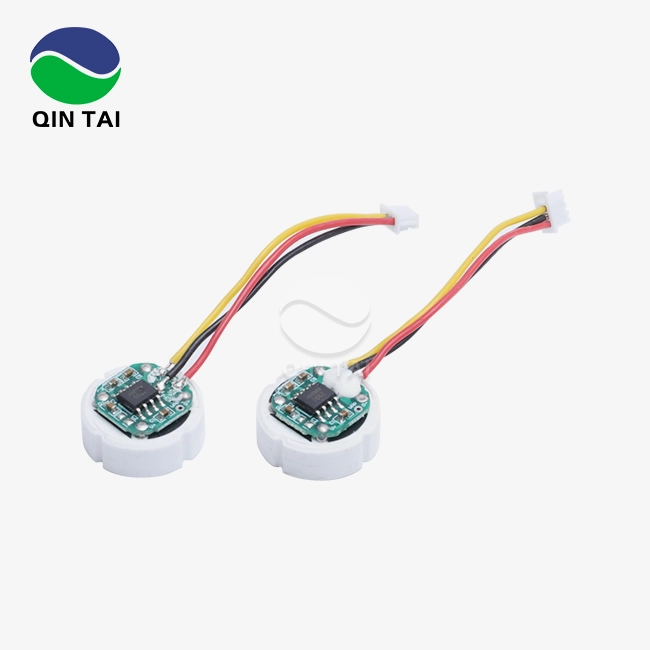
 Sensor.webp)

Our customers’ satisfaction speaks for our quality — contact us to experience the same reliable service.