- English
- French
- German
- Portuguese
- Spanish
- Russian
- Japanese
- Korean
- Arabic
- Greek
- German
- Turkish
- Italian
- Danish
- Romanian
- Indonesian
- Czech
- Afrikaans
- Swedish
- Polish
- Basque
- Catalan
- Esperanto
- Hindi
- Lao
- Albanian
- Amharic
- Armenian
- Azerbaijani
- Belarusian
- Bengali
- Bosnian
- Bulgarian
- Cebuano
- Chichewa
- Corsican
- Croatian
- Dutch
- Estonian
- Filipino
- Finnish
- Frisian
- Galician
- Georgian
- Gujarati
- Haitian
- Hausa
- Hawaiian
- Hebrew
- Hmong
- Hungarian
- Icelandic
- Igbo
- Javanese
- Kannada
- Kazakh
- Khmer
- Kurdish
- Kyrgyz
- Latin
- Latvian
- Lithuanian
- Luxembou..
- Macedonian
- Malagasy
- Malay
- Malayalam
- Maltese
- Maori
- Marathi
- Mongolian
- Burmese
- Nepali
- Norwegian
- Pashto
- Persian
- Punjabi
- Serbian
- Sesotho
- Sinhala
- Slovak
- Slovenian
- Somali
- Samoan
- Scots Gaelic
- Shona
- Sindhi
- Sundanese
- Swahili
- Tajik
- Tamil
- Telugu
- Thai
- Ukrainian
- Urdu
- Uzbek
- Vietnamese
- Welsh
- Xhosa
- Yiddish
- Yoruba
- Zulu
OEM SCR Dosing Pump Solutions for Diesel Engine Manufacturers
If you manufacture diesel engines for heavy trucks, construction machinery, agricultural equipment, or generator sets, you already know how demanding emission compliance has become. Meeting China VI or Euro VI standards is not optional — it's a production requirement. At the center of that compliance sits the SCR dosing pump, the component responsible for delivering precise amounts of diesel exhaust fluid (DEF/AdBlue) into the exhaust stream to convert harmful NOx emissions into harmless nitrogen and water. Getting this component right directly affects certification, field reliability, and total cost of ownership.
Understanding SCR Dosing Pumps in Diesel Engines
What Does a Urea Dosing Pump Actually Do?
The urea dosing pump moves AdBlue from the holding tank to the dosing syringe at a steady pressure. Even when the engine is under a lot of stress, the exhaust is hot, and it's cold outside, it has to keep the right flow rates. NOx levels that are too high or urea levels that are too low can be caused by even small dose errors, which can void warranties and make it hard to follow the rules. For Euro VI systems to work, they have to be able to dose correctly within ±3% when tested in the real world.
How the Pump Communicates with the Engine
The pump doesn't do anything by itself. It has a direct link to the Engine Control Unit (ECU) and gets real-time data on how busy the engine is, how much waste mass is moving, and what the NOx sensor is telling it. That helps the ECU figure out the correct amount and tell the pump what to do. These SCR systems are exact and adaptable because they use closed-loop control. They can change the amount within milliseconds if the moving or load conditions change.
Industries That Depend on This Technology
It's in a lot of different things, like wheel loaders, combine harvesters, Class 8 heavy trucks, naval diesel engines, and fixed generator sets at mines or power plants. The pump is stressed in different ways by different uses. It's important for a mine generator to be able to handle high temperatures and rough conditions 24 hours a day, seven days a week. This is different from a truck engine that goes on the road. One mistake OEMs often make when they buy things is not picking a pump that fits the duty cycle.
Comparing SCR Dosing Pumps: Selecting the Right OEM Solution
Pump Types and Their Trade-offs
Pumps can be made in different ways to meet different needs. Most cars that are used on public roads have diaphragm pumps because they work well with changing pressures and do a good job of pumping. These pumps can move thick fluids without getting them dirty, which is helpful in some systems that clean the air in factories.
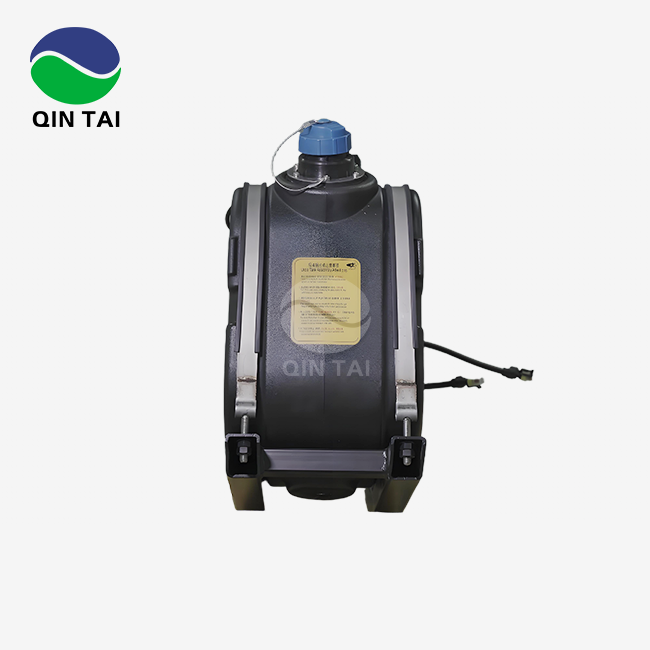
SCR dosing pump is one typical type of diaphragm pump widely used in vehicle exhaust treatment. When you need a steady flow, gear pumps are a good choice. They put out high pressure and keep it steady. When you know which design fits the pressure and flow needs of your engine platform, integration risk is much lower.
How Qintai Compares in the OEM Market
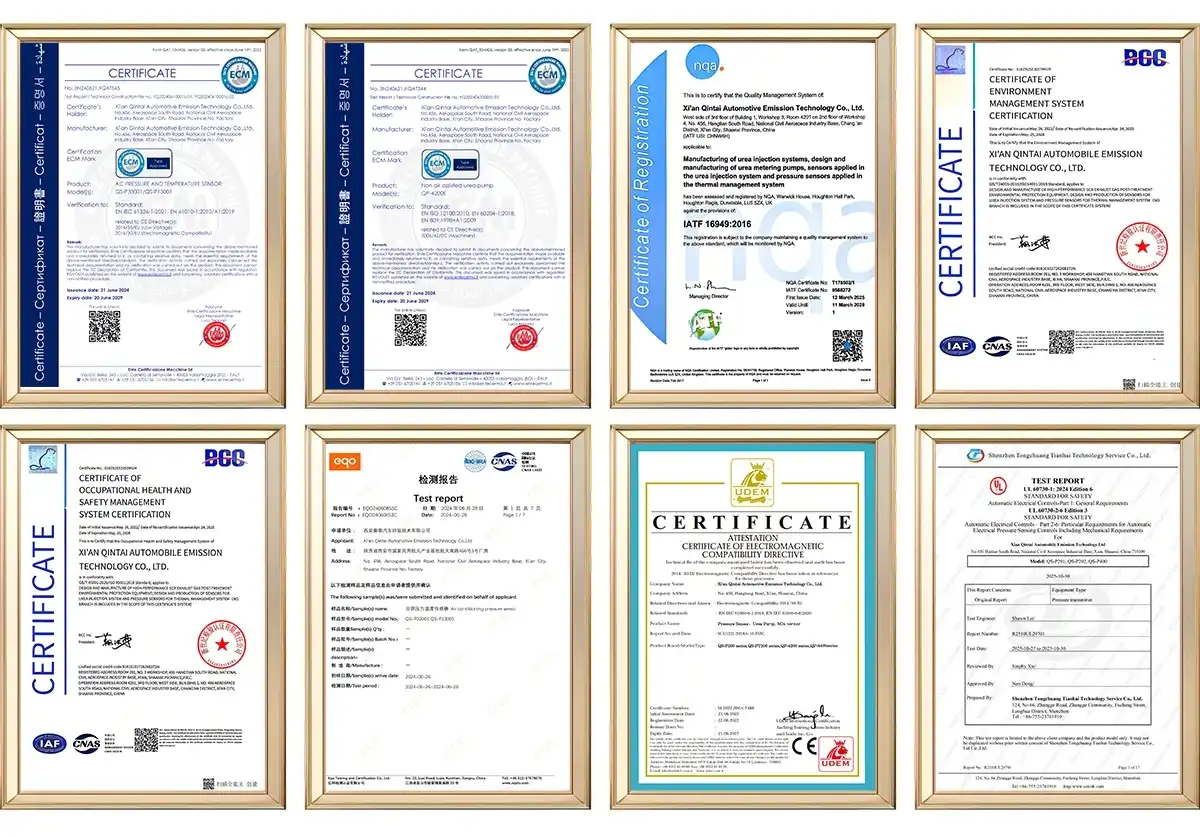
Most people know of big names in the DEF dosing pump market, like Bosch, Cummins, and Delphi. Their products are used a lot. But OEMs that buy in bulk are judging Chinese sellers more and more by how well they can do technical things. There are three main diesel engine companies in China: Weichai Power, Yuchai Power, and Quanchai Power. Qintai is one of their main suppliers. They have passed the IATF16949 and ISO9001 tests. The way that supplier works with them shows a level of quality control that buying managers can check on their own.
Aftermarket vs. Genuine OEM Parts
Real OEM-grade parts make it easier for R&D engineers to choose parts for new systems and make integration less of a guesswork. They also make the paperwork for approval easier. On the surface, aftermarket options may look like they are cheaper than OEM options.
However, breakdowns in the field due to uneven dimensional standards and missing freeze-protection logic can cost a lot more than the unit savings. If you want to buy things for large-scale production using the China VI or Euro VI frameworks, you need to see proof that the seller is an approved OEM.

Procurement Guide for OEM SCR Dosing Pump Solutions
Evaluating Supplier Credentials
A seller should have IATF16949 (automotive quality management) certifications, any related emissions certificates, and a history of offering OEM parts before buying large amounts from them. Qintai has been approved by many organizations, including ISO9001, IATF16949, CMC, CE, UL, Ex, REACH, and RoHS. It also has 58 patent applications for ideas. That stack of certifications covers OEM needs for cars as well as a wider range of industrial uses. This makes it easier for your quality department to give their approval.
Cost Structure and Customization
It's good to keep costs down, but that shouldn't mean sacrificing meeting requirements. A good OEM deal with Qintai would have clear rules for managing engineering changes, price that is based on output, and sharing the costs of tools. OEM and ODM services are both offered by Qintai.
They can help with anything from designing a product to making a lot of them. This makes it faster for people who build SCR dosing pump systems to try a new pump variant against an existing aftertreatment architecture without having to change the settings or configurations of buttons or plugs.
Delivery and Production Alignment
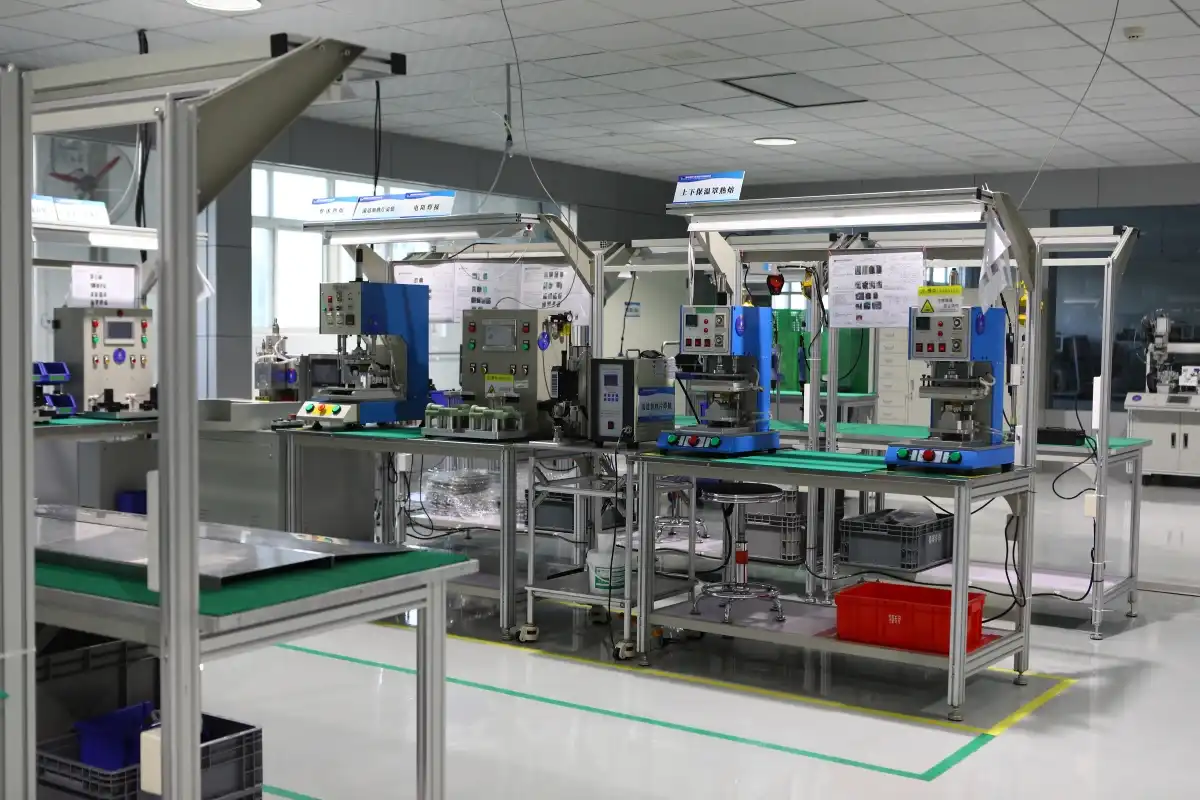
Lead times are important when you're making a lot of things. When parts are late, they slow down assembly lines and lead to fines for being behind schedule. Smaller trading middle-men can't always keep their output schedules. Suppliers like Qintai, which has been in business since 2001 and has its own R&D team and production facilities, can. As part of the process of qualifying a seller, you should always look at how much they can really make, not just what they say in their catalog.
Maintenance and Troubleshooting of SCR Dosing Pumps
Routine Inspection Protocols
Regularly checking the filter element, electrical connections, and pump pressure output is the first step in preventive maintenance. It's a good idea to check the seals at the pump's entry and exit every 50,000 km (or every 24 hours of fixed use). DEF can slowly wear away some metals. Qintai's pump units are small and have the pump, filter, and warmth all built into one unit. This lowers the number of outside connections that need to be made that leak.
Handling Freezing Conditions
AdBlue freezes at -11°C (12°F), which makes it very hard to work with in cold places. Qintai urea pumps are built with built-in logic and heating that keep them from freezing. The system checks the solution's temperature and stops giving the medicine when it reaches a safe level. Right away, when the engine is turned off, the pump clears the feed line of any DEF that is still there. This keeps ice from forming during the next cold start. With this purge function, the pump and the dose injection further down the line are both kept safe.
Diagnosing Common Failures
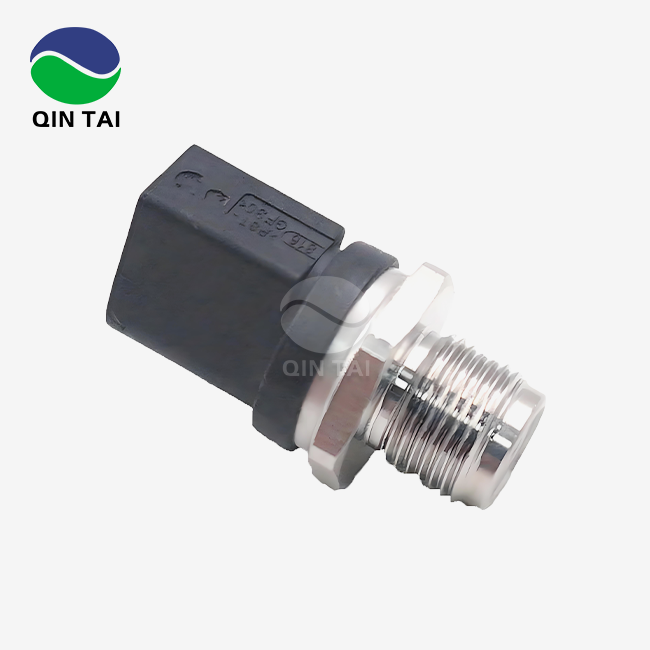
The three most common issues in the field are inconsistent flow, faults with pressure drop, and issues with how the ECUs talk to each other. Most of the time, a plugged filter or a worn-out diaphragm is to blame for flow problems of the SCR dosing pump. A pressure fault is usually caused by a broken pressure monitor in the return circuit.
Most of the time, issues with ECU connection are brought on by issues with the wiring system, not the pump itself. In the field, most problems can be fixed without having to replace the whole pump. Follow an organized diagnostic procedure that starts with checking the pressure, then the filters, and finally the wiring to make sure everything is still there.
Future Trends and Innovations in SCR Dosing Pumps for Diesel Engines
Smart Controls and Predictive Diagnostics
Pump makers are putting diagnostics on board that let rental tracking systems know in real time how well the pumps are working. This lets OEM service networks and fleet operators find dosing issues before they lead to a fault code or a derating event. Off-grid power companies and mines that use generator sets have a lot less unexpected downtime when they have this kind of early warning feature.
Material and Design Advances
Parts engineers have to use materials that can handle a wider range of temperatures and chemicals because emission standards are getting stricter. Fluoropolymer seals and pump housings that don't rust have come a long way. This means that between-service intervals are longer and warranty claims are lower. There is still work being done by Qintai's independent research and development team on the next generation of designs that will last in harsh industrial settings where pumps are used all the time.
Regulatory Direction and OEM Readiness
Not less strict, but stricter rules are being put in place for emissions. China VI, the EU Stage V, the U.S. EPA Tier 4 Final, and all of them need exact NOx aftertreatment. If OEMs choose qualified, certified SCR dosing pump providers now, they will be better prepared for when rules change in the future and won't have to re-qualify all of their parts. When you work with a company that has been around for a while, the technical risk is smaller across multiple versions of the product.
Conclusion
The cost of production, emission certification, guaranty risk, field efficiency, and the choice of SCR dosing pump are all affected by the one that is chosen. It doesn't matter if the SCR system is for a mobile big truck or a stationary generator set; what the specs say and how well-known the company is that made it.
Since more than 20 years ago, Qintai has been making things and has quality standards that have been accepted. They have also a history of giving OEM parts to diesel engine makers all over the world. If your purchasing or engineering team is looking at SCR dosing pump providers, you should talk to them about the business and technical details.
FAQ
What is the function of a urea dosing pump in an SCR system?
The urea dosing pump controls the flow rate and pressure of AdBlue as it moves from the tank to the dosing injector. It talks to the ECU to figure out how much reductant to use based on the amount of NOx in the air and the conditions of the exhaust. In this way, emissions stay within the range that is allowed.
How does the pump handle cold-weather operation?
The DEF pump units that Qintai makes have heating and logic built in that keep them from freezing based on the temperature. The pump stops adding AdBlue until the solution is above freezing. When it turns off, it clears the supply line so that ice doesn't form during cold starts.
What certifications should an OEM SCR pump supplier hold?
Look for ISO9001 and IATF16949 if you're in the car business and want to make sure quality control. Extra labels like CE, UL, RoHS, and REACH prove that the item meets safety and quality standards in other countries, which are important for selling in places like the U.S. and Europe.
Can dosing pump parameters be customized for specific engine platforms?
We do offer OEM and ODM services at Qintai. These services include setting up the interface, picking the right connector type, pressure range, and flow calibration for each engine system. Custom versions can be made at every stage, from planning to mass production.
What causes dosing pump failures in the field?
Most of the time, it's because the filter elements are clogged, the diaphragm covers are worn out, or there are problems with the wires at the ECU interface. If you check the filters often and replace the seals when they're due, you can avoid most problems before they affect how the car works.
Partner with Qintai for Your SCR Dosing Pump Supply
OEMs in more than 60 countries buy approved SCR dosing pumps from Qintai. Diesel engine aftertreatment comes from Qintai more than any other company in China. Quality that is IATF16949-certified, full OEM/ODM customization, and quick technical help are all things that they offer for mass production projects. Contact our team to talk about the amount of work you need, any technology needs, and when you need it approved. You can email info@qt-sensor.com or qt-sensor.com with a question. An important part of an SCR system is the urea dose pump.
References
1. SAE International Journal of Engines — "SCR System Performance and DEF Dosing Accuracy Under Transient Load Conditions," SAE International, 2022.
2. Emission Control Engineering Handbook — Majewski, W.A. & Khair, M.K., DieselNet Technology Guide, 2021.
3. Journal of Cleaner Production — "NOx Reduction Efficiency in Heavy-Duty Diesel Engines Using Urea-SCR Technology," Elsevier, 2020.
4. Transportation Research Part D: Transport and Environment — "Real-World NOx Emissions and SCR System Reliability in Commercial Vehicles," Elsevier, 2021.
5. Diesel Progress North American Edition — "DEF Pump Technology Advances for Tier 4 and Stage V Compliance," Diesel Progress, 2022.
6. International Journal of Automotive Technology — "Durability and Diagnostic Methods for Urea Dosing Systems in Euro VI Engines," Springer, 2023.

Our customers’ satisfaction speaks for our quality — contact us to experience the same reliable service.