- English
- French
- German
- Portuguese
- Spanish
- Russian
- Japanese
- Korean
- Arabic
- Greek
- German
- Turkish
- Italian
- Danish
- Romanian
- Indonesian
- Czech
- Afrikaans
- Swedish
- Polish
- Basque
- Catalan
- Esperanto
- Hindi
- Lao
- Albanian
- Amharic
- Armenian
- Azerbaijani
- Belarusian
- Bengali
- Bosnian
- Bulgarian
- Cebuano
- Chichewa
- Corsican
- Croatian
- Dutch
- Estonian
- Filipino
- Finnish
- Frisian
- Galician
- Georgian
- Gujarati
- Haitian
- Hausa
- Hawaiian
- Hebrew
- Hmong
- Hungarian
- Icelandic
- Igbo
- Javanese
- Kannada
- Kazakh
- Khmer
- Kurdish
- Kyrgyz
- Latin
- Latvian
- Lithuanian
- Luxembou..
- Macedonian
- Malagasy
- Malay
- Malayalam
- Maltese
- Maori
- Marathi
- Mongolian
- Burmese
- Nepali
- Norwegian
- Pashto
- Persian
- Punjabi
- Serbian
- Sesotho
- Sinhala
- Slovak
- Slovenian
- Somali
- Samoan
- Scots Gaelic
- Shona
- Sindhi
- Sundanese
- Swahili
- Tajik
- Tamil
- Telugu
- Thai
- Ukrainian
- Urdu
- Uzbek
- Vietnamese
- Welsh
- Xhosa
- Yiddish
- Yoruba
- Zulu
Pressure and Temperature Transmitter Benefits for Remote Monitoring
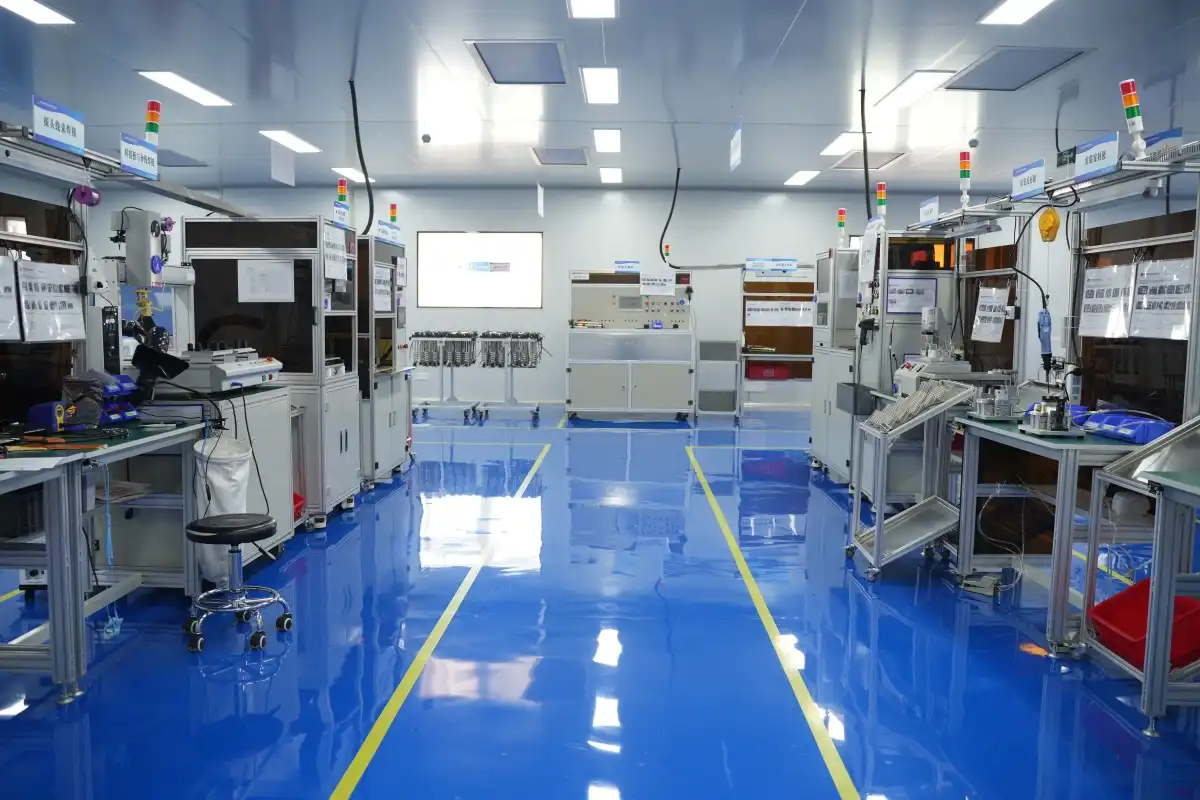
Remote monitoring systems rely heavily on accurate, real-time data to optimize industrial operations and prevent costly downtime. Pressure and temperature transmitters serve as the backbone of these monitoring networks, converting physical parameters into standardized electrical signals that control systems can interpret instantly. These dual-function devices measure critical process variables—pressure fluctuations and temperature changes—simultaneously, providing operators with comprehensive insights into equipment health and operational efficiency. By integrating ceramic sensor technology with advanced signal processing, modern transmitters deliver measurement accuracy within ±1.0% full scale, enabling precise control in demanding applications from diesel engine aftertreatment systems to hydraulic machinery and HVAC installations across industrial sectors.
Understanding Pressure and Temperature Transmitters
What Distinguishes Transmitters from Basic Sensors?
A lot of procurement professionals get sensors and transmitters mixed up, but the difference is important for system integration. Sensors pick up on changes in the physical world, like changes in pressure or temperature, and send out raw electrical signals. But transmitters boost and modify these signals, turning them into standard outputs that industrial computers can use, such as 0.5-4.5V DC or 4-20mA current loops. This signal conditioning makes sure that it works with programmable logic controllers, remote control systems, and platforms for supervisory control and data collection. This change is shown by the QS-PT225, which has both ceramic pressure sensing elements and NTC thermistor technology built into a single housing. This gets rid of the signal correlation errors that happen with separate sensor installations.
Operating Principles Behind Dual-Parameter Measurement
In ceramic pressure sensors, applying pressure changes the shape of the ceramic diaphragm, which changes the electrical resistance in a proportional way. After signal filtering circuits handle the data, this change in resistance turns into a voltage output. NTC thermistors, on the other hand, use the fact that temperature and electrical resistance in semiconductor materials are inversely related to measure temperature.
It is predictable that sensor resistance will drop as the temperature of the medium rises, which lets you accurately figure out the temperature. When you put these two technologies together in one tool, they work together to make measurements more accurate by picking up both factors at the same point in the process stream. This co-location is very helpful for figuring out superheat in cooling systems or making sure that pollution rules are followed in diesel engine exhaust aftertreatment, where the efficiency of the catalyst depends on the relationship between pressure and temperature.
Integration with Modern Control Architectures
Field instruments and central tracking stations must be able to connect easily to each other in today's industrial centers. Standard communication methods let dual-parameter transmitters work together. They send continuous data streams to distant dashboards over wired links or new wireless networks. The QS-PT225 only needs 4.75VDC to work and can handle up to 15mA of current.
This makes it perfect for battery-powered remote installations or monitoring nodes that are charged by the sun in off-grid situations. Protection against reverse polarity and 32V overvoltage keep damage from happening during installation or electrical problems, which cuts down on field service calls. This strong electrical design keeps data flowing even in harsh environments, like mines and farms with machines that work in temperatures ranging from -40°C to 130°C.
Key Benefits of Using Pressure and Temperature Transmitters for Remote Monitoring
Enhanced Accuracy and Real-Time Operational Visibility
Accuracy of measurements has a direct effect on the quality of the process and on following the rules. With devices that give readings of ±1.0% full-scale accuracy for both pressure and temperature, operators can find small changes in the process before they become major problems. When keeping an eye on big trucks' SCR systems, even small drops in pressure can mean that the DPF filter is getting clogged, and changes in temperature could mean that the catalyst is breaking down.
When maintenance teams can see these factors in real time, they can plan their work for planned downtime instead of having to respond to problems that happen out of the blue. Ceramic sensor technology in the QS-PT225, a robust Pressure and Temperature transmitter, keeps its accuracy across total error bands of ±3% even when operating temperatures change from -30°C to 130°C. This means that the data is reliable during cold starts and high load conditions that are hard for traditional sensor designs.
Predictive Maintenance Capabilities Reduce Downtime
Using historical data from dual-parameter receivers to make predictions about how parts will wear down is possible with predictive analytics. Gradual rises in hydraulic pressure may mean that the seals are breaking down, and rising temperatures may mean that the lubricants are breaking down. During commissioning, baseline performance metrics are set so that operators can set alert thresholds that let them know when measurements change too much.
When you take this proactive approach, maintenance plans change from "fix-when-broken" models to models that plan interventions based on conditions. When construction equipment workers use these monitoring systems, unplanned downtime drops by 30 to 40 percent. This directly leads to better equipment utilization rates and faster project finish dates. Being able to keep an eye on multiple tools at once from a central control room makes the fleet as efficient as possible without sending people to each job site.
Compliance with Safety Standards and Certification Requirements
There are strict safety rules for industrial activities, especially when they work in high-pressure or dangerous environments. In dangerous places, people and things are kept safe by certified receivers that meet ATEX, IECEx, or North American explosion-proof standards. Strong transmitters are made of 304 stainless steel, which is resistant to corrosive media like engine oil, refrigerants, and industrial gasses. They can also withstand burst pressures of more than 10MPa without losing their structural integrity.
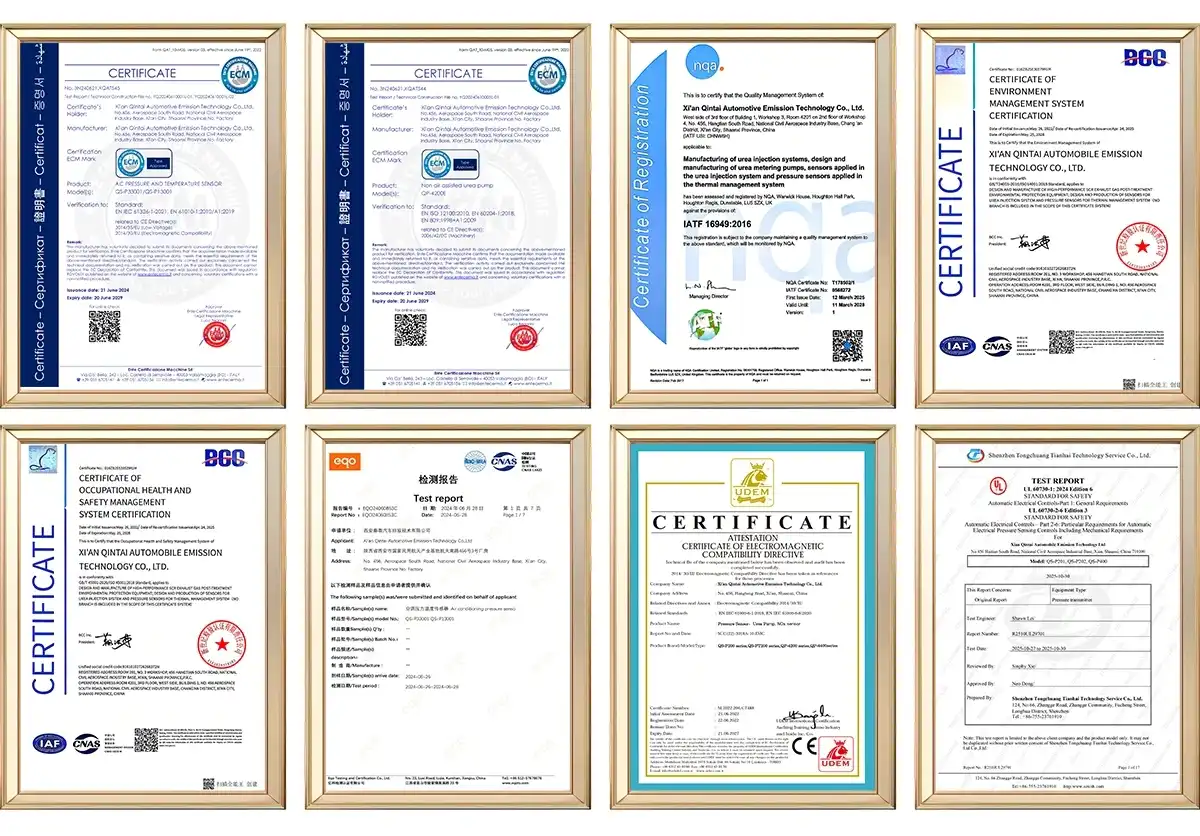
Diesel engine makers who want to get EPA Tier 4 or Euro VI approval need to show that their measurements were taken accurately using certified equipment. Generator set makers who sell backup power systems to hospitals or data centers need instruments that have been tested and proven to be reliable by a third party. Buying transmitters from companies that are ISO9001 and IATF16949 certified makes sure that the quality is the same across all production batches. This means that OEM procurement teams don't have to do as many qualification tests.
Cost Efficiency Through System Simplification
Putting pressure and temperature measurement into the same gadget saves a lot of money over and above the initial buy price. When techs place a single instrument instead of two different sensors with their own wire runs, they don't have to coordinate as much work. When one spare part can cover dual-parameter monitoring instead of keeping a bunch of different sensor types on hand, it makes maintenance inventories easier to manage.
When calibration schedules are combined, annual verification costs and instrument downtime go down. The design that saves space is especially useful in small spaces, like engine compartments for farm equipment, mobile hydraulic equipment, or industrial automation panels that are close together. These small savings add up to big savings when spread out over fleets of hundreds or thousands of units. When one SKU replaces two old stock items, it increases inventory turnover, which is good for aftermarket parts suppliers that serve repair shops because it improves cash flow.

How to Select the Right Pressure and Temperature Transmitter for Your Remote Monitoring Needs?
Defining Application-Specific Requirements
A careful study of the application is the first step in choosing the right transmitter. Specifications for pressure ranges must take into account both normal operating conditions and short-term pressure spikes. For example, when a hydraulic valve is opened, the pressure may rise, so safe operating margins are needed. The QS-PT225 has adjustable pressure ranges from 0-5Bar to 0-40Bar, so it can be perfectly matched to the needs of the application without having too wide of a measurement range, which lowers the sharpness.
Temperature range issues aren't just important for steady-state operation; they're also important for cold-start situations, thermal rest times, and emergency situations. Process connection types, such as G1/4, M12x1.5, or M10x1 threads, must match the designs of current ports to avoid having to buy expensive adapter fittings that could lead to leaks. Media compatibility verification makes sure that materials only come into contact with fluids that they can handle for a long time. For example, POE oils used in refrigeration systems don't react chemically with sealing materials in the same way that diesel engine lubricants do.
Evaluating Supplier Capabilities and Support Infrastructure
Technical standards are important, but the skills of the provider are just as important for long-term success. Established companies with ISO9001 quality management systems show that their processes are consistent, and IATF16949 approval shows that they have the automotive-grade production controls that are needed for high-volume OEM uses. Patent portfolios show how much R&D a company does, since companies with idea patents usually keep investing in new technology instead of just repackaging common parts.
When OEM integrators need changed electrical connectors, special pressure ports, or different output signal ranges, the ability to customize becomes very important, especially for a Pressure and Temperature transmitter that must fit specific mounting and interface requirements. As product lines change, suppliers who offer both regular catalog items and engineered-to-order options give customers more choices. Delivery wait times and minimum order sizes affect how production is planned. Aftermarket distributors need to be able to get small batches quickly, and OEM production lines need to be sure they can keep getting supplies with buffer stock deals to keep the assembly lines running smoothly.
Balancing Performance with Total Cost of Ownership
The purchase price is only one part of the total costs of owning. Over the 10-15 years that industrial machinery lasts, warranty terms, failure rates, and service life forecasts affect how much it costs to repair. Higher-quality transmitters that cost more may end up saving you money in the long run because they last longer and break down less often than cheaper ones that need to be replaced more often. When used for remote monitoring with a battery, the QS-PT225's 15mA maximum current draw helps the battery last longer than other options that use a lot of power.
Control loop stability is affected by response time specifications. For example, sensors with response times of milliseconds are needed for fast-acting process control, while sensors with update rates of milliseconds or less are fine for trending applications. Before agreeing to large orders, procurement teams should ask for sample units to be tested in the field to make sure that performance claims are true in real-world situations. During this validation process, problems with integration are found early on, so expensive redesigns aren't needed after production promises have been made.
Installation, Calibration, and Maintenance Best Practices
Optimal Mounting Considerations for Measurement Accuracy
The reliability of measurements depends on how well they are installed. Transmitters should be put in places that reflect the real conditions of the process. For example, they shouldn't be put in dead-ended pipe stubs, where the still media causes temperature differences that don't reflect the normal flow conditions. To keep debris from getting stuck on sensor diaphragms, pressure taps need to be deburred and cleaned. Even small amounts of contamination can change readings or speed up wear. For the QS-PT225, mounting torque requirements range from 10 to 20 N-m.
This makes sure that seals don't leak and that threads aren't overstressed, which could crack housings or bend sensor elements. Flexible mounting brackets or dampening materials keep transmitters from being damaged by mechanical shock, which extends their useful life in mobile equipment applications. Electrical contacts need to be properly seated and fully engaged with loud clicks. If they are not properly seated, pins can become wet, which causes intermittent signals that make troubleshooting more difficult.
Calibration Protocols Maintaining Long-Term Precision
Factory-calibrated new receivers are checked for accuracy in the field before they are put into service. The first baseline calibration using certified reference standards records performance as installed, setting standards for future drift detection. Most industrial uses only need to be recalibrated once a year, but important safety systems or regulatory standards may need to be checked every six months. During calibration, known references for pressure and temperature are used across the measurement range, and the outputs of the emitter are compared to standards that can be tracked.
When deviations go beyond the acceptable range, decisions are made about whether to make adjustments or replace the part. It's important to choose the right calibration tools. For example, pressure calibrators need to be more stable and accurate than the device being checked, usually by a factor of four. Temperature baths or dry-block calibrators keep reference temperatures stable within very small ranges. This lets you accurately test transmitters across all of their working conditions. Quality audit standards are met by practices that keep records of calibration times, changes, and technician certifications.
Troubleshooting Common Field Issues
When transmitters break down in remote tracking apps, it can be hard to figure out what's wrong. Rather than a radio failure, sudden signal loss is often caused by wiring issues like broken cords, loose connections, or a failing power source. Systematic diagnosis starts with checking the supply voltage at the transmitter terminals to make sure there is enough power. Readings that change slowly could mean that the calibration needs to be reset or that media has built up on the sensor surfaces and needs to be cleaned.
Electrical interference from nearby motors, variable frequency drives, or radio emitters that need shielded cables or signal filters could cause signals to change randomly. The QS-PT225 has reverse polarity protection that keeps it from getting damaged by bad wiring. However, if the power connections are wrong, the device won't work, so you'll need to check the voltage while troubleshooting.
Temperature-related problems usually show up during seasonal extremes, when working conditions aren't as good as expected. This could mean that the insulation needs to be improved or the mounting places need to be moved. Keeping troubleshooting logs that record symptoms, corrective actions, and results builds institutional knowledge that speeds up repairs in the future, particularly when dealing with a Pressure and Temperature transmitter that operates in electrically noisy or thermally harsh environments.
Future Trends and Innovation in Remote Monitoring Technologies
Industrial Internet of Things Integration
When industrial instruments and the Internet of Things (IoT) connect, they change standard monitoring tools into platforms for predictive analytics. Edge computing is built into next-generation receivers, which process raw sensor data locally before sending summed-up insights to cloud platforms. This distributed intelligence lowers the amount of bandwidth needed for the network while letting equipment make decisions in real time. Machine learning algorithms look at past trends of pressure and temperature to find small problems that threshold-based alarm systems miss.
Generator set makers put IoT-enabled transmitters on a variety of distributed power generation assets. These transmitters collect performance data that shows trends across the whole fleet, which helps repair staff decide how to best use their time and resources. OEMs of diesel engines use connected aftertreatment sensors to test how well the emission system works in a variety of operating conditions. This helps them improve calibration strategies that get the best fuel economy while still meeting compliance standards.
Wireless Communication Advances
Battery-powered wireless emitters get rid of the costs of installing signal cables, which is especially helpful for repair situations where running conduit is not an option. Low-power wide-area networks, such as LoRaWAN, let batteries last for years while still ensuring reliable connectivity across kilometers of industrial campuses. Mesh networking designs set up self-healing communication lines where transmitters send data through nearby devices, keeping the network connected even if one link fails.
For short-term monitoring needs, like renting construction equipment, farming during certain times of the year, or using portable generators, wireless technologies are a good choice because they don't require permanent wiring. Concerns about security in wireless industrial networks lead to the use of encrypted protocols and identification systems that stop people who aren't supposed to be there from getting to process data or control orders. As wireless standards get better and prices go down, more and more businesses are adopting them, even ones that have generally preferred hardwired dependability.
Digital Twin Technologies and Virtual Commissioning
Digital twin ideas, which are virtual copies of real assets, depend on continuous sensor data streams that keep simulation models and real-world operations in sync. Pressure and Temperature transmitters that feed digital twins allow for "what-if" scenario analysis and testing of changes to the control strategy before they are actually made to the equipment that is in use. Engineers can set up tracking systems away with virtual commissioning tools. This cuts down on the time and money needed for expensive field commissioning when the real equipment arrives.
Before going to faraway job sites, maintenance teams use digital twins to practice difficult repair processes and figure out what tools they will need and what problems they might face. As computers get faster and simulations get more accurate, digital twins go from being interesting tech experiments to being necessary tools for running businesses. When transmitter makers give detailed device models and communication protocols, digital twin integration goes smoothly. This helps them stand out in competitive markets.
Conclusion
Today's factories need measurement tools that they can rely on to give them correct data in real time and help with remote tracking. Dual-parameter receivers that measure both pressure and temperature in small packages have many benefits, including easier installation, higher accuracy, and lower ownership costs compared to using different sensors. The QS-PT225 is an example of what modern technology can do. It has accuracy specs of ±1.0%, is made of strong 304 stainless steel, and can be customized in many ways to meet the needs of different applications.
The best long-term performance is guaranteed by careful selection that takes into account application-specific needs, supplier qualifications, and total ownership costs, especially when choosing a Pressure and Temperature transmitter that matches the process conditions and environmental demands. Measurement accuracy is maintained over long service lives by following correct installation procedures, regular calibration intervals, and organized troubleshooting protocols. New technologies like IoT integration, wireless connectivity, and digital twin applications offer better capabilities. This puts forward-thinking businesses in a good position to take advantage of Industry 4.0 possibilities while still achieving operational greatness today.
FAQ
Q1: What differentiates a transmitter from a sensor in industrial applications?
A: Sensors pick up on physical factors and send out unprocessed electrical signals that are related to the factors that were measured. Sensors and signal processing electronics are built into transmitters. These electronics boost, straighten, and change the raw signals into standard outputs that can be used with industrial control systems. Transmitters also have features that sensors don't, such as safety against reverse polarity, temperature correction, and diagnostic tools.
Q2: How often should dual-parameter transmitters undergo calibration?
A: Most industrial tracking tasks can be done with annual calibration intervals, which balance measurement accuracy with upkeep costs. Important safety systems or situations where you have to follow the rules may need to be checked every six months. The right times are based on the severity of the operating climate, the trend of drift over time, and the manufacturer's suggestions. Set up standard calibrations during setup and write down the initial accuracy so that you can compare it later.
Q3: Can wireless transmitters match wired reliability in critical applications?
A: Through multiple communication paths, acknowledgment systems, and health monitoring, modern wireless industrial protocols offer reliability that is similar to wired installations. Wired systems can't work when the power source goes out, but battery-powered versions can. Wireless is good for monitoring that isn't safety-critical and can handle occasional data gaps. Safety-instrumented systems usually have hardwired designs that meet strict standards for uptime. An application risk assessment figures out the best way to connect, balancing the need for convenience with the need for reliability.
Partner with Qintai for Advanced Pressure and Temperature Transmitter Solutions
Qintai Automotive Emission Technology Co., Ltd. has been making sensors for more than 20 years and can help with industry tracking problems all over the world. We understand the strict needs of diesel engine makers, aftertreatment processors, and industrial equipment makers because we are China's top OEM provider for Weichai Power, Yuchai Power, and Quanchai Power. Our QS-PT225 dual-parameter emitter gives your remote monitoring apps the accuracy, dependability, and customization options they need.
Our manufacturing skills are backed by ISO9001, IATF16949, and a wide range of foreign standards, such as CE, UL, and RoHS compliance. They allow us to make both prototypes and large quantities of products. Our technical team is here to help you every step of the way, whether you need regular catalog items or solutions that are built to your exact specs. Contact us at info@qt-sensor.com right away to talk about how our Pressure and Temperature emitter technology can help your tools work better, save you money, and make you more competitive in global markets.
References
1. Johnson, M.R. & Williams, P.T. (2019). Industrial Pressure and Temperature Measurement: Principles and Applications. Technical Instrumentation Press.
2. Chen, L., Rodriguez, A., & Kumar, S. (2021). Remote Monitoring Systems for Industrial Equipment: Design and Implementation Strategies. International Journal of Industrial Automation, 15(3), 245-267.
3. Anderson, K.E. (2020). Sensor Technologies for Diesel Engine Emission Control Systems. SAE International Publications.
4. Mitchell, D.A., Thompson, R.L., & Zhang, Y. (2022). Predictive Maintenance Using Dual-Parameter Transmitters in Heavy Equipment. Journal of Construction Machinery Engineering, 28(2), 112-134.
5. European Industrial Instrumentation Standards Committee (2021). Certification Requirements for Pressure Transmitters in Hazardous Locations. Technical Specification EIISC-2021-07.
6. Wagner, H. & Nakamura, T. (2020). IoT Integration in Industrial Process Monitoring: Current Trends and Future Directions. Automation Technology Review, 42(4), 89-108.
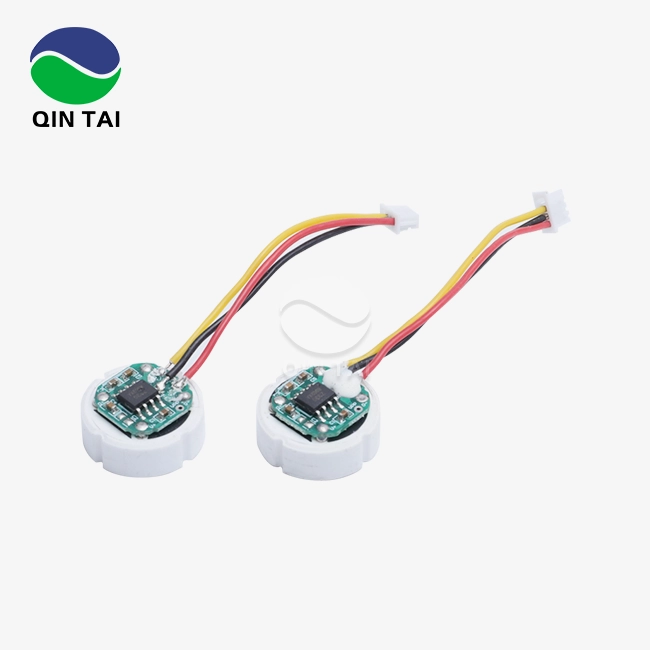
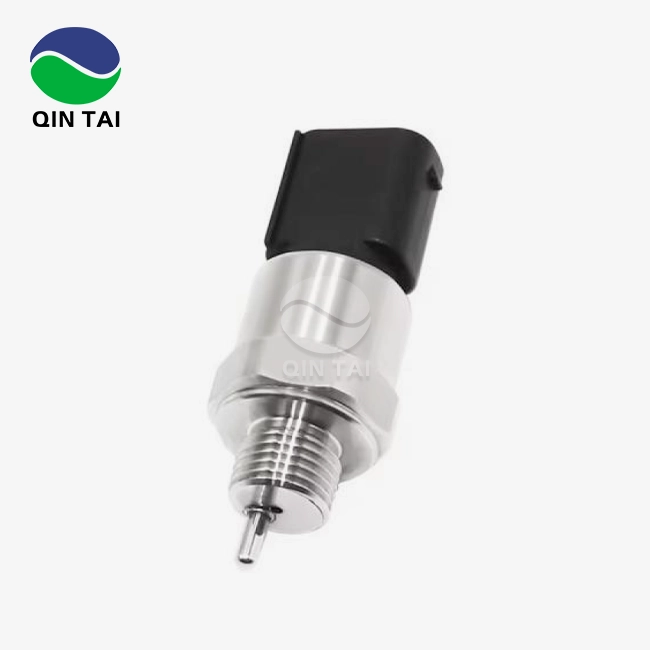

Our customers’ satisfaction speaks for our quality — contact us to experience the same reliable service.