- English
- French
- German
- Portuguese
- Spanish
- Russian
- Japanese
- Korean
- Arabic
- Greek
- German
- Turkish
- Italian
- Danish
- Romanian
- Indonesian
- Czech
- Afrikaans
- Swedish
- Polish
- Basque
- Catalan
- Esperanto
- Hindi
- Lao
- Albanian
- Amharic
- Armenian
- Azerbaijani
- Belarusian
- Bengali
- Bosnian
- Bulgarian
- Cebuano
- Chichewa
- Corsican
- Croatian
- Dutch
- Estonian
- Filipino
- Finnish
- Frisian
- Galician
- Georgian
- Gujarati
- Haitian
- Hausa
- Hawaiian
- Hebrew
- Hmong
- Hungarian
- Icelandic
- Igbo
- Javanese
- Kannada
- Kazakh
- Khmer
- Kurdish
- Kyrgyz
- Latin
- Latvian
- Lithuanian
- Luxembou..
- Macedonian
- Malagasy
- Malay
- Malayalam
- Maltese
- Maori
- Marathi
- Mongolian
- Burmese
- Nepali
- Norwegian
- Pashto
- Persian
- Punjabi
- Serbian
- Sesotho
- Sinhala
- Slovak
- Slovenian
- Somali
- Samoan
- Scots Gaelic
- Shona
- Sindhi
- Sundanese
- Swahili
- Tajik
- Tamil
- Telugu
- Thai
- Ukrainian
- Urdu
- Uzbek
- Vietnamese
- Welsh
- Xhosa
- Yiddish
- Yoruba
- Zulu
Pressure Transmitters vs. Pressure Switches: Which Is Best for Plants?
Pressure transmitters are the better choice when a plant needs a continuous pressure reading for monitoring, trending, or automatic control. Pressure switches are better for a fixed alarm, a simple start or stop, or an independent shutdown. In my experience, the answer depends on what the plant must do with the pressure information. A transmitter tells you the value. A switch tells you only that a limit was crossed. Many plants use both: the transmitter for visibility and control, and the switch as a separate protection layer. This guide shows how to decide, step by step.

How Pressure Transmitters and Pressure Switches Work
How a Transmitter Measures Pressure Continuously
A pressure transmitter turns process pressure into a continuous electrical signal. Pressure pushes on a diaphragm, and a sensing element detects the small deformation. Internal electronics then correct and amplify the signal before sending it to a PLC, DCS, or SCADA system. The most common output is 4–20 mA, where 4 mA marks the bottom of the calibrated range and 20 mA marks the top. Some models add HART or Modbus communication, which carry diagnostics and configuration data. Because the signal never stops, operators can watch trends, set several alarm levels in software, and feed the value into PID control loops. This is why pressure transmitters appear in so many automated plants.
How a Switch Detects a Setpoint
A pressure switch works differently. It compares process pressure with a preset threshold and changes the state of an electrical contact, either normally open or normally closed, when that threshold is reached. Most switches also have a reset point, and the gap between the two is called hysteresis or deadband. That gap prevents rapid on-off cycling near the setpoint. The switch carries no measurement value, so it cannot show whether pressure is rising slowly or spiking. Its strength is simplicity. It can drive a relay, start a pump, or trip a shutdown circuit without any software or controller. For fixed-point duties, that simplicity is often exactly what a plant needs.
Accuracy, Output, Calibration, and Maintenance Compared
Purchase price is only one part of the comparison. Transmitters are specified by accuracy, repeatability, temperature effect, and long-term stability. Switches are judged by setpoint repeatability, hysteresis, and contact life. A two-wire 4–20 mA transmitter needs correct power, polarity, loop resistance, shielding, and grounding. Calibration checks zero and span against a known reference. Switches need periodic checks of the set and reset points, plus attention to contact wear, diaphragm fatigue, vibration, and dirt. A transmitter costs more up front, but it reports a number you can verify against a reference gauge. A basic switch gives no diagnostic output, so scheduled testing matters.
Choosing a Device by Plant Application
When a Transmitter Is the Right Choice
I recommend a transmitter whenever operators need a real pressure value rather than a simple alarm. Typical jobs include pump and compressor control, pipeline monitoring, tank level measurement, filter differential pressure, and hydraulic diagnostics. Transmitters pay off when pressure trends affect product quality, energy use, equipment protection, or maintenance planning. A slow rise in filter differential pressure, for example, warns of clogging well before a fixed alarm would trip. Choose a smart model when the system needs HART, Modbus, remote configuration, or PLC and DCS integration. The extra cost is easy to justify when data and process stability are priorities.
When a Switch Is the Better Option
A switch is the better choice for straightforward, fixed-point control. It can raise a high- or low-pressure alarm, start or stop a pump, protect a compressor, or trigger an independent shutdown circuit. Small skids, standalone machines, and relay-based panels often need nothing more. Cost-sensitive installations benefit too, since wiring and controller inputs stay minimal. The limits appear when a plant needs actual values, several alarm levels, changing setpoints, or remote diagnostics. If operators must see how pressure behaves over time, a transmitter, or a transmitter and switch together, serves the process better than a switch alone.
Matching Devices to Water, Steam, Hydraulic, and HVAC Systems
Application drives the final choice. Water treatment plants use transmitters for pump control, pipeline monitoring, and tank level, with switches for basic protection. Steam and boiler systems often pair transmitters for monitoring with a switch for independent high-pressure shutdown. Hydraulic equipment uses transmitters for diagnostics and proportional control, and switches for simple protection. Chemical service demands careful checks of wetted materials and seals. Sanitary industries need hygienic, cleanable connections. HVAC systems may use transmitters for monitoring and switches for fan proving or differential pressure alarms. In every case, I start with the media and the control goal, then pick the device.

Selecting, Installing, and Troubleshooting
A Simple Selection Process
Start with the control objective for pressure transmitters: a measured value, a fixed alarm, proportional control, or a safety function. Next, pick gauge, absolute, or differential pressure. Gauge pressure reads against atmosphere, absolute pressure reads against a vacuum reference, and differential pressure reads between two ports. Then set the operating range, span, and overpressure limit. Review the media, temperature, vibration, corrosion risk, hazardous-area needs, and ingress protection. Finally, confirm the process connection, wetted materials, output signal, power supply, display, and accessories. A complete specification prevents compatibility problems, extra cost, and commissioning delays. Leaving out one item, such as the media, is an easy way to receive a wrong quote.
Installation and Commissioning Steps
Correct installation protects accuracy and service life. Mount the device where technicians can inspect it, calibrate it, and isolate it safely. Use suitable impulse lines, manifolds, valves, supports, and seals. Keep it away from heavy vibration, direct heat, mechanical stress, and contamination. High-temperature service may call for remote seals, cooling, or well-designed impulse piping. During commissioning, check zero, midpoint, and full-scale response against a calibrated reference, then confirm the 4–20 mA signal and display units. Record the results, and inspect grounding, shielding, and polarity before the loop goes live. These records also give maintenance teams a baseline for later comparison.
Fixing Common Problems
Most faulty readings trace back to blocked impulse lines, leaks, wrong ranges, incompatible media, overpressure, temperature effects, or wiring faults. If a transmitter sits at 4 mA, first confirm whether that equals the configured lower range value. If it does, the process may simply be at the bottom of its range. A reading near 0 mA points to a broken wire or lost power, because normal operation starts at 4 mA. Zero errors can come from trapped fluid, unequal impulse lines, or incorrect orientation. For switches, check the setpoint, reset differential, contact wiring, port cleanliness, and vibration.
Procurement Checklist for Distributors, Integrators, and Plant Buyers
What a Complete RFQ Includes
A clear request saves days of back-and-forth. List the measurement type, range, span, accuracy, overpressure rating, wetted materials, process connection, output, power supply, temperature limits, enclosure rating, and display needs. Add the certifications your market requires. For US projects, buyers often ask about UL, CE, or Ex documentation, depending on the site. State the quantity, target delivery date, and whether you need OEM branding or custom ranges. Distributors who serve several end users should group similar specifications, because one well-chosen model family can cover many jobs and keep inventory lean.
How to Judge a Supplier?
Price matters, but so do calibration traceability, production quality, application engineering, and after-sales support. Ask about lead time, minimum order quantity, warranty, and payment terms before the first order. Request drawings, samples, inspection reports, and calibration certificates. A small trial order lets you test performance on a real site before you commit to monthly restocking. Selection support matters just as much. A supplier who helps you confirm range and media saves you from returns and protects your standing with the end customer. Those checks also reduce the cash tied up in slow or wrong stock.
What Qintai Offers in Pressure Sensing?
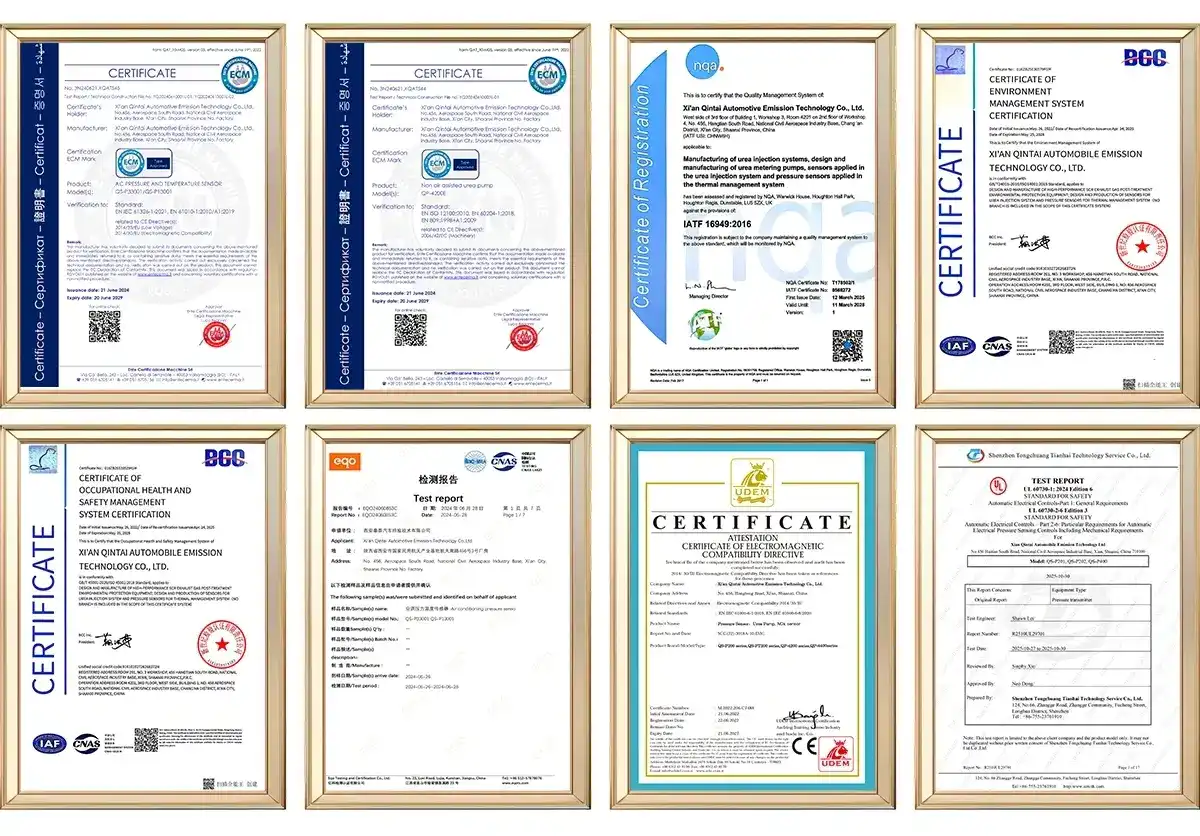
Xi'an Qintai Automotive Emission Technology Co. Ltd is a national high-tech enterprise founded in 2001. We develop, manufacture, and sell sensors, with a strong focus on pressure sensors, along with diesel engine SCR aftertreatment products. Our certificates include ISO9001, IATF16949, CMC, Ex, UL, CE, REACH, and RoHS, and we hold 58 invention patents. An independent R&D team drives product improvement. We act as a core OEM supplier to Weichai Power, Yuchai Power, and Quanchai Power, and our products reach more than 60 countries and areas. We provide OEM and ODM services and support customization by application. Please confirm the exact model, range, and output with our team before ordering.
Decision Matrix: Which Device Is Best for Your Plant?
Choose a Transmitter When
Pick a transmitter if the plant needs continuous measurement, PLC or SCADA integration, PID control, pressure trending, remote diagnostics, or differential pressure measurement. These jobs all depend on a value, not a yes-or-no signal. A transmitter also helps maintenance teams plan work, since drift and slow changes show up in the data before a failure. For distributors, this versatility is useful. A single range can serve pumps, filters, tanks, and hydraulic circuits, so pressure transmitters can simplify a stocking list. The deciding question is simple: will anyone need to know the actual number?
Choose a Switch When
Pick a switch for a fixed high- or low-pressure alarm, simple pump or compressor control, relay logic, or an independent interlock. It works well when the machine has no controller, when wiring must stay minimal, or when the duty never changes. Remember that the setpoint and reset point need regular checks, so schedule them. If the switch protects people or costly equipment, document its test interval. A switch is a direct, low-complexity answer, and for a single fixed duty it is often the most sensible one.
Use Both in Critical Systems
In critical systems, the two devices complement each other. The transmitter provides process visibility and control, while the switch supplies an independent protection layer that still works if the controller fails. The IEC 61511 standard covers safety instrumented systems in the process industry and addresses independence between basic control and safety functions. Boilers, compressors, and high-pressure hydraulic units commonly follow this approach. Final selection should follow the plant's control philosophy, safety analysis, applicable standards, and maintenance plan.
Conclusion
Pressure transmitters and pressure switches solve different problems. A transmitter converts pressure into a continuous signal, usually 4–20 mA, so a plant can trend, control, and diagnose its processes. A switch changes a contact at a setpoint, which suits fixed alarms, simple pump or compressor control, and independent interlocks. The right choice depends on the control goal, the media, the range, the environment, and the maintenance plan. Water treatment, steam, hydraulic, chemical, and HVAC systems each favor different combinations. Accurate selection, careful installation, and regular checks of calibration and setpoints protect performance for either device. Where safety is involved, a transmitter for control and a separate switch for protection give both visibility and an independent safeguard. A complete specification also keeps purchasing accurate.
FAQ
Can a pressure transmitter replace a pressure switch?
Often yes. A controller can turn the transmitter value into an alarm at any setpoint. However, safety functions that must stay independent of the control system still need a separate device.
What is the difference between a 4–20 mA signal and a switch contact?
A 4–20 mA signal changes smoothly with pressure and shows the actual value. A switch contact has two states, open or closed, and shows only whether the setpoint was crossed.
When should I use differential pressure measurement?
Use it to measure the difference between two points, such as across a filter, where a growing pressure drop signals clogging.
What documents should I ask a supplier for?
Request datasheets, drawings, calibration certificates, material information, inspection records, warranty terms, and certifications.
Get the Right Pressure Measurement Solution from Qintai
Qintai, a national high-tech enterprise founded in 2001, is a pressure transmitters manufacturer with ISO9001, IATF16949, UL, and CE certificates and 58 invention patents. We support OEM/ODM projects, customization, and distributor orders. Send your range, media, connection, and output requirements to info@qt-sensor.com, and our team will help you match the right device.
References
1. Instrument Engineers' Handbook, Volume One: Process Measurement and Analysis, 2003
2. Instrumentation Reference Book, 2010
3. IEC 61511: Functional Safety – Safety Instrumented Systems for the Process Industry Sector, 2016
4. IEC 60770-1: Transmitters for Use in Industrial-Process Control Systems, Part 1: Methods for Performance Evaluation, 2010
5. ANSI/ISA-5.1: Instrumentation Symbols and Identification, 2022
6. Process/Industrial Instruments and Controls Handbook, 1999
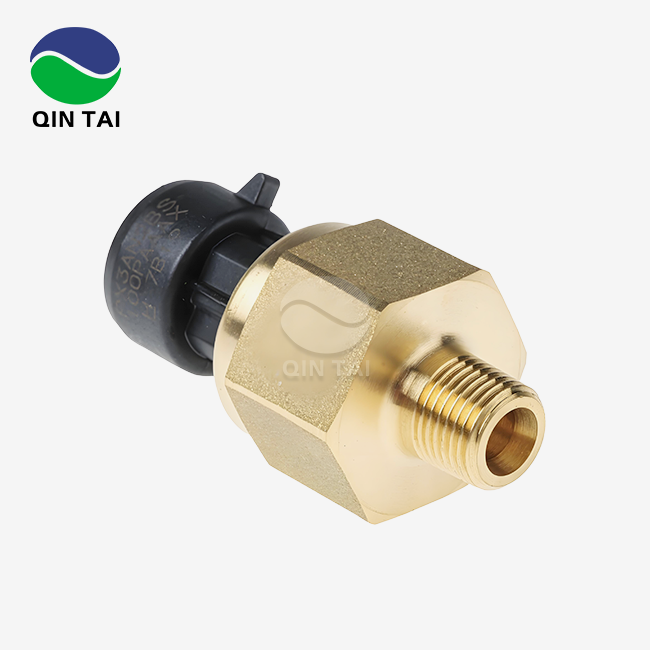
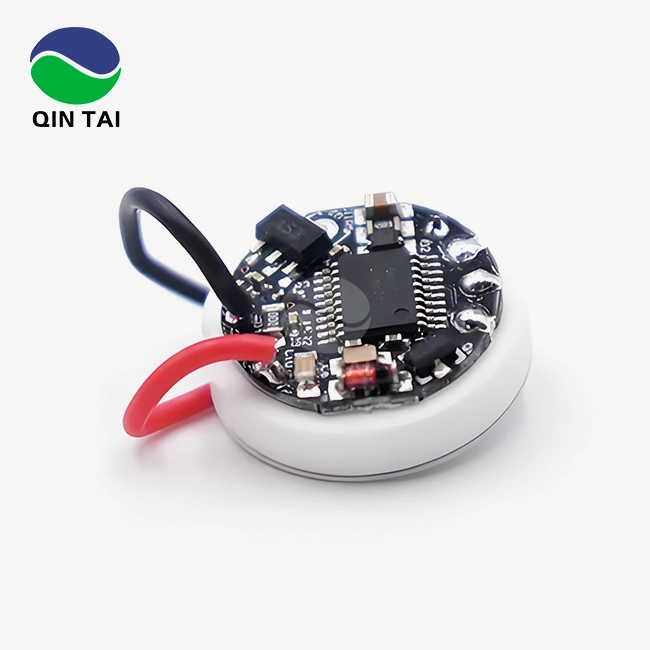
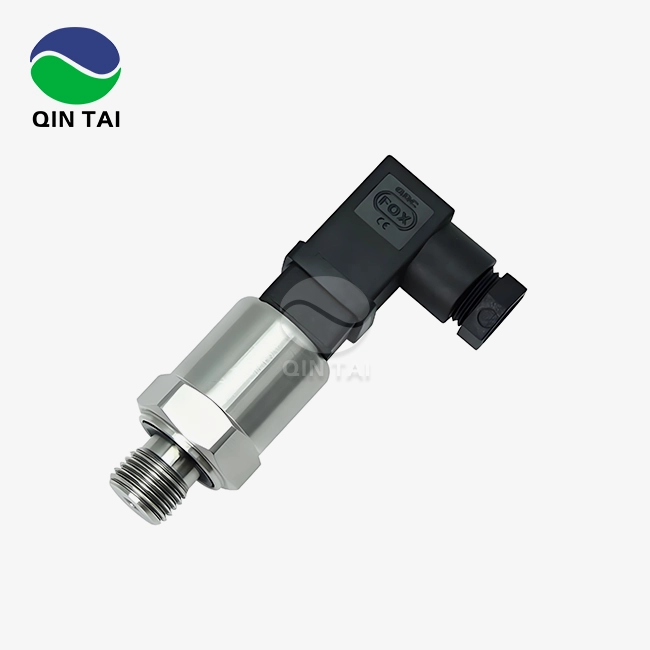

Our customers’ satisfaction speaks for our quality — contact us to experience the same reliable service.