- English
- French
- German
- Portuguese
- Spanish
- Russian
- Japanese
- Korean
- Arabic
- Greek
- German
- Turkish
- Italian
- Danish
- Romanian
- Indonesian
- Czech
- Afrikaans
- Swedish
- Polish
- Basque
- Catalan
- Esperanto
- Hindi
- Lao
- Albanian
- Amharic
- Armenian
- Azerbaijani
- Belarusian
- Bengali
- Bosnian
- Bulgarian
- Cebuano
- Chichewa
- Corsican
- Croatian
- Dutch
- Estonian
- Filipino
- Finnish
- Frisian
- Galician
- Georgian
- Gujarati
- Haitian
- Hausa
- Hawaiian
- Hebrew
- Hmong
- Hungarian
- Icelandic
- Igbo
- Javanese
- Kannada
- Kazakh
- Khmer
- Kurdish
- Kyrgyz
- Latin
- Latvian
- Lithuanian
- Luxembou..
- Macedonian
- Malagasy
- Malay
- Malayalam
- Maltese
- Maori
- Marathi
- Mongolian
- Burmese
- Nepali
- Norwegian
- Pashto
- Persian
- Punjabi
- Serbian
- Sesotho
- Sinhala
- Slovak
- Slovenian
- Somali
- Samoan
- Scots Gaelic
- Shona
- Sindhi
- Sundanese
- Swahili
- Tajik
- Tamil
- Telugu
- Thai
- Ukrainian
- Urdu
- Uzbek
- Vietnamese
- Welsh
- Xhosa
- Yiddish
- Yoruba
- Zulu
Smart Pressure Monitoring Device vs Traditional Gauges: Which Wins?
When it comes to pressure measurement in heavy industry, the debate between a smart pressure monitoring device and a traditional mechanical gauge is no longer theoretical — it has direct consequences for uptime, compliance, and cost. After evaluating both technologies across diesel engine applications, SCR aftertreatment systems, and generator sets, the answer is clear: smart devices deliver measurable advantages in accuracy, remote diagnostics, and lifecycle value. That said, traditional gauges still hold ground in specific low-complexity scenarios. The right choice depends on your operational environment, regulatory demands, and procurement strategy.

Understanding Pressure Measurement Technologies
To understand technologies for measuring pressure, one must compare traditional and modern solutions across their mechanical and digital implementations.
How Traditional Gauges Work
In traditional mechanical gauges, fluid pressure is shown on a dial by a needle deflection. This is done by Bourdon tubes or diaphragm mechanisms. Because they are passive, they don't need any power and are easy to set up. However, they need to be read by hand, can move due to vibrations, and don't have a way to log data. In tough settings like diesel engine exhaust aftertreatment systems, these flaws directly lead to missed problem finding and noncompliance risk.
How Smart Pressure Monitoring Devices Work
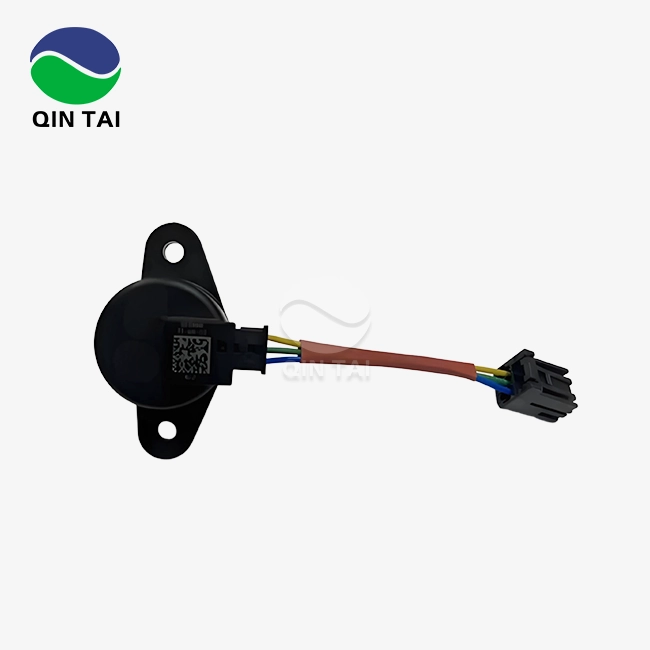
In many cases, a smart pressure monitoring device can send data wirelessly and has built-in signal processing, digital output standards (like CAN, 4–20mA, or RS485), and a piezoresistive or capacitive sensing element. The device collects pressure data all the time, checks it against set limits, and sends alerts to fleet management platforms or centralized control systems. MarketsandMarkets said in 2022 that the global market for smart sensors was worth $36.4 billion. It is expected to grow to $87.6 billion by 2027, with industrial IoT adoption being a big reason for this.
Core Comparison: Smart Pressure Monitoring Devices vs Traditional Gauges
When you look at the things that matter most in B2B purchasing decisions, the performance gap between these two technologies becomes clear. Here is a direct comparison of the most important factors that purchasing managers and R&D engineers usually look at:
- Accuracy and consistency: Most smart pressure monitoring devices are accurate within ±0.5% of the full scale, and they can also adjust for temperature. Traditional gauges tend to move by 1% to 2% over time, especially when exposed to temperature cycle conditions like those found in diesel engine exhaust.
- Data accessibility: Smart devices send data to SCADA systems, ECUs, or cloud screens in real time. Traditional gauges only show one number that can be read by humans and can't store any information.
- Maintenance burden: Mechanical gauges need to be re-calibrated and inspected physically on a regular basis. Smart devices help with predictive maintenance by pointing out problems before they happen. This cuts down on unplanned downtime by a large amount.
- Environmental resilience: Industrial-grade smart sensors rated to IP67 or higher and able to work in temperatures ranging from -40°C to +125°C are better than mechanical gauges in harsh environments with a lot of vibration, like mining equipment and heavy trucks.
- Total cost of ownership: Smart devices cost more at first, but a study released in Sensors and Actuators in 2021 found that switching to digital pressure tracking cut upkeep labor costs by up to 30% over five years.
These changes in ability are not small. Consistent and verifiable sensor data is required by law, not a choice, in situations where China VI or Euro VI emission standards apply. At this size, traditional gauges just can't meet the need.
Use Cases and Applications: Where Each Technology Excels
Where Traditional Gauges Still Perform
Traditional gauges can still be used in low-stakes situations, like on stand-alone hydraulic systems that only need to be inspected once in a while, as backup pressure signs in circuits with manual override, or on basic farm equipment that doesn't have access to digital infrastructure. They can be used in off-grid or low-cost setups because they are simple and don't use any power.
Where Smart Devices Create Decisive Value
Smart pressure monitoring devices work best in situations where accuracy over time and system integration are essential. Real-time monitoring of the difference in pressure across DPF filters in SCR aftertreatment systems makes it possible for automatic regeneration cycles and stops catastrophic filter blockage.
Continuous pressure telemetry makes it possible for generator sets in mines or power plants to have repair plans with long gaps that would be impossible to handle with manual gauges. When OEM diesel engine makers use sensor data in ECU feedback loops, they need sensors that work with CAN buses and send accurate signals, which can only be done safely by digital sensors in large quantities.
Procurement Considerations for B2B Clients
Certification, Compatibility, and Customization
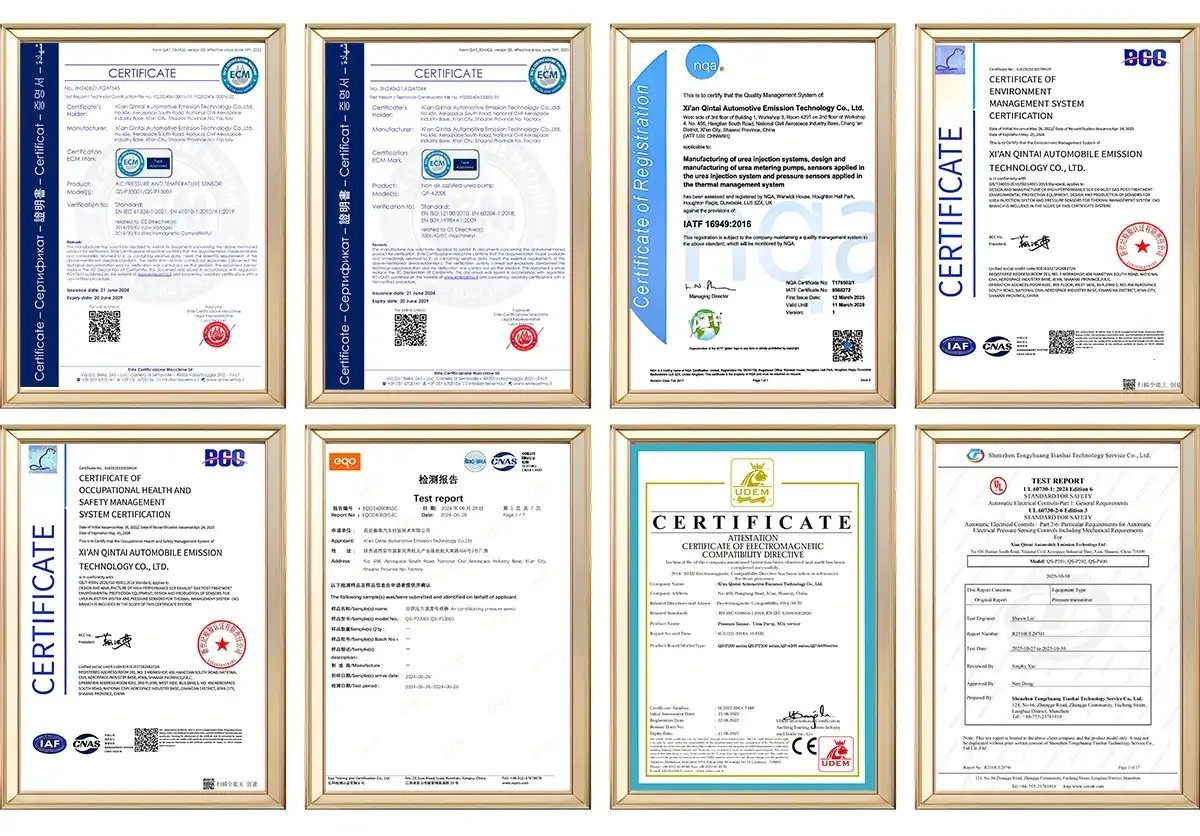
If you're looking for a smart pressure monitoring device for OEM or aftermarket use, there are three things that you should always look for in a supplier: valid approval, system compatibility, and support for customization. Manufacturers who are certified by ISO9001, IATF16949, or CMC provide a quality standard that can be checked.
Not having to redesign the whole system is saved by being able to work with existing CAN, RS485, or analog signal architectures. Depending on the range, connector type, protocol, and housing material that can be customized, a sensor may be used on different engine systems or machinery lines without having to rethink the interface.
When buying in bulk, procurement teams should also look at lead times and how well they handle customer complaints after the sale. For companies that put together aftertreatment systems, a supplier's ability to offer software setting changes or custom calibration curves can make all the difference.

Making the Right Choice: Decision Framework for Procurement Teams
You don't have to guess when choosing between tools. A structured evaluation based on five factors helps make the choice more clear:
- Operational complexity: You can only use a smart pressure monitoring device if your system needs closed-loop feedback, automated alerts, or data logging for compliance audits.
- Environmental conditions: For use in places that are hotter than 85°C, have a lot of vibration, or use corrosive media, sensors need to have industrial-grade housing and protection ratings. Before making a final choice, check the IP rating, media compatibility, and temperature range.
- Regulatory requirements: The China VI and Euro VI systems require tracking of the exhaust aftertreatment in real time. In production settings, these standards can only be met by certified smart sensors whose outputs have been shown to be accurate.
- Budget horizon: Look at the total cost of purchase over 3–5 years, not just the price per unit. Lifecycle costs are always lower for smart gadgets that have lower failure rates and can do predictive upkeep.
- Supplier support: Choose manufacturers that offer committed expert help, a history of providing OEM parts, and the ability to grow as your production needs do.
The suggestion matrix always leads toward smart pressure monitoring options for most OEM diesel engine builders, aftertreatment system installers, and generator set builders who work in controlled markets.
Conclusion
It's been a long time since traditional gauges were used in industry, but they no longer meet the needs of current diesel engines and pollution aftertreatment systems in terms of performance, compliance, or integration. A smart pressure monitoring device is more accurate, can diagnose problems in real time, and easily connects to an ECU or the internet of things (IoT). This helps with both following the rules and running the business more efficiently. When procurement teams handle complicated supply chains and emission-controlled applications, investing in smart pressure sensing technology pays off in a big way: less downtime, lower maintenance costs, and performance data that is ready for audits.
FAQ
How often does a smart pressure sensor need calibration?
Most industrial-grade smart pressure monitoring devices are set at the factory and are made to stay accurate for 2 to 5 years when used normally. When to recalibrate depends on the type of media, how often the temperature changes, and how hard the application is. As part of normal aftertreatment maintenance, sensors used in diesel exhaust or SCR systems should be checked once a year.
Can smart pressure devices operate reliably in extreme temperatures?
Yes. Good industrial sensors are made to work in a wide range of temperatures, usually from -40°C to +125°C. They also have temperature adjustment circuits built in to keep the output accurate when temperatures change. Because of this, they work well in mining equipment, heavy trucks, and outdoor generator sets.
Are smart sensors compatible with existing control systems?
Most smart pressure sensors work with standard output protocols, such as 4–20mA, CAN bus, RS485, and PWM. This makes it easy to connect them to current ECUs and SCADA systems. If a supplier lets you change the parameters of an interface, outputs can be changed even more to fit the needs of an existing system without having to redesign the hardware.
What certifications should I look for when sourcing pressure sensors?
At the very least, give priority to providers who are certified by ISO9001, IATF16949, and CMC. For export markets, CE, UL, RoHS, and REACH compliance are also important validation marks that show the quality of the product and that it follows the rules.
Partner with Qintai — Your Trusted Smart Pressure Monitoring Device Supplier
Partner with Qintai, the company you can trust to provide you with a smart pressure monitoring device. Qintai was founded in 2001 and is now known as China's top OEM pressure sensor supplier. We bring more than 20 years of experience to every pressure monitoring solution we offer. We support OEM/ODM customization from concept to mass production and have certifications for IATF16949, ISO9001, CE, UL, and CMC. Call our expert team at info@qt-sensor.com or go to qt-sensor.com to set up a meeting right away if you need a smart pressure monitoring device for SCR aftertreatment, diesel engines, or generator sets.
References
1. MarketsandMarkets — Smart Sensor Market — Global Forecast to 2027, 2022.
2. Sensors and Actuators A: Physical — "Cost-benefit analysis of digital pressure monitoring in industrial maintenance systems," Elsevier, 2021.
3. International Organization for Standardization — ISO 9001:2015 Quality Management Systems, 2015.
4. Society of Automotive Engineers — SAE J1939 Standards for CAN Bus Communication in Heavy-Duty Vehicles, 2020.
5. European Commission — Euro VI Emission Standards for Heavy-Duty Vehicles: Technical Requirements, 2019.
6. McKinsey & Company — The Internet of Things: Mapping the Value Beyond the Hype, 2020.
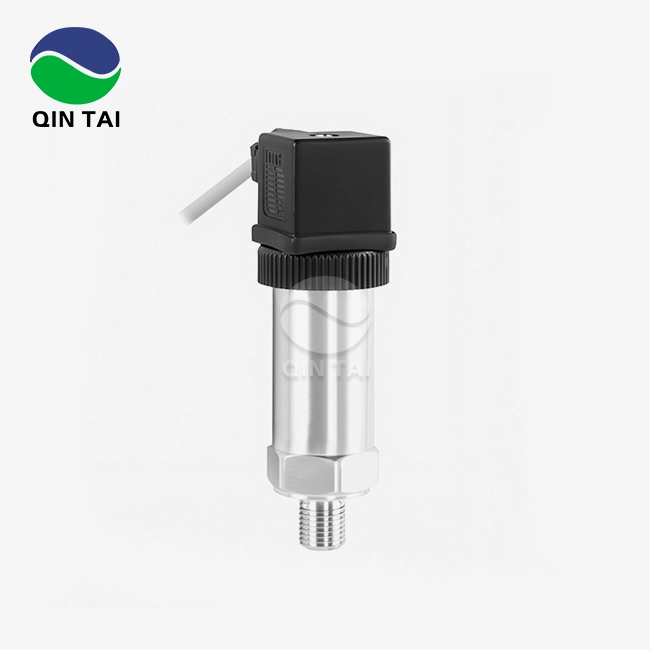
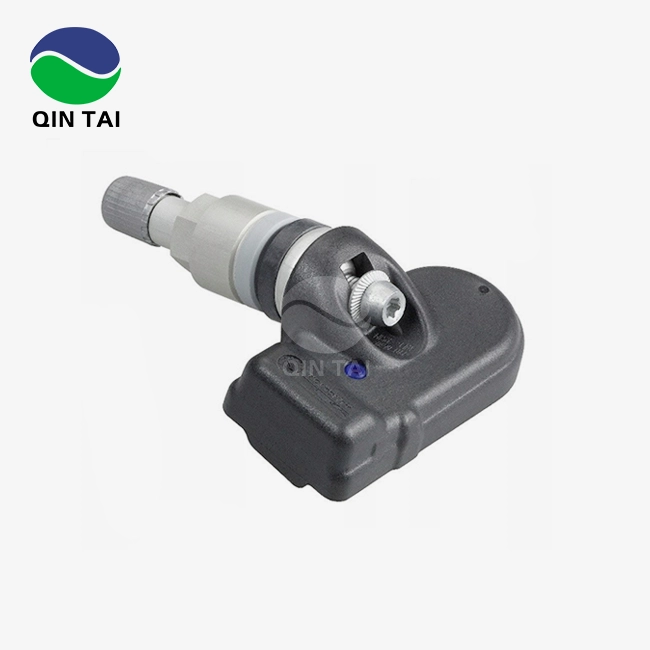
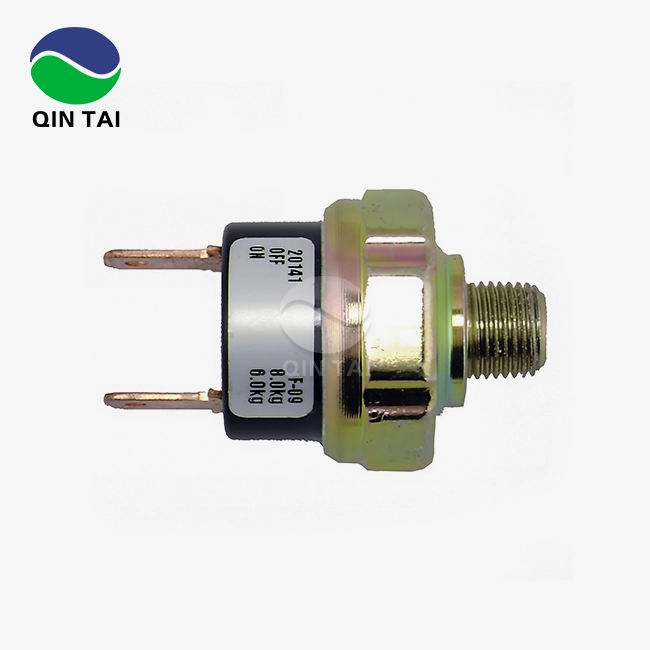

Our customers’ satisfaction speaks for our quality — contact us to experience the same reliable service.