- English
- French
- German
- Portuguese
- Spanish
- Russian
- Japanese
- Korean
- Arabic
- Greek
- German
- Turkish
- Italian
- Danish
- Romanian
- Indonesian
- Czech
- Afrikaans
- Swedish
- Polish
- Basque
- Catalan
- Esperanto
- Hindi
- Lao
- Albanian
- Amharic
- Armenian
- Azerbaijani
- Belarusian
- Bengali
- Bosnian
- Bulgarian
- Cebuano
- Chichewa
- Corsican
- Croatian
- Dutch
- Estonian
- Filipino
- Finnish
- Frisian
- Galician
- Georgian
- Gujarati
- Haitian
- Hausa
- Hawaiian
- Hebrew
- Hmong
- Hungarian
- Icelandic
- Igbo
- Javanese
- Kannada
- Kazakh
- Khmer
- Kurdish
- Kyrgyz
- Latin
- Latvian
- Lithuanian
- Luxembou..
- Macedonian
- Malagasy
- Malay
- Malayalam
- Maltese
- Maori
- Marathi
- Mongolian
- Burmese
- Nepali
- Norwegian
- Pashto
- Persian
- Punjabi
- Serbian
- Sesotho
- Sinhala
- Slovak
- Slovenian
- Somali
- Samoan
- Scots Gaelic
- Shona
- Sindhi
- Sundanese
- Swahili
- Tajik
- Tamil
- Telugu
- Thai
- Ukrainian
- Urdu
- Uzbek
- Vietnamese
- Welsh
- Xhosa
- Yiddish
- Yoruba
- Zulu
Top Benefits of Urea Pressure Sensors in Heavy-Duty SCR Systems
The main advantages of a urea pressure sensor on a heavy-duty SCR system are more precise DEF dosing, higher uptime, quicker diagnosis, stronger component protection, reduced fleet expenses, broader application fit, and simpler integration. The sensor measures the pressure in the urea line and transmits it to the control unit, which controls the pump and injector. Stable pressure guarantees the correct amount of reductant makes it to the exhaust stream which helps maintain NOx under permitted levels. This handbook is aimed at integrators, engineers and purchasers who seek precise details before selecting a part. I will illustrate how Qintai QS-P226 satisfies these demands on the way.
Introduction: Why Urea Pressure Sensors Matter in Heavy-Duty SCR Systems?
What a Urea Pressure Sensor Measures?
A urea pressure sensor, also known as a DEF pressure sensor or AdBlue® pressure sensor, detects the hydraulic pressure of the urea solution in the dosing circuit. ISO 22241-1 defines DEF as 32.5 percent urea in deionized water. The sensor converts the pressure into an electrical signal for the dosing control unit or engine control unit. The controller then regulates the output of the pump to provide a consistent supply to the injector. Without pressure input, the controller has no way of knowing whether the line is full, clogged or leaking, and that uncertainty hampers both dosage accuracy and emissions control. This measurement is a live check on the urea line.
How It Differs from Level, Temperature, and NOx Sensors?
An SCR system has several sensors, each sensor answering a separate inquiry. The level sensor shows you how much DEF you have left in the tank. The temperature sensor monitors fluid or exhaust conditions that impact thawing and dosing strategy. NOX sensors are in the exhaust and test conversion outcomes behind the catalyst. The pressure sensor is in charge of the delivery side, between the pump and the injector. From that location it shows issues the others can not see, such a blocked tube or a weak pump. The sensors together offer the controller a complete view and the pressure measurement covers the delivery side.
Where Sensors Sit and Why Hydraulic Data Matters?
Most pressure sensors are either in the DEF pump or supply module or on the line supplying the dosing injector. This configuration is used in one form or another by trucks, busses, construction machinery, agricultural equipment and generators. These machines operate lengthy hours under load therefore a slight pressure mistake repeats during each duty cycle. In the United States, the EPA's final heavy-duty regulation, published in the Federal Register in 2023, reduces the NOx limit for new engines to 0.035 g/hp-hr from 0.2 g/hp-hr beginning with model year 2027. "Tighter limitations mean less tolerance for mistake in dosing, therefore precise hydraulic data matters more for every integrator.
Benefits That Improve Dosing, Reliability, and Diagnosis
More Accurate DEF or AdBlue® Dosing
The urea pressure sensor sends its signal to the control unit, which adjusts the pump to maintain the pressure required by the injector. Uniform pressure favors excellent atomization so that urea is converted to ammonia uniformly in the hot exhaust stream. Koebel, Elsener and Kleemann (2000) reported urea-SCR as a potential technique to decrease diesel NOx, and dose management still determines how well that chemistry performs. Getting the pressure data right avoids over-dosing of DEF and poor NOx conversion from under-dosing. With the engine idling, under load and during regeneration, engineers may assess performance by comparing live pressure against pump orders, injector activity and fault codes.
Improved SCR System Reliability and Uptime
By watching pressure you may spot problems in the pumps, filters, lines, connections or injectors before they take down the entire SCR system. A modest pressure decline might indicate a leak. If the pressure is too high this might be an indication the injector is blocked or restricted. By seeing these tendencies, technicians may intervene before the vehicle breaks down on the side of the road. Heavy-duty sensors also endure vibration, temperature changes, moisture, dust and extensive duty cycles and their materials must be compatible with DEF. Teams use controlled pressure to discover the actual defect . No more guessing at installing pricey pumps or dosing modules and cars spend less time down.
Faster and More Accurate Fault Diagnosis
Many SCR defects seem similar. Warning lights, engine derating, delayed pressure build up, frequent dosing stop downs, unstable readings or implausible pressure levels might be caused by the pump, an injector or the sensor itself. I would suggest examining the connection, cabling, power supply, ground, live data, stored codes, fluid condition and pressure stability in that sequence. Consider crystallization, contamination, electrical damage, overpressure and improper installation. Warning lights and fault codes alone might be misleading since pump, injector and sensor problems can all trigger similar codes. Meter trace on sensor from 0.5 to 4.5 V exhibits drift or dropouts. The measured pressure behavior indicates which part is genuinely out of order, so that troubleshooting is shortened and improper repairs are avoided.

Benefits That Protect Components, Cut Costs, and Widen Compatibility
Better Protection for SCR Components
The whole urea delivery system is protected by a pressure feedback. If a clog or restriction occurs and pressure builds up, the controller can detect it and limit how much the pump may run before the pump or dosing module is damaged. The constant pressure also ensures that the injectors spray evenly, helping to prevent blockage and uneven spray patterns. Leaks show up as pressure decay, so teams can find them early. Crystallized urea in a line is one limitation that pressure data might signal. Fleet managers may monitor pressure trends against mileage, duty cycle and service history to identify recurring issues. Doing this ahead of time helps to prolong the service life of injectors, pumps, lines and associated SCR components.
Lower Total Cost of Ownership for Fleets
A robust urea pressure sensor reduces operational costs by enabling quicker diagnostics, fewer repeat repairs and less downtime. Technicians may use the pressure data to determine whether the problem is with the sensor, wiring, pump, injector, dosing module or control system before they purchase expensive components. Correct dosage also reduces the danger of engine derating and emissions-related shutdowns that lose a fleet productive hours. That's even another incentive to safeguard SCR hardware, which is included in the ICCT's 2016 analysis on emission control costs for heavy-duty diesel cars. Savings throughout the complete lifetime can include improved spare parts planning and fewer emergency calls.
Greater Compatibility Across Heavy-Duty Applications
Urea pressure sensors cater to diesel trucks, busses, off-road vehicles, agricultural machinery, construction equipment and generators. Fit is not only a matter of size. Buyers should verify SCR architecture, pressure range, electrical supply, output signal, connection pinout, mounting thread, communication mechanism and ECU requirements. A 12V or 24V car system doesn't inform you what the pressure range or signal kind is. Check material designations like ceramic or electronic next to comprehensive specs and durability data, since they don't establish quality on their own. For example, a 0.5–4.5 V ratiometric output only works if the ECU anticipates that signal. We match these details early to avoid rework at the time of sampling.
Easier Integration, Replacement, and Customization
In choosing a replacement, hydraulic, electrical, mechanical and environmental characteristics are considered together. Important components include pressure range, overpressure resistance, precision, reaction time, temperature range, wetted materials, sealing mechanism, connection, housing protection and OEM reference number. Buyers also compare OEM, aftermarket, private-label and customized supply, and they verify sample validation, warranty, lead time, batch consistency and technical support.
An integrator that creates assemblies from OEM designs is better served when the supplier can supply unique connections, branded packaging, application adjustments, engineering assistance, and a consistent stream of manufacturing for repeat orders. Qintai offers OEM and ODM service from product design to mass manufacturing, and enables modification for special applications.
Qintai QS-P226 Urea Pressure Sensor: Specifications and Performance
Key Specifications of the QS-P226
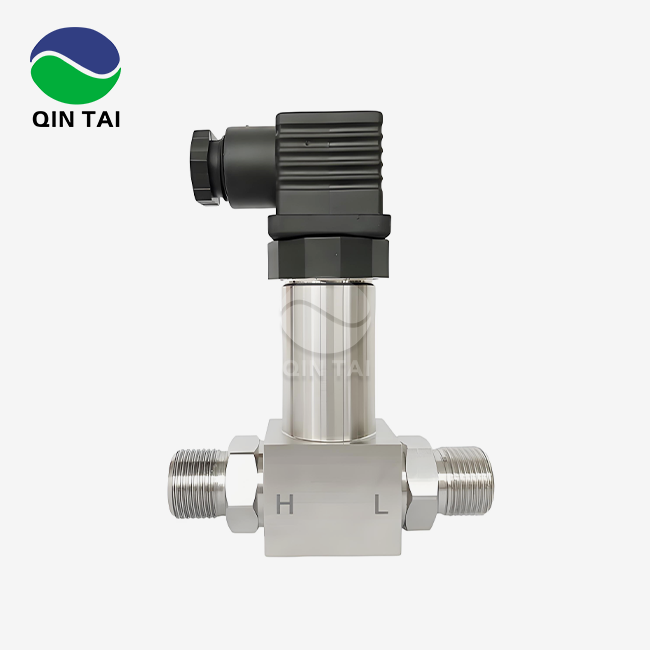
The sensor core of QS-P226 is independently designed and fabricated. It is a urea pressure sensor. It operates from a 5V source and produces an analog, ratiometric 0.5–4.5 VDC output. The measuring liquid is urea. The measurement range is from -14 psi to +130.5 psi, which corresponds to about 9 bar at the upper end. Accuracy ±0.5% The pressure range is in line with OE need, thus we match your drawing or technical agreement. The specified working temperature range is 60-80°F and we suggest that you validate the temperature profile of your application with our specialists. All units are 100% tested and with a 12 month guarantee.
How the QS-P226 Supports SCR Performance?
Accurate pressure monitoring keeps AdBlue® dosage on track. The QS-P226 gives continuous input to the engine control unit, enabling precise injection management and NOx reduction. Its broad range spans from −14 pressure to +130.5 psi, covering everything from system setup to maximum dose. This period helps to locate system leaks that cause pressure decreases, obstructions that cause overpressure, loss of pump performance and injector problems. Its ±0.5% accuracy guaranties reliable readings in the working range, ensuring greater dosage control and a reduced chance of damage to components. The measurements may be compared against bench data during commissioning by the engineers to validate that the ECU is seeing the appropriate 0.5-4.5 V values.
Built for Demanding Applications
Automotive sensors are exposed to harsh conditions and we developed the QS-P226 for them. Chemical resistance: The sensor materials are resistant to urea weathering and crystallization, therefore ensuring accurate measurement even with polluted AdBlue®. Thermal stability: The sensor retains its calibration throughout temperature ranges. Vibration resistance: the solid construction can endure the steady vibration of the vehicle without impairing the measurement accuracy.
Environmental protection the sealed construction prevents moisture and pollution from getting to the interior components. These characteristics react to the pressures mentioned before, from vibration to DEF exposure. Qintai also has ISO9001 and IATF16949 certifications to help your approval procedure for quality paperwork. Plus, every unit is 100% tested before it hits your line.
How to Choose, Install, and Verify a Urea Pressure Sensor
How to Choose the Best Urea Pressure Sensor for a Heavy-Duty SCR System
Begin with the application: vehicle, engine, SCR setup, duty cycle and environment. Then match pressure range, overpressure rating, electrical system, output signal, connection, thread, port orientation and ECU compatibility. Provide performance data that substantiates accuracy, repeatability, temperature cycling, vibration, pressure cycling, moisture and chemical resistance for the urea pressure sensor.
Then, compare the entire procurement value that includes unit pricing, tooling, minimum order quantity, logistics, warranty and technical support. Send your OEM design early so the supplier can validate interface and electrical specifications. Test samples on the target SCR system or representative bench and lay up the criteria for approval prior to bulk procurement. This order is a time-saver since errors happen during sampling, not during manufacturing.
Installation and Troubleshooting Checklist
Proper installation maintains accuracy and service life. Before installation of the sensor verify part number, pressure range, connection, sealing surface, wire and mounting port. Keep dirt and moisture out of the DEF circuit, use the specified sealing method and apply the correct tightening torque. Don't twist the harness. Avoid incompatible sealants. Keep DEF out of electrical contacts. Prime or purge system per vehicle process after install. Erase verified codes and verify for pressure build-up/stability/leaks/live data. If there are any signal issues you may require an expert to handle calibration or adaption. Document each step so your business can replicate it on every unit.
Verification Data B2B Buyers Should Request
Before accepting a supplier for a urea pressure sensor, ask for a datasheet, dimensions design, connection pinout, wiring diagram, pressure and temperature parameters, material information, installation instructions and calibration criteria. Validation evidence should include pressure cycling, temperature cycling, vibration, humidity, chemical resistance, end of line testing and batch traceability.
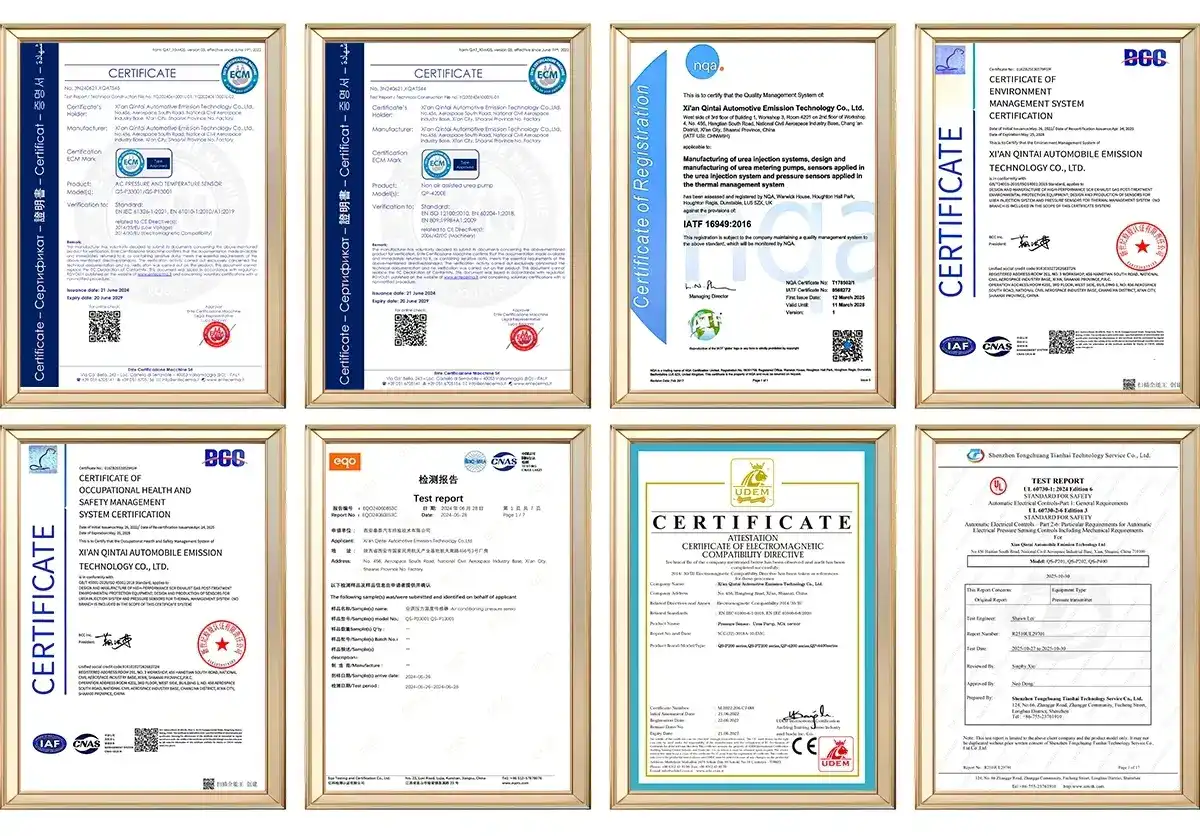
Examine compliance certificates, warranty conditions, corrective action processes and ISO or automotive quality certifications. From a commercial point of view, assess sample lead time, MOQ, manufacturing capacity, delivery schedule, private label choices, export documentation and after sales assistance. Qintai has obtained ISO9001, IATF16949, CMC, Ex, UL, CE, REACH and ROHS certifications. It has applied for 58 innovation patents and is a main supplier of Weichai Power, Yuchai Power and Quanchai Power.
Conclusion
A urea pressure sensor provides the SCR control unit with hydraulic data for maintaining DEF pressure. That data enables precision dosing, helping engines achieve increasingly strict NOx restrictions such as the EPA’s 0.035 g/hp-hr level that takes effect in model year 2027. It also boosts uptime, expedite diagnostics, preserves pumps and injectors, and decreases fleet cost by taking the guessing out of maintenance and eliminating repeat repairs. These advantages only apply when the sensor is suited to the application therefore the pressure range, signal type, connection, ECU requirements and proof of validation should all be carefully considered. Those technical intricacies translate into the actual SCR performance: the QS-P226 specs mentioned above include a −14 to +130.5 psi range, ±0.5% accuracy and a 0.5–4.5 VDC ratiometric output.
FAQ
Q1: What does a urea pressure sensor measure?
A: It detects the hydraulic pressure of DEF or AdBlue® in the dosing circuit. The sensor converts this pressure into an electronic signal which is used by the control unit to regulate the pump output and the injector feed.
Q2: Is there one normal pressure reading?
A: Nope. Normal pressure varies on the SCR design, thus always check the OEM standard. QS-P226 Pressure Range Indicates OE requirements. Measurement Range: −14 psi to +130.5 psi.
Q3: Does a pressure fault code always mean sensor failure?
A: No. Wiring faults, weak pumps, blocked injectors, crystallization, or leaks can set the same code. Check the connector, power, ground, live data, and fluid condition before replacing the sensor.
Q4: Can a faulty sensor be repaired or recalibrated?
A: Sealed pressure sensors are normally replaced, not repaired. After replacement, follow the vehicle procedure for priming, clearing codes, and any required adaptation, and use specialist support for persistent signal faults.
Q5: How do I judge a supplier?
A: Check signal and connector match, test data, certificates, warranty, sample validation, and support for customization. Run samples on your SCR system before bulk orders.
Request a Qintai Urea Pressure Sensor Specification and Supply Proposal
Ready to match a urea pressure sensor to your SCR program? Qintai, a national high-tech enterprise founded in 2001, offers OEM/ODM service, customization, and the QS-P226 with a 12-month warranty. Send your drawing, pressure range, and expected volume to info@qt-sensor.com, and our engineers will review your requirements and reply with sample and quotation options. As a urea pressure sensor manufacturer serving more than 60 countries and regions, we welcome technical questions.
References
1. Federal Register, 2023. U.S. Environmental Protection Agency, "Control of Air Pollution From New Motor Vehicles: Heavy-Duty Engine and Vehicle Standards."
2. International Organization for Standardization, 2019. ISO 22241-1, "Diesel engines — NOx reduction agent AUS 32 — Part 1: Quality requirements."
3. Catalysis Today, 2000. Koebel, M., Elsener, M., and Kleemann, M., "Urea-SCR: a promising technique to reduce NOx emissions from automotive diesel engines."
4. SAE International Journal of Engines, 2011. Johnson, T. V., "Diesel Emissions in Review."
5. SAE International, 2006. Majewski, W. A., and Khair, M. K., "Diesel Emissions and Their Control."
6. International Council on Clean Transportation, 2016. Posada, F., Chambliss, S., and Blumberg, K., "Costs of Emission Reduction Technologies for Heavy-Duty Diesel Vehicles."

Our customers’ satisfaction speaks for our quality — contact us to experience the same reliable service.