- English
- French
- German
- Portuguese
- Spanish
- Russian
- Japanese
- Korean
- Arabic
- Greek
- German
- Turkish
- Italian
- Danish
- Romanian
- Indonesian
- Czech
- Afrikaans
- Swedish
- Polish
- Basque
- Catalan
- Esperanto
- Hindi
- Lao
- Albanian
- Amharic
- Armenian
- Azerbaijani
- Belarusian
- Bengali
- Bosnian
- Bulgarian
- Cebuano
- Chichewa
- Corsican
- Croatian
- Dutch
- Estonian
- Filipino
- Finnish
- Frisian
- Galician
- Georgian
- Gujarati
- Haitian
- Hausa
- Hawaiian
- Hebrew
- Hmong
- Hungarian
- Icelandic
- Igbo
- Javanese
- Kannada
- Kazakh
- Khmer
- Kurdish
- Kyrgyz
- Latin
- Latvian
- Lithuanian
- Luxembou..
- Macedonian
- Malagasy
- Malay
- Malayalam
- Maltese
- Maori
- Marathi
- Mongolian
- Burmese
- Nepali
- Norwegian
- Pashto
- Persian
- Punjabi
- Serbian
- Sesotho
- Sinhala
- Slovak
- Slovenian
- Somali
- Samoan
- Scots Gaelic
- Shona
- Sindhi
- Sundanese
- Swahili
- Tajik
- Tamil
- Telugu
- Thai
- Ukrainian
- Urdu
- Uzbek
- Vietnamese
- Welsh
- Xhosa
- Yiddish
- Yoruba
- Zulu
Top Features to Look for in a Urea Pressure Sensor Supplier
When choosing a provider for a urea pressure sensor used in AdBlue systems, you need to look at a number of things that have an immediate effect on the performance of the SCR system, compliance with regulations, and the speed of operations. The right partner not only provides high-quality parts, but also gives technical help, the ability to produce large amounts of products, and certifications that meet strict emission standards. This choice affects how reliable your product is, how well your name is known, and how well you can meet China VI/Euro VI/EPA standards. These are the most important things that buying managers, R&D experts, and technical teams should look for when they're looking for these diesel engine parts, aftertreatment systems, and emission control solutions.
Understanding Urea Pressure Sensors and Their Industrial Importance
How Pressure Monitoring Drives SCR Efficiency?
A urea pressure sensor checks the pressure of diesel exhaust fluid (DEF or AdBlue) between the injector tip and the dosing pump. It then sends this information to the engine control unit in real time. This constant tracking makes it possible to precisely control injection, which increases the effectiveness of reducing NOx while also making sure that pollution rules are followed. The analogue voltage input from the sensor, which usually ranges from 0.5 V at low pressure to 4.5 V at high pressure, lets the ECU change the dosing rates dynamically based on the load on the engine, the temperature of the exhaust, and the state of the catalyst.
Critical Applications Across Industries
Heavy-duty diesel engines that power cars, building equipment, farm equipment, and fixed generator sets need these sensors to do their jobs. In naval SCR systems, they keep dosing correctly even when exposed to hard vibrations and water. Accurate pressure readings are needed for long-term catalytic converter performance in sites that treat industrial waste gas. For each use, sensors must be able to handle chemical damage from urea crystallisation, temperature changes from -40°C to 120°C, and steady vibrations that put stress on the mechanical parts.
Performance Metrics That Define Quality
Specifications for accuracy have a direct effect on how well pollution controls work. High-quality sensors are accurate within ±0.5% of the full measurement range. This means that emissions rules are better followed and there is less chance of damage to parts. Response time is also important—urea pressure sensors must be able to pick up changes in pressure within milliseconds to avoid over- or under-dosing. The longevity of a sensor depends on how well it can handle chemicals, since urea is acidic and can damage materials and seals. The working temperature range tells you what kind of job the equipment can do, especially if it has to work in harsh conditions or under a lot of stress.
Top Features to Evaluate When Choosing a Urea Pressure Sensor Supplier
Quality Standards and Certification Credentials
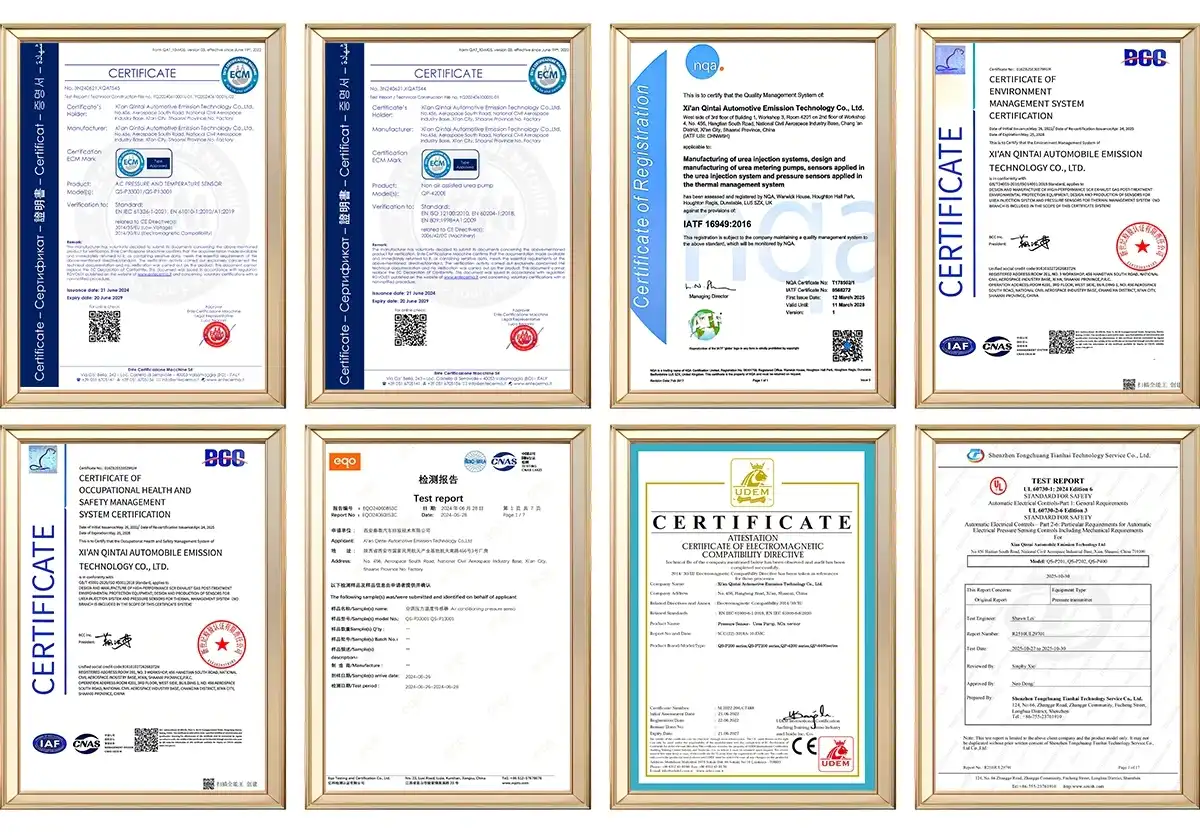
Certification qualifications show that a seller is dedicated to producing high-quality goods and following all regulations. ISO 9001 shows how structured quality management systems work, and IATF 16949 talks about the needs of the car business. For European markets, look for suppliers with regional certifications like CE, UL, and Ex. For explosion-proof needs in dangerous settings, look for suppliers with UL certifications. Following the rules set by REACH and RoHS protects the environment and makes sure that materials are safe. These licenses are more than just pieces of paper; they protect your supply chain from quality breakdowns by showing that processes have been checked, systems have been set up to track goods, and people are responsible for their actions.
Check to see if the seller has OEM approval from major engine manufacturers in addition to standard certifications. This certification proves that the product works with certain SCR designs and that it works well in real-life situations. Suppliers that work with tier-one diesel engine brands have shown that they can meet strict technical requirements and high production rates.
Product Customization and Technical Adaptability
Pressure ranges, attachment options, and electrical connections must be different for each SCR system. A good supplier will give you choices for customising the sensors so that they work with your unique application needs. Being able to change pressure levels, signal outputs, or connector types makes it easy to connect to current control systems. This adaptability is very helpful for companies that build custom aftertreatment systems or OEMs that are making the next wave of emission systems.
Sensor core technology is also technically flexible. Suppliers who can do their own research and development can change the features of sensors to meet changing pollution standards or to solve specific environmental problems. This level of technical detail sets partners who just put together parts apart from creators who make sensing technology better.
Technical Support and After-Sales Responsiveness
A supplier becomes a key partner when they offer full expert help. Having access to application experts who know how SCR systems work can help with merging issues, improving dosing plans, and quickly fixing problems in the field. Detailed datasheets, installation guides, and assistance documents cut down on the time it takes to set up and lower the number of warranty claims.
When production lines have sensor problems or quality issues, being quick after the sale is very important. Suppliers with specialised support teams, the ability to communicate in multiple languages, and quick substitute programs can keep downtime costs as low as possible. The time difference between a 24-hour answer and a two-week wait can mean the difference between meeting production deadlines and having to pay your customers extra money.
Supply Chain Reliability and Production Capacity
Your production will keep going as long as you keep your inventory levels stable and your shipping dates consistent. Check to see how much your providers can make compared to your present and future volume needs. Suppliers who are close to reaching their full capacity find it hard to handle sudden increases in orders or calls for quick service. On the other hand, suppliers who have extra capacity can protect against changes in demand.
The framework for logistics is just as important. Lead times are more solid from suppliers who have established transport networks, bonded warehouses in key markets, and know how to deal with customs processes. Ask them how they handle their inventory, what their safety stock policies are, and how often they've kept their shipping promises during busy times or when there were problems in the supply chain.
Transparent Pricing and Commercial Flexibility
Pricing should take into account promises to buy a lot, terms of payment, and the possibility of a long-term relationship. When you buy in bulk from suppliers who offer tiered prices, you can keep costs low as your production grows. Check to see if the prices given include any costs for tools, tests, or customisation that may come up later. When it comes to business, commercial freedom includes payment terms, plans for consignment goods, and framework agreements that lock in prices for several years. These parts of the contract will keep your purchasing costs stable and cut down on the paperwork that comes with negotiating a lot.

Comparing Leading Urea Pressure Sensor Suppliers and Brands
On the global market, there are both well-known international companies and specialised regional producers, and each offers a different set of benefits for urea pressure sensors. International names like Bosch and Denso have a lot of experience with cars, service networks that reach all over the world, and wide ranges of products that include different kinds of sensors. Their sensors work perfectly with most popular ECU platforms, and OEMs generally agree with this. Their prices, on the other hand, represent brand fees and global overhead structures that may be too high for applications that need to stay within a budget.
Suppliers that only sell pollution control parts often have more detailed knowledge about how to use SCRs in different situations. These businesses put a lot of money into research and development that is specific to aftertreatment. As a result, sensors have been made that work best with urea's special chemical qualities and the wide range of pressures needed for accurate doses. Their engineering teams are usually easier to get in touch with for technical help and more ready to make goods fit specific needs.
Another area to think about is OEM-approved providers. Companies that have supply deals with major diesel engine makers have to go through strict licensing processes that check their technical know-how, quality systems, and production capabilities. This approval shows dependability that secondary sellers might find hard to show. One example is Xi'an Qintai Automotive Emission Technology Co. Ltd is the main provider to Weichai Power, Yuchai Power, and Quanchai Power, three of China's biggest engine makers. It has a market share of more than 50%, making it China's top OEM supplier. This placement shows that we can provide the consistent quality, volume, and technical relationship that tier-one OEMs want.
Another way to compare is analogue versus digital instrument systems. Traditional analogue sensors with voltage values between 0.5 VDC and 4.5 VDC are easy to use, work with all ECUs, and make troubleshooting simple. Digital sensors that talk to each other using LIN or CAN protocols give better diagnostic data, allow sensor fusion designs, and let you plan ahead for repair needs. Your pick will rely on how complex your control system is, how many diagnostics you need, and how much it costs.
Procurement Best Practices for B2B Buyers of Urea Pressure Sensors
Validating Supplier Authenticity and Capability
Checking the claimed certificates through outside sources is the first step in a thorough supplier evaluation. To make sure a certificate is valid, ask the granting body for its certificate number and audit date. Carefully look over technical datasheets; unclear specs or missing parameters are signs of poor engineering. Ask for sample units to be tested to see how well they actually work compared to what was said they would work under conditions that are similar to your application. Checking references with current customers gives you a clear picture of how well a company is doing. Ask specifically about how consistent the quality is across multiple production batches, how quickly they respond to technical problems, and how flexible they are when it comes to making changes to the design or getting the goods to you faster.
Assessing Technical Expertise and Customization Depth
Look at a supplier's R&D facilities and patent collection to see how innovative they are. In contrast to companies that just repackage generic parts, companies that own a lot of intellectual property show that they are real engineers. Ask them about their urea pressure sensor core technology and whether it is their own or from somewhere else. This will show you if they have control over important performance factors. For instance, Xi'an Qintai's own sensor core technology lets measurement traits be fine-tuned to meet the needs of a particular application. This feature, which is protected by 58 invention patents, lets you make changes that component assemblers can't do. This level of technical depth is very helpful when making unique goods or solving difficult operating problems.
Negotiating Favorable Commercial Terms
A good deal strikes a mix between lowering risks and keeping prices low. In addition to unit pricing, you should also think about payment terms that work with your cash flow cycles, promises to volume that set pricing tiers, and the ability to change your estimates as market conditions change. Set clear rules about who owns the tools, how to change the specifications, and how to split the costs of quality problems. The terms of the warranty should be carefully read. Standard 12-month warranties offer basic safety, but you can ask for longer covering for mission-critical or high-volume projects. Make it clear how to file a warranty claim, when to expect a substitute, and whether the cost of the guarantee covers shipping and paperwork.
Troubleshooting and Maintenance Support: A Critical Supplier Feature
Common Failure Modes and Diagnostic Approaches
When sensors fail, they usually show up in certain fault patterns. If the pressure number stays at the lowest or highest voltage, it means that there is a problem with the electrical connection or with a part inside the body. Erratic results mean that there is pollution, mechanical stress, or water getting in. Complete signal loss could be caused by a problem with a connection or a major internal failure. Figuring out these trends speeds up the process of evaluation and resolution.
When suppliers give your service teams specific repair guides, diagnostic flowcharts, and training materials, they can quickly fix problems. Having access to technical hotlines filled by experienced engineers cuts down on downtime when problems in the field are too big for local experts to handle. Some companies offer remote diagnostic help through data analysis, which can find problems that affect whole teams before they cause a lot of problems.
Calibration Services and Accuracy Maintenance
Regular calibration checks are needed to keep sensors accurate over long repair gaps. Quality management rules are easier to follow when suppliers offer testing services, either in-house or through certified third-party labs. Knowing how often calibration is suggested for your application can help you plan for repair costs and planned downtime of equipment. Drift is found by regular testing procedures before it affects emissions compliance or leads to warranty claims. Setting up standard performance data for new sensors lets you compare them in a useful way during service intervals, revealing degradation trends that show when sensors are about to fail.
Building Strategic Long-Term Partnerships
Transactional relationships with suppliers make it harder to create value. Strategic relationships with key suppliers let you work together on things like co-creating next-generation goods, getting early access to new technologies, and getting extra help when supplies are low. Long-term contracts give suppliers the peace of mind to spend in dedicated capacity, specialised tools, or inventory buffers that meet your unique needs.
Getting suppliers involved in continuous improvement projects is a good idea. Sharing information about how well products work in the field, warranty trends, and application ideas helps providers make designs that work better in the real world. This feedback process forces product development, which is good for everyone because it makes the product more reliable, lowers costs, and makes it more competitive in the market.
Conclusion
Choosing the right urea pressure sensor provider has an effect on how well the SCR system works, how well it meets emission standards, and how much it costs to run in the long run. Give more weight to sellers who can show strong quality standards, established OEM relationships, and technical skills that can meet your needs for customisation. Along with technical specs, you should look at how reliable the supply chain is, how quickly you can get help after the sale, and how flexible the business is. The best partnerships have aligned business goals that go beyond individual deals, high-quality goods, open communication, and tech teams that work together.
FAQ
Q1: How do I verify sensor compatibility with my SCR system?
A: To make sure the device works with your dosing module, you need to make sure that the pressure range, source voltage, output signal type, and fitting configuration are all the right ones. Ask possible providers for dimension models and information on how their products will connect to your system. Then, compare these with what you need. Testing sample units in real-world settings makes sure they work properly and fit mechanically, with signals, and in a range of temperatures and stress levels that are right for your application.
Q2: What advantages do OEM-approved suppliers offer compared to aftermarket alternatives?
A: OEM-approved providers go through a lot of steps to make sure their technical knowledge, manufacturing skills, and quality methods are all up to par. This approval makes sure that it works with certain engine systems and gives you access to OEM technical paperwork that helps with the right integration. Warranty coverage is usually stronger, and expert help is better when they can talk directly to engine makers. Even though the price may be higher than aftermarket options, the lower risk of problems with integration, guarantee issues, and compliance fails usually makes up for it.
Q3: Can suppliers customize sensors for unique industrial applications?
A: Suppliers with a good reputation and their own research and development departments can give a wide range of customisation choices to meet specific pressure ranges, environmental conditions, or integration needs. Changes to the pressure range, changed electrical plugs, special mounting brackets, or better sealing against the environment are all examples of customisation. Talk about your unique needs as early as possible in the selection process. Give suppliers clear application specs that help them come up with the best solutions.
Partner with a Proven Urea Pressure Sensor Manufacturer for Your Emission Control Needs
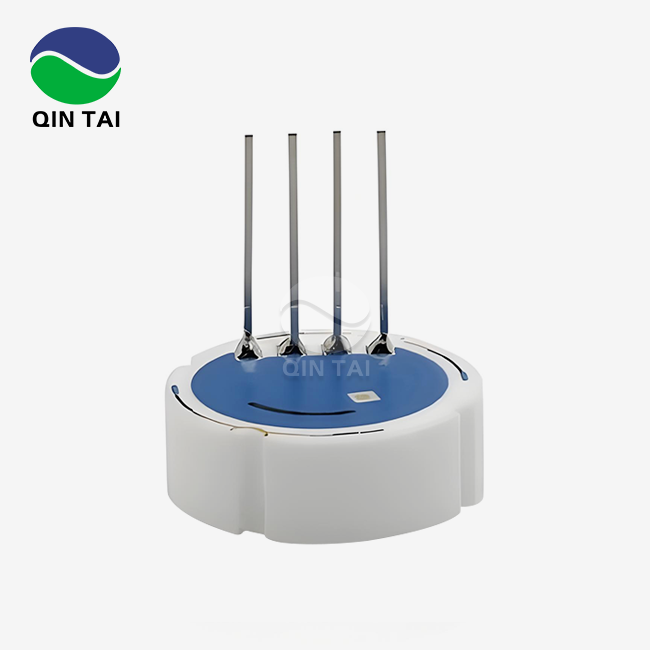
Xi'an Qintai Automotive Emission Technology Co., Ltd. Ltd has been working with China's top diesel engine makers for more than 20 years and has built strong OEM relationships. Our QS-P226 urea pressure sensor is accurate to within ±0.5% over a measurement range of -14 to +130.5 psi. This allows for exact SCR dosing control that meets strict emission standards. As a national high-tech company with ISO 9001, IATF 16949, and many other foreign certifications, we can guarantee quality, offer expert support, and make enough products for demanding uses. Our in-house research and development (R&D) skills, along with our 58 invention patents and self-developed sensor core technology, let us customise our products to meet your unique integration needs. Send an email to info@qt-sensor.com to talk to our expert team about your application needs, get full specs, or set up a sample review of our emission control sensors.
References
1. Society of Automotive Engineers, "SCR Systems for Heavy Duty Diesel Engines: Technology and Performance Standards," SAE International Journal of Engines, 2022.
2. International Organization for Standardization, "ISO 9001:2015 Quality Management Systems - Requirements and Implementation Guidelines," Geneva, Switzerland, 2015.
3. United States Environmental Protection Agency, "Heavy-Duty Engine and Vehicle Standards and Highway Diesel Fuel Sulfur Control Requirements," EPA Office of Transportation and Air Quality, 2021.
4. Diesel Technology Forum, "Selective Catalytic Reduction Technology: Commercial Vehicle Applications and Performance Metrics," Washington, DC, 2023.
5. Association for Emissions Control by Catalyst, "Best Practices for Urea Dosing System Component Selection in Mobile SCR Applications," AECC Technical Report Series, Brussels, 2022.
6. American Society for Testing and Materials, "ASTM D7714-11 Standard Test Method for Diesel Exhaust Fluid Quality Determination," West Conshohocken, Pennsylvania, 2021.

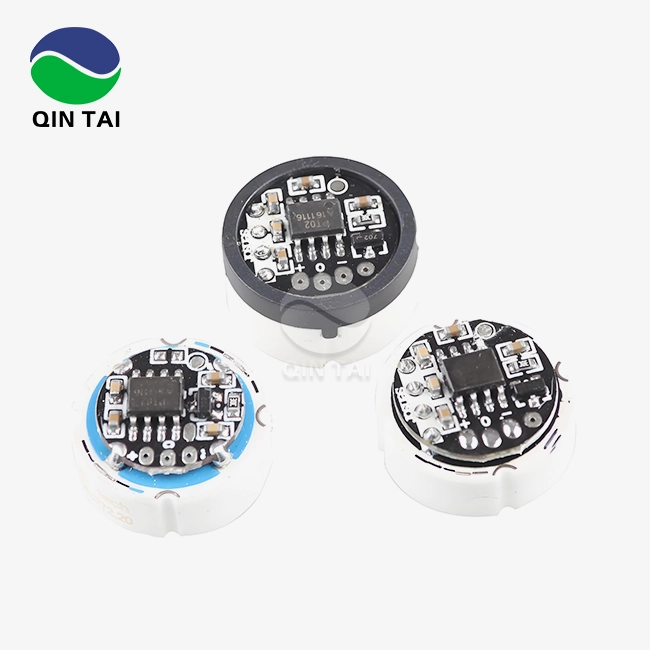

Our customers’ satisfaction speaks for our quality — contact us to experience the same reliable service.