- English
- French
- German
- Portuguese
- Spanish
- Russian
- Japanese
- Korean
- Arabic
- Greek
- German
- Turkish
- Italian
- Danish
- Romanian
- Indonesian
- Czech
- Afrikaans
- Swedish
- Polish
- Basque
- Catalan
- Esperanto
- Hindi
- Lao
- Albanian
- Amharic
- Armenian
- Azerbaijani
- Belarusian
- Bengali
- Bosnian
- Bulgarian
- Cebuano
- Chichewa
- Corsican
- Croatian
- Dutch
- Estonian
- Filipino
- Finnish
- Frisian
- Galician
- Georgian
- Gujarati
- Haitian
- Hausa
- Hawaiian
- Hebrew
- Hmong
- Hungarian
- Icelandic
- Igbo
- Javanese
- Kannada
- Kazakh
- Khmer
- Kurdish
- Kyrgyz
- Latin
- Latvian
- Lithuanian
- Luxembou..
- Macedonian
- Malagasy
- Malay
- Malayalam
- Maltese
- Maori
- Marathi
- Mongolian
- Burmese
- Nepali
- Norwegian
- Pashto
- Persian
- Punjabi
- Serbian
- Sesotho
- Sinhala
- Slovak
- Slovenian
- Somali
- Samoan
- Scots Gaelic
- Shona
- Sindhi
- Sundanese
- Swahili
- Tajik
- Tamil
- Telugu
- Thai
- Ukrainian
- Urdu
- Uzbek
- Vietnamese
- Welsh
- Xhosa
- Yiddish
- Yoruba
- Zulu
Top Urea Dosing Pressure Sensors for Reliable SCR Performance
When it comes to keeping diesel engines compliant with today's strict emission standards, one component quietly does critical work: the urea dosing pressure sensor. This precision device monitors AdBlue (DEF) hydraulic pressure inside the SCR system in real time, feeding data directly to the Dosing Control Unit so the system injects the exact urea volume needed to neutralize NOx emissions. Without accurate pressure feedback, dosing goes off-target, emissions spike, and the engine risks entering limp mode. This guide helps OEMs, aftertreatment integrators, and procurement professionals identify the right DEF pressure sensor for their specific application.

Understanding Urea Dosing Pressure Sensors: Function, Applications, and Benefits
An SCR system reduces nitrogen oxide emissions by injecting a calibrated urea solution into the exhaust stream, where it reacts with NOx over a catalyst. The pressure sensor sits within the dosing module and continuously verifies that fluid delivery pressure stays within the target range — typically between 0 and 12 bar (approximately 174 psi).
What Happens When This Sensor Fails?
When the AdBlue pressure sensor malfunctions or drifts, the ECU loses its ability to regulate injection accurately. Fault codes such as P204B appear, SCR operation is interrupted, and the vehicle may enter a derated power mode. Emissions rise immediately, stored DTCs accumulate, and in some cases the system disables urea injection entirely to protect downstream components. For fleet operators and OEMs alike, this translates directly into compliance violations and costly downtime.
Core Technical Properties That Matter
A reliable urea dosing pressure sensor must handle the corrosive nature of 32.5% aqueous urea solution across a wide thermal envelope. Industry-grade sensors incorporate piezoresistive MEMS technology or ceramic thick-film strain gauges, isolated by a 316L stainless steel or PPS diaphragm. Key performance benchmarks include IP69K ingress protection, an operating range of -40°C to +125°C, and EMC resistance suited for the dense electromagnetic environment of modern commercial vehicles. Thaw-cycle resilience — the ability to withstand the roughly 9% volumetric expansion of freezing urea — is equally non-negotiable in cold-climate applications.
Qintai QS-P226: A Purpose-Built SCR Pressure Sensor
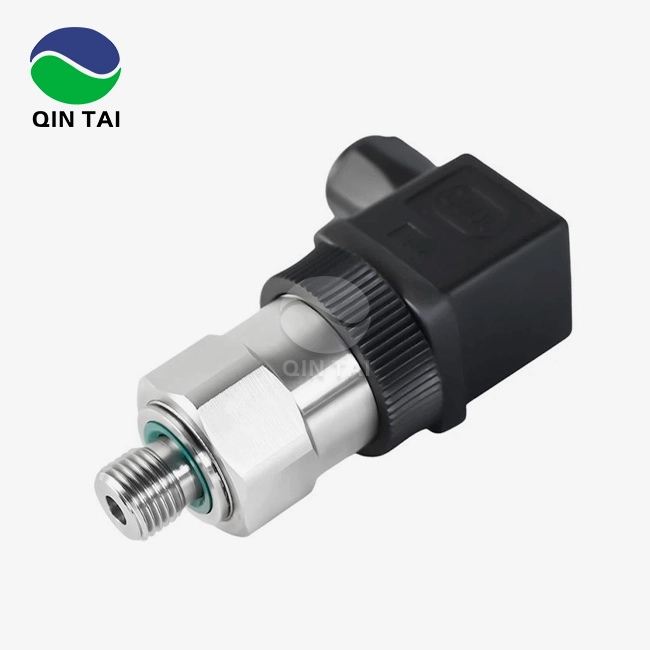
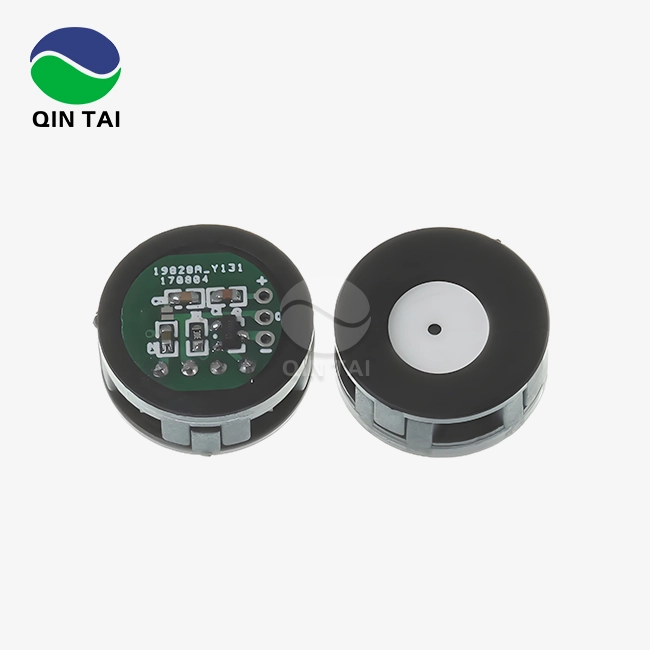
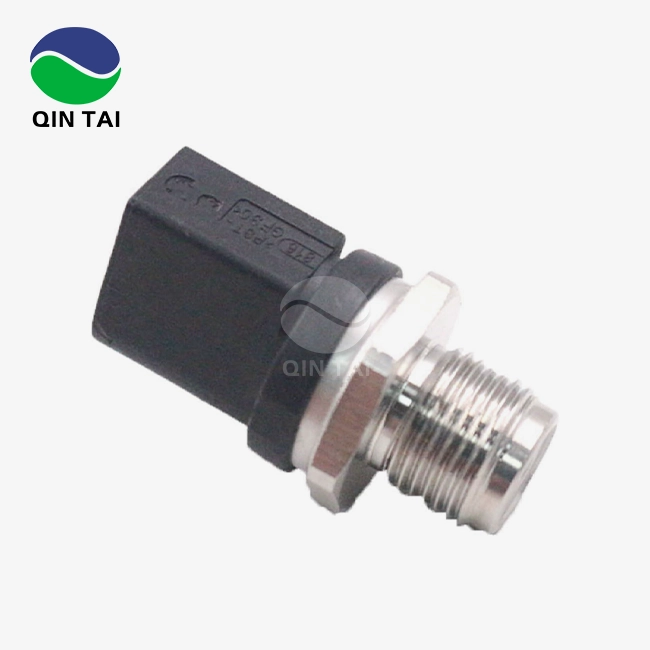
Among the products available to B2B procurement teams today, the Qintai QS-P226 stands out for its self-developed sensor core and tight accuracy specification. Rather than sourcing sensing elements from third-party vendors, Qintai engineers and manufactures the core in-house, eliminating supply chain variability and ensuring consistent batch-to-batch performance.
QS-P226 Technical Specifications at a Glance
| Parameter | Specification |
|---|---|
| Model | QS-P226 |
| Measuring Medium | Urea (DEF/AdBlue) |
| Measurement Range | -14 psi to +130.5 psi |
| Supply Voltage | 5V |
| Output Signal | 0.5–4.5 VDC ratiometric |
| Accuracy | ±0.5% |
| Warranty | 12 months |
| Quality Standard | 100% tested before shipment |
The ratiometric analog output integrates naturally with existing SCR control units without requiring additional signal conditioning hardware, which simplifies installation for both OEM production lines and aftermarket retrofit scenarios.
Why the Self-Developed Core Changes the Equation?
The urea dosing pressure sensor QS-P226's in-house sensor element delivers pressure readings across the full operating range with ±0.5% accuracy — a figure tighter than many comparable aftermarket alternatives. The internal flow path is engineered to minimize dead volume, reducing the risk of urea crystallization fouling the diaphragm, a failure mode that routinely generates P204B-class fault codes in field conditions. Robust sealing protects against moisture, particulate ingress, and chemical exposure, sustaining reliable output in the harsh underbody environments of heavy trucks, construction equipment, and agricultural machinery.
These design choices address the core procurement concerns of R&D engineers and purchasing managers directly. Here are the primary performance advantages the QS-P226 delivers in practice:
- Precise real-time pressure feedback — The analog output provides continuous data to the SCR control unit, enabling immediate dosing corrections that keep NOx conversion efficiency within Euro VI and EPA Tier 4 Final compliance windows.
- Anti-crystallization internal geometry — Smooth internal flow paths and minimized dead volume prevent the urea residue buildup that most commonly triggers unplanned sensor replacements.
- Freeze-cycle structural resilience — A flexible internal buffer accommodates AdBlue expansion during freeze events without introducing signal drift or mechanical fatigue.
- IP69K-class environmental protection — The sealing system guards against high-pressure wash-down, road debris, and chemical exposure across the full service life.
These advantages collectively reduce unscheduled maintenance events, lower warranty claim rates for OEMs, and extend SCR system uptime in demanding industrial applications. For generator set manufacturers operating in mines or power plants where continuous availability is mandatory, that operational stability carries direct financial value.

How to Choose the Right DEF Pressure Sensor for Your SCR System?
Selecting a DEF pressure monitoring device involves matching three dimensions: signal compatibility, physical interface, and environmental rating. The output signal — whether 0.5–4.5V ratiometric analog or a SENT digital protocol — must align precisely with the ECU calibration already in the target vehicle or system. Swapping signal types without recalibration generates systematic dosing errors even from a mechanically perfect installation.
Matching Sensor Specifications to Application Requirements
Thread dimensions (M10×1 or M12×1.5 are common) must match the dosing module port. Beyond the physical fit, verify that the sensor's pressure range covers both the normal operating band and any transient overpressure events specific to your pump architecture. For agricultural and construction machinery that operates in environments with significant temperature swings, thaw-cycle certification is not optional — it is a minimum qualification criterion.
Supplier Evaluation Criteria for B2B Procurement
Procurement teams evaluating a urea dosing pressure sensor supplier should prioritize three non-negotiable credentials: ISO 9001 and IATF 16949 certification (confirming consistent manufacturing process control), documented OEM supply references, and in-house testing capability with 100% pre-shipment inspection. Qintai holds both ISO 9001 and IATF 16949 certifications, supplies core OEM customers including Weichai Power, Yuchai Power, and Quanchai Power, and ships every QS-P226 unit after 100% functional testing.
Maintaining Sensor Performance: Best Practices and Troubleshooting
Even a well-specified sensor degrades without a structured maintenance protocol. Inspect connector pins at every scheduled service interval — contaminated or corroded terminals are a primary root cause of signal drift and P204B fault events. Gold-plated terminals, as used in the QS-P226, significantly reduce oxidation-related failures in humid or chemically aggressive environments.
Recognizing Early Fault Indicators
Pressure readings that fluctuate outside the expected band during steady-state operation, or a persistent soft fault code without obvious fluid leakage, typically indicate diaphragm fouling or connector degradation rather than pump failure. Running a diagnostic pressure-drop test across the dosing circuit isolates whether the fault originates in the sensor, the pump, or the injector nozzle. Sensors designed for a service life of 15,000 to 20,000 operating hours under standard commercial conditions should not require replacement before those thresholds in a well-maintained system.
Conclusion
Emission compliance in heavy-duty diesel applications depends on every component in the SCR chain performing reliably over millions of operating cycles. The urea dosing pressure sensor is a small device with an outsized impact on system integrity. Selecting a unit with verified accuracy, freeze-cycle resilience, and a self-developed sensing core — backed by certified manufacturing processes and documented OEM supply experience — reduces procurement risk and supports long-term system reliability. The Qintai QS-P226 addresses these requirements across heavy trucks, construction machinery, agricultural equipment, and generator sets, making it a technically sound and commercially competitive option for both OEM integration and aftermarket supply.

FAQ
Q1: What pressure range should I specify for a Euro VI application?
A: Most Euro VI dosing modules operate between 4 and 9 bar during normal injection cycles, with brief overpressure events up to 12 bar. A sensor rated to at least 9 bar steady-state with overpressure tolerance is the standard specification.
Q2: How often should the sensor be calibrated or replaced?
A: In standard commercial operation, sensors designed to 15,000–20,000 operating hours do not require periodic recalibration if the signal output remains within specification. Replace the unit when diagnostic testing confirms drift beyond the rated accuracy band.
Q3: Can the QS-P226 retrofit into systems using a different brand's sensor?
A: Physical thread compatibility and signal output type both need verification before any retrofit. The QS-P226's 0.5–4.5V ratiometric output is widely compatible, but always confirm against your specific ECU calibration file.
Q4: What does a P204B fault code indicate?
A: P204B (Reductant Pressure Sensor Circuit Range/Performance) typically points to signal drift from sensor aging, diaphragm contamination, or corroded connector terminals rather than a dosing pump failure.
Q5: Is the sensor safe to use in freezing climates?
A: Yes. The QS-P226 incorporates an internal flexible buffer structure that accommodates the approximately 9% volumetric expansion of freezing AdBlue without mechanical damage or signal drift.

Partner with Qintai for Your SCR Pressure Sensor Supply
Qintai brings over two decades of specialized expertise in diesel engine SCR aftertreatment technology to every B2B partnership. As a certified urea dosing pressure sensor manufacturer holding ISO 9001 and IATF 16949 qualifications, with annual production capacity exceeding two million units and a 86-person dedicated R&D team holding 58 invention patents, we deliver the consistency and scale that OEM procurement demands. Contact our technical team at info@qt-sensor.com to request specifications, samples, or a bulk quotation for the QS-P226.
References
1. SAE International Journal of Engines — "NOx Reduction Efficiency and Urea Dosing Accuracy in Heavy-Duty SCR Systems," SAE International, 2021.
2. Sensors and Actuators A: Physical — "Piezoresistive MEMS Pressure Sensors for Automotive Exhaust Aftertreatment Applications," Elsevier, 2020.
3. Emission Control Science and Technology — "Euro VI and EPA Tier 4 Compliance Strategies for Diesel Aftertreatment Systems," Springer, 2022.
4. Journal of Automobile Engineering — "Freeze-Thaw Cycle Effects on AdBlue Dosing Component Integrity," IMechE, 2019.
5. International Journal of Engine Research — "Diagnostic Fault Patterns in Selective Catalytic Reduction Systems: Field Data Analysis," SAGE Publications, 2021.
6. Automotive Engineer Magazine — "Advances in DEF Pressure Monitoring Technology for Commercial Vehicle SCR Systems," IMechE Publishing, 2023.

Our customers’ satisfaction speaks for our quality — contact us to experience the same reliable service.