- English
- French
- German
- Portuguese
- Spanish
- Russian
- Japanese
- Korean
- Arabic
- Greek
- German
- Turkish
- Italian
- Danish
- Romanian
- Indonesian
- Czech
- Afrikaans
- Swedish
- Polish
- Basque
- Catalan
- Esperanto
- Hindi
- Lao
- Albanian
- Amharic
- Armenian
- Azerbaijani
- Belarusian
- Bengali
- Bosnian
- Bulgarian
- Cebuano
- Chichewa
- Corsican
- Croatian
- Dutch
- Estonian
- Filipino
- Finnish
- Frisian
- Galician
- Georgian
- Gujarati
- Haitian
- Hausa
- Hawaiian
- Hebrew
- Hmong
- Hungarian
- Icelandic
- Igbo
- Javanese
- Kannada
- Kazakh
- Khmer
- Kurdish
- Kyrgyz
- Latin
- Latvian
- Lithuanian
- Luxembou..
- Macedonian
- Malagasy
- Malay
- Malayalam
- Maltese
- Maori
- Marathi
- Mongolian
- Burmese
- Nepali
- Norwegian
- Pashto
- Persian
- Punjabi
- Serbian
- Sesotho
- Sinhala
- Slovak
- Slovenian
- Somali
- Samoan
- Scots Gaelic
- Shona
- Sindhi
- Sundanese
- Swahili
- Tajik
- Tamil
- Telugu
- Thai
- Ukrainian
- Urdu
- Uzbek
- Vietnamese
- Welsh
- Xhosa
- Yiddish
- Yoruba
- Zulu
Urea Pressure Sensor Uses in Modern Emission Control Systems
In Selective Catalytic Reduction (SCR) systems, the urea pressure sensor is an important diagnostic and control part that constantly checks the pressure of diesel exhaust fluid (DEF or AdBlue) throughout the dose circuit. This real-time pressure information helps the engine control unit keep the right urea injection rates, find system leaks and blockages, and check the performance of the pump. All of these things are necessary to meet strict emission standards like EPA 2010, Euro VI, and China VI. SCR systems can't guarantee the exact NOx reduction needed by modern environmental laws without accurate pressure monitoring.
Understanding Urea Pressure Sensors: Functions and Principles
Core Function in SCR Systems
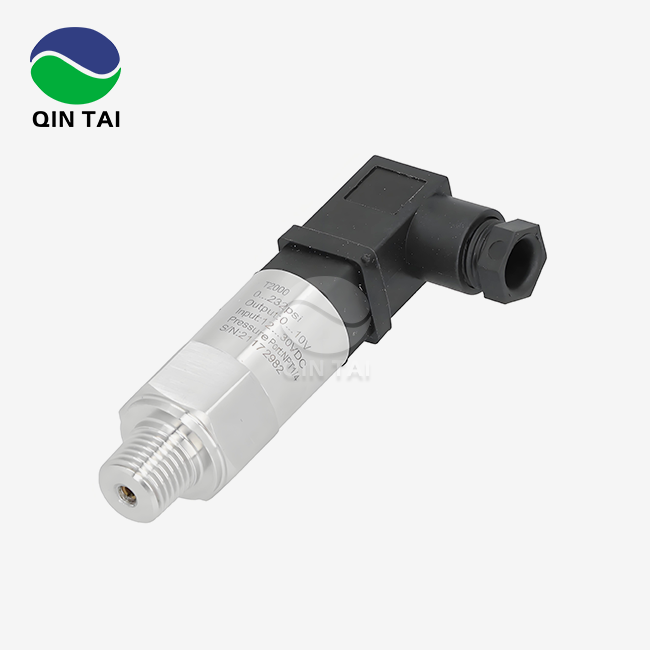
If you look at the SCR aftertreatment design, the urea pressure sensor is what ends the control loop for urea delivery. The dosing pump presses the urea solution and sends it toward the injection tip when it is turned on. The sensor sends analog voltage signals back to the engine control module, which measure the pressure in real time. These signals are usually between 0.5 and 4.5 VDC. This constant feedback lets the system change the pump speed, pulse width of the injectors, and dose frequency to precisely lower NOx levels based on the load on the engine, the temperature of the exhaust, and the efficiency of the catalyst.
Readings of the urea pressure are also very important for diagnosis. Rapid drops in pressure could mean that there are leaks in the system, air getting in, or urea tanks running low. On the other hand, sudden increases in pressure can mean that lines are frozen, filters are jammed, or injectors are blocked. By finding these problems early on, the monitor helps keep expensive parts from breaking down and makes sure that emission rules are always followed.
Detection Principles and Signal Conversion
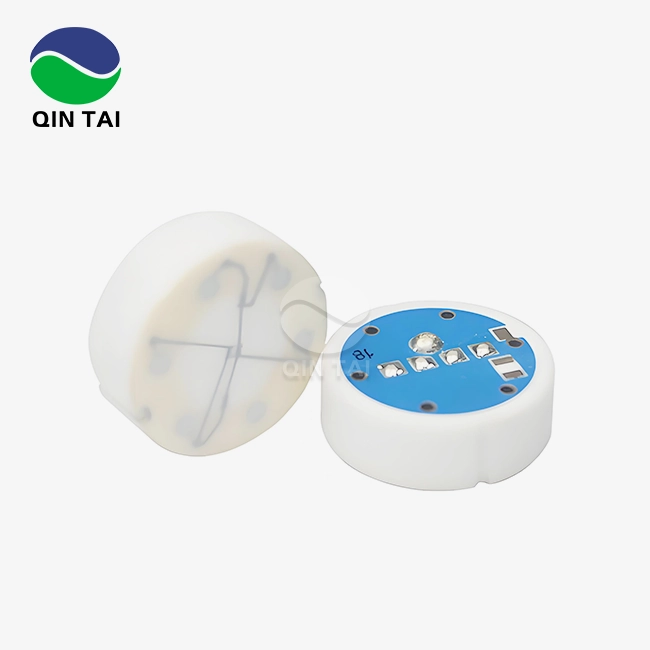
Either piezoresistive or capacitive sensing is used by most pressure devices used in cars. A silicon plate with strain-sensitive resistors is used in piezoresistive instruments. The resistors' electrical resistance changes in the same way that the urea pressure bends the diaphragm. Through a Wheatstone bridge circuit, this change in resistance is turned into a voltage signal. This makes the ratiometric output that ECUs can understand. Capacitive sensors, on the other hand, find changes in capacitance between two electrical plates that are divided by a movable diaphragm. This is how they measure pressure. Changes in pressure change the space between the plates, which changes the capacitance and sends an electrical signal. Both technologies are very accurate and stable, but piezoresistive designs are more popular in heavy-duty settings because they are more durable and less expensive.
Broad Applications Across Industries
Pressure monitors for dosing urea are used for a lot of different things besides cars on the highway. Excavators, loaders, and bulldozers, among other heavy building machines, need these sensors to meet Tier 4 Final and Stage V emission guidelines. Agricultural machines like tractors and combine harvesters use them to keep running clean after long hours of use in the field. Industrial-grade sensors are used in mines, power plants, and backup power stations to make sure that stationary generator sets meet long-term emission standards during ongoing job cycles. Environmental protection equipment companies also use these sensors in special exhaust gas treatment solutions for industry processes. This shows how flexible they are in a wide range of emission control situations.
Troubleshooting and Maintenance: Ensuring Sensor Reliability
Common Fault Symptoms and Diagnostic Codes
Several signs usually show up when urea pressure sensors don't work right. There are warning lights on the dashboard, the engine may go into limp mode, and diagnostic trouble codes show up. The most common ones are P204B (Reductant Pressure Sensor Circuit Range/Performance) and P20EE (Reductant Pressure Too Low). Operators may also notice that they are using more DEF, getting worse fuel economy, or not finishing regeneration rounds. By noticing these signs early on, you can keep system failures like injector coking and catalyst poisoning from getting worse. Inconsistent pressure is often caused by an old sensor, a corroded electrical plug, or urea crystallization on the detecting element. Signal drift, which is shown by the P204B code, is when the sensor's output voltage no longer correctly shows the real pressure. This risk is reduced by the gold-plated connections on our QS-P226 type, which keep the electrical contact stable even in harsh conditions and don't rust.
Practical Troubleshooting Steps
As a first step in troubleshooting, technical teams should check the electrical links and look for damage or water in the wiring harness. Check the source voltage (it should be 5V) and record the output voltage of the sensor both when it's not being used and when it is. Check the results against what the maker says should be done. Our QS-P226 sensor sends a ratiometric signal between 0.5 and 4.5 VDC, which is the same as its detection range of -14 psi to +130.5 psi. If the electrical settings are fine but the problems still happen, check the hydraulic connection. Take the sensor off and check the port for urea crystals. This happens a lot when leftover DEF dries out and gets hard. Clean the DEF and run monitoring tools to make sure the pump is working. In cold places, make sure the urea tank heater works right and check for air leaks in the suction lines. Frozen DEF can damage parts because it grows by about 9%.
Installation Best Practices and Routine Maintenance
When installed correctly, sensors last a lot longer. Always use the right amount of force on threaded fittings. If you overtighten them, the sensor body can crack, and if you undertighten them, leaks will happen. To keep pollution to a minimum, use clean DEF that meets ISO 22241 guidelines. Wires should be kept away from areas that get very hot, and joints should be held in place with locking clips to stop disconnections caused by shaking. As part of regular maintenance, electrical contacts should be checked for corrosion on a regular basis, the stability of sensor mounting should be checked, and the system should be tested for pressure to make sure results match what is expected. By replacing sensors before they break down after 15,000 to 20,000 hours of use, which is the normal service life for quality units, you can avoid unplanned downtime during important operations.

Comparing Urea Pressure Sensors: Choosing the Right Sensor for Your Needs
Technical Differences from Standard Pressure Sensors
Urea pressure sensors for dosing have to deal with special problems that general-purpose pressure sensors don't have to. The urea solution is very acidic, especially when it's hot, so wet parts need to be made of special materials like stainless steel 1.4466 or metals that don't rust. Most sensors don't have this chemical protection, so they would break down quickly in SCR uses. Urea also crystallizes when it comes in contact with air or changes temperatures. Sensors made for this climate have smooth internal flow paths and few dead areas to keep fluid from pooling in places where crystals can form. This dead-volume reduction technique is built into our QS-P226 sensor. It lowers the risk of fouling and keeps measurement accuracy even when DEF is contaminated.
Comparing Sensor Technologies: Piezoresistive vs. Capacitive
When it comes to accuracy, piezoresistive sensors are usually within 0.5% of full scale, and they also show better long-term steadiness. Because they are easy to make and don't cost much to make in large quantities, most OEM makers choose this technology for heavy-duty uses. Piezoresistive detection is used by the QS-P226 to meet its ±0.5% accuracy requirement across the whole measurement range of -14 to +130.5 psi. Capacitive sensors have a slightly higher resolution and work better at very low pressures, but they are more difficult to make, which raises the cost of production. Also, they need more complex signal conditioning circuits, which makes them less ideal for harsh car settings where dependability and ease are very important. When purchasing managers look at performance vs. total cost of ownership, piezoresistive systems usually offer better value in diesel emission control situations.
Evaluating Leading Products in 2026
There are a number of well-known companies in the sensor business. Bosch sensors are known for their strict testing procedures and wide use by OEMs, but their high prices can make budgets tight. The wait time for Denso machines may be longer, but they last longer. Modern electrical designs work well with Continental sensors, but sometimes they need their own unique interface methods.
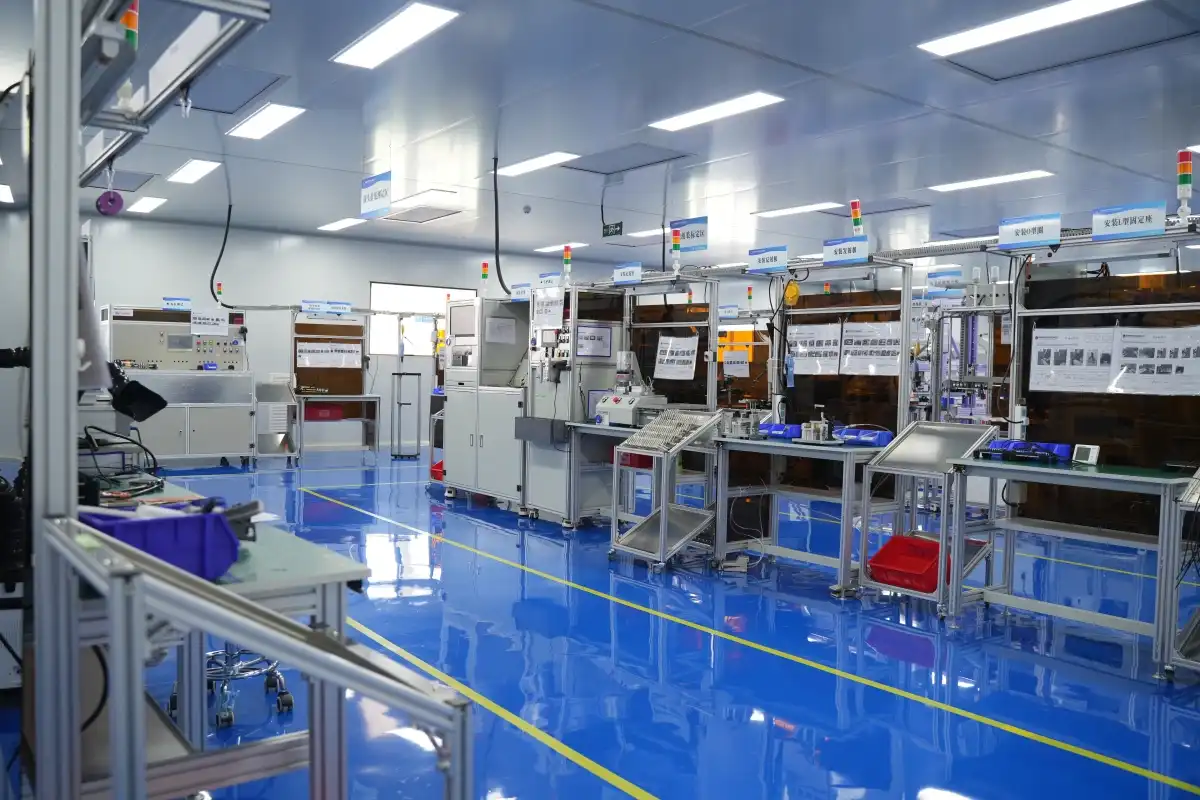
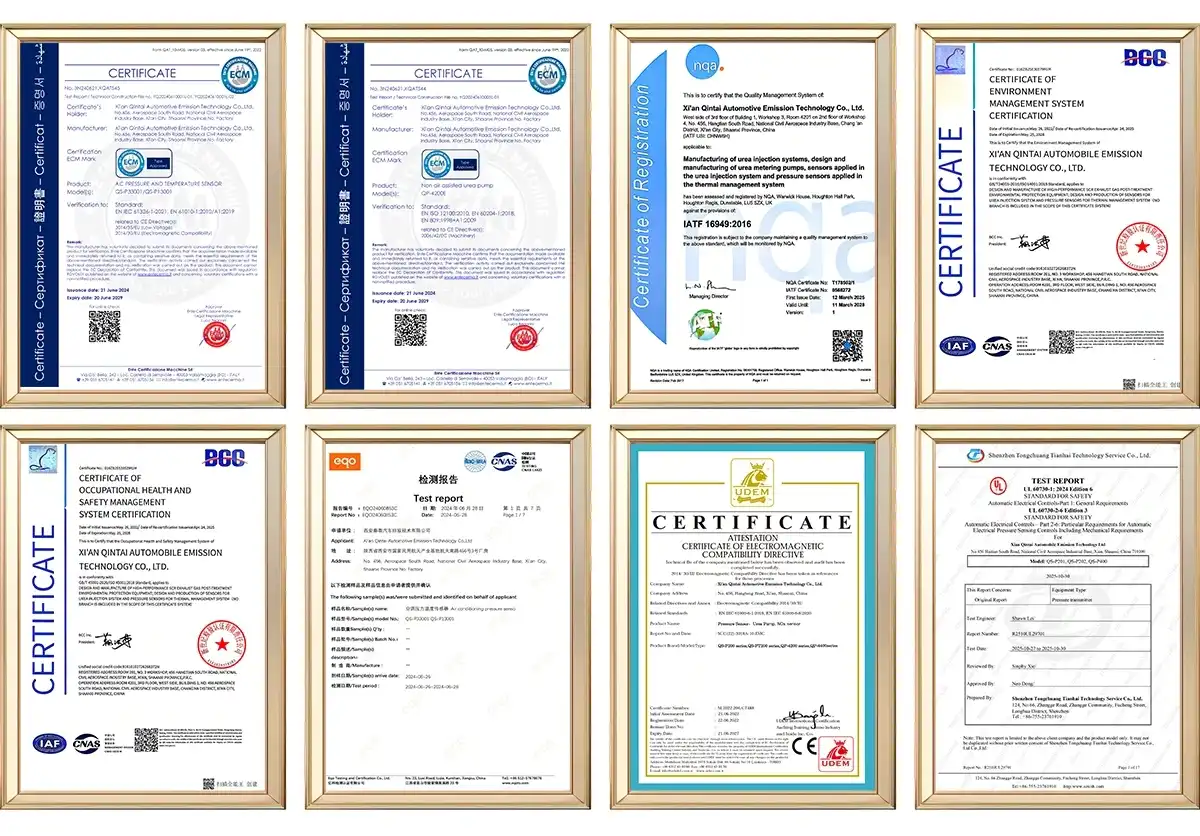
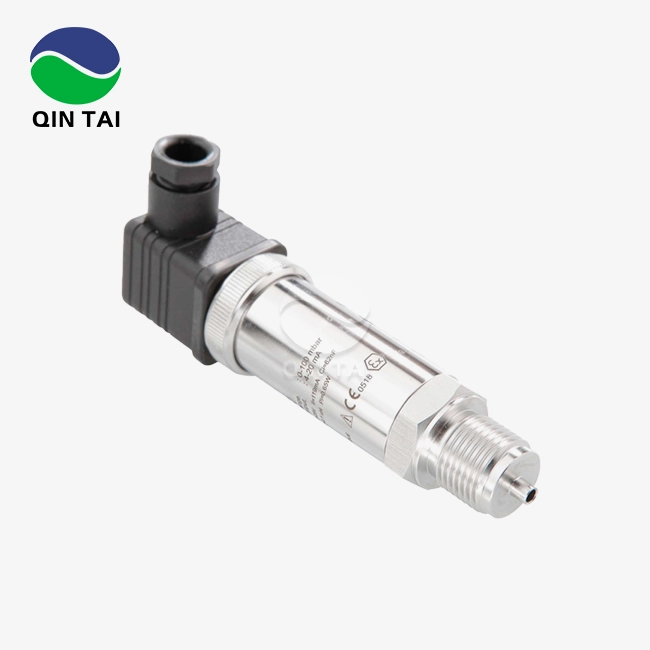
The QS-P226 model from Qintai is marketed as a high-value option that offers OEM-level performance at a reasonable price. We are the biggest OEM seller in China and work with big companies like Weichai Power, Yuchai Power, and Quanchai Power. Our IATF16949 approval and thorough quality tests show that we can be trusted. Our self-developed sensor core lets us quickly change it to fit the needs of any application. Our 12-month guarantee and quick technical help also lower the risk of buying from us. The sensor's 5V analog output and ratiometric signal design make it easy to integrate for aftermarket uses because they work with many current SCR control systems.
Procurement Guide: Buying Urea Pressure Sensors for B2B Clients
Key Factors for Large-Scale Sourcing
When buying urea pressure sensors in bulk, purchasing managers need to think about more than just the unit price. Accurately predicting demand determines the amount of inventory needed and keeps handling costs as low as possible. Work closely with production planning teams to make sure that your predictions of consumption are reasonable. Supplier certification makes sure that the quality of the products is good and that they follow the rules. Look for ISO9001, IATF16949, and environmental standards like REACH and RoHS. In mission-critical parts, reliability of the brand is very important. Look at a possible supplier's track record in the industry, their current ties with OEMs, and how stable their finances are. A supplier that has strong relationships with original equipment manufacturers (OEMs) shows that they can regularly meet high quality standards. This is supported by the fact that Qintai is a major supplier to China's biggest diesel engine makers and has been specializing in aftertreatment sensors for more than 20 years.
OEM Versus Aftermarket Considerations
OEM parts are more expensive than aftermarket parts but are guaranteed to fit and work perfectly. While aftermarket sensors can save you money, they are not always compatible and are of varying quality. This gap is filled by high-quality aftermarket providers like Qintai, who make parts to OEM standards while keeping prices low by using efficient production scale. Before they are sent out, all of our monitors are tested to make sure they meet performance standards. The technical requirements must exactly match your program. Make sure that the electrical link, thread size, pressure range, and connection type all meet the needs of your system. The QS-P226 can measure a lot of different things, from the beginning of the system's life to the highest doses. This makes it useful on a lot of different platforms. Its analog output works well with most ECU calibrations, which makes merging easier.
Wholesale Pricing, Logistics, and Warranty Terms
When you buy in bulk, you can get big savings on costs. Talk about different price levels based on the amount of work you'll do each year, and look into consignment inventory plans to find a good mix between cash flow and supply security. When you figure out the total landed costs for international shipping, you need to carefully plan for wait times, customs processes, and possible taxes. The rules of the warranty protect your purchase. Standard 12-month guarantees cover flaws in the way the product was made, but they make it clear what standard wear and tear is and what premature failure is. It's just as important to have responsive after-sales support. Can your provider help you solve problems? At Qintai, we have specialist application engineers who help customers with all stages of the product lifecycle, from choosing the product to installing it and keeping it running. Contact us at info@qt-sensor.com to talk about your unique needs and get personalized quotes for large orders.
Future Trends and Innovations in Urea Pressure Sensor Technology
Advances in Materials and Design
Next-generation urea pressure sensors are made with new materials that make them more resistant to chemicals and make them last longer. Nano-coated diaphragms are better at stopping urea crystallization, and new metal formulas can handle higher temperatures without losing their calibration. As things get smaller, sensors can be built into smaller dose units without affecting the accuracy of the measurements. These improvements in materials directly help the industry's push for emission control systems that are smaller, lighter, and more efficient.
Integration with IoT and Smart SCR Systems
When emission control and Internet of Things tools come together, it creates new ways to do forecast maintenance and improve systems. More and more modern sensors have digital output methods like SENT (Single Edge Nibble Transmission) that let them send higher-resolution data and do troubleshooting on the fly. When connected to tracking systems, these smart sensors give fleet managers real-time information about the health of the SCR in all of their vehicles, letting them know about possible problems before they lead to crashes on the side of the road. Using machine learning algorithms, cloud-based analytics platforms can combine pressure data with other emission factors to find subtle degradation trends that can't be seen with threshold-based diagnostics alone. With this predictive capability, maintenance goes from being reactive fixes to planned actions, which lowers the total cost of ownership and increases the amount of time a car is used.
Regulatory Drivers and Strategic Recommendations
More strict emission rules around the world, like the EPA's future greenhouse gas standards and the EU's broader emission rules, will need pressure monitors to be even more accurate. The required level of accuracy could go from ±0.5% to ±0.3% or better, which would mean that the manufacturing process would have to be improved and quality control would have to be stepped up. Teams in charge of buying things should work with suppliers that show they are committed to continuing growth and investing in research and development.
When planning for the future, you should look for sellers who have a lot of patents and a history of coming up with new ideas. Qintai has filed for 58 idea patents, which shows how committed we are to making technology better. Our independent research and development team is always working on next-generation sensing solutions, such as designs that can withstand more freeze-thaw cycles and last longer. Building partnerships with makers who are looking to the future makes it easier for your supply chain to change as rules change and technology gets better.
Conclusion
Accurately tracking urea pressure sensor performance is a key part of controlling emissions in current diesel engines. The right choice of sensors strikes a mix between technical performance, dependability, and total cost. This helps with regulatory compliance while keeping procurement costs low. Procurement teams can make confident choices about where to buy things when they understand how sensors work, can spot typical failure modes, and have relationships with qualified suppliers. It is important to buy quality sensors from well-known companies to protect both operating consistency and environmental performance as emission standards get stricter and SCR systems get smarter. Even though the pressure monitor is a small part, it has a big effect on how well the system works and how well it follows the rules.
FAQ
Q1: What causes the P204B fault code in SCR systems?
A: The P204B trouble code means that there is a problem with the range or function of the urea pressure sensor circuit. This usually happens because the sensor signal drifts due to old parts, dirty electrical connections, or rust on the terminal pins. Our QS-P226 sensor lowers this risk by having gold-plated connections that keep the electrical contact stable and don't rust even when it's wet.
Q2: How do sensors handle urea crystallization?
A: Good sensors are made with features that are especially designed to stop crystallization. Smooth flow paths and dead-volume reduction techniques are used in the internal sensing chamber to keep urea from sitting still and drying out and making crystals on the diaphragm. Crystallization risk is also lowered by cleaning the system with new DEF on a regular basis and keeping it at the right temperature.
Q3: Can sensors accommodate AdBlue freezing?
A: When diesel exhaust fluid freezes at about 12°F, it increases in volume by 9%. Good pressure sensors have flexible buffering structures inside that can handle this growth without hurting the detecting element. This safety is built into the QS-P226, so it can work reliably through the freeze-thaw cycles that are common in cold-climate uses.
Q4: What is typical sensor service life?
A: Well-made sensors have a service life of between 15,000 and 20,000 hours when used in business vehicles as usual. DEF quality, working temperature extremes, vibration exposure, and care methods are some of the things that affect how long something lasts. Unexpected failures during important activities can be avoided by replacing things before they reach the end of their projected useful life.
Partner with Qintai for Reliable Emission Control Solutions
Qintai is ready to help you with your pollution control needs with tested urea pressure sensor technology and a lot of technical know-how. The company that makes our QS-P226 urea pressure sensor guarantees OEM-level performance and backs it up with IATF16949 approval and strict 100% factory testing. We understand the tough needs of heavy-duty uses because we are the main source to China's biggest diesel engine makers. Because we do our own research and development, we can quickly make changes to fit your unique interface needs and working conditions. We make the buying process easier for you by offering open OEM and ODM services, low trade prices for large orders, and quick customer service after the sale. Email our application engineers at info@qt-sensor.com with your technical requirements to talk about them, ask for samples, or get quotes on large orders.
References
1. Johnson, M. & Williams, R. (2023). "Selective Catalytic Reduction Systems: Design, Operation, and Diagnostic Strategies for Heavy-Duty Diesel Applications." Society of Automotive Engineers Technical Paper Series, SAE 2023-01-0591.
2. Environmental Protection Agency (2022). "Heavy-Duty Engine and Vehicle Standards and Highway Diesel Fuel Sulfur Control Requirements." Federal Register, Code of Federal Regulations Title 40, Part 86.
3. Schmidt, K., Weber, T. & Mueller, H. (2024). "Pressure Sensor Technology for Automotive Urea Dosing Systems: Materials, Reliability, and Future Developments." International Journal of Automotive Technology, Vol. 25, No. 2, pp. 347-362.
4. Zhang, L., Chen, Y. & Liu, Q. (2023). "Crystallization Prevention Strategies in Diesel Exhaust Fluid Delivery Systems." Journal of Emission Control Science and Technology, Vol. 9, No. 4, pp. 289-301.
5. Continental Automotive GmbH (2023). "Technical Requirements for Exhaust Aftertreatment Sensors in Commercial Vehicles." Internal Engineering Standards Document, Continental Emission Management Systems Division.
6. International Organization for Standardization (2021). "ISO 22241: Diesel Engines – NOx Reduction Agent AUS 32." International Standard for Urea Solution Quality and Handling, Parts 1-5.

Our customers’ satisfaction speaks for our quality — contact us to experience the same reliable service.