- English
- French
- German
- Portuguese
- Spanish
- Russian
- Japanese
- Korean
- Arabic
- Greek
- German
- Turkish
- Italian
- Danish
- Romanian
- Indonesian
- Czech
- Afrikaans
- Swedish
- Polish
- Basque
- Catalan
- Esperanto
- Hindi
- Lao
- Albanian
- Amharic
- Armenian
- Azerbaijani
- Belarusian
- Bengali
- Bosnian
- Bulgarian
- Cebuano
- Chichewa
- Corsican
- Croatian
- Dutch
- Estonian
- Filipino
- Finnish
- Frisian
- Galician
- Georgian
- Gujarati
- Haitian
- Hausa
- Hawaiian
- Hebrew
- Hmong
- Hungarian
- Icelandic
- Igbo
- Javanese
- Kannada
- Kazakh
- Khmer
- Kurdish
- Kyrgyz
- Latin
- Latvian
- Lithuanian
- Luxembou..
- Macedonian
- Malagasy
- Malay
- Malayalam
- Maltese
- Maori
- Marathi
- Mongolian
- Burmese
- Nepali
- Norwegian
- Pashto
- Persian
- Punjabi
- Serbian
- Sesotho
- Sinhala
- Slovak
- Slovenian
- Somali
- Samoan
- Scots Gaelic
- Shona
- Sindhi
- Sundanese
- Swahili
- Tajik
- Tamil
- Telugu
- Thai
- Ukrainian
- Urdu
- Uzbek
- Vietnamese
- Welsh
- Xhosa
- Yiddish
- Yoruba
- Zulu
Where to Buy a Water Pressure Sensor from a Trusted Supplier
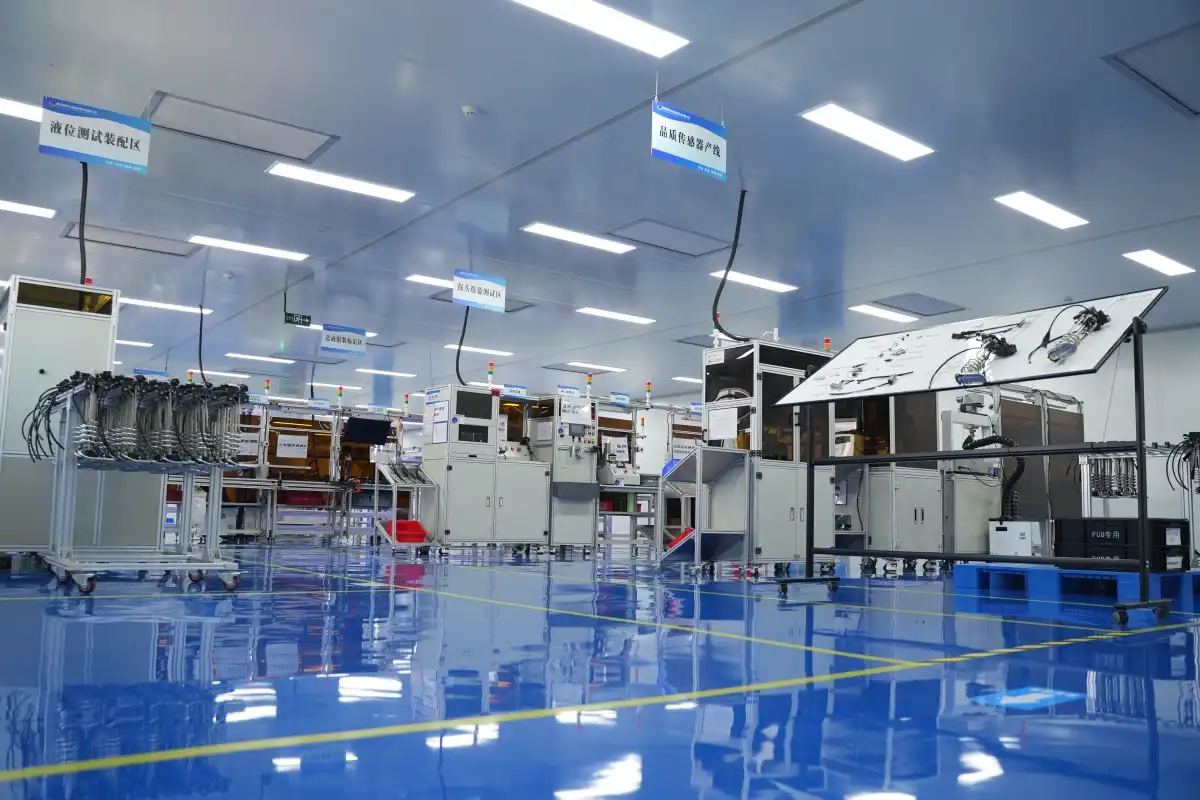
If you're sourcing a water pressure sensor for industrial or commercial use, the right supplier makes all the difference. Whether you're a purchasing manager at a diesel OEM, a supply chain lead at an SCR integrator, or a parts manager at a repair shop, your procurement decision directly affects system uptime, compliance, and cost. This guide walks you through sensor types, supplier evaluation criteria, trusted procurement channels, and what Qintai offers as a certified manufacturer with over two decades of field experience.
Understanding Water Pressure Sensors: Types and Applications
Know what you're getting before you look at different providers. There are a lot of different types of fluid pressure monitoring devices, and using the wrong one can cause expensive problems with integration further down the line.
Piezoresistive and Capacitive Sensors
In factories, piezoresistive sensors are the most common type. Using a silicon or ceramic diaphragm, they change mechanical pressure into an electrical signal. On the other hand, capacitive sensors pick up changes in electrical capacitance that happen when the diaphragm bends. Because piezoresistive types can handle higher pressures more accurately, they are commonly used in generator sets and engine cooling systems for big trucks. When very low pressure ranges are needed, capacitive types are often the best choice.
Analog vs. Digital Output Models
An analog sensor sends a steady signal, usually between 4 and 20 mA or 0.5 and 4.5 V, that can be easily connected to PLCs and ECUs. Digital output models use standards like I²C or CAN bus, which are better at blocking noise over long wire runs. For diesel OEM uses that need to comply with China VI or Euro VI, the industry standard is still analog 4–20 mA output with high signal stability. This is because it behaves consistently in harsh engine conditions.
Industrial-Grade vs. Residential Requirements
Industrial pressure transducers need to be rated IP65 or IP67 for ingress protection, be able to work in temperatures ranging from -40°C to +125°C, and be able to handle the vibrations that are common in pump rooms and off-road vehicles. Water pressure gages for homes work in much milder situations. Before putting in a final buy order for parts for building equipment or mine generator sets, procurement engineers should always check the burst pressure ratings, wetted material compatibility (usually 316L stainless steel), and EMC certifications.
Criteria for Selecting a Trusted Water Pressure Sensor Supplier
A company that calls itself a "trusted supplier" for the water pressure sensor doesn't always have the qualifications to back up that claim. It's not marketing language that B2B buying teams need; they need real proof.
Certifications and Quality Standards
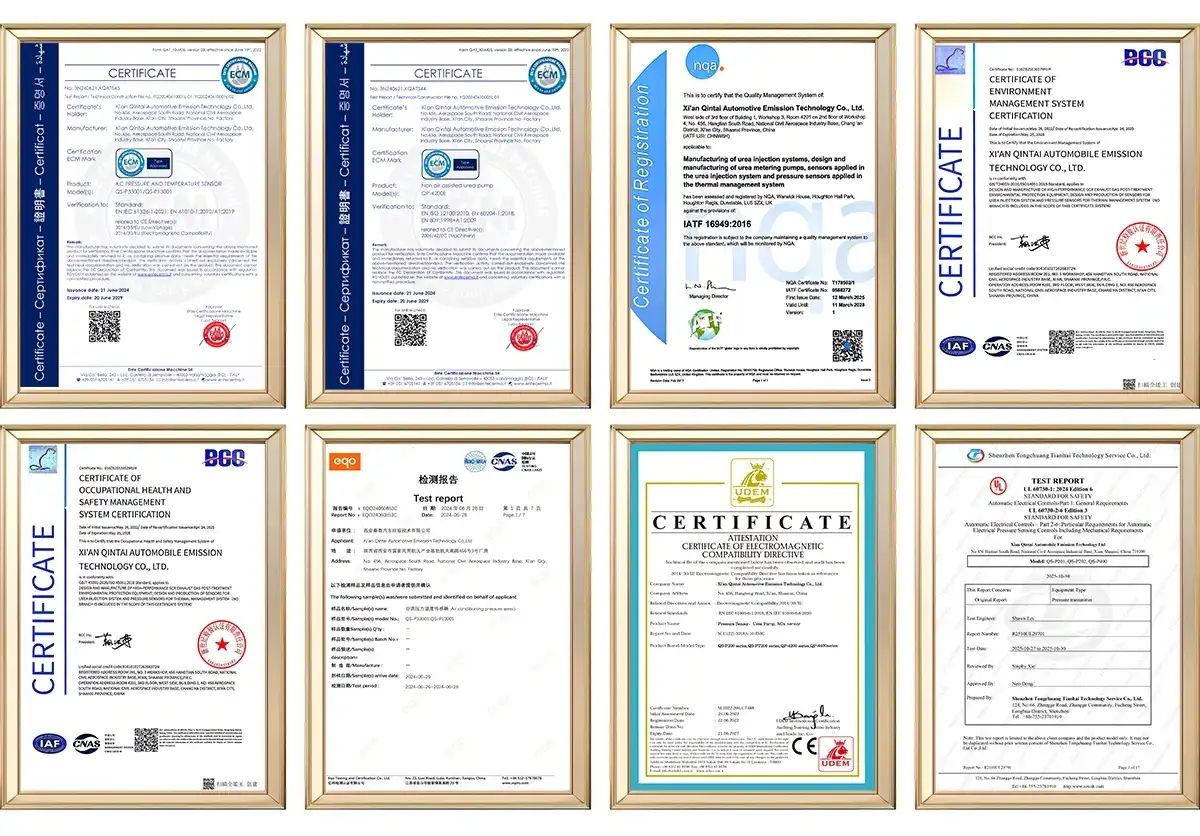
A reliable supplier has certifications that are recognized all over the world. For quality control, look for ISO 9001, IATF 16949, and CE or UL marks. For safety and electromagnetic compatibility, look for CE or UL marks. RoHS and REACH compliance show that the materials are sourced in a responsible way. Qintai has all of these and also an Explosion-proof (Ex) certificate, which is important for sensors used in places like mines or power plants.
OEM Capacity and Customization Support
OEM buyers can't accept anything less than consistent mass production. A seller should be able to show that they can keep tight tolerances even over long production runs. A good standard is set-point consistency within ±0.5% of full scale. Check to see if the provider offers OEM services, custom pressure ranges, or electrical connections that have been changed. Qintai lets you change the way a product looks and works from the design stage all the way through mass production. This makes it easier for integrators to find the interfaces they need.
After-Sales Response and Warranty Terms
After-sales reaction time is a good way to tell how reliable a seller is. For written warranty terms that cover at least 12 months, and for a dedicated technical contact, ask for it. Your engineering team will be more likely to approve suppliers at the design stage if they give you calibration documentation, failure analysis reports, and replacement protocols.

Comparing Popular Water Pressure Sensors and Brands
Honeywell, Siemens, Bosch, and Schneider Electric are all well-known global brands, but they tend to charge high prices for products that are used in general industry. A specialized manufacturer is often a better value for diesel aftertreatment systems, SCR/DPF integrators, and the commercial vehicle aftermarket.
Pressure transducers made by Honeywell are known for being accurate in HVAC and building automation. Siemens helps process companies integrate their systems well at the system level. Bosch sensors have a good reputation as OEM parts for cars. These names are good at what they do, but their catalogs might not have the exact pressure ranges, connector types, or environmental scores that China VI or Euro VI diesel exhaust aftertreatment systems need.
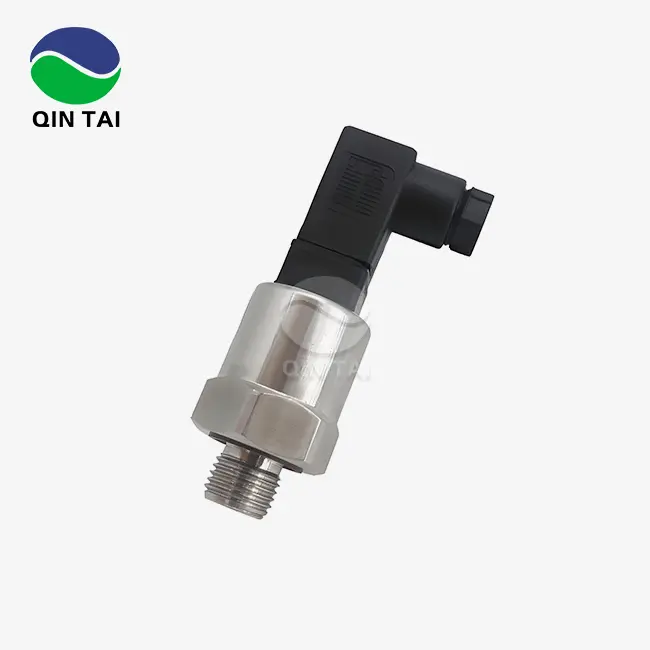
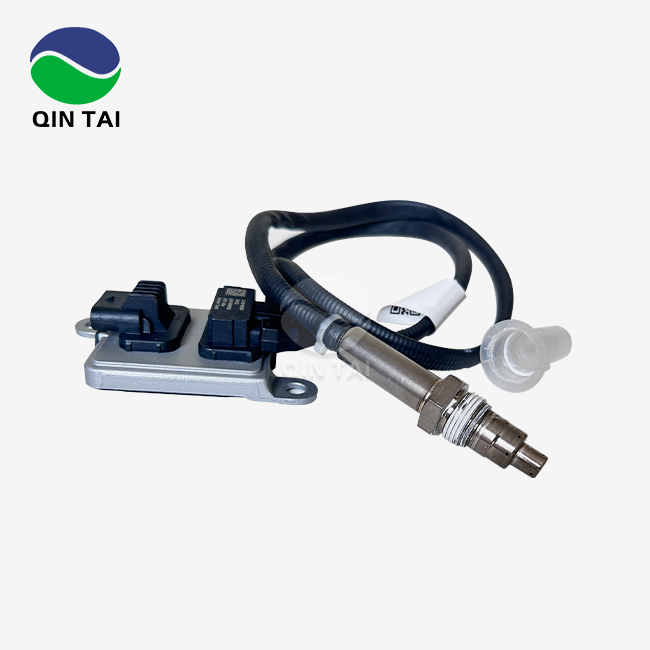
Diesel engine SCR aftertreatment monitors and fluid pressure measurement including the water pressure sensor for heavy-duty uses are what Qintai does best. Qintai is the biggest original equipment manufacturer (OEM) supplier in China, with a market share of about 80%. It is a core supplier to Weichai Power, Yuchai Power, and Quanchai Power, and it makes sensors that are designed to work in situations with a lot of shaking and high temperatures. That level of specialization means that buyers in this industry can get better application fit.
How and Where to Buy: Trusted Procurement Channels
It's not what you buy that matters, but where you buy it. There are different risks and wait times for each route.
Here are the main ways to buy things that you should look into:
- Direct from the manufacturer: Buying directly from a certified factory like Qintai gives you access to OEM pricing, custom specifications, and direct technical dialogue. Lead times are controlled, and documentation—such as material certifications and test reports—is available on request.
- Authorized distributors: Distributors offer faster local delivery and stocked inventory, which suits repair shops and parts managers who need immediate replacements. Confirm the distributor is officially authorized to avoid counterfeit products.
- Online B2B marketplaces: Platforms like Alibaba or Global Sources provide broad supplier exposure but require careful vetting. Always request product samples, third-party test reports, and factory audit results before placing a production order.
Because each route is better for a different task, you should pick the one that fits your order volume, urgency, and technology needs. For OEM contracts with a lot of parts or special sensor programs, working directly with the maker almost always works out better in the long run than buying parts one at a time through a marketplace.
Technical Support and Installation Guidance from Trusted Suppliers
When a sensor comes without any paperwork, it causes trouble in the field. As part of the price you pay, you get proper installation, calibration, and ongoing support.
Installation Protocols and Calibration
Good providers for the water pressure sensor give clear fitting directions that include torque specs, thread sealant compatibility, and the shortest straight-pipe runs to avoid reading errors caused by turbulence. Each package should come with a calibration certificate that can be tracked back to national standards. Each unit from Qintai comes with full documentation on how it was calibrated, and the company's engineering team is available to answer questions about how to integrate it.
Vibration Resistance and Environmental Sealing
Sensor precision is always at risk in places like pump rooms and engine areas where there is vibration. To keep the output stable even when they are under a lot of mechanical stress, high-quality sensors use sensing elements that are dampened and solid-state signal conditioning. Qintai sensors are made to last 100,000 to 500,000 mechanical cycles without losing their set point. This has been proven by testing them for pressure impulses and changing the temperature from -20°C to +85°C.
Integration with Control Systems and Data Loggers
Today, a lot of uses need sensors to send data to data loggers, SCADA systems, or ECUs. Make sure that the seller can offer different output signals, like 0–10 V, 4–20 mA, or digital CAN, and that the sensor's electrical case meets IP67 standards for waterproofing. This stops water from getting into wire glands, which is a major reason why sensors fail too soon in field setups.
Conclusion
Three things determine where to buy a water pressure sensor: how well it fits your needs technically, how trustworthy the supplier is, and how helpful the buying process is. When generator set engineers, OEM manufacturers, SCR system integrators, and aftermarket suppliers work with a certified, specialized manufacturer, the risk and total cost of ownership go down.
Over the past 20 years, Qintai has built its name by selling high-precision sensors including the water pressure sensor to China's biggest diesel engine makers and now to people in 60 other countries as well. It's a good choice for B2B buyers who need more than just a part number because it has IATF 16949 certification, OEM/ODM freedom, and direct expert help.
FAQ
What is the difference between a pressure sensor and a pressure switch?
A pressure sensor produces a continuous analog output—such as 4–20 mA—proportional to the measured pressure. A pressure switch delivers a binary on/off signal when pressure crosses a set threshold. Sensors are used for monitoring and control loops; switches are used for protection functions like pump shutoff.
How do I prevent rapid cycling in my pressure control system?
Select a device with adjustable hysteresis or a built-in time delay. These features prevent the output from toggling repeatedly when pressure fluctuates near the set point, which protects connected equipment from wear.
Can sensors handle corrosive fluids or seawater?
Yes, provided you specify the correct wetted materials during procurement. Titanium or specialized fluoropolymer-lined diaphragms are available for aggressive media. Standard 316L stainless steel works for most clean water and mild chemical applications.
What causes set-point drift over time?
Drift typically results from mechanical fatigue of the internal spring or diaphragm aging. Sensors built with pre-aged components and validated through high-cycle testing show significantly lower drift rates over their service life.
Can I order a custom pressure range or connector type?
Yes. Reputable manufacturers like Qintai offer ODM and customization services covering pressure range, output signal, connector interface, and housing material to match specific application requirements.
Get a Quote from Qintai — Certified Water Pressure Sensor Manufacturer
Since 2001, Qintai has sold precise fluid pressure sensors to OEMs and suppliers in 60 countries. These sensors are certified by IATF 16949, CE, UL, and Ex. We are a manufacturer of water pressure sensors that can make a lot of them and offer full OEM/ODM support. We offer consistent quality at a reasonable price. Get in touch with our engineering team right away to get detailed details, samples, or a personalized price. You can email us at info@qt-sensor.com or go to qt-sensor.com.
References
1. Fraden, J. Handbook of Modern Sensors: Physics, Designs, and Applications. Springer. 2016.
2. Instrument Society of America. ISA-7.0.01: Quality Standard for Instrument Air. ISA. 2018.
3. National Institute of Standards and Technology (NIST). Guidelines for Evaluating and Expressing the Uncertainty of NIST Measurement Results. NIST Technical Note 1297. 2019.
4. Society of Automotive Engineers. SAE J1939 Standards for Heavy-Duty Vehicle Communication Networks. SAE International. 2021.
5. International Electrotechnical Commission. IEC 60529: Degrees of Protection Provided by Enclosures (IP Code). IEC. 2020.
6. American Society of Mechanical Engineers. ASME B40.100: Pressure Gauges and Gauge Attachments. ASME. 2022.

Our customers’ satisfaction speaks for our quality — contact us to experience the same reliable service.