- English
- French
- German
- Portuguese
- Spanish
- Russian
- Japanese
- Korean
- Arabic
- Greek
- German
- Turkish
- Italian
- Danish
- Romanian
- Indonesian
- Czech
- Afrikaans
- Swedish
- Polish
- Basque
- Catalan
- Esperanto
- Hindi
- Lao
- Albanian
- Amharic
- Armenian
- Azerbaijani
- Belarusian
- Bengali
- Bosnian
- Bulgarian
- Cebuano
- Chichewa
- Corsican
- Croatian
- Dutch
- Estonian
- Filipino
- Finnish
- Frisian
- Galician
- Georgian
- Gujarati
- Haitian
- Hausa
- Hawaiian
- Hebrew
- Hmong
- Hungarian
- Icelandic
- Igbo
- Javanese
- Kannada
- Kazakh
- Khmer
- Kurdish
- Kyrgyz
- Latin
- Latvian
- Lithuanian
- Luxembou..
- Macedonian
- Malagasy
- Malay
- Malayalam
- Maltese
- Maori
- Marathi
- Mongolian
- Burmese
- Nepali
- Norwegian
- Pashto
- Persian
- Punjabi
- Serbian
- Sesotho
- Sinhala
- Slovak
- Slovenian
- Somali
- Samoan
- Scots Gaelic
- Shona
- Sindhi
- Sundanese
- Swahili
- Tajik
- Tamil
- Telugu
- Thai
- Ukrainian
- Urdu
- Uzbek
- Vietnamese
- Welsh
- Xhosa
- Yiddish
- Yoruba
- Zulu
Which Urea Dosing System Features Matter for Reliable DEF Delivery?
A urea dosing system works best when it has accurate, repeatable metering, stable pressure, fine spray atomization, clean filtration, cold-weather protection, crystallization control, and clear diagnostics. These features deliver the right amount of DEF to the SCR catalyst at idle, during acceleration, and under heavy load. When one of them fails, NOx emissions rise, warning lights appear, and deposits can block the injector. I wrote this guide for OEM engineers, system integrators, aftermarket buyers, and generator set makers who want to compare options with facts. Read on to see what to check before you place an order.
What Is a Urea Dosing System and How Does It Work?
The Main Parts of a Urea Dosing System
Up to set amounts of urea are used to move DEF from the tank to the exhaust pipe. ISO 22241 quality rules say that DEF, which is also called AdBlue, is a solution of 32.5% urea solution. It's kept in the tank, and a pump moves it through a filter. One part measures the pressure in the line, and another part sprays fluid before the SCR catalyst. The NOx level, engine load, and exhaust temperature are read by the control unit to set the dose rate. In many systems, there are also hot lines and a purge button that clears the circuit when the system is turned off. I judge the system as a whole because all of its parts work together to make it work.
How DEF Turns Into Cleaner Exhaust
Since it is hot outside, the heat changes the urea in the DEF that is sprayed into it into ammonia. When the ammonia and NOx on the SCR catalyst mix, they make nitrogen, water, and CO2. It has been shown in public research that urea-SCR can sometimes cut gasoline NOx by up to 90%. Most heavy-duty manufacturers use it to follow the rules set by the EPA in 2010 and by the EU and China in 2006. Still, the answer needs the right amount of DEF. Not enough gets rid of NOx. The ammonia can leak out of the tailpipe or build up in the pipe if you put too much. The level of emissions an engine puts out determines whether it passes or fails the test.
Why Pressure Feedback Sits at the Center
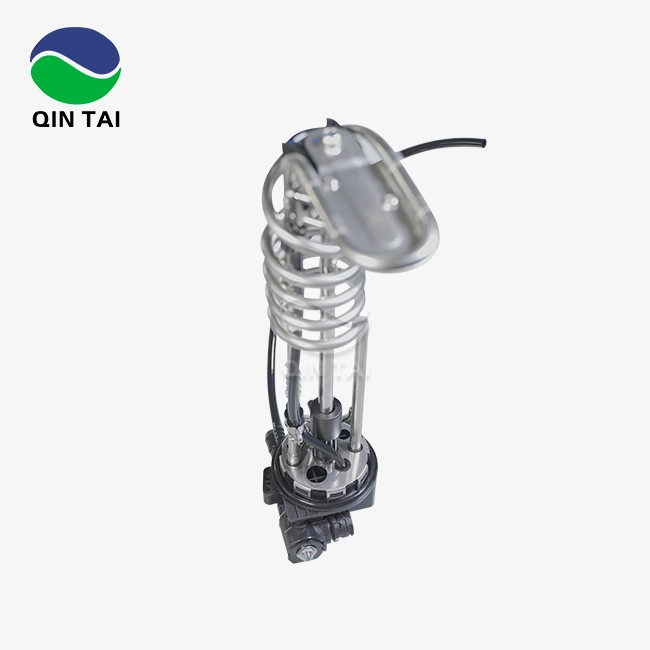
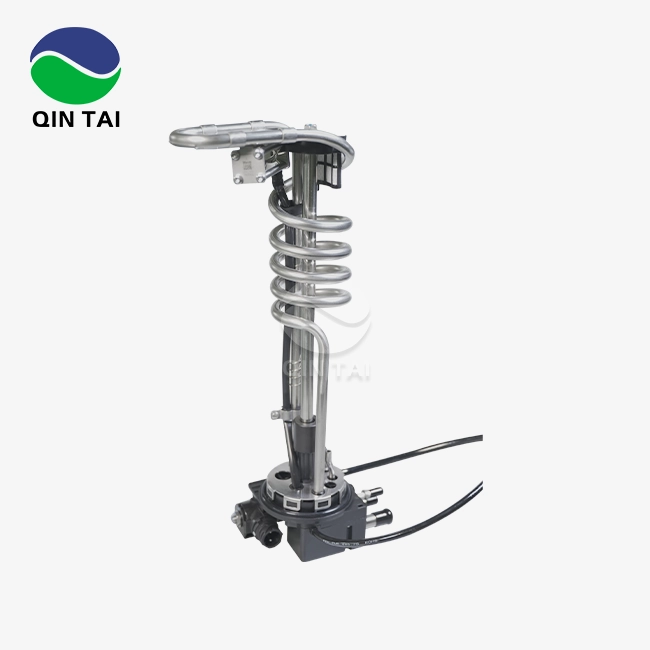
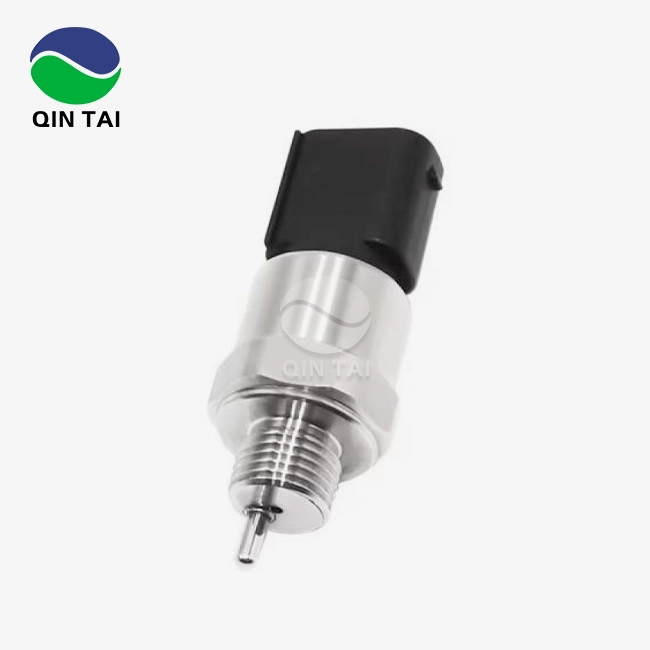
That's what the pressure sensor tells the control unit, not the pump itself. Qintai's Urea Dosing Pressure Sensor checks the pressure in the DEF line and sends real-time data to either the Engine Control Unit or the Dosing Control Unit. When the pressure drops, there may be air in the line, a leak, or both. This could be because the AdBlue is frozen or a valve is broken. Techs can also find problems with the pump and injectors faster with this closed-loop input. It also stops limp mode events when the pressure inside the dose module stays stable. The processor can only guess what the pressure is because it can't be sure. It costs money to guess because of fuel, fluid, and downtime urea dosing system.
The Most Important Features for Dependable DEF Delivery
Repeatable Metering and Stable Pressure
The size of the pump does not guaranty good delivery by itself. What's important is that the user always gets the same amount. It is important to find a DEF flow rate range that is clear, has pressure limits, and has been shown to be accurate at rest, when revving up, and when the load changes quickly. The spray isn't even when the pressure changes a lot, which makes it harder to figure out what's wrong. A pressure monitor that is calibrated across the whole range of temperature and pressure helps the controller stay on goal. When an OEM buys something, it's just as important that it works the same way every time as it did the first time. When you make a lot of something, each bit has to work the same way.
Atomization, Filtration, and Crystallization Control
It takes longer for fine drops to evaporate and fully turn into ammonia. When big droplets hit the pipe wall, urea builds up on it. So, you should pay close attention to how well the injectors spray and how far apart the pipes are that mix the fuel. Parts are stopped by a filter in the DEF circuit before they get to the injector tip. Also, connections that are closed off keep dirt out. It's also important how the inside looks. Qintai's pressure sensor has a way to keep dead volume to a minimum and keep internal flow paths smooth. This keeps the diaphragm from getting clogged with urea. After thousands of hours of use, the little things you can see on a picture are what make or break a unit.
Cold-Weather Operation, Diagnostics, and Durability
DEF begins to freeze at about 12°F (−11°C). That's important for US ships in the north and for extra power in the winter. Frozen fluid grows, so parts that can handle growth, heated lines, and heated tanks all help. The monitor made by Qintai has a flexible holding structure inside that can handle the fact that urea expands by 9% when it freezes. After that, check your email. Choose a unit with clear fault codes and an output signal, like 0.5V–4.5V or SENT, that works with your ECU. Finally, look at the numbers about shaking, temperature cycles, and salt spray. This is because a lab bench is not as rough as a gravel pit or a ship.

Comparing Urea Dosing System Designs for Different Applications
Air-Assisted vs. Airless Injection
Systems that use air help break down DEF into small drops. They can help when the temperature of the exhaust is low or when there isn't much space between the parts that mix. Putting them in takes more work because they need more lines and air flow. In devices without air, the DEF is shot through the injector nozzle after being pushed through it under pressure. Because they are easier to put together and have fewer parts, they fit a lot of trucks and off-road vehicles. You should make sure that the form fits the duty cycle and exhaust layout. There isn't a single type that is always better. Ask your supplier for spray test results on the shape of your own exhaust urea dosing system.
Electronic vs. Mechanical Control
The NOx level, engine speed, load, and exhaust temperature are all read by the electronic control. After that, the dose rate is changed right away. It also keeps track of issues and sends them to other cars in the network, which speeds up the repair process. Even though mechanical control is easier to use, it responds more slowly and gives you a lot less information on how to fix problems. If an engine is made to meet China VI, Euro VI, or EPA Tier 4 Final guidelines, the pollution system must be monitored while it is in use. Electricity is the only way to make this happen. That electronic loop stays honest as long as there is good pressure feedback from a sensor.
Integrated vs. Modular Units
The control, sensor, and pump are all housed in the same housing on a single block. It takes less time and has fewer links, which is good for OEM lines that make a lot of units. There are modules that separate the pump, the injector, and the sensors. One part can be changed without taking the whole thing apart, and the layout can be changed to make it easier to package. When people buy extra parts, they often choose flexible parts. This way, if one sensor breaks, they don't have to buy a whole new system. Which is more important for your production line or fleet? Compare how fast things can be put together to how much they cost to service.
How to Evaluate Performance and Find Root Causes of Faults
Data to Request From a Supplier
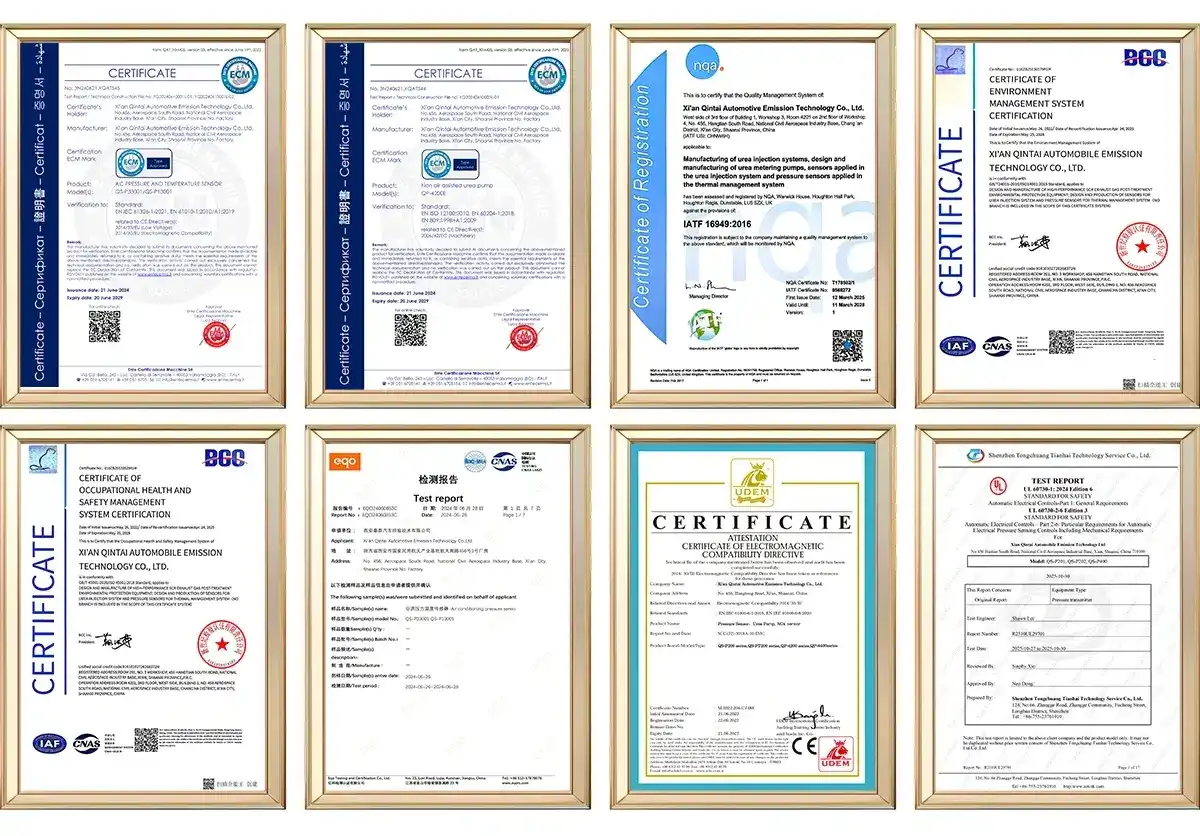
Don't ask for words; ask for numbers. You can find out about the DEF flow range, pressure limits, accuracy, repeatability, leakage rate, operating temperature, power use, and type of communication on any good datasheet. When it comes to sensors, find out how they are set up to work in all temperature and pressure conditions. IATF 16949 says that Qintai's zero-defect method is correct. Some of the things that are checked are leak tests with helium, ISO 22241 urea soaking tests for more than 3,000 hours, thermal shock tests from -40°C to +125°C for more than 500 cycles, and burst tests at 3x to 5x working pressure. Use this list to help you decide which seller to buy from. As well, keep lab results and field results separate. You can't use bench test results to build a mine road.
Tests That Prove Real-World Performance
Let the system rest, then speed it up and put a lot of stress on it. Finally, turn it off. Every time, check the provided amount against the volume that was asked for. Check the spray pattern, how the purge works, and the amount of buildup after long runs. These tests, which look at vibration, temperature cycling, salt spray, and water intrusion, show how well the hardware works in tough situations. The Urea Dosing Pressure Sensor from Qintai can be used on dirty sites by long-haul trucks, excavators, and loaders. It can also be used in naval diesel engines that run in salty air. What kinds of field situations does each seller's data cover? Also, ask for samples so that your engineers can be sure the results are correct before you place a big order.
Common Faults and Their Root Causes
Clogged injectors, crystallization, unstable pressure, pump failure, leaks, and error codes are all problems that happen a lot. One major reason could be that the DEF is bad or the fluid is stopped. Problems with the wiring, clogged filters, air in the circuit, or a weak shutdown purge are some of the other things that could cause this. The P204B code means that there is a problem with the range or performance of the pressure sensor circuit. This might happen if the sensor is old or if the jack pins are dirty. When gold-plated terminals are used, like in Qintai sensors, that risk is little to none. In this order, you should check the power, the connection, the fluid level, the pressure, the flow, the monitor, the injector, and the wires. When you replace an entire part without finding out why it failed, the issue will come up again, which costs more.
How to Choose, Install, and Source a Urea Dosing System?
Procurement Criteria That Protect Your Budget
Write down the engine, the emissions goal, the duty cycle, the exhaust layout, the annual volume, and the weather where the machine will be used. First, set the DEF's minimum and maximum pressure, flow, and response time. Find out about each supplier's production experience, quality control, ability to be tracked, wait times, technical support, and customer service after the sale. Not just the price of each item, add up the whole amount. Setting up, calibrating, maintaining, extra parts, warranty, and downtime are all important things to include. This list lets buyers compare quotes line by line, while engineers make sure the technical files match. Then, management gives the seller the go-ahead based on the same facts that the expert team used urea dosing system.
Installation and Integration Checklist
Follow the supplier's instructions on where to put the injectors, how to route the hoses, how to connect the connectors, and how to ground them. Before you use the DEF circuit, make sure it is clean and free of air, dirt, leaks, and blockages. Check the type of thread and make sure the output signal matches the ECU tuning. Most sensors have threads that are M10x1 or M12x1.5. Then, do an acceptance test that compares the amount given to the flow that was asked for during startup, warm up, high load, and shutdown. Do not get rid of the baseline data. It will be faster to do more maintenance, fix problems, and look over warranties.
Working With a Manufacturer or Supplier
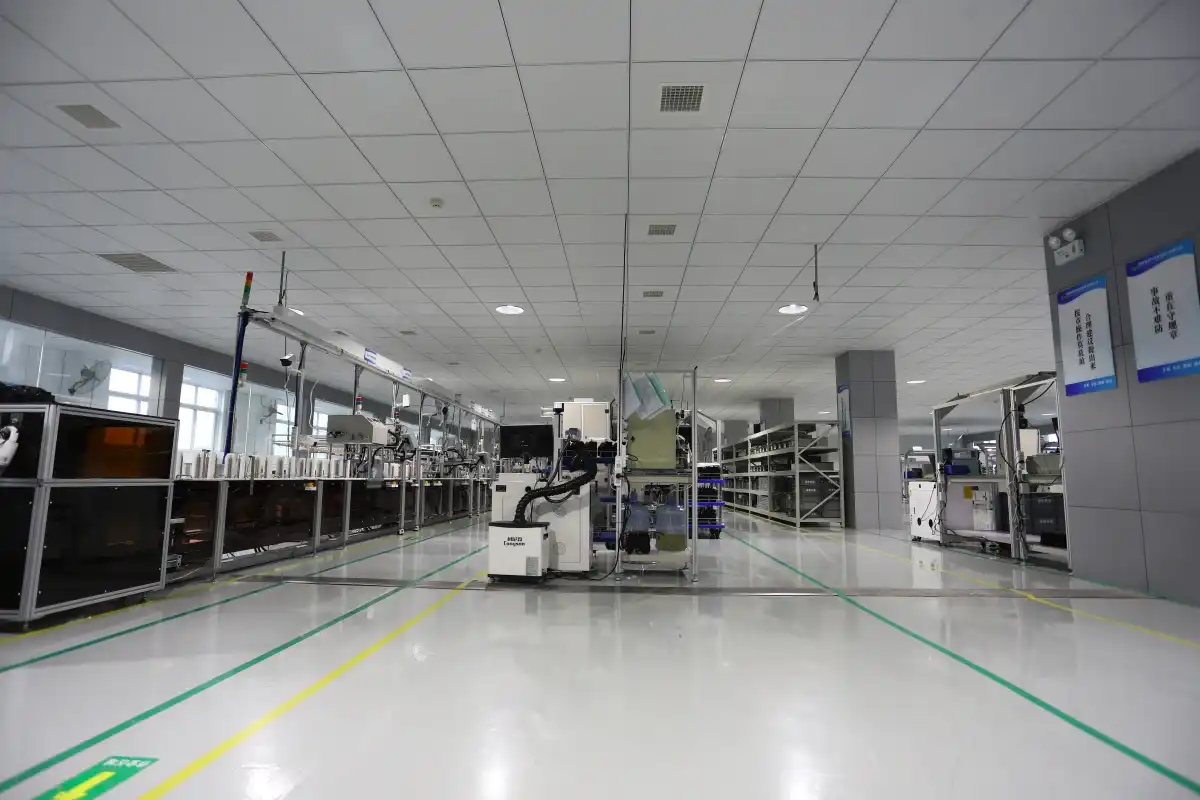
The Xi'an Qintai Automotive Emission Technology Co. Ltd. is a technology company that has been doing business across the country since 2001. We're mostly interested in sensors, especially pressure monitors, and SCR aftertreatment for diesel engines. We have ISO 9001, IATF 16949, CMC, Ex, UL, CE, REACH, and RoHS certificates and 58 creation patents. Weichai Power, Yuchai Power, and Quanchai Power all get most of their power from us. Also, we sell to more than 60 places around the world. Our OEM and ODM services can be changed to fit your needs and cover everything from design to mass production. Make sure you get datasheets, samples, help with test orders, and a clear way to get in touch after the sale, no matter who you choose.
Conclusion
When there is a reliable urea dosing system, the right amount of DEF is always sent to the SCR catalyst. This lets it cut NOx without ammonia slipping or building up. A stable pressure, fine atomization, filtration, crystallization control, defense from cold weather, and easy diagnostics are the major features. When deciding on things like air-assisted or airless injection, electronic control, and whether to use an integrated or modular layout, you should think about the duty cycle, exhaust layout, and service plan.
Claims about performance must be backed up by tests for vibration, temperature, and corrosion, as well as data from starts up, changes in load, and stops. A lot of problems are caused by bad DEF, frozen fluid, clogged filters, air, wires, or pressure sensor drift. Figure out what the main cause of the problem is before it costs a lot of money. Getting the right parts, putting them together properly, and keeping standard records are the last steps in the process.
FAQ
What causes the P204B fault code?
This is often due to signal drift from an old sensor or dirty connector pins. Qintai sensors have gold-covered terminals to lower this risk.
Can one pressure sensor fit different SCR brands?
It's not hard to find thread sizes like M10x1 or M12x1.5. The signal that comes out must be either 0.5V–4.5V or SENT, and it must match what the ECU needs.
Can freezing AdBlue damage the sensor?
As urea freezes, its volume grows by 9 percent. The Urea Dosing Pressure Sensor from Qintai has a flexible internal storage structure that can handle this.
How does the sensor handle crystallization?
Its design keeps the amount of dead volume to a minimum and uses smooth flow paths inside to keep the urea from building up on the diaphragm.
What is the typical service life?
When used for everyday business, the devices are made to last at least 15,000 to 20,000 hours.
Request a Urea Dosing System Quote From Qintai
Want to buy a urea dosing system from a business that knows how to use pressure sensors? There are 58 invention patents and IATF 16949 and ISO 9001 certificates held by Qintai. The company can make pressure sensors and SCR aftertreatment parts that are unique to each customer. Kindly send an email to info@qt-sensor.com with the model of your engine, the type of signal, the thread, and the yearly volume.
References
1. ISO 22241-1: Diesel Engines — NOx Reduction Agent AUS 32 — Part 1: Quality Requirements, 2019
2. Federal Register, Control of Air Pollution from New Motor Vehicles: Heavy-Duty Engine and Vehicle Standards and Highway Diesel Fuel Sulfur Control Requirements, 2001
3. Catalysis Today, Urea-SCR: A Promising Technique to Reduce NOx Emissions from Automotive Diesel Engines, 2000
4. SAE International Journal of Engines, Review of Vehicular Emissions Trends, 2015
5. SAE International, Diesel Emissions and Their Control, 2006
6. IATF 16949: Quality Management System Requirements for Automotive Production and Relevant Service Parts Organizations, 2016

Our customers’ satisfaction speaks for our quality — contact us to experience the same reliable service.