- English
- French
- German
- Portuguese
- Spanish
- Russian
- Japanese
- Korean
- Arabic
- Greek
- German
- Turkish
- Italian
- Danish
- Romanian
- Indonesian
- Czech
- Afrikaans
- Swedish
- Polish
- Basque
- Catalan
- Esperanto
- Hindi
- Lao
- Albanian
- Amharic
- Armenian
- Azerbaijani
- Belarusian
- Bengali
- Bosnian
- Bulgarian
- Cebuano
- Chichewa
- Corsican
- Croatian
- Dutch
- Estonian
- Filipino
- Finnish
- Frisian
- Galician
- Georgian
- Gujarati
- Haitian
- Hausa
- Hawaiian
- Hebrew
- Hmong
- Hungarian
- Icelandic
- Igbo
- Javanese
- Kannada
- Kazakh
- Khmer
- Kurdish
- Kyrgyz
- Latin
- Latvian
- Lithuanian
- Luxembou..
- Macedonian
- Malagasy
- Malay
- Malayalam
- Maltese
- Maori
- Marathi
- Mongolian
- Burmese
- Nepali
- Norwegian
- Pashto
- Persian
- Punjabi
- Serbian
- Sesotho
- Sinhala
- Slovak
- Slovenian
- Somali
- Samoan
- Scots Gaelic
- Shona
- Sindhi
- Sundanese
- Swahili
- Tajik
- Tamil
- Telugu
- Thai
- Ukrainian
- Urdu
- Uzbek
- Vietnamese
- Welsh
- Xhosa
- Yiddish
- Yoruba
- Zulu
Which Water Pressure Sensor Features Matter Most for Your System?
When selecting a water pressure sensor for industrial or OEM applications, the features that matter most are measurement accuracy, pressure range, material compatibility, ingress protection rating, and signal output type. A poorly matched sensor can cause system failures, unnecessary downtime, or costly replacements.
Whether you are sourcing for heavy-duty diesel engines, SCR aftertreatment systems, generator sets, or commercial vehicle maintenance, understanding these core attributes helps your team make procurement decisions that hold up under real operating conditions and reduce total lifecycle costs.
Understanding Water Pressure Sensors: Types and Functional Features
Analog vs. Digital Technologies
Most of the time, 4–20mA or 0–5V is the constant signal that analog sensors send out. This works well in industrial control loops where small changes in pressure need to be tracked in real time. Digital sensors, like those with IO-Link or CAN bus interfaces, send separate data packets that make it easier to figure out what's wrong with the system. For OEM diesel engine and aftertreatment uses, analog 4–20mA is still the standard because it doesn't pick up noise over long cable runs.
Pressure Transducer vs. Pressure Switch
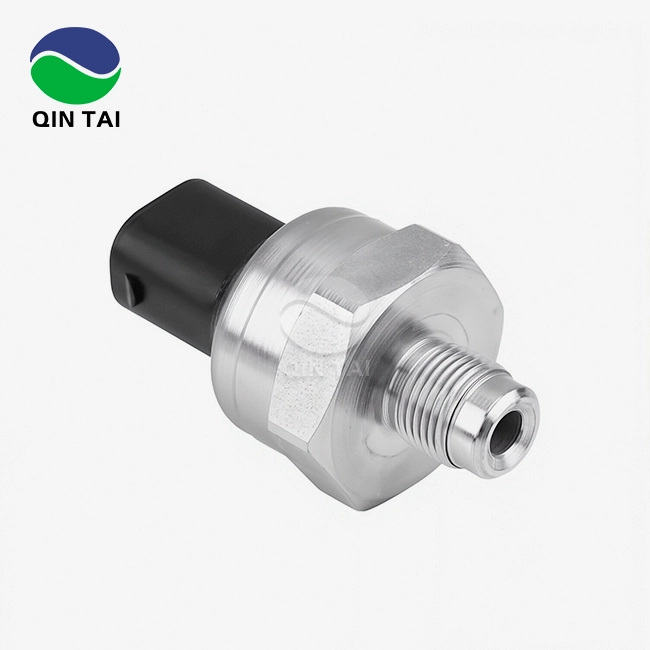
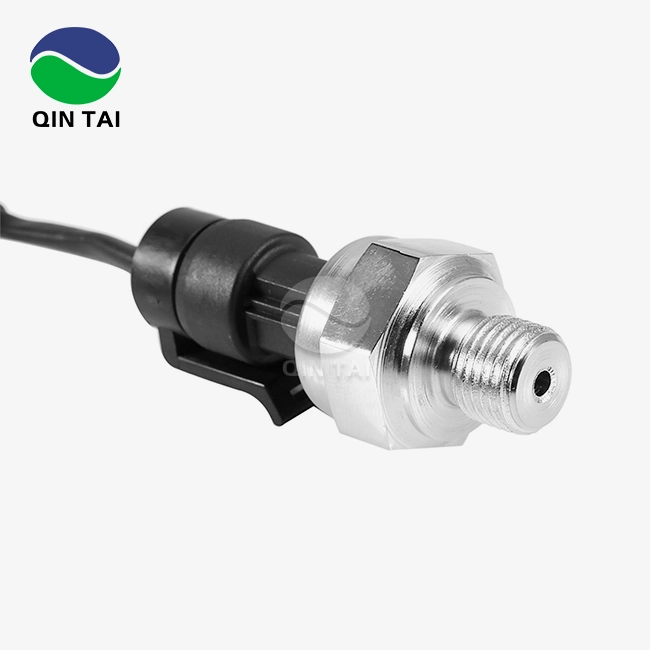
A pressure sensor sends out a steady analog signal that is proportional to the pressure being monitored. This gives workers accurate monitoring data all the time. A pressure sensor switch, on the other hand, gives a binary on/off output when a certain level is met. This is great for protecting the pump from dry running or overpressure pipe breaks. A lot of B2B procurement professionals get these two ideas mixed up. One of the first things you need to do is make sure that the output type fits with the way your control system is set up.
Wired vs. Wireless Models
Wired sensors are still the standard in building equipment, heavy machinery, and generator sets because they can send signals without any problems even in places with strong electromagnetic fields. Wireless models are good for tracking systems that are far away, like backup power plants or spread water treatment systems, where cables wouldn't work. For OEM programs that make a lot of units, wired models with standard connectors give purchasing and research and development teams the consistency and traceability they need.
Critical Performance Factors in Water Pressure Sensor Selection
Accuracy and Measurement Tolerance
For industrial fluid systems, the water pressure sensor typically has accuracy of within ±0.5% of full scale. For high-precision uses, it may be necessary to have accuracy of ±0.25% FS or better. Most home water systems can handle ±1% FS. Tighter tolerances lower the chance of false triggers in diesel engine cooling circuits and SCR urea dosing lines. They also make sure that China VI and Euro VI emission aftertreatment standards are met. Before finalizing specs, you should always ask providers for calibration certificates and test data from a third party.
Environmental Durability and Protection Ratings
Extreme temperatures, high or low humidity, and mechanical vibrations are the three main reasons why sensors fail quickly in industrial settings. At the very least, sensors used in pump rooms or under hood engines should have an IP65 rating. For fully washdown-resistant applications, IP67 is better.
Most heavy trucks and generator sets can work in temperatures between -40°C and +125°C. The materials used for the housing are also important. Bodies made of 304 or 316L stainless steel with ceramic or EPDM diaphragms are very chemically resistant to coolant, urea solution, and hydraulic fluids.
Calibration Stability and Long-Term Drift
Set-point drift over time is usually caused by the internal spring wearing out or the diaphragm getting old. To keep drift to a minimum, high-quality sensors use parts that have already been used a lot and go through strict mechanical wear testing, which is usually approved after 100,000 to 500,000 working cycles. Setting a regular time for recalibration, usually once a year for industrial uses, keeps measurement accuracy within the acceptable range and stops system errors that go unnoticed and require costly fixes.
Evaluating Market Solutions: How to Choose the Best Sensor for Your Needs
Performance vs. Cost Framework
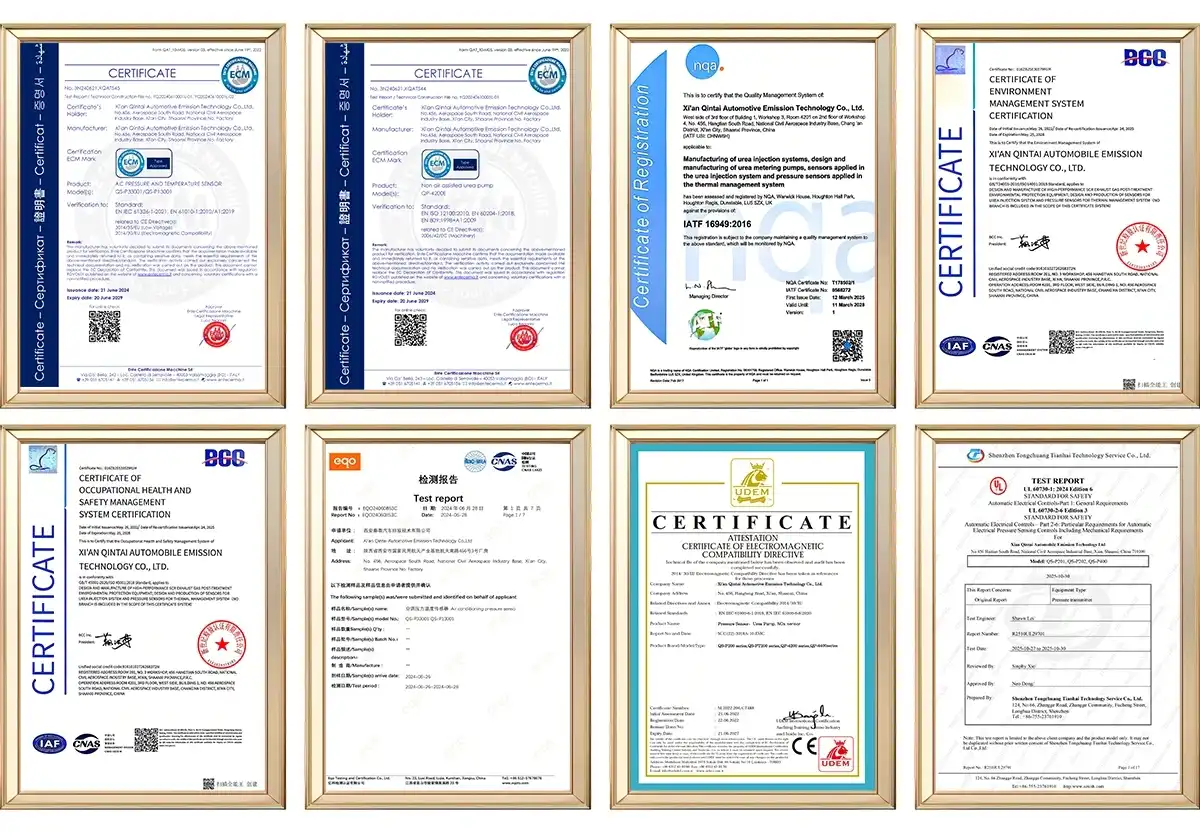
Purchasing teams are often told to cut costs on parts, but a cheaper sensor that doesn't work the same way every time can cost a lot more to maintain over three to five years. Instead of just looking at unit price, the right way to evaluate is to compare the total cost of ownership. Failure rate statistics, warranty terms, the availability of replacement parts, and the supplier's track record in mass production projects are some things to think about. For OEM-grade purchases, certifications like CE, RoHS, UL, and IATF16949 must be present.
Customization and Bulk Procurement Options
OEM programs and system developers often need sensors that don't come in normal catalog sizes or with certain pressure ranges, connector types, or output signals. The time it takes to go from concept to production can be cut down by a lot if the supplier offers real OEM and ODM services.
When looking at different companies to buy the water pressure sensor from in bulk, you should look at their minimum order quantities, lead times, logistics support, and the quality of their technical documentation. Technical and supply chain risk are both lower when you work with a provider that has focused R&D capabilities and a history of being a Tier-1 OEM partner.
Connectivity and System Integration
Modern industrial platforms connect pressure tracking data to SCADA systems, IoT dashboards, and predictive maintenance tools more and more. Standard sensors with 4–20m rangeA outputs are easy to connect to current PLCs, and later versions that use CAN bus or IO-Link make diagnostics easier in smart factory settings.
Strong protocol compatibility and adjustable interface parameters make it easier for aftertreatment system integrators to build SCR or DPF solutions. This cuts down on the time it takes to integrate and the amount of technical work your engineering team has to do.

Benefits of Integrating Advanced Water Pressure Sensors in Your System
Real-Time Monitoring and Automated Protection
By putting pressure monitors across important fluid channels that have a continuous output, control systems can automatically react to changes in pressure before they cause mechanical damage. Sensors and Actuators released a study in 2022 that found predictive pressure tracking cut unplanned pump downtime in industrial water systems by as much as 34%. This level of automated protection means that generator sets in mines or backup power plants will be up and running more often and cost less to fix.
Reduced Maintenance Costs
Maintenance teams spend less time looking for false alarms or recalibrating equipment when sensors give accurate readings over the course of their rated service life. High-cycle-tested parts with completely sealed housings that have been checked for helium leaks keep their accuracy without needing to be fixed often.
These performance traits deal with one of the most common problems in industrial procurement: the secret cost of parts that don't work right and break down early. When sensors pass strict quality control tests for mechanical wear, high-pressure impulse, temperature cycling, and electricity load, they save money over a number of years of service.
Future-Ready Data Integration
The flow of pressure data collected by the water pressure sensor into IoT platforms helps with trend analysis, finding outliers, and planning maintenance based on conditions. Companies that make environmental protection tools that manage systems that treat industrial exhaust gasses can get more accurate readings of pressure across fluid circuits. These readings then go straight into the design of the whole system, which improves both the accuracy of detection and the compliance of reporting.
Troubleshooting and Best Practices for Water Pressure Sensor Installation and Maintenance
Common Issues and Root Causes
The three most common problems in the field are sensor drift, fake results, and wear that starts too soon. Drift is usually caused by diaphragm wear or stress from temperature cycling. A lot of the time, false readings happen because of electrical noise coupling into the signal wire or air pockets stuck near the sensing port. When sensors are put in places with a lot of shaking and don't have solid-state output stages or softened sensing elements, mechanical wear speeds up.
Step-by-Step Installation Guide
Choosing a mounting spot that limits vibrations and keeps air from getting trapped is the first step in a proper installation. Thread connections should be kept closed with PTFE tape or thread compound that is made for the fluid being used. To cut down on electromagnetic interference, signal lines should be kept separate from power connections. Before starting up the system, do a zero-point adjustment with a known reference pressure after the system has been physically installed. Write down the initial calibration standard so that you can compare it in the future.
Maintenance Checklist
Between replacement rounds, routine upkeep keeps sensors working as they should. Here is a useful basis for inspections:
- Every 6 months: Inspect housing for corrosion, check connector integrity, and verify output signal against a calibrated reference gauge.
- Every 12 months: Perform full recalibration; replace diaphragm seals if process fluid is aggressive.
- At replacement threshold: If drift exceeds ±1.5% FS during recalibration, replace the unit rather than recalibrate — mechanical fatigue at that stage is typically irreversible.
Sticking to this schedule increases the life of the sensor and stops the chain of failures that happen when you ignore the gradual loss of measurement accuracy.
Conclusion
It's important to make sure that the technical specs of the water pressure sensor you choose (accuracy, pressure range, material compatibility, ingress protection, and output signal) match the needs of your system. Industrial and OEM uses are more important than domestic ones, so certification qualifications, long-term stability data, and the production capacity of the provider are what matter. Using the evaluation factors talked about in this piece, procurement and tech teams can find sensors that will work well for the whole time their equipment is in use.
FAQ
How often should I calibrate my pressure sensor?
For industrial uses, the standard time between recalibrations is one year. In settings with a lot of cycles or chemicals that are bad for you, you may need to re-calibrate every six months. Always record the results and compare them to a standard device that can be tracked.
What is the difference between a water pressure sensor and a flow sensor?
A pressure monitor sends out a proportional response based on the force per unit area in a fluid system. A flow monitor finds out how fast a stream is moving by measuring its volume or mass. The two parameters are linked but different, and many systems use both to give full process insight.
Are wireless pressure sensors as accurate as wired models?
While wireless sensors have come a long way in terms of accuracy, wired models are still better in industrial settings with a lot of electrical noise. Wired sensors with shielded wires are still the best choice for OEM and heavy-machinery uses that must have signal integrity.
What materials should I specify for corrosive media?
For exposure to harsh fluids or seawater, choose wet materials like titanium, 316L stainless steel, or chemically resistant plastics like PVDF. Check with the seller to make sure the media will work before you place the order.
How do I prevent rapid cycling or "chatter"?
Choose a sensor switch that has a built-in time-delay function or hysteresis that can be changed. The switch won't keep going off at the set-point limit if there is a hysteresis band of at least 2–5% of full scale.
Partner with Qintai for Precision Water Pressure Sensor Solutions
Since 2001, Qintai has been supplying OEM-grade pressure sensors to major diesel engine brands. The company has IATF16949, CE, UL, and RoHS certifications and has filed 58 invention patents. Weichai Power, Yuchai Power, and Quanchai Power trust us to make water pressure sensors, and we can do full OEM/ODM design, mass production, and fast shipping to customers in over 60 countries. Visit qt-sensor.com or email our technical team at info@qt-sensor.com to get a quote or product details right away.
References
1. Sensors and Actuators A: Physical — Elsevier, 2022.
2. Industrial Pressure Measurement: Fundamentals and Practice — ISA (International Society of Automation), 2020.
3. SAE Technical Paper: Pressure Sensing in Diesel Aftertreatment Systems — SAE International, 2021.
4. IEEE Transactions on Industrial Electronics: Sensor Calibration Methods for Heavy-Duty Applications — IEEE, 2019.
5. Journal of Loss Prevention in the Process Industries: Fluid System Monitoring and Failure Prevention — Elsevier, 2021.
6. ASME Journal of Pressure Vessel Technology: Diaphragm Fatigue and Long-Term Sensor Accuracy — ASME, 2020.

Our customers’ satisfaction speaks for our quality — contact us to experience the same reliable service.