- English
- French
- German
- Portuguese
- Spanish
- Russian
- Japanese
- Korean
- Arabic
- Greek
- German
- Turkish
- Italian
- Danish
- Romanian
- Indonesian
- Czech
- Afrikaans
- Swedish
- Polish
- Basque
- Catalan
- Esperanto
- Hindi
- Lao
- Albanian
- Amharic
- Armenian
- Azerbaijani
- Belarusian
- Bengali
- Bosnian
- Bulgarian
- Cebuano
- Chichewa
- Corsican
- Croatian
- Dutch
- Estonian
- Filipino
- Finnish
- Frisian
- Galician
- Georgian
- Gujarati
- Haitian
- Hausa
- Hawaiian
- Hebrew
- Hmong
- Hungarian
- Icelandic
- Igbo
- Javanese
- Kannada
- Kazakh
- Khmer
- Kurdish
- Kyrgyz
- Latin
- Latvian
- Lithuanian
- Luxembou..
- Macedonian
- Malagasy
- Malay
- Malayalam
- Maltese
- Maori
- Marathi
- Mongolian
- Burmese
- Nepali
- Norwegian
- Pashto
- Persian
- Punjabi
- Serbian
- Sesotho
- Sinhala
- Slovak
- Slovenian
- Somali
- Samoan
- Scots Gaelic
- Shona
- Sindhi
- Sundanese
- Swahili
- Tajik
- Tamil
- Telugu
- Thai
- Ukrainian
- Urdu
- Uzbek
- Vietnamese
- Welsh
- Xhosa
- Yiddish
- Yoruba
- Zulu
Why 304 Stainless Steel Transmitters Last Longer in Industry
When accurate tracking is needed for industrial processes, picking the right materials for your sensor equipment becomes very important. A Pressure and Temperature transmitter made of 304 stainless steel lasts a very long time because it is a chromium-nickel alloy that doesn't rust, can handle high temperature changes, and keeps its shape under tough working conditions. Unlike transmitters made of mild steel or aluminum, 304 stainless steel units keep correct readings for longer periods of time, which lowers the need for calibration and upkeep costs. This choice of material directly leads to less equipment breakdowns, longer replacement intervals, and a lower total cost of ownership. This is especially helpful for diesel engine manufacturers, aftertreatment system integrators, and generator set operators who need reliable, long-lasting instruments that help them follow strict emission regulations.
Understanding Pressure and Temperature Transmitters in Industry
For industrial measurement, complex machines are needed to turn real factors into signals that can be read. Modern dual-function receivers combine both sensing functions into small units, which makes installations easier and makes it easier to match up data.
Core Functions of Dual-Parameter Transmitters
These devices measure and keep an eye on pressure and temperature all the time, sending exact signals to safety controls or process automation systems. They keep important machines like gasoline engines, pumps, and compressors safe from burning or high pressure. Dual-parameter receivers are essential parts of industrial automation infrastructure because they make sure that processes are efficient and products are of high quality in both energy and manufacturing systems.
Sensing Technology Variations
For different uses, different testing methods are needed. There are mechanical ways to sense pressure that use diaphragms and other elastic parts to change force into movement, and there are also electronic ways that use piezoresistive, piezoelectric, or capacitive principles to directly create electrical signs. Resistance temperature detectors (RTDs) use changes in metal resistance, thermocouples create an electric field at the joints of different metals, or semiconductor sensors respond to changes in resistivity that depend on temperature. By knowing these basic differences, procurement workers can better match the capabilities of transmitters with the needs of different industries, such as oil and gas, HVAC, automobiles, and hydraulics.
Integrated vs. Separated Sensor Architectures
Integrated temperature sensors have a thermal probe (either a thermocouple or a thermal resistor) and solid-state electronics that are built right into the junction box. In this setup, there is no external wiring between the sensor and the emitter. This makes installation easier and lowers the risk of failure. Different types of thermal resistors have reference units, circuits that change resistance to voltage, and linearization circuits that fix nonlinear temperature-resistance relationships before sending out standard 4-20mA signals.
Thermocouple versions have cold-end compensation and wire-breakage safety that raises the output to its highest level. This lets workers know about sensor problems before the control system fails. Whether you choose an integrated or a separated design relies on how much room you have, how easy it is to do upkeep, and how redundant your system needs to be.
Why Material Quality, Especially 304 Stainless Steel, Matters for Transmitters?
The choice of material has a big impact on whether your measuring tools will live or break in commercial settings. 304 stainless steel is made up of chromium and nickel, which together form an inactive oxide layer that fixes itself when it gets scratched, protecting it from rust all the time.
Superior Corrosion Resistance in Harsh Environments
In industrial settings, pressure and temperature transmitters are exposed to various chemicals including engine oil, POE oil, refrigerants, water, and gases. The 304 stainless steel housings of quality pressure and temperature transmitters contain 18% chromium and 8% nickel, forming a passivation layer that resists acidic attack far better than mild steel or aluminum. In diesel aftertreatment systems, where pressure and temperature transmitters contact exhaust gases, urea solutions, and combustion byproducts, this chemical stability is invaluable.
Fuel contaminants and airborne moisture also challenge pressure and temperature transmitters in generator sets operating in mines or backup power roles. Material degradation directly reduces measurement accuracy and shortens calibration intervals, making corrosion-resistant construction for pressure and temperature transmitters mandatory rather than optional.
Mechanical Strength Under Pressure and Temperature Extremes
304 stainless steel is not only resistant to chemicals, but it also keeps its shape over a wide range of temperatures. Materials that don't crack or expand when heated or cooled need to be able to handle temperatures between -40°C and 130°C. The austenitic crystal structure of 304 stainless steel keeps its sharpness and ability to bend even at very low temperatures. It also keeps its strength at high temps. This mechanical stability makes sure that the sensing element stays the same size, so pressure readings don't change when the case deforms.
Heavy trucks and construction equipment vibrate, shock, and spike in pressure, which speeds up the failure of materials that are easily broken or worn down. 304 stainless steel's high yield strength and ability to work-harden allow it to handle these mechanical loads without permanently changing shape. This makes it last a lot longer in use.
Real-World Performance Evidence
Field data from the use of farming tools shows how useful material picking is in real life. When put into hydraulic systems, transmitters with 304 stainless steel housings last 40% longer on average before breaking down than peers with aluminum bodies working in the same conditions. In the same way, HVAC system designers say that guarantee claims go down when stainless steel refrigerant sensors are used. They say this is because the sensors keep their seals better and there is less galvanic corrosion at the electrical connections. These measured differences in performance back up the extra cost of the material, especially for OEMs that want to make sure their products last a long time and aftermarket parts sellers that want to make sure their parts don't break down often.
Common Challenges with Non-Stainless Steel Transmitters and How 304 SS Solves Them?
Cutting costs by using cheaper materials leads to expected failure patterns that raise the total cost of ownership. Knowing about these weaknesses helps make the case for proper material selection.
Accelerated Corrosion and Sensor Drift
When mild steel housings are exposed to condensation or acidic process media, rust scales form on them within months. This oxidation breaks down electrical connections, lets in contaminating particles, and eventually gets through external seals. Aluminum alloys work better in neutral pH environments, but they rust when they come into touch with other metals or chloride-rich environments. The galvanic cells that form speed up the loss of material at key points. These ways of breaking down things force early replacement and raise the frequency of tuning because corroded surfaces change the shape of the pressure hole. 304 stainless steel doesn't fail in these ways because it self-passivates, so the original dimensions stay the same even after long periods of use.
Vulnerability to Thermal Cycling and Vibration
Heating and cooling many times puts thermal pressures on the edges of materials, especially where different expansion factors cause strain to build up. Differential expansion makes brass parts that are threaded into aluminum bodies come loose, which damages the pressure seals. In the same way, joints in compound structures that are brazed or soldered break when they are heated up. These effects are made worse by vibrations from diesel engines, compressors, or mobility equipment, which speeds up joint breakdown. Thermal expansion mismatches can't happen with monolithic 304 stainless steel construction or welded structures using matched filler metals. This makes the attachments strong enough to survive millions of thermal and vibration cycles without breaking down.
Maintenance Cost Escalation
It may seem like cheaper materials save money upfront, but for pressure and temperature transmitters, frequent recalibration, shorter replacement intervals, and emergency repairs quickly erase any initial savings. When procurement teams focus only on unit cost, they overlook these long-term expenses—which typically exceed the price premium of better materials within the first year of service. Technical managers responsible for system uptime recognize this false economy and specify pressure and temperature transmitters with 304 stainless steel construction to reduce maintenance burdens. Material choice is especially critical for pressure and temperature transmitters deployed in remote locations like mine generator sets or offshore platforms, where service call costs far exceed component prices.

Procurement Considerations: Choosing 304 Stainless Steel Transmitters for Industrial Use
To choose the right instruments, you have to balance technical requirements, price limits, and the supplier's skills. This difficult decision-making process is sped up by using a structured review system.
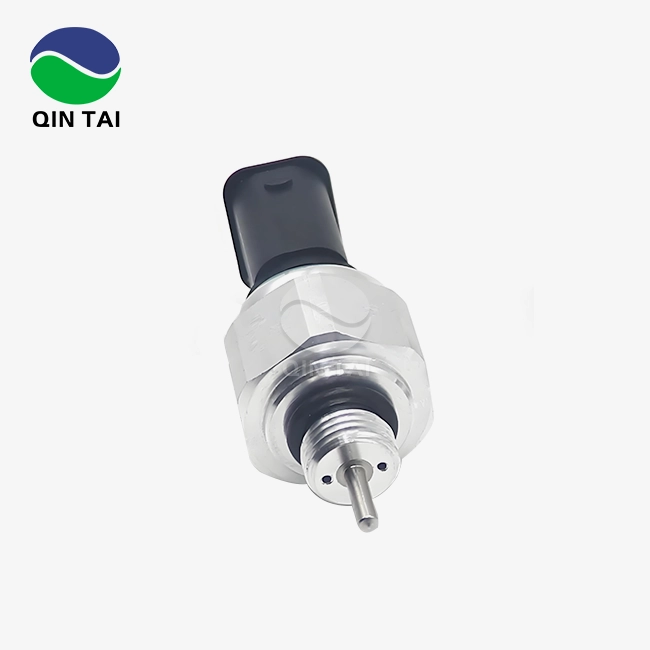
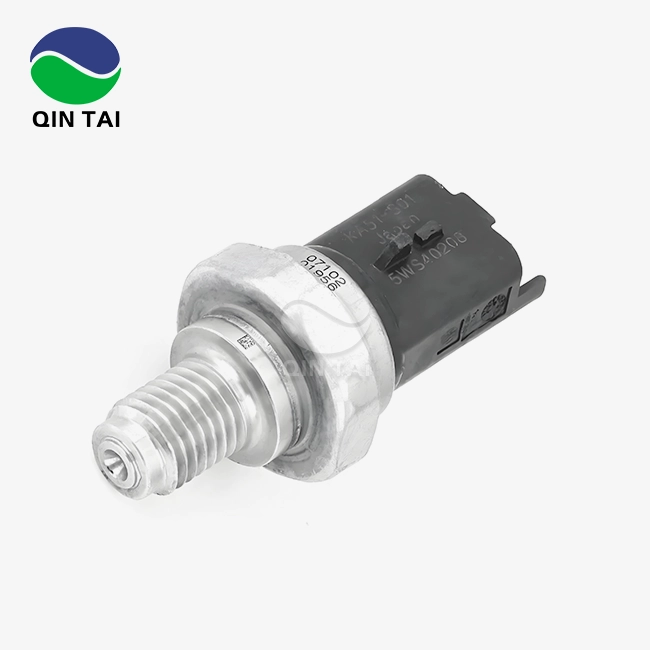
QS-PT225: Integrated Dual-Parameter Solution
The QS-PT225 from Qintai is a great example of a modern combined design because it measures both pressure and temperature in a small box. The ceramic pressure sensor is accurate to within ±1% of full scale over a range that can be customized from 0-5 Bar to 0-40 Bar. The NTC thermistor, on the other hand, gives equally accurate temperature data within ±1% of full scale across a working range of -40°C to 130°C.
When you use separate sensors in different places, measurement correlation errors can happen. This dual-output setup gets rid of those mistakes. With reverse polarity safety and 32V overvoltage capability, the probe and case are made of 304 stainless steel, which means they will last a long time in harsh industrial settings. The QS-PT225 makes it easier to connect diesel engines, hydraulic systems, HVAC equipment, and generator sets because it has a standard 0.5V-4.5V DC output and works with a number of process connections (G1/4, M12x1.5, and M10x1).
Here are the main benefits this tool gives your business:
- Space-Saving Design: Using one device instead of two separate sensors makes installation easier and saves valuable space in tight equipment installations. This is especially helpful in engine areas that are already full or hydraulic lines that aren't very big.
- Enhanced Measurement Precision: The combined design gets rid of correlation mistakes between different sensors placed in different places. This gives synchronized data that makes control algorithms and superheat calculations more accurate.
- Cost-Effective Implementation: This option is affordable for both new equipment making and aftermarket retrofit projects because it has lower installation costs, simpler wiring, and easier upkeep processes.
- Robust Industrial Construction: The development of 304 stainless steel ensures longer service life in tough mechanical settings, as it can handle burst pressures of up to 10MPa and work with different pressure media, such as engine oil, refrigerants, and hydraulic fluids.
Critical Certification and Compliance Factors
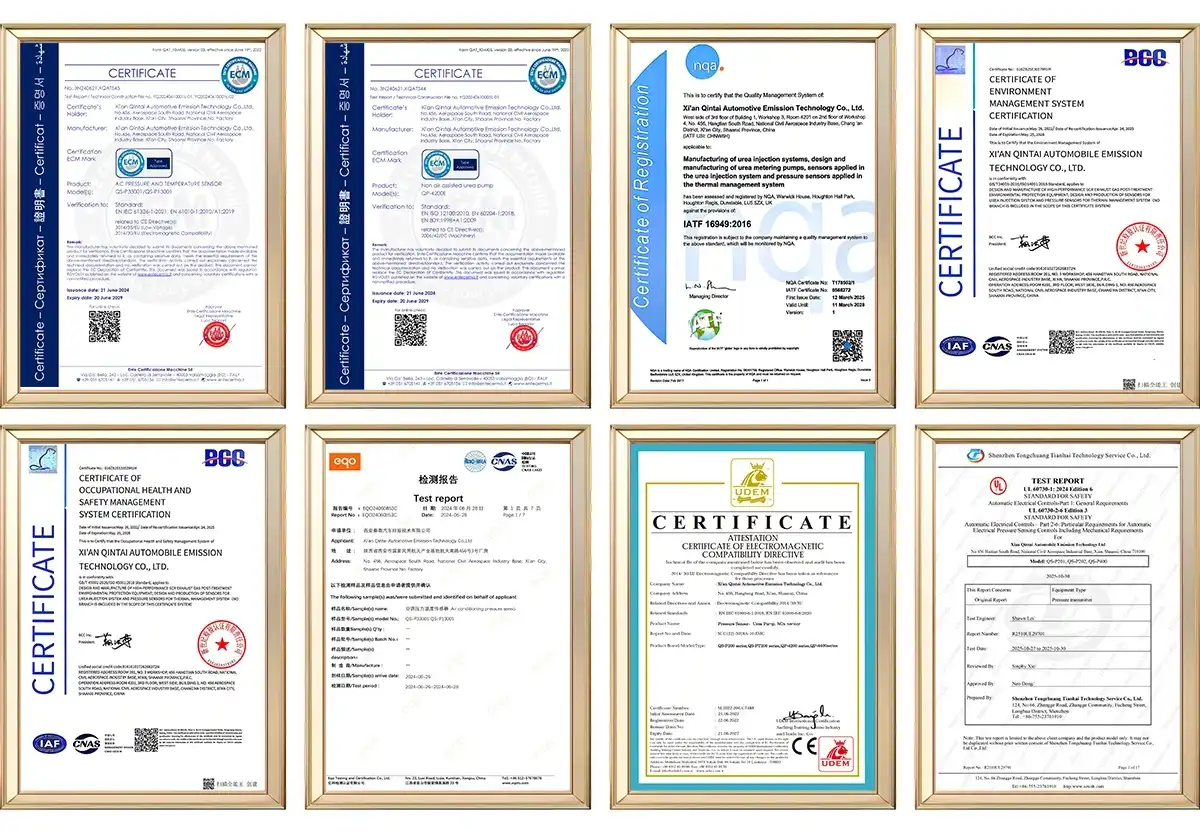
When technical teams choose which sensors to use, they need to make sure that the goods they're considering have the right certifications for the environments where they will be used. In oil and gas activities, dangerous areas must now have explosion-proof grades. Automotive suppliers need to make sure that their quality systems are in line with IATF16949, while general industry uses need ISO9001 approval as a minimum standard.
Access to international markets is based on regional approvals, such as CE marking for use in Europe, UL recognition for use in North America, and REACH/RoHS compliance for environmental rules. Qintai has these important approvals, as well as CMC and Ex grades, which puts our products in a good situation for global OEM partnerships and aftermarket sales. When making supplier deals, purchasing teams should check the certification's validity and scope to make sure it covers the right things for the job.
Supplier Reliability and Technical Support Skills
In addition to looking at the specifications of the product, a supplier's manufacturing capacity, quality consistency, and quick expert help must also be looked at. OEM users who need to be able to make a lot of things need partners who can show stable output numbers and statistical process control. It is the top original equipment manufacturer (OEM) seller of diesel engine sensors in China and a key supplier to Weichai Power, Yuchai Power, and Quanchai Power. Qintai has approved production lines that can handle big orders while keeping tight tolerances.
Our independent research and development team and 58 invention patents show that we are always coming up with new ideas to meet the needs of custom interfaces and parameter changes. When procurement managers set up key supplier relationships, this mix of size, quality systems, and engineering tools builds the kind of long-term cooperation they're looking for.
Installation and Maintenance Best Practices for 304 Stainless Steel Transmitters
The natural longevity benefits of high-quality materials are maximized by following the right installation and regular upkeep steps. Even strong 304 stainless steel needs to be handled correctly to last as long as the manufacturer says it will.
Correct Mounting and Connection Procedures
Thread contact depth and torque values have a direct effect on the strength of the seal and how the stress is distributed for a pressure and temperature transmitter. The QS-PT225 pressure and temperature transmitter recommends a fixing torque of 10–20 N·m. If the torque is too low, leaks can happen, and if it's too high, ceramic sensors inside the pressure and temperature transmitter can break or sealing surfaces can become deformed. Thread seals for the pressure and temperature transmitter must be able to work with both process media and sensor materials.
They shouldn't contain any chemicals that damage polymer O-rings or make particles get into the system. Electrical connections on the pressure and temperature transmitter need strain relief to keep wires from wearing out from shaking, and cable openings need to be properly sealed to keep water out, which damages electronics. When adding a pressure and temperature transmitter to existing setups, make sure the threads are compatible and the pressure hole volume is correct. Mismatches can change how the damping works and how fast the pressure and temperature transmitter responds.
Calibration Protocols and Accuracy Verification
For measurements to stay accurate over their entire useful life, they need to be checked for accuracy on a regular basis. During commissioning, use approved reference standards that can be traced back to national metrology centers to take baseline readings. Keep track of these numbers and the weather, since temperature and humidity can change electrical zero points. Set recalibration times based on how important the application is: check for key safety tasks every month, process control every three months, and general monitoring once a year. To find drift early, do functional checks in between official calibrations by comparing results to redundant sensors or process expectations. The QS-PT225's precision standard of ±1.0% allows for some drift over time while still keeping uncertainty levels low enough for most commercial uses.
Preventive Maintenance and Early Failure Detection
Visual checks find problems as they start to form before they become functionally obsolete. Check for rust products at the connections, housings that are broken, and moisture building up in the bodies of the connectors. By checking the source voltage, output signal levels, and insulation resistance with electrical measures, you can tell when wiring is breaking down or a component is old. When you look at the trend of sensor outputs over time, you can see patterns of slow shift that show they need to be calibrated or are about to fail.
When working in difficult conditions with particle contamination or chemical exposure, it is better to check things more often so that built-up layers don't change how well they handle heat or pressure. Even though 304 stainless steel is naturally strong, routine preventative maintenance makes it last longer and keeps important uses from having to deal with unexpected downtime.
Conclusion
Material choice has a big effect on how long a pressure and temperature transmitter lasts, how reliable its measurements are, and how much it costs to own in commercial settings. 304 stainless steel construction in the pressure and temperature transmitter has measured performance advantages over other materials because it is resistant to corrosion, strong, and stable at high temperatures. These advantages build up over normal 5–10 year service lives for the pressure and temperature transmitter. Integrated designs like the QS-PT225 pressure and temperature transmitter combine these material advantages with current ceramic sensor technology and the ability to measure two parameters at the same time.
This makes the most of limited space while also increasing the accuracy of the data. Professionals in procurement who compare original costs to long-term costs find that the small extra cost for high-quality materials pays for itself many times over in lower upkeep costs, fewer failures, and longer periods of time between replacements. As pollution rules get stricter and systems get more complicated, diesel engine makers, aftertreatment integrators, and equipment workers all over the world need reliable instruments more than ever.
FAQ
How does 304 stainless steel specifically extend transmitter lifespan?
The chromium-nickel alloy creates an inactive oxide layer that fixes itself when it gets broken. This keeps the metal from rusting for the whole life of the product. This stops the gradual breakdown of the material that leads to changes in size, failed seals, and issues with electrical connections in housings made of mild steel or aluminum. The mechanical qualities of the material keep the structure strong even when it is vibrating and under constant pressure. This stops fatigue cracks from forming, which could affect the accuracy of measurements or lead to catastrophic fails.
Can existing transmitters be upgraded with 304 stainless steel components?
Most of the time, it's not possible to retrofit sensor housings because the sensing element, housing, and electronics are all built into one unit. The safest way to update is to replace the whole unit, especially when switching from pressure and temperature monitors that are separate to dual-parameter transmitters like the QS-PT225 that are built in. This method takes into account both changes in the materials and the benefits of new sensing technology.
What certifications should buyers check when sourcing industrial-grade receivers?
Quality management certifications, such as ISO9001 and IATF16949, make sure that the production method is always the same. For systems in areas that could explode, hazardous location approvals like ATEX, IECEx, or explosion-proof grades are needed. Regional safety marks, such as CE, UL, RoHS, and REACH, show that a product meets the rules for specific areas. Ask for up-to-date certification papers and make sure the scope fits the needs of your application.
Partner with a Trusted Pressure and Temperature Transmitter Manufacturer
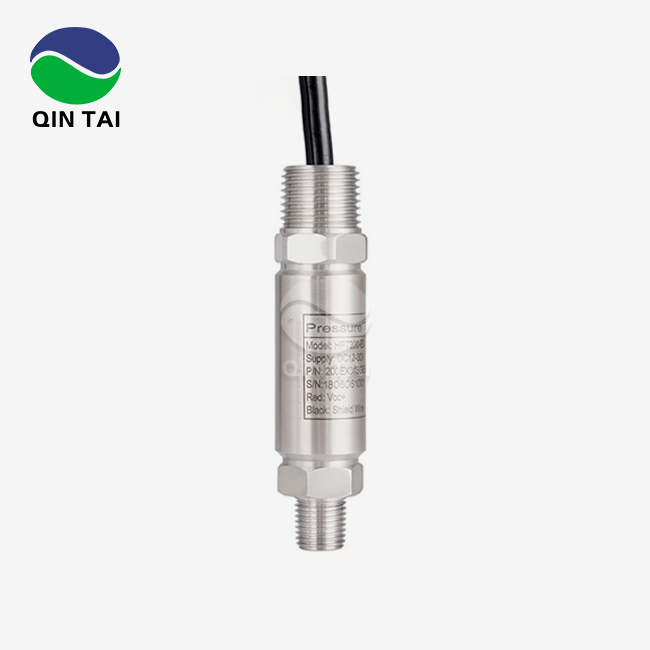
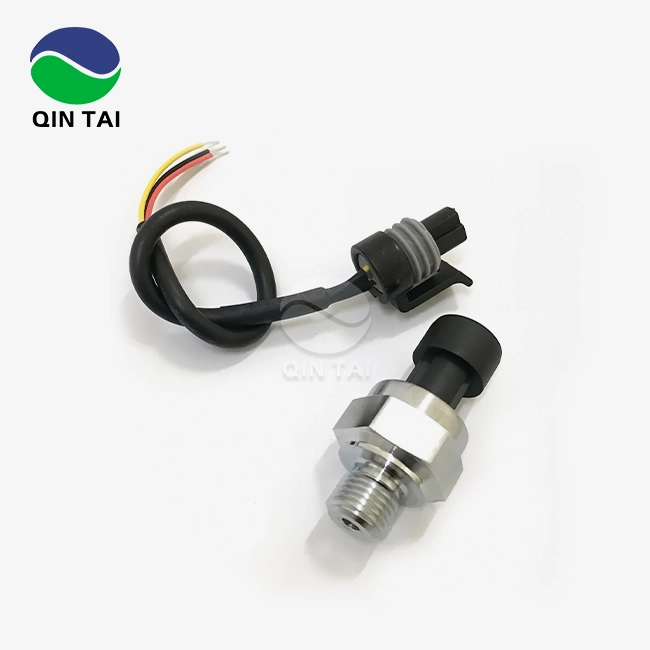
Qintai has more than 20 years of experience in industrial measurement tools and monitors that control diesel engine emissions. Our QS-PT225 dual-parameter emitter is made of tested 304 stainless steel and uses cutting edge ceramic sensor technology to give your operations the dependability and accuracy they need. As a qualified producer with ISO9001, IATF16949, and other foreign approvals, we help OEM customers and aftermarket providers by offering flexible configurations, quick technical support, and the ability to produce large quantities.
Our research team works with clients to make sure that the sensor specs are perfect for each application. This makes sure that the sensors work well for a long time and don't need to be replaced. You can talk to our procurement experts at info@qt-sensor.com about your measurement problems, get full specs, or set up a sample review of our Pressure and Temperature transmitter for industrial use.
References
1. ASM International. (2018). Stainless Steels for Design Engineers. Materials Park, OH: ASM International.
2. Lipták, B.G. (2016). Instrument Engineers' Handbook: Process Measurement and Analysis (5th ed.). Boca Raton, FL: CRC Press.
3. Bentley, J.P. (2005). Principles of Measurement Systems (4th ed.). Harlow, England: Pearson Education Limited.
4. Society of Automotive Engineers. (2020). Surface Vehicle Standard J1979: E/E Diagnostic Test Modes. Warrendale, PA: SAE International.
5. American Society of Mechanical Engineers. (2019). ASME PTC 19.2: Pressure Measurement Performance Test Codes. New York, NY: ASME.
6. International Organization for Standardization. (2017). ISO 15500: Road Vehicles—Compressed Natural Gas Fuel System Components. Geneva, Switzerland: ISO.

Our customers’ satisfaction speaks for our quality — contact us to experience the same reliable service.