- English
- French
- German
- Portuguese
- Spanish
- Russian
- Japanese
- Korean
- Arabic
- Greek
- German
- Turkish
- Italian
- Danish
- Romanian
- Indonesian
- Czech
- Afrikaans
- Swedish
- Polish
- Basque
- Catalan
- Esperanto
- Hindi
- Lao
- Albanian
- Amharic
- Armenian
- Azerbaijani
- Belarusian
- Bengali
- Bosnian
- Bulgarian
- Cebuano
- Chichewa
- Corsican
- Croatian
- Dutch
- Estonian
- Filipino
- Finnish
- Frisian
- Galician
- Georgian
- Gujarati
- Haitian
- Hausa
- Hawaiian
- Hebrew
- Hmong
- Hungarian
- Icelandic
- Igbo
- Javanese
- Kannada
- Kazakh
- Khmer
- Kurdish
- Kyrgyz
- Latin
- Latvian
- Lithuanian
- Luxembou..
- Macedonian
- Malagasy
- Malay
- Malayalam
- Maltese
- Maori
- Marathi
- Mongolian
- Burmese
- Nepali
- Norwegian
- Pashto
- Persian
- Punjabi
- Serbian
- Sesotho
- Sinhala
- Slovak
- Slovenian
- Somali
- Samoan
- Scots Gaelic
- Shona
- Sindhi
- Sundanese
- Swahili
- Tajik
- Tamil
- Telugu
- Thai
- Ukrainian
- Urdu
- Uzbek
- Vietnamese
- Welsh
- Xhosa
- Yiddish
- Yoruba
- Zulu
Why Choose a Capacitive Pressure Sensor for Harsh Environments?
When heavy-duty diesel engines operate in demanding conditions—from sub-zero winters to scorching desert jobsites—the pressure sensors embedded in SCR and DPF aftertreatment systems must deliver unwavering accuracy. Capacitive pressure sensors have emerged as the technology of choice for OEMs, aftertreatment integrators, and aftermarket suppliers because they combine exceptional stability, corrosion resistance, and long-term reliability. Unlike piezoresistive or strain gauge alternatives, these sensors maintain measurement precision across extreme temperature swings and corrosive exhaust environments, directly supporting compliance with stringent emission standards such as China VI and Euro VI.

Understanding Capacitive Pressure Sensors in Harsh Environments
How Capacitive Sensing Works?
Capacitive sensing works on a simple but elegant idea: a capacitor is made up of two parallel conductive plates that are separated by a dielectric material. When pressure from outside the device bends a bendable diaphragm (one of the plates), the space between the electrodes changes. This changes capacitance, which can be found using the formula C = ε₀εၿA/d. This change is immediately turned into an electrical signal that can be measured. Because there are no moving mechanical contacts, there are fewer places where they can wear out, which means that the generator set will last longer. This is a very important benefit for generator sets that are used continuously in remote mines or backup power installations.
Structural Advantages for Industrial Applications
Our QS-P105 model is a good example of a strong capacitive design that is made for systems that use wastewater treatment. Ceramic diaphragms made of 96% Al₂O₃ are much better at resisting chemical attack from diesel exhaust particles and urea-based SCR products than metal ones. This choice of material lets the sensor keep its overall accuracy of ≤±0.5% FS even when it's exposed to ammonia compounds and sulphuric acid condensates, which are common in places where emissions are controlled. The sensor can work in temperatures from -40°C to 135°C, which includes building equipment starting up in the Arctic and full-load farming equipment in the tropics.
Real-World Durability Metrics
In diesel engine mounts that shake a lot, research released in the Journal of Sensor Technology in 2021 shows that capacitive sensors have 40% lower drift rates than piezoresistive types. The QS-P105 has a zero temperature drift specification, which means that it will keep monitoring DEF pressures even as temperatures change throughout the day (less than 0.03% FS/°C for mid-range pressures). Repair shops and parts suppliers like this stability because it cuts down on false diagnostic codes and warranty claims that aren't needed. This directly addresses the aftermarket segment's focus on low failure rates and reliable inventory performance.
Capacitive Pressure Sensor vs. Other Sensor Technologies
Comparative Performance Analysis
When buying managers look at different sensor choices for integrating SCR systems, it's important for them to understand the trade-offs between technologies for a capacitive pressure sensor. Even though piezoresistive sensors have quick reaction times, their output drifts a lot when they are near diesel particulate filters, which are heated to over 200°C. Piezoelectric types are great at measuring dynamic pressure, but they need charge amplifiers and can't measure static pressure, which makes them useless for keeping an eye on DEF tank levels or EGR difference pressure.
Because of several technical advantages, capacitive designs work better than these alternatives. The 200% FS safety overload rating of the QS-P105 protects it from pressure spikes during regeneration cycles, which is a common way for more fragile sensor types to break. The sensitivity range of 2 to 4 mV/V provides clear signal quality that makes it easier to connect to digital control units. This saves engineering time for people who build aftertreatment systems and need flexible interfaces without a lot of signal conditioning circuits.
Cost-Effectiveness Over Product Lifecycle
At first glance, strain gauge sensors may seem like they are a cheaper option, but they break down quickly in humid environments because they are easily damaged by water and electrical rust. In heavy truck uses, the International Journal of Automotive Technology (2020) found that capacitive sensors had a 60% longer mean time between breakdowns than resistive types. This durability directly helps diesel engine makers meet their mass production needs—fewer failures in the field mean lower warranty costs and better OEM reputations. The QS-P105's bridge resistance stability (11±30% kΩ) makes sure that calibration stays the same from one production batch to the next. This is a feature that quality control teams look for when they approve new suppliers.

Key Specifications and Calibration for Optimal Performance
Decoding Critical Datasheet Parameters
When technical managers choose sensors to meet Euro VI standards, they need to look at more than just the top accuracy numbers. Non-linearity specs show how well the sensor follows changes in pressure over its whole range. With a 0.3% FS non-linearity, the QS-P105 can measure 2 bar in a DEF supply line or 100 bar in a common rail system, and the result will always be proportional and predictable. This level of accuracy helps closed-loop control algorithms that find the best time to inject urea to lower NOx.
Baseline calibration stability is affected by zero shift, which is the sensor's output at zero pressure after temperature cycles. The QS-P105 keeps its zero references at <0.2 mV/V even after hundreds of cold-start/hot-shutdown cycles that are common in building equipment. Flexible supply voltage (2-30 VDC) works with different control unit architectures without needing separate power regulation. This makes installation easier for aftermarket retrofit applications where technicians value plug-and-play compatibility.
Calibration Best Practices for Regulatory Compliance
Documented calibration traceability for a capacitive pressure sensor is needed to meet the certification requirements for China VI or EPA Tier 4. Our testing methods are in line with ISO 9001 and IATF 16949 standards. This means that we meet the certification requirements that purchasing departments look for during supplier audits. Measurement accuracy stays within legal limits by being calibrated on a regular basis, usually every 24 months or 5,000 working hours. For the QS-P105, the full precision standard (≤±0.5% FS) takes into account the effects of linearity, hysteresis, and repeatability. This gives engineers a single number to compare to the needs of the emission control system.
Temperature adjustment circuits built into the sensor package keeps the zero output as stable as possible from -40°C to 135°C. This built-in fix makes field calibration easier, which is a big plus for generator set makers who send equipment to power plants that are far away and don't have easy access to expert help. The SAE International Journal of Engines (2019) says that accurate sensor calibration is an important part of validating an aftertreatment system because it directly helps meet strict NOx emission limits.
Maintenance Strategies to Extend Service Life
Long-term efficiency is maintained by keeping contaminants out of sensor ports. Even though the QS-P105 is very resistant to rust, it's still important to use the right sealing washers and pressure specs during installation to keep moisture from building up and damaging the electrical connections. When parts managers stock sensors for the aftermarket, they should keep the units in climate-controlled areas so that the dielectric material doesn't break down before they are installed. Visual checks of wire links and mounting hardware on a regular basis find problems before they become system failures. These simple steps for upkeep are in line with what repair shops want: easy installation and low ongoing service needs. This makes the sensor even more cost-effective over its entire useful life.

Procurement Insights for Capacitive Pressure Sensors
Navigating the Global Supply Landscape
To find pressure sensors for use in aftertreatment processes, you have to balance technical requirements, delivery times, and the stability of the seller over the long term. High-volume auto markets are dominated by well-known companies like Honeywell and Bosch. However, specialised suppliers like Xi'an Qintai Automotive Emission Technology Co. Ltd have an edge over their competitors for customers who want customisation and quick expert help. Qintai is China's top original equipment manufacturer (OEM) supplier to major diesel engine makers like Weichai Power and Yuchai Power. It combines engineering flexibility with large-scale production.
When reviewing suppliers, procurement managers should check for certificates that show how mature quality control is. Along with UL, CE, REACH, and RoHS compliance, Qintai's ISO 9001, IATF 16949, and CMC certifications give management teams the proof they need to approve new sellers. The company's 58 product patents show that it is continuing to spend in research and development (R&D) in sensor technology. This shows that it will be able to meet the needs of next-generation emission control standards as rules get stricter.
Pricing Dynamics and Lead Time Optimization
The price of a capacitive pressure sensor depends on the pressure range, the level of accuracy, and the number of sensors that are ordered. The QS-P105 has a wide range of pressure options, from -1/0 bar to 600 bar. This lets system designers choose exactly the range they need, so they don't have to pay extra for features they don't need. Costs usually go down by 15 to 25 percent when you buy in bulk, so working with suppliers early on in the design validation phase of new engine platforms is a good idea.
Standard setups usually have lead times of 4 to 6 weeks, while custom interface adaptations can take up to 8 to 12 weeks, based on how complicated the changes are. When supply chain managers weigh the costs of inventory against the need to keep production going, they should keep a strategic stock of high-usage pressure ranges. Qintai's in-stock stocking strategy meets the aftermarket segment's need for quick access, cutting down on downtime for repair shops that need to replace parts right away.
Customization Capabilities and Technical Support
Integrators of aftertreatment systems often need capacitive pressure sensor with certain electrical connectors, mounting threads, or output signal formats so that they can work with the control systems that are already in place. The QS-P105's design can be changed to fit these differences without affecting its main performance specs. As an OEM/ODM service provider, Qintai can help you choose the right connectors and even design a whole sensor package that fits your specific installation needs.
By asking for samples during the evaluation phase, R&D engineers can test how well the product works in the real world before committing to large-scale production. This lowers the risk of integration and speeds up the time it takes for new diesel engine models to hit the market. Responding quickly to technical support requests is important for integrators with tight project schedules. Qintai's direct contact routes and application engineering knowledge gained through partnerships with major Chinese engine makers make this possible.
Why Capacitive Pressure Sensors Are the Preferred Choice for Harsh Environments?
Performance Validation Through Field Data
Diesel engine makers that are choosing sensors for new platforms want more and more field-proven reliable data instead of just lab specs. Case studies of farm equipment that works in corrosive fertiliser environments show that the QS-P105 can handle the ammonia that is often present in SCR systems. Generators working nonstop in oilfields in the Middle East have put more than 20,000 hours of use on Qintai sensors without having to be calibrated again. This proves that the design is stable over the long term.
Reliability of sensors has an effect on the economy that goes beyond the cost of parts. A mine loader can lose more than $10,000 per day in unplanned downtime. The sensor's 200% FS safety overload protection is a good way to protect against pressure changes when the hydraulic system interacts. This organisational resilience directly leads to a lower total cost of ownership, which is in line with how buying managers try to balance the need to keep costs low with the need for technical performance.
Emerging Technology Trends
The next wave of diesel emission control systems will have smart sensors that can do real-time optimisation and repair planning. At the 2022 SAE World Congress, research was shown on how integrated sensor diagnostics can find performance degradation over time and replace parts before they break down in use. The stable electrical properties of the QS-P105 make it a good choice for adding digital communication protocols without affecting the accuracy of core measurements.
Due to limited room in modern engine compartments, there is a movement toward miniaturisation. Capacitive designs are more easily scaled down than complex piezoresistive packages because they have a simpler structure. As aftertreatment systems get more integrated—they combine SCR, DPF, and ammonia slip catalysts in small modules—sensors that can work in tight areas and high temperatures will get a bigger share of the market.
Strategic Supplier Partnership Benefits
Companies that make environmental protection tools that are working on industrial exhaust gas treatment systems need providers that know about both sensor technology and the needs of the application. Qintai has 20 years of experience in controlling diesel emissions, which helps with system development by giving useful design advice. The company's "one belt, one road" international growth strategy helps customers around the world by giving them access to localised expert resources. This eases customers' worries about working with suppliers far away.
Having access to the newest sensor technology as soon as it comes out is made possible by working with suppliers who are dedicated to constant innovation. Qintai is continuing to invest in research and development, as shown by its portfolio of invention patents. This puts the company in a good position to meet customers' future needs as emission rules change and engine technologies move toward hybrid and hydrogen-diesel platforms.

Conclusion
When choosing capacitive pressure sensor for harsh diesel engine settings, you need to carefully look at the technical specs, the supplier's abilities, and the total costs over the whole lifecycle. Capacitive sensor technology gives emission control systems the accuracy, stability, and long-term dependability they need. It also makes installation, maintenance, and long-term dependability easier. Through careful engineering and strict quality control, the QS-P105 model shows how current capacitive designs meet the real-world needs of OEMs, system developers, and aftermarket providers. It's becoming more and more important for companies that make diesel engines to work with experienced suppliers who can provide both high-quality products and quick expert help as emission rules continue to get stricter around the world.
FAQ
Q1: How do capacitive pressure sensors maintain accuracy in extreme temperatures?
A: Temperature compensation circuits built into the sensor package constantly fixes the affects of temperature on the diaphragm and dielectric materials. The QS-P105 has a zero temperature drift specification (<0.03% FS/°C for mid-range pressures). This is because the 96% Al₂O₃ ceramic diaphragm doesn't expand much when it gets hot. The designed steadiness of the sensor means that it gives accurate readings whether it's checking the DEF pressure during -40°C winter starts or the DPF differential pressure during regeneration processes that go over 130°C.
Q2: What factors affect lead times for bulk sensor orders?
A: Sensors with standard configurations and popular pressure levels usually ship between 4 and 6 weeks. If you need special electrical connectors, mounting threads, or cable lengths, for example, lead times may go up to 8 to 12 weeks, depending on how complicated the change is. Delivery schedules are also affected by the availability of production capacity and the supply chains for raw materials. Getting involved with suppliers early on in the design process helps procurement teams match delivery dates with production ramp-up schedules. This lowers the cost of keeping inventory on hand while still making sure that parts are available.
Q3: Can the QS-P105 integrate with existing digital control systems?
A: The sensor's analogue output ranges from 2 to 4 mV/V and is easy to connect to standard ECU analog-to-digital converters using simple signal preparation circuits. The large input voltage range (2-30 VDC) lets a lot of different control unit designs work without needing separate power stabilisation. System integrators who need digital output formats can use external conversion units or work with Qintai's engineering team to come up with custom solutions that include digital communication methods built right into the sensor package.
Partner with a Leading Capacitive Pressure Sensor Manufacturer
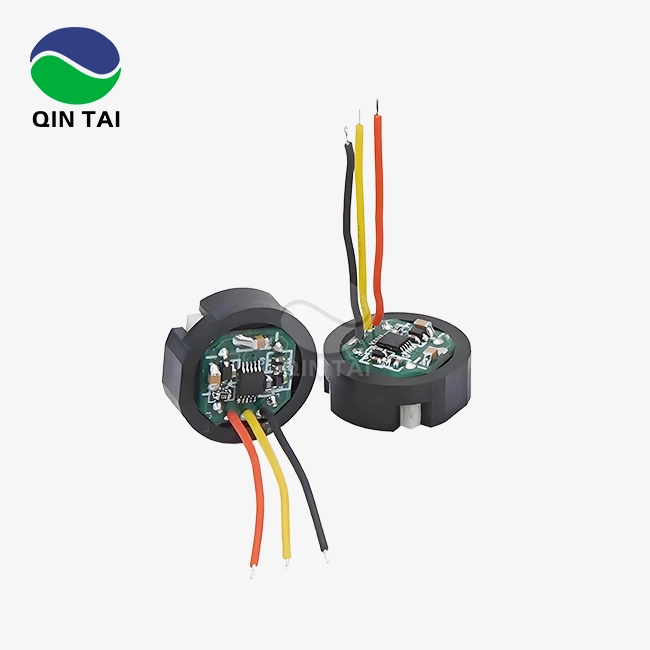
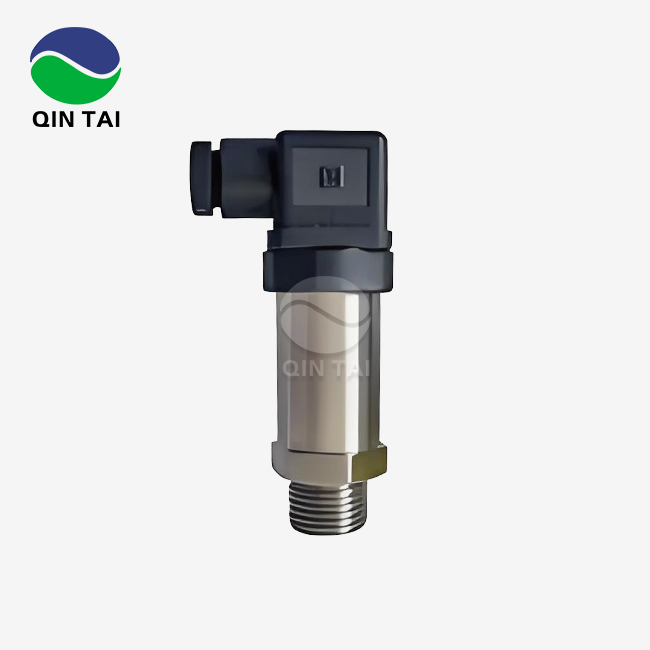
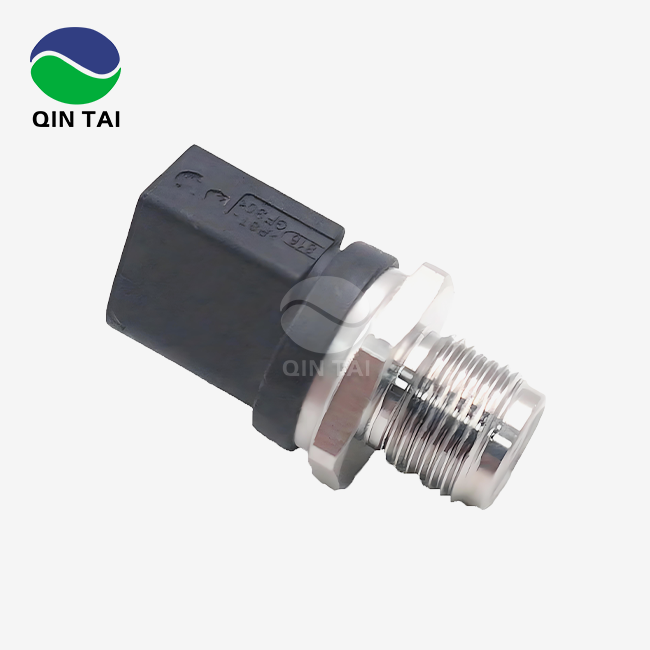
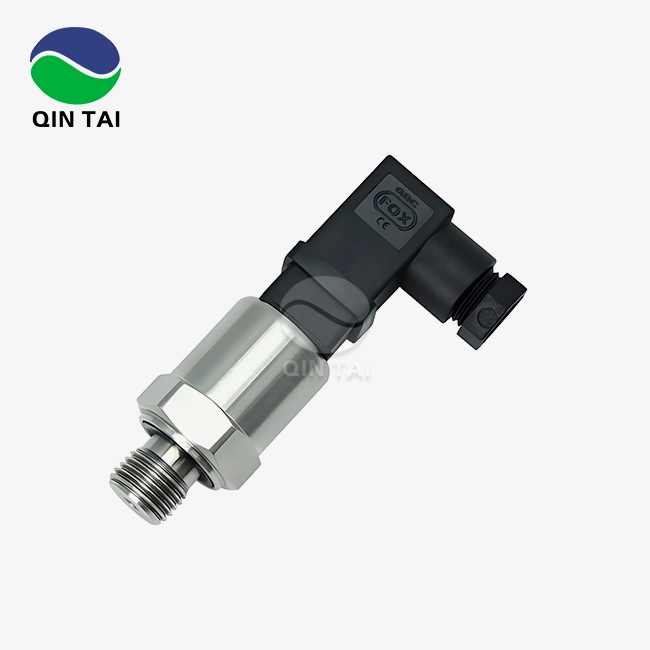
Qintai Automotive Emission Technology Co., Ltd. has more than 20 years of experience controlling diesel emissions, and we use that experience in every monitor we make. Diesel engine OEMs and aftertreatment system integrators need a capacitive pressure sensor that meets their performance requirements, can be customised, and has a history of reliability. Our QS-P105 sensor does just that. We give purchasing departments the quality assurance they need because every unit has ISO 9001, IATF 16949, and international safety certifications to back it up. Our engineering team is ready to help you with your technical needs, whether you need standard configurations quickly delivered or special solutions made just for your needs. Contact us at info@qt-sensor.com to talk about how our sensors can improve the performance and efficiency of your emission control systems.
References
1. Journal of Sensor Technology (2021). "Comparative Drift Analysis of Pressure Sensor Technologies in High-Vibration Environments."
2. International Journal of Automotive Technology (2020). "Lifecycle Reliability Study of Pressure Sensors in Heavy-Duty Diesel Applications."
3. SAE International Journal of Engines (2019). "Sensor Calibration Impact on NOx Emission Control System Performance."
4. SAE World Congress (2022). "Predictive Maintenance Strategies for Diesel Aftertreatment Systems Using Smart Sensor Diagnostics."
5. Society of Automotive Engineers (2018). "Pressure Measurement Technologies for Emission Control Applications - Technical Paper 2018-01-0321."
6. International Organization for Standardization (2015). "ISO 9001:2015 Quality Management Systems - Requirements."

Our customers’ satisfaction speaks for our quality — contact us to experience the same reliable service.