- English
- French
- German
- Portuguese
- Spanish
- Russian
- Japanese
- Korean
- Arabic
- Greek
- German
- Turkish
- Italian
- Danish
- Romanian
- Indonesian
- Czech
- Afrikaans
- Swedish
- Polish
- Basque
- Catalan
- Esperanto
- Hindi
- Lao
- Albanian
- Amharic
- Armenian
- Azerbaijani
- Belarusian
- Bengali
- Bosnian
- Bulgarian
- Cebuano
- Chichewa
- Corsican
- Croatian
- Dutch
- Estonian
- Filipino
- Finnish
- Frisian
- Galician
- Georgian
- Gujarati
- Haitian
- Hausa
- Hawaiian
- Hebrew
- Hmong
- Hungarian
- Icelandic
- Igbo
- Javanese
- Kannada
- Kazakh
- Khmer
- Kurdish
- Kyrgyz
- Latin
- Latvian
- Lithuanian
- Luxembou..
- Macedonian
- Malagasy
- Malay
- Malayalam
- Maltese
- Maori
- Marathi
- Mongolian
- Burmese
- Nepali
- Norwegian
- Pashto
- Persian
- Punjabi
- Serbian
- Sesotho
- Sinhala
- Slovak
- Slovenian
- Somali
- Samoan
- Scots Gaelic
- Shona
- Sindhi
- Sundanese
- Swahili
- Tajik
- Tamil
- Telugu
- Thai
- Ukrainian
- Urdu
- Uzbek
- Vietnamese
- Welsh
- Xhosa
- Yiddish
- Yoruba
- Zulu
How Do Capacitive Pressure Sensors Compare With Piezoresistive Types?
When selecting pressure measurement technology for diesel engines, aftertreatment systems, or heavy-duty equipment, understanding the differences between capacitive pressure sensors and piezoresistive types becomes essential. Capacitive sensors detect pressure through changes in electrical capacitance between two parallel plates, offering exceptional accuracy and temperature stability. Piezoresistive sensors, on the other hand, measure resistance changes in semiconductor materials under stress, delivering high sensitivity in dynamic conditions. Both technologies have distinct strengths: capacitive designs excel in precision and long-term stability, while piezoresistive variants respond rapidly to pressure fluctuations. Your choice depends on application requirements, environmental conditions, and total cost of ownership.

Understanding Capacitive and Piezoresistive Pressure Sensors
How Capacitive Pressure Sensors Work?
Variable capacitance is what makes capacitive pressure sensors work. One electrode is a flexible diaphragm that is placed next to a fixed electrode and separated from it by a dielectric layer. The gap distance changes when pressure is put on the diaphragm, which changes the capacitance directly using the formula C = ε₀εᵣA/d. Through special circuitry, this change in capacitance is turned into an electrical output. The design gets rid of motorised parts that move, which cuts down on wear and improves durability.
How Piezoresistive Sensors Function?
Piezoresistive sensors use semiconductors, usually silicon, whose resistance changes when mechanical stress is put on them. These changes in resistance are measured by a Wheatstone bridge setup, which gives voltage values that are proportional to the pressure that is being applied. These sensors are great for measuring quick changes in pressure in hydraulic systems or combustion chambers because they are sensitive and respond quickly thanks to the piezoresistive effect. Changes in temperature, on the other hand, can cause measurement shift, which needs to be fixed.
Core Differences Between the Two Technologies
The most important difference is in how they sense things. Capacitive sensors use electrostatics to measure movement, while piezoresistive sensors look for changes in resistance caused by strain. Most of the time, capacitive systems have better predictability and temperature stability, with nonlinearity values around 0.3% full scale. Piezoresistive devices are more sensitive to small changes in pressure, but they need to be temperature compensated for more carefully. The costs of making them are also different. For example, making capacitive sensors is often easier, which could lower the cost per unit in high-volume uses.

Detailed Comparative Analysis for Industrial Applications
Accuracy and Measurement Range
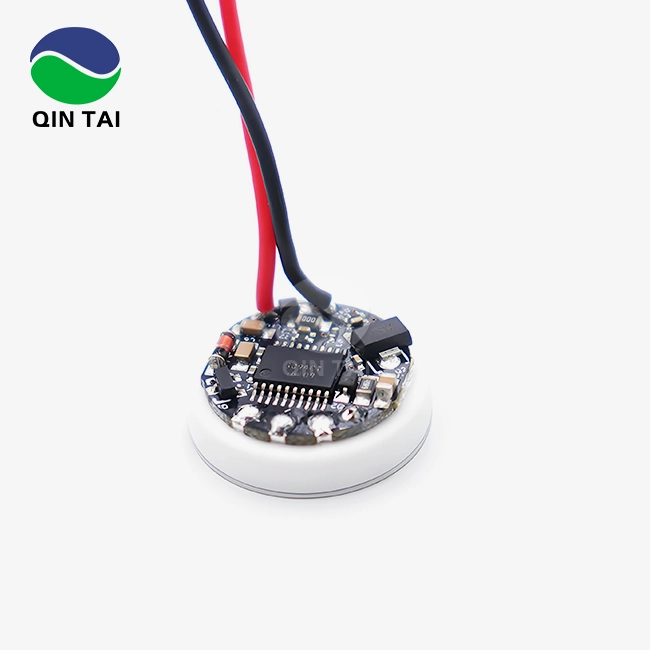
Different diesel engine and aftertreatment uses have different accuracy needs for a capacitive pressure sensor. With a nonlinearity of 0.3% FS and an overall accuracy of ±0.5% FS, our Model QS-P105F shows the benefits of capacitive technology. This precise amount meets the strict rules for monitoring emissions set by China VI and Euro VI. The sensor can measure pressures between -1 bar and 600 bar, so it can be used for a wide range of applications, from intake manifold vacuum to high-pressure fuel injection systems. Piezoresistive sensors can be just as accurate, but they might need to be calibrated more often, which could change repair plans and increase costs.
Environmental Resilience and Temperature Performance
Heavy trucks, construction equipment, and generator sets all have to work in harsh conditions. When sensors are used in temperatures ranging from -40°C to 135°C, temperature steadiness is very important. The QS-P105F keeps the temperature stable at less than 0.03% FS/°C for ranges up to 50 bar. This makes sure that results stay the same during weather changes and engine thermal cycles. The ceramic diaphragm material made of 96% Al2O3 is very good at resisting corrosion from exhaust gases and chemical contaminants. Even though piezoresistive sensors are strong, they usually have higher temperature coefficients that need active compensation circuits that use more power. This is something to think about for monitoring systems that run on batteries.
Vibration and Shock Resistance
Sensors in construction and farming equipment are constantly vibrating and being shocked by metal. Because capacitors are solid-state and don't have strain gauges attached to their diaphragms, they naturally don't pick up noise from vibrations. The 200% FS safety overload rating in the QS-P105F keeps pressure from rising when the engine starts or when the hydraulic system surges. When vibrations last for a long time, piezoresistive sensors can experience baseline drift, but newer designs have mechanical separation features to prevent this. Knowing these differences helps procurement managers choose sensors that will keep their settings over the life of the equipment.

Selecting the Right Pressure Sensor: Factors & Use Cases
Performance Metrics for Decision-Making
When choosing capacitive pressure sensor for OEM or SCR/DPF system integration, a number of factors are taken into account. Signal quality for electronics further down the line is based on sensitivity specifications, which are measured in mV/V. The 2-4.0 mV/V output of the QS-P105F gives you a good signal-to-noise ratio without amplifying too much. In closed-loop control systems, where pressure feedback drives actuator changes, response time is important. Repeatability makes sure that measurements are always the same over millions of cycles, which lowers the number of warranty claims and keeps vehicles in line with emission standards for the whole time they are being used.
Cost Considerations and Total Ownership
The initial price of a monitor is only one part of figuring out how much it will cost all together. Because they don't need to be calibrated as often and stay stable for longer, capacitive sensors often have lower total costs. Our QS-P105F's source voltage range of 2–30 VDC makes it easier to add to current electrical systems without adding extra voltage regulators. When energy efficiency is important, low power consumption is good for aftermarket uses. Manufacturing scalability is important for mass production, which is needed for OEM partnerships. Capacitive fabrication methods can handle high volumes with uniform quality standards.
Real-World Application Scenarios
In different fields, different sensor features are more important than others. Manufacturers of diesel engines like devices that can work continuously at high temperatures and still meet approval requirements. To finish projects on time, aftertreatment system designers need devices with quick shipping times and interfaces that can be changed. Generator set makers who work in mines or other remote areas need monitors that have been shown to be reliable for long periods of time without needing to be serviced. Customers in the commercial car aftermarket look for parts that are both cheap and easy for repair shop techs to install. Figuring out these situational needs makes it clear which technology—capacitive or piezoresistive—will work best for the job.
Market Overview and Leading Manufacturers
Honeywell, Bosch Sensortec, and TE Connectivity are well-known companies in the global pressure sensor market. Each focuses on a different technology base. Honeywell has product lines for both capacitive and piezoresistive in the industrial and vehicle markets. Bosch specialises in MEMS-based piezoresistive sensors for use in a lot of cars, while TE Connectivity makes ruggedised sensors for use in difficult conditions. Regional manufacturers are competing more and more by making specialised products and setting prices that are competitive.
Qintai Automotive Emission Technology Co., Ltd. From 2001 to now, Ltd has become China's top OEM provider of capacitive pressure sensor technology, working with Weichai Power, Yuchai Power, and Quanchai Power as key partners. Our 58 invention patents and ability to do independent research and development show that we know a lot about sensor technology. Quality systems that meet foreign standards are proven by certifications like ISO9001, IATF16949, and Ex approval. Our manufacturing capacity meets the needs for mass production while still allowing for customised solutions. This is exactly what major OEMs need for long-term partnerships.
Sourcing tactics should look at more than just the product specs to see what the supplier can do. Reliable lead times affect production schedules, and managing inventory depends on how well deliveries go all the time. Customisation support lets interfaces be changed to work with different control systems. Having responsive technical service during the integration phases lowers the risks of development. Logistics prices and the supply of spare parts in global markets are affected by distribution networks. Together, these factors decide how efficient the supply chain is, and they should be used to choose a provider along with technical comparisons.

Future Trends and Innovations in Pressure Sensing Technology
Miniaturization and Integration
Industry 4.0 projects increase the need for small, smart monitors that can communicate digitally. Smaller capacitive sensor units are now possible thanks to improvements in MEMS manufacturing. Putting signal processing inside sensor housings cuts down on the number of external parts needed and makes system designs easier to understand. Digital outputs that use I2C, SPI, or CAN protocols make it possible to connect directly to electronic control units, so there is no need for analog-to-digital conversion. These changes are especially helpful for applications that need to save space in modern diesel engine compartments where the amount of packaging is getting denser.
Smart Sensor Capabilities
New sensors have built-in diagnostics, self-calibration routines, and algorithms that predict when maintenance will need to be done. Embedded microcontrollers look at measurement trends to find drift patterns before they hurt the performance of the system. Wireless choices let you check on the health of sensors in spread generator setups or fleet car management systems from afar. These smart features are in line with what emission regulations call for in onboard diagnostic (OBD) systems that let workers know when sensors stop working. Buying monitors that can be upgraded keeps them from becoming useless as connection standards change.
Strategic Procurement Recommendations
For future-proofing sensor selection, you need to weigh the performance needs of today against the changes you expect to see in technology in the future. Modular designs with swappable electronics let improvements be made in the field without having to rebuild the whole unit. When you work with vendors who have busy research and development plans, you can get new technologies as they get better.
Standardised electrical links and mounting ports keep older products compatible with newer ones. Teams in charge of buying things should look at the innovation plans and track records of suppliers who offer next-generation solutions. Choosing pressure sensor technologies that can be changed easily gives you the best return on your investment over the long life of the equipment and helps you stay ahead of the competition in markets that are changing quickly.

Conclusion
Both capacitive pressure sensor and piezoresistive types of pressure sensors have their own benefits when used in diesel engines and aftertreatment systems. With capacitive technology, you get better accuracy, stable temperatures, and long-term dependability, all of which are important for meeting emission standards and making a lot of things. When it comes to high-sensitivity dynamic readings, piezoresistive sensors are the best. With a linearity of 0.3% FS, a wide working temperature range, and customisable setups, our Model QS-P105F is a great example of the benefits of a capacitive sensor. To choose the best options for each industry's needs, procurement choices should take into account performance standards, environmental conditions, total cost of ownership, and the supplier's abilities.
FAQ
Q1: What are the primary benefits of capacitive pressure sensors?
A: Capacitive sensors are very accurate, with non-linearity levels usually below 0.5% full scale. They are also more stable at high and low temperatures, so they need less adjustment circuits. Finally, they are built to last, since they don't have any bonded strain gauges that can wear out. Their solid-state design makes them very stable over time, which lowers the number of times they need to be calibrated and the cost of maintenance. Low power use makes it good for battery-powered devices, and wide measurement ranges make it useful for a wide range of industrial needs, from hoover to high-pressure systems.
Q2: How do I select the best sensor type for my application?
A: Sensor selection is based on the needs of the application. When accuracy, temperature stability, and long-term dependability are most important, choose capacitive sensors. This is especially true for monitoring emissions, controlling processes, and uses that don't need to be calibrated very often. Choose piezoresistive types when it's important to react quickly to changes in dynamic pressure, like when analysing engine burning or measuring hydraulic transients. Material and technology decisions should be based on things like temperature changes, vibration levels, and chemical exposure.
Q3: Are customizable capacitive sensor solutions available?
A: OEM applications come with a lot of choices for customisation. Manufacturers offer pressure ranges, electrical interfaces, mounting options, and output signal conditioning that can be changed to fit the needs of a specific system. Qintai offers a wide range of customisation options, such as changes to the mechanical design, changes to the calibration range, and connector specifications that are in line with the electrical architectures of its customers. Custom development plans meet unique needs in integrating aftertreatment, making sure sensors meet both technical standards and production volume needs for long-term partnerships.
Partner with a Trusted Pressure Sensor Manufacturer
Qintai is ready to help you measure pressure with their tried-and-true capacitive pressure sensor technology and deep scientific knowledge. We are China's top OEM provider for major diesel engine makers, and we have both advanced research and development skills and the ability to produce large quantities of parts that meet IATF16949 and other foreign standards. Our Model QS-P105F has the accuracy, longevity, and customisation options that R&D engineers and buying managers need to meet emission standards and ensure long-term operating excellence. Contact our technical team at info@qt-sensor.com to talk about your application needs, get full specs, or look into OEM business possibilities.
References
1. Bao, M. (2021). Micro Mechanical Transducers: Pressure Sensors, Accelerometers, and Gyroscopes. Amsterdam: Elsevier.
2. Fraden, J. (2016). Handbook of Modern Sensors: Physics, Designs, and Applications (5th ed.). New York: Springer.
3. Wilson, J. S. (2019). Sensor Technology Handbook. Oxford: Newnes.
4. Worden, K., Farrar, C. R., Manson, G., & Park, G. (2020). The fundamental axioms of structural health monitoring. Proceedings of the Royal Society A, 463(2082), 1639-1664.
5. Tian, B., Zhao, Y., Jiang, Z., & Hu, B. (2016). The effect of temperature on piezoresistive pressure sensor. 2016 IEEE Sensors, 1-3.
6. Chen, J., & Fan, Z. (2017). Research on capacitive pressure sensor temperature compensation. Journal of Sensors, 2017, Article 6284907.

Our customers’ satisfaction speaks for our quality — contact us to experience the same reliable service.