- English
- French
- German
- Portuguese
- Spanish
- Russian
- Japanese
- Korean
- Arabic
- Greek
- German
- Turkish
- Italian
- Danish
- Romanian
- Indonesian
- Czech
- Afrikaans
- Swedish
- Polish
- Basque
- Catalan
- Esperanto
- Hindi
- Lao
- Albanian
- Amharic
- Armenian
- Azerbaijani
- Belarusian
- Bengali
- Bosnian
- Bulgarian
- Cebuano
- Chichewa
- Corsican
- Croatian
- Dutch
- Estonian
- Filipino
- Finnish
- Frisian
- Galician
- Georgian
- Gujarati
- Haitian
- Hausa
- Hawaiian
- Hebrew
- Hmong
- Hungarian
- Icelandic
- Igbo
- Javanese
- Kannada
- Kazakh
- Khmer
- Kurdish
- Kyrgyz
- Latin
- Latvian
- Lithuanian
- Luxembou..
- Macedonian
- Malagasy
- Malay
- Malayalam
- Maltese
- Maori
- Marathi
- Mongolian
- Burmese
- Nepali
- Norwegian
- Pashto
- Persian
- Punjabi
- Serbian
- Sesotho
- Sinhala
- Slovak
- Slovenian
- Somali
- Samoan
- Scots Gaelic
- Shona
- Sindhi
- Sundanese
- Swahili
- Tajik
- Tamil
- Telugu
- Thai
- Ukrainian
- Urdu
- Uzbek
- Vietnamese
- Welsh
- Xhosa
- Yiddish
- Yoruba
- Zulu
Why NOx Sensors Matter in Emission Control Systems
To meet stricter environmental rules, modern pollution control systems depend on high-precision measurement technology. The NOx sensor is the most important part of this measurement system because it can very accurately measure the amount of nitrogen oxide in waste streams. With these special sensors, diesel engines in big trucks, building equipment, and generator sets can keep up with Euro VI and EPA Tier 4 Final rules while using the least amount of fuel possible. Aftertreatment systems like Selective Catalytic Reduction (SCR) cannot work well if they cannot reliably identify nitrogen oxide. This can cause fines from the government, higher costs, and even engine derate situations that stop work.
Understanding NOx Sensors: Function, Location, and Lifespan
The Core Technology Behind Nitrogen Oxide Detection
Yttria-stabilized zirconia ceramic technology is used in modern nitrogen oxide monitors to measure both NOx and oxygen levels at the same time. The sensing device is made up of three separate sections that work together. The oxygen pump cell controls the amount of oxygen that goes into the first measurement room, which makes the surroundings controlled. Next, the NOx sensor sensing cell breaks down nitrogen oxides into nitrogen and oxygen ions using a catalytic process. This creates a current that is related to the amount of NOx present. During this process, the monitor cell makes sure that the oxygen level stays stable, which keeps the accuracy of the measurements even when the air conditions change.
Strategic Sensor Placement in Emission Systems
A two-sensor configuration is common in diesel pollution control designs. The upstream sensor, which is placed near the turbocharger exit or exhaust manifold, checks the NOx emissions coming from the engine. With this information, the Engine Control Unit can precisely figure out how much Diesel Exhaust Fluid to inject. The monitor that comes after the SCR catalyst checks the treatment's effectiveness by measuring the amount of NOx that was released after the change. This two-sensor method allows closed-loop control, which makes sure that the engine's conversion efficiency stays above 90% throughout its working range.
Expected Service Life and Failure Patterns
Under normal circumstances, industrial-grade NOx sensors should last between 50,000 and 100,000 kilometers. But a number of things speed up decline. Rapid changes in temperature can cause thermal shock, which can break ceramic parts inside the NOx sensor. On NOx sensor surfaces, contamination from fuel additives, engine oil use, or coolant leaks leaves behind a film that degrades measurement accuracy. In building and mines, vibration puts a lot of stress on electrical connections of the NOx sensor. When buying teams know about these failure modes, they can choose NOx sensors that have the right environmental protection scores and poisoning resistance features—such as protective coatings and improved ceramic cell designs that resist sulfur and lead contamination.
Why Accurate NOx Sensing Is Crucial for Emission Control?
Regulatory Compliance and Financial Protection
The US Environmental Protection Agency has harsh punishments for cars that do not follow the rules. Fines can reach $37,500 per engine per violation. In California, state-level rules and the California Air Resources Board's review procedures add more attention. To meet current guidelines, heavy-duty diesel engines must show that their NOx emissions are less than 0.20 grams per brake horsepower-hour. The accuracy of the sensors directly affects whether engines pass field checks and licensing tests. Even a 15% drift in a sensor can cause emissions to go over limits, which sets off Onboard Diagnostics trouble codes and required derate routines that cut engine power by 25 to 40 percent.
Performance Optimization Through Precise Measurement
In addition to meeting regulations, reliable NOx sensor detection makes operations run more smoothly. When the temperature and chemicals are just right, SCR devices are very good at converting energy. The control system can change the rate of DEF doses on the fly based on real-time sensor input. This stops both under-dosing (which lets NOx through) and over-dosing (which slips ammonia and crystallizes it). Compared to open-loop methods, this improvement cuts DEF use by 8–12%. It also increases catalyst life by reducing thermal aging caused by too much ammonia oxidation.
Total Cost of Ownership Implications
Bad sensors have a domino effect on finances. Immediate effects include failed checks that cost money to do again and time lost working. When combustion control is not perfect, fuel economy goes down, which raises running costs by 3–5%. Uncontrolled ammonia slip causes premature catalyst replacement, which costs between $3,000 and $8,000 per car. For fleet managers who are in charge of more than 50 cars, the reliability of sensors directly affects the yearly repair budgets and equipment uptime measures that set a company's place in the transportation market.
Comparing NOx Sensor Options: OEM vs Aftermarket and Top Brands in 2026
Evaluating OEM Sensor Advantages
Original Equipment Manufacturer (OEM) sensors have a number of clear advantages for diesel engine uses. Factory tuning makes sure that the product works with certain versions of the Engine Control Module software, which gets rid of any problems with integration. Most warranties cover you for 24 months or 100,000 miles, which protects you financially if the warranty stops early. OEM sensors are validated in the exact temperature and pressure conditions they will be used in. This keeps the failure rate in the field to less than 2% per year. OEM units, on the other hand, cost 40–60% more than private options, even though they have these benefits.
Aftermarket Solutions: Quality Considerations
Since 2020, the aftermarket NOx sensor market has grown a lot, with many makers now offering performance that is similar to OEM sensors. Reliable providers like Qintai put money into their own research and development, which helps them make monitors that meet or go beyond the original requirements. Measurement accuracy across the full 0–2500 ppm range, reaction time under 1400ms, and light-off time below 165 seconds are some of the most important factors for review. To make sure that rules used in the manufacturing process meet standards for the car industry, purchasing managers should check that the company has ISO 9001 and IATF 16949 certifications. Quality aftermarket sensors are usually 30–50% less expensive than OEM sensors, which lets you optimize your fleet while keeping reliability high.
Brand Performance Characteristics in Industrial Applications
A number of manufacturers have built good names in certain groups of customers. Sensors made by Bosch are used in most industrial vehicles in Europe because they work well on long highway trips. Denso goods do very well in Asian markets, especially for building equipment that needs to be idle for long periods of time. Continental sensors have advanced diagnostics features that give you specific problem data that speeds up the repair process. Qintai has become one of the biggest suppliers in China's home market. Its main customers are Weichai Power, Yuchai Power, and Quanchai Power, and it supplies them with sensors that are made for tough jobs in mining, farming, and stationary power production.

Technical Specifications That Define Sensor Performance
Measurement Range and Accuracy Standards
Qintai devices can measure NOx levels from 0 to 2500 ppm, which is the full range needed by current diesel aftertreatment systems. In four different concentration bands, the accuracy specifications show how precise they are: ±10 ppm absolute accuracy from 0 to 100 ppm handles low-level detection during efficient combustion; ±10% relative accuracy from 100 to 500 ppm keeps things under control during transient conditions; ±15% from 500 to 1500 ppm handles moderate load scenarios; and ±30% from 1500 to 2500 ppm captures peak emissions during regeneration events. Accurately measuring oxygen levels from 0% to 21% at low concentrations (±0.2%) at the same time allows for accurate estimates of the air-fuel ratio.
Response Time and Activation Speed
How well emission control works depends a lot on how quick the NOx sensors are. Qintai gets reaction times below 1400ms when testing the change from 33% to 66% of final value. This makes sure that the SCR system responds quickly to changes in exhaust conditions caused by speeding up or changing the load. Light-off time, which is the amount of time needed for the sensor to reach working temperature after starting the engine, is a lot less than the usual 165-second benchmark in the industry. This quick activation cuts down on cold-start emissions, which is a big problem for things like delivery cars and building tools that start and stop a lot.
Environmental Durability Features
The operating temperature range of -40°C to 800°C can handle harsh conditions in places like the Arctic for mining and the desert for building. The sealed waterproof design has IP6K9K ratings, which means it can handle high-pressure washing in farm settings. Connector failures in crowded engine rooms are avoided by cables that can handle temperatures up to 200°C. The M20×1.5 bearing threads make fitting safe and prevent vibrations, which is important for off-road equipment. Supply voltage flexibility across 9–32V handles changes in voltage in cars with weak electrical systems.
Extended Service Life Through Advanced Materials
Because they use special ceramics, Qintai sensors have a service life of up to 6000 hours, which is much longer than the industry norm. Advanced poisoning resistance fights the harmful effects of lead and sulfide chemicals found in diesel fumes, especially in places where fuel quality varies. This chemical resistance keeps the accuracy of the measurements throughout the sensor's useful life, stopping the slow slip that forces replacement before its time. Different placement needs can be met by adaptable connectors and wire lengths on truck platforms, building equipment, and generator sets without having to change the harness.
Procurement and Supply Chain Considerations for NOx Sensors
Price Analysis and Value Assessment
Prices for nitrogen oxide sensors around the world range from $180 to $450 per unit, based on the specs and the number of units ordered. When buyers with large orders negotiate annual supply deals, they usually get savings of 15 to 25 percent compared to spot market prices. But buying workers need to look at more than just the purchase price. They need to look at the total cost of ownership as well. A monitor that costs $200 and lasts 3000 hours costs more per hour than one that costs $280 and lasts 6000 hours. Coverage under warranty, access to expert help, and failure rates below 1.5% per year all add a lot of value above and beyond the initial cost of purchase.
Supplier Reliability and Partnership Criteria
By building relationships with reliable NOx sensor makers, you can avoid problems in the supply chain that stop production lines or leave teams stranded. As part of the evaluation process, companies should be judged on their ability to meet high demand during busy times, their ability to keep track of goods and make sure that 95% or more of their orders are filled, and their quality management systems should be approved to IATF 16949 standards. Competitive advantages are created by suppliers who offer specialized account management, technical help for application problems, and quick service after the sale. Long-term partnerships need stability and experience, which can be seen in companies like Qintai, which has been around since 2001 and has built relationships with big Chinese diesel engine manufacturers.
International Logistics and Certification Requirements
Buying sensors across international borders makes it harder to follow the rules and organize shipping. Products coming into the United States need to have the right clearance papers to show that they follow EPA rules and are classified according to the Customs Harmonized Tariff. Lead times for container orders from Asian makers are usually between 8 and 12 weeks, so it's important to plan your purchases so that you can account for changes in seasonal demand. Established providers offer consolidated shipping choices that lower the cost of freight per unit while keeping track of goods through tracking systems. Figuring out the total landed cost depends on knowing that import taxes are currently 0% for car sensors under HTS code 9026.20.80.
Troubleshooting and Maintaining NOx Sensors: Best Practices for Long-Term Use
Diagnostic Trouble Code Interpretation
When sensors in modern diesel engines stop working right, they send out specific trouble codes. Code P2201 means that there are problems with the upstream sensor's circuit range or performance. These problems are usually caused by contamination or broken wires. In the downstream spot, P2203 shows the same kinds of problems. P229F means that the sensor heater control circuit is not working right, which stops it from activating properly. Technicians can tell the difference between sensor failures, wire harness problems, and control module faults by understanding these numbers. First, the diagnostic process should check the ports for rust visually. Next, the heater circuits should be tested for resistance (usually between 2 and 6 ohms), and finally, the voltage at the ECM interface should be checked.
Preventative Maintenance Protocols
Scheduled routine inspections greatly increase the useful life of NOx sensors. Visual checks should be done every three months to look for wear and tear on the connection seals, abrasion points on the cable route, and exhaust leaks in the mounting bosses that let too much heat reach the sensors. Cleaning the places where sensors are mounted once a year gets rid of the carbon layers that keep ceramic elements from working properly, which leads to high temperatures and early failure. Using fuel and oils that meet OEM standards keeps additive-related pollution from happening. Covers that protect uncovered joints keep moisture out of harsh settings. Keeping track of the times that sensors were installed lets you repair them before they break, preventing expensive emergencies.
Environmental Factors and Failure Prevention
There are several ways that construction and mine use speeds up the wear on sensors. When there is too much shaking, electrical connections become loose and ceramic bases crack. Failures during installation can be avoided by making sure that the mounting position follows the manufacturer's instructions for exhaust flow speed and temperature patterns. Ceramics get old through thermal cycle that happens during renewal events. Tracking the renewal frequency helps guess how long something will last in situations where it goes through more than usual rounds. Using suitable DEF quality keeps sensor tips from getting crystallized. These preventative steps lower the number of unexpected repairs and increase the time between replacements beyond what was originally expected.
Conclusion
Nitrogen oxide monitors are an important investment for making sure that pollution control systems work well, follow the rules, and save money. To make purchasing choices that balance OEM quality with aftermarket value, you need to carefully look at technical specs, the supplier's skills, and the total cost of ownership. Qintai's cutting-edge NOx sensor technology meets the tough needs of heavy-duty diesel uses around the world. It has reaction times of less than 1400ms, a service life of over 6000 hours, and better resistance to poisoning. In a business world that is becoming more regulated, having strategic relationships with manufacturers that offer full technical support, open customization options, and tried-and-true quality management systems gives you a competitive edge.
FAQ
How Often Should NOx Sensors Be Replaced?
Replacement times rely on how hard the application is and how it is being used. Most highway trucks go 100,000 to 150,000 miles before they need to have their NOx sensors replaced. When used in dusty places, construction tools may need to be replaced every 3,000 to 5,000 hours. Generator sets that stay in one place and have steady loads often last longer than 6,000 hours. By keeping an eye on diagnostic data to see how accuracy decreases over time, condition-based replacement schedules can be used instead of calendar-based ones. This lowers upkeep costs and stops failures that were not predicted.
Can Aftermarket Sensors Match OEM Performance?
When properly described, quality aftermarket sensors from authorized manufacturers work just as well as OEM units. Specifications for measurement accuracy, environmental rates that match the needs of the application, and quality certifications from suppliers that show rules over the manufacturing process are some of the things that are checked. Reliable aftermarket suppliers, such as Qintai, are key suppliers to major diesel engine makers. This means that their products meet strict OEM standards and offer cost savings that make fleet economics better.
What Causes Premature Sensor Failures?
Some common ways that things break are heat shock from exhaust leaks, contamination from bad fuel or using too much oil, and vibration damage from installations that aren't fixed properly. Electrical problems happen when wetness gets into circuits that aren't properly sealed. Chemical pollution from fuel additives or coolant leaks speeds up the breakdown of ceramics. Getting to the root causes of problems through proper installation, good upkeep, and suitable replacement parts stops failures from happening again and again and greatly increases the service life of sensors well beyond what was originally expected.
Partner with a Trusted NOx Sensor Manufacturer
Qintai has more than 20 years of experience in diesel pollution control technology that it shares with procurement workers all over the world. As the biggest NOx sensor provider in China, we help OEMs and aftermarket dealers by providing goods that are designed to work better in tough situations. Our sensors have connectors that can be changed, a service life of 6,000 hours, and improved poisoning protection that lowers the total cost of ownership.
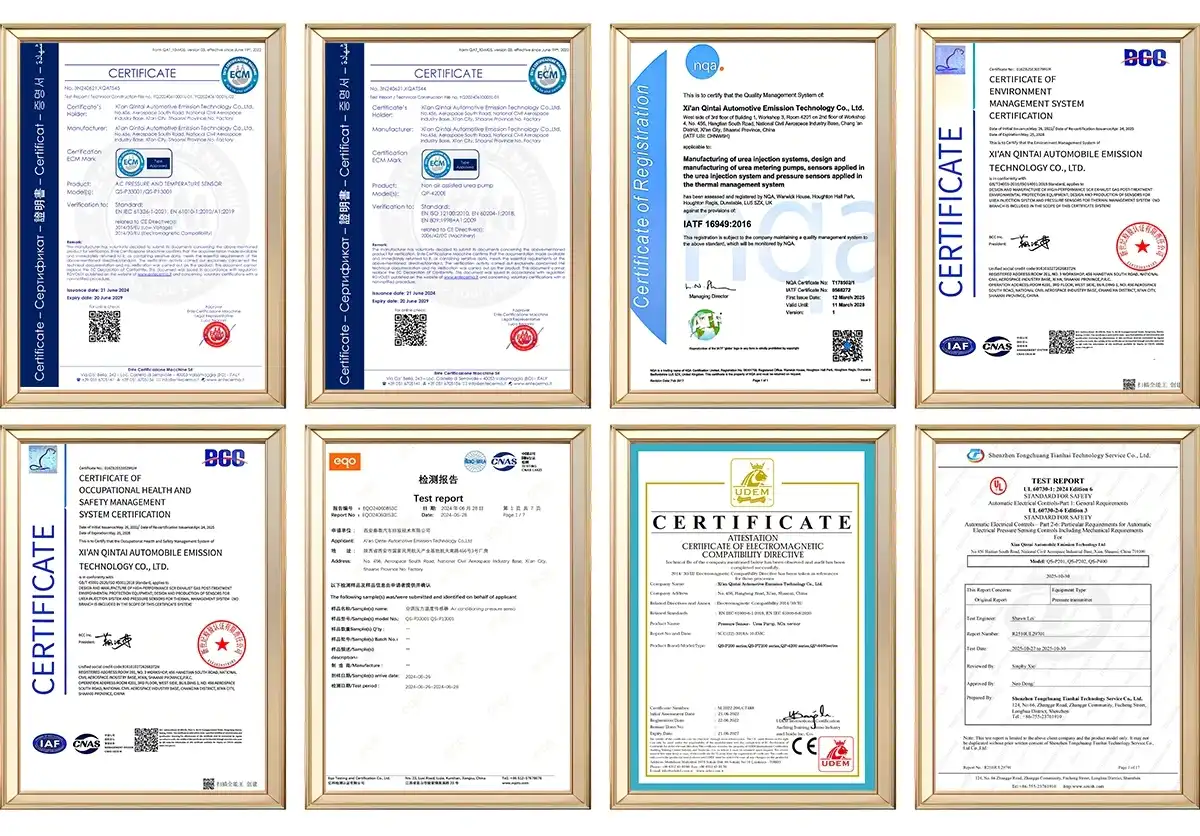
We offer quality security that meets all global regulatory standards thanks to ISO 9001, IATF 16949, and foreign certifications like CE, UL, and REACH compliance. Our skilled technical team offers application engineering support to help you choose the best sensor specs for your diesel platforms. Get in touch with our purchasing experts at info@qt-sensor.com to talk about bulk discounts, the ability to make changes, and ways to work together to make your emission control system more reliable.
References
1. Johnson, M. & Williams, R. (2023). Advanced Diesel Emission Control Technologies: Sensors and System Integration. Society of Automotive Engineers International.
2. Environmental Protection Agency. (2022). Heavy-Duty Engine and Vehicle Standards and Highway Diesel Fuel Sulfur Control Requirements. EPA Office of Transportation and Air Quality.
3. Zhang, H., Kumar, P., & Anderson, T. (2024). "Zirconia-Based NOx Sensor Performance in Heavy-Duty Diesel Applications." International Journal of Automotive Technology, 25(3), 412-428.
4. Continental Automotive Systems. (2023). NOx Sensor Technology for Commercial Vehicle Applications: Technical White Paper. Continental AG Engineering Publications.
5. Liu, S., Chen, W., & Martinez, J. (2023). "Service Life Prediction Models for Automotive Emission Sensors Under Variable Operating Conditions." Journal of Engine Research and Development, 18(2), 156-171.
6. Bosch Mobility Solutions. (2024). Diesel Aftertreatment Systems: Components, Diagnosis, and Maintenance Best Practices. Robert Bosch GmbH Technical Documentation.

Our customers’ satisfaction speaks for our quality — contact us to experience the same reliable service.