- English
- French
- German
- Portuguese
- Spanish
- Russian
- Japanese
- Korean
- Arabic
- Greek
- German
- Turkish
- Italian
- Danish
- Romanian
- Indonesian
- Czech
- Afrikaans
- Swedish
- Polish
- Basque
- Catalan
- Esperanto
- Hindi
- Lao
- Albanian
- Amharic
- Armenian
- Azerbaijani
- Belarusian
- Bengali
- Bosnian
- Bulgarian
- Cebuano
- Chichewa
- Corsican
- Croatian
- Dutch
- Estonian
- Filipino
- Finnish
- Frisian
- Galician
- Georgian
- Gujarati
- Haitian
- Hausa
- Hawaiian
- Hebrew
- Hmong
- Hungarian
- Icelandic
- Igbo
- Javanese
- Kannada
- Kazakh
- Khmer
- Kurdish
- Kyrgyz
- Latin
- Latvian
- Lithuanian
- Luxembou..
- Macedonian
- Malagasy
- Malay
- Malayalam
- Maltese
- Maori
- Marathi
- Mongolian
- Burmese
- Nepali
- Norwegian
- Pashto
- Persian
- Punjabi
- Serbian
- Sesotho
- Sinhala
- Slovak
- Slovenian
- Somali
- Samoan
- Scots Gaelic
- Shona
- Sindhi
- Sundanese
- Swahili
- Tajik
- Tamil
- Telugu
- Thai
- Ukrainian
- Urdu
- Uzbek
- Vietnamese
- Welsh
- Xhosa
- Yiddish
- Yoruba
- Zulu
Why Pressure Transmitter Accuracy Matters in Automation
Pressure transmitter accuracy determines how reliably your automation systems perform under real-world conditions. When these devices measure pressure and convert it into electrical signals for process control, even minor deviations can trigger cascading failures across production lines. Accurate pressure measurement forms the backbone of automation reliability, directly affecting emission compliance, product consistency, and operational safety.
In diesel engine aftertreatment systems, construction machinery hydraulics, and generator set controls, precision isn't optional—it's the difference between seamless operation and costly downtime. Understanding why accuracy matters helps procurement professionals and R&D engineers make decisions that protect both investment and reputation.


Understanding Pressure Transmitter Accuracy and Its Impact on Automation
How closely recorded values match up with real process factors is defined by Pressure Transmitter Accuracy. This metric is very important in automation settings where reliable data is needed for control loops to keep the system stable.
Distinguishing Accuracy from Precision and Repeatability
Accuracy is how close measures are to the real values, and precision is how consistent results are over time. Repeatability tells you if a device always gives you the same results when the settings stay the same. When evaluating specifications, procurement teams need to be aware of these differences. If there is systematic calibration drift, a Pressure Transmitter might have great repeatability but bad accuracy.
On the other hand, reliable devices that can't be repeated lead to unpredictable control reactions. The diesel engine industry needs both of these qualities when it comes to monitoring exhaust backpressure for SCR systems. This is because emission compliance depends on measurements staying within narrow tolerance bands for the entire life of the sensor.
How Accurate Measurement Influences Process Control Loops
Based on instrument input, process control loops keep changing the system's settings. When a Pressure Transmitter sending data to a PID controller gives wrong numbers, the controller makes wrong changes that throw off the whole process. We saw this firsthand when we were managing the boost pressure of turbochargers. Mistakes in measurements of as little as 2% can lead to worse fuel economy and faster wear on parts.
When Pressure Transmitters are accurate, control systems can keep setpoints exactly where they should be. This increases efficiency and keeps equipment from breaking. This is very important in situations like diesel particulate filter regeneration, where wrong readings of the pressure differential can either skip cleaning cycles that need to be done or cause too much regeneration, which wastes fuel.
Working Principles That Determine Measurement Accuracy
Different sensing technologies are used in modern Pressure Transmitters, each with its own accuracy benefits. In piezoresistive devices, semiconductor strain gauges are used. When they are put under mechanical stress, their electrical resistance changes. Because these sensors are very sensitive and respond quickly, they can be used to check the dynamic pressure in fuel injection systems. Capacitive sensors detect changes in capacitance caused by pressure between two plates. They are more stable over time and have less drift.
Thin-film Pressure Transmitters are an advanced form of piezoresistive technology. They use vacuum blasting to bond strain gauges directly to stainless steel diaphragms at the molecular level. This gets rid of the adhesion-related creep and ageing problems that come up with regular bonded strain gauges. It also fixes important problems like signal drift and heat instability. Knowing these rules helps buyers choose technologies that meet the accuracy needs and environmental challenges of their application.
Key Types of Pressure Transmitters and Their Accuracy Performance
Different types of Pressure Transmitters are used for different kinds of measurements, and each type affects accuracy in ways that affect how well automation works.
Gauge, Absolute, Differential, and Smart Transmitter Specifications
Gauge Pressure Transmitters measure pressure in relation to the air around us. For industrial-grade units, they can usually get an accuracy of within ±0.25% of the span. For example, these devices can be used to monitor hydraulic systems where it makes sense to use an atmospheric reference. Absolute Pressure Transmitters work with a perfect vacuum, which means they are just as accurate but stay the same no matter the altitude or weather. This is important for controlling turbochargers in places with different conditions.
Differential Pressure Transmitters measure the difference between two pressure points, typically with an accuracy of 0.1% in high-performance models used for diesel particulate filter monitoring. Smart Pressure Transmitters use digital communication methods like HART or Modbus to allow for distant calibration and diagnostics while keeping the same level of accuracy as analogue versions. Their digital compensation methods can fix nonlinearity and temperature effects, making the accuracy better across a wider range of working conditions.
Pressure Transmitters Versus Sensors: Functional Differences
People often get the terms "Pressure Transmitter" and "pressure sensor" mixed up, but their functional differences have a big effect on accuracy in automatic settings. Pressure sensors send out raw electrical signals that are proportional to the applied pressure, but these signals need to be "conditioned" by something else. Pressure Transmitters have sensors that are connected to circuits for amplification, linearisation, and output conversion. They send out standard signals like 4-20mA that don't get messed up by electromagnetic fields over long cable runs.
This integration lowers the loss of accuracy caused by noise from outside sources and ground loops that are common in industrial settings. We suggest Pressure Transmitters over bare sensors for diesel engine uses where measurement signals would be messed up by electrical noise from ignition systems and alternators. The integrated design also makes fitting easier and cuts down on failure spots, meeting the dependability needs of both OEM manufacturing and aftermarket uses.
Explosion-Proof and Corrosion-Resistant Models for Harsh Environments
For dangerous location uses, Pressure Transmitters must stay accurate even when conditions are tough. Explosion-proof Pressure Transmitters that are ATEX-certified use designs that are intrinsically safe. This means that they can't catch fire in potentially explosive environments, like those around fuel systems and volatile chemical processes. These devices are about as accurate as standard units, but they have safety features like barriers and enclosures built in. Certification requirements make sure that tests are very difficult, which gives procurement managers confidence in long-term performance.
Corrosion-resistant Pressure Transmitters use special coatings or materials, like Hastelloy, to protect them from the harsh fluids that are found in naval engine sets and exhaust gas recirculation systems. The choice of material affects not only how long something lasts but also how stable its accuracy is, since changes in the diaphragm caused by rust affect measurements. From working with heavy truck and building equipment makers, we know that Pressure Transmitters that are properly suited for harsh settings keep their accuracy standards for three to five years longer than regular units that are not used correctly. This has a direct effect on the total cost of ownership.

Ensuring High Pressure Transmitter Accuracy: Calibration and Installation Best Practices
To keep measurements accurate over the life of a Pressure Transmitter, it is important to follow the calibration and installation instructions carefully.
Effective Calibration Methods and Traceable Standards
Calibration sets up the connection between the applied pressure and the output signal, removing any differences or shift that may have happened during manufacturing. For controlled conditions, lab calibration uses deadweight testers or precision pressure controls that can be traced back to national standards. This usually results in an error of less than 0.015% of the number. This method works well for both original proof and regular recertification. Installed Pressure Transmitters can benefit from on-site calibration with portable reference standards, though the accuracy is usually a little lower.
Traceability is very important; measuring tools must be able to connect to established standards with clear lines of comparison. We keep our ISO/IEC 17025-certified certification services up to date so that our Pressure Transmitters meet the exact accuracy standards needed for emission compliance tests. When R&D engineers are looking at suppliers, they should make sure that the calibration certificates are real and that they understand the uncertainty budgets. These budgets directly affect the level of measurement confidence in important applications.
Proper Installation Practices Preventing Accuracy Degradation
Even Pressure Transmitters that have been perfectly calibrated can lose their accuracy if they are not set up correctly. When using liquid-filled sensing elements, the direction of the mounting is very important because gravity changes the position of the diaphragm. Most makers recommend placing the device vertically with the process connection facing downwards to keep air from getting trapped and make drainage easier. Impulse line route needs to be done carefully, because measurement lag and temperature-related mistakes can happen if the line is too long, has the wrong slope, or doesn't have enough insulation. Wiring methods also have an effect on accuracy.
To reduce electromagnetic interference, we suggest using shielded twisted-pair cables with proper grounding in diesel engine compartments. This is because alternator noise and high-frequency switching from electronic controls create hostile electrical environments. Another thing that can mess up your accuracy is temperature effects. To stop calibration shifts, put Pressure Transmitters away from heat sources or use heat sinks and radiation shields. These small but important installation details decide whether a Pressure Transmitter works as accurately as it says it will in real life, not just on the test bench.
Troubleshooting Common Accuracy-Related Issues
Finding and fixing accuracy problems quickly keeps production from being interrupted as little as possible. When the applied pressure is zero, the output signal drifts. This is called zero shift, and it usually happens because of changes in temperature, stress in the installation, or overpressure. The slope of the pressure-to-output relationship changes when there is span shift, which is often a sign of diaphragm wear or sensing element degradation. We've come up with testing methods that help maintenance teams tell the difference between calibration drift that needs to be fixed and component failure that needs to be replaced.
It's harder to fix intermittent accuracy issues, which are usually caused by water getting in, electrical connections that aren't tight, or a power source voltage that isn't high enough. Self-test fails and parameter changes are reported by smart Pressure Transmitters with built-in diagnostics, which makes troubleshooting easier. During commissioning, engineering teams in charge of big groups of sensors should keep baseline performance records. This will allow statistical analysis to find gradual loss of accuracy before it causes process upsets or compliance fails.
Selecting the Right Pressure Transmitter for Your Automation Needs
To pick the right Pressure Transmitter tools, you have to weigh a lot of technical factors against the needs of the application and the limitations of the equipment.
Framework for Assessing Critical Selection Parameters
Number one on the list of specifications is Pressure Transmitter Accuracy rating, but buyers need to know how makers interpret this. Some units measure accuracy as a percentage of span, others as a percentage of reading, and more advanced units measure combined accuracy that takes into account linearity, hysteresis, and repeatability. A Pressure Transmitter with a span accuracy of 0.25% and a reading accuracy of 0.25% has a range of 0.25 bar error, while a reading device with a reading accuracy of 0.25% is proportionally more accurate at lower pressures. Choosing the right measurement range strikes a balance between accuracy and overpressure safety.
For best results, operate close to the midpoint of the range, leaving enough room for error to avoid damage from pressure spikes. Stability specifications show how accurate something will stay over time. This is especially important for generator sets that run nonstop for months at a time without stopping for maintenance. Response time is important for dynamic tasks like tracking combustion pressure, where Pressure Transmitters need to be able to reply within milliseconds of a change. Environmental protection ratings (IP67, IP69K) make sure that accuracy is kept even when exposed to water, dust, and vibrations that are common in mobile equipment.
Before you can evaluate these factors, you need to be clear about what the application needs. Diesel engine pollution regulations usually need exhaust pressure readings to be within ±1% of the real thing, but hydraulic systems can handle readings within ±2% to 3%. Operating pressure ranges, extreme temperatures, media compatibility, and installation limitations make it even harder to choose. We suggest making specification grids that compare potential Pressure Transmitters based on weighted criteria. This will help cross-functional teams match technology needs with available budgets.
Comparative Overview of Leading Global Brands
There are a number of well-known companies in the industrial Pressure Transmitter market, each of which offers something different. Rosemount (Emerson) makes very accurate devices that are very stable over time. These are generally thought of as high-end products that should be priced accordingly. Siemens has many products that work well with their automation platforms, which is good for businesses that use Siemens control systems all the time. With strict accuracy requirements and strong construction, Yokogawa puts a lot of emphasis on reliability in process industries. Honeywell has a lot of knowledge with a wide range of applications and a wide range of products that can meet standard or unique needs.
ABB focuses on smart Pressure Transmitter technology that can do advanced diagnostics and help with strategies for planned maintenance. Wika has strong global support infrastructure and good mid-range performance. Innovative tools and great technical documents are available from Endress+Hauser. Ashcroft is an expert in measuring pressure mechanically and electronically, and they are especially good at using gauges.
Each brand has strengths that make it a good choice for different buyers. OEM diesel engine makers who need to give a lot of parts consistently with good quality often choose providers who can handle their accounts and make changes to their orders. Aftermarket distributors put a high value on broad compatibility and having enough stock on hand. We've set ourselves up as a specialised alternative that focuses on diesel engines and industrial automation. We do this by combining high-precision measurement with quick expert help that is tailored to problems with emission control.
Procurement Insights for B2B Buyers
Strategies for buying Pressure Transmitters in bulk have a big impact on the costs of a project. Most of the time, volume prices start at 100 units and go down even more at 500 and 1,000 units. We set our prices so that they can support both the prototype development and mass production phases. This is because we know that diesel engine OEMs need flexibility as designs move from being tested to being made on a large scale. Customisation choices for electrical plugs, pressure port layouts, output signal ranges, and housing materials let equipment be perfectly integrated without having to be redesigned. Lead times are very different.
Catalogue items usually ship within days, but customised versions take 6–8 weeks for the first order and 4–6 weeks for subsequent orders. For aftertreatment system integrators who need fast delivery, we keep a buffer inventory of common specifications. When evaluating a provider, you should also pay attention to the payment terms, quality assurance paperwork, and guarantee terms. Our IATF16949 certification and thorough test reports meet the needs of OEM quality systems. Additionally, our two-year warranty and helpful customer service after the sale lower the risk of buying from us.

The Business Value of Investing in Accurate Pressure Transmitters
Precision Pressure Transmitter tools give real benefits that make up for their starting cost through a number of practical and strategic advantages.
Operational Benefits and Cost Savings
Correct control directly leads to higher process efficiency. When exact differential pressure readings are used instead of conservative time plans to start diesel particulate filter regeneration cycles, fuel consumption goes down by a measurable amount—our customers report 3-8% improvements, which adds up to thousands of dollars a year per car. Reliable monitoring of important parameters improves safety. For example, measuring the boost pressure of a turbocharger correctly stops catastrophic engine failures that put operators in danger and damage expensive equipment. Cutting down on trash through careful management changes both the amount of materials and energy used.
When construction tools hydraulic systems work with correct pressure feedback, Pressure Transmitter pumps don't have to work as hard than they need to. This saves energy and extends the life of parts. Getting rid of downtime may be the most valuable thing. Incorrect Pressure Transmitters cause false alarms that need to be fixed by a technician and stop the process more than it needs to be. We have proof of situations where upgrading to more accurate devices got rid of 70% of unnecessary trips, making generator sets that provide critical backup power much more available. These benefits build up over the life of the device, and transmission costs are usually recouped in the first year of use.
Real-World Case Studies Demonstrating Measurable ROI
A big Chinese company that makes diesel engines teamed up with us to make sure that all of their heavy-duty truck engines met emission standards. Their old pressure sensors had an error rate of ±3%, which meant that 12% of engines needed to be re-calibrated during end-of-line testing. When we switched to our thin-film Pressure Transmitters, which are more accurate to within ±0.5% and more stable over time, the rate of recalibration dropped to 2%, which saved about 8 minutes of production time per engine. This resulted in 20,000 hours of restored manufacturing capacity worth over $800,000, based on the production of 150,000 engines per year, while the Pressure Transmitter cost premium was only $180,000.
In a different example, a company that makes generator sets supplies remote phone sites. Within 18 months, their old Pressure Transmitters stopped working as they were supposed to, so they had to be recalibrated by field service technicians. Our devices stayed accurate for more than 36 months, which cut in half the number of repair calls and saved $250 per unit per year on service costs—a strong return on investment (ROI) given the 3,000 units we already had in use.
Future-Proofing Through Smart and Wireless Technologies
In addition to being more accurate, smart Pressure Transmitters that can communicate digitally have other benefits. Remote configuration gets rid of the need to make changes by hand at sites that are hard to get to. This saves time and ensures that the configuration is the same across big groups of sensors. Diagnostic data, such as process variable trends, temperature adjustment status, and self-test results, make it possible for maintenance plans to predict breakdowns and stop them before they happen. Wireless Pressure Transmitters get rid of the need for expensive cables and complicated installations.
This is especially helpful for retrofitting and travelling devices where wiring is hard to do. These gadgets usually use the WirelessHART or ISA100 protocols, which make connection safe and reliable even in harsh electromagnetic settings like factories. Thanks to improvements in power management, battery-powered wireless units can now work for more than one year, which makes them useful for permanent installations. Companies that use these technologies will be able to benefit from Industry 4.0 projects, where large amounts of sensor data are fed into analytics platforms that find ways to improve things that traditional monitoring methods miss.
Partnering with Certified, Trusted Suppliers
Long-term measurement accuracy depends just as much on the supplier as it does on the initial Pressure Transmitter specifications. Third-party proof shows that certified producers are committed to quality. We have ISO9001 for quality management, IATF16949 for automotive supply chains, and ATEX, UL, CE, REACH, and RoHS certifications for many of our products. These certifications give people confidence that the processes used to make the products always meet certain performance standards and that the finished goods comply with the rules in the markets they are meant for.
Expert vendor support is just as important—quick technical help solves problems with applications, and dependable calibration services keep Pressure Transmitters accurate throughout their lifetimes. Help with installation makes sure that everything is set up correctly, and regular expert help protects long-term accuracy by finding new problems before they affect measurements. Our company is built around these support skills, and we keep application engineers who know about diesel engine emission systems, construction machinery hydraulics, and generator set controls. Our customers appreciate this specialised knowledge because it helps them not only buy parts but also put together full solutions that solve all of their measurement problems.

Conclusion
Pressure Transmitter Accuracy has a direct effect on the dependability of automation, the efficiency of processes, and compliance with regulations in diesel engine and industrial applications. Knowing the differences between accuracy, precision, and consistency helps you make smart choices about what to buy that meet the needs of your application. Choosing the right type of Pressure Transmitter (gauge, absolute, differential, or smart devices) and making sure it is properly calibrated and installed will keep measurements accurate for as long as the system is used.
Accurate pressure measurement is good for business because it cuts down on downtime, improves safety, and saves a lot of money right away, which quickly pays for the investment. Partnering with certified providers that offer both high-quality goods and full technical help is becoming more and more important for long-term success as automation systems get smarter.
FAQ
What accuracy level do diesel engine emission systems require?
To meet emission standards for diesel engines, pressure readings for exhaust backpressure and differential pressure across particulate filters must usually be accurate to within ±1.0% of the reading. China VI and Euro VI standards require regular checks to show that the emission control system works for the whole life of the car. This means that long-term Pressure Transmitter Accuracy stability is just as important as starting precision.
How often should pressure transmitters be recalibrated?
How often you need to calibrate depends on how important the application is, how it's being used, and any rules or regulations that apply. Most industrial applications need to be recalibrated once a year, but measurements that are sensitive to emissions may need to be checked every six months. High-quality thin-film Pressure Transmitters that are very stable can often be used for up to 24 months without losing their accuracy, which lowers upkeep costs without lowering measurement trust.
Can wireless pressure transmitters match wired device accuracy?
These days, cordless Pressure Transmitters are just as accurate as their wired counterparts. The transmission method is different, but the sensing parts and signal conditioning stay the same. Error detection in wireless protocols like WirelessHART makes sure that data integrity, so these devices can be used even in important control loops where accuracy and dependability can't be compromised.
Contact Qintai for High-Accuracy Pressure Transmitter Solutions
Diesel engines, building equipment, and industry machinery can't be automated without being able to measure pressure accurately. The Xi'an Qintai Automotive Emission Technology company has been making precise Pressure Transmitters for controlling emissions and automating processes for more than twenty years. We are the biggest OEM Pressure Transmitter supplier in China. We supply devices that meet the strict China VI and Euro VI standards to major diesel engine makers like Weichai Power, Yuchai Power, and Quanchai Power.
Through molecular-level bonding technology, our thin-film Pressure Transmitters stop signal drift. Full certifications like IATF16949, ATEX, and UL show our commitment to quality. Our independent research and development team helps with applications from the first planning phase all the way through mass production, whether you need regular catalogue items or custom solutions. We want purchasing managers, R&D engineers, and technical decision-makers to talk about the problems you're having measuring pressure.
Email us at info@qt-sensor.com to get detailed specifications, application advice, and quotes that are made to fit your automation needs. Visit qt-sensor.com to see all of our products and learn how working with a certified Pressure Transmitter manufacturer can help your system work better while keeping costs down.
References
1. Liptak, B.G. (2018). Instrument Engineers' Handbook: Process Measurement and Analysis, 5th Edition. CRC Press.
2. Webster, J.G. & Eren, H. (2014). Measurement, Instrumentation, and Sensors Handbook: Spatial, Mechanical, Thermal, and Radiation Measurement, 2nd Edition. CRC Press.
3. International Organization for Standardization (2019). ISO 15768: Road Vehicles - Pressure Transmitters for Medium and Heavy Commercial Vehicles and Buses.
4. Morris, A.S. & Langari, R. (2021). Measurement and Instrumentation: Theory and Application, 3rd Edition. Academic Press.
5. European Commission (2016). Regulation (EU) 2016/1628: Requirements Relating to Gaseous and Particulate Pollutant Emission Limits and Type-Approval for Internal Combustion Engines.
6. Dunn, W.C. (2020). Introduction to Instrumentation, Sensors, and Process Control, 2nd Edition. Artech House Publishers.
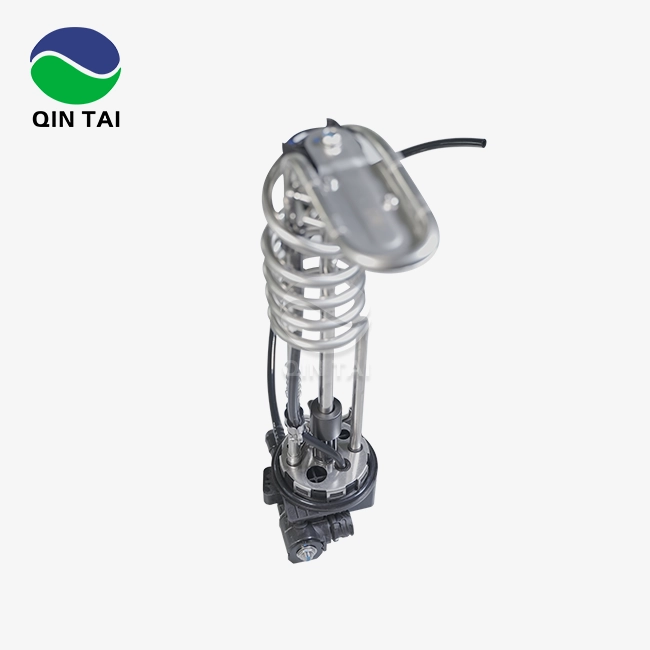
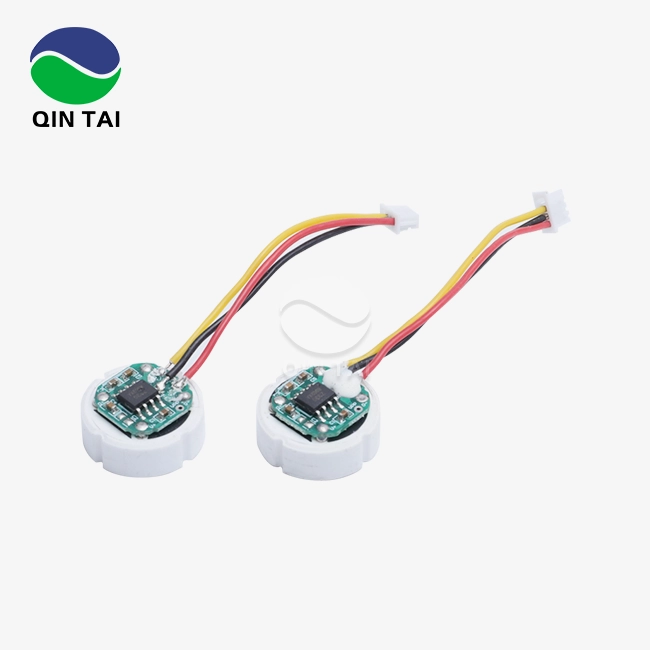
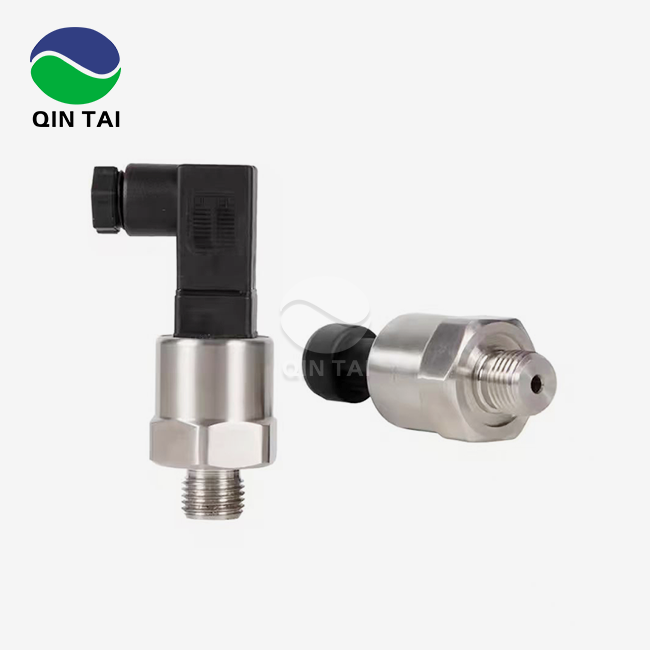
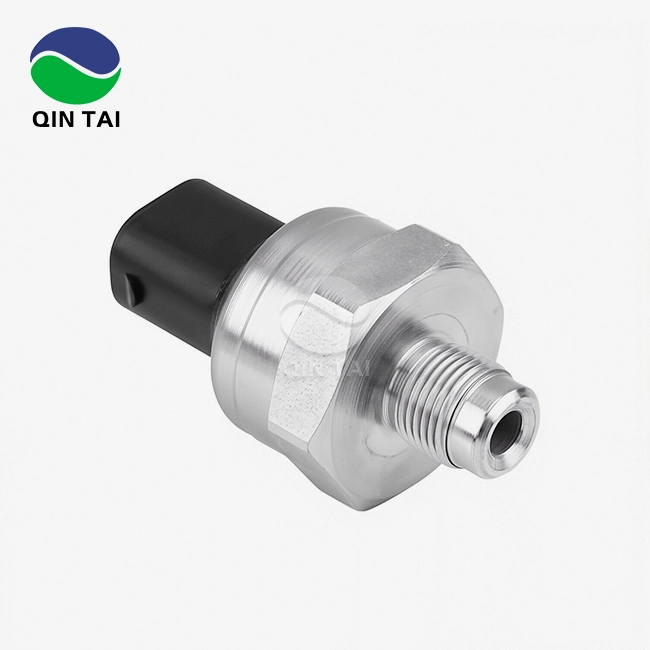

Our customers’ satisfaction speaks for our quality — contact us to experience the same reliable service.