- English
- French
- German
- Portuguese
- Spanish
- Russian
- Japanese
- Korean
- Arabic
- Greek
- German
- Turkish
- Italian
- Danish
- Romanian
- Indonesian
- Czech
- Afrikaans
- Swedish
- Polish
- Basque
- Catalan
- Esperanto
- Hindi
- Lao
- Albanian
- Amharic
- Armenian
- Azerbaijani
- Belarusian
- Bengali
- Bosnian
- Bulgarian
- Cebuano
- Chichewa
- Corsican
- Croatian
- Dutch
- Estonian
- Filipino
- Finnish
- Frisian
- Galician
- Georgian
- Gujarati
- Haitian
- Hausa
- Hawaiian
- Hebrew
- Hmong
- Hungarian
- Icelandic
- Igbo
- Javanese
- Kannada
- Kazakh
- Khmer
- Kurdish
- Kyrgyz
- Latin
- Latvian
- Lithuanian
- Luxembou..
- Macedonian
- Malagasy
- Malay
- Malayalam
- Maltese
- Maori
- Marathi
- Mongolian
- Burmese
- Nepali
- Norwegian
- Pashto
- Persian
- Punjabi
- Serbian
- Sesotho
- Sinhala
- Slovak
- Slovenian
- Somali
- Samoan
- Scots Gaelic
- Shona
- Sindhi
- Sundanese
- Swahili
- Tajik
- Tamil
- Telugu
- Thai
- Ukrainian
- Urdu
- Uzbek
- Vietnamese
- Welsh
- Xhosa
- Yiddish
- Yoruba
- Zulu
Why Water Pressure Sensors Improve Pump Safety and Control Systems
At any given time, a water pressure sensor sends a message to a controller that measures the line pressure. This keeps the pump safer and easier to control. If the pressure changes too much, it can sound an alarm, slow down the pump, or turn it off before a seal, pipe, or valve breaks. With a variable-frequency drive, the pressure can stay the same instead of the motor being turned on and off with the same signal. The people who buy things, like OEM engineers and system integrators, need to know how the tech works, how to specify it, and where to get it. That's why I made this guide.
Water Pressure Sensor Fundamentals
What Is a Water Pressure Sensor and Why Does It Matter?
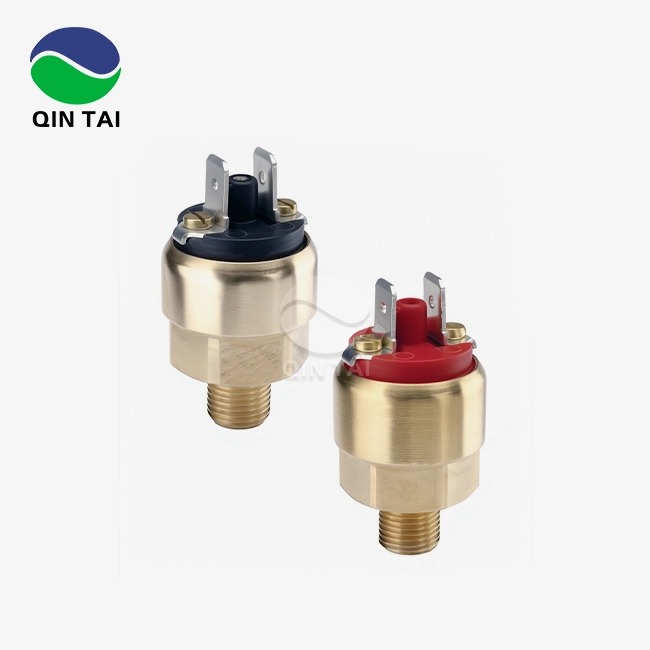
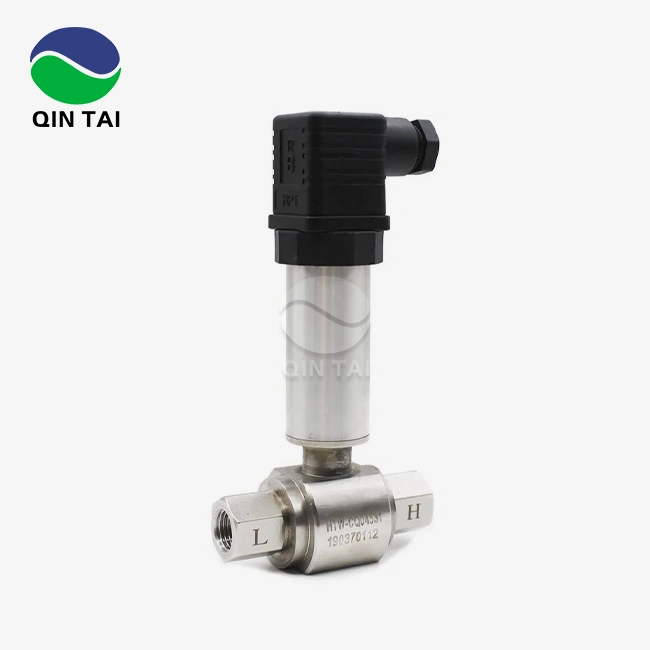
An electrical signal from a water pressure sensor is sent to a PLC, inverter, building management system, alarm panel, or monitoring platform to tell it how much pressure is in the water. A lot of the time, there is a pressure port, a wetted diaphragm or sensing element, a signal-conditioning circuit, a connector or cable, a housing, and a structure for sealing.
Someone has to read the number on the dial of a gage. Someone or something sends that number to the control system. You can use it whenever you want. As soon as it is put in place, the sensor stops low pressure and dry runs, lowers pump cycling, manages output, and records operating data. Service teams can use that data to plan work that needs to be done before something breaks.
How Does a Water Pressure Sensor Work?
An element that senses or moves changes when hydraulic pressure is put on it. It's possible to measure the change. Electrical changes can be made from those changes with the help of ceramic, strain-gauge, MEMS, and piezoresistive technologies. The right choice depends on the job and how well you want to do it.
On the inside of the device, electronics boost the signal, check its accuracy, and turn it into a standard output like 0–10 V or 4–20 mA. In a closed-loop pump system, the sensor checks the pressure and the controller checks to see if it is equal to a setpoint. If there isn't enough water, the pump can start, stop, or change speed. As long as this loop keeps going, the system will fix itself when demand changes.
Water Pressure Sensor vs. Pressure Switch vs. Pressure Transducer
These three controls work together in some ways, but they all do different things. When there is a certain amount of pressure, a pressure switch either turns on or off. For simple home systems and basic pump safety, that works. A sensor or transducer constantly gathers pressure data, which lets you control speeds, set alarms, keep an eye on things from afar, and store data.
A lot of sellers say that "sensor" and "transducer" mean the same thing. I think you should compare products based on their output, accuracy, pressure range, wetted materials, and compatibility instead of their names. Mechanical switches can also move from their set point as the springs and diaphragms wear out. When the controller has a sensor, it can change the thresholds in-game. Which choice is best depends on how complicated the system is, how much automation you want, and how much it will cost over its whole life.
Output Signals, Safety Functions, and Pump Applications
Water Pressure Sensor Output Types and Wiring
How easy it is for the water pressure sensor to talk to the pump controller depends on the type of output. 4–20 mA signals are common in factories because they work well over long cable runs and don't get messed up by other signals. There are a lot of 0–10 V signals in HVAC and building automation. 0.5 V to 4.5 V and 0 V to 5 V signals work for OEM electronics that are built in. You can add simple alarms or diagnostics to digital and switching outputs.
I check the datasheet before I wire something to see what the supply voltage, polarity, grounding, cable shielding, controller input type, and environmental protection are. If there is a problem with the output of a sensor not matching the input of a controller, it can slow down commissioning. That's why I check it during specification instead of on the job site.
How Water Pressure Sensors Improve Pump Safety and Control
A water pressure sensor that is properly set up can quickly tell the difference between too much and too little pressure. In the event that pipes, seals, valves, or pump housings are hurt, high-pressure feedback can sound an alarm, slow down the pump, or activate safety logic. If you hear low pressure, it means that the tank is empty, there is a leak, a line is clogged, a valve is closed, or the engine is running without any fuel. Many of the mechanical seals need the pumped liquid to cool and grease them, so it's important to run the pump dry.
When used with a variable-frequency drive, continuous feedback also helps keep the pressure steady, stops unnecessary start-stop cycling, and saves power. Things like changes in pressure are also useful. It's possible for the filter to be clogged, the pump to be worn out, or a leak to begin.
Applications in Different Pump Systems
At homes, in businesses, in cities, and in factories, water pressure sensors are used in pumps. In home booster systems, they keep the pressure steady and run the pump on their own. Insecticide systems use them to find clogged lines, leaks, and places where the supply is weak. When it comes to well water systems, you need to pay attention to sediment, pressure spikes, corrosion, and how far apart the cables are.
Different types of media may need to be able to handle high temperatures, and HVAC and boiler loops may need to be able to work with building management. The material is used in cooling water circuits for generator sets, cleaning equipment, and chiller circuits, as well as in pump stations and other machinery. What the sensor tells the controller is always the same: the real pressure at the key point.

Selection, Installation, and Troubleshooting
How to Choose the Best Water Pressure Sensor
Price and range aren't the only things that make a choice good. Setting the control goal and measurement point was the first thing I did. After that, I check to see if the job needs absolute, gage, or differential pressure. No matter how hard you use it or how high the pressure is, the range should keep its clarity. Most home systems work in this range (0–100 psi).
To get the most accurate results, it's best to look at long-term stability, hysteresis, zero drift, accuracy, and repeatability all at the same time. A reading of ±1% full scale might be fine for everyday use, but for precise work, you might need ±0.25% full scale. Look at the wet stuff to see if it will still work if the water has chemicals, glycol, sediment, or cleaning agents in it. Finally, make sure you look at the temperature range, IP rating, thread standard, output, and supply voltage. The IEC 60529 document describes what an IP code is.
Installation Guide: How to Install and Test a Water Pressure Sensor
By installing the water pressure sensor correctly, you protect both its accuracy and its useful life. Put the sensor where you want to measure it, but keep it away from things that will shake it a lot, like sediment, pressure spikes, and direct pump discharge. If the flow in a system pulses, it may need a snubber or damper to keep the pressure from changing too quickly.
Let the line's pressure drop before you do any work. Then, use the right sealing material and tighten to the right torque. Keep the signal wires away from the motor and inverter cables if you can. Also, make sure you follow the chart that comes with the product. After setting up everything, compare the sensor's reading to a standard. Then check for leaks, stability, response, and how the alarm on the controller works. It costs a lot more to look for mistakes after the fact than to check for them when the system is first set up.
Common Water Pressure Sensor Problems and Troubleshooting
People often say that they have no signal, no output, readings that change quickly, wrong measurements, the pump cycling a lot, and the device breaking down early. I begin with the basics, such as the power supply, polarity, wiring, condition of the connectors, blocked pressure ports, controller configuration, and broken cables.
There are many things that can make readings not stable, such as vibrations, air in the pipeline, electromagnetic interference, or sudden changes in pressure. It's possible for readings to be off because of drift in the calibration, changes in temperature, or a range that isn't right for the job. Not the sensor itself, cycling a lot could mean that there is a leak, a broken check valve, the wrong thresholds, or that the controller is not tuned well. We need to look more closely at water hammer, corrosion, condensation, overloading, and mechanical stress when the same thing keeps breaking.
Sourcing Water Pressure Sensors for OEM and B2B Projects
Procurement Guide: Price, Suppliers, and OEM Requirements
The price of a water pressure sensor is based on its range, accuracy, output, materials, connection type, protection for the environment, calibration, certification, customization, order quantity, and the number of sensors bought. When people are shopping, I tell them to compare prices across more than just catalog prices. Also, they should make sure that the quote includes testing, paperwork, connectors, cables, and accessories.
Some things you can do to save money when you buy in bulk are those below.
- standardizing variants
- forecasting annual demand
- requesting batch inspection records
- negotiating lead time, packaging, safety stock, and replacement terms
OEM teams should not only look at consistent manufacturing for the water pressure sensor, but also traceability, experience with exporting, technical support, sample lead time, MOQ, and the ability to make a lot of products. It is engineers who make the technical shortlist, purchasing staff who compare prices, and management who approves the supplier. With a full document package, you can do all of those steps faster.
Why a Properly Specified Water Pressure Sensor Becomes the Preferred Solution
Checks and pressure switches can work for simple systems, but they don't give you much control or data freedom. If you choose the right water pressure sensor, you can get constant feedback, the ability to change thresholds and speed controls, as well as the ability to monitor from afar and use data to find problems and do maintenance. They can cut down on downtime, stress on the machines, and the cost of running the business.
There is also a lot of energy here. The U.S. pumping sourcebook. The Department of Energy says that pumping systems use around 20% of the world's electricity. It is important to make even small changes to make them more efficient. Still, the outcome relies on how well the pressure range, output, materials, environmental protection, installation method, and controller programming are matched to the task at hand. The machine can report its own condition instead of waiting for a worker to notice a problem, which can make equipment more reliable for OEMs and system integrators.
What Qintai Offers for Water Pressure Sensor Projects
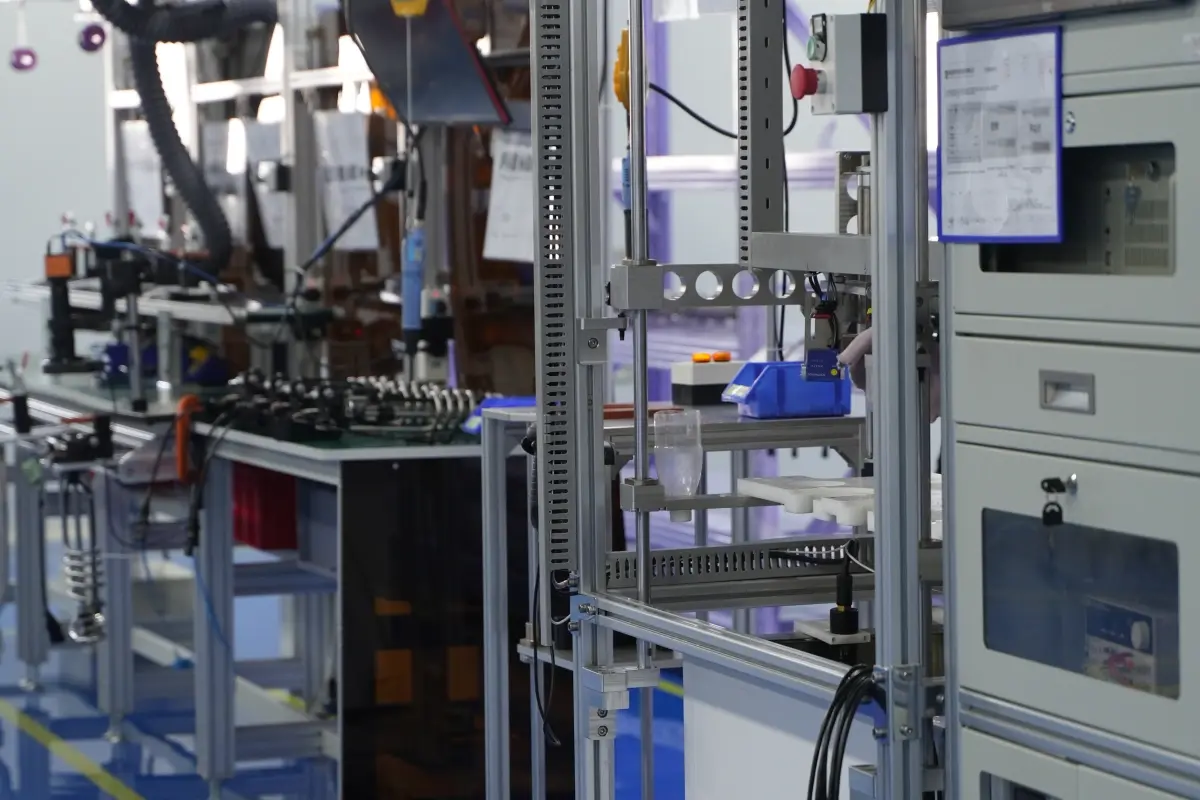
It is called Qintai Automotive Emission Technology Co., Ltd. Ltd. is a national tech company that has been around since 2001. The main thing this company does is research and development for diesel engine SCR aftertreatment systems and sensors, especially pressure sensors. It also sells and makes these systems. Buyers usually want to know about two strengths:.
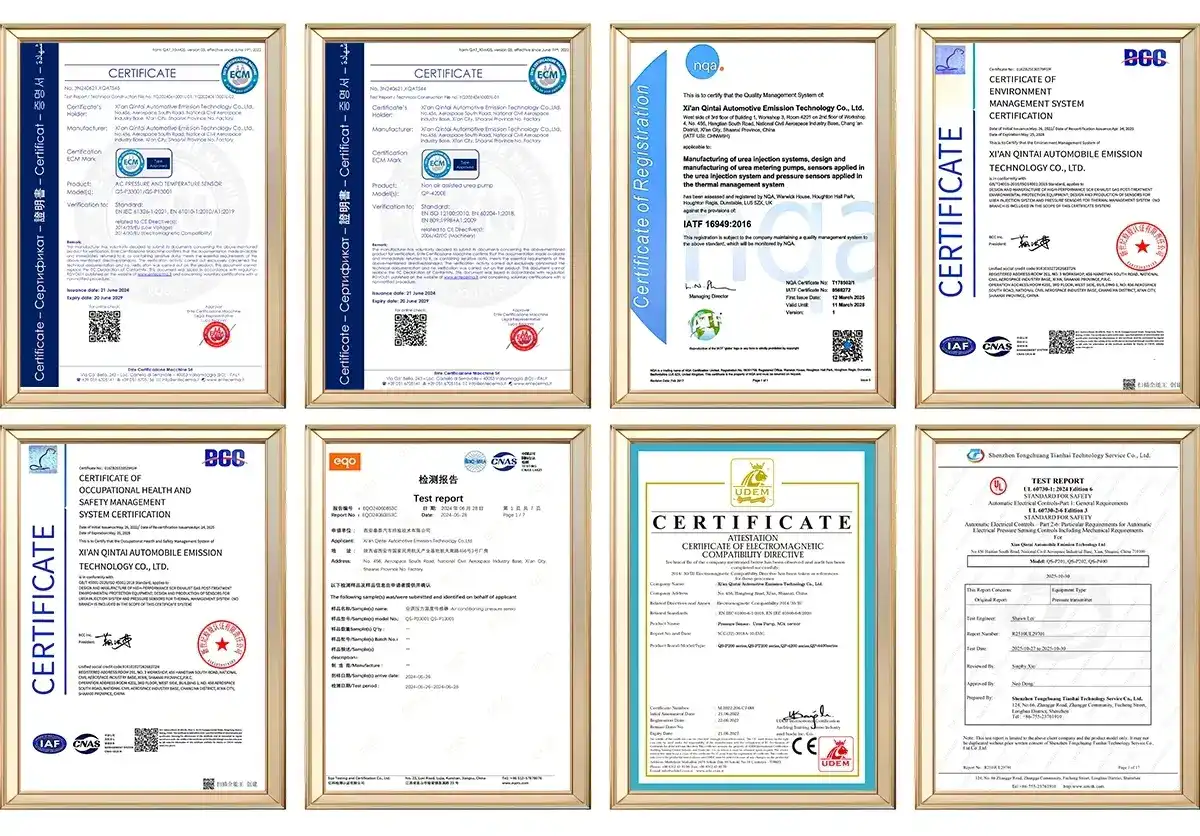
- Certification and R&D: Qintai holds ISO9001, IATF16949, CMC, Ex, UL, CE, REACH, and RoHS certificates and has applied for 58 invention patents. An independent R&D team works continuously to improve product performance, which gives technical reviewers and approval committees clear records to check.
- OEM supply and customization: Qintai is a core supplier to China's Weichai Power, Yuchai Power, and Quanchai Power, ranking No. 1 in China market share. It offers OEM and ODM services from design to mass production and supports customization for specific applications and customer needs.
In order to choose a source, these points answer the questions that make the process take longer. More than 60 countries and regions buy things from Qintai.
Conclusion
Water pressure sensors turn hydraulic conditions into dependable electrical feedback for pump protection, automation, and monitoring. It talked about how a sensor works, how its different outputs connect to controllers, and why continuous data is better than a pressure switch for controlling things. Find overpressure, low pressure, and dry running early on to protect pumps, seals, and pipes. With variable-frequency drives and steady regulation, there is less cycling and use of energy. It can be used for many things, like home boosters, industrial skids, and machinery cooling circuits.
Still, performance depends on meeting the right requirements and being set up correctly. The pressure range, accuracy, output, wet materials, environmental rating, and wiring all need to be right for the job. You can trust the readings because they've been carefully tested. For OEMs and integrators, a clear look at the datasheet and assessment of the supplier lowers the risk of choice and the cost over the lifecycle.
FAQ
What is the difference between a pressure switch and a water pressure sensor?
A switch's set point tells it whether to be on or off. A steady signal, like 4–20 mA, is sent by a sensor and lets you control and watch speeds that change.
How do I prevent rapid pump cycling?
Pick an item that has a time delay or hysteresis built in that you can change. Also look for leaks, broken check valves, and incorrect thresholds.
Can a water pressure sensor handle corrosive liquids or seawater?
Yes, as long as you let them know during the buying process that they need titanium or special plastics for the wet materials. Check the datasheet every time to make sure the media works.
What causes setpoint drift over time?
Most of the time, worn-out springs and diaphragms are to blame in mechanical switches. This drift is stopped by good parts that have already been aged.
How does a sensor handle vibration in pump rooms?
Solid-state electronics and sensing elements that have been dampened help the units deal with vibrations from machines. It is also important to have a snubber and know where to put the mount.
Request a Water Pressure Sensor Quote from Qintai
A well-known tech company named Qintai can help you pick out a water pressure sensor for your pump project. They are certified by ISO9001 and IATF16949, and they also have 58 invention patents and offer OEM/ODM service. We are ready to make changes suitable for your needs. Send your pressure range, output, media, and volume to info@qt-sensor.com, and our team will get back to you. Go to qt-sensor.com to find out more.
References
1. Karassik et al., Pump Handbook, McGraw-Hill, 2008
2. Hydraulic Institute and Europump, Variable Speed Pumping: A Guide to Successful Applications, Elsevier, 2004
3. U.S. Department of Energy, Improving Pumping System Performance: A Sourcebook for Industry, 2006
4. Jon S. Wilson, Sensor Technology Handbook, Newnes (Elsevier), 2004
5. McMillan and Considine, Process/Industrial Instruments and Controls Handbook, McGraw-Hill, 1999
6. International Electrotechnical Commission, IEC 60529: Degrees of Protection Provided by Enclosures (IP Code), 2013
 Sensors.webp)

Our customers’ satisfaction speaks for our quality — contact us to experience the same reliable service.