- English
- French
- German
- Portuguese
- Spanish
- Russian
- Japanese
- Korean
- Arabic
- Greek
- German
- Turkish
- Italian
- Danish
- Romanian
- Indonesian
- Czech
- Afrikaans
- Swedish
- Polish
- Basque
- Catalan
- Esperanto
- Hindi
- Lao
- Albanian
- Amharic
- Armenian
- Azerbaijani
- Belarusian
- Bengali
- Bosnian
- Bulgarian
- Cebuano
- Chichewa
- Corsican
- Croatian
- Dutch
- Estonian
- Filipino
- Finnish
- Frisian
- Galician
- Georgian
- Gujarati
- Haitian
- Hausa
- Hawaiian
- Hebrew
- Hmong
- Hungarian
- Icelandic
- Igbo
- Javanese
- Kannada
- Kazakh
- Khmer
- Kurdish
- Kyrgyz
- Latin
- Latvian
- Lithuanian
- Luxembou..
- Macedonian
- Malagasy
- Malay
- Malayalam
- Maltese
- Maori
- Marathi
- Mongolian
- Burmese
- Nepali
- Norwegian
- Pashto
- Persian
- Punjabi
- Serbian
- Sesotho
- Sinhala
- Slovak
- Slovenian
- Somali
- Samoan
- Scots Gaelic
- Shona
- Sindhi
- Sundanese
- Swahili
- Tajik
- Tamil
- Telugu
- Thai
- Ukrainian
- Urdu
- Uzbek
- Vietnamese
- Welsh
- Xhosa
- Yiddish
- Yoruba
- Zulu
AdBlue Dosing System vs SCR Dosing System Comparison Guide
If you work in diesel engine manufacturing, fleet management, or aftertreatment system integration, you have probably asked this question at least once: what exactly is the difference between an AdBlue dosing system and an SCR system? These two terms often appear together, and the confusion is understandable. This guide breaks down how each technology works, how they compare in real-world performance, and what to look for when sourcing components for mass production or fleet maintenance.
Understanding AdBlue and SCR Dosing Systems
What Is an AdBlue Dosing System?
An AdBlue dosing system is a precise injection tool that sends a set amount of Diesel Exhaust Fluid (DEF), which is a 32.5% high-purity urea solution, straight into the exhaust stream. A dosing pump, a urea filter, an injector nozzle, and instruments that work with them make up the system. Its job is to correctly measure the fluid so that the catalyst further down gets just the right amount of material to start a chemical reaction.
What Is an SCR System?
The main structure of the aftertreatment is Selective Catalytic Reduction (SCR). The SCR catalyst, the diesel oxidation catalyst (DOC), the electronic control unit (ECU) that runs the whole process, the diesel particulate filter (DPF) that comes in different shapes and sizes, and NOx monitors both upstream and downstream are all part of it. Nitrogen oxides (NOx) are changed into nitrogen (N₂) and water vapor by the SCR catalyst. One important part of this bigger setup is the AdBlue dosing system.
How They Work Together
Both technologies depend on each other. If the dosing isn't right, the SCR catalyst either gets too little urea, which leads to NOx slip and regulatory non-compliance, or too much, which leads to ammonia slip and catalyst degradation. EPA research on heavy-duty engine emissions says that the accuracy of the dose directly affects whether a vehicle meets Euro VI or EPA Tier 4 Final standards. You can think of the AdBlue dosing system as the fuel pump and the SCR system as the engine. They work together and can't do their jobs separately.
Performance and Efficiency Comparison
Dosing Accuracy and Calibration
The AdBlue dosing system method works within a range of errors that most experts say is between ±2 and 5% of the goal injection volume. This level of accuracy is maintained by high-quality dosing pumps from sources certified to IATF 16949 in temperatures ranging from -40°C to +85°C. This is very important for building equipment that works in harsh environments. Most of the time, the ECU uses real-time NOx sensor feedback to handle calibration.
Emission Reduction Efficiency
With a good AdBlue dosing system and a well-calibrated SCR system, NOx reduction rates can go above 95%, which is what most OEMs need to get Euro VI approval. Field data from heavy-truck fleets in Europe shows that nearly 30% of SCR-related warranty claims are due to dosing pump failures. This shows how important it is for filters and injectors to work properly at the component level.
Total Cost of Ownership
A lot of the time, purchasing managers only look at the unit price. But the real numbers include how often maintenance needs to be done, how often filters need to be replaced, and how much downtime costs. If a dosing pump breaks too soon, it can cause engine derating, or "limp mode," which can stop a 40-ton truck in the middle of the road. Urea filters that are rated to ISO 22241 and need to be changed every 120,000 to 200,000 km keep the dosing consistent and keep particles from getting into the catalyst further down the line.
Common Issues and Troubleshooting of AdBlue Dosing Systems
Recognizable Failure Signs
In service records, three types of failures show up most often. First, more DEF being used means that either the injector is leaking or the dosing curve is not calibrated correctly. Second, NOx sensor fault codes, especially long-lasting upstream/downstream ratio errors, show that the catalyst isn't getting the right amount of urea. Third, layers of crystallization inside dosing lines lower pressure and block injectors. This problem gets worse when cheap screens let debris through.
Preventive Maintenance Steps
The most cost-effective way to protect something is to do regular repair. These are the main maintenance tasks that cut down on unexpected downtime:
• The urea filter should be changed every 120,000 to 200,000 km, or more often in places with a lot of dust, like construction sites and mines.
• At each major service interval, check the tips of the dosing injectors for urea crystal buildup and clean them only with approved solvents.
• If a dosing-related fault code shows up, check the NOx sensor's calibration. This is because a sensor that has moved can give wrong dosage changes.
These steps take care of the most common reasons why the SCR system fails before they get worse and lead to full derating events. Ignoring them can cause catalyst poisoning, which is a pricey fix that usually costs more than replacing the whole AdBlue dosing system.
System Reset and Diagnostics
When you replace a dosing pump or filter, you have to do a proper ECU restart and system purge cycle. A lot of techs don't do this step, which leaves behind fault codes that set off warning lights again and make the next troubleshooting session more difficult. If you use OEM-approved diagnostic software, the system will be sure to recognize the new part and re-calibrate its injection map properly.
Procurement Considerations and Supplier Insights
Key Selection Criteria
When buying dosing components, you should look at four technical requirements. First, make sure that the AdBlue dosing system works with the current ECU and sensor architecture. If it doesn't, calibration problems will happen no matter how well it was built. Next is the filtration grade. Using ISO 22241-compliant media, filters should work at 5–10 microns. Third, the provider must be IATF 16949 certified to make sure that mass production is consistent from batch to batch. Fourth, the length of the lead time and the amount of stock you have directly affect your output plan.
What to Expect From Established Suppliers
Bosch and Continental are often used by OEMs to buy parts because they have validated AdBlue dosing systems and global service networks. Valeo has reasonable prices for aftermarket parts. Each brand has a different warranty period (usually 12 to 24 months) and a different level of technical support for requests to make changes. If you need to find something for a non-standard use, like generator sets in mines, you need to look for industrial-grade versions that can handle higher temperatures.
Bulk Purchasing and Long-Term Agreements
When OEMs are making a lot of units, getting a long-term supply deal with a certified manufacturer is the best way to keep prices stable and keep production going. Tiered pricing is usually available for orders over 500 units, and some makers offer ODM services that let you change the interface, which is helpful when putting an AdBlue dosing system into a custom ECU design.
Benefits of Incorporating Advanced AdBlue Dosing Systems in Your Fleet
Regulatory Compliance Without Compromise
Correct urea injection is the easiest and most direct way to meet Euro VI and EPA Tier 4 standards. If fleets buy good AdBlue dosing systems, they don't have to worry about the fines and lost productivity that come with failing emissions inspections. This must be done for all farm equipment and engine sets that follow the EPA Tier 4 Final rules.
Operational and Financial Returns
Here are some real-world benefits of using modern AdBlue dosing system technology in the workplace:
• Three to five percent less fuel used in heavy trucks because precise NOx control lets the engine ECU run a more aggressive combustion map.
• Less wear on the engine over time because proper DEF injection cuts down on the need for high-rate exhaust gas recirculation (EGR), which in turn lowers the amount of soot in the oil.
• Fewer unplanned repair events, which directly leads to more vehicles being available and lower costs per kilometer.
These benefits add up to a lot over the life of a car. If a fleet owner with 50 Class 8 trucks switches to a better AdBlue dosing system, they can expect to see real savings in the first year.
Brand and Compliance Credibility
Using certified, trackable parts is also good for the selling side of the business. When dealers and service shops keep good AdBlue dosing systems on hand, they build an image for dependability with fleet customers. This is a real business benefit in a market where downtime costs a lot.
Conclusion
The AdBlue dosing system and the SCR system are not two different technologies; they work together to make one solution. The architecture is set by the SCR system, and the AdBlue dosing system checks to see if that architecture works. OEMs, integrators, and fleet operators always have to make decisions based on the quality of the parts, the certification of the supplier, and how reliable the parts will be in the long term. If you choose an AdBlue dosing system that meets ISO 22241 and is made by a company that is IATF 16949-certified, you are protecting both your equipment and your compliance status.
FAQ
How often should I change my urea filter?
Most of the time, every 120,000 to 200,000 km or at big service times. To keep the dosing pump from getting too full of particles, shorter replacement cycles are needed in places with a lot of dust, like mines and construction sites.
Can you clean and use a urea filter again?
Not at all. The synthetic media traps contaminants deep inside its fiber structure. When you try to clean the filter, you damage the media and let the particles through that it was meant to stop through, which causes the injector to fail.
What causes AdBlue to crystallize in dosing lines?
When high exhaust temperatures dry the remaining urea solution, leaving behind solid layers, this is called crystallization. Low-quality filters that let tiny particles pass through speed up this process by giving the particles places to start growing.
Does the strength of the filter change the SCR catalyst?
Yes, filters that use glue or materials that don't follow the rules can forever damage the SCR catalyst, and the cost of fixing it is much higher than the difference in price between a high-end and low-end filter.
What kinds of licenses should a company that sells dosing systems have?
For quality control, look for IATF 16949, ISO 22241 compliance for DEF-contact materials, and any regional licenses that are important to the market you want to reach, like China VI type approval paperwork.
Partner With Qintai for Your AdBlue Dosing System Supply
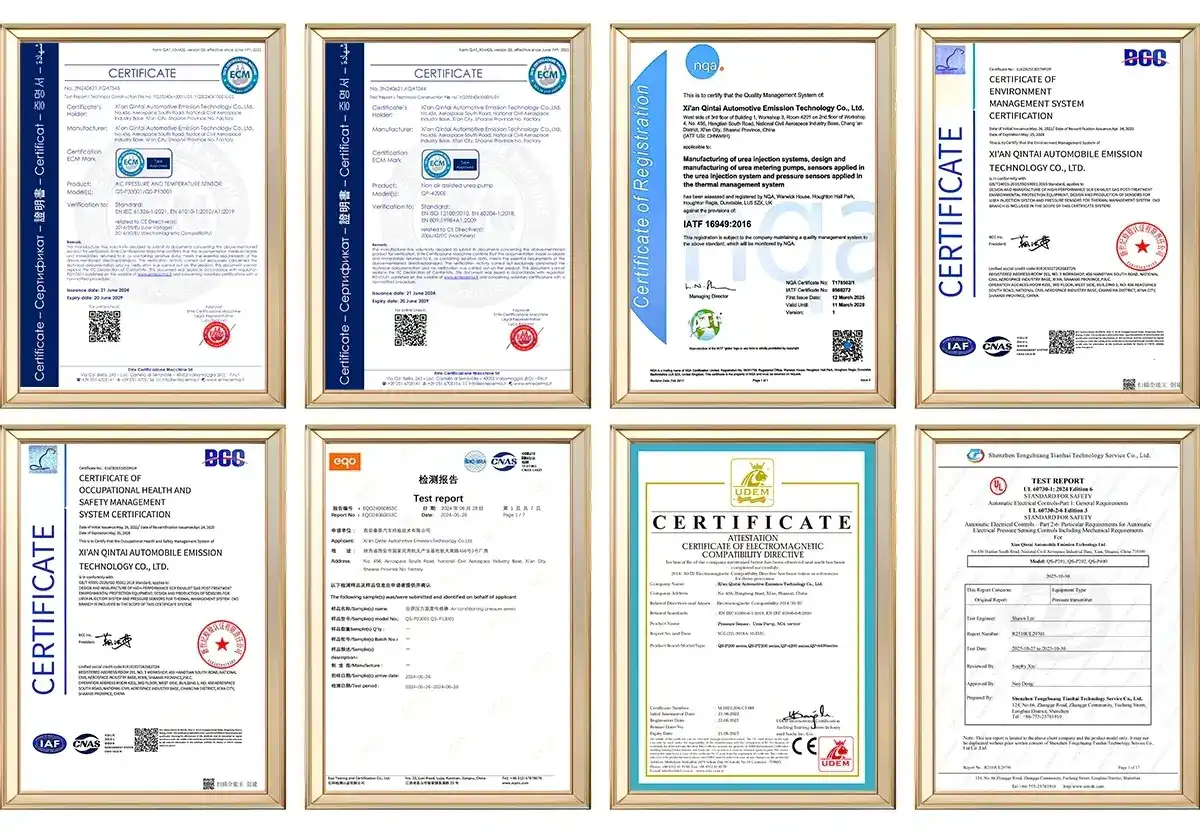
Qintai has been a supplier of SCR aftertreatment parts since 2001 and is certified by ISO 9001, IATF 16949, CE, UL, and REACH. When it comes to market share, Qintai is the biggest OEM AdBlue dosing system supplier in China. They are also a core supplier to Weichai Power, Yuchai Power, and Quanchai Power. They work with OEM customers, system integrators, and aftermarket distributors in more than 60 countries. We can customize OEM/ODM products, make a lot of them, and give direct technical help. To get details or a price, email our team at info@qt-sensor.com.
References
1. European Commission. Regulation (EC) No 595/2009 on Type-Approval of Motor Vehicles with Respect to Emissions from Heavy Duty Vehicles (Euro VI). Official Journal of the European Union, 2009.
2. U.S. Environmental Protection Agency. Diesel Exhaust Fluid and Selective Catalytic Reduction: Heavy-Duty Engine Emission Standards. EPA Office of Transportation and Air Quality, 2016.
3. International Organization for Standardization. ISO 22241: Diesel Engines — NOx Reduction Agent AUS 32. ISO, 2019.
4. Johnson, M. & Torres, R. Aftertreatment System Reliability in Heavy-Duty Diesel Applications. SAE International Journal of Engines, 2021.
5. Transport & Environment. Euro VI Truck Emissions: Real-World NOx Performance and Compliance Assessment. Transport & Environment Report, 2022.
6. Automotive Industry Action Group. IATF 16949:2016 — Quality Management System Requirements for Automotive Production and Relevant Service Parts Organizations. IATF, 2016.

Our customers’ satisfaction speaks for our quality — contact us to experience the same reliable service.