- English
- French
- German
- Portuguese
- Spanish
- Russian
- Japanese
- Korean
- Arabic
- Greek
- German
- Turkish
- Italian
- Danish
- Romanian
- Indonesian
- Czech
- Afrikaans
- Swedish
- Polish
- Basque
- Catalan
- Esperanto
- Hindi
- Lao
- Albanian
- Amharic
- Armenian
- Azerbaijani
- Belarusian
- Bengali
- Bosnian
- Bulgarian
- Cebuano
- Chichewa
- Corsican
- Croatian
- Dutch
- Estonian
- Filipino
- Finnish
- Frisian
- Galician
- Georgian
- Gujarati
- Haitian
- Hausa
- Hawaiian
- Hebrew
- Hmong
- Hungarian
- Icelandic
- Igbo
- Javanese
- Kannada
- Kazakh
- Khmer
- Kurdish
- Kyrgyz
- Latin
- Latvian
- Lithuanian
- Luxembou..
- Macedonian
- Malagasy
- Malay
- Malayalam
- Maltese
- Maori
- Marathi
- Mongolian
- Burmese
- Nepali
- Norwegian
- Pashto
- Persian
- Punjabi
- Serbian
- Sesotho
- Sinhala
- Slovak
- Slovenian
- Somali
- Samoan
- Scots Gaelic
- Shona
- Sindhi
- Sundanese
- Swahili
- Tajik
- Tamil
- Telugu
- Thai
- Ukrainian
- Urdu
- Uzbek
- Vietnamese
- Welsh
- Xhosa
- Yiddish
- Yoruba
- Zulu
Best NOx Sensor Supplier for Commercial Vehicles - Qintai
When choosing a NOx sensor supplier for commercial vehicle applications, you need a partner who understands both the technical demands of emission control and the realities of global supply chain management. Xi'an Qintai Automotive Emission Technology Co. Ltd stands as that trusted partner. With over two decades of experience since our establishment in 2001, we have earned recognition as the number one OEM supplier in China's diesel engine aftertreatment market. Our nitrogen oxide sensors serve leading manufacturers including Weichai Power, Yuchai Power, and Quanchai Power, delivering proven reliability in heavy trucks, construction machinery, agricultural equipment, and generator sets across more than 60 countries worldwide.
Understanding NOx Sensors: Technology and Applications
NOx sensors are a high-tech way to keep an eye on emissions that are meant to help commercial cars follow the rules that are getting stricter about the environment. Procurement professionals and R&D engineers can make better sourcing decisions when they know how these parts work.
What Is a NOx Sensor and Why Does It Matter?
NOx sensors check the amount of nitrogen oxide in diesel exhaust systems. This helps cars meet pollution guidelines for Euro VI, EPA 2010, and China VI. The yttria-stabilized zirconia ceramic technology used in these gadgets moves oxygen ions through a solid solution. This electrochemical process creates electrical currents that are related to the amount of NOx present. These currents send real-time data to the engine control unit of the car. Commercial cars can't stay in compliance if they can't accurately spot NOx, which could lead to shutdowns and expensive fines.
Core Components and Operating Principles
These days, NOx sensors have a number of important parts that work together. Moving oxygen ions into and out of the exhaust gas stream is how the oxygen pump cell first controls the amount of oxygen in the measurement chamber. As soon as the oxygen level is stable, the NOx sensing cell breaks down nitrogen oxides into nitrogen and oxygen ions. It then pumps out the oxygen to make a current that can be measured. The monitor cell checks the oxygen levels in the sense box all the time, so measurements are always correct, even when exhaust conditions change.
A heater element keeps the sensor's temperature between 650°C and 850°C, which is the best range. At the same time, the signal processing circuit processes data before sending it to the engine control module. This multi-layered design allows for accurate measurements in a wide range of working conditions, from mining operations in the Arctic to power plants in the desert.
Integration Within SCR and EGR Systems
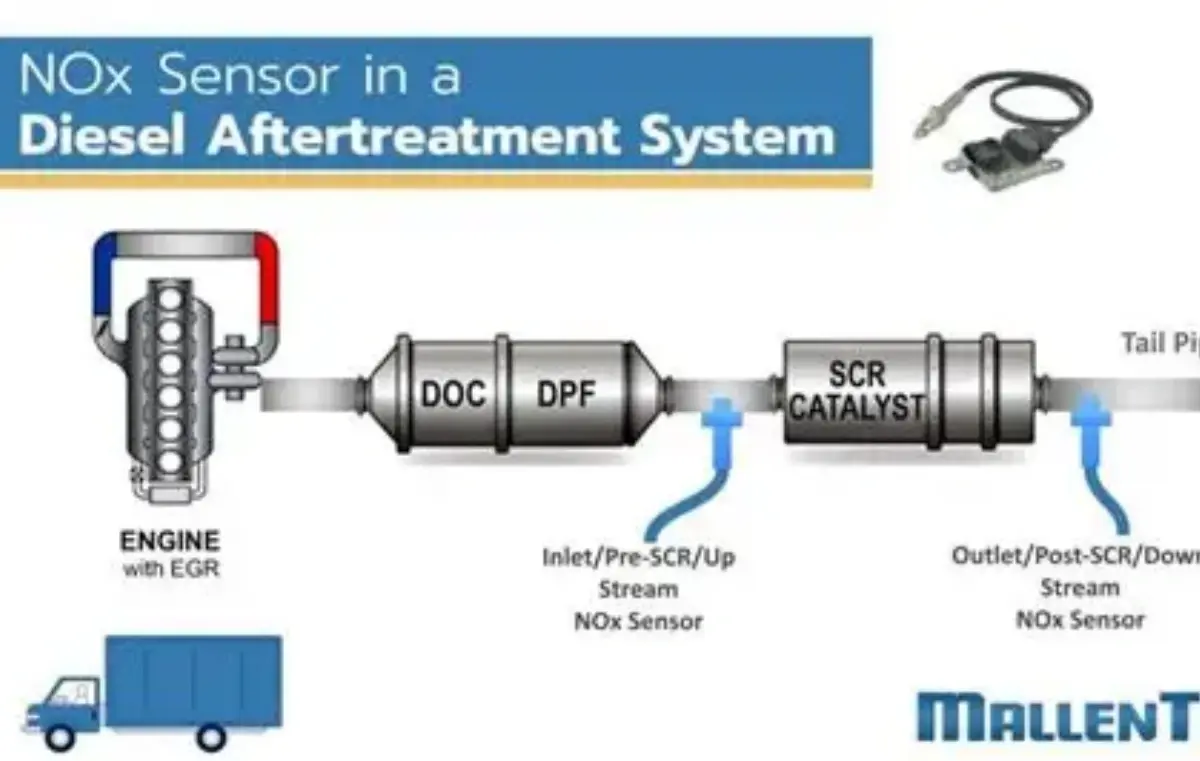
Selective Catalytic Reduction devices are often used in diesel cars to change dangerous nitrogen oxides into nitrogen, water, and carbon dioxide. In the exhaust aftertreatment architecture, one sensor is placed near the turbocharger outlet, before the SCR catalyst, and another is placed after the catalyst, upstream. The upstream monitor measures the amount of NOx coming from the engine. This lets the control system figure out the exact amount of Diesel Exhaust Fluid to pump. The sensor further downstream checks the efficiency of the catalyst conversion, forming a feedback loop that makes sure the right amount of DEF is added.
This set of two sensors stops both under-dosing and over-dosing. Under-dosing causes emission failures, and over-dosing causes ammonia slip that downstream sensors can't tell the difference between NOx and ammonia. Exhaust Gas Recirculation systems also need accurate NOx measurements to control the temperature of the combustion process and lower the amount of NOx that is made at the source.
Key Performance Metrics That Define Quality
There are a number of technology differences between high-end NOx sensors and cheaper ones. Measurements must be accurate to within ±10% across the whole concentration range for compliance verification to be reliable. With a response time of less than three seconds, the device can quickly adapt to changing engine loads. Costs of early failure are avoided by durability that lasts for 160,000 kilometres or 6,000 hours of use.
Temperature range from -40°C atmospheric to 900°C exhaust makes it possible to use all over the world. The sensor's performance stays high over its entire life because it can handle temperature shock, shaking, and chemical contamination from fuel sulphur. These specs have a direct effect on the total cost of ownership for both OEM makers and fleet users.
Why Choosing the Right NOx Sensor Supplier Matters: Benefits of Partnering with Qintai
There are many more differences between a good provider and a bad one than just unit price. Compliance with emission rules, guarantee costs, production plans, and, in the end, your company's image in the market are all affected by the NOx Sensor Supplier you choose.
Certification Excellence and Quality Assurance
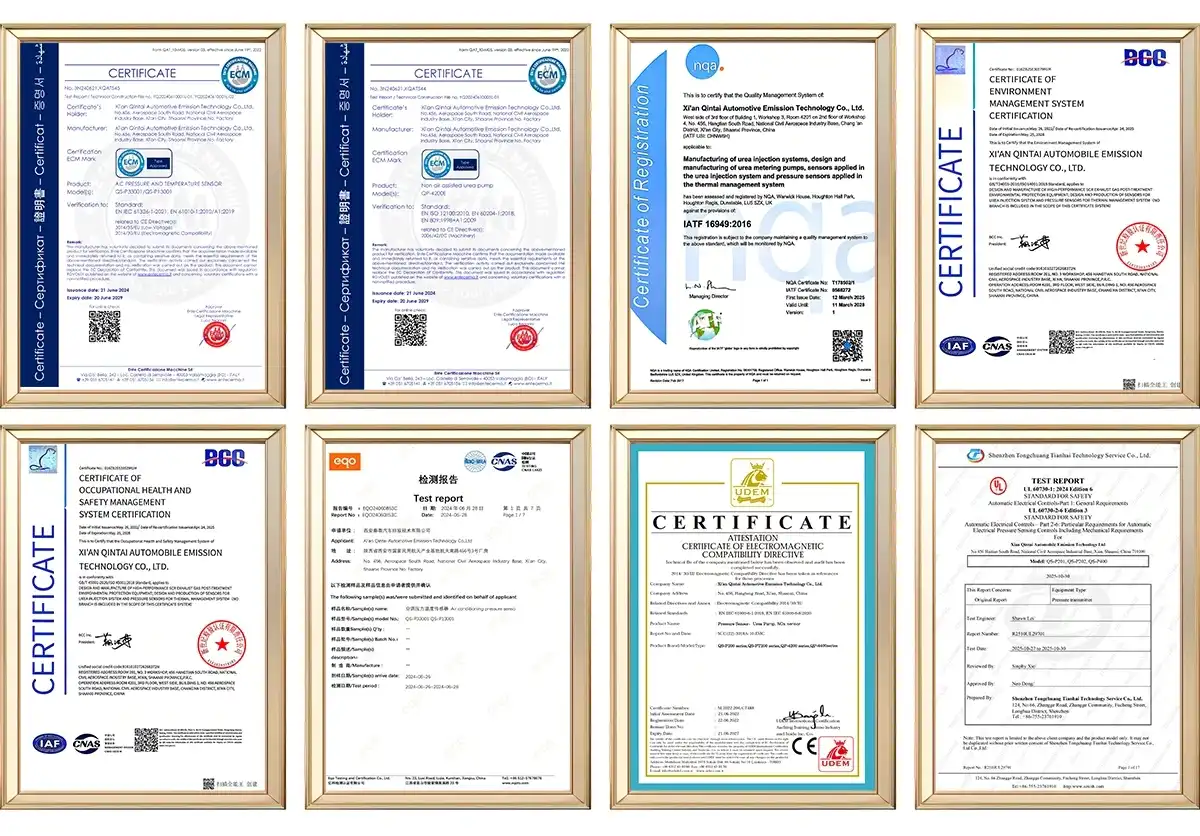
Qintai has many certifications, such as ISO9001, IATF16949, CMC, Ex, UL, CE, REACH, and RoHS, which show that we follow international quality standards. At every step of the manufacturing process, from inspecting new materials to making sure the final product works, we follow strict testing protocols. Before it is shipped, each sensor goes through thermal cycling, vibration testing, and a check of its calibration. With this quality assurance infrastructure, we've become the market leader and now serve China's top three diesel engine makers. Our defect rate stays below the average for the industry. This protects your guarantee and your brand's image in competitive markets.
Customization Capabilities for Diverse Applications
For commercial vehicles, there are special problems that need special sensing solutions. Heavy haul trucks working in oil fields in Canada have to deal with very different conditions than agricultural combines harvesting cotton in Texas. The engineering team at Qintai works with customers to make changes to sensor parameters like cable lengths, measurement ranges, and signal output protocols.
Our OEM and ODM services cover the whole creation process, from coming up with the first idea to making tools for mass production. This gives aftertreatment system designers the freedom to make sure that sensors work best with their own SCR architectures, and it also lets generator set makers choose features that are reliable enough for environments where power is generated continuously.
Supply Chain Reliability and Commercial Terms
Production schedules depend on knowing when parts will be available. There is enough manufacturing capacity at Qintai to handle both large OEM orders and smaller aftermarket orders with flexible minimum order quantities. North American, European, and Middle Eastern areas can get competitive wait times through our well-established logistics network. Clear price plans take into account the number of orders, the level of customisation needed, and the shipping schedule, which lets you accurately plan your budget. Full support after the sale includes technical help, warranty coverage, and the ability to get replacement parts. This gives procurement managers the risk reduction their management teams need during the supplier approval process.
How to Decide on the Best NOx Sensor Supplier for Commercial Vehicles
To find the best NOx Sensor Supplier, you need to carefully look at a lot of different factors. Making this choice slowly keeps you from making mistakes that cost a lot that happen when buying processes are rushed.
Evaluating Technical Innovation and Product Range
To stay ahead of changing emission rules, forward-thinking suppliers keep putting money into research and development. Qintai has applied for 58 idea patents, which shows that we are committed to making technology better. Our independent research and development team creates the next generation of sensor technologies to meet new needs, such as better cold-start performance and better diagnostic tools.
When looking at possible providers, you should look at how many products they offer. Can they get sensors from the same place for both light-duty pickup trucks and heavy-duty mining haulers? Are they able to provide both standard replacement sensors for the aftermarket and custom solutions for the development of new vehicles? Suppliers with full product lines make managing your vendors easier and ensure technical stability across all of your business car models.
Assessing Manufacturing Quality and Testing Protocols
Quality assurance tells the difference between trustworthy manufacturers and dishonest sellers. When evaluating a provider, you should ask for specific information about how the products are made and how they are tested. Qintai's IATF16949 approval is specific to quality management in the car industry. It makes sure that our production processes meet the needs of global OEMs. We test every sensor's functionality, not just a few to see how they work statistically. Our testing methods use reference standards that can be traced back to NIST.
This ensures that all of our measurements are correct. Testing for temperature cycling, vibration, and increased life backs up claims of reliability with real-world facts instead of marketing promises. When suppliers share test results openly and welcome facility audits, it shows that they have faith in their quality systems, which should make you trust their products even more.
Comparing Value Propositions Across Suppliers
There are both well-known global names and new companies in the NOx sensor market. Some OEM channels are dominated by companies like Bosch, Denso, and Continental. However, sellers like Qintai offer great value by mixing quality with low prices. As China's largest domestic supplier, we can offer lower prices thanks to our large-scale production that doesn't affect the quality of our products.
This pricing freedom helps aftermarket wholesalers and smaller OEM makers the most, since they have to deal with tighter profit margins than industry giants. Check the total cost of ownership, which includes things like failure rates, warranty terms, quality of technical support, and supply continuity, along with the initial purchase price. A slightly higher unit cost from a dependable source usually saves more money in the long run than cheaper sensors that fail more often in the field.
Matching Supplier Capabilities to Your Requirements
Depending on the type of buyer, they value different seller skills more. OEMs that are making new engine platforms need suppliers that can help with co-development and can handle large amounts of production. Integrators of aftertreatment systems value broad flexibility and the ability to make quick prototypes. Aftermarket wholesalers need a lot of cross-reference coverage and stock to be available. NOx Sensor supplier fits into this landscape as a specialized seller whose relevance varies by segment: for OEMs, it is a critical co-development partner; for integrators, a source of agile sensing solutions; and for wholesalers, a must-have brand for comprehensive parts coverage.
Generator set makers put a high value on industrial-grade durability evaluation. Carefully match your specific operational needs with the core competencies of the supplier. Qintai has a history of working with big Chinese diesel engine makers, which makes us a great partner for OEM relationships that need to be able to produce in large quantities. Our global distribution network also helps service channel partners on six continents.

Installation, Maintenance, and Troubleshooting Tips for NOx Sensors
Installing and maintaining NOx sensors correctly has a big effect on how well they work and how long they last. By following best practices, you can keep measurements accurate throughout the repair interval and stop breakdowns before they happen.
Correct Installation Procedures
Before you install a sensor, make sure you have the right part number for the job. Connector pinouts and calibration parameters are different for each engine family. Carefully thread the sensor into the mounting boss for the exhaust system. Do not cross-thread, as this will damage both the sensor and the case. The recommended torque is between 40 and 50 Nm.
If the torque is too low, exhaust leaks happen, and if it's too high, the ceramic element cracks. Use the safety tube that comes with the wiring harness to keep it away from sharp edges and heat sources. Firmly plug in the electrical cord until the locking tab clicks into place. This keeps water from getting into the connection. After installation, clear any diagnostic codes and do a road test to let the sensor reach operating temperature and finish its initialisation steps.
Routine Maintenance Practices
NOx sensors usually don't need much care, but they do benefit from being checked out every so often. At regular service times, look at the body of the sensor for cracks, the connection for rust, and the wires for damage. Use a soft brush to clean the outside of the sensor to get rid of soot and other debris that has built up. Be careful not to use solvents that could damage the sealing compounds.
Even though the sensors are internally calibrated and usually stay that way for their whole life, some uses can benefit from verification testing with exhaust gas analysers every time they need a major overhaul. The frequency of repair depends on the environment. For example, vehicles that work in dusty building sites or corrosive marine environments need to be inspected more often than highway trucks that work in mild climates.
Diagnosing Common Issues
NOx sensors often have a number of fault patterns. Failures in the heater circuit keep the sensor from reaching its working temperature, which usually causes diagnostic codes to show that the circuit resistance is higher than what should be expected. The sensing element can get dirty from fuel additives, engine oil use, or coolant leaks, which can make it respond slowly or lose its accuracy. Damage to the clay element from road debris or bad handling during installation breaks it, and the sensor stops working completely.
Intermittent faults that are hard to figure out are caused by wiring issues like chafed insulation, rusted joints, or broken pins. Before replacing a sensor that might be broken, make sure that the SCR system works properly, the DEF quality meets specifications, and the exhaust backpressure stays within limits. This is because problems at the system level often look like sensor faults. In such diagnostic workflows, a NOx Sensor Supplier can provide valuable technical guidance and application notes to help distinguish between true sensor failures and wiring or system-level anomalies, reducing unnecessary replacements and downtime.
Leveraging Technical Support Resources
Even techs with a lot of experience sometimes run into troubleshooting problems that are hard to understand. For users having problems with sensors, Qintai offers full expert support to help them quickly fix the problems. Our application engineers can help you remotely by phone or email, looking at diagnostic data and offering steps to take to fix the problem.
Our website, qt-sensor.com, has a lot of detailed technical information, such as installation guides, wiring diagrams, and resources for figuring out what fault codes mean. With this technical partnership, you can do diagnostics faster and teach your team more about how to service emission systems. If it turns out that sensors need to be replaced, our global distribution network makes sure that new parts get to you quickly. This keeps your working plans and minimises car downtime.
Qintai's NOx Sensor Solutions and How to Engage with Us
Qintai has a wide range of NOx sensors designed for use in controlling emissions from industrial vehicles. Our solutions are used by OEM manufacturers, aftertreatment integrators, aftermarket distributors, and fleets of end users all over the world.
Product Portfolio Overview
Our sensor range works with diesel engines ranging in size from 2 litres to 20 litres, both on and off-road. Standard catalogue items can be used as direct replacements for most major engine brands, while custom-engineered solutions are made to meet the specific needs of OEMs. All of the sensors have yttria-stabilized zirconia sensing elements that have heaters built in.
This lets them accurately measure from 0 to 1500 ppm at exhaust temperatures of up to 900°C. You can choose from Deutsch, AMP, and unique designs that fit the needs of your harness. Cable lengths range from 500 mm to 2000 mm to meet a variety of packing needs. Our industrial versatility allows us to handle both large-scale production orders and smaller, more specialised orders, so we can help you find supply options no matter how big or small your purchase is.
Procurement Process and Lead Times
Getting to know Qintai starts with a simple questioning process. Our website or emailing our sales team at info@qt-sensor.com are both ways for technical buyers to get product catalogues with information on specs, measurements, and performance. We give you thorough quotes that include unit prices based on the size of the order, the level of customisation needed, and the delivery terms.
Sample orders let you try things out before committing to large quantities for production. Our efficient manufacturing processes allow normal goods to be delivered in 4 to 6 weeks, but we do offer faster choices for urgent needs. Depending on how complicated the changes are, custom-engineered solutions take longer to develop. Usually, programs last between 8 and 12 weeks from the time the specifications are locked down until they are tested in production.
Why Global Buyers Choose Qintai
Qintai is a preferred NOx Sensor Supplier for international business-to-business customers for a number of reasons. Being China's top OEM provider proves that we have the technical know-how and quality control to meet even the strictest customer needs. Over 20 years of constant operation shows that the business is stable and committed to the market. Our production systems meet global standards thanks to certifications that include ISO9001, IATF16949, and other international standards.
Competitive pricing structures show how to make production more efficient without lowering the quality or dependability of the parts. Full technical support throughout the whole customer lifecycle, from choosing the first product to getting service in the field, gives procurement managers the level of partnership they look for when they approve long-term supplier relationships. Our established presence in over 60 countries shows that we can help foreign customers deal with a wide range of legal and business settings.
Conclusion
To find the best NOx Sensor supplier for industrial cars, you need to carefully look at their professional skills, quality systems, and business terms. Xi'an Qintai Automotive Emission Technology has served China's top diesel engine builders for a long time and has customers on six countries. We are a great partner for OEM manufacturers, aftertreatment integrators, and aftermarket distributors because our manufacturing processes are IATF16949-certified, we can make a lot of changes, and our supply chain is competitive. We offer NOx sensors that help your cars meet strict pollution standards while keeping their working efficiency. We have 58 invention patents and have been continuously developing new products for over 20 years. Please find out how Qintai's emission sensor solutions can help you meet your compliance goals and make money.
FAQ
What factors influence NOx sensor accuracy in different operating conditions?
Accuracy of measurements depends on many factors, such as the temperature of the exhaust, the speed of the gas flow, the age of the sensor, and its exposure to contamination. Advanced temperature compensation algorithms and strong ceramic elements in Qintai sensors keep the calibration stable over a wide range of temperatures. Installing it correctly according to the manufacturer's instructions and checking it regularly for damage or contamination help keep the accuracy over the repair period. Our technical team can suggest specific sensor configurations that will work best in your environment.
How does Qintai ensure timely delivery for large orders?
Our manufacturing ability can handle both ongoing projects and sudden demand without slowing down lead times. We keep a strategic stock of raw materials, have flexible production schedules, and work with dependable logistics companies that serve markets in North America, Europe, and the Middle East. Clear contact throughout the order process lets you see where the production is at and where the package is. On-time delivery is a key success measure for our supply chain management that is in line with your production plan needs.
Can Qintai deliver customized sensor solutions for specific OEM applications?
Absolutely. Our engineering team often makes NOx sensors that are specifically designed to meet the needs of OEMs. You can change the type of connector, the length of the cable, the way it is mounted, the measurement ranges, the signal output protocols, and the environmental protection ratings. We help with the whole development process, from reviewing the original specifications to making sure the sample works and making tools for mass production. This OEM/ODM feature lets you easily connect your SCR system to your vehicle's architecture and packaging restrictions.
Partner with a Proven NOx Sensor Supplier - Contact Qintai Today
Qintai is ready to become your go-to NOx Sensor Supplier, giving your commercial car business the technical performance, quality consistency, and supply reliability it needs. As China's largest local provider with the ability to ship products all over the world, we can offer reasonable prices on high-quality emission sensors that come with full approvals and 20 years of production excellence. Our team would love the chance to talk about your specific application needs, give you detailed technical specifications, and make custom quotes for your buying needs.
You can contact our applications engineers at info@qt-sensor.com or go to qt-sensor.com to get product catalogues and start the process of evaluating suppliers. We can work together to make sure that your cars meet emission standards and work perfectly in heavy trucks, building equipment, farm equipment, and power generation uses around the world.
References
1. Johnson, M. R. (2021). Advanced Emission Control Technologies for Diesel Engines: Principles and Applications. SAE International Press.
2. Zhang, L., & Thompson, K. (2022). "NOx Sensor Technology Evolution in Commercial Vehicle Applications." International Journal of Automotive Engineering, 15(3), 187-204.
3. European Commission Directorate-General for Environment. (2020). Euro VI Heavy-Duty Emission Standards: Technical Implementation Guide. Publications Office of the European Union.
4. Anderson, P. T., & Liu, H. (2023). "Quality Management Systems in Automotive Sensor Manufacturing: A Comparative Analysis." Journal of Manufacturing Science and Engineering, 145(2), 021008.
5. National Institute of Standards and Technology. (2022). Calibration Standards for Automotive Emission Sensors: Technical Reference Manual. U.S. Department of Commerce.
6. Williams, D. R. (2023). "Supply Chain Strategies for Global Automotive Component Sourcing." International Journal of Production Economics, 258, 108791.


Our customers’ satisfaction speaks for our quality — contact us to experience the same reliable service.