- English
- French
- German
- Portuguese
- Spanish
- Russian
- Japanese
- Korean
- Arabic
- Greek
- German
- Turkish
- Italian
- Danish
- Romanian
- Indonesian
- Czech
- Afrikaans
- Swedish
- Polish
- Basque
- Catalan
- Esperanto
- Hindi
- Lao
- Albanian
- Amharic
- Armenian
- Azerbaijani
- Belarusian
- Bengali
- Bosnian
- Bulgarian
- Cebuano
- Chichewa
- Corsican
- Croatian
- Dutch
- Estonian
- Filipino
- Finnish
- Frisian
- Galician
- Georgian
- Gujarati
- Haitian
- Hausa
- Hawaiian
- Hebrew
- Hmong
- Hungarian
- Icelandic
- Igbo
- Javanese
- Kannada
- Kazakh
- Khmer
- Kurdish
- Kyrgyz
- Latin
- Latvian
- Lithuanian
- Luxembou..
- Macedonian
- Malagasy
- Malay
- Malayalam
- Maltese
- Maori
- Marathi
- Mongolian
- Burmese
- Nepali
- Norwegian
- Pashto
- Persian
- Punjabi
- Serbian
- Sesotho
- Sinhala
- Slovak
- Slovenian
- Somali
- Samoan
- Scots Gaelic
- Shona
- Sindhi
- Sundanese
- Swahili
- Tajik
- Tamil
- Telugu
- Thai
- Ukrainian
- Urdu
- Uzbek
- Vietnamese
- Welsh
- Xhosa
- Yiddish
- Yoruba
- Zulu
Ceramic Pressure Sensors vs Silicon: Which Is Best for Your System?
When your diesel engine, SCR aftertreatment system, or generator set depends on accurate pressure data, the sensor material you choose matters more than most engineers expect. Ceramic pressure sensors and silicon-based sensors each bring distinct strengths to the table. The short answer: if your system faces harsh media, wide temperature swings, or corrosive environments—ceramic wins. If you need ultra-compact size and low-cost precision in a controlled setting—silicon is competitive. This article breaks down exactly where each technology performs, so you can make a confident procurement decision.

Understanding Ceramic and Silicon Pressure Sensors
How Ceramic Sensors Work
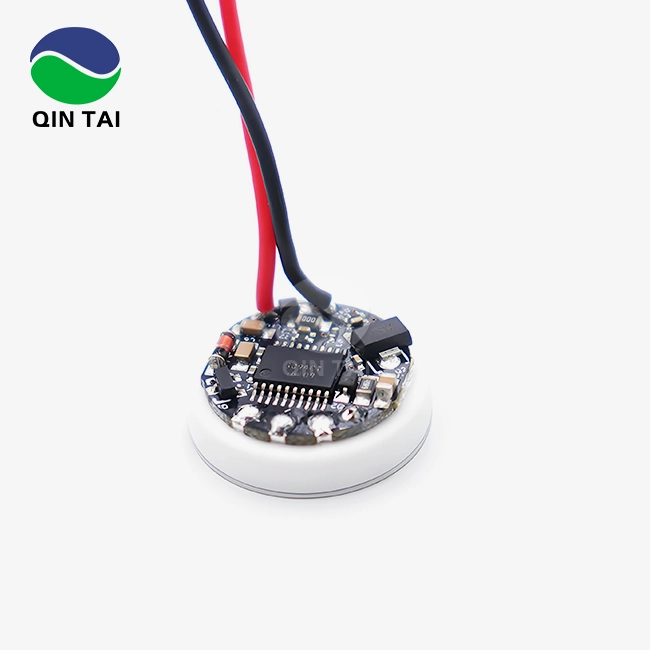
A piezoresistive or capacitive sensing element is attached to a ceramic diaphragm, which is usually made of 96% Al2O3 alumina, in ceramic pressure sensors. The diaphragm bends when pressure is put on it, and the resistance bridge turns the mechanical stress into an electrical output that can be measured. Chemicals and mechanical wear don't hurt the ceramic base nearly as much as metal or plastic options.
How Silicon Sensors Work
Micro-Electro-Mechanical Systems (MEMS) technology is what silicon devices use. Diffused piezoresistors on a micro-machined silicon diaphragm react to changes in pressure. Silicon sensors are commonly used in consumer electronics, medical devices, and light industrial settings where media support is not as important because MEMS manufacturing allows for very small form factors and high sensitivity.
Key Structural Differences
The main difference is the material of the diaphragm and how it reacts with the process media. Ceramic diaphragms don't need an isolation layer to touch the media directly, so there is no point where something could go wrong. Even though silicon diaphragms are very accurate, they often need an oil-filled isolation system when they are exposed to aggressive fluids. This makes the assembly more complicated and costs more.
Performance Comparison: Ceramic vs Silicon Pressure Sensors
Accuracy and Linearity
Both methods are very accurate, but they do so in different situations. Ceramic pressure sensors that use piezoresis have a range of ±0.1% to ±0.5% of full scale. In both lab and HVAC-style settings, silicon devices can get the same numbers. The difference shows up when the machine is really under stress. Ceramic keeps its nonlinearity within ≤0.3% FS even when temperature and pressure change. The Qintai QS-P105 model shows this across its -1/0 bar to 600 bar range.
Temperature and Environmental Durability
From -40°C to 135°C, ceramic sensors work reliably, and the temperature drift is kept below 0.03–0.05% FS/°C. In theory, silicon sensors can work in the same range, but their performance drops faster when they are exposed to rough particles, harsh chemicals, or places with a lot of moisture. Ceramic parts always last much longer than silicon ones in diesel exhaust aftertreatment systems and hydraulic circuits.
Long-Term Stability
Field data from industrial hydraulic applications shows that metal-diaphragm sensors stop working after a few months of being exposed to rough media, but ceramic diaphragm sensors keep working properly for years. This reliability directly lowers the number of replacements and unexpected downtimes, which is a big deal for fleet operators, mine-site generator sets, and high-output farm equipment that works nonstop.

Industrial Applications and Suitability
Where Ceramic Sensors Excel
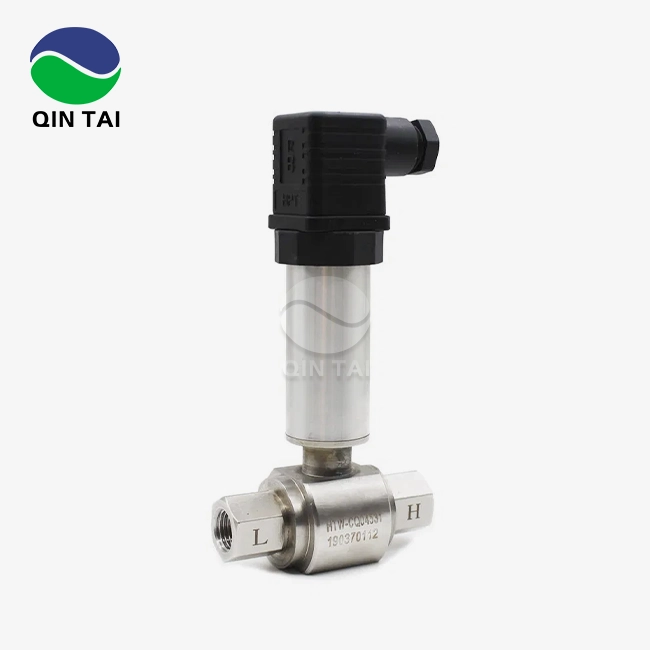
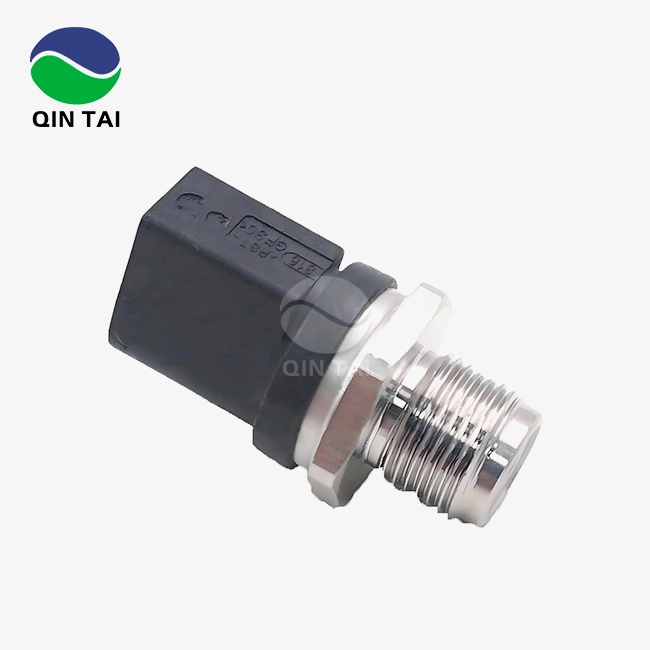
In demanding settings, ceramic pressure sensors are the norm. In big trucks, building equipment, and farm equipment with diesel engines, they accurately measure oil pressure, fuel pressure, and exhaust backpressure over a wide temperature range. Ceramic diaphragm sensors are used in SCR and DPF aftertreatment systems to measure the difference in pressure across particulate filters. Exhaust vapors or soot-filled gasses can't damage the sensors.
In the following areas, ceramic sensor technology consistently performs better than silicon:
- Diesel engine aftertreatment (SCR/DPF systems): Direct exposure to exhaust gases, moisture, and particulates demands chemical inertness and abrasion resistance that only ceramic provides at scale.
- Hydraulic and pneumatic systems: Pressures up to 600 bar with oil-based or water-glycol media are well within ceramic sensor capability, while silicon alternatives require additional protection layers.
- Generator sets in mines and power plants: Continuous operation under vibration, dust, and temperature cycling calls for industrial-grade durability—ceramic sensors deliver without frequent recalibration.
Because of these qualities, procurement teams that are looking for parts for mission-critical systems favor ceramic pressure sensors.
Where Silicon Sensors Are Competitive
Silicon sensors work best in medical equipment, consumer electronics, barometric monitoring, and other places where the media is clean, the pressures are low, and the environment is controlled. Silicon sensors offer good accuracy at a lower unit cost for OEM projects that need to stay within a budget and operate in normal circumstances. But when upkeep, calibration slip, and early replacement are taken into account, their total cost of ownership goes up.
Procurement Considerations for B2B Clients
Total Cost of Ownership vs Unit Price
Purchasing managers usually look at the price per unit, but sellers of ceramic pressure sensors that have been shown to last a long time can lower the real cost per measurement cycle. A ceramic sensor that costs 20–30% more than a silicon sensor can last 3–5 times longer in harsh or corrosive environments. This trade-off strongly favors ceramic for OEM supply chains that need consistent mass production.
Certification and Compliance Requirements
Diesel engine makers who make cars that have to meet China VI or Euro VI emission standards must get the sensors they use in aftertreatment systems from at least IATF16949 and ISO9001 certified sources. Qintai has these two certificates, as well as CE, UL, RoHS, REACH, and Ex ratings. These ratings make sure that Qintai meets all of the compliance requirements that management and buying approval chains need before they can qualify as a seller.
Customization and Lead Time
If a business is looking for ceramic pressure sensors to use in an SCR system, they often need special pressure ranges, connector types, or output signal setups. Suppliers that offer OEM/ODM services and have their own R&D departments can meet these needs without having to wait longer for orders. Make sure that your provider can provide paperwork for every change in specifications and help your engineering team with validation testing.

Calibration, Maintenance, and Integration Tips
Calibration Best Practices
Ceramic and silicon sensors should be calibrated against traceable pressure standards on a regular basis, based on the conditions in which they will be used. In high-cycle uses like hydraulic systems, it is usual to check the adjustment once a year. For ceramic sensors that can work with a range of supply voltages (2–30 VDC, like the QS-P105), make sure that the supply voltage stays stable at the calibration point to avoid zero-output drift.
Installation and Mounting
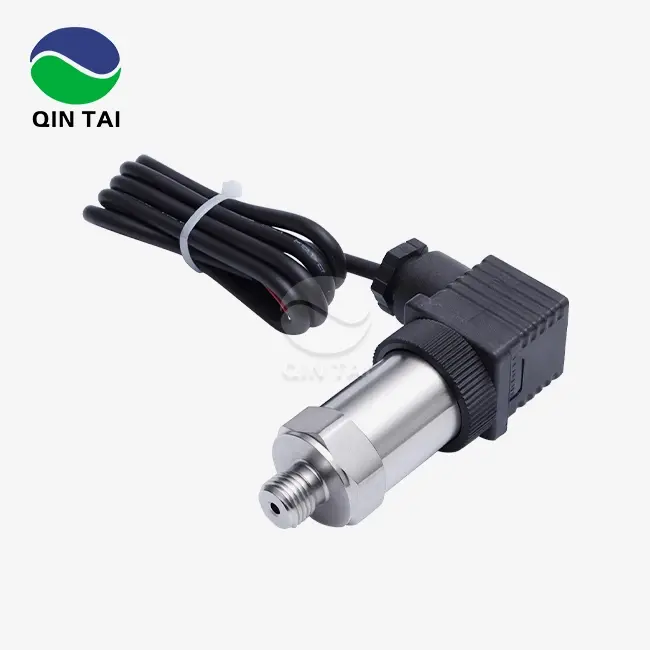
There are easy mounting options on the QS-P105 that make installation faster and easier. Before you place, make sure that the thread specifications work with your process link or manifold. Use the right thread sealer and be careful not to over-torque, as this can put too much stress on the ceramic pressure sensors' diaphragm and stop it from working. The working temperature range (-40°C to 135°C) should be checked against the highest temperature in your system where the sensor is located.
Troubleshooting Common Issues
Most of the time, electrical noise on the supply line, mechanical over-stress from incorrect mounting torque, or a safety overload event exceeding the rated 200% FS are to blame when a ceramic diaphragm sensor shows drift or non-linear output. The QS-P105 has a 200% FS safety overload rating, which saves it from pressure bursts that happen when diesel engines start up and when hydraulic systems pressure rises.
Conclusion
It's not a matter of which ceramic or silicon pressure sensor is better in general; it's about which sensor technology works best in the given situation. Ceramic pressure sensors are better than silicon in harsh conditions because they are resistant to chemicals, last longer, and are more stable over time. This makes them ideal for diesel engine OEMs, SCR/DPF operators, generator set makers, and industrial aftertreatment applications. The Qintai QS-P105, built around advanced ceramic pressure sensors, is a technically sound and financially viable choice for your system that needs accuracy from -1 bar to 600 bar and -40°C to 135°C. It is also backed by certified production standards.

FAQ
How accurate are ceramic pressure sensors compared to silicon?
Piezoresistive ceramic pressure sensors typically achieve ±0.1% to ±0.5% of full scale. Silicon sensors reach similar numbers in clean, stable environments. Under thermal cycling, abrasive media, or chemical exposure, ceramic maintains tighter long-term accuracy due to its material stability.
Are ceramic sensors suitable for high-temperature diesel engine applications?
Yes. Ceramic sensors rated for -40°C to 135°C working temperature and manufactured from 96% Al₂O₃ perform reliably in engine compartment and exhaust aftertreatment environments where silicon or metal-diaphragm sensors may degrade prematurely.
Can ceramic pressure sensors be customized for specific OEM requirements?
Qualified ceramic pressure sensor manufacturers offer OEM/ODM services covering pressure range, connector type, output signal, and mounting configuration. Confirm that the supplier holds IATF16949 certification and can provide product validation documentation.
What pressure ranges do ceramic sensors cover?
Ceramic diaphragm sensors cover a broad spectrum—from as low as 0–1 bar up to 600 bar or beyond, depending on design. The QS-P105 covers -1/0 bar to 600 bar, suitable for hydraulic, fuel, and exhaust pressure monitoring.
What certifications should I require from a ceramic sensor supplier?
For diesel engine and emission-regulated applications, require ISO9001, IATF16949, CE, RoHS, and REACH at minimum. Suppliers serving mining or explosive environments should also carry Ex certification.
Partner with Qintai for Certified Ceramic Pressure Sensor Solutions
Since 2001, Qintai has sold ceramic pressure sensors to OEM customers in more than 60 countries. They are certified by ISO9001, IATF16949, CE, UL, and Ex. We make ceramic pressure sensors and have the biggest part of the diesel engine aftertreatment sensors market in China. We can do OEM/ODM work and have a variable production capacity. Get in touch with our expert team to talk about your needs, get a price, or download the QS-P105 product datasheet. You can contact us at info@qt-sensor.com or go to qt-sensor.com.
References
1. Fraden, J. Handbook of Modern Sensors: Physics, Designs, and Applications. Springer, 2016.
2. Eaton, W. P., & Smith, J. H. "Micromachined pressure sensors: review and recent developments." Smart Materials and Structures, 1997.
3. Gerlach, G., & Dötzel, W. Introduction to Microsystem Technology: A Guide for Students. Wiley, 2008.
4. Kinnell, P. K., & Craddock, R. "Advances in silicon resonant pressure sensing technology." Measurement Science and Technology, 2012.
5. Bryzek, J., Peterson, K., & McCulley, W. "Micromachines on the march." IEEE Spectrum, 1994.
6. Turner, J. D., & Austin, L. "Sensors for automotive applications." Proceedings of the Institution of Mechanical Engineers, Part D: Journal of Automobile Engineering, 2000.

Our customers’ satisfaction speaks for our quality — contact us to experience the same reliable service.