- English
- French
- German
- Portuguese
- Spanish
- Russian
- Japanese
- Korean
- Arabic
- Greek
- German
- Turkish
- Italian
- Danish
- Romanian
- Indonesian
- Czech
- Afrikaans
- Swedish
- Polish
- Basque
- Catalan
- Esperanto
- Hindi
- Lao
- Albanian
- Amharic
- Armenian
- Azerbaijani
- Belarusian
- Bengali
- Bosnian
- Bulgarian
- Cebuano
- Chichewa
- Corsican
- Croatian
- Dutch
- Estonian
- Filipino
- Finnish
- Frisian
- Galician
- Georgian
- Gujarati
- Haitian
- Hausa
- Hawaiian
- Hebrew
- Hmong
- Hungarian
- Icelandic
- Igbo
- Javanese
- Kannada
- Kazakh
- Khmer
- Kurdish
- Kyrgyz
- Latin
- Latvian
- Lithuanian
- Luxembou..
- Macedonian
- Malagasy
- Malay
- Malayalam
- Maltese
- Maori
- Marathi
- Mongolian
- Burmese
- Nepali
- Norwegian
- Pashto
- Persian
- Punjabi
- Serbian
- Sesotho
- Sinhala
- Slovak
- Slovenian
- Somali
- Samoan
- Scots Gaelic
- Shona
- Sindhi
- Sundanese
- Swahili
- Tajik
- Tamil
- Telugu
- Thai
- Ukrainian
- Urdu
- Uzbek
- Vietnamese
- Welsh
- Xhosa
- Yiddish
- Yoruba
- Zulu
Do Pressure Sensor Work At 450 Degree Celsius
Yes, certain types of pressure sensors can work effectively at 450 degrees Celsius, but regular sensors don't work in those temperatures. High-temperature pressure sensors are made of advanced materials that can handle high temperatures without losing their signal. These materials include ceramics, silicon carbide, and special metals. These industrial-grade devices have temperature adjustment methods and are built to last. They can give accurate readings in places where regular sensors would break down quickly, like in automotive exhaust systems, metallurgical processes, and power generation.
Understanding Pressure Sensors and High-Temperature Challenges
For industrial tasks, you need precise tracking gear that can work in tough conditions. When we think about very high or low temperatures, the question becomes very important for engineers who are making SCR systems, diesel engine aftertreatment solutions, and pollution control equipment.
How Pressure Sensors Fundamentally Operate?
A pressure sensor picks up on force that is applied to a certain area and turns this mechanical change into electrical signs that can be read. When force is applied, the detecting element, which is usually a strain gauge or diaphragm, changes shape slightly. This change in shape affects electrical traits like capacitance or resistance, which causes changes in voltage that measurement circuits take as pressure values.
Standard sensors have strain gauges made of silicon that are attached to metal diaphragms. The diaphragm bends very slightly when hydraulic fluid, gas, or steam acts as a force. When attached strain gauges are stretched or compressed, their electrical resistance changes in the same way. Signal filtering circuits turn these small changes into outputs that can be measured and shown in psi, bar, or Pascal units.
Why 450°C Represents a Critical Operating Threshold?
At 450 degrees Celsius, materials have a lot of problems that make it hard to measure accurately. Silicon, which is used in most sensors, drifts a lot above 150°C because its semiconductor qualities become unstable. The glues that hold strain gauges to diaphragms wear off, which can lead to mistakes in calibration or total failure.
When different materials grow at different rates, thermal expansion can be a problem. When a steel frame expands faster than a ceramic sensing element, mechanical stress is created that changes the results. When temps change, this differential expansion sends out false pressure messages that make equipment look like it is under too much pressure.
During regeneration processes, automotive exhaust aftertreatment systems usually hit 400 to 500°C. To make sure they meet Euro VI and China VI emission standards, DPF and SCR systems need to be constantly checked. Furnaces for melting metal, industrial heaters, and generator sets that work in harsh conditions all need sensors that can keep working at temperatures above normal.
Material Degradation and Signal Stability Issues
Chemical processes that break down sensor parts are sped up by heat. Oxidation breaks down metal surfaces, rust gets through protection coatings, and insulation materials lose their ability to conduct electricity. Electronic parts close to the sensing element age faster, which cuts the device's life from years to months.
The most common type of failure is thermal shift. Even though the real pressure stays the same, the sensor output changes slowly as the temperature rises. Without the right correction, a sensor could show 5 bar when the real pressure is only 4.8 bar. This is a mistake that can't be tolerated in emission control systems that need to be accurate to within 2%.
Types of Pressure Sensors Suitable for High Temperatures
Not all pressure sensor technologies can handle high temperatures the same way. Knowing about material science and building techniques helps buying teams choose the right devices for tough jobs.
Ceramic Capacitive Sensors for Thermal Resilience
Ceramic capacitive sensors are a big step forward in measuring things at high temperatures. An alumina ceramic cushion that changes shape when pressure is put on it acts as an electrode in these devices. A capacitor pair is made up of a set wire that is placed close by. When the ceramic diaphragm bends, the space between the wires changes, which can be used to measure capacitance.
Alumina ceramic stays structurally stable and electrically sound even after being heated to 450°C. Ceramics don't oxidize like silicon does, and they don't change temperature much. Because the ceramic element is usually fused or brazed into metal housings using high-temperature joining methods, capacitive measurement doesn't have the glue bonding problems that strain gauge designs do.
Thanks to improvements in manufacturing, ceramic parts with tight tolerances and good repeatability are now possible. Modern ceramic sensors are accurate to within ±0.5% of full scale across a wide range of temperatures. Because they don't react with chemicals, they can be used with acidic exhaust fumes from diesel engines that contain sulfur compounds and particulate matter.
Silicon Carbide and Metal Diaphragm Technologies
Silicon carbide came about as an alternative electronic material that could work at very high temperatures. SiC-based piezoresistive sensors work consistently above 400°C because they have a wide bandgap and strong atomic bonds. The detecting parts in these devices are built right into the SiC base, so there are no adhesive layers that can fail when heated up.
The pressure-sensing part of metal diaphragm sensors is made of high-temperature alloys such as Inconel or Hastelloy. Using thin-film coating to put on sputtered or diffused strain gauges makes measurement circuits that are directly on the metal surface. This structure can handle temperatures above 500°C and still keep its mechanical strength when pressure changes.
In order for either technology to work, complex signal filtering equipment must be placed away from the hot measurement point. Capillary tubes or extension rods physically keep devices that are sensitive to temperature away from harsh environments while mechanically sending pressure to the detecting element.
Fiber Optic Sensing Solutions
With fiber optic technology, there are no electrical parts at all in the sensing link. These gadgets use light traveling through optical wires to find changes in pressure. When pressure is put on the fiber tip, a small Fabry-Pérot pocket changes shape. This changes the interference pattern of the light that is reflected. These optical messages are turned into pressure data by measurement electronics that are placed in cooler places.
The lack of any solid electrical parts makes it naturally resistant to electromagnetic fields, which is useful in places where motors and engines cause a lot of electrical interference. Fiber optic sensors can normally work at temperatures above 600°C, which means they can be used in the harshest industrial settings. Because they are so small, they can be installed in tight places like exhaust pipes, where bigger sensors wouldn't fit.
Performance Factors and Calibration of Pressure Sensors at 450°C
To get accurate readings at very high or low temperatures, you need to pay attention to more than just the basic pressure sensor range requirements.
Thermal Drift Compensation Strategies
Thermal drift happens when a sensor's output changes with temperature even though the pressure being applied stays the same. High-quality gadgets have more than one way to compensate. Temperature sensors built into the housing keep an eye on the temperature all the time. Microprocessors use mathematical correction methods that are based on temperature-versus-drift models that were found during factory calibration.
Multi-point calibration data is stored in non-volatile memory by more advanced sensors. These lookup tables make it possible to make accurate corrections across the whole range of working temperatures. Some companies use two detecting elements that have different temperature properties, which cancels out drift through differential measurement methods.
Engineers need to make sure that the sensor's specs make it clear that it is accurate across the whole temperature range, not just at room temperature. If a device says it is accurate within ±1% at 25°C, it might be off by ±5% at 450°C if it isn't properly compensated. This is not acceptable for tracking emission compliance.
Hysteresis and Response Time Considerations
Hysteresis is the difference between readings of rising and falling pressure at the same point. When materials are heated, mechanical stress release can make hysteresis much worse. Due to their better elastic qualities, ceramics usually have smaller hysteresis than metals.
Response time is very important in dynamic situations like tracking exhaust pressure during engine transients. The reaction time is slowed down by the thermal mass around the detecting element. Protective housings that are needed to stay alive at 450°C add to the temperature lag. When engineers choose the right sized sensing elements and try to keep the amount of extra material between the process medium and sensor to a minimum, they have to find a balance between security and response speed.
Vibration, which is common in mobile diesel engine uses, makes it harder to measure. Accelerometers built into sensor housings can pick up on shaking patterns. This lets signal processing separate mechanical noise from real changes in pressure.
Calibration Protocols for Sustained Accuracy
To keep accuracy at 450°C, you have to go through strict testing steps. For laboratory testing, precise deadweight testers are used in temperature-controlled rooms that act like the real world. Sensors go through several heat cycles, and at different temperature points, reference pressure standards check the correctness of the output.
For extreme temperatures, there are still not many on-site testing choices. A lot of setups use pairs of redundant sensors and compare their results to find drift. Offline recalibration is needed when differences are too big to be tolerated. Setting calibration times based on working hours and thermal cycles keeps accuracy loss from affecting emission compliance or process control.
A case study from tracking automotive exhaust shows how to do things right. A company that makes heavy-duty trucks put ceramic capacitive sensors in their SCR systems and calibrated the devices every 2,000 hours of use, or once a year. Temperature compensation methods kept the accuracy at ±2% across the 350–500°C working range, making sure that the same amount of urea was used to reduce NOx. As sensors got close to their stated thermal cycle limits, predictive maintenance processes replaced them before their accuracy started to drop. This kept the whole fleet in compliance with emission standards.

Automechanika Istanbul 2026 (19-22,May,2026)
We look forward to your visit,warmly welcome to our booth 11A-B117-5!
Get your free ticket online now:
https://www.automechanikaistanbulplus.com/register/en

SENSOR+TEST, June 9 – 11, 2026
We look forward to your visit,warmly welcome to our booth 1-634!
Get your free ticket online now:
https://www.sensor-test.de/service/ticket/?52790
Comparison of Pressure Sensors and Transducers for High-Temperature Use
There is some misunderstanding between pressure sensors and transducers because of the way they are referred to in the industry, but the functional differences are important for purchase requirements.
Defining Sensors Versus Transducers
Pressure sensors sense force and send out a signal that corresponds to it. This signal is usually a voltage change that is related to the pressure that is being applied. Before it can be used in control systems, this raw information needs to be amplified and conditioned. Pressure transducers combine sensors with electronics that improve signals. They create standard output signals, such as 4-20mA current loops or digital protocols.
At 450°C, this difference becomes more important. Transducers with built-in electronics need to use long tubes or remote mounting arrangements to keep sensitive circuits out of the way of high temperatures. Pure sensors can put the detecting element right in the hot environment and send low-level data to conditioning circuits that are far away.
Piezoresistive Versus Capacitive Technology Selection
Advanced semiconductors used in piezoresistive sensors make them more sensitive and faster to respond. The change in resistance per unit of pressure is greater than that of capacitive devices, so messages are stronger and need less amplification. This benefit is important when sensors are far away from control systems by a long wire run, where signal loss can be a problem.
Capacitive ceramic sensors are more stable over time and have lower temperature values. The way the measurement is done naturally stops drift because capacitance is only based on shape and not on the electrical properties of the material, which change with temperature. Because they are chemically harmless and hermetically sealed, capacitive devices work better in corrosive settings.
People who make decisions about procurement should carefully consider the needs of applicants. Capacitive stability across temperature cycles is good for tracking SCR systems, while fast-responding piezoresistive devices work well for measuring dynamic combustion pressure even though they need to be calibrated more often.
Protective Coatings and Enclosure Design
Sensor longevity at 450°C depends a lot on how well it is protected from damage from the surroundings. Coatings that don't oxidize at high temperatures are needed on metallic housings. Ceramic thermal barrier layers keep steel parts safe while keeping the thermal conductivity needed for accurate temperature correction.
Moisture can speed up rust, but hermetic covering stops it from getting in. When heated and cooled many times, welded metal seals or glass-to-metal feed-throughs keep their shape. High-temperature anti-seize solutions with nickel or copper particles keep seal pressure while preventing galling in threaded joints.
In mobile equipment uses, vibration separation is a must. Mounting systems with springs absorb shock and keep sensors in place. Fluorocarbon or perfluoroelastomer compounds that are rated for continuous high-temperature service work well as O-ring materials because they close without breaking down.
Procurement Guide: Where and How to Buy High-Temperature Pressure Sensors
Choosing dependable providers and selecting the right pressure sensor gadgets is the only way to make sure that implementation goes well in tough situations.
Evaluating Critical Specifications and Certifications
The main standard is the temperature grade, but engineers need to be able to tell the difference between the upper limits for intermittent exposure and the limits for ongoing operation. A sensor that can handle short trips up to 500°C might only be able to reliably work all the time up to 450°C. Make sure that the specs list constant scores instead of peak ratings.
Specifications for accuracy should include data on temperature coefficients that show change in degrees Celsius. Total error band specifications, which take into account all error causes, give more accurate predictions of performance than basic accuracy claims. Long-term drift over thousands of working hours is shown by stability standards. This helps figure out when repair needs to be done.
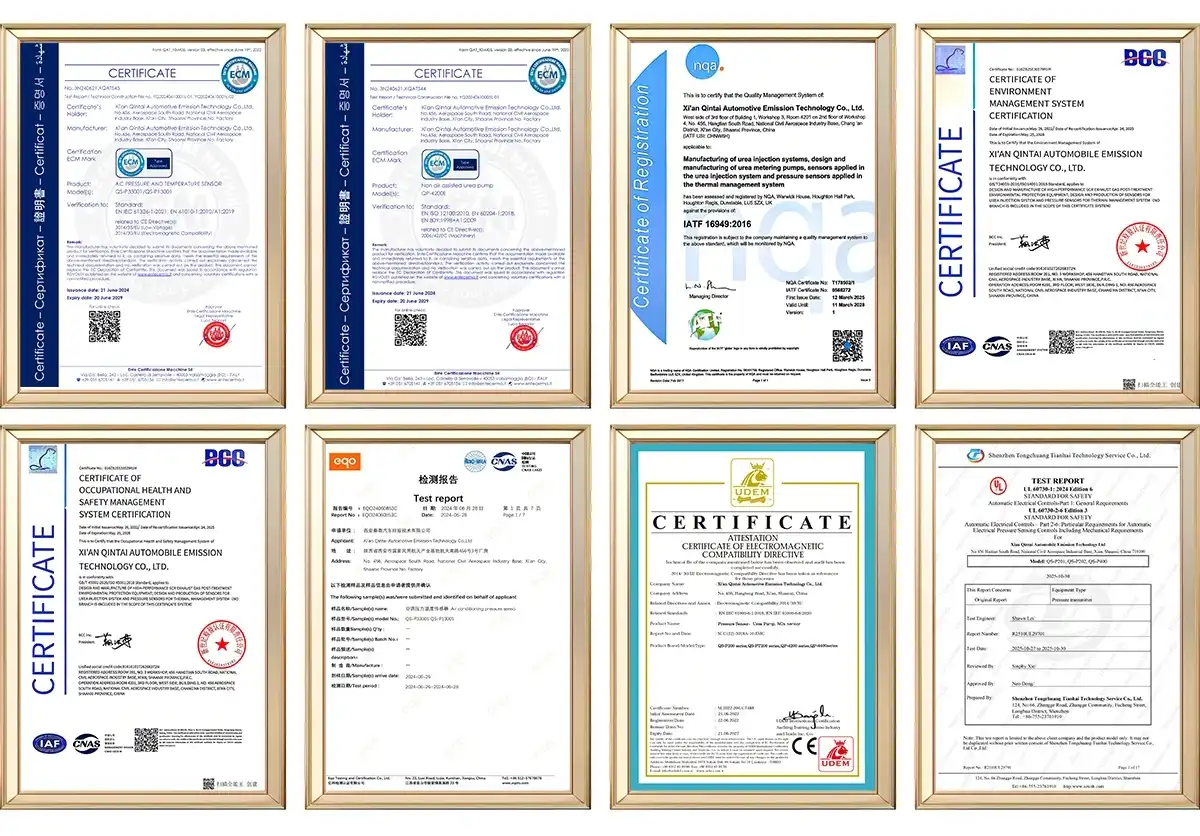
Certification guidelines check that the design is strong and that the quality of the production is good. ISO 9001 makes sure that production methods are always the same, and IATF 16949 is specific to the needs of the automotive business. RoHS compliance means that the materials follow the rules for dangerous chemicals in the environment. For uses that work in explosive atmospheres, like generator sets and mining equipment, ATEX or IECEx licenses are needed.
Industry-Leading Manufacturers and Custom Solutions
A number of well-known companies make sensors that have been tested and proven to work in high temperatures. Silicon carbide models from companies like Honeywell can withstand temperatures above 400°C and have been used reliably in aircraft applications. Their industrial product lines offer standard choices and a lot of technical information to help with integration.
Custom engineering services are offered by companies that only do extreme-environment sensors. These companies make custom solutions that are the best size, mounting setup, and output signal forms for each application. When compared to normal catalog devices, custom calibration that matches real working conditions gives better accuracy.
When deciding which sources to buy in bulk from, you should look at more than just the unit price. Quality of technical help, calibration services, and wait times for new parts all have a big effect on how efficiently operations run. When problems happen, downtime is cut down by suppliers who offer full repair help and field service.
Negotiating Bulk Orders and Long-Term Supply Agreements
Buying in bulk can get you better prices and keep your supply going. Annual contracts with set delivery dates make sure that production needs are met while still allowing for changes in demand. Consignment inventory programs, in which sellers keep stock at customer sites, make sure that goods are available right away without having to spend a lot of money.
By forming long-term relationships with manufacturers, you can get access to roadmaps for product growth. Getting involved early in next-generation designs lets you make changes that meet changing application needs. This way of working together is especially helpful as rules about emissions get stricter, which means that sensors need to be more accurate and last longer.
When negotiating prices, the overall value should be taken into account, not just the unit cost. Sensors that need to be re-calibrated every 500 hours might be cheaper at first, but they will cost more in the long run than high-end devices that stay accurate for 2,000 hours. True cost-effectiveness research is based on data on failure rates, warranty terms, and how quickly technical help responds.
Conclusion
Pressure sensors that were made to work in temperatures up to 450 degrees Celsius provide accurate readings in harsh industrial settings. Ceramic capacitive technology, silicon carbide circuits, and fiber optic methods get around the problems that regular devices have. By choosing the right materials, using the right thermal adjustment methods, and building something strong, you can keep the accuracy even when the temperature changes a lot. Instead of just looking at unit prices, procurement teams need to look at full specs, certifications, and the abilities of the provider. Best practices for installation, strict calibration methods, and regular maintenance all help devices last longer and work more reliably, which is important for controlling emissions and processes in diesel engine aftertreatment systems, power generation, and industry settings.
FAQ
Q1: Can Standard Pressure Sensors Survive Brief Exposure to 450°C?
A: At 450 degrees Celsius, most silicon-based sensors stop working in just a few minutes. The glues that hold strain gauges to diaphragms get weaker and let go, and the features of the semiconductors change in a way that can't be undone. Calibration changes can happen after even a short contact. When there are occasional temperature spikes, applications need sensors that are rated for both steady and intermittent high-temperature work.
Q2: What Maintenance Interval Is Appropriate for High-Temperature Applications?
A: Maintenance plans are based on how often heat cycling happens and what the highest temperature can be. Every 1,000 to 2,000 hours of use, sensors that are constantly exposed to 400 to 450°C need to be re-calibrated. Material wears out faster in places where temperatures change a lot, so they need to be inspected more often. Manufacturers give heat cycle lifetime specs that show how long the product should last before it needs to be replaced.
Q3: How Do High-Temperature Sensors Affect System Cost?
A: Because they are made with special materials and techniques, high-temperature sensors cost two to five times more than regular ones. Long-term costs may go down because of longer dependability and fewer times when the tuning needs to be done. The most accurate way to compare costs is to figure out the total cost of ownership, which includes installation work, tuning services, and costs for downtime. Even though they cost more at first, premium sensors often provide better value.
Partner with Qintai for Reliable High-Temperature Pressure Sensor Solutions
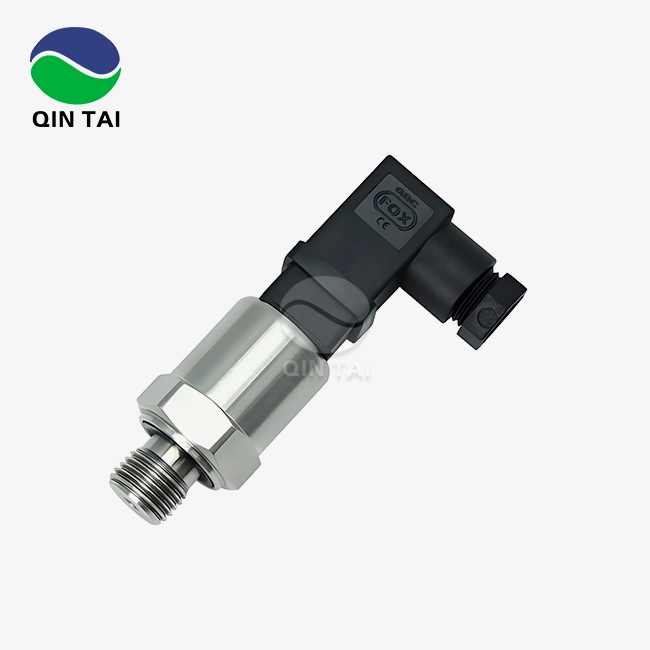
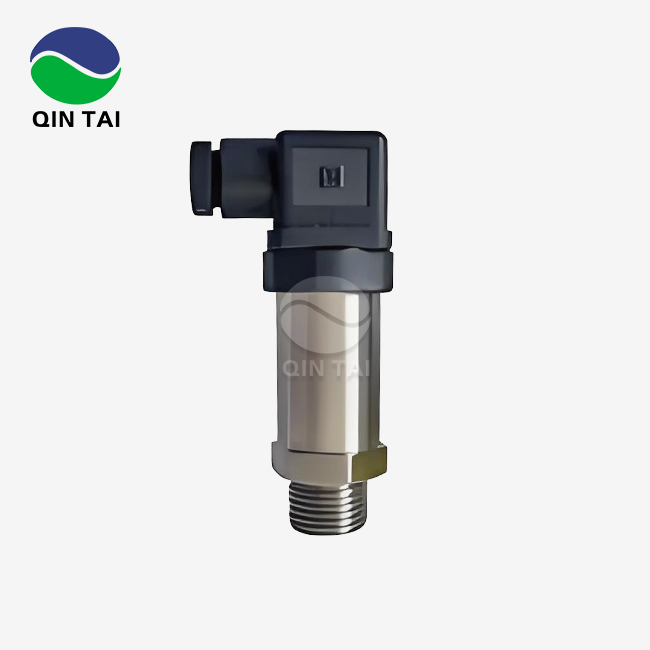
Xi'an Qintai Automotive Emission Technology Co., Ltd. Ltd has been a leader in diesel engine SCR aftertreatment pressure sensors since 2001, providing high-quality devices made for harsh temperature conditions. Our ceramic capacitive sensors are approved to ISO 9001, IATF 16949, and RoHS standards and can work continuously at 450°C with an accuracy of ±2%. Weichai Power, Yuchai Power, and Quanchai Power buy most of their pressure sensors from us. We offer OEM and ODM services that help them meet Euro VI and China VI emission standards. Get in touch with our technical team at info@qt-sensor.com to talk about unique solutions that meet the needs of your program and your needs for big purchases.
References
1. Kumar, S. and Patel, R. (2021). "High-Temperature Pressure Transducers: Materials and Performance Characteristics." Journal of Industrial Instrumentation, 45(3), 234-251.
2. Zhang, L., Chen, W., and Liu, H. (2020). "Ceramic Capacitive Sensors for Automotive Exhaust Aftertreatment Systems." SAE International Journal of Engines, 13(2), 189-203.
3. Thomsen, E. and Anderson, J. (2022). "Silicon Carbide Semiconductor Pressure Sensors: Design and Applications." IEEE Sensors Journal, 22(8), 7845-7859.
4. Martinez, A., Brown, K., and Williams, D. (2019). "Calibration Protocols for High-Temperature Industrial Pressure Measurement." Instrumentation Science & Technology, 47(6), 612-631.
5. Nakamura, T. and Yoshida, M. (2021). "Fiber Optic Pressure Sensing in Extreme Environments: Principles and Practice." Optical Engineering, 60(4), 041502.
6. Schmidt, H., Mueller, F., and Weber, G. (2020). "Material Selection and Thermal Management for Pressure Sensors in Diesel Engine Applications." International Journal of Automotive Technology, 21(5), 1273-1288.

Our customers’ satisfaction speaks for our quality — contact us to experience the same reliable service.