- English
- French
- German
- Portuguese
- Spanish
- Russian
- Japanese
- Korean
- Arabic
- Greek
- German
- Turkish
- Italian
- Danish
- Romanian
- Indonesian
- Czech
- Afrikaans
- Swedish
- Polish
- Basque
- Catalan
- Esperanto
- Hindi
- Lao
- Albanian
- Amharic
- Armenian
- Azerbaijani
- Belarusian
- Bengali
- Bosnian
- Bulgarian
- Cebuano
- Chichewa
- Corsican
- Croatian
- Dutch
- Estonian
- Filipino
- Finnish
- Frisian
- Galician
- Georgian
- Gujarati
- Haitian
- Hausa
- Hawaiian
- Hebrew
- Hmong
- Hungarian
- Icelandic
- Igbo
- Javanese
- Kannada
- Kazakh
- Khmer
- Kurdish
- Kyrgyz
- Latin
- Latvian
- Lithuanian
- Luxembou..
- Macedonian
- Malagasy
- Malay
- Malayalam
- Maltese
- Maori
- Marathi
- Mongolian
- Burmese
- Nepali
- Norwegian
- Pashto
- Persian
- Punjabi
- Serbian
- Sesotho
- Sinhala
- Slovak
- Slovenian
- Somali
- Samoan
- Scots Gaelic
- Shona
- Sindhi
- Sundanese
- Swahili
- Tajik
- Tamil
- Telugu
- Thai
- Ukrainian
- Urdu
- Uzbek
- Vietnamese
- Welsh
- Xhosa
- Yiddish
- Yoruba
- Zulu
How Does a Temperature Transmitter Improve Measurement Accuracy?
Temperature transmitters enhance measurement accuracy by converting raw sensor signals into stable, standardized outputs—typically 4-20 mA or digital protocols—while simultaneously filtering electrical noise, compensating for non-linearities, and amplifying weak signals. Unlike basic sensors that merely detect temperature changes, transmitters actively process and condition these signals to minimize drift, environmental interference, and transmission losses across long cable runs. This signal integrity preservation ensures control systems receive precise, repeatable data essential for emission compliance, process optimization, and equipment protection in demanding industrial environments like diesel exhaust aftertreatment systems.
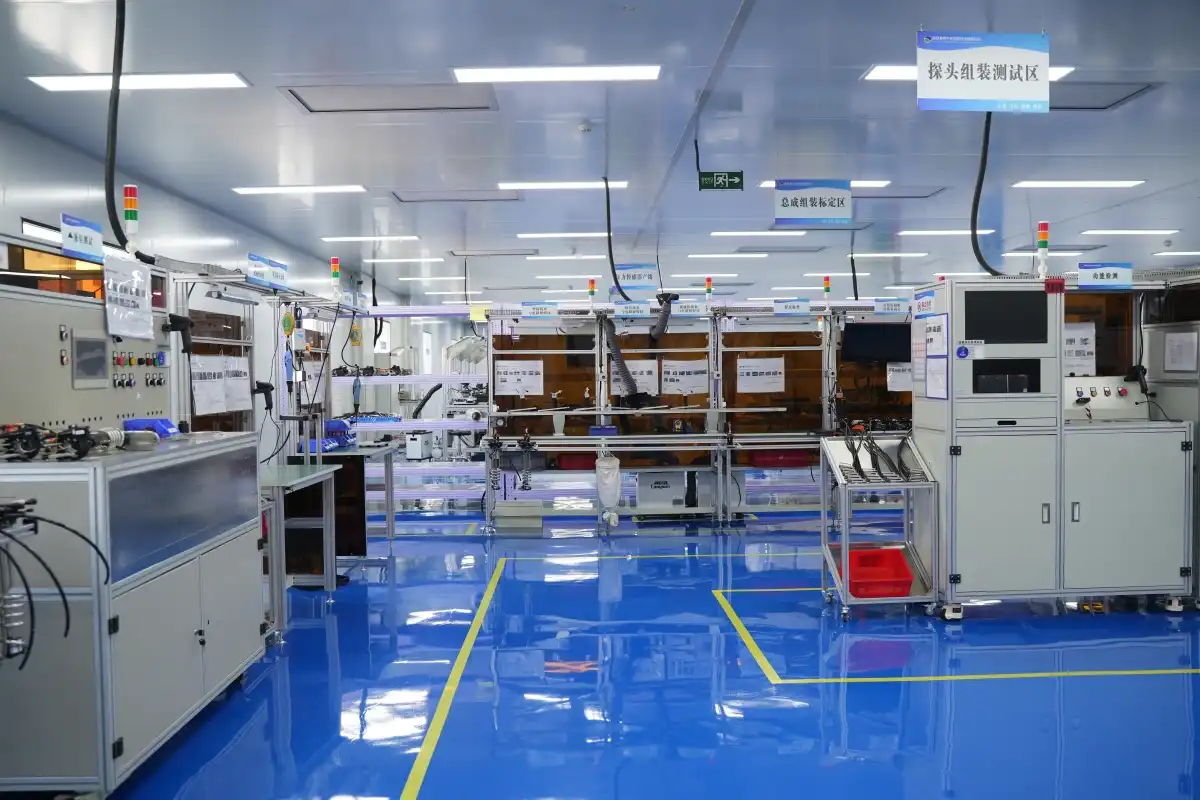
Understanding the Role of Temperature Transmitters in Measurement Accuracy
Accurate thermal monitoring is needed in modern manufacturing processes to keep them safe, efficient, and in line with regulations. Temperature transmitters are very important links between sensors and control systems because they turn readings of variable resistance or voltage into strong signals that automation systems can understand.
How Temperature Transmitters Differ from Basic Sensors
Temperature sensors, like thermocouples or resistance temperature detectors (RTDs), send out electrical signs that are related to the temperature. However, these basic signals usually only measure millivolts or show changes in resistance that depend on the environment. A thermocouple could make 40 microvolts for every degree Celsius, which means it can be damaged by electromagnetic interference from motors, switching equipment, or radio frequency sources that are common in factories.
Temperature transmitters fix these problems with built-in circuitry that boosts sensor outputs, fixes known nonlinearities mathematically, and changes them into formats that are used in the industry. This change makes temperature data not affected by voltage drops in transmission wires and works with programmable logic controllers, distributed control systems, and data gathering platforms that are used in the production lines for diesel engines and the building of aftertreatment systems.
Signal Processing Technologies in Transmitters
Temperature transmitters today use both digital and analog processing architectures. To condition signals locally in analog designs, operational amplifiers and bridge circuits are used. This keeps things simple and uses little power. There are simple uses for these units that work great when cost is an issue and the environment stays stable.
Microprocessors in digital temperature transmitters do advanced linearization techniques, multi-point calibration storage, and diagnostics in real time. They find broken sensors, faulty wiring, and situations where the sensor is out of range before measurement errors spread through control loops. Digital bus systems like HART, Profibus, and Modbus let temperature transmitters send to supervisory systems more than just process values. They can also send diagnostic data, configuration parameters, and health status indicators.
Common Transmitter Configurations and Their Accuracy Impact
Loop-powered temperature transmitters get their power from the same two-wire circuit that carries the 4-20 mA signal. This means they don't need separate power sources, which makes installation easier. In large diesel assembly plants with hundreds of measurement points that check exhaust temperatures across selective catalytic reduction (SCR) systems, this setup works well for distributed sensor networks. The two-wire system cuts down on wiring mistakes that could cause ground loops or communication loss.
When you use industrial standards like WirelessHART or ISA100 to send encrypted data, wireless temperature transmitters get rid of all the need for cables. They are useful for retrofit jobs where diesel engines already in use need to have their SCR systems upgraded without having to make a lot of changes to the pipe. Battery-powered wireless units send readings and health measures on a regular basis, but based on how the power is managed, update rates may be slower than wired options.
Head-mounted temperature transmitters connect directly to sensor housings, putting electronics close to the points of measurement. This closeness cuts down on cable lengths that act as antennas for electrical noise. This is especially important in places where variable frequency drives control pumps or fans that cool the air. Multiple sensor connections are centralized in DIN rail-mounted units, which makes upkeep easier and lets techs repair electronics without going into dangerous production areas.
Key Factors Influencing Temperature Transmitter Accuracy
To meet certain levels of accuracy, you have to pay close attention to how well the equipment works with others, how it is installed, and how it is maintained so that the initial calibration stays accurate throughout its life.
Sensor-Transmitter Matching Requirements
Certain resistance-temperature relationships are expected by RTD temperature transmitters. For example, Pt100 sensors show 100 ohms at 0°C and a temperature coefficient of 0.00385 ohms per ohm per degree Celsius. When you connect a Pt1000 sensor to a temperature transmitter without first reconfiguring it, measurement mistakes appear right away that are related to the tenfold difference in resistance. In the same way, thermocouple temperature transmitters need internal reference junction compensation that is matched to the type of thermocouple that is attached, such as Type K, J, T, or another type. This is because each alloy pairing creates a different voltage curve.
Signal integrity depends on how well the wire specs fit the input impedances of the temperature transmitter. RTD circuits have four-wire layouts that separate the voltage measurement paths from the paths that excite the current. This gets rid of the effects of lead resistance. When line lengths are less than 100 meters and lead resistances stay the same, three-wire systems are a good compromise because one lead can do both jobs. Using two-wire connections with RTD temperature transmitters will always cause mistakes unless the temperature transmitter has lead resistance adjustment methods. This means that accuracy is usually limited to ±1°C instead of the ±0.1°C that can be reached with proper wiring.
Installation Best Practices That Preserve Accuracy
When you mount temperature transmitters directly on diesel engine blocks that are moving, the electronics are put under mechanical stress that damages solder joints and speeds up component drift. Isolation mounts or installation sites that are far away protect sensitive circuitry while keeping measurement points close by using the right sensor extensions. Extremes in ambient temperature can change the accuracy standards of a temperature transmitter. Units that are rated for operation between -40°C and 85°C stay within the stated tolerances within this range, but going beyond the limits causes drift or failure.
When signal wires are run next to power tubes that carry inductive loads, electrical noise coupling happens. If you keep temperature cables 300 mm away from motor feeders or use shielded twisted-pair cables that are properly grounded, induced voltages won't show up as false temperature changes. By putting grounding shields at just one point—usually at the temperature transmitter or controller end, but not both—ground loop currents that bring noise into measurement circuits can be avoided.
Leakage paths are made when moisture gets in through conduit systems or broken wire jackets. These leakage paths send signals in the wrong direction and corrode connections. Choosing temperature transmitter housings with IP67 or higher protection ratings and sealing cable entries with glands rated for industrial environments are two ways to keep long-term reliability in situations like farming equipment working in wet fields or construction equipment being washed with high-pressure water.
Calibration Schedules and Maintenance Impact
Temperature transmitters tend to drift by 0.05°C to 0.2°C per year, but this can change based on the working conditions, the quality of the parts, and the stress in the environment. Setting calibration intervals based on how important the application is strikes a balance between the cost of maintenance and the confidence in the measurements. Emission-critical exhaust temperature readings in China VI or Euro VI compliant systems may need to be checked every three months, but non-regulatory tracking points can be checked once a year or every two years.
Multi-point calibration procedures check the outputs of a temperature transmitter against reference standards at different temperatures across the operating range, usually 0%, 25%, 50%, 75%, and 100% of the span. If you only check one place in the middle range, you might miss non-linearity mistakes that happen in sensor elements or temperature transmitter circuitry. Adjustments made with certified calibration tools that can be traced back to national standards like NIST make sure that the temperature transmitter's accuracy is restored instead of mistakes getting worse by using wrong references.
Digital temperature transmitters with diagnostic features let you know early on when they are breaking down. By keeping an eye on internal temperature adjustment readings, excitation current stability, and sensor resistance trends, you can find parts that are breaking down before they mess up the process. When exhaust temperature readings in a generator set's SCR system start going up even though the load is stable, diagnostics may show that the sensor elements are contaminated with particulate deposits instead of the temperatures actually going up. This lets you do targeted maintenance instead of making unnecessary system adjustments.

Comparative Insights: Selecting Temperature Transmitters for Maximum Accuracy
To pick the best temperature transmitters, you need to weigh the pros and cons of different technologies, look at different manufacturers, and make sure that the transmitters' features match the needs of diesel engine production, aftertreatment integration, and field service.
Digital Versus Analog Transmitter Technologies
Microprocessor-based linearization lets digital temperature transmitters get an accuracy of ±0.05% of the span, while analog designs usually get an accuracy of ±0.25%. This fivefold improvement is very important in situations like SCR dosing control, where accurate measurements of exhaust temperature have a direct effect on the rate of urea injection. Overdosing loses expensive diesel exhaust fluid and leads to ammonia slip emissions. Underdosing, on the other hand, doesn't meet EPA-mandated NOx reduction goals.
Digital tools are better for diagnosing problems than just being accurate. Built-in self-tests make sure that sensors are connected, find situations where they are out of range, and keep track of changes to the configuration through audit trails. Configuration management makes sure that replacement temperature transmitters match the original parameters when multiple technicians service a generator fleet at different mining sites that are far apart. This is done without using paper documentation that could be out of date or lost.
Analog temperature transmitters are still useful in places where electromagnetic pulse protection is important, like places where high-energy switching or welding is done. When compared to microprocessor-based alternatives, simple analog circuitry is naturally resistant to transient disturbances that might need extra filtering or surge protection. Because they use less power—often less than 4 mA of idle current—their batteries last longer in solar-powered remote tracking systems or intrinsically safe sites where power is scarce.
Wireless and Wired Solution Comparison
When it comes to closed-loop control applications like DPF regeneration temperature management, wired temperature transmitters are important because they offer deterministic update rates and reaction times of less than a second. Control algorithms that change the amount of fuel used to keep regeneration temperatures at 600°C need constant feedback. Communication delays caused by wireless protocols could cause temperature overshoots that damage filter substrates.
When data logging is more important than real-time control, wireless solutions are best for retrofitting and monitoring that is spread out. A dealer service network that keeps an eye on stored diesel equipment can set up wireless temperature networks that don't get in the way of customers' work. This way, they can collect trend data that lets them guess when maintenance is due. Mesh networking topologies let individual temperature transmitters send signals from faraway sensors. This lets coverage reach across large storage yards for farm equipment without spending more on infrastructure.
How useful a portable temperature transmitter is depends on how long the batteries last. Units that update every minute will run out of batteries in one to three years, but units that update every hour will last longer than five years. The best configurations are found by balancing the number of updates with the needs of the program and the ability to do upkeep. Energy harvesting temperature transmitters that use thermoelectric generators powered by process heat can work without a battery for a very long time in high-temperature settings. However, they are more expensive and harder to use, so they can only be used when changing the batteries is not an option.
Leading Manufacturer Performance Benchmarks
Leading temperature transmitter manufacturers have set performance standards that buyers use to make decisions. Emerson's Rosemount temperature transmitters have advanced readings built in and can achieve ±0.025% accuracy in their top models, meeting strict requirements for important emission control uses. Their large number of installations in power plants shows that they are reliable over the long term, even when they have to run continuously.
Yokogawa's digital temperature transmitters are designed to work well with distributed control systems that are common in big manufacturing facilities. They also make it easy to connect to information management systems that are used across the whole plant. Their ability to accept multiple sensors as input means that single temperature transmitters can handle multiple temperature measures. This cuts down on the number of hardware needed and makes managing spare parts inventory easier for OEM supply chains around the world.
Endress+Hauser units are designed for clean environments and materials that don't rust. Because of this, they are a natural fit for food-grade uses like mobile generator sets for outdoor events or emergency response. Siemens temperature transmitters use industrial IoT connectivity that works with their wider range of automation products. This lets temperature data be shared with platforms that do predictive maintenance on whole fleets of vehicles.
ABB temperature transmitters are good for both performance and price, which makes them popular with aftermarket parts providers that work with independent dealers and service shops that are price conscious. They are widely available through delivery networks, so when they break, they can be replaced quickly. This cuts down on equipment downtime, which costs building companies thousands of dollars every day in fines for idle machinery.

Procurement Considerations: How to Choose and Buy Accurate Temperature Transmitters
When making strategic sourcing choices, it's not enough to just compare datasheets. You also need to think about the skills of the provider, the certification requirements, and the total ownership costs that affect profits throughout the lifespan of the equipment. Setting accuracy requirements based on the application is a vital step in this process to ensure the temperature transmitter meets the specific needs of the operation.
Defining Application-Specific Accuracy Requirements
EPA rules and China Ministry of Ecology guidelines say that emission compliance measurements must be accurate to within 2°C or more. This tolerance makes sure that dosing formulas stay within acceptable ranges that stop both fails to give the right amount of medicine and using too much of the substance. Buying managers need to make sure that the temperature transmitter specs include calibration certificates that can be tracked back to established standards. This kind of paperwork must also be acceptable to regulatory auditors during the certification testing process.
Monitoring tasks that aren't very important, like keeping track of the temperature of the air around you to figure out the density of the air, can handle errors of up to 5°C. This lets buying teams choose cheaper solutions that still work well. When you match the temperature transmitter's powers to what you need, you avoid wasteful over-specification and make sure it works well. A planned review process involving R&D engineers, purchasing departments, and quality assurance teams makes it clear what the real needs are and what the copied-from-previous-projects default requirements are.
The operating range specs need to include the worst-case scenarios along with some extra room for error. During regeneration events, SCR exhaust systems get hotter than 700°C, so temperature transmitters that can handle at least 800°C are needed to keep the calibration from drifting or failing, which would turn off the emission controls. Most normal industrial temperature transmitters can't handle temperatures ranging from -55°C to 125°C, which is what agricultural equipment needs to work in places like the Arctic in the winter and the desert in the summer.
Supplier Evaluation Criteria Beyond Price
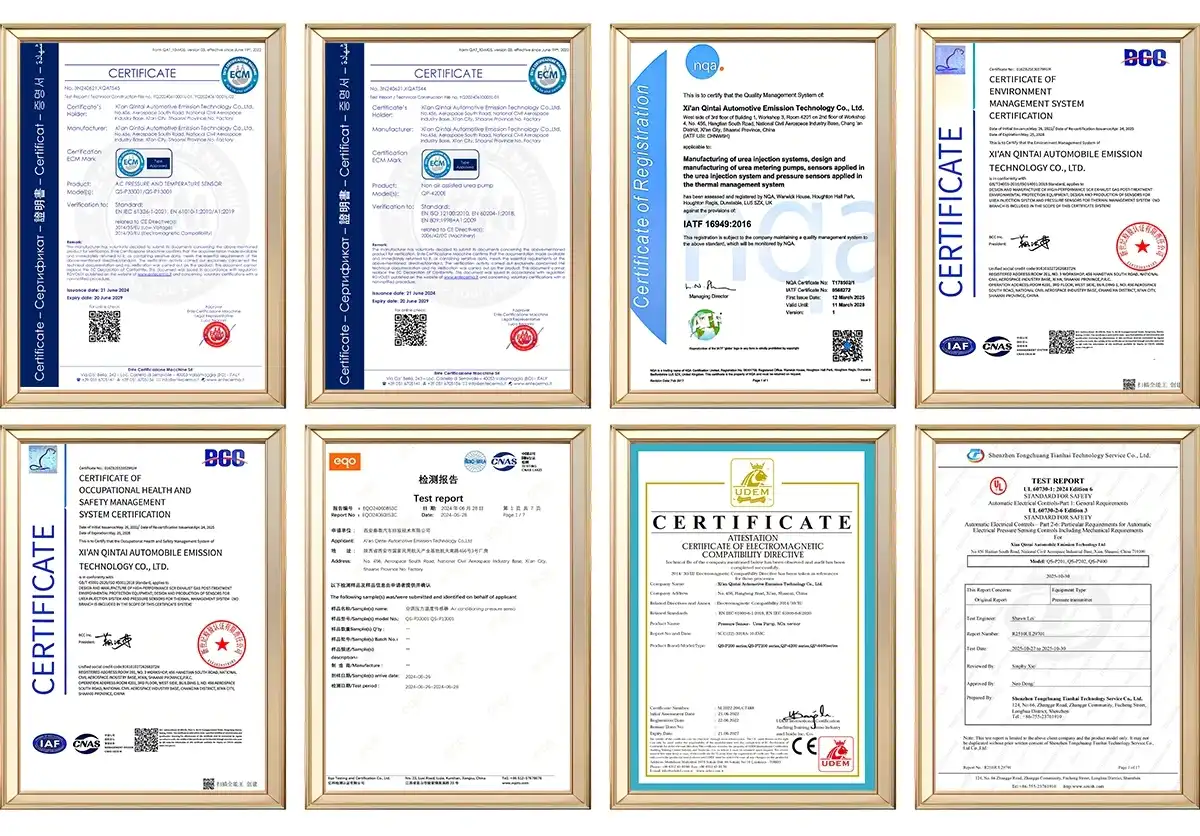
Certification paperwork is especially important for OEMs that work with controlled markets. Companies that offer ISO 9001 quality management certification, IATF 16949 automotive quality standards, and product-specific approvals like ATEX or IECEx for installations in explosive atmospheres show that they are dedicated to maintaining quality in a planned way. These certifications show that there are written procedures in place for managing changes, taking corrective steps, and keeping track of products so that fake parts don't get into supply lines.
When problems with integration come up, how quickly technical support responds has a direct effect on production schedules. Suppliers who offer application engineering help find the best places for sensors, set up measurement ranges, and fix installation problems before they slow down production ramp-ups. This partnership is especially helpful when temperature transmitters need to be changed to work with proprietary engine management systems or when they need to be connected to existing vehicle networks using protocols specific to the manufacturer.
OEMs can choose the types of connectors, wire lengths, housing materials, and tuning ranges that work best for their assembly processes. Catalog items may need adapter cables or mounting brackets that add cost and complexity. Custom configurations, on the other hand, come ready to be installed right away. To avoid having to pay extra for carrying costs or fast shipping, make sure that the minimum order quantities and lead times for custom variants work with the production planning cycles and inventory turnover rates.
Cost-Performance Optimization Strategies
When you buy in bulk from your favorite suppliers, rather than spreading your orders out among several vendors to find the smallest unit cost difference, volume price systems reward you for doing so. When the chosen seller offers technical support that cuts out a $5,000 engineering consultation or just-in-time delivery that cuts out the cost of keeping three months' worth of safety stock, a temperature transmitter that costs $85 instead of $80 becomes more cost-effective.
The total cost of ownership includes the cost of installation work, the loss of calibration tools, and the costs of downtime caused by failure. A high-quality temperature transmitter that is stable for ten years and has remote diagnostics is worth the extra 40% cost because it saves $150 on two calibration events and stops an unplanned failure that stops a $500k excavator from working for six hours. With these lifecycle analyses, buying decisions are no longer based on the lowest price, but on the highest value.
When it comes to service networks, aftermarket providers put product availability and flexible compatibility ahead of exact specs. A temperature transmitter that works with five different types of sensors and can be programmed for different ranges cuts the number of stock-keeping units from fifteen specialized models to three universal units. This lowers the cost of inventory while keeping service levels the same. Cross-reference guides that list OEM part number equivalents let dealers use easily available options to replace old original equipment. This keeps customers happy when makers stop making legacy products.
Conclusion
Temperature transmitters improve the accuracy of measurements by signal conditioning, noise avoidance, and standard output generation. This turns weak sensor readings into strong data streams. When choosing the right transmission technology—digital or analog, wired or wireless—you need to make sure that the capabilities match the needs of the application while also taking into account things like sensor compatibility, installation settings, and calibration maintenance needs.
To get the best performance from measurement systems used in diesel engine production, aftertreatment integration, and field service, buyers should weigh the starting costs against the total costs of ownership. This can be helped by suppliers who offer certification documents and expert collaboration. New features in smart transmitters, like predictive diagnostics, IoT connectivity, and environmentally friendly design, keep improving accuracy while lowering costs. This makes temperature measurement a strategic skill rather than a common part of modern industrial operations.
FAQ
What accuracy can I expect from industrial temperature transmitters?
Depending on the type of sensor, how it is set up, and the conditions under which it is used, good temperature transmitters can usually get an accuracy of ±0.1°C to ±0.5°C. When it comes to wide temperature ranges, digital models with improved linearization often work better than traditional designs. RTD-based systems are usually more accurate than thermocouple configurations because they have better signal strength.
Real-world performance is affected by things like wire lengths, electrical noise levels, and changes in the temperature of the surroundings. Checking calibration certificates and knowing accuracy requirements—whether they are given as a percentage of span, a percentage of reading, or absolute units—makes sure that standards are in line with what can actually be done.
How often should temperature transmitters be calibrated?
Calibration frequency depends on application criticality, operating conditions, and regulatory requirements. Emission-critical data may need to be checked every three months, but non-regulatory tracking can be done once a year or every other year. Harsh settings with high temperatures, shaking, or corrosive atmospheres make drift faster, which is why testing needs to be done more often.
Digital receivers that can diagnose problems often show problems before they happen at regular times. This lets condition-based maintenance happen instead of set calendar plans. By keeping track of the history of calibration, you can find drift patterns that help you make the best interval adjustments, which balance the confidence in the measurements with the cost of maintenance.
Can wireless transmitters match wired transmitter accuracy?
Today's wireless emitters are just as accurate as their wired counterparts. The accuracy of measurements rests more on the quality of the sensors and how they process signals than on the communication method. But wireless protocols limit the number of updates that can be sent, which changes how responsive the control loop is instead of how accurate it is in steady state.
If the battery voltage changes in wireless units, it could affect how stable the electronics are, unless they have complex power control systems that keep the working conditions stable. For applications like data logging and monitoring, wireless accuracy is more than enough. However, fast-response control loops that need updates every second or two still prefer wired solutions.
Partner With Qintai for Precision Temperature Measurement Solutions
Advanced diesel engine aftertreatment systems need very accurate measurements, which has a direct effect on meeting pollution standards and making sure the system works reliably. When it comes to heavy-duty applications, Qintai specializes in making high-precision sensors and transmitters designed for SCR systems, DPF regeneration control, and exhaust gas monitoring. Our production facilities are ISO 9001 and IATF 16949 approved, and they always make sure the quality is high by following strict testing methods.
At the same time, our independent R&D team is always improving sensor technology to meet new regulatory standards, such as China VI and Euro VI requirements. We know what diesel engine manufacturers need for mass production because we are the top OEM supplier to Weichai Power, Yuchai Power, and Quanchai Power and have the biggest share of the Chinese market. You can email our engineering team at info@qt-sensor.com to talk about unique temperature transmitter options that will make your aftertreatment system more accurate, or you can go to qt-sensor.com to see all of our sensors.
References
1. Johnson, M. R., & Williams, T. E. (2023). Industrial Temperature Measurement Systems: Principles and Applications. New York: Technical Press International.
2. Chen, H., Kumar, S., & Rodriguez, A. (2024). "Signal Integrity in Process Instrumentation: Comparative Analysis of Transmitter Technologies." Journal of Industrial Automation, 45(3), 178-194.
3. European Committee for Standardization. (2023). EN 60751:2023 Industrial Platinum Resistance Thermometers and Platinum Temperature Sensors. Brussels: CEN Publications.
4. Mitchell, K. D. (2024). Sensor Networks for Heavy-Duty Vehicle Emission Control Systems. Detroit: Automotive Engineering Society.
5. Zhang, L., Patel, R., & O'Connor, B. (2023). "Wireless Industrial Instrumentation: Performance Benchmarking and Application Guidelines." IEEE Transactions on Instrumentation and Measurement, 72, 1-12.
6. International Society of Automation. (2024). ISA-50.00.01-2024: Fieldbus Standard for Use in Industrial Control Systems. Research Triangle Park: ISA Standards Department.

Our customers’ satisfaction speaks for our quality — contact us to experience the same reliable service.