- English
- French
- German
- Portuguese
- Spanish
- Russian
- Japanese
- Korean
- Arabic
- Greek
- German
- Turkish
- Italian
- Danish
- Romanian
- Indonesian
- Czech
- Afrikaans
- Swedish
- Polish
- Basque
- Catalan
- Esperanto
- Hindi
- Lao
- Albanian
- Amharic
- Armenian
- Azerbaijani
- Belarusian
- Bengali
- Bosnian
- Bulgarian
- Cebuano
- Chichewa
- Corsican
- Croatian
- Dutch
- Estonian
- Filipino
- Finnish
- Frisian
- Galician
- Georgian
- Gujarati
- Haitian
- Hausa
- Hawaiian
- Hebrew
- Hmong
- Hungarian
- Icelandic
- Igbo
- Javanese
- Kannada
- Kazakh
- Khmer
- Kurdish
- Kyrgyz
- Latin
- Latvian
- Lithuanian
- Luxembou..
- Macedonian
- Malagasy
- Malay
- Malayalam
- Maltese
- Maori
- Marathi
- Mongolian
- Burmese
- Nepali
- Norwegian
- Pashto
- Persian
- Punjabi
- Serbian
- Sesotho
- Sinhala
- Slovak
- Slovenian
- Somali
- Samoan
- Scots Gaelic
- Shona
- Sindhi
- Sundanese
- Swahili
- Tajik
- Tamil
- Telugu
- Thai
- Ukrainian
- Urdu
- Uzbek
- Vietnamese
- Welsh
- Xhosa
- Yiddish
- Yoruba
- Zulu
How to Verify Ceramic Pressure Sensor Supplier Quality
Verifying Ceramic Pressure Sensors supplier quality requires a systematic approach combining certification validation, technical capability assessment, and production consistency evaluation. Reliable suppliers demonstrate adherence to international standards like ISO9001 and IATF16949, possess advanced manufacturing facilities with proven quality control systems, and maintain transparent communication throughout procurement cycles. B2B buyers must scrutinize supplier track records, examine product specifications against application requirements, and conduct sample testing to ensure sensors deliver consistent performance across emission control systems, hydraulic monitoring, and industrial automation. Choosing qualified suppliers minimizes operational risks, reduces long-term costs, and supports regulatory compliance in demanding industrial environments.
Understanding Ceramic Pressure Sensors and Their Quality Parameters
The performance features of Ceramic Pressure Sensors are superior to those of conventional metal-based alternatives, representing a significant development in industrial measurement technology. The detecting element in these devices is made of high-purity aluminium oxide ceramic, which is usually 96% Al2O3. It is very strong mechanically and very resistant to toxic media found in diesel engine systems, hydraulic circuits, and emission control applications.
Why Ceramic Outperforms Traditional Sensing Technologies?
The makeup of the material has real practical benefits. When exposed to aggressive fluids or exhaust gases, stainless steel sensors rust within months. Ceramic diaphragm pressure sensors, on the other hand, keep their measurement accuracy for years. This longer operational life directly leads to less downtime and a lower total cost of ownership. This is especially important for heavy truck fleets and construction gear operators who have to stick to tight repair windows.
Another important benefit is that it stays stable at high temperatures. Ceramic pressure transducers stay accurate from -40°C to 135°C, which is a wide range of temperatures that are common in exhaust systems for generator sets and mobile equipment that works in climates that change often. When temperatures go above 100°C, metal sensors tend to drift a lot, which makes emission monitoring less accurate when compliance margins are small.
Critical Quality Specifications That Define Performance
The suitability of piezoresistive Ceramic Pressure Sensors for diesel engine aftertreatment applications is determined by a number of technical parameters. Specifications for non-linearity below 0.3% full scale guarantee accurate measurements across the entire pressure range. This is very important for keeping an eye on selective catalytic reduction systems, where accuracy affects how much urea is used and how well NOx is converted. Zero temperature shift factors show that the sensor is stable. Premium Ceramic Pressure Sensors have drift rates of less than 0.05% full scale per degree Celsius. This means that the setting stays accurate even when the engine temperature changes.
This stability has a direct effect on long-term dependability in China VI and Euro VI compliance, where emission limits require sensors to work consistently over long periods of time between service. Sensitivity ratings between 2.0 and 4.0 mV/V show how the sensor's electricity reacts to pressure. Higher sensitivity makes signal conditioning easier in aftertreatment control units, which lowers the complexity of the electronics and makes the system more resistant to noise. This is especially helpful in diesel engine settings that are electrically loud, where electromagnetic interference can mess up low-level signals.
Key Criteria to Evaluate Ceramic Pressure Sensor Suppliers
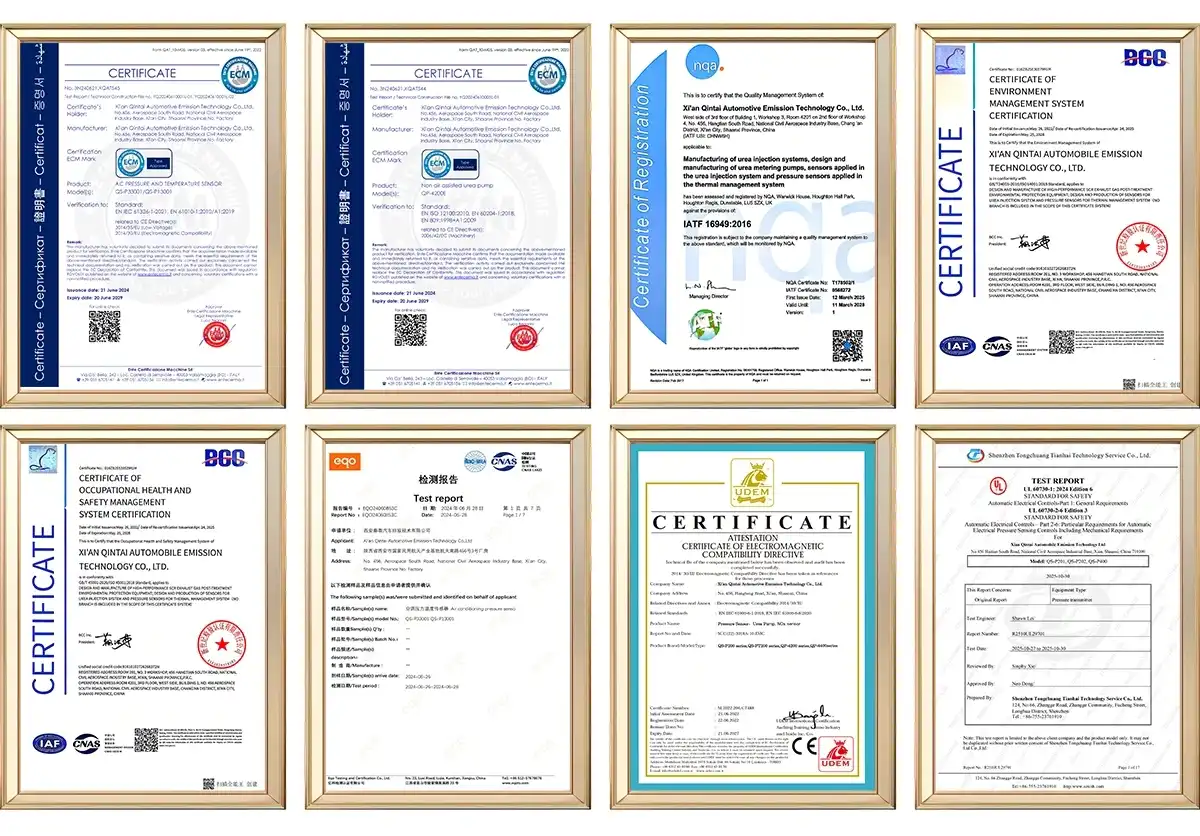
Verification of approval is the first step in qualifying a Ceramic Pressure Sensor supplier. Legitimate producers have ISO9001 quality management certification, which shows that they have a system for controlling processes. IATF16949 certification, on the other hand, covers the needs of the car supply chain and includes advanced quality planning methods and processes for approving production parts. These certifications aren't just pieces of paper; they're audited proof of a culture of factory control and ongoing growth.
Manufacturing Capability and Production Capacity Assessment
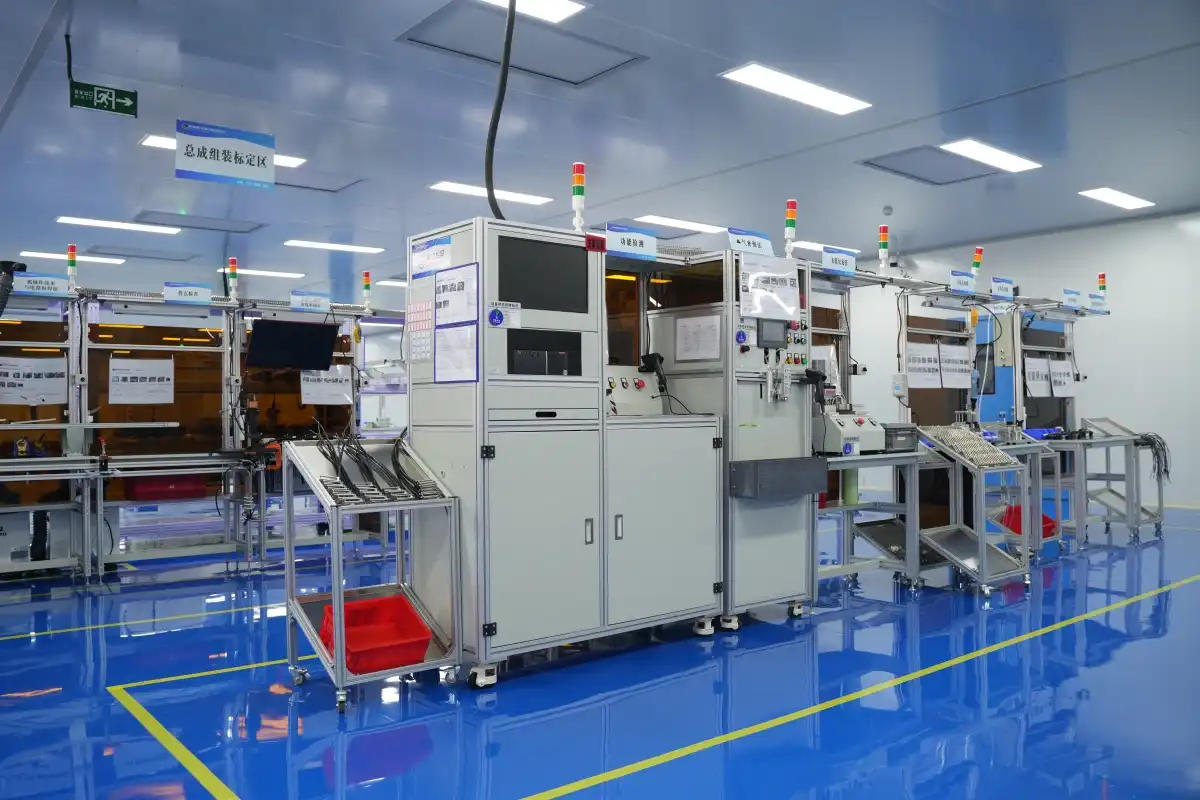
Scale of production is important when looking for diesel engine OEM uses that need thousands of units every month. Suppliers who are good at what they do run dedicated production lines for ceramic sensors that use automated assembly equipment to make sure consistency that can't be reached by hand. Ask about daily production capacity, batch size flexibility, and lead time stability. To keep supply lines from going down, sellers who manage high-volume car projects usually keep a buffer inventory and extra production lines.
Competent providers are different from industry stars in terms of their ability to come up with new technologies. Advanced makers continue to fund research and development, as shown by their patent files that cover things like better sensor designs, better manufacturing processes, and solutions that are tailored to specific applications. With 58 invention patents, Qintai has shown a strong dedication to technical progress, which can be seen in product features like pressure ranges and interface configurations that can be changed to meet the needs of each individual customer.
Quality Control Systems and Testing Protocols
Strict testing protocols make sure that sensors work properly before they are shipped. It is important to find a provider that does full functional testing, which includes checking the linearity of the pressure reaction, the accuracy of the temperature compensation, and the electrical output. In addition to functional testing, outdoor licensing includes testing for media compatibility, thermal cycling, and vibration endurance in conditions that are similar to those found in building and farming tools. Third-party proof is an independent way to prove quality. Suppliers with UL, CE, and Ex certifications have sent their goods to approved testing labs to make sure they meet safety and performance guidelines. RoHS and REACH compliance certifications also check that material restrictions are followed, which is becoming more and more important as environmental laws around the world get stricter.

How to Assess Supplier Reliability Through Market and Client Insights?
Being present in the market shows that a provider is stable. Manufacturers that have been around for a while and serve many industries show that they are resilient in business and technically flexible. Suppliers who are key suppliers to major diesel engine makers like Weichai Power and Yuchai Power have passed strict qualification checks and keep quality standards high even when making a lot of engines. These are important traits to look for in a new partner.
Evaluating Technical Support and Customer Service Infrastructure
Professional suppliers are different from commodity vendors because they offer quick technical support. Partners who are good at application engineering help buyers choose the right products by helping them match sensor specs to system needs. This help is very useful when adding sensors to SCR/DPF aftertreatment systems because where they are installed, the pressure range they are used in, and how well they work with the electrical interface all affect how accurate the measurements are and how reliable the system is. How fast after-sales service is affects the total purchasing experience. When problems happen, suppliers who keep enough extra parts on hand and offer expert assistance help keep production from stopping.
Manufacturers who offer warranties that last longer than the standard terms show that they are confident in the durability of their products. Look for sources that offer longer warranties on sensors that are used in difficult situations like mine generator sets and backup power systems. Project timelines are affected by how well people can communicate. Suppliers who have done business internationally before know how important it is to respond quickly to questions, clarify specifications, and give reports on the state of an order. They also follow a set of rules for communication that makes sure they do this. Language skills and time zone coverage make it easier for people in different places to work together.
Comparison of Ceramic Pressure Sensors and Supplier Solutions
Ceramic Pressure Sensors are in competition with a number of other technologies, each of which has its own benefits. Silicon piezoresistive sensors are very sensitive and can be made smaller, but they don't have the chemical resistance or temperature range of ceramic sensors. Piezoelectric sensors can measure dynamically when pressures change quickly, but they need charge amplifiers and can't measure steady pressure, which makes them less useful in emission control systems that need to be watched all the time.
Material Technology and Application Suitability
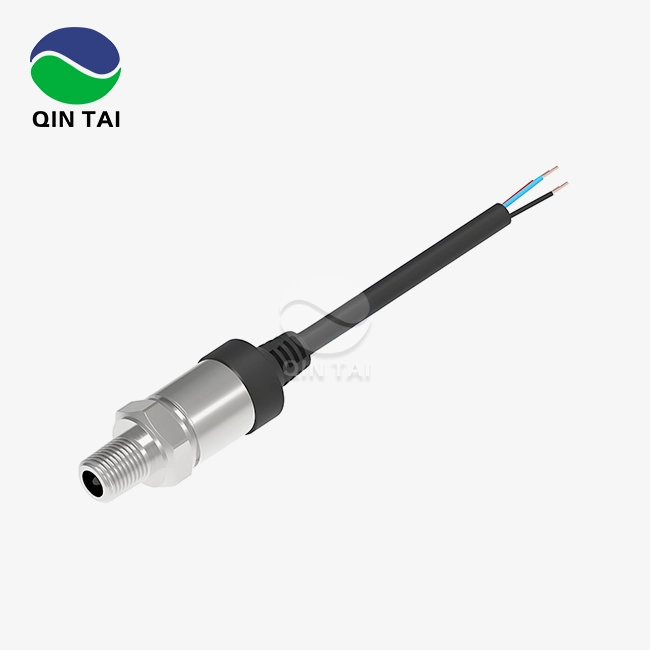
Stainless steel sensors with metal diaphragms are strong and work well in hydraulic systems, but ceramic sensors are better at resisting corrosion in exhaust environments that are acidic. Stainless steel sensors slowly break down when they are exposed to sulphur compounds and acidic condensates found in diesel fumes. This makes them less stable and forces them to be replaced too soon. The QS-P105 model is an example of the benefits of a ceramic sensor because it is made of 96% Al2O3. If you put this kind of material together, it can handle rough particles in exhaust streams and still measure accurately from hoover to 600 bar. The small size makes it easier to place in aftertreatment housings that don't have a lot of room, which is common in heavy truck uses where packaging density keeps going up.
Cost Considerations and Lifecycle Economics
The initial buy price is only one part of the total cost. Ceramic pressure transducers may cost more up front than basic metal sensors, but they have better lifetime economics because they last longer and need less upkeep. When figuring out the total cost, you should include how often the parts need to be replaced, how much they cost to fix, and how much they cost to re-calibrate. These are all areas where ceramic technology clearly shines. Transparency in supplier price affects how well buying works. Professional makers give thorough quotes that break down unit costs, tooling costs for unique configurations, and different price levels based on volume. Clear communication about lead times is necessary for accurate production planning. This is especially important when sensors are long-lead parts in the assembly of an aftertreatment system.
Practical Steps to Verify Supplier Quality Before Purchase
The most direct way to check for quality of Ceramic Pressure Sensors is to evaluate a sample. Ask for representative Ceramic Pressure Sensors samples that meet your specific application needs in terms of pressure range, electrical output, and mounting setup, and then test them on a bench to make sure they match what the description says they are. Check for nonlinearity across the pressure range of the Ceramic Pressure Sensors, make sure that temperature adjustment works, and check the reaction time of the Ceramic Pressure Sensors in changing conditions that are similar to real service.
Documentation Review and Certification Verification
Professionalism in production can be seen in the quality documents. Check that sample units can be traced back to national measurement standards by looking at the calibration certificates that come with them. Look over test reports that include environmental qualification tests like electromagnetic compatibility, thermal cycling, and vibration endurance. Full documentation packages show that quality management is being done in a planned way and give starting points for new inspection processes. Verification is based on the validity of the certification. You can get copies of certificates and check that they are real by going to the websites of the organisations that issued them or calling the certification agencies directly. In industrial supply lines, fake certifications can show up sometimes, especially when buying from middlemen instead of direct producers.
Factory Audit Considerations
On-site facility audits give suppliers a chance to be evaluated in depth. Directly watch the manufacturing process, checking out the equipment's capabilities, the level of cleanliness, and how the work is organised. Check the infrastructure for quality control, such as calibration labs, environmental test chambers, and the use of statistical process control. Interviews with production engineers and quality managers to test the skills of the staff show that the organization is more than just its marketing materials. Virtual exams are useful options to travelling when it's not possible. You can ask for live video tours of the building that include the warehouse, production areas, and quality control labs. Even though they aren't as thorough as physical exams, virtual assessments are still useful for learning about the size of the production operation, how well the equipment works, and how well the operations are run.
Conclusion
To check the quality of a Ceramic Pressure Sensors supplier, you need to carefully look at them from a number of different angles, including their certification, their technical skills, their quality system, and their reputation in the market. Reliable suppliers show they are good at what they do by getting recognised quality certifications, communicating clearly, and giving full technical support throughout the entire procurement lifecycle.
Ceramic pressure transducer technology has strong benefits in terms of resistance to rust, stability at high temperatures, and accurate measurements. Choosing the right provider is especially important for emission control systems where sensor reliability directly affects regulatory compliance. Structured verification processes, such as testing samples, reviewing paperwork, and inspecting facilities, help buyers build relationships with qualified suppliers who can support long-term operational success in diesel engines, construction equipment, and industrial settings.
FAQ
How Can I Test Ceramic Pressure Sensor Accuracy Before Purchase?
Ask for samples that have been measured and use precision deadweight testers or reference pressure standards that can be traced back to national metrology centers to do verification tests. Apply pressure at several points along the measurement range, usually 0%, 25%, 50%, 75%, and 100% full scale, and record the electrical output at each one. From the data you have collected, figure out non-linearity, hysteresis, and repetition. Compare the measured performance to what the manufacturer says it should be, while allowing for some uncertainty in the test equipment.
What Certifications Should Quality Suppliers Possess?
ISO9001 certification shows that quality management is done in a planned way, and IATF16949 covers specific standards for the car supply chain that are important for diesel engine uses. Product certifications, such as the CE mark, show that the product meets European safety standards. The UL listing confirms electrical safety for North American markets, and the Ex certification covers designs that are intrinsically safe for dangerous areas. Environmental compliance certifications, like RoHS and REACH, make sure that material restrictions are followed. Industry-specific certificates, such as the China Metrology Certification (CMC), show that the correctness of measurements has been checked by the government.
Does After-Sales Service Quality Impact Sensor Performance?
The level of after-sales help has a bigger effect on the total ownership experience than the performance of the sensors themselves. Technical help that responds quickly answers questions about installation, fixes problems with applications, and sends new units when something goes wrong. Maintaining a stockpile of spare parts by suppliers keeps output from stopping, and full warranty coverage protects against early failures. Strong relationships after the sale allow for ongoing growth through feedback loops where data from the field informs product improvements that benefit future purchases.
Partner with a Trusted Ceramic Pressure Sensors Manufacturer
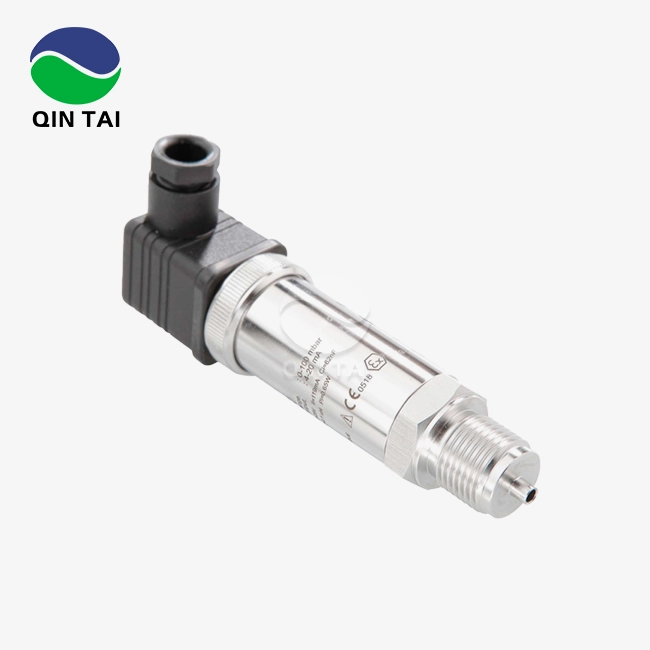
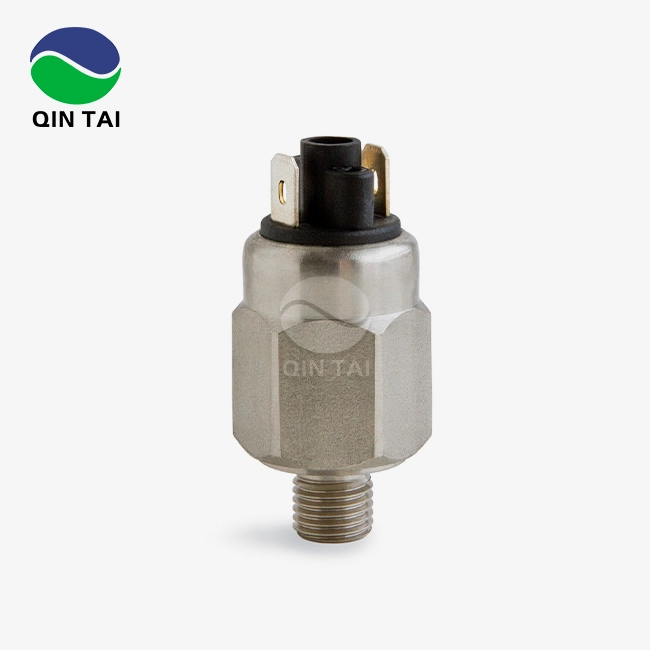
With more than 20 years of experience in diesel engine aftertreatment systems, Qintai is ready to help you with your pressure sensing needs. As the top OEM provider in China for Weichai Power, Yuchai Power, and Quanchai Power, we mix large-scale production with cutting-edge technology. Our ISO9001, IATF16949, and other industry-specific certifications ensure consistent quality. Our QS-P105 Ceramic Pressure Sensors has the corrosion resistance, temperature stability, and measurement accuracy that your uses need. It also comes with a wide range of customisation options and quick expert support. Email our team at info@qt-sensor.com to talk about your unique needs, ask for samples, or find out how our Ceramic Pressure Sensors can help your system work better and follow the rules.
References
1. Industrial Pressure Sensor Technology Standards Committee. (2023). Guidelines for Ceramic Pressure Transducer Qualification Testing in Automotive Applications.
2. Peterson, R.K. & Martinez, L.T. (2022). Comparative Analysis of Pressure Sensor Technologies for Diesel Engine Emission Control Systems. Journal of Automotive Engineering, 45(3), 234-251.
3. International Organization for Standardization. (2021). ISO 9001:2015 Quality Management Systems Requirements for Industrial Sensor Manufacturers.
4. Chen, W.H. (2023). Advanced Ceramic Materials in High-Temperature Pressure Sensing Applications. Materials Science and Engineering Review, 38(2), 145-167.
5. European Committee for Standardization. (2022). EN 61326-1:2021 Electrical Equipment for Measurement, Control and Laboratory Use - EMC Requirements.
6. Zhang, Q.L. & Thompson, D.A. (2024). Supplier Quality Assessment Frameworks for B2B Industrial Component Procurement. Supply Chain Management Quarterly, 29(1), 78-94.

Our customers’ satisfaction speaks for our quality — contact us to experience the same reliable service.