- English
- French
- German
- Portuguese
- Spanish
- Russian
- Japanese
- Korean
- Arabic
- Greek
- German
- Turkish
- Italian
- Danish
- Romanian
- Indonesian
- Czech
- Afrikaans
- Swedish
- Polish
- Basque
- Catalan
- Esperanto
- Hindi
- Lao
- Albanian
- Amharic
- Armenian
- Azerbaijani
- Belarusian
- Bengali
- Bosnian
- Bulgarian
- Cebuano
- Chichewa
- Corsican
- Croatian
- Dutch
- Estonian
- Filipino
- Finnish
- Frisian
- Galician
- Georgian
- Gujarati
- Haitian
- Hausa
- Hawaiian
- Hebrew
- Hmong
- Hungarian
- Icelandic
- Igbo
- Javanese
- Kannada
- Kazakh
- Khmer
- Kurdish
- Kyrgyz
- Latin
- Latvian
- Lithuanian
- Luxembou..
- Macedonian
- Malagasy
- Malay
- Malayalam
- Maltese
- Maori
- Marathi
- Mongolian
- Burmese
- Nepali
- Norwegian
- Pashto
- Persian
- Punjabi
- Serbian
- Sesotho
- Sinhala
- Slovak
- Slovenian
- Somali
- Samoan
- Scots Gaelic
- Shona
- Sindhi
- Sundanese
- Swahili
- Tajik
- Tamil
- Telugu
- Thai
- Ukrainian
- Urdu
- Uzbek
- Vietnamese
- Welsh
- Xhosa
- Yiddish
- Yoruba
- Zulu
Pressure Sensor For All Your Automotive Engineering Needs
When accuracy is needed in car engineering, dependability can't be compromised. Pressure sensors are very important tools for measuring and keeping an eye on force in cars' fluid and gas systems. They do this by turning mechanical pressure into electrical signs that help drivers make decisions in real time. Choosing the right sensing technology is important for business efficiency, regulatory compliance, and long-term revenue, whether you're building emission control systems for heavy-duty diesel engines, integrating aftertreatment solutions, or handling aftermarket stocks. To help you make better engineering and buying choices, our complete guide explains selection criteria, performance benchmarks, and purchase strategies.
Understanding Pressure Sensors and Their Role in Automotive Engineering
At their core, these gadgets pick up on mechanical force acting on a surface and turn that change in physical form into electrical signs that can be measured. This change lets tracking systems keep an eye on things like when the fuel injections happen and how fast the waste gas is recycled. This information is used to improve the vehicle's performance and safety.
Fundamental Operating Principles
Most sensing devices use strain gauge technology, which changes electrical resistance by changing how much force is given to a mechanical part. As the pressure changes, the strain gauge, which is a conductive pattern attached to a flexible base, grows or shrinks, causing changes in the voltage that are equal to those changes in pressure. These outputs are amplified and filtered by signal conditioning circuits, which send standard numbers to engine control units or diagnostic connections.
Another popular method is capacitive sensing, which is often used in ceramic-based designs. One electrode is a movable diaphragm, and the other is a plate with a set surface. When pressure changes the shape of the diaphragm, the capacitance between the sensors moves, which causes electrical changes that can be measured. Ceramic capacitive designs are good at resisting chemicals and staying stable at high temperatures. This makes them good for use in exhaust systems where toxic gases and high temperatures are common.
Hydraulic designs can pick up changes in fluid pressure in transmission systems, brake circuits, and power steering units. These pressure sensor have sensing parts inside strong housings that are made to work in high-pressure hydraulic settings and keep measuring accurately over a wide range of temperatures.
Critical Automotive Applications
Absolute pressure data from the intake manifold are used by engine control systems to figure out the best timing and amount of fuel to give. Monitoring the exhaust backpressure makes sure that diesel particulate filters work within safe limits, which keeps them from breaking and keeps emissions legal. Tyre tracking systems let drivers know when their tyres aren't inflated enough, which saves gas and makes the roads safer.
Hydraulic sense is used by transmission control modules to make gear shifts smooth. This extends the life of parts and makes driving more comfortable. Multiple sensing points are built into brake systems to control antilock features and computer stability programmes. The HVAC temperature control changes the flow of refrigerant based on the system pressures. This keeps the car comfortable.
Configurations for emission control are especially tough places to work. Sensors that watch over urea injection systems in selective catalytic reduction aftertreatment have to be able to handle being exposed to ammonia, temperature changes of more than 400°C, and the normal vibrations that come with heavy-duty diesel engines. For these kinds of uses, devices need special materials, sealing technologies, and testing methods to stay accurate over long periods of time between service.
Performance-Influencing Factors
How well recorded numbers match the real applied force is called calibration accuracy. Depending on how important the application is, automotive-grade parts usually say that their accuracy is within ±0.5% to ±2% of the full-scale range. For example, emission control sensors need tighter tolerances than HVAC uses that aren't as important.
Operating temperature ranges show which zones are best for each car. While exhaust uses require stable operation above 150°C, intake system sensors can operate effectively from -40°C to 125°C. To work at a wide range of temperatures, you need adjustment circuits and special materials that keep their electrical properties even when the temperature changes a lot.
Response time affects how well a control device works. In order to increase economy and lower emissions, fast-reacting sensors allow for precise fuel injection changes during brief acceleration. For basic tracking tasks like showing oil pressure, slower devices are enough.
Mechanical stability includes resistance to vibration, longevity for pressure cycles, and compatibility with different media. In heavy machine uses, parts are constantly under mechanical stress. Chemical resistance is important in fuel and emission systems where parts are regularly exposed to aggressive fluids. Manufacturers of good products list IP67 or IP69K ratings for entry protection. These ratings make sure that the product will work reliably even if it gets wet, dirty, or cleaned with chemicals.
How to Choose the Best Pressure Sensor for Automotive Use?
To choose the right sensing technology, you have to make sure that the device's powers meet the needs of the application. When it comes to mass production and merger compatibility, OEM engineers put a lot of weight on OEM suppliers, while secondary suppliers put a lot of weight on interchangeability and low prices. Generator set makers focus on making sets that will last for a long time when they are used all the time.
Defining Application Requirements
Write down the working conditions, such as the pressure range, the type of media, the extremes of the atmospheric temperature, the vibration profiles, and the amount of room that is available. A fuel rail device that measures between 0 and 2000 bar needs very different specs than an exhaust backpressure monitor that works at 0 to 5 bar. When pressure sensor come into contact with acidic fluids, chemical compatibility is important. For example, diesel fuel works well with stainless steel or ceramic construction, while ammonia in urea injection systems needs special alloys to handle it.
Environmental exposure affects the need for ingress safety. For fitting under the hood, it needs to be resistant to oil, coolant, and road salt spray. Thermal insulation and high-temperature wires are needed in places where exhaust systems are located. Devices that are placed on a chassis need to be able to stop vibrations and handle mechanical stress.
Essential Selection Criteria
The accuracy standards must match the needs of the control system. Applications that need to be accurate to within ±1% are better, while tasks that aren't required by law can handle errors of ±2% to ±3%. Total error band, which takes into account weather effects, non-linearity, and long-term drift, is a more accurate way to show success than simple accuracy numbers.
Different types of electrical outputs exist, such as analogue voltage (0-5V), current loops (4-20mA), and digital standards (CAN, LIN). Analogue messages work well with older systems, but they can't be used for diagnostics. Advanced features like self-diagnostics, temperature compensation reports, and setup freedom can be made possible by digital outputs, but they only work with control units that are compatible.
The materials used in sensor elements affect how long they last and how much they cost. Piezoresistive silicon is very sensitive and can be made very small, but it needs to be kept away from fluids that are toxic. Thin-film metal strain gauges are fairly cheap and give good precision. Thick-film ceramic versions are more expensive but offer better chemical protection and thermal stability for harsh exhaust uses.
Different types of connections are available, from standard threaded ports (M10x1, M12x1.5) that are used in many situations to unique flanges that are made for specific setups. You can terminate an electrical cable with flying leads for freedom, Deutsch car plugs for dependability, or integrated cable assemblies, which make installation easier but make field service harder.
Tailored Recommendations by Application
Diesel emission aftertreatment needs sensors that can work in a wider temperature range (-40°C to 180°C), are made of materials that don't corrode when they get wet, and have been tested to last more than 10,000 hours of operation. Ceramic capacitive designs from well-known companies meet China VI and Euro VI standards and come with mounting options that are compatible with OEM designs.
Cross-reference compatibility and cost placing are the most important factors in aftermarket repair cases. Sensors with thread sizes and electrical connections that match OEM allow straight replacement without changing the wiring, which makes fitting easier for repair shops. Competitive pricing brings in wholesalers who manage a wide range of inventory, but the products must still be reliable enough to keep guarantee returns to a minimum.
Generator sets that are used constantly in mines or backup power plants need to be built with industrial-grade materials that are more resistant to shaking and need to be calibrated more often. Sensors with a service life of 50,000 hours or more make servicing easier in faraway locations where getting to them is hard and downtime is expensive.
Innovative Solutions and Latest Trends in Automotive Pressure Sensing
Electrification, connection, and the creation of self-driving cars are all changing the way sensing works. Intelligent sensors are replacing traditional analogue devices. These sensors offer diagnostic feedback, insights into preventative maintenance, and easy interaction with car networks.
Smart Sensor Integration
Modern sensing units have microcontrollers built in that process signals locally, adjust for temperature, and do self-diagnostics. Smart sensors don't send raw analogue signals that can be messed up by electromagnetic fields. Instead, they use digital methods that send error-checked data files. This design makes measurements more accurate by using a programme to account for temperature changes. It also lets you change the pressure ranges or output features from afar without having to change the hardware.
CAN bus integration lets sensors connect to communication networks that cover the whole car and send not only pressure measures but also diagnostic trouble codes when problems happen inside the vehicle. This feature speeds up fixing because maintenance workers get clear signs of failure instead of vague "sensor signal implausible" alerts. Predictive algorithms look at measurement trends and let workers know before full failures happen. This changes maintenance strategies from reactive to preventive, which cuts down on unplanned downtime.
IoT-Enabled Monitoring
For fleet control and remote repairs, connected car platforms use sensor data. Telematics systems collect working parameters, such as pressures, from several car systems and look for patterns in performance that show problems are starting to appear. Fleet managers keep an eye on the whole group of vehicles and schedule repair based on the state of each part rather than at set times.
This connection is especially helpful for people who run generator sets and are in charge of distributed power setups. Monitoring from afar can find strange changes in pressure that could mean a filter is clogged or a system leak. This lets people fix problems before they become too big to handle. Cloud-based analytics look at how well similar units are doing and find ones that stand out and might need more attention.
Emerging Requirements for Autonomous Systems
Self-driving cars need pressure sensor designs that are redundant and more reliable. Safety-critical turning and stopping systems use two sensors and cross-checking algorithms to make sure they keep working even if one part fails. For these setups to work, the sensors need to have very low failure rates and clear problem states. This requires using advanced manufacturing methods and strict quality standards.
Electrification introduces new sensing needs in battery thermal management, coolant circulation, and brake-by-wire hydraulic systems. Electrical designs for sensors are affected by the need for high-voltage separation, and battery cases that don't have a lot of room can be fitted into small packages. In response to these trends, manufacturers make smaller units that are more resistant to electromagnetic interference (EMI) and can be used in powertrain settings with a lot of noise.
Market Developments in 2026
An study of the industry shows that there is a growing need for sensor systems that can be customised and support OEM-specific interfaces and mounting configurations. Manufacturers that offer open design services get a bigger share of the market because they shorten the time it takes to build new products for automakers with multiple lines. Bulk buying arrangements favour providers who can show stable quality, quick technical support, and the ability to change production numbers to meet changing demand in the car industry.
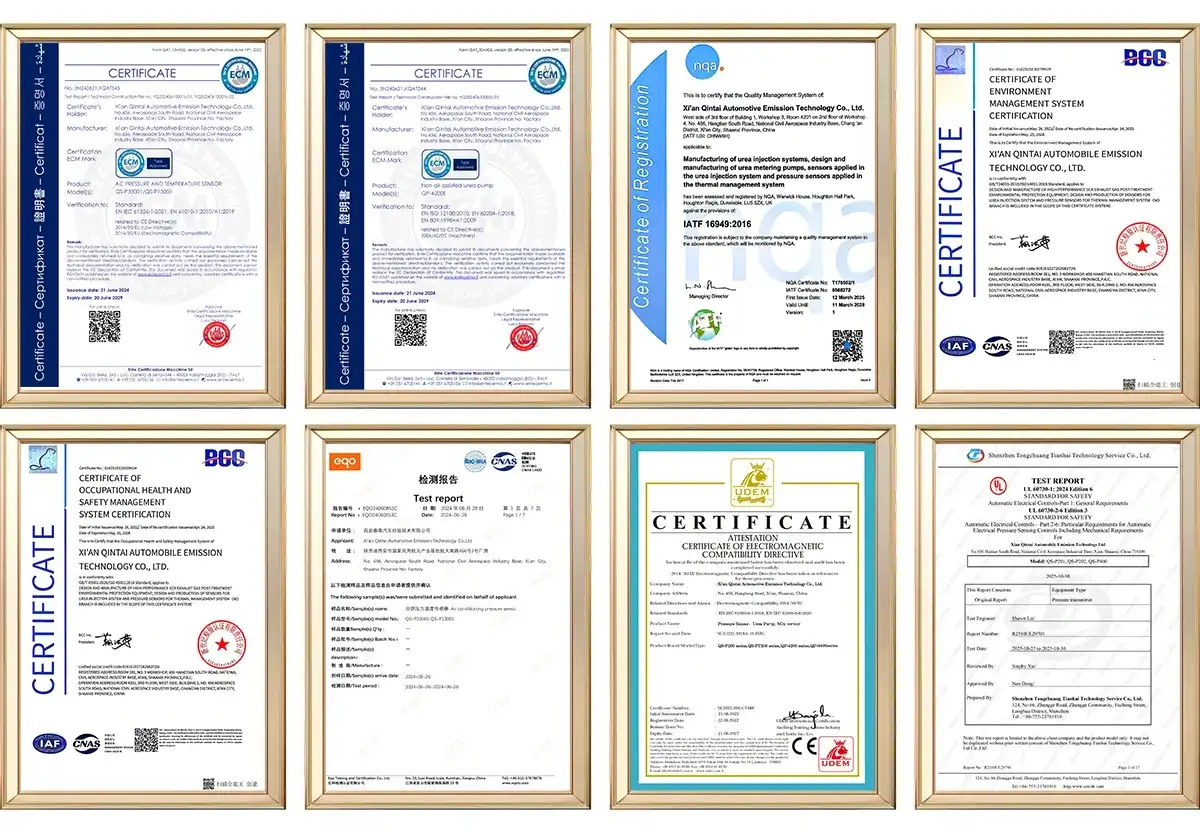
As environmental compliance and tracking become more important to regulators, certification standards get stricter. Suppliers who have ISO 9001 quality management, IATF 16949 car standards, and RoHS material certifications are in a better place in global supply chains. These certificates make it easier for buying managers to find qualified suppliers because they guarantee consistent production standards and legal compliance.

SENSOR+TEST, June 9 – 11, 2026
We look forward to your visit,warmly welcome to our booth 1-526!
Get your free ticket online now:
https://www.sensor-test.de/service/ticket/?52790
Procurement and Supplier Guide for Automotive Pressure Sensors
Decisions about where to get things affect the quality of the goods, the reliability of the supply chain, and the total cost of purchase. When B2B buying teams look at possible partners, they look at things like their technical skills, their ability to make things, their quality standards, and the terms of the deal.
Evaluating Supplier Capabilities
Quality marks give you a basic idea of how well a product is made. The ISO 9001 certification shows that quality management is done in a planned way, and the IATF 16949 certification talks about the needs of the car industry, covering things like how to approve production parts and plan for improved product quality. Extra approvals, such as ATEX or UL, show that the product meets regional safety standards, which can affect its ability to get into new markets.
Suppliers' ability to support production growth is based on their manufacturing capacity. Ask about the current rate of utilisation, the adaptability of the tools, and the wait times for increasing the number. When production starts up for vehicles, suppliers who are already close to their capacity limits may find it hard to meet demand spikes. Dual-sourcing methods lower risks, but they add qualification costs and make it harder to keep track of supplies.
Technical help responsiveness affects both development timelines and the resolution of production problems. Check to see if the tech staff at your suppliers is qualified, if application experts are available, and if they have a history of helping customers with integration problems. Manufacturers who give on-site help during prototype stages and production starts show that they care about their customers' success in more ways than just delivering a product.
Interpreting Technical Documentation
Critical performance factors are listed in datasheets, but it's just as important to understand the test circumstances. Specifications for accuracy may include particular temperature or pressure ranges, with worse performance outside of these limits. Burst pressure numbers show the limits of what can destroy something, while proof pressure sets the limits of what can be overloaded without damaging it. These are important differences for safety estimates.
Media compatibility tables show fluids that have been tried, but new fuel formulations or chemicals used to control emissions may not have performance data that has been written down. Ask for chemical resistance tests when using proprietary media, especially in trial emission systems where the long-term effects of exposure are still unknown.
Electrical specs include source voltage ranges, output signal traits, and how well the pressure sensor works with electromagnetic fields. Check that the sensor outputs and the receiving control units can work together, especially when it comes to the voltage levels and current drive needs. EMI sensitivity data shows that sensors meet the standards for the electromagnetic environment in cars, which stops interference from other electrical systems.
Procurement Strategies
Directly working with makers is best for OEMs that need to do a lot of work and need to be able to customise, negotiate prices, and make sure they have a secure supply chain. Manufacturers offer engineering help, open production schedules, and the chance to work together on intellectual property for unique designs.
Distributor channels help aftermarket sellers keep a wide range of products in stock by giving them access to more brands, making transportation easier, and combining invoices. Authorised wholesalers stay up-to-date on the technical side of the product lines they sell. They can help with selection and troubleshooting, and they can send smaller orders faster than factory-direct orders.
When you agree to buy in bulk, you get better prices and first choice for supplies when there are shortages. Manufacturers can plan their production more efficiently when they have a lot of orders. For example, they might be able to offer amortisation of tooling costs or customisation services that aren't possible for smaller orders. Negotiating payment terms is a way to handle cash flow while taking into account savings for early payment or shorter terms.
Quality Assurance and Compliance
Before parts go into production, incoming checking procedures make sure they meet the requirements. Dimensional proof makes sure that the mounting surfaces meet the design requirements, and functional testing makes sure that the output properties are correct across a range of pressures. Sampling plans weigh the cost of inspections against the amount of risk that can be tolerated. Safety-critical parts need to be tested 100% of the time, while non-critical parts can be tested statistically.
Traceability standards let you find the root cause of problems that happen in the field. Lot tracking connects fitted parts to times of manufacture, batches of raw materials, and production equipment. This makes it easier to return specific parts if problems start to happen on a regular basis. Suppliers with complete tracking systems show they care about quality and make it easier for everyone to work together on failure analysis.
Environmental compliance certifications, such as RoHS, prove limits on restricted substances and make sure that goods meet the rules in each area. REACH notifications list the chemicals that are used and are needed to get into the EU market. When manufacturers give customers full compliance paperwork, it makes following the rules easier for them and keeps the certification process from taking too long.
Conclusion
When choosing and keeping pressure sensor technology, you have to balance the need for efficiency with the needs of the environment and business needs. Technical teams can make better decisions about which parts to use when they understand sense principles and factors that are specific to the application. Buying teams can get more power by carefully reviewing a supplier's skills, paying special attention to things like certifications, production capacity, and how quickly they can help customers. Best practices for calibration verification and maintenance help keep measurement accuracy over long service gaps, which supports emission compliance and operating efficiency. Because sensor technology is moving towards connected, smart systems, companies that stay up to date on new features can use innovations that give them a competitive edge.
FAQ
Q1: What makes pressure detectors different from pressure sensors?
A: These terms are often used equally in business, but there are some specific differences between them. Transducers change one type of energy into another, in this case turning mechanical pressure into electrical data. In addition to simple conversion, sensors may be able to show, communicate, or condition signals and pick up physical events.
Q2: How do I choose the right temperature settings for sensors in my exhaust system?
A: For exhaust uses, sensors need to be rated much higher than the highest temperature that the gas is predicted to reach, usually up to 180°C or higher. The temperature number includes both the sensing element and the electronics that go with it, so make sure that the specs cover the whole system. The site of the mount is important because places further downstream have cooler temperatures than places where the turbines come out.
Q3: Can sensors for cars work with Arduino prototype platforms?
A: A lot of automotive sensing devices give off analogue voltages that can be used with Arduino's analogue inputs. This makes it possible to build prototypes. Based on the specs in the datasheet, scaling calculations turn sensor voltage ranges into pressure numbers. For example, CAN bus sensors need CAN transceivers and protocol libraries, and digital protocol sensors need the right communication screens.
Partner with Qintai for Reliable Pressure Sensor Manufacturing Solutions
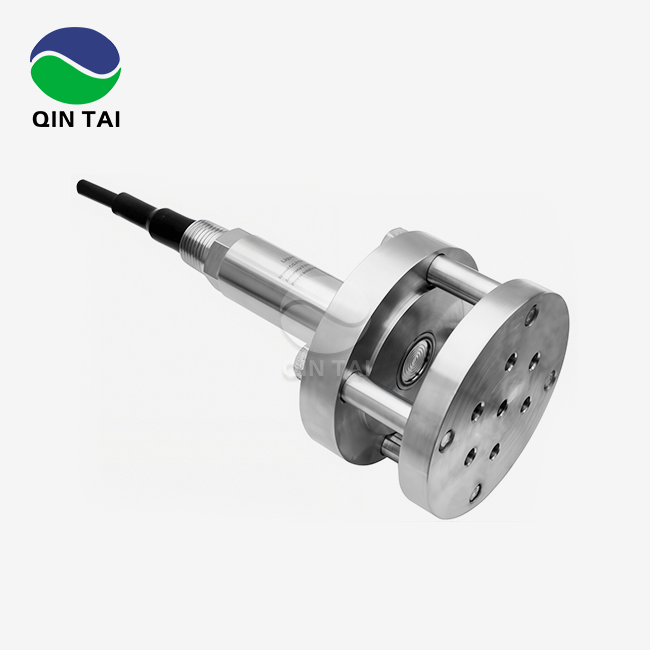
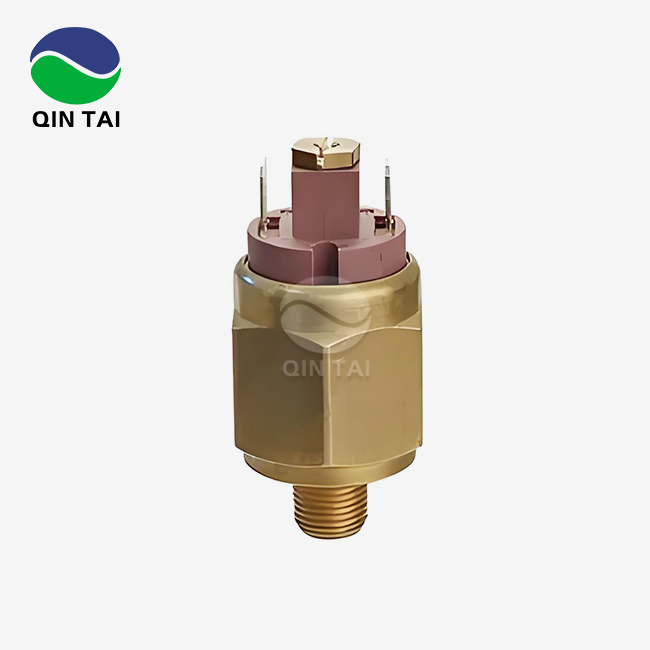
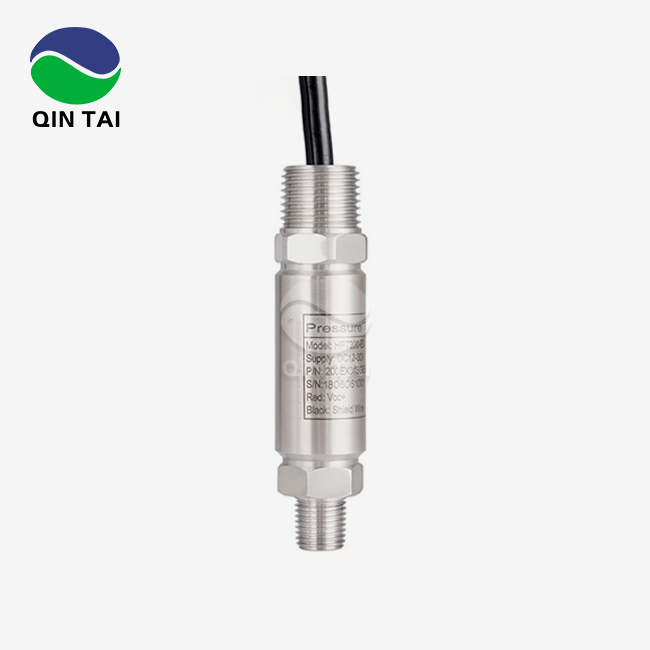
Xi'an Qintai Automotive Emission Technology Co. Ltd is ready to help you with your car engineering projects by providing you with tried-and-true sensing options. We have been in business since 2001 and have 20 years of experience with aftertreatment for diesel engines. We can also make all kinds of pressure sensor. Our IATF 16949 certification guarantees quality for the car industry, and our ISO 9001 methods make sure that production standards are always met. We keep a lot of certifications, like RoHS, REACH, UL, and CE, which makes it easier for you to follow the rules.
Our engineering team has come up with 58 new ideas that have been trademarked. They provide unique OEM and ODM solutions for major diesel engine makers like Weichai Power, Yuchai Power, and Quanchai Power. This experience leads to sensors that work best in places where emissions are treated after they are released, where accuracy, reliability, and temperature stability are very important. Our independent research and development (R&D) and flexible customisation services can meet your needs, whether you need parts that are compliant with China VI or Euro VI, help with prototype development, or partnerships for large-scale production. As a reliable pressure sensor provider that wants you to succeed, you can email our technical experts at info@qt-sensor.com to talk about your application needs, get full datasheets, or get custom quotes.
References
1. Wang, J., & Liu, H. (2022). Advanced Automotive Sensor Technologies: Principles and Applications. SAE International Publishing.
2. Patel, S. K., & Morrison, R. T. (2023). "Pressure Measurement in Diesel Engine Emission Control Systems," Journal of Automotive Engineering, 237(4), 892-907.
3. European Automotive Manufacturers Association. (2023). Heavy-Duty Vehicle Emission Standards Compliance Guide. Brussels: ACEA Technical Reports.
4. Chen, Y., Zhang, L., & Kumar, A. (2024). "Smart Sensor Integration in Connected Vehicle Architectures," IEEE Transactions on Vehicular Technology, 73(1), 445-461.
5. Thompson, D. R. (2022). Industrial Pressure Transducer Selection and Application Handbook. Instrumentation Society of America Press.
6. Martinez, C., & Hoffman, E. (2023). "Calibration Strategies for Automotive-Grade Pressure Sensors in Harsh Environments," Sensors and Actuators A: Physical, 348, 113-128.

Our customers’ satisfaction speaks for our quality — contact us to experience the same reliable service.