- English
- French
- German
- Portuguese
- Spanish
- Russian
- Japanese
- Korean
- Arabic
- Greek
- German
- Turkish
- Italian
- Danish
- Romanian
- Indonesian
- Czech
- Afrikaans
- Swedish
- Polish
- Basque
- Catalan
- Esperanto
- Hindi
- Lao
- Albanian
- Amharic
- Armenian
- Azerbaijani
- Belarusian
- Bengali
- Bosnian
- Bulgarian
- Cebuano
- Chichewa
- Corsican
- Croatian
- Dutch
- Estonian
- Filipino
- Finnish
- Frisian
- Galician
- Georgian
- Gujarati
- Haitian
- Hausa
- Hawaiian
- Hebrew
- Hmong
- Hungarian
- Icelandic
- Igbo
- Javanese
- Kannada
- Kazakh
- Khmer
- Kurdish
- Kyrgyz
- Latin
- Latvian
- Lithuanian
- Luxembou..
- Macedonian
- Malagasy
- Malay
- Malayalam
- Maltese
- Maori
- Marathi
- Mongolian
- Burmese
- Nepali
- Norwegian
- Pashto
- Persian
- Punjabi
- Serbian
- Sesotho
- Sinhala
- Slovak
- Slovenian
- Somali
- Samoan
- Scots Gaelic
- Shona
- Sindhi
- Sundanese
- Swahili
- Tajik
- Tamil
- Telugu
- Thai
- Ukrainian
- Urdu
- Uzbek
- Vietnamese
- Welsh
- Xhosa
- Yiddish
- Yoruba
- Zulu
SCR Dosing System VS AdBlue Pump: Which Option Fits Your Fleet Best?
If you manage a diesel-powered fleet — whether heavy trucks, construction equipment, or generator sets — choosing the right emission control setup is one of the most consequential procurement decisions you'll face. Both the SCR dosing system and the AdBlue pump play critical roles in reducing NOx emissions to meet Euro VI and EPA Tier 4 standards. But they are not interchangeable. Understanding how each operates, where each excels, and what each costs over time will sharpen your decision-making and protect your compliance record.

Understanding SCR Dosing Systems and AdBlue Pumps
What Is an SCR Dosing System?
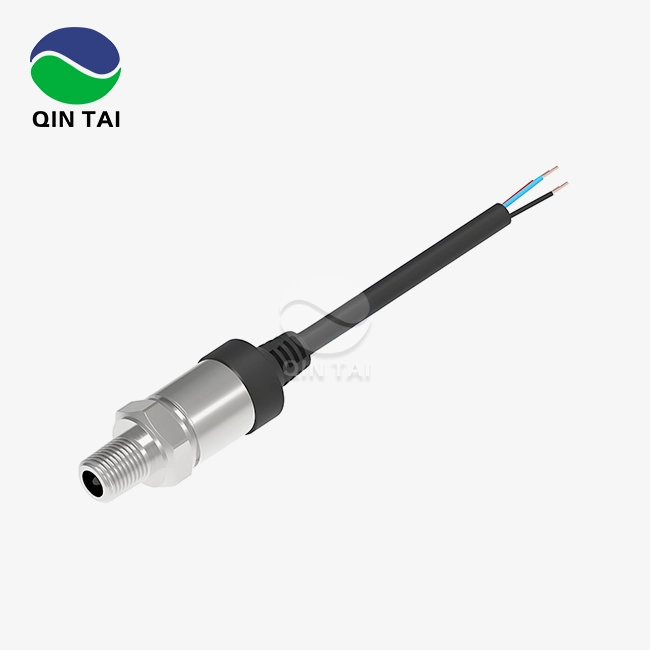
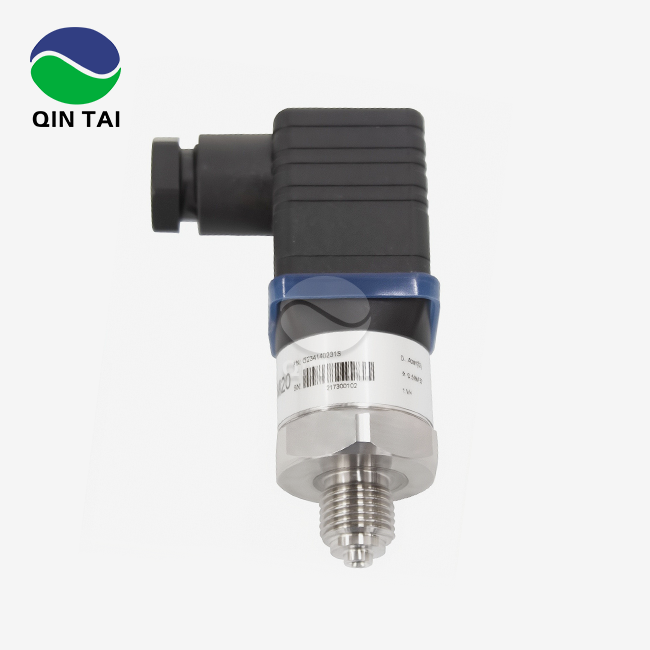
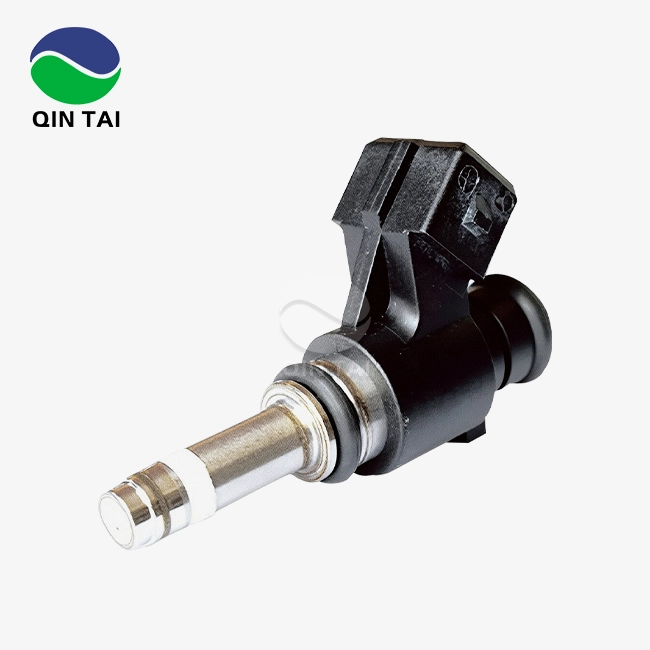
A Selective Catalytic Reduction (SCR) dosing system is the whole unit that delivers precisely measured amounts of Diesel Exhaust Fluid (DEF/AdBlue) into the exhaust stream before it reaches the SCR catalyst. The dosing control unit (DCU), urea injector, supply module, and urea dosing pressure sensor are usually part of it. The pressure sensor sends hydraulic input to the DCU in real time, making sure that each injection event is correct within very small ranges. This is very important for keeping the NOx conversion efficiency above 90%, which is what Euro VI protocols require.
What Does the AdBlue Pump Do?
One part of the SCR design is the AdBlue pump, which is also known as the DEF supply pump. Its job is to take urea solution from the storage tank and pump it up so that it can be sent to the dosing injector. Without steady pump pressure (usually between 4.5 and 9 bar, based on the system design), injection accuracy goes down, and fault codes like P204B show up, which starts limp mode. The urea fuel tank helps with this process by having built-in level, temperature, and quality indicators that constantly tell the ECU how the fluid is doing.
These two things work together. A common and expensive mistake is to think of them as different buying options without taking into account how they affect each other.
Comparative Analysis: SCR Dosing System vs AdBlue Pump
When it's time for maintenance, procurement engineers often wonder if they should get a whole SCR dosing system or just replace the AdBlue pump. The answer relies on the type of application, the method of failure, and the total cost of ownership.
To compare, here are the main things that make them different:
- Scope of function: An entire SCR dosing system controls closed-loop pressure, injection timing, freeze protection, and fault diagnosis. A new AdBlue pump only changes the pressure of the fluid, which is good for targeted repairs but not enough to improve the whole system.
- Emission compliance assurance: Full SCR assemblies made by certified manufacturers are validated by IATF 16949 and ISO 9001, which helps provide traceable compliance documentation for OEM type approval. In controlled markets, audit risk exists because stand-alone pump replacements might not have the same approval.
- Maintenance cost trajectory: It costs less up front to replace a single AdBlue pump. But if you don't fix problems like pressure sensor drift or injector fouling, breakdowns keep happening. Heavy-duty truck owners have done studies that show replacing an entire SCR dosing system instead of fixing individual parts costs 30–40% more over the course of five years.
- Compatibility and calibration: The output of the urea dosing pressure sensor must exactly match the calibration of the ECU, whether it's a 0.5V–4.5V analog signal or the SENT protocol. Dosing mistakes caused by mismatched signals lower the efficiency of catalytic conversion and raise diagnostic fault flags.
When your R&D or technical department looks at long-term system stability along with your buying team's cost goals, these differences are very important.

How to Choose Between SCR Dosing Systems and AdBlue Pumps for Your Fleet
The structured decision path starts with three questions about the fleet: What kind of engine do you have? What kind of rules and regulations govern your business? What amount of downtime is acceptable?
Decision Criteria for OEMs and Integrators
A fully certified SCR dosing system with a high-precision urea dosing pressure sensor is the only choice that can be made by diesel engine builders and aftertreatment developers who are building to China VI or Euro VI standards. It gives you the closed-loop feedback system you need for type approval and consistent mass output. Before committing to a large order, supplier certifications like ISO 9001, IATF 16949, and emission-specific homologation must be checked.
Decision Criteria for the Aftermarket
Repair shops and parts distributors that work with commercial vehicles or construction equipment often have to deal with high turnover and tight budgets. In this case, a direct-fit AdBlue pump replacement that works with a wide range of vehicles and is usually in stock gives the best return on investment. Thread standards (M10×1 or M12×1.5), output signal compatibility, and freeze-expansion tolerance are the most important criteria for approval. The last one is especially important in northern US states where AdBlue crystallization at -11°C causes diaphragm stress.
Decision Criteria for Generator Set and Industrial Applications
Generators and backup power systems at mine sites need to be very durable. In these conditions, the SCR dosing pressure sensor needs to work reliably for 15,000 to 20,000 hours, even when it is subjected to vibrations, changes in temperature, and high-salinity air. The right specification is for a full SCR assembly that has been shown to last in the field and comes with expert help from the provider.

Future Outlook and Industry Trends for SCR Dosing Systems and AdBlue Pumps
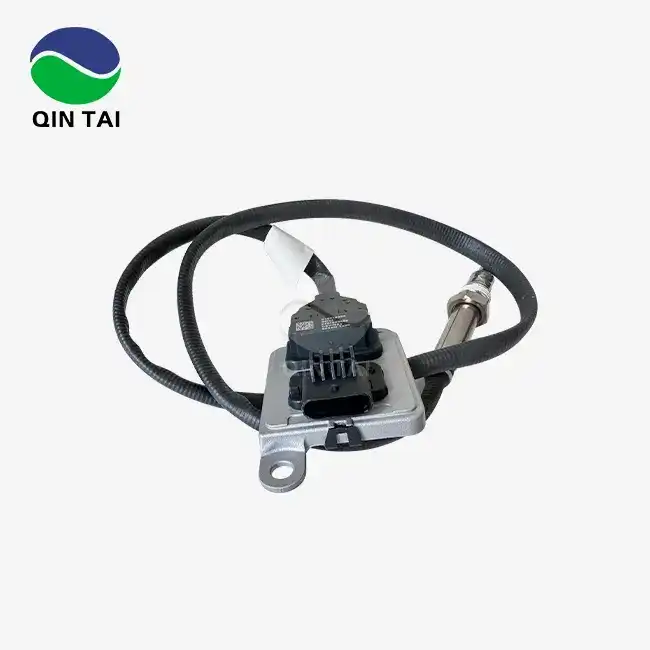
The market for pollution control sensors is changing very quickly. Recent fleet telemetry studies show that IoT-enabled SCR dosing systems now send real-time dosing data to fleet management platforms. This lets maintenance be planned ahead of time and cuts unplanned downtime by up to 25%. Pressure sensors that use the SENT protocol are slowly replacing analog outputs in new platform designs because they are better at blocking noise and having higher resolution.
Pressure from regulators is also growing stronger. The US EPA is continuing to make Tier 4 rules stricter for things that aren't used on roads, and Euro VII plans that are being looked at by the European Commission show that NOx limits will be lowered even more. When these rules become law, fleets that buy SCR dosing designs that can be upgraded and are flexible will have lower costs when they need to be retrofitted.
From the point of view of the supplier environment, companies that offer OEM/ODM customization and quick delivery lead times for the SCR dosing system are becoming more popular, especially among aftertreatment integrators who are in charge of multi-platform car projects.
Procurement Guide: Purchasing SCR Dosing Systems and AdBlue Pumps
Prioritize suppliers of SCR dosing system parts that have verifiable certification portfolios, a history of providing OEM parts, and a responsive after-sales infrastructure. If you are buying a lot of OEM parts, you should ask for PPAP paperwork and process capability data (Cpk ≥ 1.67) to make sure that the production is consistent.
Global SCR dosing system suppliers can be found on online business-to-business (B2B) sites like Alibaba and Made-in-China. However, working directly with a maker is still the best way to get unique interface specs and stable prices over the long term. Make sure that any supplier can give you documentation that shows they follow Ex, CE, UL, REACH, and RoHS rules for the market you want to reach.
For the system to stay up and the guarantee to stay valid, it must be installed by trained professionals and have access to legitimate OEM spare parts, especially pressure sensors and injector assemblies.

Conclusion
The SCR dosing system and the AdBlue pump are both very important parts of modern diesel pollution control, but they work in different ways and require different strategies for purchase. Full SCR dosing systems are good for OEM builds, apps that need to follow rules, and long-term industry uses. Targeted AdBlue pump replacements take care of aftermarket maintenance that is driven by cost. The best choices about what to buy are ones that take into account not only price, but also the needs of the application, the rules that apply, and how reliable the provider is.
FAQ
Can an AdBlue pump be used as a direct replacement for a full SCR dosing system?
Not at all. An AdBlue pump only raises the pressure of the fluid. The pump, dosing control unit, injector, and pressure sensor are all calibrated and part of a full SCR dosing system. Changing just one part doesn't change how well the whole system works.
What causes the P204B fault code in SCR systems?
P204B usually shows the range or performance variation of the urea pressure sensor circuit. Sensors that are getting old, dirty connecting pins, or signal drift are all common reasons. Gold-plated terminals and strong sealing make this type of failure much less likely.
How does a urea dosing pressure sensor handle AdBlue freezing?
Quality sensors have flexible internal storage structures that can handle the 9% volume increase that happens when urea freezes. This keeps the diaphragm from rupturing and the accuracy of the calibration.
What certifications should I require from an SCR component supplier?
Need at least ISO 9001, IATF 16949, and market-specific certifications like CE, UL, REACH, and RoHS. To get OEM type approval, you need to include emission-specific homologation documentation.
What is the typical operational lifespan of a urea dosing pressure sensor?
For normal commercial car uses, a well-made urea dosing pressure sensor is made to last between 15,000 and 20,000 hours of usual job cycles.
Partner with Qintai — Your Trusted SCR Dosing System Supplier
Since 2001, Qintai has provided precise SCR dosing system parts to Weichai Power, Yuchai Power, and Quanchai Power. The company has ISO 9001, IATF 16949, CE, UL, and Ex certifications in over 60 countries. For your program, our engineering team is ready to help, whether you need OEM-grade parts or custom DEF dosing options. Visit qt-sensor.com or email us at info@qt-sensor.com for details and prices from other companies.
References
1. SAE International Journal of Engines — "Performance Evaluation of SCR Aftertreatment Systems for Heavy-Duty Diesel Applications," SAE International, 2022.
2. Emissions Analytics — "AdBlue Consumption and NOx Conversion Efficiency in Euro VI Trucks," Emissions Analytics, 2023.
3. Environmental Science & Technology — "Field Performance of Selective Catalytic Reduction Systems Under Real-World Driving Conditions," American Chemical Society, 2021.
4. Heavy Duty Trucking Magazine — "Total Cost of Ownership: SCR System Maintenance Strategies for Fleet Operators," Randall-Reilly Publishing, 2023.
5. European Commission Technical Report — "Euro VII Emissions Standards Impact Assessment for Commercial Vehicles," European Commission, 2022.
6. SAE Technical Paper Series — "Urea Dosing Precision and Sensor Integration in Modern SCR Systems," SAE International, 2020.

Our customers’ satisfaction speaks for our quality — contact us to experience the same reliable service.