- English
- French
- German
- Portuguese
- Spanish
- Russian
- Japanese
- Korean
- Arabic
- Greek
- German
- Turkish
- Italian
- Danish
- Romanian
- Indonesian
- Czech
- Afrikaans
- Swedish
- Polish
- Basque
- Catalan
- Esperanto
- Hindi
- Lao
- Albanian
- Amharic
- Armenian
- Azerbaijani
- Belarusian
- Bengali
- Bosnian
- Bulgarian
- Cebuano
- Chichewa
- Corsican
- Croatian
- Dutch
- Estonian
- Filipino
- Finnish
- Frisian
- Galician
- Georgian
- Gujarati
- Haitian
- Hausa
- Hawaiian
- Hebrew
- Hmong
- Hungarian
- Icelandic
- Igbo
- Javanese
- Kannada
- Kazakh
- Khmer
- Kurdish
- Kyrgyz
- Latin
- Latvian
- Lithuanian
- Luxembou..
- Macedonian
- Malagasy
- Malay
- Malayalam
- Maltese
- Maori
- Marathi
- Mongolian
- Burmese
- Nepali
- Norwegian
- Pashto
- Persian
- Punjabi
- Serbian
- Sesotho
- Sinhala
- Slovak
- Slovenian
- Somali
- Samoan
- Scots Gaelic
- Shona
- Sindhi
- Sundanese
- Swahili
- Tajik
- Tamil
- Telugu
- Thai
- Ukrainian
- Urdu
- Uzbek
- Vietnamese
- Welsh
- Xhosa
- Yiddish
- Yoruba
- Zulu
Sensors Guide: Types, Uses and Industrial Applications
Industrial sensors are the eyes and ears of modern manufacturing, converting physical phenomena—pressure, temperature, proximity, flow—into actionable electrical signals. They enable real-time monitoring, predictive maintenance, and regulatory compliance across diesel engine aftertreatment systems, emission controls, and heavy machinery. With rapid advancements in miniaturization, wireless connectivity, and IoT integration, today's industrial sensor technologies deliver unprecedented accuracy and reliability, empowering purchasing managers and R&D engineers to make informed decisions that balance performance, cost, and long-term operational stability.
Understanding Industrial Sensors: Types and How They Work
Industrial Sensors work by spotting changes in their surroundings and turning those changes into signals that can be measured. Electromagnetic sensors respond to changes in magnetic fields, optical sensors measure changes in light intensity or wavelength, and thermal sensors keep an eye on differences in heat. Depending on the situation, each device has its own unique benefits.
Core Sensor Categories and Their Operating Principles
Pressure sensors measure the force that fluids or gases put on them into an electrical signal. Piezoelectric types make voltage that is related to the pressure that is applied. This gives them almost instantaneous reaction times that are perfect for dynamic tracking. Sealed pressure sensors check the difference between an internal reference pressure and external forces. This lets them make accurate differential readings, which are very important in hydraulic systems and emission control equipment.
Temperature sensors, including thermocouples and resistance temperature detectors (RTDs), keep an eye on the temperature conditions in diesel engines, exhaust aftertreatment systems, and generator sets. Accurate temperature data is needed to make sure that emission standards are met and that catalytic converters and particulate filters don't get damaged by heat.
Proximity sensors can tell when an object is nearby without touching it, using capacitive, electrical, or sound means. These gadgets make assembly lines more automated and keep workers safe by keeping an eye on where the tools are placed.
Flow sensors measure how much a gas or liquid moves, which helps fuel injection systems and SCR dosing units improve their processes. Accurate flow measurement has a direct effect on how well emissions are reduced and fuel economy.
Technological Innovations Driving Sensor Evolution
New developments focus on wireless communication methods, which make installations easier and allow for networks of tracking stations to be spread out. IoT-enabled Industrial Sensors send data to cloud platforms, which makes distant diagnosis and predictive analytics possible. Miniaturisation makes it possible to fit things into places with limited space, like diesel particulate filter systems. Better material science makes them more resistant to vibrations, harsh temperatures, and exhaust gases that eat away at metal. These new ideas are in line with strict emission rules like China VI and Euro VI, where the reliability of Industrial Sensors has a direct effect on compliance outcomes.
Key Industrial Sensor Applications Across Industries
Industrial Sensors are important for many different types of industries because they turn raw data into practical information that improves safety, efficiency, and environmental responsibility.
Process Control and Automation
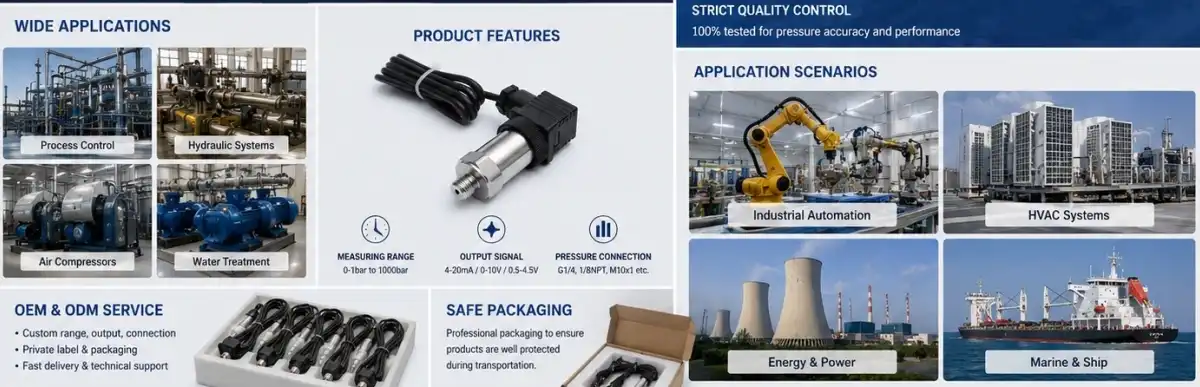
When diesel engines are being made, pressure sensors keep an eye on the hydraulic systems that power the fuel pumps and turbochargers. Finding abnormal changes in pressure finds possible leaks or blockages before they become expensive failures. In exhaust gas recirculation (EGR) devices, temperature sensors make sure that the best conditions for combustion are met, which lowers nitrogen oxide pollution. Flow monitors control how much urea is added to selective catalytic reduction (SCR) systems. This keeps the exact ammonia-to-NOx ratios that are needed to meet regulatory standards.
Safety Enforcement and Environmental Monitoring
Pressure monitors are very important for finding leaks in hydraulic and gas lines. Finding pressure drops early on stops fluid loss, machine damage, and safety risks in the workplace. Continuous emissions monitoring systems (CEMS) are used in environmental uses. In these systems, Industrial Sensors track the makeup of exhaust gases and sound warnings when pollutant levels get close to legal limits. This feature is necessary for companies that make generator sets that are used in mines and power plants, where breaking the rules can cost a lot of money and hurt your image.
Quality Assurance and Predictive Maintenance
Real-time data from Industrial Sensors lets maintenance plans be planned ahead of time, which cuts down on unplanned downtime. By keeping an eye on the differences in pressure between diesel particulate filters (DPFs), you can see how much soot is building up and plan regeneration processes before too much backpressure hurts engine performance. In aftertreatment system integration, Industrial Sensors check that parts work while they are being put together. This lowers the number of defects and guarantee claims. By finding inefficiencies like compressed air leaks early on, manufacturing sites that use sensor networks can increase productivity while lowering energy use.
Sensors that check the pressure and temperature of hydraulic fluid are helpful for construction equipment workers because they keep excavators and loaders from breaking down in dangerous situations. Precision agriculture methods increase food yields by using farming equipment with advanced sensor arrays to find the best planting depth and fertiliser distribution.
How to Choose the Right Industrial Sensor for Your Needs?
To choose the right Industrial Sensor technology, you need to carefully look at the working factors, the environmental conditions, and the needs for system integration.
Defining Operational Requirements
First, decide what the variable you want to measure is (pressure, temperature, flow, or proximity) and what the acceptable measurement ranges and accuracy tolerances are. OEMs of diesel engines that put emission compliance first need Industrial Sensors with narrow precision bands and stable calibration over long periods of time. For generator set uses, reliability and vibration resistance are important. On the other hand, aftermarket repair shops value how easy it is to install and how well it works with a wide range of equipment models.
Communication and Compatibility Considerations
Wired Industrial Sensors offer strong signal integrity, but they are harder to install. Wireless Industrial Sensors, on the other hand, make it easier to add to current equipment. Integrating data is easy when it works with current control protocols, like CANbus, Modbus, or custom systems. Industrial Sensors with customisable interfaces and parameter adjustments help aftertreatment system designers make solutions that work with a variety of engine platforms.
Environmental and Certification Factors
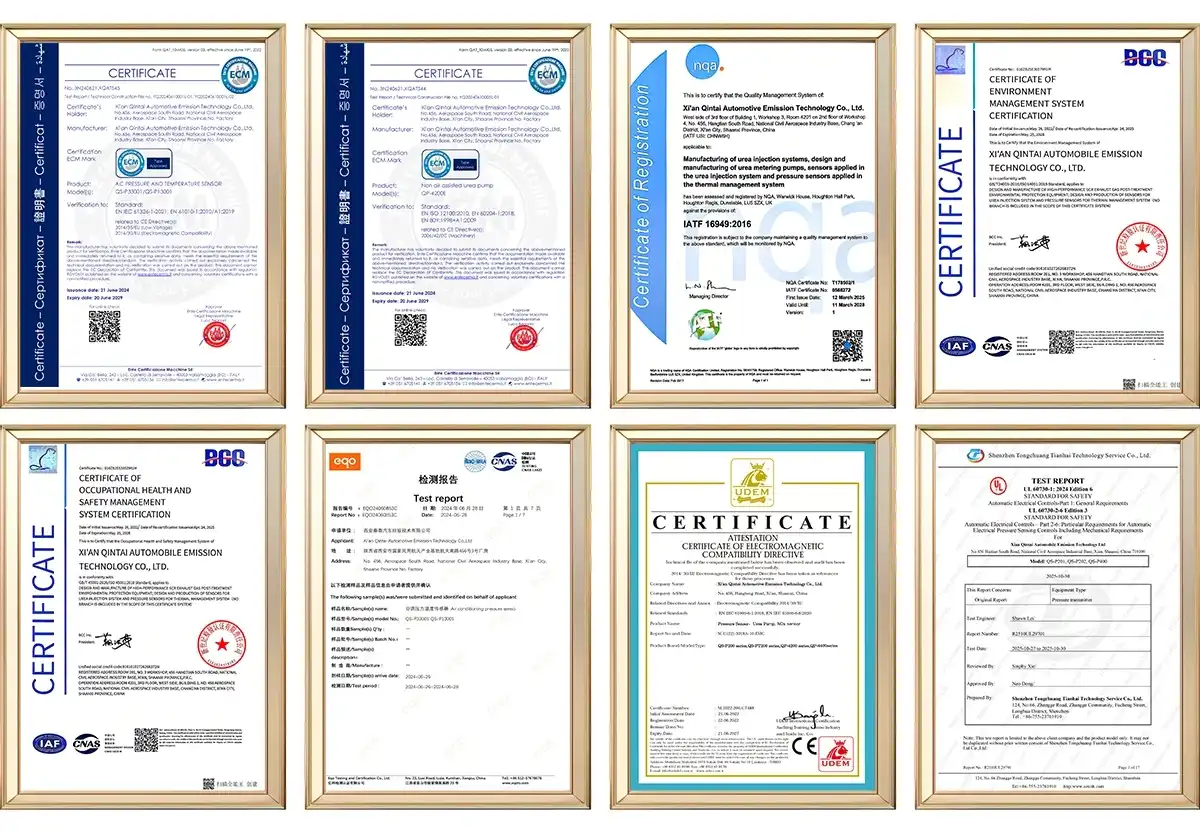
When Industrial Sensors are used in harsh environments, they have to be able to handle changes in temperature, corrosive exhaust gases, and mechanical shock. A rating of IP67 or IP69K for ingress protection keeps out water and contaminants. Adhering to certifications like IATF16949 for automotive uses, ATEX for explosive environments, and UL and CE for international markets guarantees that the product will work as expected and follow all regulations. When purchasing managers look at different providers, they should make sure that the testing standards and quality control systems are in line with ISO9001 standards.
Maintenance, Calibration, and Troubleshooting of Industrial Sensors
To keep Industrial Sensors working well over long periods of time between service, they need to be maintained and fixed in a planned way.
Preventive Maintenance Protocols
Scheduling regular inspections keeps measurement accuracy high and stops Industrial Sensors from drifting. Cleaning methods get rid of the building of dirt and grime on sensing elements that are exposed to hydraulic fluids or exhaust gases. When to recalibrate depends on the application. For example, emission-critical Industrial Sensors may need to be checked every three months, while less demanding settings can go without checks for a year. Firmware updates improve performance and fix known problems, which makes devices last longer.
Common Faults and Diagnostic Techniques
Most of the time, signal loss is caused by corrosion in the connectors or damage to the wires from shaking. Using a multimeter to check for electrical connection and correct voltage levels is called checking. Electromagnetic fields near heavy machinery and other environmental factors can change the shape of analogue signals. Shielded cables and better grounding can help with this problem. Physical damage from temperature cycling or mechanical impact means that the Industrial Sensor needs to be replaced; a visual check shows that the housings are cracked or the sensing elements are deformed.
Professional Support Services
Technical support from the maker is helpful for setups that are hard to do, like adding Industrial Sensors to SCR aftertreatment systems. Help with installation makes sure that the fixing is in the right place and that the fluid connection pressure requirements are met. Diagnostic services find the real reasons why things break down sometimes, so you don't have to keep swapping parts. Long-term service agreements protect asset uptime for mission-critical applications like backup power generators by scheduling calibration visits and giving you priority access to replacement parts.
Industrial Sensor Procurement: How to Buy with Confidence?
Strategic procurement looks at technical requirements, the abilities of suppliers, and the total cost of ownership over the whole lifecycle.
Evaluating Supplier Credentials
Manufacturers with a history can show their track records through certification portfolios and customer references. Companies with IATF16949 certification have quality systems that are good enough for diesel engine OEM supply chains and are made for cars. Compliance with REACH and RoHS ensures the safety of chemicals and care for the environment, which is becoming more and more important for markets in Europe and North America. Patent portfolios show how much money a company spends on research and development and how much it can come up with new technologies.
Pricing and Delivery Considerations
Through economies of scale, buying in bulk lowers unit costs, which is good for production lines that make a lot of things. Being clear about lead times makes it possible to make accurate production schedules, and suppliers who keep stock on standard configurations speed up deliveries. Custom Industrial Sensor development takes longer, but it can solve problems that other sensors can't, like mounting ports that aren't standard or pressure levels that aren't standard. Framework deals with chosen suppliers keep prices stable and make sure that supplies are distributed even when there are problems in the supply chain.
Warranty and After-Sales Support
Full guarantees that cover both material and workmanship flaws protect you financially against fails that happen too soon. Time-to-first-response and problem resolution rates show how fast technical help is, which affects the continuity of operations. Commissioning risks are lower when suppliers offer on-site installation help and training. Good documentation, like detailed datasheets and integration guides, makes it easier to check that specifications are met and fix problems with the system.
Coordinating global logistics makes sure that deliveries made across foreign lines are always on time. Suppliers who know how to export can handle customs paperwork and harmonised tax classifications, which cuts down on shipping delays. Regional delivery networks make it easier for aftermarket sellers and repair shops to get more Industrial Sensors when they run out.
Conclusion
To choose and keep Industrial Sensors, you need to know a lot about how technology works, what the application needs, and what the provider can do. Pressure monitors are a great example of how useful and important these devices are in the aftermarket for industrial vehicles, diesel engines, and aftertreatment integration. Prioritising certified suppliers with proven quality systems, strong technical support, and the ability to make changes quickly and easily increases operating efficiency and lowers the total cost of ownership. Proactive maintenance and calibration protocols keep measurements accurate and extend the life of sensors. They also help with emission compliance and predictive maintenance strategies, which are important in today's competitive industrial markets.
FAQ
What pressure sensor types are most suitable for diesel engine aftertreatment systems?
Piezoelectric pressure sensors work great in changing situations that need quick responses, like checking the backpressure of exhaust gases across diesel particulate filters. Sealed pressure monitors give accurate differential readings for hydraulic systems and SCR urea dose pumps, even when heavy-duty diesel engines are vibrating and the temperature changes.
How often should Industrial Sensors be recalibrated?
How often you need to recalibrate relies on how important the application is and how bad the surroundings is. Emission-related Industrial Sensors that help with legal compliance should be checked every three months, but Industrial Sensors with less demanding jobs can be checked once a year. Manufacturers' specs and industry standards provide basic advice that is changed based on how much drift was seen during the first operation.
What certifications matter when sourcing industrial sensors internationally?
OEM suppliers can show that they have automotive-grade quality management by getting IATF16949 certification. ATEX approval lets you use it in places like mines and chemical plants where there is a risk of explosion. In North America and Europe, UL and CE markings make it easier to get into markets. REACH and RoHS compliance proves that chemicals are safe and that companies are taking more responsibility for the environment through their sustainability programs.
Partner with Qintai for Industrial Sensor Excellence
Xi'an Qintai Automotive Emission Technology Co. Ltd has served diesel engine OEMs, aftertreatment system integrators, and generator manufacturers since 2001, ranking No. 1 in China's market share as a core supplier to Weichai, Yuchai, and Quanchai Power. Our pressure sensors, temperature sensors, and NOx sensors carry ISO9001, IATF16949, ATEX, UL, CE, REACH, and RoHS certifications, meeting stringent China VI and Euro VI emission standards. With 58 invention patents and an independent R&D team, we deliver customized OEM/ODM solutions backed by fast delivery and comprehensive after-sales support. Thousands of Industrial Sensor manufacturers worldwide trust our industrial-grade reliability for heavy trucks, construction machinery, agricultural equipment, and generator sets. Contact info@qt-sensor.com to discuss your application requirements and request technical specifications tailored to your operational environment.
References
1. Fraden, Jacob. Handbook of Modern Sensors: Physics, Designs, and Applications. Springer International Publishing, 2016.
2. Wilson, Jon S. Sensor Technology Handbook. Elsevier, 2005.
3. Webster, John G., and Halit Eren. Measurement, Instrumentation, and Sensors Handbook: Electromagnetic, Optical, Radiation, Chemical, and Biomedical Measurement. CRC Press, 2014.
4. Bao, Xiaoqi, and Liang Chen. Recent Progress in Distributed Fiber Optic Sensors. Sensors Journal, 2012.
5. Society of Automotive Engineers. Surface Vehicle Recommended Practice J1939: Serial Control and Communications Heavy Duty Vehicle Network. SAE International, 2016.
6. International Organization for Standardization. ISO 9001:2015 Quality Management Systems — Requirements. ISO, 2015.
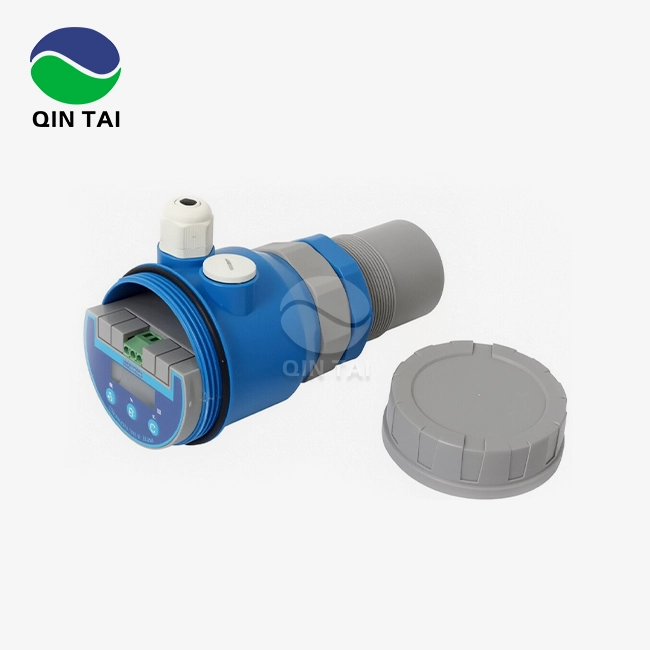
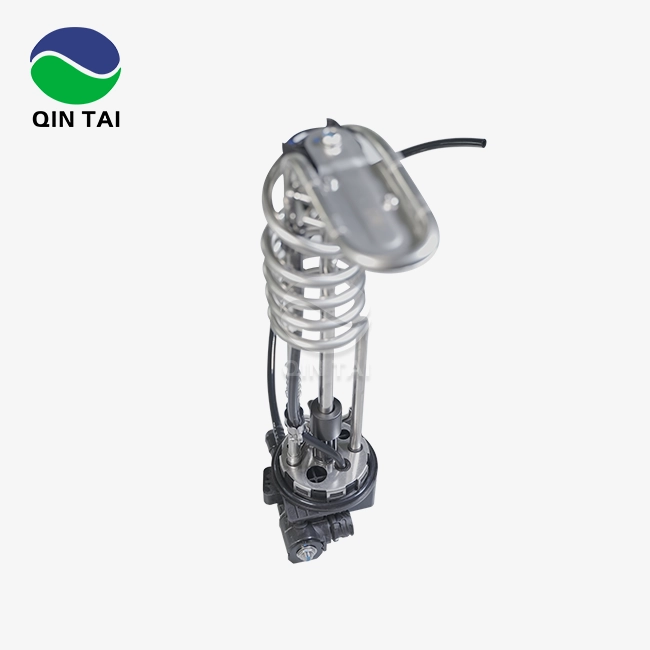
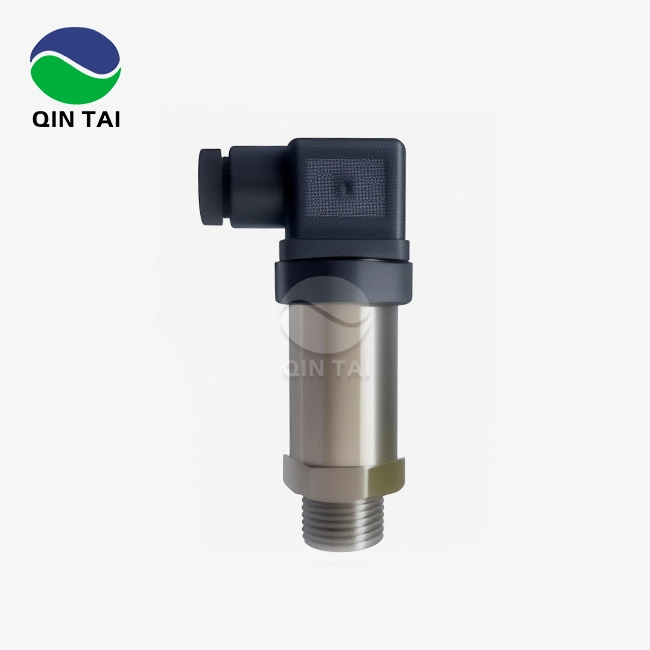

Our customers’ satisfaction speaks for our quality — contact us to experience the same reliable service.