- English
- French
- German
- Portuguese
- Spanish
- Russian
- Japanese
- Korean
- Arabic
- Greek
- German
- Turkish
- Italian
- Danish
- Romanian
- Indonesian
- Czech
- Afrikaans
- Swedish
- Polish
- Basque
- Catalan
- Esperanto
- Hindi
- Lao
- Albanian
- Amharic
- Armenian
- Azerbaijani
- Belarusian
- Bengali
- Bosnian
- Bulgarian
- Cebuano
- Chichewa
- Corsican
- Croatian
- Dutch
- Estonian
- Filipino
- Finnish
- Frisian
- Galician
- Georgian
- Gujarati
- Haitian
- Hausa
- Hawaiian
- Hebrew
- Hmong
- Hungarian
- Icelandic
- Igbo
- Javanese
- Kannada
- Kazakh
- Khmer
- Kurdish
- Kyrgyz
- Latin
- Latvian
- Lithuanian
- Luxembou..
- Macedonian
- Malagasy
- Malay
- Malayalam
- Maltese
- Maori
- Marathi
- Mongolian
- Burmese
- Nepali
- Norwegian
- Pashto
- Persian
- Punjabi
- Serbian
- Sesotho
- Sinhala
- Slovak
- Slovenian
- Somali
- Samoan
- Scots Gaelic
- Shona
- Sindhi
- Sundanese
- Swahili
- Tajik
- Tamil
- Telugu
- Thai
- Ukrainian
- Urdu
- Uzbek
- Vietnamese
- Welsh
- Xhosa
- Yiddish
- Yoruba
- Zulu
Top Benefits of NOx Sensor in Diesel Emission Control
If you manage procurement for a diesel OEM, operate an SCR aftertreatment line, or source parts for a commercial fleet, understanding what a nitrogen oxide sensor does — and why it matters — can directly affect your compliance record, your maintenance budget, and your supplier relationships. This guide walks through the core benefits, common issues, selection criteria, and sustainability value of NOx sensors in diesel emission control, with specific attention to the needs of B2B buyers across heavy trucks, construction machinery, generator sets, and industrial exhaust treatment.
What Is a NOx Sensor and Why Is It Crucial in Diesel Engines?
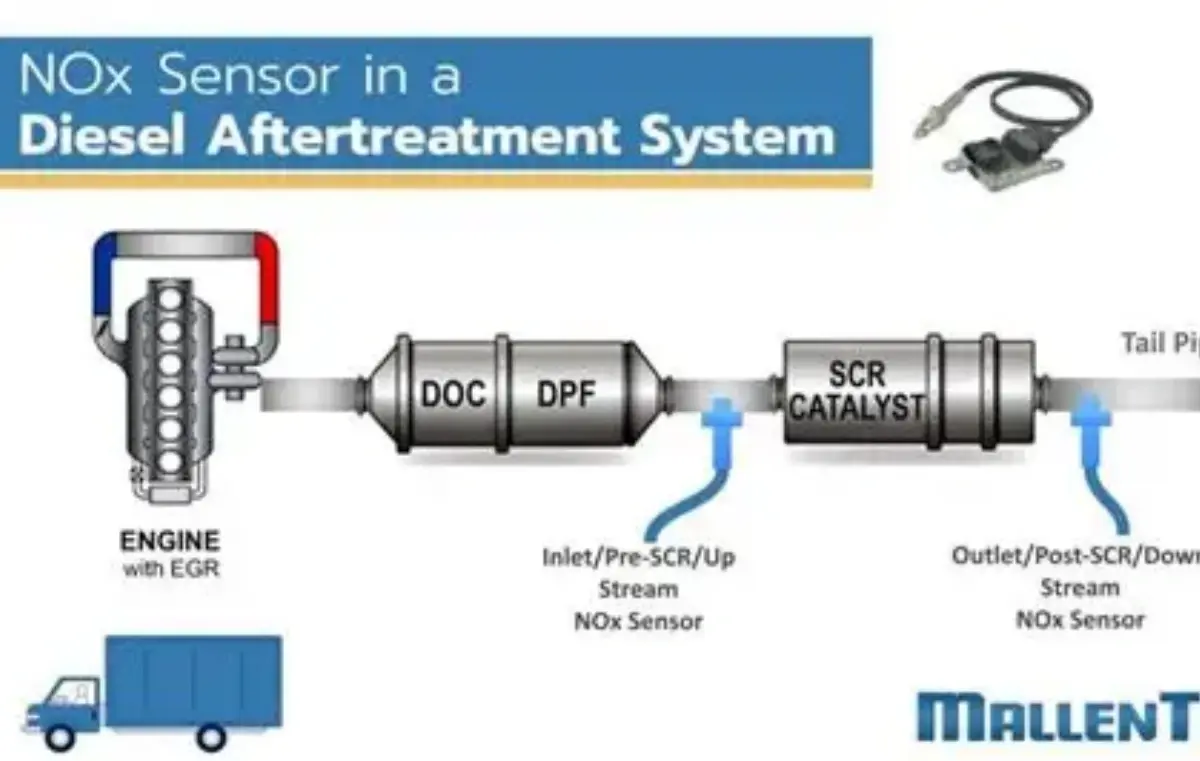
A NOx sensor measures the concentration of nitrogen oxides in diesel exhaust gas in real time. Unlike a standard oxygen sensor, which monitors air-fuel ratio for combustion tuning, a nitrogen oxide sensor is dedicated to the aftertreatment system — specifically, it tells the engine control unit how much DEF (Diesel Exhaust Fluid) to inject into the SCR catalyst.
How the Sensing Mechanism Works
The sensor uses yttria-stabilized zirconia ceramic as its solid electrolyte. Inside the device, an oxygen pump cell first regulates oxygen levels in a sealed measurement chamber. A second NOx sensing cell then catalytically decomposes nitrogen oxides into nitrogen and oxygen ions. The resulting ion current is proportional to the NOx concentration — giving the ECU a precise, real-time reading.
Upstream vs. Downstream Sensor Placement
Modern diesel systems run two sensors. The upstream sensor, positioned near the turbocharger outlet, reads raw engine-out NOx and determines the correct DEF dosing rate. The downstream sensor, placed after the SCR catalyst, reports post-treatment NOx levels as a performance check. If the downstream reading stays too high, the system triggers a fault code and, eventually, engine derate.
Why Euro VI and EPA Standards Make These Sensors Non-Negotiable
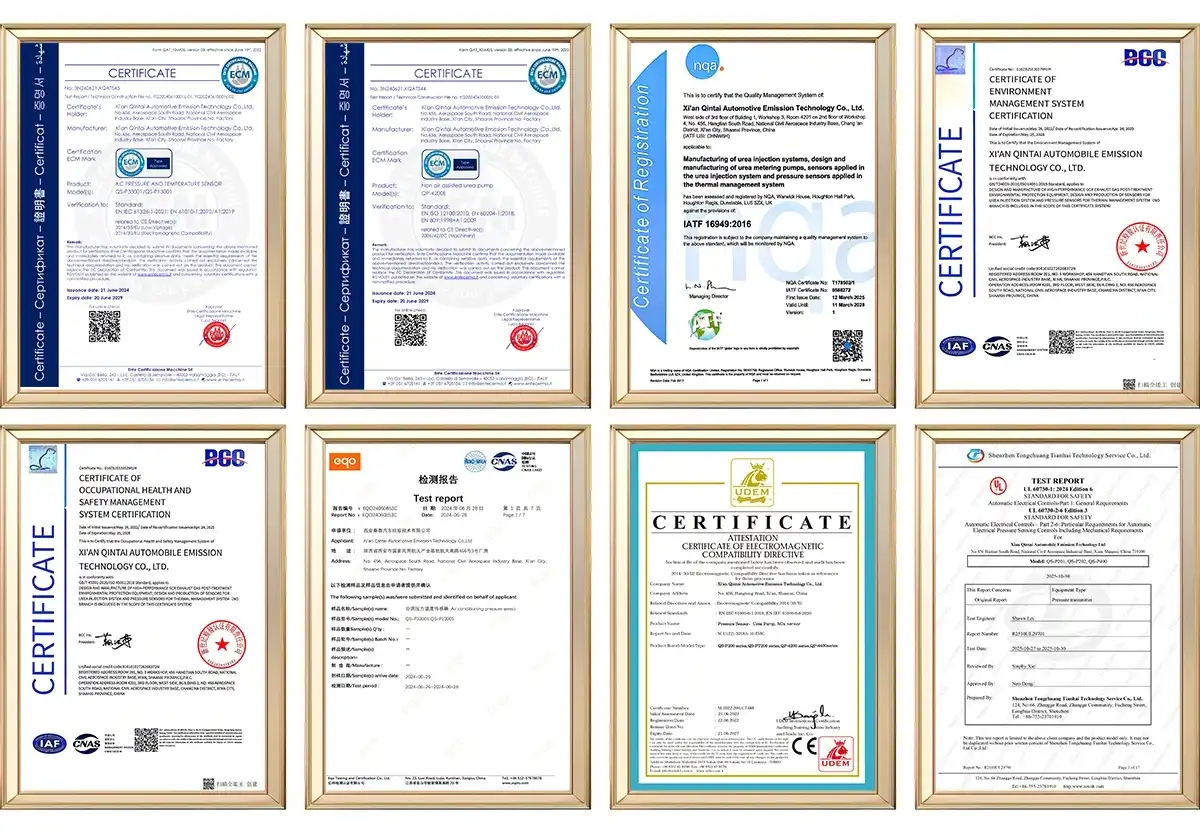
Euro VI and EPA 2010+ regulations cap NOx emissions at levels that require continuous closed-loop monitoring. Without accurate exhaust gas sensing, SCR systems cannot dose DEF correctly, catalyst efficiency drops, and vehicles fail emissions inspections. For OEM purchasing managers, sensor certification — including ISO 9001, IATF 16949, and relevant CE/RoHS qualifications — is a baseline procurement requirement.
Top 5 Benefits of Using NOx Sensors in Diesel Emission Control
It's not just the papers that change when you choose the wrong computer. If you want to know why nitrogen oxide sensors are important in diesel aftertreatment systems, read on.
- Precise Regulatory Compliance: Real-time NOx data allows the SCR system to dose DEF with accuracy, keeping tailpipe emissions within Euro VI and EPA thresholds. A sensor measuring from 0 to 2500 ppm with ±10 ppm accuracy at low concentrations gives the ECU the resolution it needs to avoid over- or under-dosing.
- Improved Fuel and DEF Efficiency: Accurate dosing means the system never wastes urea. Over-dosing causes ammonia slip, which triggers the downstream sensor and wastes fluid. Under-dosing causes NOx exceedance. Tight feedback control reduces DEF consumption by preventing both failure modes.
- Extended SCR Catalyst Lifespan: Ammonia buildup from over-dosing accelerates catalyst degradation. Sensors that maintain dosing accuracy protect catalyst washcoat integrity, reducing the frequency of costly catalyst replacements.
- Early Fault Detection and Reduced Downtime: When sensor readings drift or fail, the ECU logs diagnostic trouble codes (DTCs) before the vehicle enters a derate condition. Maintenance teams can address issues during scheduled service rather than roadside breakdowns, a direct cost saving for fleet operators.
- Measurable Carbon Footprint Reduction: Every percentage point of SCR efficiency gained through accurate sensing translates to lower N₂O and NOx output. This supports corporate ESG targets and green procurement policies, which increasingly influence OEM supplier approvals.
Because of these five perks, the Nox sensor helps cars stay on the road and don't break the law, and the total cost of ownership goes down.

Common NOx Sensor Issues and Troubleshooting for B2B Clients
It's possible for well-built sensors to break down in the field. Repair teams can fix small issues before they get worse and cost a lot to fix if they know how things break down most of the time.
Lead and Sulfide Contamination
Diesel smoke has very small amounts of sulfur dioxide and lead chemicals. Over time, these pollutants cover the sensing element, which makes it less sensitive and causes the ECU to get the DEF dose wrong. It takes a lot longer for sensors that are very hard to poison to stay calibrated than for regular units.
Inaccurate Readings and Drift
Sensor drift happens when data slowly move away from their real values. This is usually caused by heater elements that are worn out. It is kept at the right temperature (between 100°C and 800°C) by the heater. If the resistance of the heater changes, it gets harder to keep the temperature under control, and the readings become less accurate.
Diagnostic and Reset Procedure
If the nitrogen oxide sensor gives you a trouble code, use an OBD-II or heavy-duty diagnostic tool to find the exact DTC. Before you change the sensor, make sure there aren't any bigger issues, such as a clogged DPF, a broken EGR valve, or a problem with the DEF. So that the ECU can start over, take the car out of the garage for 15 minutes after changing the battery. After that, let the system learn again by driving the car on the road for a while. Clear any DTCs that are still there with the reader after the drive cycle shows that everything is working as it should.
Comparing NOx Sensors: OEM vs. Aftermarket and Top Brands for Procurement
Buying departments often question whether or not the extra cost of OEM sensors is worth it compared to alternatives. It depends on the kind of program, the number, and the level of help that is needed.
OEM Sensors: Precision at a Price
Bosch and Denso make OEM-grade sensors that are made with a lot of care. Many Euro VI truck engines already have a Nox sensor because Bosch makes the Universal Nox sensor. These units are calibrated the most consistently, but they cost the most per unit and may take longer to ship if you order a lot of them.
Aftermarket Alternatives: Value with Caveats
If an aftermarket sensor made by a qualified company has IATF 16949 approval and can talk to OEM systems using the same protocols, it can work just as well as an OEM sensor. Buyers should not only ask for spec sheets but also test data. They should also check that the connecting ports fit with the car's base.
Supplier Selection Criteria for B2B Buyers
In order to find a nitrogen oxide sensor supplier that will be valuable in the long term, you should look at their list of certifications (ISO 9001, IATF 16949, CE, RoHS), their ability to work with more than 300 communication protocols, their ability to customize cables and connectors, their minimum order quantity, their delivery lead time, and their history with OEM integrations.
How NOx Sensors Contribute to Sustainable and Cost-Effective Diesel Operations
It's not enough for officials to make sure that emissions are being properly tracked. There is a real return that can be measured.
DEF System Integration and Efficiency
In a closed circle, the DEF dosing injector, the SCR catalyst, and the Nox sensor all do their jobs. If the upstream monitor really does measure how much nitrogen fumes are coming out of the engine, the dosing system can choose the stoichiometric urea injection rate. This keeps the catalyst clean so that ammonia doesn't slip off and stops under-dosing so that not enough NOx is converted.
Onboard Diagnostics and Fleet Telematics
The CAN bus is how heavy trucks of today send data from their Nox sensor to platforms for managing the fleet. When sensors send data to telematics, fleet managers can see NOx trends for whole groups of cars. This lets them decide when to fix something based on how it works in the real world instead of set miles times.
Long Service Life as a Sustainability Factor
If the sensor is rated for 6,000 hours of use, which is more than the usual industry standard, it will need to be replaced less often over the life of the car. Changes that happen less often mean that you don't have to buy new tech as often. Between 4,000 and 6,000 hours, sensors last twice as long. That's how much it costs to buy new sensors and how long it takes to handle them for 500 cars.
Conclusion
Nox sensors are the heart of diesel emission control. They check how accurate compliance is, how well DEF works, how long the trigger lasts, and how well it can diagnose. When OEM engineers, SCR fitters, aftermarket parts managers, and generator set buying teams pick a sensor, they need to make sure it has the right technical specs, certifications, and seller support structure to keep their operations safe and their regulatory standing high. When making a choice, the most important things to think about are the response time, source qualification depth, measurement accuracy, and service life.
FAQ
How often should a NOx sensor be replaced?
Every time your car needs major work, most makers say you should do an inspection. If everything goes as planned, sensors that are rated for 6,000 hours can last a lot longer than regular units in the same field. But the sulfur amount, the quality of the fuel, and the duty cycle all affect how long it really lasts. As a first sign of trouble, keep an eye on the DTCs and any strange dose trends.
Can a NOx sensor be cleaned rather than replaced?
Cleaning the detecting part is not a good idea. Chemists can break the very precise parts like the wires and zirconia ceramic. You should run a test loop first if you think there might be waste. Most of the time, it is cheaper to buy a new sensor than to try to clean an old one.
What are the early signs of sensor failure?
Watch out for things like using more DEF, getting SCR fault codes that won't go away, failing emissions tests, or a clear drop in engine power from system derate. If sensors upstream and downstream give the same readings when they should be very different, that's another sign that a part that detects has broken.
Does sensor compatibility matter across different truck platforms?
Yes. The ECU of the car needs to be able to use the correct type of connector, wire length, CAN protocol, and signal output format. Buy teams have more choices when they work with different fleets when sensors have connectors that can be changed and can connect to more than 300 different communication methods.
Partner With Qintai for Proven NOx Sensor Solutions
Qintai has been in business since 2001 and is approved by both ISO 9001 and IATF 16949. N2O monitors are sold to OEM partners in more than 60 countries. They make Nox sensors better than any other business and sell them to Weichai Power, Yuchai Power, and Quanchai Power. They can respond in less than 1,400 ms, last up to 6,000 hours, and have startup times that are much faster than the industry standard of 165 seconds. They are also very resistant to being poisoned by lead and sulfur dioxide. Pick any kind of plug and any amount of wire you desire. You can email Qintai's business-to-business team at info@qt-sensor.com or visit qt-sensor.com to get prices and specs.
References
1. European Commission. Euro VI Heavy-Duty Vehicle Emission Standards Regulation (EC) No 595/2009. Official Journal of the European Union, 2009.
2. U.S. Environmental Protection Agency. Control of Air Pollution from New Motor Vehicles: Heavy-Duty Engine and Vehicle Standards. EPA, 2001.
3. Society of Automotive Engineers. SAE J1939 Standards Manual: Serial Control and Communications Heavy-Duty Vehicle Network. SAE International, 2015.
4. Koebel, M., Elsener, M., & Kleemann, M. Urea-SCR: A Promising Technique to Reduce NOx Emissions from Automotive Diesel Engines. Catalysis Today, Elsevier, 2000.
5. National Institute for Automotive Service Excellence. Diesel Emission Control Systems Diagnostic Reference Guide. ASE Education Foundation, 2018.
6. Johnson, T.V. Diesel Emissions in Review. SAE International Journal of Engines, SAE International, 2011.

Our customers’ satisfaction speaks for our quality — contact us to experience the same reliable service.