- English
- French
- German
- Portuguese
- Spanish
- Russian
- Japanese
- Korean
- Arabic
- Greek
- German
- Turkish
- Italian
- Danish
- Romanian
- Indonesian
- Czech
- Afrikaans
- Swedish
- Polish
- Basque
- Catalan
- Esperanto
- Hindi
- Lao
- Albanian
- Amharic
- Armenian
- Azerbaijani
- Belarusian
- Bengali
- Bosnian
- Bulgarian
- Cebuano
- Chichewa
- Corsican
- Croatian
- Dutch
- Estonian
- Filipino
- Finnish
- Frisian
- Galician
- Georgian
- Gujarati
- Haitian
- Hausa
- Hawaiian
- Hebrew
- Hmong
- Hungarian
- Icelandic
- Igbo
- Javanese
- Kannada
- Kazakh
- Khmer
- Kurdish
- Kyrgyz
- Latin
- Latvian
- Lithuanian
- Luxembou..
- Macedonian
- Malagasy
- Malay
- Malayalam
- Maltese
- Maori
- Marathi
- Mongolian
- Burmese
- Nepali
- Norwegian
- Pashto
- Persian
- Punjabi
- Serbian
- Sesotho
- Sinhala
- Slovak
- Slovenian
- Somali
- Samoan
- Scots Gaelic
- Shona
- Sindhi
- Sundanese
- Swahili
- Tajik
- Tamil
- Telugu
- Thai
- Ukrainian
- Urdu
- Uzbek
- Vietnamese
- Welsh
- Xhosa
- Yiddish
- Yoruba
- Zulu
Top Capacitive Pressure Sensor Uses in Industrial Automation
When engineers and procurement managers ask which pressure sensing technology holds up best across high-demand industrial environments, the capacitive pressure sensor consistently earns its place at the top of the list. Unlike piezoresistive or piezoelectric alternatives, capacitive sensors detect pressure by measuring the change in electrical capacitance between two conductive plates separated by a dielectric layer.
That simple physics principle translates into high sensitivity, low power draw, and stable long-term performance — exactly what heavy-duty industrial automation demands. This guide covers working principles, real applications, procurement strategy, and what to look for when sourcing from a verified supplier.

Understanding Capacitive Pressure Sensors and Their Working Principles
How Capacitance Changes Under Pressure
To figure out how a capacitive pressure sensor works, write C = ε₀εⁿA/d. The capacitance goes up when pressure is put on a flexible diaphragm because the gap (d) between it and a solid electrode gets smaller. That shift is turned into an electrical output that can be read by a signal filtering circuit. Because there are no moving parts, there is less wear and longer service intervals, which is useful in settings where production is ongoing.
Temperature Compensation and Stability
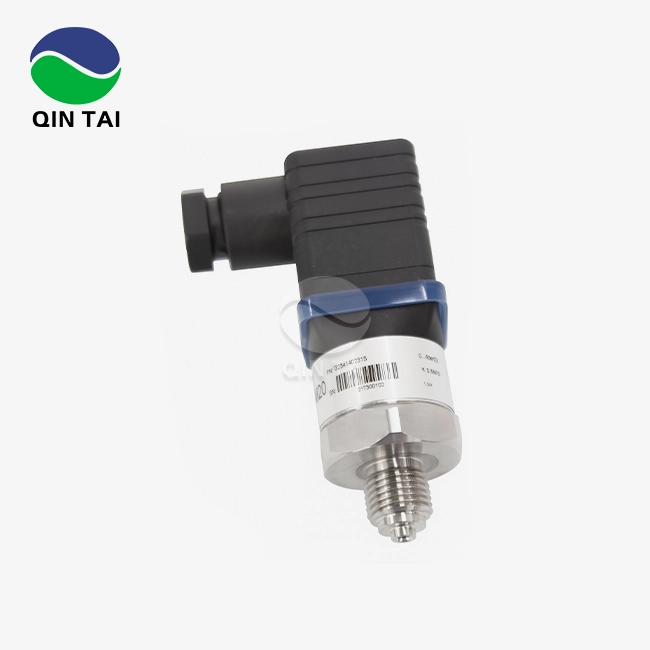
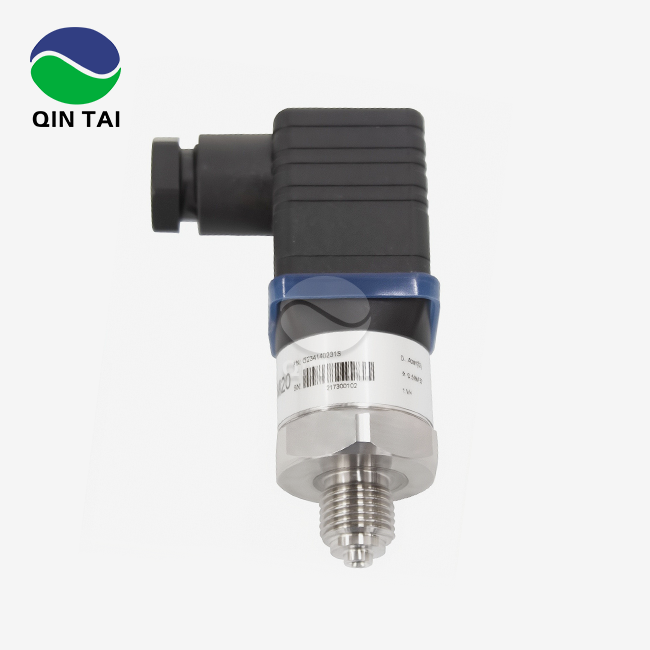
Temperature drift is a problem that pressure sensors are known to have. Good sensors deal with this by having built-in circuits for compensation or using ceramic diaphragm materials that don't expand much when they get hot. This one, the Qintai QS-P105, has a 96% Al₂O₃ ceramic diaphragm that has a zero temperature shift of less than 0.03% FS/°C for ranges of 2–50 bar and less than 0.04% FS/°C for ranges of 50–600 bar. In places where temperatures range from -40°C to 135°C, that amount of heat stability is very important.
Key Technical Parameters to Read on a Datasheet
Pay attention to these sensor specs when reading the datasheet: non-linearity (the QS-P105 gets 0.3% FS), complete accuracy (≤±0.5% FS), sensitivity (2–4.0 mV/V), and safety overload rate (200% FS). These numbers tell procurement engineers if the sensor can handle sudden changes in pressure without breaking or needing to be re-calibrated. This directly affects the total cost of ownership.
Top 5 Industrial Automation Applications of Capacitive Pressure Sensors
In many different types of industries, capacitive pressure sensors are used in places where other parts would break. Here are five areas where a lot of information is available about how well they did.
1. Diesel Engine Aftertreatment Systems
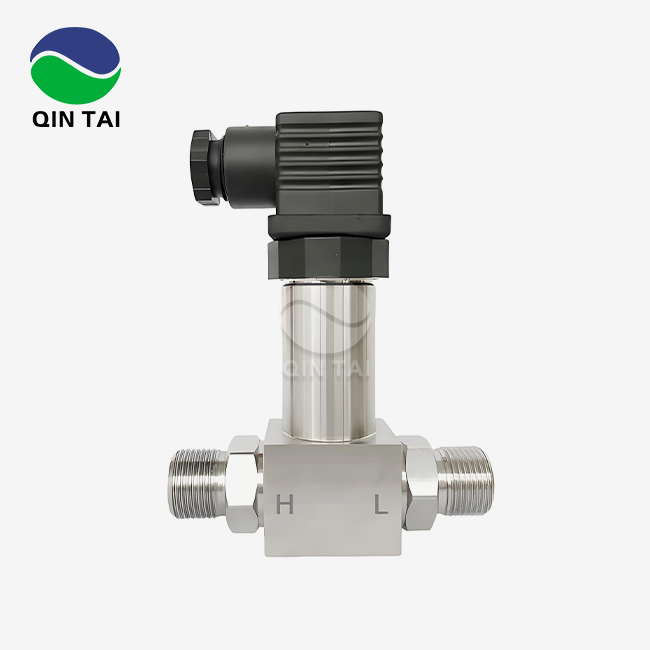
To meet China VI and Euro VI pollution standards, SCR (Selective Catalytic Reduction) and DPF (Diesel Particulate Filter) systems rely on the capacitive pressure sensor to measure air pressure correctly. A differential pressure sensor checks how full the filter is and starts the regeneration cycles at the right time, not too early or too late. High-repeatability sensors that can work in wide pressure ranges (up to 600 bar) protect downstream components and lower the number of fake trigger events.
2. Chemical Process Control
Chemical production lines need pressure monitoring that stays accurate even when corrosive media are present. Ceramic diaphragms, like the 96% Al₂O₃ in the QS-P105, are much better at protecting against chemical attack than stainless steel alone. Real-time data on pressure is sent directly to PLC systems. This keeps batch processes within tight specification windows and lowers the amount of product loss caused by changes in pressure.
3. Hydraulic Systems in Construction and Agricultural Machinery
The hydraulic systems in excavators, loaders, and combine harvesters are usually under 400–600 bar of pressure. Installing pressure transducers at the outlets of pumps, valve blocks, and cylinder ports gives operators and onboard controllers the information they need to keep seals from failing and avoid unplanned downtime. The QS-P105 works with this range and has a safety overload limit of 200% FS, which means it can handle pressure spikes without signal shift.
4. Generator Sets and Industrial Power Systems
Back-up engines in data centers, mines, and power plants have to work regularly for thousands of hours. Monitoring fuel pressure, oil pressure, and coolant pressure all depend on monitors that stay calibrated for long amounts of time. The QS-P105 says that it can work in temperatures ranging from -40°C to 135°C, which means that it can be used for both Arctic-based generators and hot engine chambers.
5. HVAC and Building Automation
To protect fans and keep efficiency in check, large industrial HVAC systems keep an eye on the pressure of the refrigerant. Capacitive pressure sensors that don't use a lot of power are good for tracking nodes that are driven by batteries or the bus, where every milliwatt counts. Their low hysteresis also means that the system reads the same pressure value when the pressure goes up and down, which is important for making sure that control loops work correctly.
All five of these uses have one thing in common: they all need sensors that can give accurate readings over years of being used in tough conditions. That's exactly where ceramic-based capacitive technology is better than designs that are only resistive.
Comparing Capacitive Pressure Sensors with Other Sensor Technologies for Industrial Use
Capacitive vs. Piezoresistive
It is easy to find and doesn't cost much to buy piezoresistive sensors, but they move when the temperature changes. The capacitive pressure sensor, especially those with ceramic diaphragms, keeps their tuning better when the temperature changes. This is important for placements that are outside or on engines.
Capacitive vs. Piezoelectric
Piezoelectric sensors are great at picking up short bursts of pressure, but they aren't good at measuring steady-state pressure. Capacitive designs give more useful information for most industrial process control uses that need to keep an eye on things all the time.
Capacitive vs. Strain Gauge
Strain gage monitors are very accurate, but they can become worn out over time. In high-cycle uses, capacitive sensors with ceramic diaphragms and no moving parts tend to last longer than strain gage types. This means that they don't need to be replaced as often, which saves money on work costs.

Procurement Considerations: Choosing and Buying Capacitive Pressure Sensors
Supplier Credentials and Certifications
Purchasing teams should check to see if a supplier has any well-known quality certifications. The company Qintai has 58 invention patents and is certified by ISO9001, IATF16949, CE, UL, Ex, CMC, REACH, and RoHS. When your quality check or customs clearance process needs written proof of manufacturing standards, these qualifications are important.
Customization, Lead Time, and Volume
Catalog sensors don't always work in all situations. The QS-P105 can handle pressures from -1/0 bar to 600 bar and works with voltages from 2 to 30 VDC, so most system designs don't need any extra signal conditioning hardware. Qintai also provides OEM and ODM services, which include designing products and making a lot of them. This is helpful for integrators who need a certain socket, cord length, or output format.
Evaluating Total Cost of Ownership
The price of the purchase is only one factor. When sensors have better upfront accuracy (≤±0.5% FS) and lower drift rates, they don't need to be re-calibrated as often, which saves time and money on labor. The QS-P105 has a bridge resistance of 11±30% kΩ and a zero shift of less than 0.2 mV/V.
These numbers show that the production limits are stable for the capacitive pressure sensor, which means that the system will work as expected. Before placing a large order, ask for samples and put them through the real temperature and pressure processes of your application.
Future Trends and Innovations in Capacitive Pressure Sensors for Industrial Automation
IoT and Smart Sensor Integration
Pressure sensor makers are moving toward digital output formats and on-chip diagnostics because of Industry 4.0. When sensors connect directly to MQTT or OPC-UA data streams, control engineers don't have to do as much work to integrate the data. This also lets predictive maintenance algorithms spot drift before it causes a process fault.
Advanced Materials and Miniaturization
It is already known that ceramic diaphragm materials like Al₂O₃ exist, but new material study is making diaphragms with even lower temperature coefficients. Miniaturized sensor kits are allowing pressure sensing to be used in robotic end-effectors and mobile farming tools that couldn't do it before because of space and weight issues.
Long-term Supplier Partnerships
As pollution rules get stricter around the world, OEM diesel engine makers need stable, certified sensor supply lines. Making long-term deals with a capacitive pressure sensor maker that is certified for both Chinese and foreign markets lowers regulatory risk and makes it easier to check suppliers.

Conclusion
Industrial machinery puts a lot of stress on pressure sensors: they have to be able to handle a wide range of temperatures, chemicals, long service intervals, and very high accuracy standards. Each of these requirements is met by the capacitive pressure sensor made with ceramic diaphragm technology, whose performance can be measured and documented.
The Qintai QS-P105 has a 0.3% FS non-linearity, a 200% FS safety overload, and an operating range of -40°C to 135°C. It comes in a design that can be changed to fit OEM diesel applications, SCR/DPF integration, hydraulic systems, and power generation. It's cheaper to make changes to the field later if you choose the right monitor technology early on in the system design process.
FAQ
How often should a capacitive pressure sensor be recalibrated?
In most industrial automation settings, annual recalibration is the standard practice. However, sensors with low zero drift — such as less than 0.03% FS/°C — can often extend that interval when installed in thermally stable environments. Always follow your system's maintenance schedule and the manufacturer's published drift specifications.
Why choose a capacitive sensor over a piezoresistive one for engine applications?
Capacitive sensors, particularly those using ceramic diaphragms, maintain calibration more consistently across wide temperature ranges. In diesel engine aftertreatment systems that cycle between cold start and full operating temperature, this stability reduces the risk of false readings that could trigger unnecessary regeneration events or emission control faults.
Can these sensors handle harsh outdoor environments?
Yes. The QS-P105 operates from -40°C to 135°C and uses a 96% Al₂O₃ ceramic diaphragm with strong resistance to corrosion and abrasion. This material profile supports long-term deployment in mining, agricultural, and outdoor power generation settings where exposure to moisture, dust, and vibration is routine.
What pressure ranges are available?
The QS-P105 covers -1/0 bar through 600 bar across 13 standard pressure ranges, making it suitable for applications from low-pressure HVAC monitoring to high-pressure hydraulic systems.
Partner with Qintai — A Trusted Capacitive Pressure Sensor Supplier
Since 2001, Qintai has sold pressure sensors to OEM customers in more than 60 countries. They are certified by IATF16949, ISO9001, CE, UL, and Ex. Qintai is one of the best capacitive pressure sensor manufacturers in China. It is a core OEM seller to Weichai Power, Yuchai Power, and Quanchai Power, and it offers custom specs, flexible order amounts, and quick expert support after the sale. Get in touch with our engineering team right away to get a sample of the QS-P105 or to talk about making a unique pressure measuring solution for your needs. You can email us at info@qt-sensor.com or go to qt-sensor.com.
References
1. Fraden, J. Handbook of Modern Sensors: Physics, Designs, and Applications. Springer. 2016.
2. Wilson, J.S. Sensor Technology Handbook. Elsevier/Newnes. 2005.
3. Bao, M. Analysis and Design Principles of MEMS Devices. Elsevier. 2005.
4. Pressure Sensor Market — Global Forecast to 2028. MarketsandMarkets Research. 2023.
5. Bryzek, J. "Advances in MEMS-Based Pressure Sensors." IEEE Sensors Journal. 2012.
6. Turner, J.D., & Austin, L. "Sensors for Automotive Applications." Proceedings of the Institution of Mechanical Engineers, Part D: Journal of Automobile Engineering. 2000.


Our customers’ satisfaction speaks for our quality — contact us to experience the same reliable service.