- English
- French
- German
- Portuguese
- Spanish
- Russian
- Japanese
- Korean
- Arabic
- Greek
- German
- Turkish
- Italian
- Danish
- Romanian
- Indonesian
- Czech
- Afrikaans
- Swedish
- Polish
- Basque
- Catalan
- Esperanto
- Hindi
- Lao
- Albanian
- Amharic
- Armenian
- Azerbaijani
- Belarusian
- Bengali
- Bosnian
- Bulgarian
- Cebuano
- Chichewa
- Corsican
- Croatian
- Dutch
- Estonian
- Filipino
- Finnish
- Frisian
- Galician
- Georgian
- Gujarati
- Haitian
- Hausa
- Hawaiian
- Hebrew
- Hmong
- Hungarian
- Icelandic
- Igbo
- Javanese
- Kannada
- Kazakh
- Khmer
- Kurdish
- Kyrgyz
- Latin
- Latvian
- Lithuanian
- Luxembou..
- Macedonian
- Malagasy
- Malay
- Malayalam
- Maltese
- Maori
- Marathi
- Mongolian
- Burmese
- Nepali
- Norwegian
- Pashto
- Persian
- Punjabi
- Serbian
- Sesotho
- Sinhala
- Slovak
- Slovenian
- Somali
- Samoan
- Scots Gaelic
- Shona
- Sindhi
- Sundanese
- Swahili
- Tajik
- Tamil
- Telugu
- Thai
- Ukrainian
- Urdu
- Uzbek
- Vietnamese
- Welsh
- Xhosa
- Yiddish
- Yoruba
- Zulu
What Are the Benefits of Using a Capacitive Pressure Sensor for HVAC?
Using a capacitive pressure sensor in HVAC systems delivers measurable gains in accuracy, energy efficiency, and long-term reliability. Unlike piezoresistive alternatives, capacitive sensors detect pressure changes through capacitance variation between electrode plates—a mechanism that produces stable, low-drift readings even under humidity, dust, and temperature swings common in HVAC environments. For OEM engineers and procurement managers evaluating sensing technology for air handling, ventilation, and filtration control, these sensors offer a technically sound and cost-effective path to system optimization and compliance-ready performance.

Understanding Capacitive Pressure Sensors in HVAC Systems
There is a simple physical principle behind how a capacitive pressure sensor works. You can squeeze a flexible diaphragm to make it bend toward a fixed electrode. This closes the space between them. The decrease in the gap changes the capacitance value, which can be written as C = ε₀εᵣA/d. This change is then turned into an electrical output that can be used. There are fewer places where things can go wrong because there aren't any mechanical links. This is especially helpful in HVAC settings where shaking and moisture are constant factors.
Why HVAC Environments Demand Sensor Precision
At the same time, HVAC systems have to control airflow, the difference in pressure between filters, the pressure of the refrigerant, and the static pressure in the ducts. Any sensor drift wastes energy and makes things less comfortable. Capacitive designs keep readings stable over long duty cycles because they are not as affected by changes in resistance caused by temperature as piezoresistive designs are. A study in Sensors and Actuators A: Physical confirms that ceramic-diaphragm capacitive sensors are more stable at high temperatures and have less hysteresis than their silicon-based resistive counterparts. This is important information for people who design HVAC systems.
Key Benefits of Using Capacitive Pressure Sensors in HVAC Applications
Before looking at each benefit in turn, it's helpful to see the bigger picture: people who run HVAC systems always say that unexpected downtime and energy costs are their biggest operational worries. Sensors that lower both at the same time have different amounts of value. When it comes to HVAC uses, capacitive pressure monitors are the best choice because of these main benefits.
- High Measurement Accuracy: Non-linearity as low as 0.3% FS ensures that pressure readings reflect actual system conditions rather than sensor artifacts. This precision level is critical for variable air volume (VAV) controllers that modulate damper positions in real time.
- Durability Against Environmental Stressors: Ceramic diaphragm materials—such as 96% Al₂O₃ alumina used in Qintai's QS-P105 series—resist corrosion, abrasion, and moisture ingress. HVAC mechanical rooms and rooftop air handling units expose sensors to condensation and particulate contamination regularly. A sensor built from high-purity ceramic tolerates these conditions without accelerated wear.
- Wide Operating Temperature Range: Industrial HVAC installations in mines, power plants, and cold-storage facilities require sensors rated from sub-zero to high-heat environments. A sensor operating reliably from -40°C to 135°C covers virtually every HVAC application without compromise.
- Low Power Consumption with Wide Supply Voltage Flexibility: Supply voltage acceptance from 2 to 30 VDC simplifies integration into both legacy control panels and modern IoT-enabled building management systems (BMS). Low current draw also supports battery-backup sensor nodes—an increasingly common requirement in smart building retrofits.
All of these benefits of a capacitive pressure sensor add up to one practical result: fewer service interruptions, more stable system performance, and a lower total cost of ownership. When procurement managers compare the cost of a single unit to the cost of maintenance over the product's lifetime, the equation always favors high-specification capacitive sensing technology.

Comparative Advantages: Capacitive vs. Other Pressure Sensors in HVAC
Many people still use piezoresistive sensors, but they have a known flaw: their output changes noticeably when the temperature changes because resistance-based strain gages are sensitive to temperature. Capacitive sensors are better at separating pressure readings from thermal noise, which means that zero temperature shift is smaller.
Performance Comparison at a Glance
When looking at the things that HVAC engineers care about the most—accuracy, drift, lifespan, and maintenance interval—capacitive sensors do better than resistive ones in almost every way. It's important for systems that need to keep a close eye on pressure bands, like refrigerant circuits and clean-room pressurization systems, to have zero temperature drift values below 0.03% FS/°C (in the 2–50 bar range).
Total Cost of Ownership Perspective
The initial cost of buying sensitive sensors may be a little higher per unit. Over a 5–10 year working window, however, longer calibration intervals, less work needed for recalibration, and lower rates of field replacement result in net saves. A study released in 2022 in the journal Building and Environment found that adding precision pressure sensing to commercial HVAC systems cut energy use by 8–12% just by controlling fan speed more efficiently. This is a good return on investment that makes the higher sensor cost worthwhile.
Procurement Considerations for Capacitive Pressure Sensors in HVAC
There are a lot of things you need to look at when choosing a reliable capacitive pressure sensor supplier. OEMs that want to sell their products in controlled markets must follow all certification rules. Buyers should make sure that the product has ISO 9001 and IATF 16949 quality control certifications, as well as RoHS and CE approval for materials and electromagnetic compatibility.
What to Verify Before Committing to a Supplier
The quality of the technical documents is a good indicator of how mature the production process is. Engineering openness is shown by a seller who gives full datasheets with zero shift, bridge resistance tolerance, safety overload rating, and full accuracy figures. When suppliers can't give this much information, they add an unknown risk to the procurement chain. Customization is important for both OEM buyers and buyers who need non-standard mounting setups or interfaces. Verified OEM/ODM service capacity, which includes a range of pressure choices and output setups that can be changed, cuts down on development time and risk of integration.

Real-World HVAC Applications and Case Studies Using Capacitive Pressure Sensors
Capacitive pressure sensing technology is now used in a wide range of HVAC applications, from business office towers to industrial generator set housing and cooling systems for farm equipment. The sensor's job is always the same: to provide accurate differential or absolute pressure data that lets the system respond intelligently.
Smart Building and Industrial Applications
Capacitive pressure sensors that are built into building management systems (BMS) make it possible to replace filters before they need to be replaced. This is done by watching the drop in pressure across air handling unit filters in real time. This stops replacements at regular intervals, which saves a lot of money on operational costs. When installed on generator sets in power plants and mining sites, where harsh conditions must be tolerated and continuous uptime is required, sensors rated at 200% FS safety overload can handle pressure surge events that would damage standard-grade devices. This overload limit directly lowers the risk of guarantee claims for the companies that make the equipment.
The future of HVAC system design is pressure sensing nodes that work with the Internet of Things and send data to cloud-based diagnostics platforms. These designs work well with sensors that have a stable analog output and can work with a wide range of input voltages. They don't need any extra signal conditioning hardware.
Conclusion
Capacitive pressure sensors are a great choice for HVAC system builders and buying workers because they are accurate, can withstand harsh environments, and last a long time. Their working principle is based on stable capacitance physics instead of highly sensitive resistance. This means that they need to be calibrated less often, waste less energy, and have better control over the system. Capacitive sensing technology is consistently shown to be the most reliable choice for demanding HVAC environments by OEMs and aftermarket buyers looking for a technically proven and certified option.

FAQ
Q1: How does a capacitive pressure sensor maintain accuracy in humid HVAC environments?
A: Ceramic diaphragm materials don't let water in and don't rust on the outside. When sensors made with 96% Al₂O₃ diaphragms are exposed to humidity, they keep their shape, which stops capacitance drift caused by dielectric contamination. With a rating of ≤±0.5% FS for comprehensive accuracy, readings can be trusted even after a long deployment.
Q2: What is a typical minimum order quantity for B2B HVAC sensor procurement?
A: MOQ is different for each source and amount of customization. Most of the time, standard stock models can support lower MOQs than fully personalized versions. The fastest way to get accurate price and wait time confirmation is to talk to a supplier's sales team directly and give them your technical specs and expected volume.
Q3: Can these sensors be customized for non-standard HVAC pressure ranges?
A: Yes, OEM/ODM suppliers can change the pressure ranges, output signals, connector types, and mounting formats to fit the needs of a specific application. This freedom is very helpful for integrators who are making their own SCR, DPF, or HVAC control modules.
Q4: What certifications should I require from a capacitive pressure sensor manufacturer?
A: There are different types of certificates, such as ISO 9001 and IATF 16949 for quality systems, CE and RoHS for market compliance, and application-specific certifications like Ex (explosion-proof) for HVAC installations in dangerous areas.
Partner With Qintai for Precision Capacitive Pressure Sensor Solutions
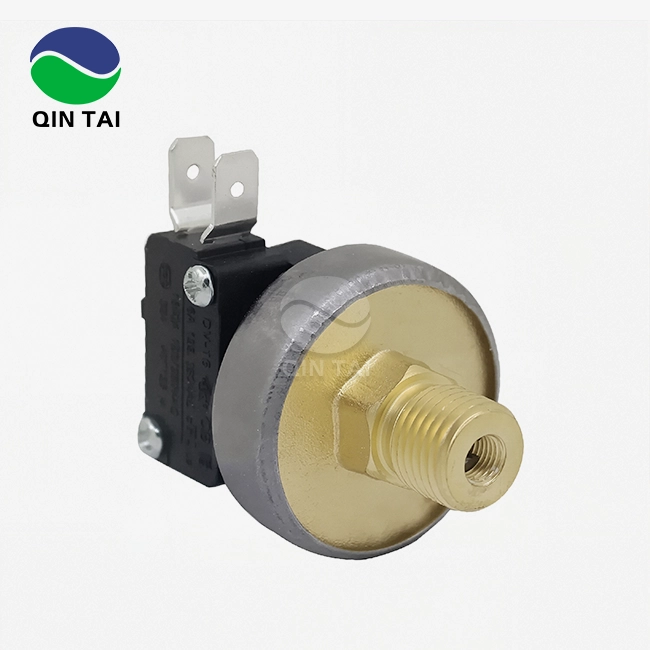
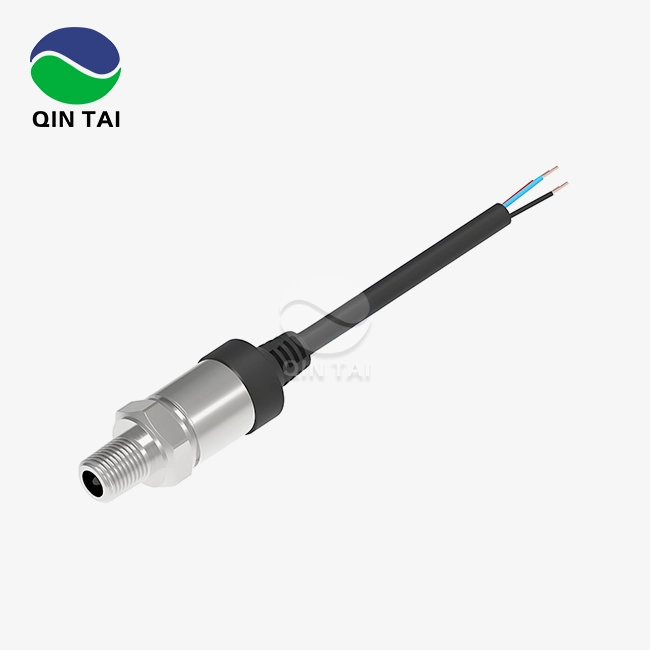
Since 2001, Qintai has provided pressure sensing technology to big trucks, building equipment, and generator sets around the world. The company is certified by ISO 9001, IATF 16949, CE, RoHS, and UL. Qintai is a well-known company that makes capacitive pressure sensors. Their QS-P105 line has fully adjustable pressure ranges, can work with a wide range of power voltages, and is made with industrial-grade ceramic diaphragms. Contact us at info@qt-sensor.com to get a technical datasheet or volume quote.
References
1. Sensors and Actuators A: Physical — Elsevier, 2019
2. Building and Environment — Elsevier, 2022
3. ASHRAE Journal — American Society of Heating, Refrigerating and Air-Conditioning Engineers, 2021
4. IEEE Sensors Journal — Institute of Electrical and Electronics Engineers, 2020
5. Energy and Buildings — Elsevier, 2023
6. Measurement Science and Technology — IOP Publishing, 2018

Our customers’ satisfaction speaks for our quality — contact us to experience the same reliable service.