- English
- French
- German
- Portuguese
- Spanish
- Russian
- Japanese
- Korean
- Arabic
- Greek
- German
- Turkish
- Italian
- Danish
- Romanian
- Indonesian
- Czech
- Afrikaans
- Swedish
- Polish
- Basque
- Catalan
- Esperanto
- Hindi
- Lao
- Albanian
- Amharic
- Armenian
- Azerbaijani
- Belarusian
- Bengali
- Bosnian
- Bulgarian
- Cebuano
- Chichewa
- Corsican
- Croatian
- Dutch
- Estonian
- Filipino
- Finnish
- Frisian
- Galician
- Georgian
- Gujarati
- Haitian
- Hausa
- Hawaiian
- Hebrew
- Hmong
- Hungarian
- Icelandic
- Igbo
- Javanese
- Kannada
- Kazakh
- Khmer
- Kurdish
- Kyrgyz
- Latin
- Latvian
- Lithuanian
- Luxembou..
- Macedonian
- Malagasy
- Malay
- Malayalam
- Maltese
- Maori
- Marathi
- Mongolian
- Burmese
- Nepali
- Norwegian
- Pashto
- Persian
- Punjabi
- Serbian
- Sesotho
- Sinhala
- Slovak
- Slovenian
- Somali
- Samoan
- Scots Gaelic
- Shona
- Sindhi
- Sundanese
- Swahili
- Tajik
- Tamil
- Telugu
- Thai
- Ukrainian
- Urdu
- Uzbek
- Vietnamese
- Welsh
- Xhosa
- Yiddish
- Yoruba
- Zulu
What Pressure Sensors Are Used in Automotive Systems?
Automotive pressure sensors are specialized devices that measure and monitor pressure variations across multiple vehicle systems, including engine management, exhaust aftertreatment, transmission control, braking systems, and tire pressure monitoring. Modern vehicles typically employ piezoresistive silicon sensors, capacitive ceramic sensors, and MEMS-based transducers, each optimized for specific environments ranging from high-temperature exhaust streams to low-pressure HVAC applications. These sensors convert mechanical pressure changes into electrical signals, enabling precise control and compliance with stringent emission regulations like China VI and Euro VI standards.
Understanding Automotive Pressure Sensors: Types and Functions
Automotive pressure measurement technology is now an important part of designing modern cars, especially as emission standards get stricter and systems get more complicated. Each pressure sensor does a specific job, like checking how well the combustion process is working, making sure the brakes are safe, or improving the performance of the aftertreatment system.
Core Working Principles
Basically, car pressure sensors work by turning physical pressure into electrical signals that can be measured. When pressure is put on a detecting element, which is usually a sheet or diaphragm, it changes shape mechanically. Based on the sensor technology used, this displacement is then turned into an electrical output through different physical effects. When the applied pressure changes and the output signal is exposed to corrosive media that is typical in automobile settings, the link between the two must stay stable.
Piezoresistive Pressure Sensors in Engine Applications
Because they are so sensitive and small, piezoresistive pressure sensors are the most common type of sensor used in engine oil pressure monitoring and fuel injection systems. These gadgets use silicon diaphragms that are filled with piezoresistors that are set up in Wheatstone bridge patterns. When pressure changes the shape of the diaphragm, the resistors' resistance changes because of the strain.
This throws off the balance of the bridge, which leads to a proportional voltage output. This technology is great at tracking pressures from 0.5 bar to 200 bar, which means it can be used to keep an eye on common rail fuel systems, oil ports, and turbocharger boost pressure. Because mechanical stress and electrical output are directly related, R&D engineers can get real-time information that they need to improve engine performance and stop catastrophic failures.
Capacitive Ceramic Sensors for Harsh Environments
Capacitive pressure sensors use a different way to measure pressure that makes them more stable over time in chemically harsh settings. In these devices, a ceramic diaphragm acts as one capacitor plate and an electrode that stays in place acts as the other. When pressure causes deflection, the gap between the plates changes, which changes the capacitance because distance and capacitance are inversely related.
Ceramics like alumina are very good at resisting the chemicals that are in toxic exhaust gases. This makes these sensors perfect for SCR aftertreatment systems, where they measure the difference in pressure between diesel particulate filters. The strong design allows it to work in temperatures higher than 850°C, meeting the strict requirements of Euro VI and China VI emission control systems.
MEMS Technology and Miniaturization Advantages
Micro-Electro-Mechanical Systems (MEMS) pressure sensors are the newest and best way for cars to sense things. MEMS sensors are made using methods for making semiconductors. They have sensing elements, signal conditioning, and temperature adjustment all on a single silicon chip that is only a few millimeters across. This shrinking makes it possible to use in places with limited space, like HVAC systems and transmission control modules. Because semiconductors can be made in large quantities, MEMS sensors are a cost-effective choice for OEM uses that need to make a lot of them. This directly addresses the cost-cutting concerns of purchasing managers in the heavy truck and building machinery industries.
Comparing Pressure Sensor Technologies for Automotive Use
To choose the right sensor technology, you have to weigh a lot of performance factors against the needs of the application and the stresses of the surroundings.
Piezoresistive versus Capacitive Performance Characteristics
When you look at the differences between piezoresistive and capacitive technologies, you can make decisions about what to buy. Pressure sensors based on these two principles each have distinct strengths: piezoresistive sensors respond more quickly, often in less than one millisecond. This makes them better for taking dynamic readings in fuel injection systems, where pressure changes that happen in a split second can affect the quality of the burning. Temperature sensitivity, on the other hand, needs careful compensation circuitry to stay accurate over the -40°C to 125°C range that is common in automotive applications.
Over the course of their five to ten-year operational lifetimes, capacitive ceramic sensors keep their accuracy standards and show better long-term stability with minimal drift. Their built-in overload protection—the diaphragm touches the electrode at very high pressures without breaking—is a form of reliability insurance that generator set makers value, especially for use in harsh mine and power plant settings. In exchange, response times are a little slower and unit costs are higher, but these problems become less important when you look at the total cost of ownership over longer service intervals.
Digital versus Analog Output Integration
Choosing between digital communication methods and analog voltage output has a big effect on how hard it is to integrate the system. Traditional analog sensors that send signals between 0.5V and 4.5V need to be converted from analog to digital in the Electronic Control Unit (ECU). This can make them more susceptible to noise and make calibration more difficult. When digital sensors with I2C, SPI, or CAN bus interfaces are used, they send pre-conditioned data that makes it easier for the ECU to handle and lowers worries about electromagnetic interference.
Digital communication also makes it possible for sensors to report error conditions, temperature readings, and the internal health status along with pressure data. Integrators of aftertreatment systems need expert help that can see the whole system when they're fixing problems, and this feature meets their needs. As centralized computing platforms and software-defined vehicle concepts become more common in vehicle electrical systems, the move toward digital architectures keeps speeding up.
Material Selection and Environmental Durability
Material science is a key part of making sensors last longer in the hard surroundings of cars. Sensors that are exposed to road salt, hydraulic fluids, and changes in temperature have housings made of stainless steel, which makes them strong and resistant to corrosion. Media-isolated designs use ceramic walls or oil-filled spaces to keep sensor elements away from corrosive substances while sending pressure through fluids that can't be compressed.
Protective layers and hermetic closing methods decide how long a sensor will last in situations where it will be exposed to chemicals, particles, and water. Barriers against environmental entry are made up of laser-welded seals and glass-to-metal feedthroughs. This keeps the electronics inside safe during 100,000-kilometer service gaps. These features that make the part last longer directly address the failure rate worries of commercial vehicle aftermarket suppliers whose reputations depend on the dependability of their parts.
Ensuring Performance: Accuracy, Calibration, and Reliability Factors
Industrial-grade car sensors are different from consumer-grade ones because they are more accurate and consistent over time.
Factors Affecting Sensor Accuracy
The accuracy specifications that purchasing managers see on technical datasheets are affected by a number of factors. Temperature-related errors happen because the sensing elements and housing materials expand and contract with temperature. To fix these errors, you need adjustment methods or bimetallic correction structures. The difference between values of rising and falling pressure is called mechanical hysteresis. It is caused by the elastic properties of the diaphragm materials and the effects of growing stress.
Aging-related drift happens when sense elements get worn out from being under pressure millions of times. High-quality sensors have drift rates that are less than 0.1% of the full scale per year. This is possible because the materials are carefully chosen and the sensors are heat treated to relieve stress during production. Cross-sensitivity to acceleration and vibration can lead to measurement errors in mobile applications. To fix this, mounting techniques that isolate the sensor mechanically or digital filtering inside the sensor electronics are needed.
Calibration Methods and Standards
Factory calibration figures out the mathematical connection between the sensor's output and the pressure being applied by trying it at multiple points against standards that can be tracked. For pressure sensors, this process is especially critical because their output drifts with both pressure and temperature. Most of the time, manufacturers calibrate at three or more pressure points across the working range and test for temperature correction at set times. For digital sensors, calibration factors are saved in the sensor's memory, and for analog sensors, they are cut by adjusting the laser resistor.
More and more, advanced car applications use in-situ calibration methods that change sensor readings based on data from multiple system inputs that are repeated. For instance, in SCR systems, exhaust pressure sensors can be checked against readings of mass airflow and engine working maps to find calibration drift. This method increases the useful service life and lowers the number of times that equipment has to be manually re-calibrated, which stops it from working.
Interpreting Technical Specifications
To compare products from different suppliers in a useful way, procurement workers need to understand how to read technical datasheets. Operating range tells you the lowest and highest pressures that the sensor can correctly measure. Burst pressure tells you the highest pressure that the sensor can survive before it starts to break down permanently. Different types of accuracy standards, like percentage of full scale, percentage of reading, or absolute pressure units, need to be normalized before they can be compared.
Response time tells you how fast the sensor output changes in response to changes in the real pressure. This is very important for closed-loop control applications. Temperature coefficients tell us how much the output shifts for every degree of temperature change. This helps us decide what kind of compensation circuitry we need. By knowing these parameters, R&D engineers can choose sensors that meet the needs of the application without making too many requests, which leads to cost increases that aren't necessary.
Procurement Guide: How to Choose and Where to Buy Automotive Pressure Sensors
When you do strategic sensor buying, you have to weigh the technical needs against business needs and the facts of the supply chain.
Critical Selection Criteria for OEM Applications
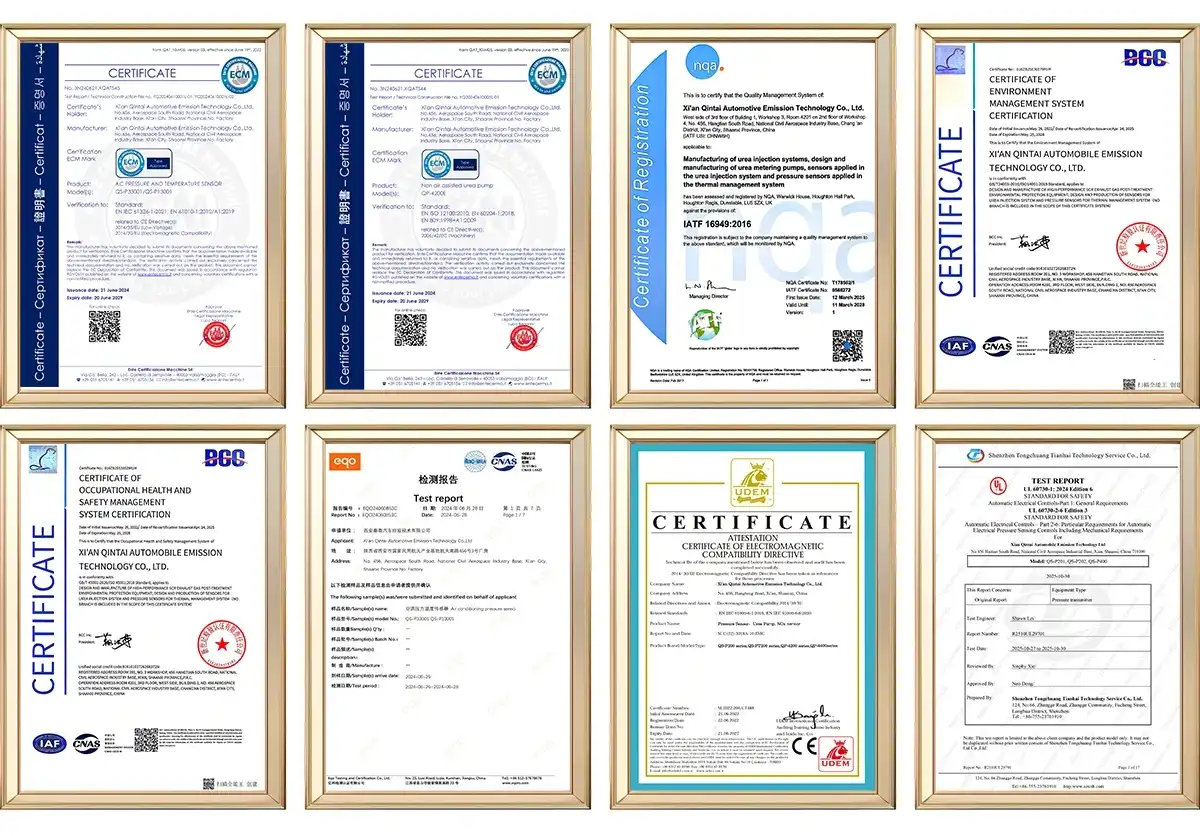
Diesel engine makers who put pollution compliance first need to make sure that potential sensors meet the approval standards that apply to their markets. Automotive-qualified parts are certified by the IATF 16949 quality system and go through AEC-Q100 stress tests that check for things like resistance to temperature cycling, moisture, and mechanical shock. These standards make sure that parts will last in both the production setting and the field without breaking down too soon.
Stability requirements have a direct effect on how often you need to calibrate and what your warranty covers. If sensors show less than 0.5% drift over two years, they are less likely to need to be re-calibrated in the field or have parts replaced under warranty. This protects both the manufacturer's image and the cost of service. When yearly volumes hit tens of thousands of units, mass production capacity becomes very important. This means that suppliers must show that they have enough manufacturing capacity and quality control methods to keep things consistent across big production batches.
Supplier Landscape and Capabilities
In the global market for automotive sensors, there are both well-known companies with decades of engineering experience and new companies with competitive pricing structures. Companies like Bosch have a lot of experience putting together car systems because they have built monitors that work with engine control systems. This in-depth understanding of applications is useful when defining the product and fixing problems.
When it comes to lead times and customization options, regional suppliers can sometimes be better, especially for mid-volume applications that don't need the highest performance standards. Chinese companies have put a lot of money into automatic production systems and quality control systems, which has helped them get certifications that make them good options for applications that need to save money. When forming long-term partnerships, procurement managers should look at a supplier's financial stability, technical help infrastructure, and track record of high performance.
Bulk Purchasing Considerations
Breakpoints in volume pricing structures are usually set at 1,000, 5,000, and 10,000 units. As order sizes rise, per-unit costs drop by a large amount. By setting up blanket buy orders with planned releases, manufacturers can get better prices on large orders while keeping costs down by arranging for just-in-time deliveries. Different items have different lead times. Stock items can be sent within days, while custom-configured sensors need 12 to 16 weeks to be made.
Customization options include everything from simple changes to the socket to completely redesigned sensors with pressure ranges, electrical outputs, and mounting setups that are specific to the customer. Custom projects can be completed more quickly by suppliers who have their own tools and design resources than by those who use engineering resources from outside the supplier. Supply chain managers can negotiate better terms and make sure that product availability matches production plans when they understand these factors.
Future Trends and Innovations in Automotive Pressure Sensor Technology
New technologies offer better features that will change how car systems are built and how well people expect them to work.
IoT Integration and Connected Diagnostics
Adding wireless communication directly to pressure sensors makes it possible to use predictive maintenance plans that keep equipment from breaking down when it's least expected. Bluetooth Low Energy and industrial IoT standards let these pressure sensors send data to cloud platforms, where machine learning algorithms look for trends that don't make sense and warn of parts that are about to break down. This feature is especially helpful for generator sets used in remote areas where constant condition tracking keeps expensive unplanned downtime from happening.
Connected sensors also allow for over-the-air updates to calibrations and parameter changes, which means that software updates don't need to be done physically. Fleet managers who are in charge of hundreds of cars can keep an eye on the health of all the sensors from one place, so maintenance can be planned based on the real state of each part instead of set schedules. This method is based on data and makes the best use of upkeep funds while also increasing the availability of tools.
Advanced Materials and Nanotechnology
Researchers working on nanomaterial sensing elements say they will be a thousand times more sensitive than silicon-based designs. Carbon nanotube pressure sensors have very good gauge factors, which are the relationship between change in strain and change in resistance. This lets them measure very small changes in pressure that are important for advanced combustion control strategies. Graphene-based sensors have similar benefits in terms of sensitivity, plus they are flexible enough to fit around curves.
These new technologies are still mostly in the research stages. Within the next five to seven years, commercially qualified products for cars should be available. There may be chances to be an early adopter in high-performance applications where cost concerns are smaller and performance benefits support higher prices. By keeping an eye on these changes, R&D teams can guess what new features will be added in the future and plan their product roadmaps accordingly.
Multifunctional Sensor Integration
Sensor fusion, which is becoming more popular, combines several measurement parameters into a single physical package. This makes installation easier and lowers the cost of the system. Pressure-temperature sensors that work together get rid of the need for two different devices that adjust for temperature. They also give both readings to control algorithms. Triaxial accelerometers that are combined with pressure sensors allow for advanced vibration corrections and calibration changes that take into account direction.
Multi-parameter sensors are being used more and more in electric and hybrid vehicles to monitor coolant pressure, temperature, and flow rate all at the same time. This reduces the number of connectors, makes wiring harnesses easier to use, and makes packaging more efficient in battery enclosures with limited space. As microelectronics skills grow and power use goes down, the growth path points to continued integration.
Conclusion
Different types of pressure sensors are used in different automotive pressure measurement technologies to meet the needs of different uses, environments, and performance levels. For engine control, piezoresistive silicon pressure sensors respond quickly; capacitive ceramic devices can handle harsh aftertreatment conditions; and MEMS technology enables cheap mass production. When making purchases, people have to weigh the technical requirements against business factors like meeting certification requirements, the supplier's skills, and the total cost of ownership. New developments in connectivity, advanced materials, and sensor integration look like they will make it easier to build next-generation vehicles and control emissions.
FAQ
Which sensor type suits SCR aftertreatment applications?
Because they can handle temperatures above 850°C and are very chemically resistant to corrosive exhaust fumes, capacitive ceramic pressure sensors work very well in SCR systems. Their long-term stability keeps calibration drift to a minimum, which means they need less maintenance over the typical multi-year service intervals for heavy-duty diesel applications.
How do customization options address specific application requirements?
Manufacturers with a lot of experience can make changes to pressure levels, electrical connections, mounting threads, and output signal types. Custom calibration works with pressure units that aren't standard or voltage ranges that match what the ECU already inputs. Customized sensors usually have lead times that are 8 to 12 weeks longer than normal product release. This means that planning ahead is needed during the product development stages.
What certifications validate automotive-grade sensor quality?
Getting IATF 16949 certification shows that your quality management system meets the needs of the car production industry. AEC-Q100 certification shows that parts can withstand normal stress tests, such as changing temperatures, being exposed to damp, and mechanical shock. ISO 9001 is a basic standard for quality assurance. Product-specific certifications, like ATEX, meet the needs of some uses that need to work in dangerous atmospheres.

Partner with Qintai for Reliable Pressure Sensor Solutions
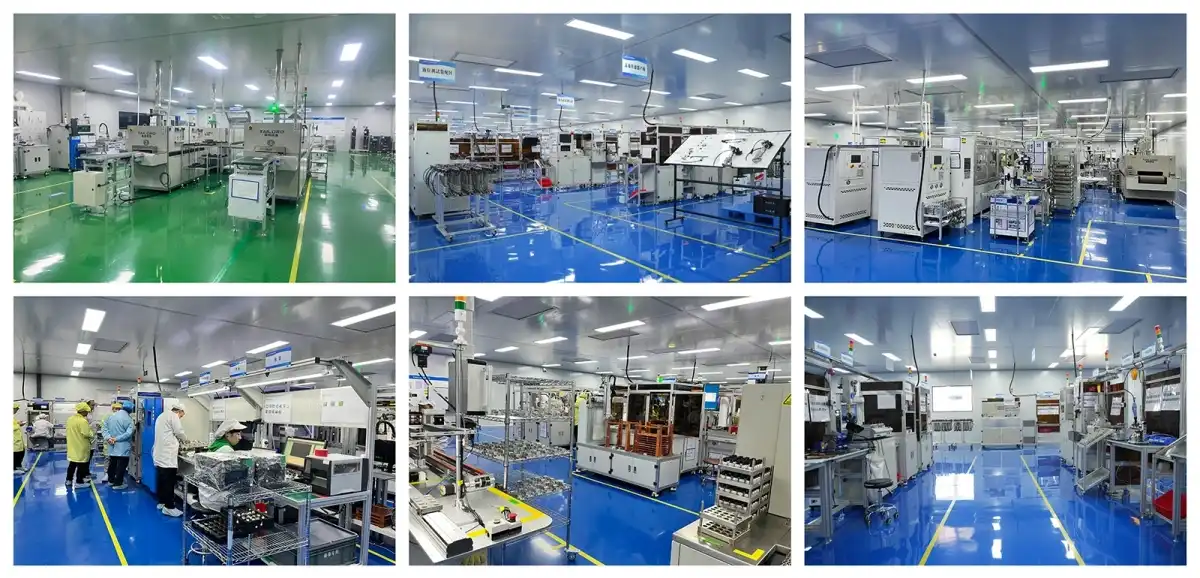
Qintai Automotive Emission Technology Co., Ltd. is ready to help you buy automotive pressure sensors. They have more than twenty years of experience in specialized engineering. We have the biggest market share among Chinese diesel engine OEMs because we are dedicated to quality and new ideas all the time. We are the major supplier of pressure sensors to Weichai Power, Yuchai Power, and Quanchai Power. Our factories are IATF 16949-certified and make sensors that meet China VI and Euro VI emission standards.
These sensors are backed by 58 idea patents and strict testing methods. We can completely customize everything, from the way the devices are mounted to the way they talk to each other. Our production can be scaled up or down to accommodate prototypes or yearly numbers of more than 500,000 units. Get in touch with our engineering team at info@qt-sensor.com to talk about your specific application needs and find out how Qintai's expertise as a pressure sensor manufacturer can help your vehicle system work better and meet government standards.
References
1. Fleming, W. J. (2008). "New Automotive Sensors—A Review." IEEE Sensors Journal, Vol. 8, No. 11, pp. 1900-1921.
2. Tian, B., Zhao, Y., Jiang, Z., Zhang, L., Liao, N., Liu, Y., & Meng, C. (2017). "Fabrication and Structural Design of Micro Pressure Sensors for Tire Pressure Measurement Systems." Sensors, Vol. 17, No. 2, Article 422.
3. Barlian, A. A., Park, W. T., Mallon, J. R., Rastegar, A. J., & Pruitt, B. L. (2009). "Review: Semiconductor Piezoresistance for Microsystems." Proceedings of the IEEE, Vol. 97, No. 3, pp. 513-552.
4. Sandmaier, H., & Kuhl, K. (1991). "A Square-Diaphragm Piezoresistive Pressure Sensor with a Rectangular Central Boss for Low-Pressure Ranges." IEEE Transactions on Electron Devices, Vol. 38, No. 10, pp. 2295-2298.
5. Puers, R. (1993). "Capacitive Sensors: When and How to Use Them." Sensors and Actuators A: Physical, Vol. 37-38, pp. 93-105.
6. Kumar, S. S., & Pant, B. D. (2014). "Design Principles and Considerations for the 'Ideal' Silicon Piezoresistive Pressure Sensor: A Focused Review." Microsystem Technologies, Vol. 20, No. 7, pp. 1213-1247.
 Sensors.webp)

Our customers’ satisfaction speaks for our quality — contact us to experience the same reliable service.