- English
- French
- German
- Portuguese
- Spanish
- Russian
- Japanese
- Korean
- Arabic
- Greek
- German
- Turkish
- Italian
- Danish
- Romanian
- Indonesian
- Czech
- Afrikaans
- Swedish
- Polish
- Basque
- Catalan
- Esperanto
- Hindi
- Lao
- Albanian
- Amharic
- Armenian
- Azerbaijani
- Belarusian
- Bengali
- Bosnian
- Bulgarian
- Cebuano
- Chichewa
- Corsican
- Croatian
- Dutch
- Estonian
- Filipino
- Finnish
- Frisian
- Galician
- Georgian
- Gujarati
- Haitian
- Hausa
- Hawaiian
- Hebrew
- Hmong
- Hungarian
- Icelandic
- Igbo
- Javanese
- Kannada
- Kazakh
- Khmer
- Kurdish
- Kyrgyz
- Latin
- Latvian
- Lithuanian
- Luxembou..
- Macedonian
- Malagasy
- Malay
- Malayalam
- Maltese
- Maori
- Marathi
- Mongolian
- Burmese
- Nepali
- Norwegian
- Pashto
- Persian
- Punjabi
- Serbian
- Sesotho
- Sinhala
- Slovak
- Slovenian
- Somali
- Samoan
- Scots Gaelic
- Shona
- Sindhi
- Sundanese
- Swahili
- Tajik
- Tamil
- Telugu
- Thai
- Ukrainian
- Urdu
- Uzbek
- Vietnamese
- Welsh
- Xhosa
- Yiddish
- Yoruba
- Zulu
Why Choose Ceramic Pressure Sensors for High-Temperature Systems
When your operation depends on reliable pressure monitoring in extreme heat, the sensor you choose can make or break your uptime. Ceramic pressure sensors are engineered specifically to maintain measurement accuracy and structural integrity in high-temperature environments where conventional metal or silicon sensors degrade. Built from 96% Al₂O₃ alumina, these sensors resist thermal drift, corrosion, and abrasive media — making them the preferred choice for diesel engine aftertreatment systems, SCR/DPF assemblies, generator sets, and heavy industrial applications worldwide.

Understanding Ceramic Pressure Sensors and Their Working Principle
How Ceramic Sensing Elements Work
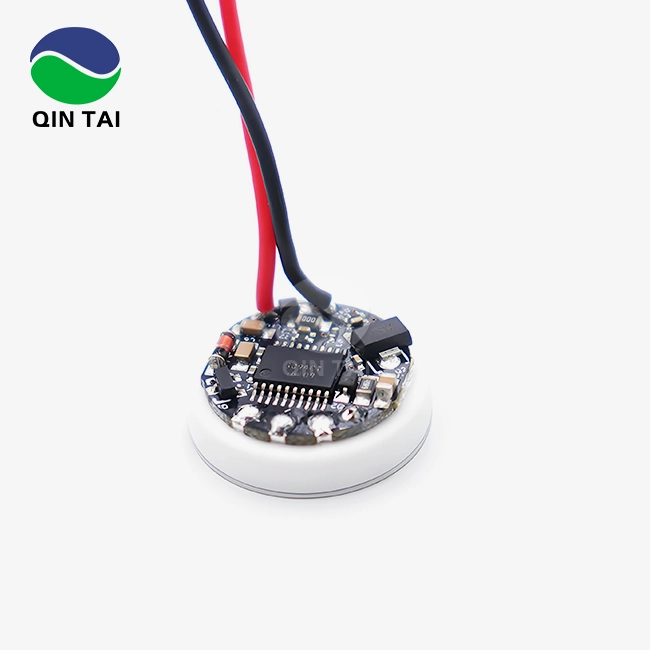
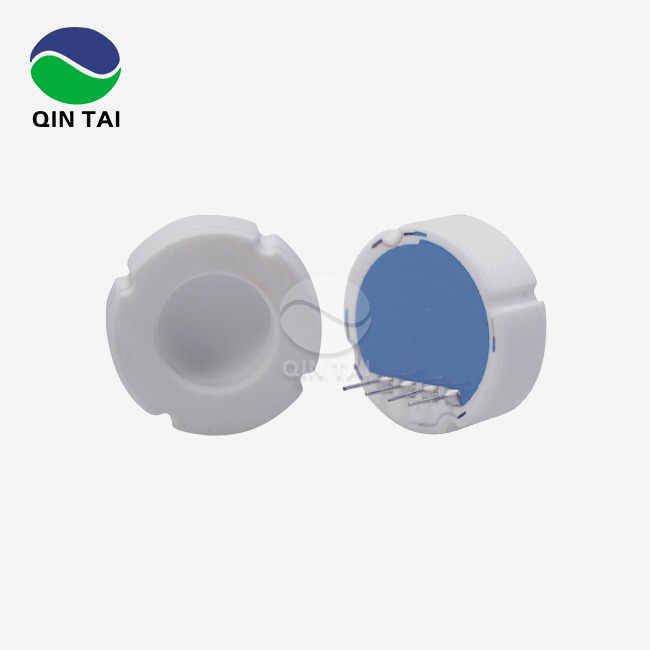
Through resistive elements bonded directly to the ceramic diaphragm, piezoresistive ceramic pressure sensors turn applied pressure into an electrical signal that can be measured. The resistance values change when pressure changes the diaphragm, which causes a millivolt output that is proportional to the load. Capacitive ceramic versions can tell when the diaphragm bends by checking for changes in capacitance. In both designs, oil-filled chambers are not needed, which cuts down on failure points and allows direct media contact. This design provides non-linearity within ≤ 0.3% FS and overall accuracy of ≤ ± 0.5% FS, which are performance levels that metal-diaphragm alternatives find hard to match when exposed to high temperatures for a long time.
Ceramic vs. Metal and Silicon Sensors
Metal sensors use diaphragms made of stainless steel or titanium, which can expand and contract with temperature. This causes drift and wear and tear over time. Silicon-based sensors are very sensitive, but they don't have the chemical protection that is needed in hydraulic or exhaust conditions that are corrosive. In contrast, ceramic diaphragms keep their shape over a wide temperature range (-40°C to 135°C), which makes them better for systems that are constantly being heated.
Why Ceramic Pressure Sensors Excel in High-Temperature Systems?
Material Resilience Under Sustained Heat
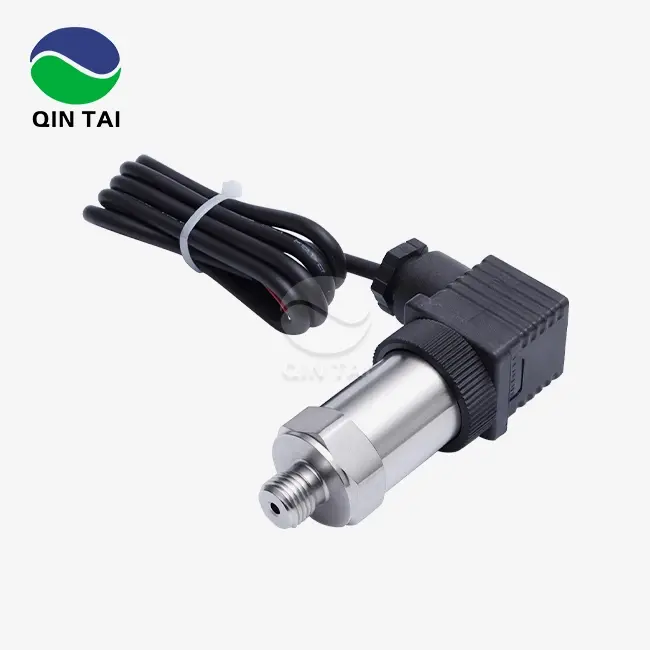
One of the most persistent issues in high-pressure industrial monitoring is signal drift caused by temperature. Metal sensors often have zero temperature drift that gets worse over time, so they need to be re-calibrated often. With ceramic pressure sensors like the QS-P105 from Qintai, the zero temperature drift stays below 0.03–0.05% FS/°C. This protects the accuracy of measurements in diesel engine aftertreatment lines, mine-site generator sets, and continuous-duty exhaust treatment systems.
Ceramic naturally keeps heat in and protects the sensing element from quick temperature changes that happen a lot when big trucks and construction equipment start up from a cold start. When metal diaphragms are heated and cooled over and over, they bend plastically. But the Al₂O₂ structure absorbs and releases stress without permanently changing shape.
Here are the main performance benefits of ceramic sensors that make them stand out in places with high temperatures:
- Thermal stability: Zero temperature drift < 0.03–0.05% FS/°C ensures readings remain consistent through full operating cycles without recalibration shutdowns.
- Extended service life: Ceramic resists corrosive exhaust gases and abrasive particulate media that degrade metal surfaces within months, translating directly to reduced replacement frequency and lower total cost of ownership.
- Safety overload tolerance: The QS-P105 supports 200% FS safety overload, protecting the sensing element during transient pressure surges common in hydraulic and pneumatic circuits.
These benefits lead to measurable drops in unplanned downtime and upkeep costs, which are important things for buying managers to think about when figuring out the total cost of ownership.

Selecting the Right Ceramic Pressure Sensor for Your Industrial Needs
Key Specifications to Evaluate
Matching the specs of ceramic pressure sensors to the needs of your application keeps it from breaking down too soon and makes sure that you're following the rules. Diesel engine makers that want to meet China VI or Euro VI pollution standards must make sure that the sensor stays accurate across the full range of exhaust backpressure while also being able to handle vapor and particulate exposure. Interface flexibility and output ranges that can be changed are both important for SCR/DPF installers.
When you look at a ceramic diaphragm pressure sensor, pay close attention to the following factors:
- Pressure range: Confirm the rated range covers your system's peak and minimum pressures. The QS-P105 spans -1/0 bar to 600 bar, accommodating both vacuum and high-pressure hydraulic circuits.
- Supply voltage compatibility: A 2–30 VDC input range allows direct integration with diverse ECU and PLC architectures without auxiliary conditioning hardware.
- Certifications: Verify ISO 9001, IATF 16949, RoHS, and CE compliance to satisfy OEM supplier qualification requirements and environmental directives.
- Media compatibility: Confirm the ceramic element's resistance to your specific process fluid — whether engine oil, urea solution (DEF), or compressed air.
It's also important to choose between piezoresistive and capacitive ceramic elements. For large production runs, piezoresistive designs are more cost-effective. Capacitive designs, on the other hand, have slightly better resolution for precise lab or industrial process uses.
Buying Guide for Ceramic Pressure Sensors in Bulk and Customized Solutions
Procurement Strategy for High-Volume Industrial Buyers
When buying a lot of ceramic pressure sensors, the best way to control risk is to make sure the suppliers are qualified. Established makers using IATF 16949 quality management systems provide the process discipline needed for consistent mass production, which is a must for OEM buying managers who sign multi-year supply agreements.
It is certified by ISO 9001, IATF 16949, CE, RoHS, and CMC, and it has also filed 58 invention patents. Weichai Power, Yuchai Power, and Quanchai Power all use Qintai as a main supplier because it is the No. 1 OEM supplier in China's domestic market. These three companies make a lot of diesel engines. Because of this production size, wait times and prices for large orders stay the same, which lets aftermarket distributors and system designers build stable supply chains. Another strategic procurement benefit is the ability to customize. The QS-P105 can be configured for OEM/ODM purposes, with custom pressure ranges, connector types, output signal formats, and mounting dimensions. This means that integrators of aftertreatment systems can get rid of adapter hardware and make assembly easier.
Practical Applications and Case Studies of Ceramic Pressure Sensors in High-Temperature Systems
Where Ceramic Sensing Technology Proves Its Value?
Ceramic pressure tracking technology has shown consistent performance in field applications that would quickly break down traditional sensors in diesel engine aftertreatment, power generation, and industrial exhaust treatment. Differential pressure measurement across the DPF substrate in SCR exhaust aftertreatment systems needs sensors that can handle being exposed to hot exhaust gas, soot particles, and harmful nitrogen oxides all the time. When put in this location, metal-diaphragm monitors usually need to be replaced every 12 to 18 months. When used in similar situations, ceramic diaphragm sensors usually last longer than 5 years between servicing, which cuts down on system upkeep tasks by a lot.
The QS-P105's working temperature range of -40°C to 135°C and 200% FS overload tolerance give it the industrial-grade longevity that project engineers need in places like mine sites and backup power generator sets, where temperatures change a lot and systems run nonstop for months at a time. The small body form also gets around fitting problems in generator enclosures where sensors are hard to get to. Environmental protection equipment companies that keep an eye on industrial exhaust gas streams benefit from the sensor's high linearity and resistance to corrosion, which make it possible to accurately measure pressure differences between the filtration and scrubbing stages. This information is needed for system integration and regulatory reporting.

Conclusion
In harsh chemical, high-pressure, and high-temperature industrial settings, ceramic pressure sensors work better than standard metal and silicon alternatives. The Qintai QS-P105 combines the most important performance features—high temperature stability, resistance to corrosion, a wide pressure range, and the ability to be scaled up for mass production—into an approved sensing system that can be customized. OEMs, system developers, aftermarket wholesalers, and industrial equipment makers need a reliable ceramic pressure sensor provider. There is a lot of proof that ceramic technology is the best long-term choice.
FAQ
Q1: What makes ceramic pressure sensors better than metal sensors in high heat?
A: Ceramic diaphragms maintain dimensional stability and low drift at sustained elevated temperatures. Metal diaphragms expand and contract with heat cycles, introducing measurement error and mechanical fatigue. Ceramic material resists these effects, keeping accuracy within ≤ ± 0.5% FS throughout the operating life.
Q2: Can the QS-P105 be customized for specific system interfaces?
A: Yes. Qintai offers comprehensive OEM/ODM customization including pressure range, connector configuration, output signal type, and mounting dimensions. This flexibility makes the sensor directly compatible with diverse ECU and control architectures without additional signal conditioning hardware.
Q3: How do I verify sensor quality before placing a bulk order?
A: Request the manufacturer's calibration datasheets, certification documents (ISO 9001, IATF 16949, RoHS, CE), and material composition reports. Qintai provides full technical documentation and supports pre-production sample evaluation for OEM qualification programs.
Q4: What pressure ranges does the QS-P105 cover?
A: The QS-P105 covers -1/0 bar to 600 bar, accommodating both vacuum and high-pressure hydraulic or pneumatic applications across heavy truck, construction machinery, generator set, and industrial exhaust treatment deployments.
Partner With Qintai — Trusted Ceramic Pressure Sensor Manufacturer
Qintai delivers proven ceramic pressure sensors engineered for the most demanding high-temperature industrial systems. As China's No. 1 OEM supplier with certifications including IATF 16949, CE, and RoHS, we support mass production, customization, and long-term supply partnerships across 60+ countries. Reach out directly for technical consultation and bulk order pricing at info@qt-sensor.com.
References
1. Fraden, J. Handbook of Modern Sensors: Physics, Designs, and Applications. Springer, 2016.
2. Webster, J. G. The Measurement, Instrumentation and Sensors Handbook. CRC Press, 2014.
3. Bao, M. Analysis and Design Principles of MEMS Devices. Elsevier, 2005.
4. Ripka, P., & Tipek, A. Modern Sensors Handbook. ISTE Ltd, 2007.
5. Bryzek, J., Peterson, K., & McCulley, W. "Micromachines on the March." IEEE Spectrum, 1994.
6. Peirs, J., Reynaerts, D., & Van Brussel, H. "Scale Effects and Thermal Considerations for Micro-Actuators." Sensors and Actuators A: Physical, Elsevier, 2000.

Our customers’ satisfaction speaks for our quality — contact us to experience the same reliable service.