- English
- French
- German
- Portuguese
- Spanish
- Russian
- Japanese
- Korean
- Arabic
- Greek
- German
- Turkish
- Italian
- Danish
- Romanian
- Indonesian
- Czech
- Afrikaans
- Swedish
- Polish
- Basque
- Catalan
- Esperanto
- Hindi
- Lao
- Albanian
- Amharic
- Armenian
- Azerbaijani
- Belarusian
- Bengali
- Bosnian
- Bulgarian
- Cebuano
- Chichewa
- Corsican
- Croatian
- Dutch
- Estonian
- Filipino
- Finnish
- Frisian
- Galician
- Georgian
- Gujarati
- Haitian
- Hausa
- Hawaiian
- Hebrew
- Hmong
- Hungarian
- Icelandic
- Igbo
- Javanese
- Kannada
- Kazakh
- Khmer
- Kurdish
- Kyrgyz
- Latin
- Latvian
- Lithuanian
- Luxembou..
- Macedonian
- Malagasy
- Malay
- Malayalam
- Maltese
- Maori
- Marathi
- Mongolian
- Burmese
- Nepali
- Norwegian
- Pashto
- Persian
- Punjabi
- Serbian
- Sesotho
- Sinhala
- Slovak
- Slovenian
- Somali
- Samoan
- Scots Gaelic
- Shona
- Sindhi
- Sundanese
- Swahili
- Tajik
- Tamil
- Telugu
- Thai
- Ukrainian
- Urdu
- Uzbek
- Vietnamese
- Welsh
- Xhosa
- Yiddish
- Yoruba
- Zulu
Why Thin Film Pressure Sensor Improves Measurement Accuracy
The strain element is bonded directly onto the metal diaphragm, thus no glue is between the strain element and the moving portion, and so the thin film pressure sensor has better measurement accuracy. That connection eliminates a usual cause of creep and hysteresis and it enables each unit to repeat its output cycle, cycle after cycle. Laser trimmed resistances and temperature correction then restrict drift across the working range. In this essay I describe how the technology operates, how it compares with alternative solutions and how purchasers may define, test and source it with confidence.

Why Measurement Accuracy Matters in Industrial Pressure Monitoring
What a Small Pressure Error Costs
Buyers often tell me a one-percent error sounds harmless. On a diesel engine, it rarely stays that small. Control units use pressure readings to make decisions about fueling, filter loading, and urea dosing. A biased signal can trigger a false fault, delay a regeneration, or hide a real leak. In a plant, bad readings add to energy use, push maintenance earlier than needed, and raise the risk of unplanned downtime. For OEMs working toward Euro VI and China VI limits, a drifting sensor also makes it harder to hold emission performance steady. Accurate input costs far less than fixing these problems later.
Where Measurement Errors Come From
Several basic causes cause most blunders. The zero point and span alter with temperature. Hysteresis causes pressure measurements to diverge when pressure decreases at the same rate as it rises. Creep lets output wander slowly under steady demand. Vibration, electromagnetic radiation, and pressure spikes exceeding the limit generate noise or permanent changes. Bad calibration and installation might stress the enclosure. An effective sensor design must handle numerous factors at once due to their diversity.
Why One Datasheet Number Is Not Enough
One accuracy number seldom shows everything. Most datasheets state room temperature, optimum conditions. The sensor experiences heat, vibration, grease, and electrical noise in the field. I advise engineers to examine the error band across all temperatures. Diaphragm construction, materials, compensatory factors, output stability, and environment appropriateness influence performance. On a running engine, a less precise sensor may provide tighter results. Consider the operating context, not simply a number, while designing.
How a Thin Film Pressure Sensor Works and Why It Is Accurate
Structure and Signal Path
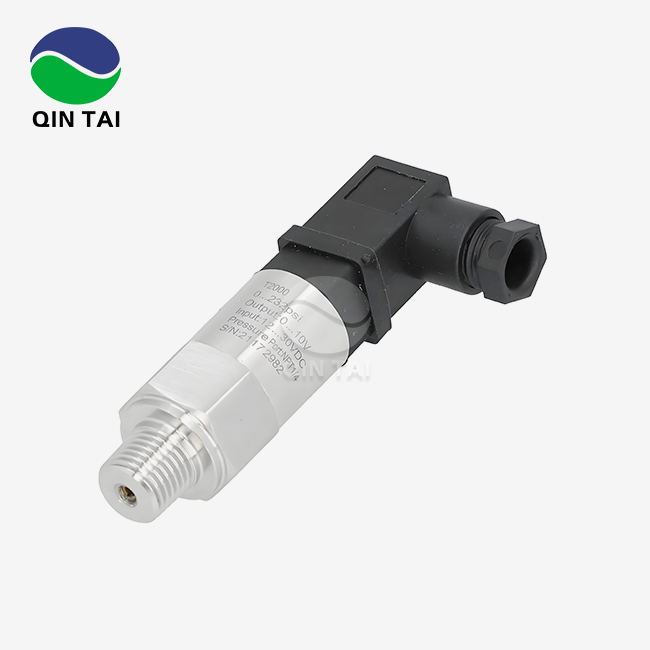
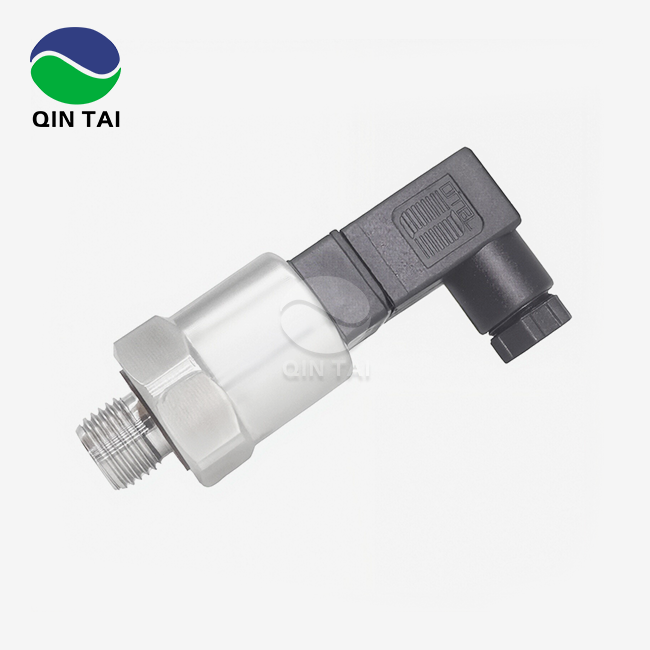
Thin film pressure sensors feature a resistive sensing structure on a stainless steel diaphragm. Diaphragm bends and extends pattern under pressure, altering port resistance. The resistors are on a bridge circuit so little changes result in millivolt signals. Electronics output it as voltage, current or digital. It features a pressure port, protective layers, terminals, housing and seals. The metal body gives mechanical strength but has to comply with the temperature, corrosion risk and media.
Why Deposition Reduces Creep and Hysteresis
Sputtered designs for the thin film pressure sensor deposit the sensitive and insulating coatings on the substrate under high vacuum. In a long pull, no sticky layer creeps, since the layers are held together by atomic forces. Creep means slow movement of output under constant pressure. Hysteresis is the discrepancy between the up and down readings. Reducing both will make it more repeatable. Sputtering is very sensitive to film thickness, enabling uniform sensing elements with little unit-to-unit fluctuation. In certain versions, the sensor core is welded to a stainless-steel port to remove O-ring seals and oil line from the pressure channel.
Temperature Compensation and Diaphragm Strength
Since heat travels zero and span, output accuracy relies on adjustment. Manufacturers trim laser resistors and utilise on-chip temperature sensors with signal electronics correction techniques. For 0.1% or 0.25% accuracy, diaphragm shape, stable film material, correction, and low-noise conversion must operate together. A metal diaphragm helps the sensor withstand vibration, stress, and repeated loading. Still, compensated range claims need model-specific test data. Calibration, wiring, and installation, not only the sensing layer, determine sensor accuracy.

Thin Film Pressure Sensor Compared With Other Technologies and Where It Is Used
Thin Film Versus Thick Film, Piezoresistive, and Strain Gauge Designs
Every technology has a place. Printed paste layers make thick-film sensors suitable for cost-sensitive tasks. Silicon piezoresistive sensors work well at low pressure and suit tiny circuits, but hostile media need oil-filled isolation. Flexible bonded-foil strain gauges have creep and environmental issues from the glue. Compact metal structure, repeatability, and minimal hysteresis distinguish thin-film designs. I compare choices based on overall error band, nonlinearity, hysteresis, heat coefficients, long-term security, overload capacity, and burst pressure throughout the range, not accuracy %.
Diesel Engine and Aftertreatment Uses
Pressure sensors work hard in diesel systems. Differential pressure sensors across diesel particulate filters assist the engine control unit assess soot load. SCR systems use urea dosing line pressure sensing to stabilise injection. Engines require oil, fuel, and intake pressure data. Custom ports, connections, and housings and proven manufacturing methods are common in OEM and integrator projects. Qintai provides diesel engine SCR aftertreatment devices and sensors, focusing on pressure sensors, therefore these needs define our technical effort.
Industrial, Hydraulic, and Generator Set Uses
Thin film pressure sensor are utilised in mobile hydraulics on building and agricultural machinery, compressor equipment, water treatment, fuel systems, and generator sets for mines, power plants, and backup power. Metal diaphragm or compact body suit pressure cycling, vibration, and restricted places. Sensors are often connected to PLC and SCADA systems by voltage or 4–20 mA. The current loop resists noise from electricity over long cable lines and shows damaged wires as faults. Hard sites need additional media compatibility, temperature restrictions, shock, EMC performance, accountability, and certification tests.
Choosing, Calibrating, and Verifying a Thin Film Pressure Sensor
Define the Measurement Scenario First
Selection begins with the work, not the catalogue. Note the pressure type (gauge, absolute, or sealed gauge), range, and proof pressure. Insert the medium, pressure change rate, installation area, and projected service life. Choose a range where regular operation is comfortable and spikes are below evidence. Next, compare overall accuracy, hysteresis, repeatability, reaction time, long-term security, and burst rating throughout real temperature range. A sensor that appears nice on paper but fails in practice cannot be purchased with this order.
Check Electrical, Mechanical, and Environmental Fit
Check that your sensor communicates with your controller. Check output type, excitation voltage, wiring, connection, cable length, and EMC. The port thread, sealing technique, vibration, humidity, oil, acidic gas, and shock should be checked. OEM teams should enquire about sample authorisation, MOQ, lead time, manufacturing consistency, and technical support. Aftermarket purchasers value adaptability, ease of installation, and stock. Aftertreatment integrators often require configurable interfaces and settings. Early detail matching saves redesign time and assures delivery.
Calibration, Testing, and Installation
Sensor output is calibrated against a traceable pressure. A typical technique assesses nonlinearity, hysteresis, repeatability, negative offset, and temperature impacts on rising and falling cycles with known pressures. Process measuring device evaluation standards like IEC 61298 are generic. Add pressure cycling, vibration, shock, overload, and actual media to application testing. Installation matters too. Even after a clean factory calibration, torque, cable tension, pressure spikes, grounding, and tubing may cause field mistakes. Clear acceptance limitations in purchase papers align everyone.
Buying Thin Film Pressure Sensors: Cost, Supplier Evaluation, and OEM Procurement
What Drives Thin Film Pressure Sensor Cost
Price goes beyond logic for the thin film pressure sensor. Pressure range, accuracy class, temperature adjustment, diaphragm material, output type, connection, testing, certification, customisation, quantity, and logistics are quoted. The lowest unit price may hide warranty claims, service failures, and recurrent service visits, buying executives know. Comparing the total expense of ownership is advised. Years-accurate sensing costs less than cheap ones that need repair or calibration. Get a quote by specification.
How to Evaluate a Supplier
Since technical teams pick suppliers, buying evaluates price, and management approves, each group needs distinct evidence. Engineers want test results, full-range temperature correctness, overload and burst evaluations, and media compatibility. Buyers value MOQ, lead time, and response time. Automotive production, traceability, calibrating controls, and export experience managers need IATF 16949 quality systems. Explain how the supplier addresses unit consistency and sample-to-mass production. Customisation improves lifecycle productivity, integration, and dependability over features.
Where Qintai Fits, and Where Thin Film Has Limits
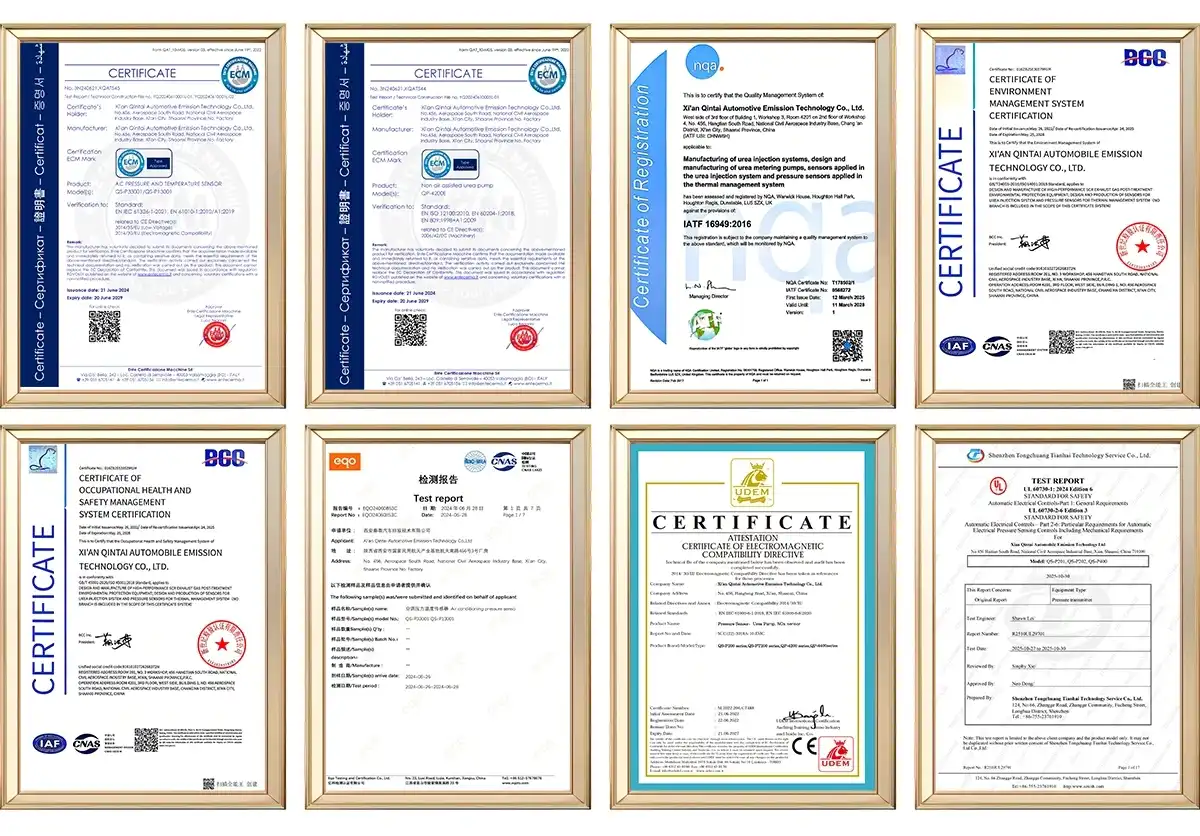
Thin film cannot fix anything. It may not work for every low-pressure application, tough substrate, or heat range, but a higher initial cost ensures reliability and longevity. Qintai can help if fitted. Since 2001, Xi'an Qintai Automotive Emissions Technology Co. Ltd. has held ISO9001, IATF16949, CC, Ex, UL, CE, REACH, and RoHS certifications and filed for 58 invention patents. Weichai Power, Yuchai Power, and Quanchai Power rely on us for OEM/ODM service and customisation in over 60 countries.
Conclusion
When placed directly on a metal diaphragm, the thin film pressure sensor eliminates adhesive creep, hysteresis, and unit consistency issues, improving measurement accuracy. Under heat, vibration, and overload, temperature compensation and robust diaphragm restrict drift. Complete accuracy relies on sensor design, testing, wiring, and installation.
Buyers should consider overall error band throughout the working range rather than one datasheet figure since thin-film, thick-film, piezoresistive, or strain-gauge alternatives fit diverse demands. Diesel, industrial, and generator set users get reliable pressure data by matching range, medium, output, and accreditation to the application and testing with traceable calibration.
FAQ
What makes a thin film pressure sensor more repeatable?
The sensing layer is deposited directly on the metal diaphragm, so no adhesive can creep. Controlled film thickness, low hysteresis, and temperature compensation also keep output consistent from cycle to cycle.
Can a thin film pressure sensor handle high temperatures?
It depends on the model. Check the compensated temperature range, operating limits, media compatibility, and test data before you commit, because these values differ between product families.
What information do I need to request a quotation?
Send the pressure type and range, accuracy target, operating temperature, media, signal output, connector, port details, quantity, certification needs, and delivery date.
Send Your Specification to Qintai for a Thin Film Pressure Sensor Review
Qintai supports OEM and ODM projects, from design to mass production. If you are comparing a thin-film pressure sensor manufacturer for diesel engine, aftertreatment, or generator set programs, send your pressure range, temperature limits, media, output, and annual volume to info@qt-sensor.com. Our engineers will review the specification, discuss customization, and advise on samples. You can also visit qt-sensor.com to see our sensor range and certifications.
References
1. Handbook of Current Sensors, 2017
2. Measurement, Instrumentation and Sensors Handbook 2014
3. Handbook of Sensor Technology, 2005.
4. IEC 61298-2. Process measurement and management devices, 2008.
5. Bosch The automotive industry Handbook, 2018.
6. SAE Standard of Engines 2009
 Sensors.webp)

Our customers’ satisfaction speaks for our quality — contact us to experience the same reliable service.