- English
- French
- German
- Portuguese
- Spanish
- Russian
- Japanese
- Korean
- Arabic
- Greek
- German
- Turkish
- Italian
- Danish
- Romanian
- Indonesian
- Czech
- Afrikaans
- Swedish
- Polish
- Basque
- Catalan
- Esperanto
- Hindi
- Lao
- Albanian
- Amharic
- Armenian
- Azerbaijani
- Belarusian
- Bengali
- Bosnian
- Bulgarian
- Cebuano
- Chichewa
- Corsican
- Croatian
- Dutch
- Estonian
- Filipino
- Finnish
- Frisian
- Galician
- Georgian
- Gujarati
- Haitian
- Hausa
- Hawaiian
- Hebrew
- Hmong
- Hungarian
- Icelandic
- Igbo
- Javanese
- Kannada
- Kazakh
- Khmer
- Kurdish
- Kyrgyz
- Latin
- Latvian
- Lithuanian
- Luxembou..
- Macedonian
- Malagasy
- Malay
- Malayalam
- Maltese
- Maori
- Marathi
- Mongolian
- Burmese
- Nepali
- Norwegian
- Pashto
- Persian
- Punjabi
- Serbian
- Sesotho
- Sinhala
- Slovak
- Slovenian
- Somali
- Samoan
- Scots Gaelic
- Shona
- Sindhi
- Sundanese
- Swahili
- Tajik
- Tamil
- Telugu
- Thai
- Ukrainian
- Urdu
- Uzbek
- Vietnamese
- Welsh
- Xhosa
- Yiddish
- Yoruba
- Zulu
Why Urea Dosing Pump Performance Affects Emission Control
The urea dosing pump is a key component in emission control because it controls the amount of Diesel Exhaust Fluid (DEF), or AdBlue, that enters the SCR injector and the pressure at which it is injected. If the pump provides too little, the catalyst cannot convert enough nitrogen oxides (NOx) and tailpipe emissions increase. If it provides too much, ammonia leaks out and leaves deposits. Unstable pressure will also ruin the spray pattern. The solution is one idea: the catalyst can only function with the fluid the pump provides. In this post, I describe how the pump works, how it impacts SCR findings and how to choose, test and troubleshoot one for your aftertreatment system.
What Is a Urea Dosing Pump and How Does It Work?
Urea Dosing Pump Function in an SCR System
Def urea pump or urea dosing pump is a device that transfer DEF from the storage tank to the dosage module. DEF is a 32.5% urea solution in deionized water and ISO 22241 specifies the quality criteria. The pump generates the required pressure for the injector and retains it when the load on the engine varies. Sprayed DEF then decomposes into ammonia in the hot exhaust. The ammonia then combines with the NOx on the catalyst to generate nitrogen and water. In 2000, urea-SCR was presented as a potential method to reduce diesel NOx in a publication in Catalysis Today. Without a consistent pump flow, that chemistry stalls.
AdBlue and DEF Dosing Pump Working Principle
I outline the chronology of labor in four stages. First the pump pulls DEF from the tank via a filter. It then pressurizes the fluid and pushes it through lines that may be heated in cold conditions. The injector then opens at the command of the Engine Control Unit (ECU) and injects DEF into the exhaust stream. Finally, many systems have the pump cleanse the lines after shutdown to prevent any residual fluid from freezing or crystallizing. DEF freezes at roughly 12°F (−11°C), therefore purge and freeze protection are important in cold U.S. areas. Anti-backflow features prevent fluid from going the wrong way.
Typical Urea Dosing Pump Performance Parameters
When I examine a data sheet I look at 5 things first . Stable flow rate Working pressure Supply voltage Operating temperature range Response time . Many SCR systems are 5 to 10 bar, depending on the OEM design therefore the engine maker's drawing has the last word. Connector type & port size & communication protocol are equally important. If a pump meets the flow spec, but has the improper connection or signal, it costs days in integration. Material compatibility with DEF and the predicted duty cycle round out the list. Each item has a direct impact on the accuracy of field dosing.
Why Urea Dosing Pump Performance Directly Affects Emission Control
Under-Dosing: When the Pump Cannot Deliver Enough DEF
The most straightforward method a poor urea dosing pump increases emissions is via under dosing. A clogged filter, low pressure, air in the line, worn pumping element, low supply voltage or a blocked injector may all reduce the amount of DEF that makes it to the exhaust. Then the catalyst is starved of ammonia and the NOx goes out the exhaust. The EPA 2010 standard restricts heavy-duty highway engine NOx to 0.20 grams per brake horsepower-hour and gives minimal space for wasted conversion. The ECU may record a fault code and if the problem is repeated the engine may be derated which stops operations and loses fleets money.
Over-Dosing: When Pump Output Exceeds the Required Quantity
Over-dosing is the difficulty at the other end. The extra DEF is creating more ammonia than the catalyst can handle, therefore ammonia is leaking out the tailpipe. Excess liquid may also cause urea deposits on the injector tip and in the exhaust pipe, particularly at low exhaust temperatures. Those deposits hinder flow, and increase backpressure. Over-dosing consumes DEF and increases operational expenses. This silently produces a pump that wanders with temperature or voltage. The system seems normal yet consumption increases . That's why I ask providers for flow-accuracy data across the whole operational range, not just at one test point.
Pressure Instability, Pulsation, and Response Time
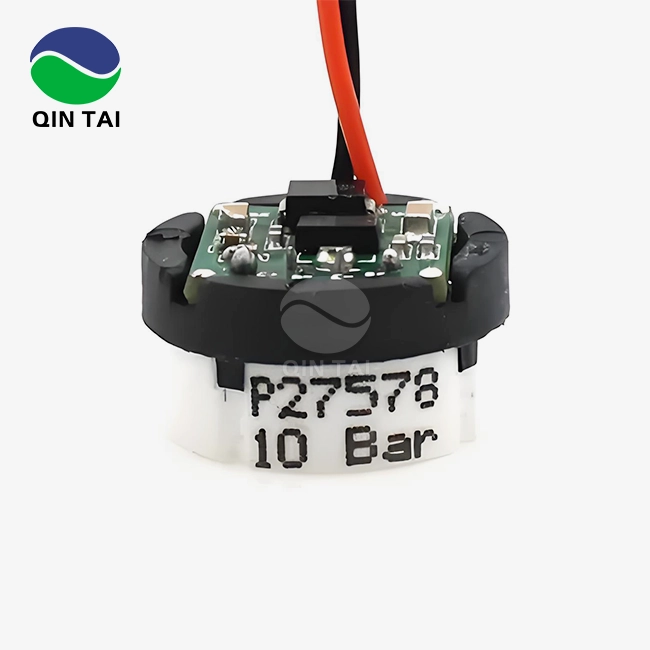
Steady pressure is a function of spray quality. If pressure is not stable, the droplet size will shift and the DEF may strike the pipe wall instead of mixing with the exhaust gas. Strong pulse makes the task of the injector harder. A delayed reaction means that the system is left behind by a fast throttle adjustment. Closed-loop pressure feedback will solve this. A pressure sensor feeds back to the ECU, which adjusts the pump to keep the goal. Cold start, high acceleration and full load operation test that loop the most. Qintai also produces pumps as well as pressure sensors, so that measurement and delivery are one control chain.
Key Factors That Determine Urea Dosing Pump Performance
Flow Rate and Pressure Range
Maximum flow and maximum pressure as shown on a data sheet only convey half of the picture. I'm looking for the steady functioning range, the flow and pressure the pump maintains without drifting. The DEF demand is a function of engine size, injector rating and catalyst volume. Pump too tiny and the system is starved under heavy load. A size too big could cycle more frequently and wear out sooner. Ask the provider to supply a curve of flow vs pressure and voltage and compare it with the OEM dosing requirement. This check saves a lot of integration surprises. It requires minimal time, and saves a whole sample cycle.
Electrical Voltage and Pump Design
Voltage takes the platform. Light duty vehicles typically run on 12V, whereas large duty trucks and busses require 24V. Also, make sure you check the allowable voltage range, a sudden decrease might impair the urea dosing pump output. Design is the other option. The diaphragm pump keeps the fluid away from the driving mechanism. The piston pump may achieve a greater pressure, but has to carefully take care of sealing and wear. Noise, size, durability, and maintenance vary by model so ask for test data, not just pump type. Qintai's urea pump is small in size and combined with the pump, filter and heater in one unit, saving installation space.
Materials, Sealing, and Environmental Demands
DEF may damage various common metals, including brass, copper and carbon steel, hence wetted parts need to be stainless steel or DEF-rated polymers and elastomers. Seals need particular attention, since leaks lead to white urea crystals and may accelerate corrosion of adjacent parts. The chemistry is as important as the environment. A pump works under stress from dust, water spray, vibration and frigid temperatures. Qintai urea pumps include built-in freeze protection and purge function and provide precise dosing in all temperature settings. minimal energy consumption and minimal noise are especially beneficial in engine compartments when space is at a premium. I would recommend specifying the worst case site circumstances in the standard.

How to Choose the Best Urea Dosing Pump for an SCR System?
Steps 1 and 2: Define the Application and Write the Specification
It is contingent upon the application: size of engine, exhaust temperature, duty cycle and where it is installed. Next, construct a specification listing the voltage, flow, pressure, temperature range, port types, dimensions, communication protocol and needed certifications. For an integrator who uses an OEM design as a starting point, the interface components that determine whether the pump will fit are connection pinout, mounting locations, and signals. I propose to include them in the technical agreement before someone asks for samples. That behavior saves a quotation round and keeps the sampling stage on course. It also makes it simpler to detect faults later, since everyone works from the same figures.
Step 3: Compare Electric and Pneumatic Pumps
Power consumption, control accuracy, installation requirements, reaction time and maintenance. The ECU controls electric pumps and they simply require wiring . Most on road SCR systems are compatible . Pneumatics require a compressed air source. That could be OK for machinery that already has air onboard, but it adds pipes and another component to service. The key is communication. Qintai urea pumps are compatible with Bosch ECU for certain SCR management methods and cooperate with the ECU to adjust the dosage amount according to the engine load, exhaust flow and NOx sensor feedback. Tell your supplier what ECU and protocol you are using before you make a decision on a model.
Steps 4 and 5: Evaluate the Supplier, Testing, and Total Cost
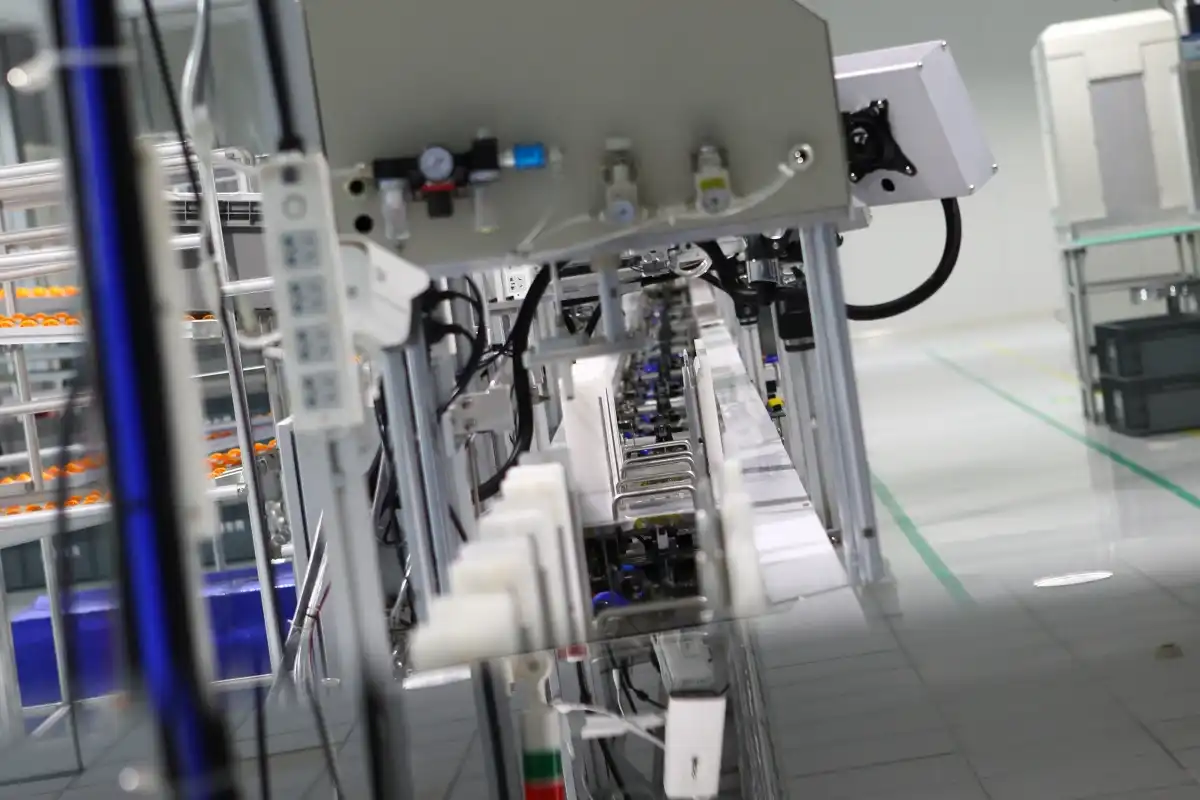
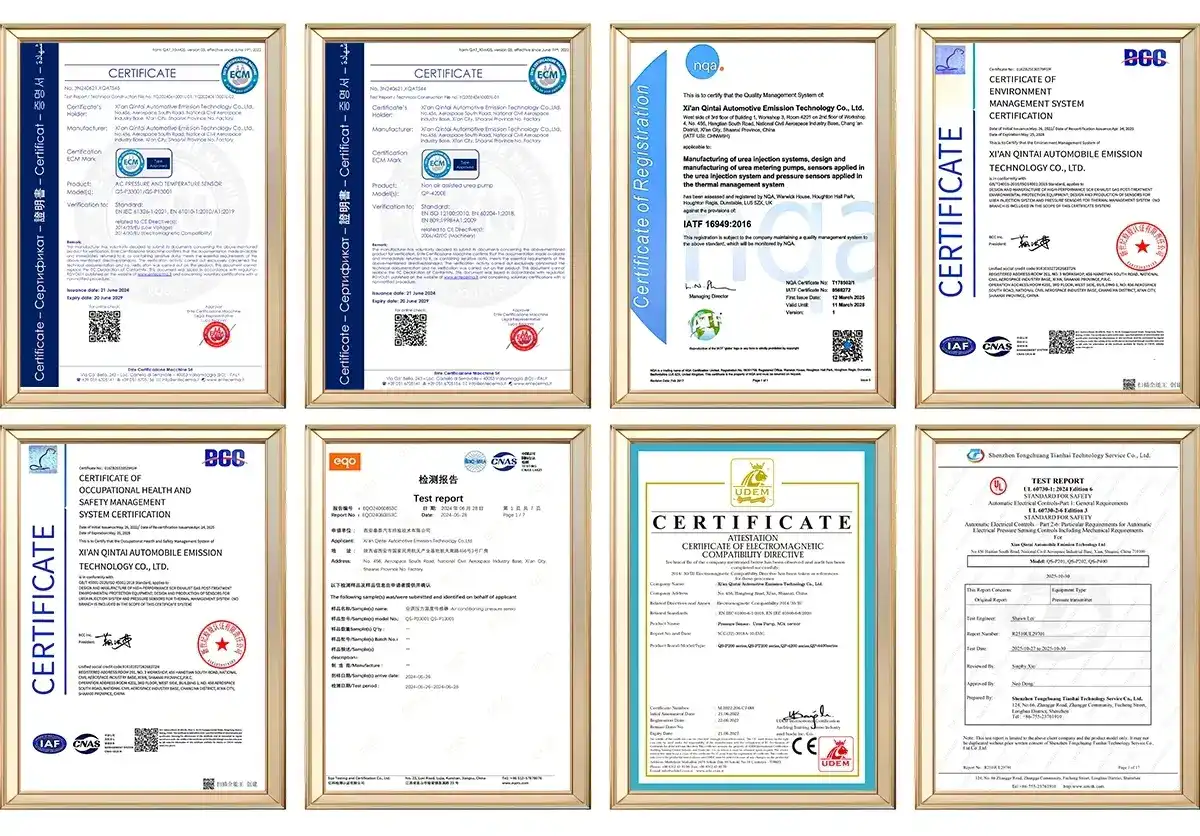
Evaluate suppliers on technical skills, testing, traceability, documentation and after sales assistance. Qintai is a national high-tech firm created in 2001, with an autonomous R&D team and 58 innovation patent applications for the urea dosing pump. We have certifications such as ISO9001, IATF16949, CE, UL, REACH, and RoHS. We are a main supplier of Weichai Power, Yuchai Power and Quanchai Power. We provide OEM and ODM service from design to mass manufacturing. Request performance curves, test reports and pilot data from any provider. Then add up the whole cost: energy usage, downtime, replacement frequency, and warranty. One failure will halt a vehicle, cheap price loses its attractiveness.
Common Urea Dosing Pump Problems and Their Solutions
Urea Dosing Pump Not Working
Begin with the electrical fundamentals. Turn the system on and check the supply voltage at the pump connection. Also check the fuses, grounds, connectors and ECU communication. Then check DEF level and temperature. Heater thaws frozen tank or pipe to restore flow. Then check the filter and lines for obstruction. I also examine diagnostic codes before changing anything, since the code typically indicates to a sensor or wiring failure and not the pump. Only replace the pump once these methods have ruled out simpler explanations. This order saves shop time and components.
Low Pressure, Insufficient Flow, and Leaks
Don't only look at pressure with no load, look at it in actual circumstances. A poor pump might seem healthy with no resistance. Common reasons include a clogged filter, air leaks into the suction line, a damaged pumping element, insufficient voltage and a clogged injector. Look for leaks at fittings, line connections, seals and pump housing. The leak channel is frequently marked by white crystalline residue. Use only DEF-compatible parts to replace seals. Tighten fittings to the torque levels specified by the manufacturer. If the pressure is still low after these inspections, return the pump to the manufacturer for assessment instead of opening it in the field.
How to Prime, Clean, and Maintain the Pump?
Fill the tank with clean DEF, conduct the priming process using the diagnostic tool or the manual's key-cycle method and validate that pressure develops to prime a pump. Maintain with ISO 22241 DEF, let purge cycle to complete at shutdown, check filters on schedule and maintain connections dry. - Crystal residue on external surfaces will dissolve with warm water. Internal disassembly is reserved for skilled specialists who must follow the manufacturer's servicing guidelines. Clean storage and clean funnels pay off. Soiled fluid is the cause of many pump breakdowns. A basic diary of filter modifications and error codes will also assist in tracing reoccurring occurrences.
Conclusion
Accurate DEF supply determines how successfully an SCR system regulates NOx. A urea dosing pump that maintains flow and pressure levels keeps ammonia supplied to the catalyst, while under-dosing allows NOx to escape and over-dosing generates ammonia slide and deposits. The spray quality and control precision is degraded by pressure fluctuations, pulsing and delayed reaction. Performance relies on flow range, voltage, pump design, DEF suitable materials and environmental protection and on matching them to the engine, injector and ECU. Clear specification, supplier testing and maintenance with ISO 22241 fluid guaranties reliable outcomes. The best pump is the one that works consistently in the system it is designed for. Not the cheapest or highest pressure model.
FAQ
Q1: What does a urea dosing pump do in an SCR system?
A: It delivers DEF from the tank to the dosing module at the required pressure, so the injector can meter NOx-reducing fluid precisely.
Q2: What is the normal pressure range of a urea dosing pump?
A: It depends on the system design. Many run at roughly 5 to 10 bar, so confirm the OEM specification.
Q3: Should I choose a 12V or 24V urea dosing pump?
A: Match the vehicle's electrical system. Light-duty platforms often use 12V, and heavy-duty trucks commonly use 24V.
Q4: Is the Qintai pump compatible with Bosch ECU?
A: Qintai urea pumps comply with Bosch ECU for specific SCR control strategies. Share your ECU model so we can confirm fit.
Q5: Can a urea dosing pump be used for fertilizer or wastewater treatment?
A: Not without review. Those fluids and flow needs differ from vehicle DEF, so check materials and ratings first.
Q6: How can I buy a urea dosing pump in bulk?
A: Send your drawing, voltage, flow, pressure, and annual volume to info@qt-sensor.com. We start with samples, then move to batch supply.
Contact Qintai for a Urea Dosing Pump That Fits Your Emission Control Project
Qintai is a urea dosing pump manufacturer offering OEM and ODM service from product design to mass production, plus flexible customization. Our integrated pump, filter, and heater design suits cold-weather duty, and we hold ISO9001 and IATF16949 certificates. Send your engine type, voltage, flow, pressure, and annual volume to info@qt-sensor.com.
References
1. ISO 22241-1, 2019 – Diesel engines – NOx reduction agent AUS 32 – Part 1: Quality requirements, International Organization for Standardization
2. Catalysis Today, 2000 – Koebel, M., Elsener, M., and Kleemann, M., "Urea-SCR: A Promising Technique to Reduce NOx Emissions from Automotive Diesel Engines"
3. Applied Thermal Engineering, 2014 – Guan, B., et al., "Review of State of the Art Technologies of Selective Catalytic Reduction of NOx from Diesel Engine Exhaust"
4. SAE International Journal of Engines, 2016 – Johnson, T. V., "Vehicular Emissions in Review"
5. Diesel Emissions and Their Control, SAE International, 2006 – Majewski, W. A., and Khair, M. K.
6. Federal Register, 2001 – U.S. Environmental Protection Agency, "Control of Air Pollution From New Motor Vehicles: Heavy-Duty Engine and Vehicle Standards and Highway Diesel Fuel Sulfur Control Requirements"

Our customers’ satisfaction speaks for our quality — contact us to experience the same reliable service.