- English
- French
- German
- Portuguese
- Spanish
- Russian
- Japanese
- Korean
- Arabic
- Greek
- German
- Turkish
- Italian
- Danish
- Romanian
- Indonesian
- Czech
- Afrikaans
- Swedish
- Polish
- Basque
- Catalan
- Esperanto
- Hindi
- Lao
- Albanian
- Amharic
- Armenian
- Azerbaijani
- Belarusian
- Bengali
- Bosnian
- Bulgarian
- Cebuano
- Chichewa
- Corsican
- Croatian
- Dutch
- Estonian
- Filipino
- Finnish
- Frisian
- Galician
- Georgian
- Gujarati
- Haitian
- Hausa
- Hawaiian
- Hebrew
- Hmong
- Hungarian
- Icelandic
- Igbo
- Javanese
- Kannada
- Kazakh
- Khmer
- Kurdish
- Kyrgyz
- Latin
- Latvian
- Lithuanian
- Luxembou..
- Macedonian
- Malagasy
- Malay
- Malayalam
- Maltese
- Maori
- Marathi
- Mongolian
- Burmese
- Nepali
- Norwegian
- Pashto
- Persian
- Punjabi
- Serbian
- Sesotho
- Sinhala
- Slovak
- Slovenian
- Somali
- Samoan
- Scots Gaelic
- Shona
- Sindhi
- Sundanese
- Swahili
- Tajik
- Tamil
- Telugu
- Thai
- Ukrainian
- Urdu
- Uzbek
- Vietnamese
- Welsh
- Xhosa
- Yiddish
- Yoruba
- Zulu
Best Urea Pressure Sensor for SCR and AdBlue Systems in 2026
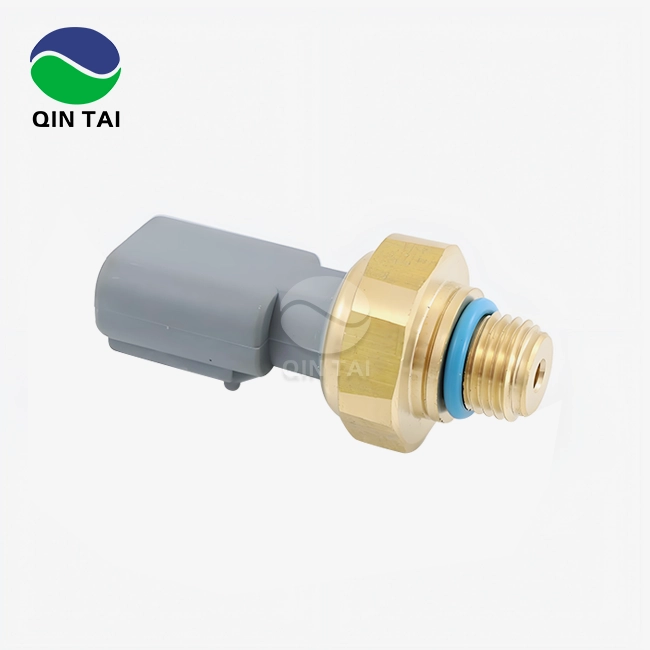
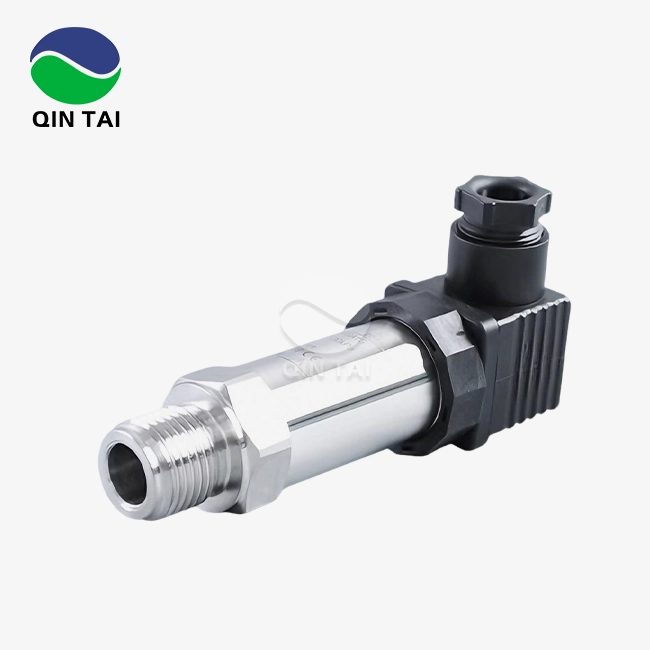
Diesel engine manufacturers and aftertreatment integrators should consider the Qintai QS-P226 as the best urea pressure sensor for SCR and AdBlue systems in 2026. Our analog sensor provides ±0.5% accuracy from -14 to +130.5 psi, ensuring exact dosing for emissions compliance under China VI and Euro VI requirements. The QS-P226 meets OEMs' mass production needs for reliable, cost-effective solutions with proven chemical resistance against urea corrosion, thermal stability throughout operating conditions, and 100% factory testing.
Introduction
Commercial diesel engine emissions management relies on Selective Catalytic Reduction (SCR) technology to fulfill stricter worldwide environmental laws. Urea dosage uses AdBlue, a high-purity urea solution, to transform hazardous nitrogen oxides into innocuous nitrogen and water vapor. This conversion process relies on accurate pressure monitoring during the dosing cycle.
Procurement managers and R&D engineers are under pressure to choose components that meet regulatory and operational standards. As 2026 approaches, pollution standards tighten, especially in the US heavy truck industry, where EPA rules require constant NOx reduction performance. This handbook gives technical decision-makers the analytical foundation to assess pressure sensing technologies that meet immediate compliance and long-term value. Sensor selection has costly consequences beyond first purchase. Component failure rates affect warranty claims, downtime, and brand reputation. Understanding sensor technology technical specifications, compatibility needs, and market positioning helps maintain operational performance and profit margins in competitive B2B contexts.
Understanding Urea Pressure Sensors: Functions, Principles, and Maintenance
Core Functions in SCR Systems
In closed-loop AdBlue injection, urea pressure sensors in urea dosing systems provide vital input. These components continually detect hydraulic pressure between the dosing pump and injector nozzle, sending electricity to the engine control unit. These signals let the ECU compute real-time flow rates, regulate pump duty cycles, and check system integrity. Due to pressure data issues, dosing systems cannot maintain adequate urea-to-exhaust ratios for catalyst performance.
Analog Versus Digital Sensor Technologies
Modern SCRs use two sensor designs. Analog sensors output 0.5 to 4.5 VDC continuous voltage proportional to pressure. This ratiometric design integrates easily with ECU analog inputs and lowers failure modes. Digital sensors use LIN or CAN protocols and integrate signal processing in their modules. Digital variations provide better diagnostics, but their complexity may not justify their cost premium in reliability-over-feature-depth applications.
Common Failure Modes and Diagnostic Strategies
By gradually drifting output voltage, sensor deterioration causes the ECU to indicate implausible pressure levels. A persistent fault code linked to dosing pressure variation, excessive AdBlue use outside load patterns, or intermittent limp mode activation are early warning indications. Supply voltage stability, connection corrosion, and sensor output versus pressure references should be tested. Regular calibration verification, especially in high-mileage applications, avoids emissions-compromising performance deterioration. AdBlue residue in fittings causes sensor membrane crystallization, therefore maintenance practices should prevent it. Scheduled mounting point and electrical connection checks prolong service intervals and prevent unexpected failures. Documenting baseline performance parameters during installation helps troubleshoot the component throughout its life.
Comparing Top Urea Pressure Sensor Brands and Technologies in 2026
Global Market Leaders and Regional Specialists
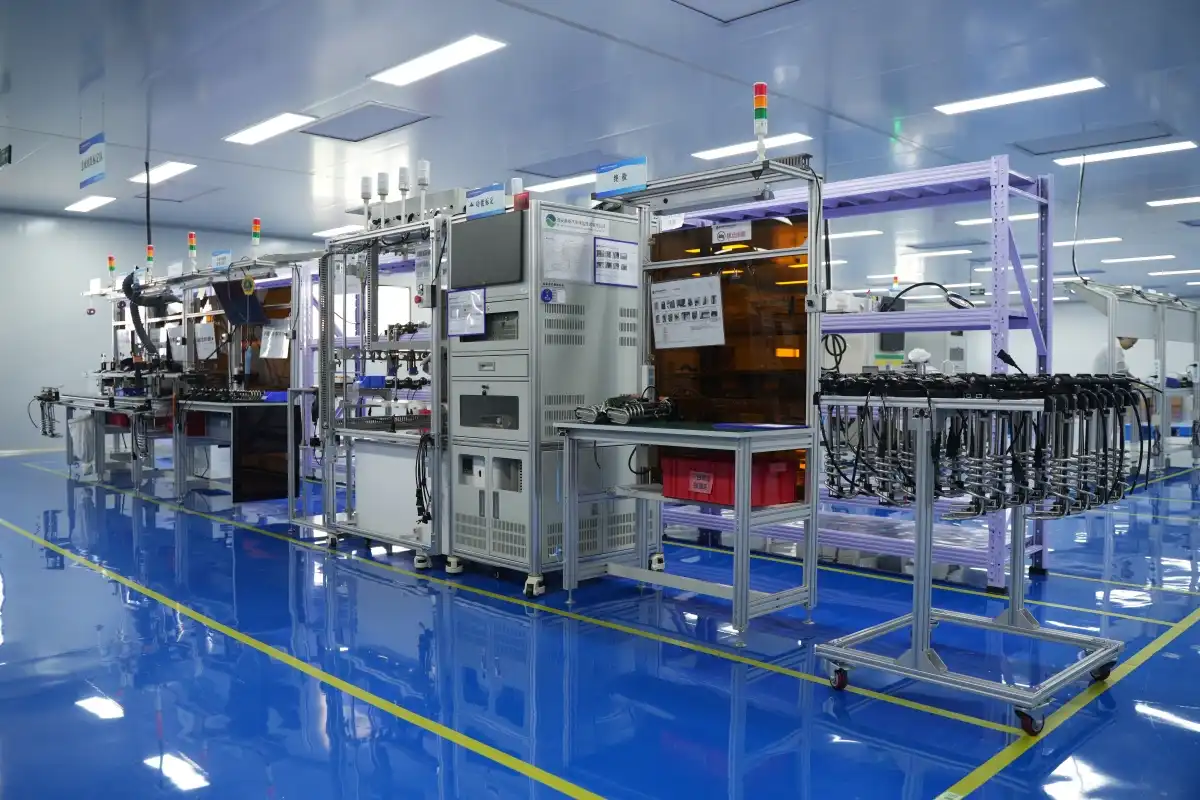
Bosch and Continental dominate European OEM supply chains with decades of automotive sensor experience and certification portfolios. They charge premium prices due to brand equity rather than technical excellence due to extensive R&D in materials science and signal processing. Delphi uses its commercial vehicle background in North American heavy-duty sectors, whereas Denso dominates Asian diesel markets. Regional experts like Qintai have become strong competitors by focusing on application-specific optimization rather than market penetration. Qintai Automotive Emission Technology Co. Ltd., founded in 2001, uses focused development for diesel aftertreatment. As the top OEM supplier to China's top engine manufacturers, including key agreements with Weichai Power, Yuchai Power, and Quanchai Power, the firm has technical credibility from rigorous validation programs and volume production consistency.
Technical Performance Benchmarking
Accuracy standards provide differentiation. Industrial sensors usually have ±2% accuracy, whereas automotive-grade components meet ±1%. The Qintai QS-P226 is one of the most accurate analog sensors available, with ±0.5% accuracy, outperforming branded options at comparative prices. Precision in dosing eliminates catalyst over- or under-supply under transient operating circumstances, improving emissions control. Comprehensiveness of measurement range influences system diagnostics. Positive pressure sensors cannot detect suction-side leaks or pump cavitation. The QS-P226's -14 psi to +130.5 psi range covers all operating circumstances, from priming to maximum dosage pressure, providing complete fault detection to safeguard downstream components from pressure abnormalities.
Warranty Terms and After-Sales Support
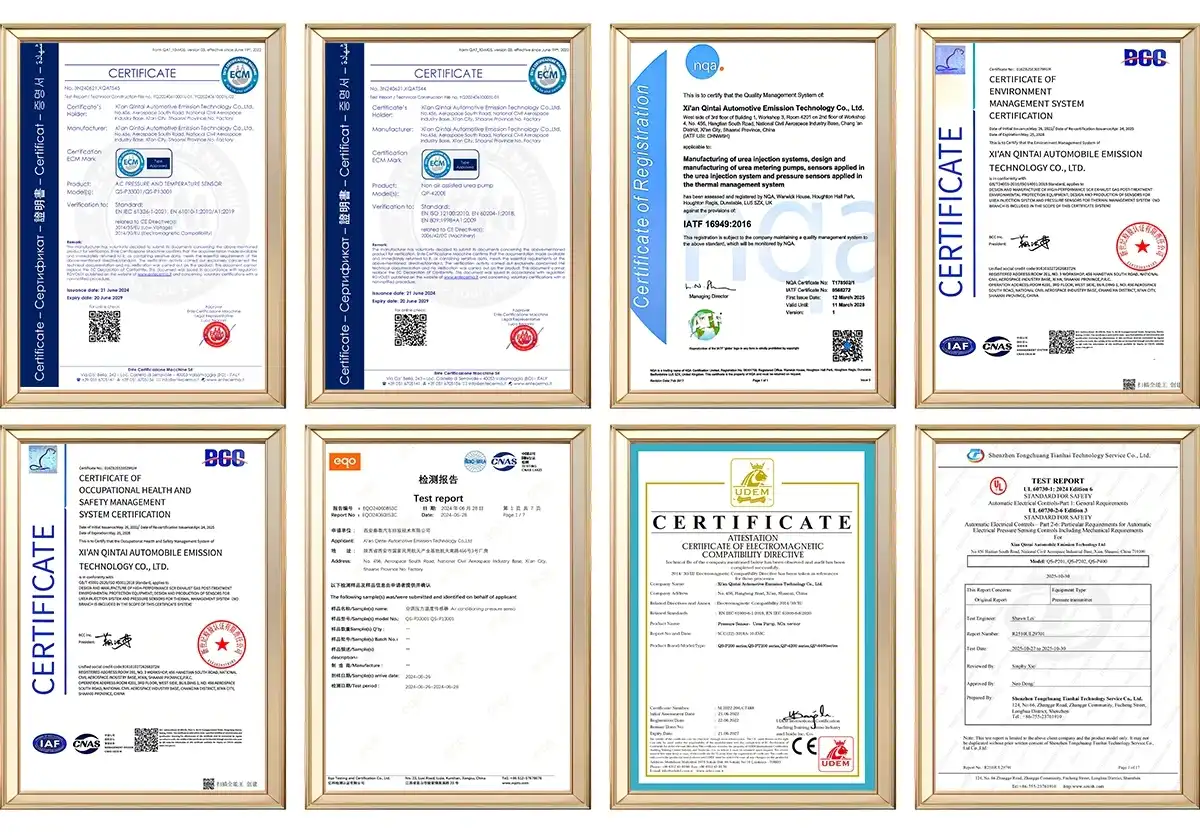
Industry standards for automobile electrical components are 12-month warranties. Technical assistance, replacement part availability, and product customization distinguish companies. Suppliers providing 24-month extended coverage indicate component durability but may charge for it. Failure rate statistics, replacement logistics costs, and supplier reputation for warranty claims without negotiation are needed to calculate total cost of ownership. Qintai's ISO9001, IATF16949, CMC, Ex, UL, CE, REACH, and RoHS certifications speed up internal approval procedures for procurement teams. Continuous R&D investment in their 58 innovation patents improves product dependability and application compatibility for consumers.

How to Choose the Best Urea Pressure Sensor for Your SCR System: A Decision Support Framework
Application Requirements Assessment
Start selection of a urea pressure sensor with extensive operational parameter analysis. Stationary generator sets favor long-term stability over transient reaction, whereas heavy-duty highway vehicles in harsh temperatures need sensors verified throughout broad thermal ranges. Particulate pollution from agricultural machinery requires higher sealing standards. Construction equipment vibration profiles can cause mechanical stress in poorly constructed mounting systems. Sensor performance must fulfill regulatory test methods' accuracy and reaction time requirements for emission standards compliance. China VI and Euro VI standards demand component specifications to meet NOx reduction efficiencies over standardized driving cycles, even if sensor precision is not expressly required.
Critical Selection Criteria Prioritization
System demands should drive accuracy requirements, not arbitrary specs. SCR systems with 90% NOx conversion efficiency may accept sensor drift, whereas 95%+ applications require tighter tolerances. The QS-P226's ±0.5% precision allows for aging without impacting compliance. Materials compatibility with urea chemistry, moisture-preventing seal designs, and mechanical robustness against vibration-induced failure are assessed for durability. Qintai's chemical resistance engineering solves urea's corrosive and crystallization qualities, ensuring measurement accuracy even with polluted AdBlue that damages other sensors. Compatible verification goes beyond pressure range matching. Integration difficulty and installation cost depend on electrical interface compatibility, mounting arrangement alignment with packaging restrictions, and connection standards. Analog outputs with ratiometric voltage signals work with legacy ECU designs without software development costs.
Supplier Evaluation Methodology
Technical departments should prefer application-specific vendors with case studies, reference installations, and pre-purchase testing support. Qintai's status as China's top OEM supplier is a testament to engine manufacturers' component dependability standards. Trust from a third party decreases procurement risk. Assessing supplier financial soundness, production capability for volume scaling, and geographic closeness for logistical lead times benefits purchasing departments. Qintai's 23-year history and growing worldwide presence in 60+ countries offer institutional stability for long-term partnerships. Their OEM and ODM services provide customisation for particular application needs without engineering fees.
Purchasing Urea Pressure Sensors: Market Trends, Procurement Tips, and Logistics in 2026
Market Dynamics Driving Demand
Global regulatory harmonization accelerates SCR implementation in deregulated countries, increasing pressure sensing component demand. US infrastructure investment initiatives targeting emission reductions in construction and agricultural equipment provide procurement possibilities for compliance, cost-effective vendors. As first-generation SCR systems deployed in 2010–2015 reach end-of-service periods necessitating component replenishment, replacement market demand develops.
OEM Versus Aftermarket Sourcing Strategy
Original equipment manufacturers usually choose tier-one suppliers with substantial validation paperwork, supply chain stability, and liability insurance. For fast delivery and low prices, aftermarket buyers sacrifice warranty conditions for cost-effectiveness and inventory availability. Qintai bridges this gap with OEM-grade quality verified by major engine manufacturers and aftermarket-friendly inventory and price.
Procurement Channel Selection
Direct supplier involvement benefits volume buyers of a urea pressure sensor seeking customisation or long-term supply agreements with fixed price. Distributors offer integrated logistics, lower minimum order quantities, and local technical assistance at margin prices in unit pricing. Online B2B platforms allow price discovery and supplier comparison but may lack technical support for complicated application matching. Negotiating bulk orders should include unit pricing, payment terms, inventory management assistance, and contractual safeguards against specification drift between manufacturing lots. OEM production scheduling requires lead time commitments because component shortages stop assembly lines at costs greater than sensor savings. Dual-source solutions reduce supply risk and keep primary suppliers competitive.
Future Trends and Innovations in Urea Pressure Sensor Technology
IoT Integration and Predictive Analytics
New sensor designs include inbuilt intelligence to send real-time data to fleet management platforms. This link lets operators spot deterioration trends before failure and schedule maintenance during scheduled downtime instead of roadside breakdowns. Pressure sensors becoming networked diagnostic nodes add value beyond emissions control, reducing operating costs through improved maintenance intervals in entire vehicle health monitoring ecosystems.
Materials Science Advancements
Research into ceramic membrane technologies and corrosion-resistant metals solves urea exposure's chemical difficulties. Advanced materials engineering will increase the lifespan of next-generation sensors, lowering lifetime ownership costs even at higher beginning prices. Nanotechnology coatings that inhibit crystallization offer maintenance-free operation without periodic cleaning unlike present components.
Regulatory Evolution Impact
Sensors must retain accuracy throughout greater working environments than existing requirements as European and Asian Real Driving Emissions (RDE) test methodologies tighten. Components verified via lab tests may not meet regulatory requirements beyond 2027. Procurement strategies should emphasize suppliers who consistently innovate ahead of regulatory changes. Diagnostic process standardization and replacement part interchangeability may lessen brand lock-in that limits aftermarket competition. Modular sensor designs with standardized interfaces might change competitive dynamics by emphasizing performance and durability above proprietary connection designs that cement existing vendors.

SENSOR+TEST, June 9 – 11, 2026
We look forward to your visit,warmly welcome to our booth 1-634!
Get your free ticket online now:
https://www.sensor-test.de/service/ticket/?52790
Conclusion
Optimal urea pressure sensor solutions for SCR and AdBlue dosing systems must balance technical performance, supplier reliability, and total cost of ownership over prolonged service intervals. The Qintai QS-P226 shows how targeted engineering for specific application needs may match brand performance at lower cost in competitive procurement circumstances. With ±0.5% accuracy, a wide pressure range, and proven chemical resistance, this choice is ideal for OEMs and integrators focusing on emissions compliance and dependability. Successful programs will avoid component obsolescence and compliance problems by partnering with suppliers with technical understanding, manufacturing scalability, and commitment to innovation as regulatory requirements increase through 2026 and beyond.
FAQ
Q1: How do I detect a failing pressure sensor before complete failure?
A: Gradual increases in AdBlue usage without load changes, sporadic fault codes due to implausible pressure readings, and static ECU-reported dosing pressure levels notwithstanding engine conditions are early symptoms. Diagnostic equipment detects urea pressure sensor output voltage deviation during pump operation. Current readings compared to baseline measurements provided upon installation show degeneration needing replacement before catastrophic collapse.
Q2: What advantages do analog sensors offer compared to digital alternatives?
A: Analog pressure sensors are simpler, reducing failure modes and simplifying ECU integration. Their ratiometric voltage outputs use simple ADC inputs and no specific communication protocols, reducing system complexity and development expenses. In electrically loud diesel applications, analog systems are more electromagnetically compatible. The Qintai QS-P226's 0.5-4.5 VDC output interfaces seamlessly with conventional ECU inputs, saving software development costs for digital sensors using LIN or CAN protocols.
Q3: What are typical lead times for bulk sensor orders?
A: Standard manufacturing runs for quantities under 1,000 pieces take 4-6 weeks from order confirmation to shipment, with accelerated alternatives available at premium prices. Suppliers coordinate materials procurement and manufacturing scheduling for volume orders above 5,000 pieces, which can take 8-10 weeks. Consignment inventory agreements or blanket purchase orders with timed releases stabilize supply chains and prevent component shortages during peak production.
Partner with Qintai for Reliable Urea Pressure Sensor Solutions
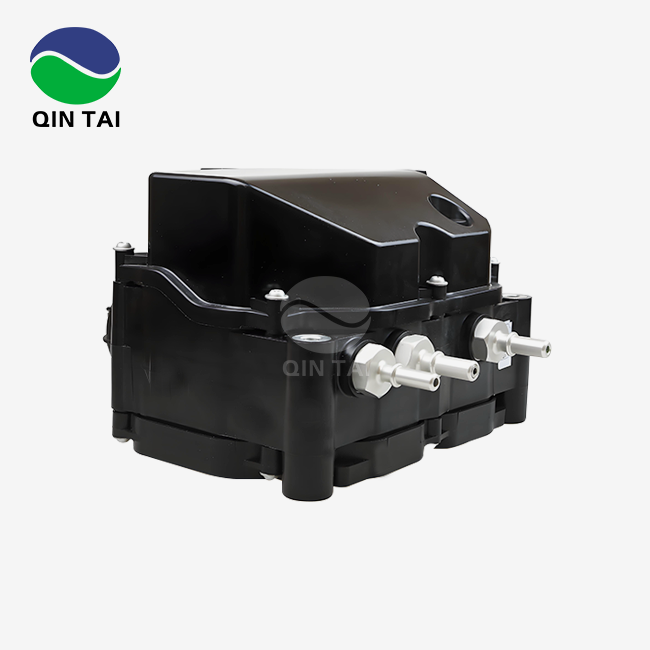
Pressure sensing technology from Qintai is backed by over two decades of diesel aftertreatment experience. We provide OEM manufacturers, aftertreatment integrators, and commercial vehicle operations with rapid technical assistance, competitive pricing, and dependable global logistics as China's top urea pressure sensor supplier. Our QS-P226 model's precise analog sensing and durable construction—validated by Weichai, Yuchai, and Quanchai—prove performance in the industry's most demanding applications.
Reach out to our engineering team at info@qt-sensor.com to discuss your specific application requirements, request technical specifications, or receive customized quotations for volume orders. We provide comprehensive OEM and ODM services supporting product adaptation to your exact specifications, backed by ISO9001 and IATF16949 certified manufacturing processes.
References
1. Society of Automotive Engineers. (2025). SCR System Component Specifications for Heavy-Duty Diesel Applications. SAE International Technical Paper Series, J2913 Revision 2025.
2. United States Environmental Protection Agency. (2024). Federal Emission Standards for Commercial Vehicles: 2026 Compliance Requirements. EPA Office of Transportation and Air Quality Publication EPA-420-R-24-003.
3. International Council on Clean Transportation. (2025). Real Driving Emissions Test Protocols: Global Regulatory Harmonization Trends. ICCT White Paper Series, March 2025 Edition.
4. Automotive Sensor Technology Consortium. (2024). Pressure Sensor Reliability Standards for Automotive Urea Dosing Systems. ASTC Technical Specification ASTC-PS-2024-08.
5. Advanced Engine Research Institute. (2025). Materials Compatibility in Urea-Based Aftertreatment Components: Long-Term Degradation Study. AERI Research Report Vol. 18, No. 3, pp. 245-278.
6. Global Diesel Technology Forum. (2024). Procurement Best Practices for SCR System Components in Commercial Applications. GDTF Industry Guidelines Publication, October 2024.

Our customers’ satisfaction speaks for our quality — contact us to experience the same reliable service.